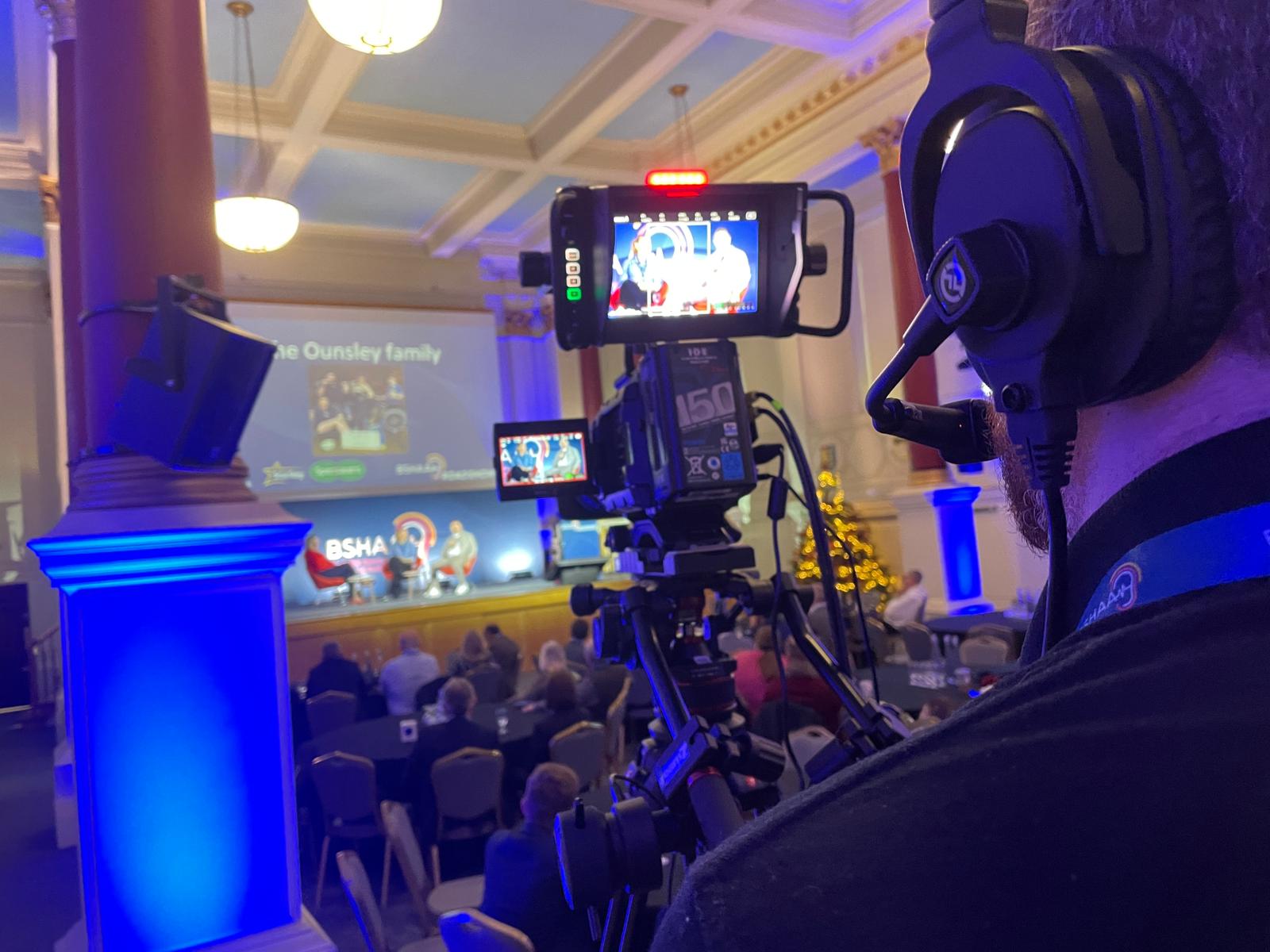

Sustainability has become a defining theme in the events industry. From reusable name badges to carbon-offset travel schemes, there’s growing recognition that every decision we make as organisers, venues, and suppliers has an environmental consequence. Yet one of the most effective tools for reducing emissions and increasing accessibility is often overlooked: the hybrid event.
Hybrid as a Strategic Choice
Hybrid events have come a long way since the early days of the pandemic. What started as a necessity has matured into a deliberate, strategic way of engaging audiences. By combining an in-person gathering with high-quality live streaming and interactive online participation, organisers can significantly reduce the carbon footprint of an event without compromising reach or impact.
A well-designed hybrid event allows global audiences to connect without the need for mass travel, long-haul flights, or overnight stays. It’s a shift in mindset – not from “in-person” to “virtual”, but towards a more intelligent balance between the two. The best events today aren’t about bringing everyone to one place; they’re about bringing the experience to everyone.
The Environmental Case for Hybrid
Transport is consistently one of the largest contributors to an event’s carbon footprint, often accounting for more than 70% of total emissions. Reducing the number of attendees who need to travel immediately lowers that figure. Even small changes – such as encouraging remote attendance for certain sessions, or hosting regional watch parties – can make a measurable difference.
Hybrid events also help cut waste. Smaller physical audiences mean less catering, fewer single-use materials, and lower energy consumption at venues. Add to that the ability to repurpose digital content rather than recreating it from scratch, and the environmental benefits quickly multiply.
Building Sustainability into Event Design
Designing a sustainable hybrid event starts long before cameras roll. It begins with asking the right questions at the planning stage:
- Could parts of the event be streamed rather than replicated across multiple cities?
- What’s the minimum viable footprint for production and crew travel?
- How can online participants be given an equally valuable experience?
The answers to those questions lead to smarter, leaner events. Advances in technology now make it possible to deliver broadcast-quality production with smaller, more efficient setups. Portable connectivity units, remote-controlled cameras, and cloud-based switching tools have made professional streaming achievable from almost anywhere – fields, factories, and temporary spaces included.

Key Actions for Event Organisers
For organisers looking to reduce their environmental impact while maintaining event quality, here are some practical steps to consider:
- Plan hybrid from the start – integrate digital participation into your event design early, rather than adding it later as an afterthought.
- Reduce travel where possible – encourage remote attendance for speakers or attendees who would otherwise fly or travel long distances.
- Select sustainable venues – choose locations with renewable energy use, good public transport links, and established recycling or waste management systems.
- Rethink materials – minimise printed materials, reuse signage and staging, and prioritise digital communications and ticketing.
- Use efficient production setups – opt for lightweight, multi-purpose equipment and local crew where possible to reduce freight and travel.
- Incorporate accessibility – design hybrid participation options that support diverse needs, including captioning, interpreters, and simple navigation.
- Repurpose your content – film sessions for reuse in future training, marketing, or community engagement rather than recreating similar events later.
- Measure and communicate impact – track emissions, waste reduction, and audience reach to build transparency and set measurable sustainability goals.
These small, intentional changes not only make a difference environmentally but also resonate with delegates and sponsors who increasingly expect sustainability to be more than a policy statement.
The Inclusion Factor
Sustainability and inclusivity often go hand-in-hand. Hybrid events remove barriers for those who can’t travel – whether due to cost, accessibility needs, illness, or family commitments – and make participation possible for a far wider audience.
They also support diversity by enabling organisations to draw speakers and delegates from around the world, without the associated financial or environmental cost of travel. For many event planners, this broader inclusivity has become a central part of their ESG goals.
Longevity and Content Value
One of the most powerful sustainability gains from hybrid events lies in how they extend an event’s lifespan. When sessions are captured in high-quality video, they can be repurposed into on-demand training materials, highlight reels, or short-form content for marketing.
Instead of existing as a one-day experience, an event can generate weeks or months of ongoing engagement. That’s better for ROI and better for the planet – fewer repeated gatherings, fewer duplicated resources, and more lasting impact from a single production.
From Trend to Standard Practice
As sustainability commitments become standard across the industry, hybrid events are likely to form the backbone of a more responsible approach to event design. The most successful organisers will be those who see hybrid not as a fallback but as an opportunity – a way to balance human connection with environmental awareness.
The key is integration. Rather than treating sustainability as an add-on, it needs to be embedded into every part of the planning process, from travel policies and supplier choices to content strategy and legacy use. Hybrid offers a natural framework for this shift, allowing the industry to reduce impact while maintaining creativity, innovation, and engagement.
A Greener Future for Events
The events industry has always been about connection – and connection doesn’t have to come at the expense of the planet. Hybrid delivery offers a blueprint for how we can continue to create shared experiences while respecting the world we build them in.
Many production teams are already embracing this shift. At Stream7, for example, the majority of events delivered are now hybrid, supported by energy-efficient equipment, digital-first workflows, and remote production technologies that reduce travel and waste. It’s a small example of how sustainability can be embedded not just in event design but in the day-to-day operations of the wider industry.
The next era of sustainable events won’t just be about cutting carbon or swapping single-use items for greener alternatives. It will be about designing smarter, more inclusive experiences that work for both people and the planet.
And that’s the real secret of hybrid events.

Sponsored Content

