celebpeek
  • Home
  • Bollywood
  • Hollywood
  • Lifestyle
  • Fashion
celebpeek
  • Music
  • Celebrity News
  • Events
  • TV & Streaming
Home » PopMatters » Page 8
Tag:

PopMatters

Susumu Yokota
Music

A Perfect Portrait of Electronic Trailblazer Susumu Yokota » PopMatters

by jummy84 October 6, 2025
written by jummy84

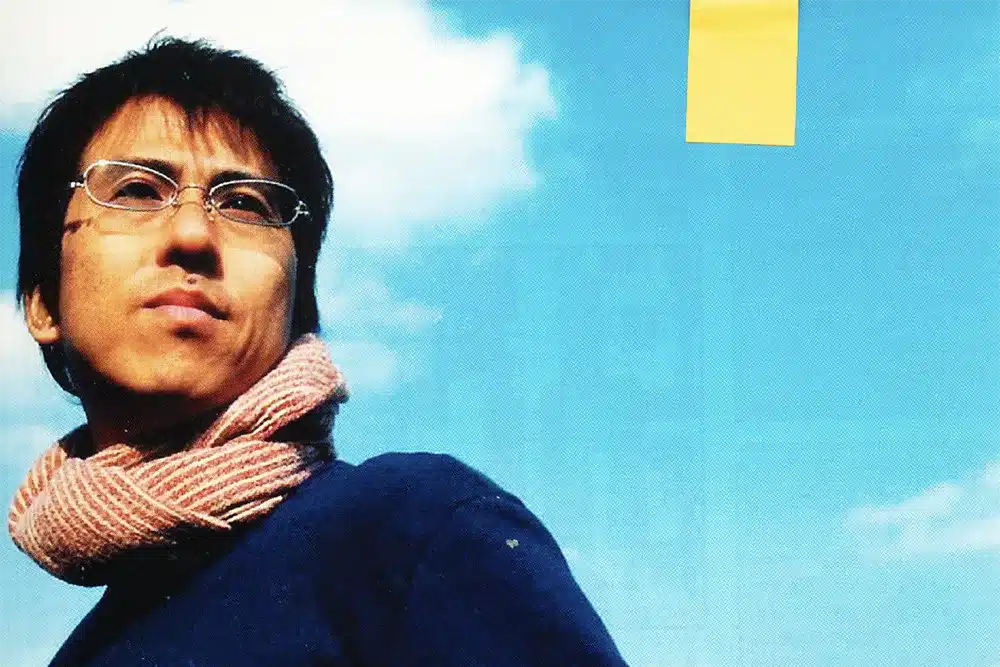
Susumu Yokota can be an intimidating artist to approach, which is why Lo Recordings’ Skintone Edition Volume 1 is immediately essential. Collecting the first seven albums released under Yokota’s own Skintone label, the box set neatly presents the most personal and esoteric work of the pioneering electronic house and ambient musician, doing the digging for you.

Yokota started the label in 1998, releasing albums under his own name after years of creating techno and house music under the pseudonyms Ebi, Tenshin, 246, Anima Mundi, and Stevia, among others. As such, the Skintone albums were reflective of Yokota’s innermost yearnings, less for clubs than headphones. In fact, the first two releases were produced in limited editions of 500 CDs each. He wasn’t trying to find an audience; he was trying to find himself.

Skintone Edition Volume 1 is almost like the first half of an autobiography discovered posthumously (Yokota died in 2015 at the age of 54). It begins with 1998’s Magic Thread, which immediately immerses the listener in its vast dub soundscapes. Mixing a slower, deeper version of the four-on-the-floor beats of his house music with intricately designed ambient tracks, Yokota’s first Skintone release was an intimate harbinger of things to come.

As the title implies, Image 1983-1998, the second Skintone release, is itself a collection of recordings spanning the titular 15 years. Across 14 tracks, Susumu Yokota experiments with guitar, organ, bells, samples, tape loops, and other musical instruments, manipulating their deconstruction to create fleeting yet magical moments. Granted, these feel like demos, accomplished sketches from an artist’s notebook, rather than completed works, with studies of individual instruments and techniques. Continuing the painterly metaphor, it’s more of a cubist or pointillist album than the minimalist and expressionist styles for which Yokota is known. 

While not quite the proverbial missing link, it’s still an interesting piece of the puzzle, showcasing the musician’s evolution from minimalist guitars toward synthesized ambient beauty. The album wears Yokota’s love for the short-lived post-punk band Young Marble Giants on its sleeve, no pun intended. In that sense, Image 1983 -1998 is both a testament to his inspirations and to the processes and styles that would influence him down the line.

The next album in the set, 1999’s Sakura, is widely regarded as Yokota’s most significant achievement and one of the best ambient albums of all time. This was the moment when the artist was able to bridge the gap between his intimate experiments and accessible appeal without any compromise, with the album getting picked up by the UK’s Leaf Label for European distribution. 

Sakura certainly lives up to the hype, and if you’re not willing to fork over the cash for this bespoke and beautiful box set, Lo Recordings released the individual remastered album on 26 September 2025. (They also have a 14-track album, Skintone Collection, which is a great but brief introduction to the artist.) It’s an essential text in the canon of electronic music, where Yokota assembles the fragmented harmonies of his earlier work into moments of pure bliss. It’s especially great to hear, after Image 1983-1998, the experiments with acoustic instrumentation coming to full fruition alongside a newfound cinematic grandiosity and synthesized sparkle.

After creating a few somewhat traditional but excellent electronic albums released outside the Skintone label (such as 1999 and Zero), Susumu Yokota returned to his own label for another distinctive, personal album. 2001’s Grinning Cat is a bit of a curveball in his discography, but rightfully beloved by his fans for its playful, jazzy rhythms, with Yokota emphasizing the piano more than ever. The production is just as cavernous as the previous Skintone releases, but the varied styles and jubilant tinkering add new layers of personality to the music.

Will, released the same year as Grinning Cat, is similarly fun but even more buoyant, bouncing along to uniquely programmed beats. Throwing in more sonic variety and endless ideas, Will is filled with musical non sequiturs and sometimes ridiculous surprises; it’s house music by way of slapstick comedy. The shortest title in Skintone Edition Volume 1, this fifth Skintone release is a quick blast of fun that’s perhaps most reminiscent of the early Skintone parties Yokota used to throw, which his label was named after (similar, in a way, to the Telepathic Fish parties in the UK around the same time). 

The sixth Skintone release, 2002’s The Boy and the Tree, marks a sharp departure from Yokota’s previous two albums, reflecting his restless and chimerical nature. The shape-shifting musician delved even deeper into the acoustic abyss, expanding the cinematic nature of Sakura while incorporating a swirling, psychedelic bent that’s alternately gripping and soothing. 

The Boy and the Tree feels like taking some ancient drug and participating in a secret ceremony. Yokota combines traditional Noh performance elements, including vocal chanting (utai), syllabic rhythm (chūnori), and classical instrumentation (hayashi), with natural sounds and samurai battle cries to create his most ritualistic work.

Finally, Laputa closes out Skintone Edition Volume 1 with the most complicated album of the set. The seventh Skintone release builds on the bombastic ceremonial quirks of The Boy and the Tree, but expands upon them with not only an epic, macrocosmic scope but meticulous microscopic intricacies. Laputa completes Susumu Yokota’s evolution away from house music, extricating the music from beats entirely.

Laputa features some of the most detailed drone music in existence, with Yokota’s punctilious production endlessly elaborating on what tends to be a monolithic aural texture. Yokota treats vocals like another processed instrument he has perfected, layering them to complement incredible blasts of aggressive synths and his usual penchant for subtle acoustic melodies. It was the most avant-garde album of Yokota’s career at the time, and confounded his fans and even the critics. Hearing it in the context of Skintone Edition Volume 1, however, provides the kind of context that makes Laputa seem like an almost natural next step, as Yokota tread deeper into the possibilities of sound.

It may be hard for some people to imagine ambient music expressing the full range of human emotion, but that was Susumu Yokota’s mission. He sought the musical equivalent of ki-do-ai-raku, the Japanese phrase for four major human emotions (joy, anger, sorrow, and pleasure or comfort). ‘I’m trying to achieve that beautiful thing. There is always fear, rage, and ugliness existing behind beauty,” he once explained. “I have been trying to express ki-do-ai-raku through music. I would like to express even one’s hidden emotion with reality. It’s my eternal goal.”

Yokota poured himself into the albums on Skintone Edition Volume 1, and his emotions pour out of them as a result. “Songwriting was like a diary for him,” DJ Miku, who released some of Yokota’s albums on his Newstage label, told Wax Poetics after the musician’s death. “It was important for him to create music from what he felt in the moment. That’s why I think Yokota’s work is very emotional. He was never one to sacrifice the soul of a track to make it sound better. In other words, there is no lie in his works.”

Bringing together these personal albums in one magisterial set, Skintone Edition Volume 1 is a beautiful, powerful study of Susumu Yokota in his own words. It’s perfect in nearly every way (something reflected in its cost) – the remastering, the art and packaging, the selections. While several of Yokota’s albums, released under different aliases, are absolutely phenomenal and more accessible (Acid Mt. Fuji, Zen, Zero), the Skintone albums are his most honest and distinctive achievements. They are an evocative expression of the artist as seeker, devoted to discovery and the expansion of possibilities.
October 6, 2025 0 comments
0 FacebookTwitterPinterestEmail
The Best Metal Albums of September 2025
Music

The Best Metal Albums of September 2025 » PopMatters

by jummy84 October 6, 2025
written by jummy84

As we gear up for the end of 2025, the heavy stream continues uninterrupted. Unearthed black metal recordings from LVTHN and Vörnir are finally released, while Gjendød, Nexion, and Destruction Ritual continue to define the present of the genre, albeit in different ways. Historic acts make their solid returns, with the newest Paradise Lost and the long-awaited Fauna releases. On the fringes, Nuclear Dudes continue their manic, low-key, ambitious efforts, Igorrr merge electronica and black metal, Hateful Abandon offer dark industrialized post-punk, and Intercourse stare into the abyss without blinking. That and much more, so dig in! – Spyros Stasis

The Best Metal Albums of September 2025


Arkhaaik – Uihtis (Eisenwald)

One of the stranger outfits from the Jünger Tumilon, Arkhaaik are obsessed with the ritualistic dimension of extreme metal. Their debut record, dʰg̑ʰm̥tós, follows the path of mystical black/death, tracing the lineage of Grave Upheaval and Mitochondrion. Yet, their return with Uihtis sees a tectonic shift. While the ritual remains at the centre of it all, the primal black/death has given way to a more refined, blackened death/doom approach, a change that is also mirrored in the cleaner production. “Hagrah Gurres” oozes with this essence, taking on the latter-day Septicflesh majesty (minus the symphonic applications) and delivering it with devastating force. 

The striking component here is the groove, and its derivation is uncanny. It alternates between the modern death/doom scene and also incorporates elements from Panzerfaust and their graphic applications. This is Arkhaaik’s newfound strength. Their ability to assimilate diverse elements and bring a unified result. Take their black metal side. For the most part, they rely on fleeting lead patches, small discordant fragments. However, these still convey the same sense of unease evoked by the dissonant orthodoxy advocates.

Similarly, the death metal form alters, at times settling into its atmospheric doom quality, but then exploding in a catchy beatdown with “Hrkþos Heshr Hiagom”. It continues, from the atmospheric interludes that evoke the darkness ushered in by the Ruins of Beverast, to the momentum and energy infused with the spirit of Bölzer. Most importantly, Uihtis does not simply rehash these ideas. It makes them its own, and while it does not appear that Arkhaaik have fully completed their vision, they are definitely on the right path. – Spyros Stasis


Destruction Ritual – Providence (End All Life)

Destruction Ritual’s 2021 demo felt like a message from the genre’s primal years. It manages to contain the lo-fi, raw, and aggressive quality that defined black metal demos, but without becoming a gimmick. The project of French heavyweights MkM (Antaeus), TerrorReign (Necrobloos), and US-based guitarist Arafel oozes with poisonous distortion, taking to heart the relentless core of Blood Libels, and the venomous extension of black metal orthodoxy.

Yet, Destruction Ritual’s return with Providence turns a new page. The production now suits a full-length, shedding the demo’s rougher edges without losing venom. From the outset, the early Scandinavian ethos prevails. The title track best exemplifies this turn, its riffology saturated with the trademark icy tremolos. It provides a vivid element, a dream of dark forests where spectres roam. It is an aesthetic that carries over through the eerie, arachnoid lead work, especially pronounced in the clean-ish parts of “Washed Away Sins”. 

This excavation goes further, with a proto-black metal perspective shining through both lead mechanics and progression. The guitars encompass a duality, a yin and yang, at times descending into a cacophonous à la early Bathory haze (“Providence”), to then ascend to classically metallic notions (“Pride & Corrupted Dreams”). The drums do not relent, their continuous beating is not as fast, as it is dedicated. Their martial approach constructs a near militant procession, one that allows Destruction Ritual to tap into their latent DNA. The Antaeus strain is right there, and the venomous onslaught in “Closure” makes sure we do not forget this.

The orthodox route is also called upon, with the cold and torturous mid-tempo of “Gone Days of Splendor” and the atmospheric parts of “Decaying Masks of Remorse” shining through. Thus, Providence does not simply retrace Destruction Ritual’s steps. It instead unearths black metal’s primal soil, its proto form’s extremity, Antaeus’s venomous scars, and the ritual pulse of orthodoxy, binding them together in a singular, destructive statement. – Spyros Stasis


Fauna – Ochre & Ash (Prophecy/Lupus Lounge)

With their debut record, Rain, coming out the same year as Diadem of 12 Stars, Fauna established themselves as one of the first Cascadian black metal bands. Like their contemporaries, Fauna are obsessed with the majesty of the Pacific Northwest. They translate the area’s mystical sceneries into raw, ambient forms. However, it did take a moment for their sound to come together, with the rough promise of Rain and The Hunt finally paying off in their 2012 full-length, Avifauna. Following 13 years of silence, Fauna now return with another ambitious work in Ochre & Ash.

The atmosphere is again fundamental, Fauna taking great care in sonic placements and sound recordings to build a holistic ambiance. Today, this sounds closer to the Nordic folk of Wardruna, especially in “A Conjuring”, which also serves as a platform from which Fauna can leap into other territories. Hypnotic tinges rise from the clean guitars with “Labyrinths”, making use of their circular motif to craft its inescapable mazes. When the distortion surges and the pace drops, the music drifts toward funeral doom rather than earthy black metal.

The same energy can be harnessed to achieve a strange, forest psychedelia in parts of “Eternal Return”. The wolf might change his coat, but not his nature. Thus, Fauna still tap into the primal black metal havoc, the start of “Nature and Madness” conjuring an apocalyptic quality to its trademark black metal riffing. These reveal the bloodied teeth, with Fauna imbuing their form with a tribal essence passed from the likes of Neurosis. Not so much a musical influence, but rather a spirit guide that points the band toward their true north.

Fauna’s return is admirable, and Ochre & Ash sees them return to their true form. Longform compositions, blending ambient sensibility, tribal spirit, and black metal devastation, Ochre & Ash is a demanding yet deeply immersive rite, one that reveals more with each descent. – Spyros Stasis


Gjendød – Svekkelse (Osmose)

Rekindling black metal’s flames is no simple task, and few truly succeed in this endeavour. And then there are those who not only awaken the old ethos but also chart their own path. This is Gjendød’s story, whose latest record Svekkelse comes just one year after their excellent fifth full-length, Livskramper. As has been the case throughout the band’s discography, Gjendød’s foundation dates back to the mid-1990s, leaning toward the more outlandish expressions of the genre.

So echoes of Ulver’s pastoral melancholy reverberate through the passages of “Lykkens bortgang”, while the Enslaved influence injects a sense of lost magic and lore. It is an otherworldly pull, captured through the relentless progression of “Uten nåde” and the second half of “En elv av kjøtt” and its beautiful acoustic guitar passages.

Yet, underneath this foundation lies a discordant self. On “Maktens sødme”, the pre-industrial Thorns lineage is clear. The intricate guitar work feels like an echo of Snorre’s feverish dreams. This dissonant methodology recalls Ved Buens Ende. The start of “En elv av kjøtt” spirals into a vortex of chaos and entropy. Slight melancholic touches are offered, with “En staur i hjertet” employing the icy riffology to create a nocturnal anthem, parallel to the works of Djevel.

Further off-kilter ideas float, like the synthesizers in “Den Falske råte” hint at a cosmic escape. Throughout all this, Gjendød seamlessly balance between the primitive core of the genre and its more nuanced manifestation. Svekkelse stands as a testament to Gjendød’s duality, firmly rooted in tradition yet unafraid to venture into uncharted terrain as a hermit. – Spyros Stasis


Hateful Abandon – Threat (Sentient Ruin)

Hateful Abandon understand intersections. Their entire discography is built on this fact. For them, punk and industrial are not parallel lanes. No, they are branches of the same tree, best presented under a joining post-punk root. Their first record in a decade, Threat, opens with this principle. “Nuclear Thread Worker” relishes the early Killing Joke aura, this unsettling state between punk history and urban reality, where the two competing forces mold Threat.

“Shithouse” moves closer to hardcore chaos, but never gives in. The straightforward progression instead repeats on an endless loop. On the other side, the industrial tone appears in a sinisterly gleeful manner. The bombastic start to “Scavenger” is only the surface for Hateful Abandon, but deeper undercurrents are running just below. The apocalyptic essence of “Scavenger” takes hold, with operatic vocals evoking memories of the early In Slaughter Natives releases, as does “Sculptures” with its off-kilter synthesizers. It is an always-present narrative, as Hateful Abandon feel a strong pull toward the apocalyptic.

“Dome” with its huge bass lines evokes the fiery visions of Streetcleaner, the faraway cries heralding an inescapable devastation. It is a vibe that persists even in the most desolate moments, with “Shimmer Road” evoking the Swans-like melancholy. Coupled with some minor black metal influences, especially pronounced in “Nuclear Thread Worker”, Hateful Abandon unveil a world aflame. This invocation comes with a certain mystique. And while their guiding light might be the post-punk foundation of Joy Division, their far-reaching extensions make for a much more daunting offering. – Spyros Stasis


Treading a similar path to Jason Köhnen’s Bong-Ra, the past two decades saw the breakcore architecture of Gautier Serre’s early career mutate into ever more concrete forms—still as spastic and crazy as his earlier works, but touched differently. Where Köhnen’s vision ended up encased in industrial grime and heaviness, all oozing electronic textures and sparking electricity (check out Black Noise, released earlier this year), Serre pushed his project Igorrr towards predominantly black metal territories. While 2017’s Savage Sinusoid had already hinted at this direction and 2020’s Spirituality and Distortion announced the true metallic potential behind the project, Amen witnesses its full realization.

Drop the needle anywhere on the album and you’ll be inundated with waves of utterly intense and, perhaps, insane but organic-sounding instrumental expression. Owing to Serre’s ambitious approach, which included recording actual church organs and acoustic instruments, the album feels vibrant and breathes deeply even in its more suffocating passages.

Neoclassical strings and operatic vocals float above ripping riffs and striated breakbeats, then pour right through them (“Daemoni”). Gorgeous Eastern melodies intertwine with blast beats to explode into blistering second-wave black metal (“Headbutt”). Elsewhere, chants dissolve into saturating textures (“Pure Disproportionate Black and White Nihilism”). While it might appear unnecessarily extravagant on paper, this astute eclecticism is what ultimately elevates the album above its peers, with an injection of adrenaline at hand every time things threaten to fall into a rut. – Antonio Poscic


Intercourse – How I Fell in Love With the Void (Brutal Panda)

Many find staring into the abyss daunting, something to be done sparingly if at all. But that is not the case for Connecticut’s Intercourse, who, since their inception, have consistently peered into the void. Their aptly titled, fifth full-length, How I Fell in Love With the Void, does not abstain from that practice. To that end, they once more contort their noise rock fascinations through a hardcore immediacy. This makes the discordant guitar work in “The Ballad of Max Wright” hit with much more potency. “Unsuccessfully Attempting to Parse Nightmare From Reality” takes this further, contemplating a dissonant obsenity that bounces between old-school punk ethos and Fugazi‘s post-hardcore.

Thus, Intercourse dig into the dark and oppressive side of hardcore. The heavier groove works nicely alongside the noise rock influence, with touches of a sludge pedigree coming through when things slow down. This makes the despair more palpable in “Zoloft and Blow”, staring down the same dead ends that Great Falls have found (“Family Suicide Gun”). Plunging into the atmospheric only enhances the despair, the title track being a prime example when the clean guitars and subdued playing come in.

This contradiction brings to mind Chat Pile and their melancholic outlook, especially in “I’m Very Tired Please Let Me Die”, where they provide a subtle industrial injection. Even in their more energetic state, as seen in the metallic-induced “Cadaver Resume” with its chugging and the mathcore-adjacent “Another Song About the Sun”, they still cling to a sense of hopelessness. Intercourse understand that hopelessness is not always defeatism; sometimes it is the only way through. – Spyros Stasis


LVTHN – The Devil’s Bridge (Amor Fati)

Formed in the mid-2010s, LVTHN quickly transitioned from their early, raw, Scandinavian-inspired sound to the rising orthodox black metal trend. Their debut full-length, Eradication of Nescience, was a timely offering, following the footsteps of the French black metal scene, coalescing Antaeus’s devastating force with the Aosoth-ian transcendental devilry. The band’s sophomore record, The Devil’s Bridge, might be arriving nine years later, but in spirit it inhabits the same space as their debut.

The latter stage of orthodoxy still prevails, with “A Malignant Encounter – The Servant” employing the Aosoth principles once more, forming a solid, impenetrable guitar wall. The guitar timbre is near elemental, a cosmic force that pushes against all life. From there, the dissonant injections are expected, with the guitars in “A Malignant Encounter – The Master” and “Sum Quod Eris” dripping their discordant poison on top of the aggressive progression. Here, the more chaotic outbreaks break the mould, the start of “Cacodaemon” and “Grim Vengeance” show the unforgiving side of the band, honed by the spirit of Ondskapt and Funeral Mist.

In moments, this can become even more abrasive, with “Mother of Abominations” unearthing the Katharsis corpse for a brief time. However, while The Devil’s Bridge is a well-put-together record, it does feel like clinging too hard to the past. According to their press release, the bulk of the work was written and recorded in 2019, with further adjustments being made over the years. That’s something that comes across. A record frozen in a different time, which invokes its spirit, but does not extend it. – Spyros Stasis


Modern Life Is War – Life on the Moon (Deathwish)

One of the prominent hardcore acts of the 2000s, Modern Life Is War, released two pivotal records in My Love. My Way and Witness. What made them stand out was their dedication to the punk ethos, while feeling a strong melodic pull. This pull might have been overstated in their third full-length, Midnight In America, and the band eventually performed a course correction with their 2013 Fever Hunting. Now they return 12 years later with Life on the Moon, a record that swings the pendulum wildly across different states and moods.

The emotional core is exposed, from the “Invocation” introduction and its almost poppy sentimentality, and it remains prevalent throughout Life On The Moon. “Jackie Oh No” pushes harder on these melodic inclinations, while “Homecoming Queen” further digs in its hooks. Still, there are times when the balance is better, with “First Song on the Moon” finding equilibrium between fervour and catchiness. Similarly, “In the Shadow of Ingredion” and “Johnny Gone” move closer to the old-school ethos, the former embracing quasi-metallic elements and the latter some New York hardcore characteristics.

The transformations keep revolving, from post-hardcore abrasiveness in “There Is a Telephone That Never Stops Ringing”, to the relentless speed of “Bloodsport” and the subdued Have Heart energy of “You Look Like the Morning Sun”. There are also moments of quasi-psychedelic introspection, “Empty Shoes” with its emotive quality, “Over the Road” with its hypnotic aspiration, and finally “Kid Hard Dub” with a hazy perspective.

Overall, this constant transformation holds the record back, disrupting its flow and restraining it from hitting a certain stride. There are still interesting ideas in Life on the Moon, but it feels like Modern Life Is War have not completely coalesced these. Maybe this will come the next time around, and hopefully that will not take another 12 years. – Spyros Stasis


Nexion – Sundrung (Avantgarde Music)

The problem with unexpected hit albums, even in niche genres, such as 2020’s Seven Oracles by Reykjavík’s black-death metal outfit Nexion, is that the band suddenly have expectations to live up to. While the yips, the curse of the sophomore release, or whatever you want to call it, is very much a real thing, the Icelandic quintet appear too imperious and self-assured to succumb to such foolishness. Sundrung stands shoulder to shoulder with the best Nexion have produced so far.

Nebulous as it might be, applying the Icelandic black metal term here makes sense, as Sundrung exhibits certain similarities with the music of Misþyrming and Svartidauði in each of its tracks’ epic tapestry: majestic riffs rolling along growled chants and lighter folk flourishes alternating with brutal attacks. Simultaneously, there is a hunger at play within Nexion’s idiom that separates them from the lot as they draw from death metal’s unfiltered brutality and sprinkle perverted atmospherics across the eight tracks.

There is very little filler here despite the album’s 50-odd minutes. In fact, the extended duration seems critical in making the band’s special moments—passages that sound like storms brewed in the deepest layers of hell—feel truly earned. Here, Josh Rood’s deranged, Attila Csihar-evoking roars skitter over machine gun riffing and snaking melodies, like something off of an early Behemoth record or Keep of Kalessin’s flash in the pan Reclaim. Terrific stuff. – Antonio Poscic


Nuclear Dudes – Truth Paste (Independent)

Jon Weisnewski, of the mighty Akimbo, might have started Nuclear Dudes as his bedroom project, but boy, this thing has legs. On their fifth full-length, Truth Paste, Weisnewski is joined by Teen Cthulhu vocalist Brandon Nakamura for an exhilarating ride. The start is bombastic, as “Napalm Life” descends into a grindcore frenzy, fierce and unrelenting. It is an expression rooted in the punk lineage, which manifests in various forms.

The crossover-inspired “Holiday Warfare” contains fragments of a thrash past, while “Juggalos for Congress” reveals a more traditional groove. However, Nuclear Dudes tend to take things to extremes, relishing the powerviolence perspective, especially pronounced in the absolute mayhem of “Sad Vicious”.

Still, a fundamental component here is the industrial backbone, and Nuclear Dudes feel a strong pull towards electronica. It is so powerful that at times they retreat to dance-like moments, as in the second half of the title track and “Death of a Burning Man”. At other times, this morphs into an industrialized fascination, which at its most basic level arrives with a Ministry or Prong-ian quality (“Cyrus the Virus”).

Where things get really interesting is when the industrial self merges with the grindcore essence, taking a cue from Genghis Tron’s monumental Board Up the House. “Space Juice” is a prime example of this motif, and the stunning use of synthesizers is capable of expanding the violent ideas toward otherworldly realms, as is the case with the hazy quality of “Concussion Protocol”. There is a lot of sarcasm and playfulness here, and it fits the image, but do not fool yourself: Truth Paste is anything but middle-of-the-road or straightforward. The ambition shines from underneath all that. – Spyros Stasis


Paradise Lost – Ascension (Nuclear Blast)

Among the original wave of doom-death metal bands, particularly those who rose to fame during the early 1990s in the ranks of the UK’s Peaceville Records, Paradise Lost have aged most gracefully. Whether thanks to the stability of their lineup or the self-confidence and freedom to experiment with genres as they saw fit—from death and gothic metal to synthpop and back—the music they put out feels vibrant and played with genuine gusto even four decades into their career 

Ascension, the group’s 17th LP, finds them in stellar form. As if each style they ever came across embedded a fragment of itself into their DNA, the album becomes akin to a mashup—based in dramatic death and doom metal, but free to stretch into territories of gothic rock, post-metal, and pop. Take, for example, the opener “Serpent on the Cross”, which is a crushing and relentless sublimation of Paradise Lost’s death-doom tendencies, featuring tightly wound atmospheres that release into galloping rhythms and gorgeously melodic riffs.

Meanwhile, “Tyrants Serenade” ups the melancholy and Weltschmerz to levels unheard since 1993’s Icon, and “The Precipice” has the group descending into funeral doom, with grave piano keys and Nick Holmes’ stunning vocal delivery leading the dirge in its steady, heavy crawl. These are all signs of a mature band that, despite all odds, sound as if their life had just begun. – Antonio Poscic


Vörnir – Av Hadanfärd Krönt (Mystiskaos)

I am becoming increasingly terrified by the prolific nature of particular musicians, especially when they tend to collaborate. Not only can they continue to produce new work, but they also tend to unearth their earlier material, reworking it and releasing it. This is the case with Vörnir, featuring artists such as Alex Poole, Rory Flay, Swartadauþuz, and H.V. Lyngdal. Much like the case of LVTHN’s new record, Vörnir’s debut was written at a different time. Written between 2011 and 2015 and recorded from 2015 to 2024, Av Hadanfärd Krönt radiates with the spirit of another era, steeped in the orthodox tradition of black metal.

This work needs to be experienced as a continuum, a flow of dark energy that arrives in maelstrom form. Vörnir tend towards orthodoxy’s harsher side, not shying away from relentless assault without many breaks. However, while the anger is palpable, there is an underlying methodology that runs through it. This unyielding perspective is defined by strict precision, not loose aggression. It makes the work that much more calculating, and as a result, it becomes colder.

The pull of the dissonant is still there, but it feels like the time passed between writing and recording has transfigured it. Instead of the venomous injections, Vörnir unleash psychedelic fumes. Far away, fleeting lead work delves into this motif, projecting different emotional flavors. At times, these hallucinogenic capabilities project a deep ambiance, an otherworldly dreaminess. Still, they are also capable of constructing towering moments of mid-tempo dedication, or even granting momentum to the ongoing assault.

This is where Vörnir succeed. They balance between the initial proximity of their compositions to orthodox black metal, but they have allowed time to imbue these with additional components. In that sense, they appear almost as an avant-garde act that is rooted in tradition but pushes further beyond. – Spyros Stasis


October 6, 2025 0 comments
0 FacebookTwitterPinterestEmail
'Telepathic Fish' Captures the Ambient Chill of the Early 1990s » PopMatters
Music

‘Telepathic Fish’ Captures the Ambient Chill of the Early 1990s » PopMatters

by jummy84 October 5, 2025
written by jummy84

Telepathic Fish: Trawling the Early ‘90s Ambient Underground

Various Artists

Fundamental Frequencies

5 September 2025

It was 1992, and England had a hangover. The Happy Mondays had bankrupted Factory Records, the Stone Roses had disappeared, and the KLF summed it all up at the Brit Awards when they shot blanks into the audience and announced, “The KLF have now left the music business.” The glow sticks had cracked and leaked. Madchester and the rave phase were evolving into something entirely different. Looking to decorate their cultural comedown with new sines and wonders, partygoers sought spacey sounds and calmer frequencies. Enter Telepathic Fish, an ambient scene lovingly chronicled in Telepathic Fish: Trawling the Early ’90s Ambient Underground, a new release from Fundamental Frequencies.

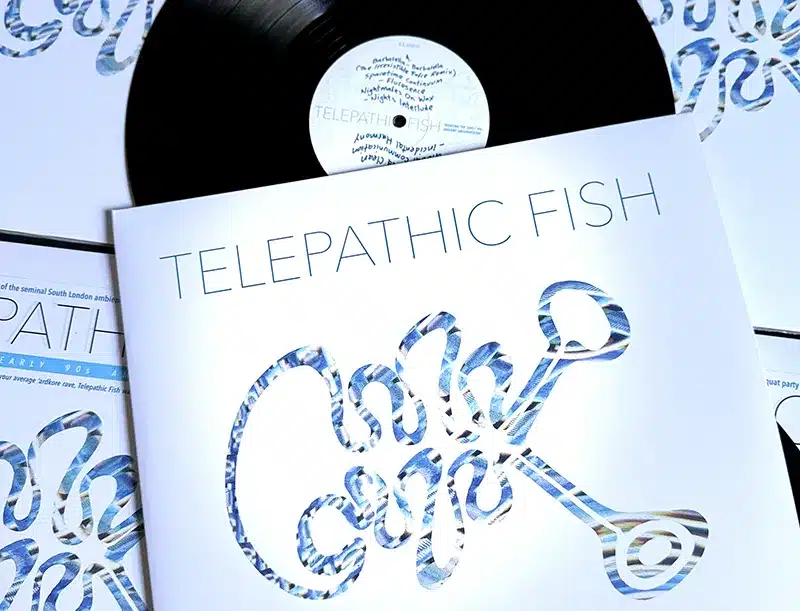
Telepathic Fish is a curious collection, seeing as it doesn’t document a specific label or artist but rather a small sonic scene that organically emerged in 1992. It’s a friendly tale of fortuity, with random roommates uniting their shared interests to create the eponymous events in South London. David Vallade, Mario Aguera, Kevin Foakes, and the late Chantal Passamonte (also known as Mira Calix) found themselves living together at 102 Grove Vale, London SE22. When the friends began throwing parties under the collective name Openmind, they didn’t immediately realize how deftly they had tapped into the countercultural zeitgeist, like oracles of auricles.

Their parties included a “chill out room”, covered in mattresses and awash in UV lights, in which ambient techno flooded the atmosphere. Soon, that electronic ambience became the leading player, not just a supporting act, in a series of so-called “Telepathic Fish” shindigs. Openmind and various DJs (including Richard D. James of Aphex Twin fame) would select songs for these house parties, and the most representative and essential tracks from the time make up this ten-song ambient album. It’s obviously deeply personal to the compilers of this mix, and even if that intimate connection to the music doesn’t really come across (with Telepathic Fish achingly emanating a “you had to be there” vibe), it’s nonetheless a cleverly curated selection of chilled-out electronica.

Trawling the Early ’90s Ambient Underground features tracks from Nightmares on Wax, Spacetime Continuum, Global Communication, and Caustic Window, as well as remixes of songs by Keiichi Suzuki, Tranquility Bass, Barbarella, and others from the time. Perfectly sequenced, one would be forgiven for assuming that several of these tracks came from a single artist, so cohesive is the project’s vision (especially the first half). It’s rarely repetitive, though, with each tune reflecting a different aural facet of the scene, from silly synth squiggles to epic washes of waveforms.

The Barbarella remix is a phenomenal introduction, setting the sumptuous, warm tone of Telepathic Fish. Far from the icier, somewhat aloof sounds of certain contemporaneous electronic acts, the opening tunes are wholly inviting and accessible despite their length and musical complexity. With more than half the songs running eight minutes or longer, the album effortlessly immerses listeners in its wondrous, often playful sci-fi world. Insides’ “Skinned Clean” is perhaps the most beat-driven tune, and a great one at that, but danceable percussion isn’t missed on other lustrous tracks.

While a natural extension of the first six songs, the second half of Telepathic Fish is more musically diverse. After the somewhat aimless, 14-minute “Satellite Serenade (Trans Asian Express Mix)”, the record’s only real misstep, Telepathic Fish ends strongly with three unforgettable tracks. Tranquility Bass’ “Cantamilla (Bomb Pop)” magically combines a spry, funky rhythm with Arabic layali and a catchy vocal sample; it feels like the ancestor of so many less memorable songs on generic “world music” compilations. 

The album ends on a startlingly beautiful note with the radical No-Man remix “Days in the Trees (Reich)”, which features heartwarming minimalist accompaniment to a memorable moment from the brilliant series Twin Peaks, in which the character Donna Hayward vividly recounts a sweet girlhood memory. The song feels like a sly thesis statement for all of Telepathic Fish, a record of a gorgeous memory from the early 1990s.

The accompanying booklet is informative but also a treasure trove of imagery from the era. It collects pictures of the many bespoke artifacts created by the roommates and their friends, working within myriad mediums, “from spray-painted stencils and badges to stamps and stickers, ink-jet printers, photocopiers and fax machines, collage and early 3D computer art”, as the booklet notes. In retrospect, Openmind and their Telepathic Fish parties seem like the electronic descendants of Andy Warhol’s multimedia art studio, The Factory, with a ragtag assemblage of eccentric creatives building off each other to create a thriving space where art and music became a collective experience.

Considering how much of an ecstatic event the Telepathic Fish parties were, it’s admittedly mildly melancholic to listen to Telepathic Fish: Trawling the Early ’90s Ambient Underground on one’s own, as a private headspace alone between headphones. However, the inspirational DIY narrative of its hip and happy happenstance, so thoughtfully documented and recalled by this delightful mix and beautiful booklet, might just galvanize some burgeoning bohemians to create their own scene and perhaps host tomorrow’s parties.

October 5, 2025 0 comments
0 FacebookTwitterPinterestEmail
Patrick Shiroishi 2025
Music

Patrick Shiroishi Possesses a Gift for Improvisation » PopMatters

by jummy84 October 4, 2025
written by jummy84

In a recent interview, multi-instrumentalist and radical song form detonator Asher White stated, regarding the truly grim moment the US is experiencing right now, “There is no singular apocalypse. There’s thousands of apocalypses all over, at all time.” It’s a good summation of the permanent state of disquiet anyone with a conscience is now experiencing. While the unifying messages (and naiveté) of 60-year-old protest songs appear to be nowhere in sight, musicians are constantly using their voices and instruments to at least comment on where the country has landed.

Improvising alto saxophonist Patrick Shiroishi’s latest album, Forgetting Is Violent, offers up an unsettling example. Between his solo releases, guest appearances, and collaborations, Shiroishi‘s output is staggering. Recent albums have found him using field recordings, synths, and other effects to meditate on his Japanese-American ancestors, some of whom experienced concentration camps at the hands of a misguided US government and its race-based paranoia during World War II.

With his latest, a more collaborative effort, he has cast the net wider, making statements about the corrosive effects of American racism in general as the country plunges into authoritarianism and the ruling party holds up a recently deceased transphobe, sexist, and racist as a martyr to white grievance. So, arguably, there is a much-needed proposal for freedom in Forgetting Is Violent, but tracks such as “Mountains That Take Wing” suggest how difficult it is to obtain. His sax flutters peacefully as if in flight, only to be mauled by shards of Aaron Turner’s guitar. Shiroishi responds with warbled cries as the guitar soars on brutal, sustained notes. It is music of stark beauty, but it’s often difficult to take.

Shiroishi has acknowledged that his love of the saxophone was sparked by artists such as John Zorn. He states, he “started playing in bands with saxophone in college and diving into weirder settings. We were more into punk jazz kind of stuff.” This most certainly explains the roots of his more turbulent outpourings, or guest appearances with the likes of the all-engulfing drone monsters Water Damage, or his involvement with the Detroit-based punk band the Armed.

However, his releases, including this one, show several sides of his music. One of the album’s muted, yet perhaps most disturbing tracks, “…What Does Anyone Want But to Be a Little More Free”, features Shiroishi’s aunt recalling her first experience with racism over a dreamscape of disembodied voices, radio transmissions, and wavering, electric harmonies from Shiroishi’s alto. There’s also “Prayer for a Trembling Body”, easily the album’s most peaceful track. Here, Shiroishi’s voice whispers what might be a hymn or a thousand-year-old ballad over the sparsest of soundscapes. In some ways, it recalls the calmer music from 2024’s Glass House. 

The album is a suite of sorts, with Side One featuring the bulk of the collaborations and Side Two finding Shiroishi mostly in calmer solo waters. However, the album’s closer, “Trying to Get to Heaven Before They Close the Door”, which features guitarist Mat Ball, begins with a distant hum, perhaps a bee or a passing airplane, before a vocal line, somewhere between a howl and a sigh of relief, appears. Then the gnashing of Ball’s electric guitar enters, tumbling over and under the drone, suggesting that one can find freedom, but, like the plummeting of astronauts in a capsule re-entering the Earth’s atmosphere, it’s going to be a bumpy ride.

The song’s final moments argue that if you can handle discomfort, the payoff is worth every minute. Less ambient than 2022’s Evergreen, and not as personal as 2021’s solo saxophone LP Hidemi, Forgetting Is Violent demonstrates Patrick Shiroishi’s gift for improvisation in a variety of settings as well as his continued use of his instrument to make insistent, brave social statements.

October 4, 2025 0 comments
0 FacebookTwitterPinterestEmail
Baxter Dury Allbarone
Music

Baxter Dury’s ‘Allbarone’ Is His Very Best Album » PopMatters

by jummy84 October 4, 2025
written by jummy84

To truly love a Baxter Dury record is to spend time with the words. On a Dury record, meanings slowly reveal themselves like one of those magic eye pictures from the nineties. However, that is to mistakenly assume that there is just one meaning. Play the album to a room of 20 and you’d probably be met with at least a dozen interpretations. What all would agree is that he has a nuanced understanding of the human condition: the emotional ups, the let-downs, and the everyday exposure to total dickheads.

Left with just the words, new album Allbarone would read as poetry—a collection of on-the-nose, cynical, and endlessly quotable lines of social commentary. However, with producer Paul Hepworth matching his verbosity by blending inventive and varied electronic influences, Allbarone is elevated to a level near Dury’s best album to date.

Thumping opener “Allbarone” serves as a spectacular statement of intent. As close to a full-on house tune as he has ever done (barring his Fred Again collaboration). Paul Epworth’s dance-infused production shines with Dury laying his lines over throbbing synths and pulsing beats. JGrrey’s bubblegum vocals add some feminine yin to Dury’s droll yang as Dury details being stood up in one of the UK’s most popular drinking establishments it initially comes across as a hilarious take on modern dating but on repeat listens it could just as easily be about the creepy, desperate actions of a man unable to come to terms with being left in the lurch.

Whichever interpretation you prefer, there is no denying that it’s as fresh as one of Druy’s crisp, linen suits. The banging vibes continue in “Schadenfreude”. A curtain of twitchy, arpeggiated synths allows Dury to poke his head out and fling bitter barbs at the one who got away (“you were off with that doughnut”). The more percussive, “Kublai Khan” addresses the unfinished feeling as he experiences a “sliding doors” moment, seeing the object of affection travel in the opposite direction on an escalator.

After the opening trio of dancier tunes, the record morphs into more recognisable, yet no less thrilling, Dury territory. “Alpha Dog” lounges in a disco bed with a bass line that Bernard Edwards would be proud of. Once again featuring JGrrey, who effortlessly weaves in contrasting melodies that quickly take root in the subconscious.

On the more introspective “The Other Me”, a hypnotic, circling, post-punk bassline sits front and centre, augmented by sudden stabs of horns like being stuck in a particularly disconcerting traffic jam. The even more uneasy, “Hapsburg” opens with anaesthetised, dislocated vocals and off-kilter synths. There’s a more pronounced feeling of things quickly deteriorating, as if the bottom is suddenly much closer than anticipated. Musically, it’s another example of just how rich the album is.

Over washes of synths and rumbling bass, “Return of the Sharp Heads” could well take the honour of featuring the funniest lyrics Dury has ever written. It finds Dury going on a stream of consciousness rant about the people of Shoreditch (“You’re just a bunch of soul-fuckers / Who rate yourselves”). Even after repeated listens, it still has the power to make the listener spit out any liquid they may have foolishly attempted to consume at the time.

On a record of highlights, “Mockinjay” could justifiably lay claim to being the standout. As the percussion tumbles and falls, Dury effortlessly bounces syllables off each other in an incredible show of his wordplay. Surprisingly inspired by the Hunger Games film, “Mockingjay” details the sad romantic type whose romantic intentions don’t extend beyond a computer screen. Closer, “Mr W4” could well be Dury’s tongue-in-cheek theme tune. It’s a beguiling, beautiful, lounge disco finish with barroom piano notes swirling like whips of smoke. It’s a tale of deluded west Londoners with delusions of grandeur and Dury at his most wonderfully sardonic.

Baxter Dury has created that rare album that continually reveals hidden depths, both lyrically and musically. Allbarone is a richly observed record drawn from a wealth of experience studying human relationships. It also slaps.

October 4, 2025 0 comments
0 FacebookTwitterPinterestEmail
Snooper 2025
Music

Snooper Find Form and Focus on ‘Worldwide’ » PopMatters

by jummy84 October 3, 2025
written by jummy84

Like a deep-sea creature built to withstand crushing depths, Snooper seem to thrive under pressure. How else do you explain their five-year leap from a no-stakes home video and recording project—made purely for founders Blair Tramel and Collin Cummins’ amusement—into a fully fledged five-piece, internationally touring art-punk band?

Their breakneck trajectory mirrors the velocity of their sound: wacky earworms and sonic wallops hurled faster than the speed of thought. That spark fuels their wild, hyperkinetic live shows—papier-mâché- and puppet-laden spectacles that first caught fire in Nashville basements before carrying them to global stages and, eventually, into the orbit of Third Man Records. 

That’s how we got 2023’s Super Snooper. Though ostensibly their full-length debut, it felt more like feverishly flipping through a sketchbook: crammed with ideas that flashed with brilliance but vanished too quickly to land fully. Fun, feral, and just the right amount of silly, yes, but also frustratingly fragmented, too many ideas to count, all spilling out faster than the band could contain them.

Worldwide, their follow-up feels more like a proper full-length debut. Snooper are still bug-eyed, absurd, wound up. Don’t worry, most of the songs still clock in at under three minutes, but this time around they push each idea until it bursts, whether into a nervous ricochet or full-bodied collision. 

Up first is the grinding, aggressive pulse of “Opt Out”. Blair Tramel’s clipped, matter-of-fact vocals cut through a pounding backdrop, the band locking into jagged unison behind her. It’s the sound of anxiety given structure, chaos hammered into danceable order. More importantly, rather than fizzling out or darting away, it resolves with a palpable finality—the kind you feel in your body even if you can’t quite articulate why.

What was once an art project oddity is now a real rock band in full command of its powers. As the record boils on, it becomes clear that the opener wasn’t a fluke, and once Worldwide starts, it doesn’t need to stop, not even to catch its breath. “Guard Dog” pulses like a nervous heartbeat over a bassline that throbs at a low boil. “Star 69” snarls with crunch and menace, building until it ruptures. Riffs expand and collapse with brutal efficiency, lurching forward tooth and fang, equal parts danger and vitality.

Even their take on the Beatles‘ “Come Together” thrums with improbable conviction. The laid-back shuffling we’ve come to know (and love) from the original becomes a pounding sprint, Tramel delivering John Lennon‘s lyrical nonsense with such ease you could almost be forgiven if you didn’t immediately recognize it as a Beatles cover.

Elsewhere throughout Worldwide, it’s Tramel’s restraint that resonates—straight-ahead phrasing that resists overemoting, as if the world might collapse if she lingered too long on one feeling. Around her, Connor Cummins (guitar/electronics), Conner Sullivan (guitar), Happy Haugen (bass), and Brad Barteau (drums) play with machine-tight exactitude. Every jagged piece snaps into place, no matter how improbable. 

Each track on Worldwide works like a release valve in a tightly pressurized system, and Snooper operate it with a hard-won ease. What once seemed like fleeting sparks of real musical potential now burn steady: full-bodied songs, alive enough to soothe our itchy, swelling brains and our aching, racing human hearts.

October 3, 2025 0 comments
0 FacebookTwitterPinterestEmail
Mariah Carey Here for It All
Music

Mariah Carey’s ‘Here for It All’ Is a Winning Return » PopMatters

by jummy84 October 3, 2025
written by jummy84

Mariah Carey’s new album showcases a veteran who understands what is needed to succeed in the new musical landscape. The last few years have not been especially kind to 1990s divas. Radio was once ruled by one-named divas like Whitney, Celine, Madonna, Shania, and Janet, their releases being heralded with the glitzy pomp and circumstance of a big Hollywood movie. These queens once reigned over a musical realm that has since evolved into a new and vibrant landscape, marked by streaming, file sharing, and the decline of record sales. However, the 2020s are a new world, and as one of the 1990s’ most outstanding performers, Mariah Carey isn’t immune to the shifts, either.

Mariah Carey’s new album, Here for It All, marks the first in her career not to be recorded for a major label; instead, Carey has partnered with the new media company Gamma to release her 16th record. It demonstrates the decorated songstress’ willingness to adapt to her new business environment. The days of major labels battling to sign superstars are in the past, and she seems to understand that.

It’s important to note that Carey’s new musical home isn’t a tiny indie label. It’s not like she’s going to be singing in coffeehouses or at state fairs. Gamma, founded by Larry Jackson and Ike Youssef, had a reported $1 billion in startup capital as of 2023 and boasts collaborations with notable figures such as Snoop Dogg, Usher, and Rick Ross. After several years on major labels like Sony, Virgin, and Island, Carey has chosen Gamma as the venue for her umpteenth comeback. (Here for It All comes a whopping seven years after her previous LP, Caution, the most extended break she’s ever had between releases.)

Carey’s new album pays homage to the past. Here for It All is an affectionate and charming look at Black pop music of the 1970s and 1980s, charmingly retro without feeling stale or derivative. It’s a nod to the kind of music Carey grew up on and the sounds that influenced her as she came of age. Here for It All also highlights her enduring gifts, especially that spectacular voice, which is miraculously intact.

Although Carey’s voice is undeniably the central selling point of her records, she has always been primarily a singles artist. She has a couple of bona fide classic albums in her discography (Butterfly and Glitter come to mind), but she shines brightest on catchy hits – usually crafted by creative and dynamic talents who gracefully lead Carey into whatever current pop trend is happening.

On Here for It All, she has opted out of working with her classic stalwarts, such as Babyface, Dave Foster, or Walter Afanasieff, and instead found creative kinship with artists like Anderson Paak, who appears on the second track, “Play This Song”, and shares writing credits on two other tracks. Carey’s primary collaborator on the album is Daniel Moore II, a musician who has worked with the singer-songwriter on several of her projects and has served as musical director for tours and residences since 2018.

What is Mariah Carey’s new album about?

Carey has described her new music as “new Mariah, but still sounds like Mariah, but there’s a little twist to it”. It’s figuring out what she’s referencing when she mentions the “little twist” that we get to the heart of the winning album. At a trim and economic 11 tracks, Here for It All does recall bits and pieces of Carey’s work from the last 30 or so years of her career.

There are the lovely ballads that allow Carey to showcase her still-supple voice, hip-hop-inflected pop that highlights the singer’s pioneering of blending melodic pop with rap, and midtempo dance numbers that shake up the sounds and inject moments of energy. The album opens with the smooth “Mi” that bears the hallmarks of a great Mariah Carey song: wall-to-wall vocals, fluttery harmonies, and the kind of deadpan self-referential wit that has made Carey one of the funniest singers out there.

“I’m the D-I-V-A, that’s MC,” she purrs over skipping beats, leaning hard into the camp image she has carefully cultivated, name checking tropes of wealth like Harry Winston and Hermès as she sings absurdly boastful lyrics such as “And you couldn’t walk a mile in my shoes (‘Cause they hurt like hell)” summoning up oft-reproduced and shared images of Carey cautiously tottering on mile-high stilettos on stage or on the red carpet.

“Play This Song” is a summery love ballad reminiscent of the starry-eyed love duets of the 1970s Motown era. Joined by Anderson Paak, the two conjure up the spirit of Diana Ross and Marvin Gaye or Stevie Wonder and Syreeta Wright. The swirling production, live drums, and relaxed arrangements give the song the feeling of the kinds of songs parents played on a Saturday morning while doing housework. Carey brings 1970s disco and funk with the sprightly “I Won’t Allow It”. The record glides on a shimmying beat that recalls birthday parties at the roller rink. In both instances, Carey demonstrates an affinity and agility in embracing the era’s pop-soul sounds.

There are modern cuts on the album, as well. The first single, “Type Dangerous” (released with a retro 2000s video laden with special effects), is the most concerted effort to keep Carey relevant. It’s a good song, though its busy production makes it most likely to date quickly. It’s a song that feels a bit forced, compared to the other tunes, which feel far more fitting. L.A. Reid, executive producer of the album, said that “[Carey] is fighting to stay contemporary”. As evidenced by the other, better songs on the project, she doesn’t need to try that hard to sound fresh.

Far better is “Jesus I Do”, a collaboration with the legendary gospel sister act, the Clark Sisters. It’s a canny move to recall Carey’s facility with gospel music and even a smarter idea to make the spiritual song a dance song. The diva is energized and enthusiastic when singing about her faith, and the Clark Sisters offer their gorgeous airtight harmonies. “Jesus I Do” is a high point, indicating that she should seriously consider cutting a contemporary gospel album for her next project.

The other jewels on Mariah Carey’s new album show the singer at her mid-1990s best. Although not Sir Paul McCartney‘s best composition, she does a fine job of elevating his big hit, making the silly chorus (“Wo, wo, wo, wo only my love does it good”) lilting and lovely, especially with stunning, shimmery background vocals. Of course, the centerpiece is the title track, which closes the record.

The McCartney cover sounds like classic Music Box-era Mariah Carey. The lyrics are moving, and the structure of the Broadway ballad-like song builds to a satisfying bout of adlibs, vocal runs, and belts (that expose a pleasing grit and rasp in her near-perfect voice) before the song cleverly shifts to a shuffling, strutting gospel workout that features some wonderful vocalizing as well as samples of Carey’s whistle register.

Earlier this year, Mariah Carey appeared on Barbra Streisand‘s latest album in a collaboration with Streisand and Ariana Grande. The song was the expected pop ballad, which called for each singer to showcase their estimable vocal skills. It’s a significant moment in Carey’s career because it places her in a fascinating context: sandwiched between two oversized divas, just as fabulous and popular as she, but each representing a different era, and like Carey, each a pioneer in her era.

Here for It All coincides with a critical time in her life when she wrestles with the balance of being a contemporary pop star and a legacy artist. However, it succeeds, despite the potential baggage it carries, Mariah Carey’s new album proves that she possesses timeless gifts.

October 3, 2025 0 comments
0 FacebookTwitterPinterestEmail
5 Futuristic Albums to Transport You
Music

5 Futuristic Albums to Transport You » PopMatters

by jummy84 October 2, 2025
written by jummy84

The future haunts popular music. From Sun Ra‘s cosmic philosophies to Kraftwerk‘s robotic minimalism, from Janelle Monáe‘s android suites to the shimmering dream worlds of Björk, artists have long looked to the future as both a warning and a possibility. To imagine the future in sound is not merely to garnish it with synthesizers and sci-fi tropes but to wrestle with what it means to be human in a world constantly shifting under the weight of technology, identity, and desire.

In 2025, that conversation is more urgent than ever. Music is no longer just a mirror of culture, but a laboratory for speculation: a space where love can be reprogrammed, identities shapeshift, and utopias and apocalypses coexist in the same beat. What defines “futuristic” music today is not its palette of synthetic tones; those are already common currency, but its ability to disrupt time itself, destabilizing the boundaries between memory and prophecy.

The five albums gathered here don’t simply gesture toward tomorrow. They inhabit it. Each one offers a distinct vision of how music can bend space, fracture genre, and reimagine the self. Together, they form a constellation of possibilities.

Kid Cudi – Entergalactic

Loneliness Among the Stars

Few artists embody the paradox of futurism like Kid Cudi. Since his 2009 breakthrough Man on the Moon, Cudi has been hip-hop’s melancholic astronaut, orbiting mainstream rap while never quite belonging to it. Entergalactic, released alongside his Netflix animated odyssey, distills his ethos into an interstellar love story that is both cartoon fantasy and confessional diary.

Futurist records often revel in alienation, but Cudi makes the infinite feel intimate. His voice — nasal, fragile, endlessly human — floats against glacial synths and psychedelic textures. Songs like “Willing to Trust” transform zero gravity into a metaphor for vulnerability, while “Do What I Want” pits trap percussion against shimmering arpeggios.

“Space here is not a void,” the album insists, “but a canvas for longing”. In Cudi’s cosmos, the cold vacuum of the future still carries the warmth of a heartbeat.


NZCA Lines – Infinite Summer

Dancing Through the Anthropocene

Where Cudi looks upward, NZCA Lines looks around at the planet itself. Michael Lovett’s Infinite Summer dazzles with the sleekness of 1980s synthpop, yet its brilliance hides shadows: an ecological crisis, a world locked in perpetual heat. The title alone feels like an omen, paradise turning to drought, endless light shading into exhaustion.

Tracks such as “Persephone Dreams” seduce with crystalline surfaces, but their lyrics evoke collapse: oceans swelling, skies burning. Lovett’s genius lies in the tension between sound and theme. The music sparkles like utopia even as it mourns the fragility of the earth beneath it.

This is futurism for the Anthropocene: the apocalypse not as silence, but as something glittering and dangerously danceable. Infinite Summer reminds us that tomorrow’s catastrophe may arrive disguised as pleasure.


Don Toliver – Love Sick

Posthuman Desire

If NZCA Lines envisions planetary collapse, Don Toliver zooms into the microcosm of desire. Love Sick is futurism refracted through romance in the digital age, where emotions are filtered, mediated, and reassembled by technology.

Toliver’s Auto-Tuned croon is less an effect than an existential condition. His voice drips like liquid chrome, warping between seduction and distortion. In tracks like “Private Landing”, ecstasy collides with alienation; in “Do It Right”, nostalgic samples crash into futuristic beats, compressing decades into a single moment.

Here, AutoTune becomes a metaphor: in a posthuman world, to love is to glitch, to yearn through distortion. Love Sickaches with vulnerability despite, or because of, its synthetic sheen. It argues that the future of intimacy is not the erasure of feeling, but its mutation.


Lava La Rue – Starface

Queering the Cosmos

For Lava La Rue, futurism is liberation. Starface imagines queerness not as marginal, but as interstellar —a force expansive enough to light entire galaxies. Where Cudi makes space personal and NZCA Lines makes it planetary, La Rue makes it political, envisioning futures where identity is fluid and infinite.

The EP shapeshifts like its creator. UK rap bleeds into neo-soul, psychedelia rubs against indie textures, all threaded with cosmic imagery. “Lift Off” pulses with ecstatic confidence, while quieter tracks hover like weightless daydreams.

La Rue’s cosmos echoes the traditions of Black queer futurism, Octavia Butler’s novels, Janelle Monáe’s android anthems — yet it feels distinctly rooted in London’s multicultural vibrancy. Starface is speculative but never escapist. It argues that the future is not abstract: it is lived, grounded, and already shimmering in communities that refuse confinement.


Johnel – Galactic Theme

Ancestral Rhythms in Hyperspace

If La Rue queers futurism, Johnel reorients it toward heritage. Galactic Theme fuses African polyrhythms with cosmic synthscapes, producing music that feels both ancient and interstellar. Inspired by Kid Cudi’s Entergalactic, this short album is a distinctly Afrofuturist vision: the drum as heartbeat and warp drive, ancestral memory traveling across galaxies.

Unlike futurist projects that abandon the past for shiny abstraction, Johnel insists that continuity is itself a radical gesture. Released via Nnamani Music Group, his music resonates with Sun Ra’s cosmic philosophies and Burna Boy’s global reach, yet it never imitates. Instead, it extends the lineage. The future, he suggests, is not blank but already inscribed with ancestral echoes.

In Galactic Theme, one hears time collapse: tradition becomes trajectory, history becomes horizon. The past is not left behind in tomorrow; it is what powers the leap into it.


The Future Is Already Here

What unites these albums is not sonic uniformity, but rather a defiance of stasis. Cudi turns solitude into cosmic intimacy. NZCA Lines transforms climate dread into shimmering pop. Toliver reframes digital longing as posthuman desire. La Rue queers the cosmos into infinite possibility. Johnel launches ancestral rhythm into orbit.

To call them “futuristic” is less about sound design than about ambition, the audacity to construct sonic worlds that imagine beyond the limits of today. Each album refuses the idea that the present is fixed. Each insists that tomorrow can be sounded into existence.

“Perhaps the most radical act of futurism,” these works seem to say, “is not predicting what comes next, but daring to invent it.”

In their music, the future is not a horizon waiting to arrive. It is already here, scattered across beats, refrains, and voices bold enough to claim it.

5 Futuristic Albums to Transport

October 2, 2025 0 comments
0 FacebookTwitterPinterestEmail
Jeff Tweedy 2025
Music

Jeff Tweedy Fends Off the Darkness on ‘Twilight Override’  » PopMatters

by jummy84 October 2, 2025
written by jummy84

Jeff Tweedy’s robust collection of songs, Twilight Override, is as overwhelming as it is understated. In The New Yorker’s “Radio Hour” interview with Amanda Petrusich, Tweedy said that, although the LP spans three records, the record feels shorter than some of his other works, particularly those with a certain intensity. He said he whittled it down from five albums’ worth of material, which is the natural result of his yeoman’s approach to songwriting.  

Twilight Override, therefore, is not a concept album nor an opus but rather a meditation on Tweedy’s current state and the state of the world. He explores themes such as creativity, patriotism, the simple beauty that surrounds us, and love’s capacity to overcome. Mostly, it’s his vision on various states of being that can be taken whole or sampled independently, depending upon one’s mood. It proves to be a compelling testament to the beauty of art and what unites us together rather than tears us apart. 

For those familiar with Tweedy’s larger body of work, similar sonic textures arise over the course of the LP. The opener, “One Tiny Flower”, gets discordant, maybe not to the extent of Yankee Hotel Foxtrot (2002), but it certainly harkens back to that beautiful and complicated time. The singer-songwriter’s signature qualities can be felt everywhere, even in the most unflashy ways.

Consider “KC Rain (No Wonder)”, with its prominent acoustic guitar, breathy background vocals, and pastoral electric guitar, and the commonalities become apparent. “Out in the Dark” feels like a faster version of “How to Fight Loneliness” (from Summerteeth), adding some refreshing female accompaniment.  

Unlike releasing a massive collection of songs, Tweedy was intentional about this set, which was recorded with a consistent group of musicians, including his two sons, Sammy and Spencer. Time is represented as past, present, and future on the three discs.

Much of the record reflects his psyche at this particular moment, a 58-year-old now confronting mortality and forced to consider the twilight of his own life. Tweedy understands that twilight can be overwhelming, as it comes from or leads to darkness, but it remains entwined with newness and rebirth. There is a certain liberation that comes from reflecting upon such themes, which is manifested here through the act of creation over destruction.   

Throughout the record, time can be understood as a specific moment, but it’s also portrayed as fluid. One of the highlights, “Forever Never Ends”, speaks to how we never truly move beyond certain events, especially unpleasant experiences. Tweedy recounts the details from a disastrous prom night, when the band kick things into full gear for a rousing refrain: “Forever never ends / I’m always back there again and again and again.”  

The past can emerge from distant places but also from contexts not so far removed. In the “Radio Hour” interview, Tweedy described the collective trauma of the pandemic, which we haven’t fully dealt with and maybe will never overcome. The pulsating “No One’s Moving On”, shot through with angular, messy guitar lines, speaks to that phenomenon with lyrics that say, “Now we’re all so missing / It’s not like the love is gone / All of our ghosts are living / And no one is moving on.” The insights Tweedy offers are poignant and often brilliant. 

As an artist, Jeff Tweedy is often regarded as a tremendous songwriter but a lesser poet, a foil to David Berman, if you will. However, the song “Feel Free” would serve as a counterargument to that sentiment. Any number of the images Tweedy includes to represent freedom prove memorable, whether the sentiment be civic (“Carry a torch in the street / Say you’re full when we know you’re empty”), communal (“To fall in love with the people you know / And fall harder for the people you don’t”), or deeply personal (“Swim alone in the open sea / Bounce around holding a baby”). Not since “Jesus, Etc.” has he written something so devastatingly beautiful, and that is saying something. 

Some of the tracks feel lived in, frayed by time, especially in how they recall seminal acts that came before. The country-tinged “Betrayed” recalls the early 1970s Grateful Dead, whereas the circular and simple “Western Clear Skies” is more conceptually aligned with the Beatles‘ “White Album”. The saloon-style piano and acoustic instrumentation on “Saddest Eyes” evoke the spirit of groups like the Band, which valued jamming together in a room.  Not all throwbacks come through in sepia tones, however, as “Lou Reed Was My Babysitter” (another in a long line of Velvet Underground-inspired tunes) brims with energy and celebrates the visceral qualities of being at a rock and roll show. 

Throughout the record, Tweedy and company celebrate the organic act of making music, as imperfect as it can be. His mode remains analog in a digital age. The minor miscues or demo recordings show a musician willing to incorporate anything and everything to prioritize authenticity over perfection. “Parking Lot”, which sounds like Craig Finn meets Richmond Fontaine, hears Tweedy saying “fuck” after a misstep, and “Cry Baby Cry”, recorded in a Dublin hotel room, captures the flutter of bars letting out across the river. As with any original recording, Tweedy and his cohort offer something that cannot be replicated. 

By no means is Twilight Override perfect, but the musicians clearly poured a lot into this powerful set of 30 songs. The album may not be as intense as some of the others that came before, but Tweedy has arguably become more reflective as he’s aged. In fact, at this moment, he sounds liberated.

In the lead-up to the release, Tweedy spoke about how he’s mainly concerned with a handful of things: feeling free, making records with friends, and adding his voice to the long line of music that came before and will extend far beyond. Of the record, he said, “Sharing this music with the world is the best I can do.” For now and for many years to come, that gesture will prove better than good enough. 

October 2, 2025 0 comments
0 FacebookTwitterPinterestEmail
Neil Young
Music

Neil Young & the Chrome Hearts Rock for Rebellion » PopMatters

by jummy84 October 2, 2025
written by jummy84

There are a few musicians who have been able to maintain both their relevance and their edge from the 1960s to the 2020s, and Neil Young remains such a trailblazer. One of the most influential rockers in music history, Young has also been a force across multiple genres, ranging from folk rock in the 1960s to what would become classic rock in the 1970s and onward to earning the honor of being dubbed “the godfather of grunge” in the 1990s. 

Young has kept it going in the 21st century, not just touring behind his classic hits but also delivering new material that continues to shine a light on the modern problems that plague society. That has included cutting-edge socio-political commentary in vibrant new music from 2003’s Greendale to 2006’s Living With War, 2015’s The Monsanto Years, 2016’s Peace Trail, and 2025’s Talking to the Trees with his current group, the Chrome Hearts. 

The Chrome Hearts aren’t really a brand new band per se, rather a recalibration of Promise of the Real, which served as Young’s band from around 2015 to 2020. Lukas Nelson and Promise of the Real (often featuring Lukas’ younger brother Micah) backed Young for several tours and albums, a match made in music heaven, as Lukas and drummer Anthony LoGerfo had met at a Neil Young show in 2008. However, with Lukas deciding it was time to focus on his own career, Logerfo, bassist Corey McCormick, and Micah Nelson have carried on backing Young as the Chrome Hearts (along with keyboardist Spooner Oldham).

The Love Earth Tour has touched down for its penultimate stop at the Shoreline Amphitheater in Mountain View, California, and it’s a homecoming show, with the Bay Area venue having previously hosted Young’s annual Bridge School benefit shows for many years. The tour has been winning raves across the nation while also making headlines with the new song “Big Crime”, which takes direct aim at the current occupants of the White House.

“Don’t need no fascist rules / Don’t want no fascist schools / Don’t want soldiers on our streets / There’s big crime in DC at the White House,” Young sings on the song released at the end of August. It’s pretty amazing how Neil Young is yet again the cutting-edge artist with the courage to call out the powers that be for their crimes against the people, much as he was back in 1970 when he authored the instant classic “Ohio” after a National Guard massacre at Kent State University that saw four anti-war student protestors shot dead with nine more wounded.

The concourse features some tabling opportunities for activism to “Take Action” to “Love Earth”, and it feels like a timely offering, with how the Trump regime has been dragging America in the opposite direction of protecting the environment to maximize fossil fuel exploitation and profiteering. It’s a critical time for humanity and the climate, so it’s inspiring to see Young back out on the road, still rocking out at age 79, while bringing a Love Earth Village on the road with him.

“Support your friends, Support the land, And support the people that want to care for the land. The revolution starts with us. The revolution starts with you,” says a quote from Young on the “Take Action” cards being handed out that feature a QR code linking to “the many ways you can LOVE EARTH & MAKE A DIFFERENCE!”

Photo: Lisa Miller

An intriguing group, Reverend Billy and the Stop Shopping Choir, open the show with a 30-minute set that sets an insurgent tone for the evening. The Reverend, played by actor and playwright William Talen, has grown his act from solo activism in New York City’s Times Square to leading a rock band with a backing choir and an inspiring message. “We work for the earth. What’s your favorite planet? Someone give me an Earthalujah, liberate yourselves,” Reverend Billy urges as an introduction to “La La Liberate”. 

He goes on to discuss how we recognize that we need to change. “Someone give me a Changealujah! We gotta go get the billionaires and they’re surrounded by police,” the Rev laments. “Let’s make some new change,” he says as an introduction to “Can We Be Strange Enough to Change Enough”, a rocking tune that takes on an uplifting revival vibe.

Reverend Billy goes on to call out the bankers and financiers of fossil fuels, suggesting that the audience “Tell ’em what they’ve been doing wrong with their money, tell’ em to do the right thing for the Earth… You are the Earth yourself, you’re on assignment, and you love the Earth, life is beautiful, we love the Earth,” he says as an intro to “Beautiful Earth” from 2022’s Change Without Us album. With encouragement to befriend the animals, trees, butterflies, and the sea, the song concludes the set like a sermon for planetary peace and harmony, culminating in a rousing finish as the Rev calls out for collective activism to change the world.

Neil Young has been an activist rocker throughout his career, yet even more so in the 21st century. He opens the show with “Ambulance Blues”, performed on acoustic guitar, where he sings of how “the air was magic” when he played “back in the old folky days”. The vibe elevates when Young switches to electric guitar as he and the Chrome Hearts rock out on “Cowgirl in the Sand”, from his classic 1969 album Everybody Knows This is Nowhere. The giant rust-colored amplifier prop behind him makes Young seem larger than life, and indeed, he is. The number of peers who can match his impressive career arc from then to now can arguably be counted on one hand.

Neil Young 2025
Photo: Lisa Miller

The bluesy “Vampire Blues” from 1974’s On the Beach album turns out to be a tour debut, as Young isn’t content to just repeat the same setlist each night. It taps into the environmentalist theme of the tour, with Young singing of a vampire “Sucking blood from the earth” to “Sell you 20 barrels’ worth”. The fan favorite “Powderfinger” from 1979’s Rust Never Sleeps gets the place rocking again with the guitar-driven sound that led to the “godfather of grunge” tag, as Young sings of when he was just 22 and “was wondering what to do”.

“Thank you for coming, take care of yourself in this crazy world, we’re just glad to be here tonight,” Young says after “Long Walk Home”, perhaps alluding to the Charlie Kirk assassination earlier in the week, among other daily insanities.

The show soars to a multidimensional level on the electrifying “Be the Rain”, as Young sings what feels like a signature anthem for the Love Earth Tour: “Save the planet for another day / Don’t care what the governments say…” The climactic closing track of 2003’s Greendale concept record, featuring his long-time band Crazy Horse, the song remains as timely now as the lyrics implore the audience to take action. “We got to wake up, We got to keep going / We got a job to do / We got to save Mother Earth.”

The Chrome Hearts sound fantastic as McCormick and LoGerfo rock a heavy groove, while Young and Nelson riff out on an extended jam. There’s something so uplifting about seeing a band rock out on a well-crafted song about standing up to the powers that be to save the planet, and Neil Young & the Chrome Hearts show how it’s done on “Be the Rain”.

Neil Young 2025
Photo: Lisa Miller

“Southern Man” from 1970’s After the Goldrush gets a theme going as the band keep rocking on a classic tune that takes the South to task for its racism and moral hypocrisy. Micah Nelson displays his multi-instrumental skills by moving to piano for the song, but then he’s back on guitar when “Southern Man” leads directly into “Ohio” as the band throw down an incendiary performance of the classic anti-war anthem about “Four dead in O-hi-o”. Nelson stands out again as he fills the David Crosby role on the backing vocals, crying out, “Four! How many more?” 

Neil Young’s “Ohio” still holds a vital lesson for modern America. While the events of 4 May 1970, have been largely written off by history as a tragic accident, historical evidence suggests that President Richard Nixon had reason to hold a grudge against the militant Kent State chapter of SDS (Students for a Democratic Society) and sought to make an example of them. With another megalomaniac like Donald Trump in the White House making frequent threats against his perceived and often contrived political enemies, the lessons of 4 May 1970 loom large as Trump uses the National Guard to intimidate the citizens of America, as already seen in Los Angeles and Washington, DC. 

It’s an impactful combo when Neil Young & the Chrome Hearts move right from 1970’s “Ohio” into 2025’s “Big Crime” to make a bold and rocking statement as Young sings straight to the point: “Got to get the fascists out, Got to clean the White House out…” The song feels like it could be a sequel to 2006’s underrated Living With War (which oddly isn’t represented in the setlist), as it provides a musical boost for resistance to the right-wing extremism that America currently faces from the Trump regime.

“Silver Eagle” from 2025’s Talking to the Trees album is introduced by Young as a song inspired by his bus driver asking whether he was writing anything current. The mid-tempo road song captures the good vibes of taking the show on the road and “feeling free”. That leads to a performance of the heartfelt deep cut “Sail Away” from Rust Never Sleeps, apparently not played since 2013.

Neil Young 2025
Photo: Lisa Miller

The shimmering “Harvest Moon” follows as a majestic crowd pleaser that sounds great here under the stars, as well as CSNY’s “Looking Forward” for a stellar acoustic sequence. “Looking forward to all that I can see / Is good things happening to you and me / I’m not waiting for times to change / I’m gonna live like a free roamin’ soul / On the highway of our love,” Young sings in what feels like a timely message for heavy times.

Neil Young cranks up the insurgent rock ‘n’ roll vibe with “Sun Green”, a song from Greendale about an activist who chains herself to a statue of an eagle in the lobby of a power company to protest the sleazy corruption taking place. “Hey, Mr. Clean, you’re dirty now, too,” Young sings as he and the Chrome Hearts rock out. “Mother Earth has many enemies / There’s much work to be done,” he sings toward the end. 

That makes for a great segue into the ultra classic anthem “Hey Hey, My My (Into the Black)”, as Young and the audience sing together, “Hey hey, my my, rock and roll can never die!” It’s an electrifying moment for those who consider rock and roll akin to their religion, which seems to be most of the crowd. Young and Nelson tear it up with scintillating riffage over the big groove as Shoreline rocks out. Another timeless classic follows with “Like a Hurricane”, as the set continues to surge. Nelson plays a keyboard with wings that descends from above on ropes, adding an extra surreal element to the performance. The psychedelic rock power here is at a high level as Young rips it up on one of his most influential tunes.

Young takes things back down a notch as he plays an organ on Crosby, Stills, Nash & Young’s “Name of Love”, singing “You hold the future in your hands / Do it in the name of love / Before another bomb explodes / Can you do it in the name of love?” It’s another timely question for this crazy world, where money in politics has corrupted our government to serve corporatocracy profiteering rather than serving the people. “Old Man” closes out the set with Young and the Chrome Hearts rocking righteously, before the band returns for a big encore on “Rockin’ in the Free World”. 

Neil Young 2025
Photo: Lisa Miller

The iconic tune from 1989’s Freedom still sounds remarkably contemporary, perhaps aided by its status as a staple encore for Pearl Jam since the 1990s (who also backed Young on his 1995 Mirrorball album). Like director John Carpenter‘s classic film They Live (1988), the song was a lament on the politics of the 1980s, which were dominated by the hypocritical “compassionate conservatism” of Ronald Reagan and George H. W. Bush.

Yet, as in They Live, “Rockin’ in the Free World” continues to play as a prophetic vision of modern times, with the corporate race to the bottom and the corruption of politics by the military-industrial complex. Then there’s also the timeless power chords and the inevitable energy level the song conjures. 

It’s one of the great climactic closers in rock history, proven again here as Neil Young and the Chrome Hearts lead the audience in rocking out to “take America back”, as one of the tour T-shirts proclaims. At a perilous time for the US, when many musicians and artists are afraid to speak truth to power for fear of potentially offending part of their audience, Neil Young remains one of the most courageous and spiritual leaders of the rock and roll counterculture that he helped pioneer.

October 2, 2025 0 comments
0 FacebookTwitterPinterestEmail
Newer Posts
Older Posts

Social Connect

Facebook Twitter Instagram Pinterest Youtube Snapchat

Recent Posts

  • 2009 feels like a whole other world away

  • Watch Ariana Grande and Jimmy Fallon Perform a History of Duets

  • Spotify’s Joe Hadley Talks ARIA Awards Partnership

  • Nick Offerman Announces 2026 “Big Woodchuck” Book Tour Dates

  • Snapped: Above & Beyond (A Photo Essay)

Newsletter

Subscribe my Newsletter for new blog posts, tips & new photos. Let's stay updated!

Categories

  • Bollywood (1,929)
  • Celebrity News (2,000)
  • Events (267)
  • Fashion (1,605)
  • Hollywood (1,020)
  • Lifestyle (890)
  • Music (2,002)
  • TV & Streaming (1,857)

Recent Posts

  • Shushu/Tong Shanghai Fall 2026 Collection

  • Here’s What Model Taylor Hill Is Buying Now

  • Julietta Is Hiring An Assistant Office Coordinator In Dumbo, Brooklyn, NY (In-Office)

Editors’ Picks

  • 2009 feels like a whole other world away

  • Watch Ariana Grande and Jimmy Fallon Perform a History of Duets

  • Spotify’s Joe Hadley Talks ARIA Awards Partnership

Latest Style

  • ‘Steal This Story, Please’ Review: Amy Goodman Documentary

  • Hulu Passes on La LA Anthony, Kim Kardashian Pilot ‘Group Chat’

  • Hannah Einbinder Slams AI Creators As “Losers”

  • Facebook
  • Twitter

@2020 - celebpeek. Designed and Developed by Pro


Back To Top
celebpeek
  • Home
  • Bollywood
  • Hollywood
  • Lifestyle
  • Fashion
celebpeek
  • Music
  • Celebrity News
  • Events
  • TV & Streaming