celebpeek
  • Home
  • Bollywood
  • Hollywood
  • Lifestyle
  • Fashion
celebpeek
  • Music
  • Celebrity News
  • Events
  • TV & Streaming
Home » Coming » Page 2
Tag:

Coming

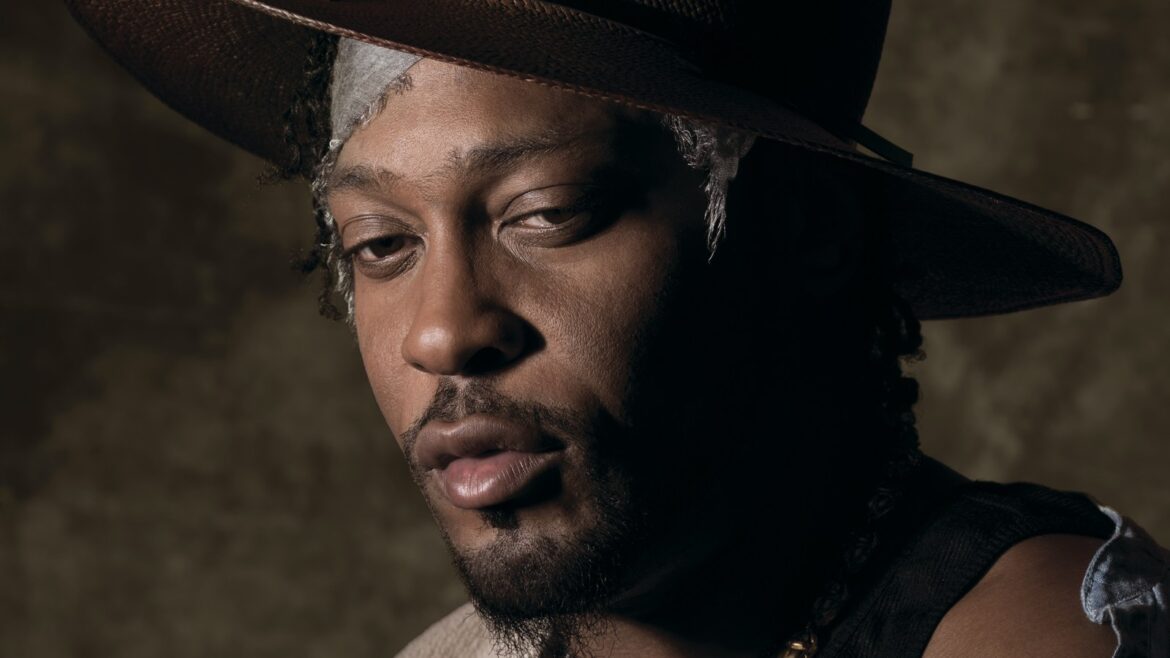
The Second Coming of D'Angelo
Music

The Second Coming of D’Angelo

by jummy84 October 14, 2025
written by jummy84


D
’Angelo is a morning person, of sorts. When he’s working in the studio, as was often the case in the 14-year interregnum between 2000’s Voodoo and 2014’s Black Messiah, he quits his all-night recording sessions just in time to greet each day’s sunrise. “I’m definitely on the night shift,” he says, drawing deep on one of a series of Newport cigarettes, not long after midnight in the midtown Manhattan studio where he recorded much of Black Messiah. He’s wearing a denim shirt unbuttoned over a white undershirt, dark jeans and leather boots. Dog tags bearing the names of his three children hang from a chain around his neck. He looks weary, though he woke up not long ago. It’s his first interview since he released one of the most universally acclaimed albums in years, an album that seemed as if it might never come out at all.

D’Angelo could well be the most singular, visionary star to emerge from R&B since Prince. His music, stuffed with live instrumentation and harmonic sophistication, is suffused with the sound and spirit of Sly Stone, Miles Davis, Jimi Hendrix and Marvin Gaye, among many others. But if Prince has been prolific to a fault, D’Angelo has had the opposite problem: It took him five years to follow up his first album, 1995’s Brown Sugar, thanks in part to writer’s block and label problems. But Voodoo was a stone classic, with the Roots’ Questlove and session bassist Pino Palladino helping him create a swampy, hip-hop-informed mélange of black music’s past and its possible future. His nude beefcake video for the slinky “Untitled (How Does It Feel)” was an MTV and BET smash, making him a sex symbol. (Friends said it haunted him as he slipped out of shape in the years to come.) And then, aside from a few guest appearances, silence.

D’Angelo’s heavy-lidded eyes are warm, with flashes of wariness. He’s quick to laughter, and radiates disarming gratitude at the slightest compliment. He can be vague when the subject turns to why his album took so long, mostly blaming major-label turmoil, though a cocaine and alcohol problem that culminated in a 2005 car crash and rehab stays didn’t help. He’s also a perfectionist, and Black Messiah, with its dizzying layers of vocals, guitar (much of it played by D’Angelo himself, who mastered the instrument during his break), strings and keyboards, is the rare album that seems to have benefited from endless tweaking — it manages to be simultaneously lush and abrasive, bracingly modern and soothingly retro.

Editor’s picks

D’Angelo, who turned 41 in February, is clearer on what pushed him to finally release the LP: He had lyrics that dealt powerfully with police violence and black despair, and the protests in Ferguson made him realize it was time. “I was like, ‘Man, I gotta fucking contribute. I gotta participate,’ ” he says. “And I’m done trying to be a perfectionist about it.”

D’Angelo performs on the ‘2000 MTV Movie Awards’ at the Sony Pictures Studio in Culver City, Ca.

Frank Micelotta/ImageDirect/Getty Images

But in the rush, he released only a portion of the album he envisioned. So even as a June tour looms, he’s back in the studio now to try to finish what he’s hoping will be an expeditious follow-up, working with leftover tracks from the same sessions. His gear is in his preferred room, the way he likes it: his custom-made electric guitar, a vintage drum machine, a bass, a gleaming black piano; and in the far corner, a fabric tent where he likes to huddle when recording vocals (“my little tepee,” he calls it). On the floor are boxes from his vinyl LP collection, heavy on gospel vocal groups.

D’Angelo grew up in Richmond, Virginia — his father, a preacher, was mostly out of his life by the time he was nine. But the church loomed large in his upbringing — a child prodigy, he was backing the choir on piano each Sunday at age five. His initial musical fascinations were gospel and the Saturday Night Fever soundtrack, until he heard Prince: “It was love at first bite.”

Related

The interview continues a couple of days later in a private room booked by his high-powered manager, Kevin Liles, in an exclusive cigar club, the Grand Havana Room. D’Angelo shows up cheerfully at midnight for a 9 p.m. appointment, looking freshly showered and caffeinated. This time, he wears a Kangol cap at a jaunty angle and a shirt that says ‘AFRO PUNK.’ We talk until the club shuts down, then drive aimlessly in an Uber looking for a new location. He makes small talk, big-upping an HBO documentary on Fran Lebowitz and expressing the desire to buy a Pono, before finally coming up with a destination: the studio, once again.

People were wondering if you were ever going to release a new album. Was that a question in your own mind, though?
No one knew what the fuck! [Laughs] But for me, it wasn’t a question, not at all. I had a little anxiety of how it would be received, but I knew it was coming.

The song “Back to the Future (Part 1)” feels like a reintroduction to the world.
When I wrote it, I envisioned it being the first thing people would hear, because it kind of tells the story of where I’ve been: “So, if you’re wondering about the shape I’m in/I hope it ain’t my abdomen that you’re referring to.” It was kind of like me answering some questions, without really being asked. Not just for everybody, but also for myself.

The trippy strings on that song have a “Sgt. Pepper’s” vibe.
Wow, thank you! The Beatles are a major influence for everybody, but when I was writing that song, I was very heavy into them — I was fucking around and doing covers of my favorite Beatles songs, experimenting with shit like that. I also really was digging America Eats Its Young at the time, which was one of the only Funkadelic albums that utilized strings.

The “Charade” lyrics — “All we wanted was a chance to talk/’Stead we only got outlined in chalk” — got a lot of attention for their timeliness.
It just shows how ongoing this shit is, because I wrote that even before the Trayvon Martin thing happened. It’s crazy that we’re still in the streets protesting the same shit. That song was just about the state of society in general — when I say, “A chance to talk,” that means a chance to come to the table and exercise rights that are supposed to be ours already. Me and [co-writer] Kendra [Foster] were reading a lot of [James] Baldwin around that time.

How did you end up with such a richly layered album?
The best way to describe the process is very much like a sculpture. You’re just constantly chipping and chipping away at it. I’ll work on something for a minute, and, once I feel like I’m starting to fixate on it, I put it away and go to another one. I jump around a lot. I play pretty much everything on all of the songs, and after I’m done with the blueprint, then I’ll bring in my guys. Or there are times when it’s just me and Ahmir [Questlove], and he’ll come up with the drum pattern, and I’ll sit around and write the music. Then when Pino comes in on the bass, he can mirror my left hand on the keys in such a way where it’s hard to tell the difference even amongst ourselves.

Can we attribute the delay of the album, ultimately, to your substance issues, or was it much more complicated than that?
The shit that happened in my personal life didn’t help, but it wasn’t just about that. There were moving parts — management changes, record-company changes. Virgin Records went defunct, and before that, they went through personnel changes. Back in the day, the executives actually gave a fuck about music — that’s the biggest change. The music business is a crazy game, especially for somebody like me who is really a purist about the art. Trying to balance the pressures of commercialism, it’s a tightrope. It’s a fine line between sticking to your guns and insanity.

What was the label hoping for?
The label wanted a Voodoo part two. At one point, after Voodoo, I was early in the process of working on new music that would eventually be on Black Messiah, and I let the label know where I was at with it. The music was pretty ahead of the curve, and they weren’t ready for that. They had these young college kids coming in as A&R, trying to tell me, “You should get so-and-so to produce this track, or you should get so-and-so to spit 16 on this.” I remember walking out of a meeting like, “Fuck you, fuck this!” The biggest factor in all of it was money. They cut off funding, and I had to go on the road to generate money on my own to fund the recording.

What has the course of your friendship with Questlove been through all of this?
For the most part, it’s just love. There were peaks and valleys — we’re brothers, and brothers fight. When Dilla died, it hit all of us. [Editor’s note: Voodoo collaborator J Dilla died in 2006, of complications from lupus.] It scared the shit out of me, actually, enough that I really felt my own mortality. I think Ahmir was afraid for me at that point, and sometimes when you feel like that, I guess you don’t quite know how to express it, and there was silence. I just had to go through it and get to the other side of it. And thank God I did.

Ferguson aside, how did you know the album was done?
It was time. Everyone was in the streets, so we sat down with the team and did some soul-searching and decided to put it out. But if it were left entirely up to me, it wouldn’t have come out. I had to get out of my head. Because there were so many songs that I wanted people to hear.

Were you originally thinking of, like, a 36-song triple-LP thing?
It wasn’t that long! [Laughs] But it was longer than what Black Messiah ended up being. What I’m working on now is like a companion piece. I hope people receive it that way. It’s part of the same vision.

The political songs got the most initial attention, but there’s a lot of other things going on there.
Well, a lot of the songs that people didn’t hear really take on those themes even more directly than the songs that are on Black Messiah.

So you could have hit people with something that was kind of like . . .
Almost like a beating over the fucking head [laughs].

There’s rarely a lead vocal by itself on this album — you surround your voice with harmonies. What is that about for you?
I grew up teaching parts to choirs, and I love a whole group of voices singing as one. When I was young, I had an “aha” moment in church. There was a thing called testimony service, and somebody would sing a song, and everyone else would join in, finding a note where they fit. During one of those, a light went on in my head. In that moment, I heard everything — Parliament, the Staple Singers, Curtis Mayfield, Prince — in there. That sound came out of the slave ships, straight from Africa, like in 12 Years a Slave when they’re singing “Roll Jordan Roll.” That’s why that shit resonates. I can just think about that and get chills. So when I got my first four-track recorder and started multitracking my own voice, that was the first thing I aspired to reproduce.

You had people from your church telling you not to play “the devil’s music” — that goes back to the days of Sam Cooke.
I never believed it. They were trying to make me afraid of something I just wasn’t afraid of. And my grandmother, who was like a saint, never said that to me. Just the contrary. She would say, “Go out there and do your thing.”

Someone like Marvin Gaye saw spirituality and sexuality in conflict, but Prince seems to see them as one thing.
That’s the correct way to look at it to me. Marvin might’ve been more conflicted because he was brought up that way. I see making love as a form of worship.

How did you start doing R&B in a hip-hop context?
To me, it’s not melding the two worlds so much as it is exposing where they meet in the middle. To me, Teddy Riley did it with New Jack Swing, which was the bread-and-butter of my high school band Precise. And when I started making hip-hop beats and digging in the crates, I heard things that made me know that shit was there — the Meters and Band of Gypsys sounded like brand-new hip-hop to me. So I started putting the dots together. And my quest was always to take it a step further.

There’s a perception that you were deeply bothered at being shown as a sex object in the “Untitled (How Does It Feel)” video.
I’m at peace with it, and I feel there’s been too much made out of it. Any issues I may have had were me thinking that it wasn’t about the song — that it was all about me appearing in the nude. But now I think people gravitated to how sexy and beautiful the song was. It wouldn’t have raised the eyebrows it did if the song wasn’t good. The video was just a great accompaniment.

What’s your general feeling about race relations? How much optimism do you have?
I’m an idealist. So in that respect I’m very optimistic. At the same time, awareness is the biggest thing we’re missing. When I say “we,” I mean us as black folk.

When I was coming up, popular tastes bent toward consciousness — the Rakims of the world, and the Public Enemys, and the Boogie Down Productions. Discovering Malcolm X was trendy. So if there’s things in the world you want to change, you first have to make those changes within yourself. I hate to sound like a Hallmark card, or like “Man in the Mirror,” but that really is the truth [laughs].

But what should be done in the face of entrenched racism and institutional corruption? What can artists do?
The first and best thing is to speak about it and sing about it. Aretha Franklin was as important to the civil-rights movement as Malcolm X and Medgar Evers. Artists can choose to take on the tremendous amount of responsibility we have, or choose to ignore it. I can’t knock a motherfucker for not singing what I feel like I should sing. But I know it’s time for me to say it.

At the same time, your live show isn’t all that political.
I never want to feel like I’m preaching. I do feel music is a ministry, but I’m not trying to make myself Bob Marley or nothing like that [laughs]. Motherfuckers get themselves in trouble that way — when you put yourself on that pedestal, people don’t expect you to be human.

What do you make of current hip-hop?
No comment [laughs]. I like Kendrick Lamar. I like that album.

Trending Stories

There’s a striking commonality between “Black Messiah” and “To Pimp a Butterfly.”
Mm, that’s dope. He’s jacked into the roots, he respects the lineage. The timing of both was kind of uncanny — it was almost a sign: Motherfuckers are making some shit that’s relevant to the times.

What do you want the next few years of your career to look like?
I want to do what Yahweh is leading me to do. Do I know fully what that is? No, I don’t. I’m trying to keep myself open, my heart open, to receive and to know what that is. But I do want to put a lot of music out there. I feel like, in a lot of respects, that I’m just getting started.
October 14, 2025 0 comments
0 FacebookTwitterPinterestEmail
Crazy Trailer for 'The Elixir' Indonesian Zombie Film Coming to Netflix
Hollywood

Crazy Trailer for ‘The Elixir’ Indonesian Zombie Film Coming to Netflix

by jummy84 October 14, 2025
written by jummy84

Crazy Trailer for ‘The Elixir’ Indonesian Zombie Film Coming to Netflix

by Alex Billington
October 13, 2025
Source: YouTube

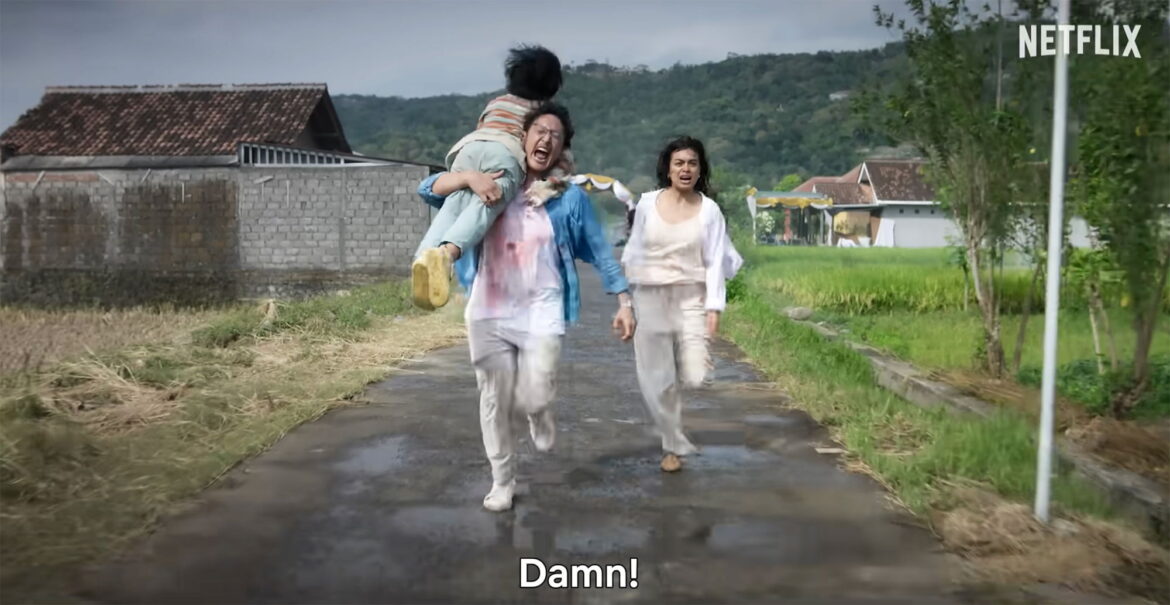
“There are so many people eating people out there.” Netflix has revealed an official trailer for The Elixir, and Indonesian zombie horror thriller arriving to watch later this month streaming worldwide. This crazy fun zombie dark comedy is about a family which tries medicine that turns their dad into a hungry undead monster. A dysfunctional family running a renowned herbal medicine business creates even more trouble. The owner of the company attempts to innovate by creating a new potion, which ends up triggering a zombie outbreak. Made by Indonesian filmmaker Kimo Stamboel, The Elixir immerses audiences in a world of raw terror & unrelenting suspense. It weaves in Indonesian cultural elements, from the herbal medicine jamu to zombies with local characteristics, all set against the backdrop of familiar family dynamics. The film stars Mikha Tambayong, Eva Celia, Donny Damara, Dimas Anggara, Marthino Lio, Kiki Narendra, Ardit Erwandha, Claresta Taufan, and Varen Arianda Calief. This certainly looks crazy & gnarly! It’s extra gross and intense and filled with zombies galore as they overrun police and everyone else. Check it out.

Here’s the official trailer (+ poster) for Kimo Stamboel’s horror film The Elixir, direct from YouTube:

The Elixir Horror Film Trailer

The Elixir Horror Film Poster

Set in a remote village near Yogyakarta, the movie opens with a patriarch’s ambition to maintain power, leading to family disputes & catastrophe. Kenes (Mikha Tambayong) and her family visit her father, Sadimin (Donny Damara), the owner of a renowned herbal medicine business, to discuss the future of the family business. Tensions escalate when Kenes confronts her best friend, Karina (Eva Celia), about her intention to marry Sadimin. But the quarreling abruptly turns into fear when Sadimin, having just drunk his new potion of eternal youth, suddenly loses consciousness & transforms into a terrifying creature—a zombie. Panic erupts as the undead pounce on humans, while the uninfected try desperately to escape. All disputes, egos and emotions must be set aside for one goal: helping each other and fighting for survival. The Elixir is directed by Indonesian filmmaker Kimo Stamboel (half of “The Mo Brothers”), director of Macabre, Killers, Headshot, DreadOut, The Queen of Black Magic, Ivanna, Jailangkung: Sandekala, Sewu Dino, last year’s Dancing Village: The Curse Begins, and the “Blood Curse” series. The screenplay is written by Agasyah Karim, Khalid Kashogi, Kimo Stamboel. Produced by Edwin Nazir. Netflix will debut Stamboel’s The Elixir streaming on Netflix worldwide starting October 23rd, 2025 this fall. Anyone want to watch?

Share

Find more posts in: Foreign Films, Horror, To Watch, Trailer

October 14, 2025 0 comments
0 FacebookTwitterPinterestEmail
Is the Show Coming Back After Season 2? – Hollywood Life
Hollywood

Is the Show Coming Back After Season 2? – Hollywood Life

by jummy84 October 11, 2025
written by jummy84

Image Credit: HBO Max

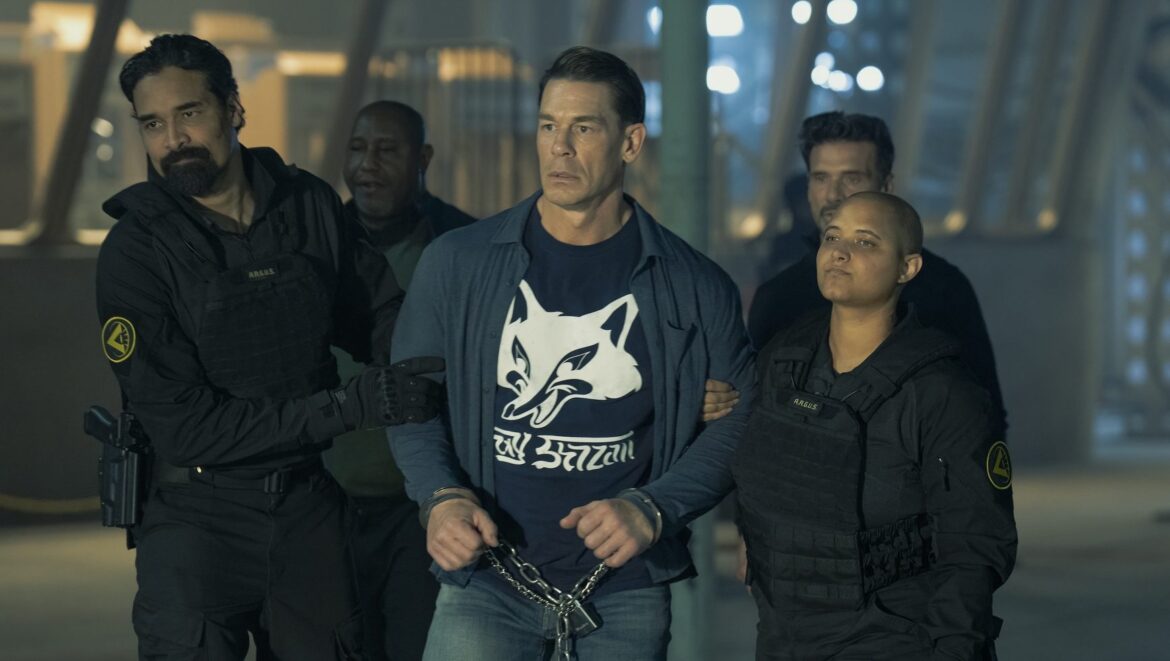
DC Universe fans might have to catch their breath after watching the season 2 finale of Peacemaker. Now that James Gunn‘s series has wrapped its second season, viewers are dying to know if they can look forward to a season 3 of the John Cena-led show.

Below, Hollywood Life has the latest updates so far about a possible season 3 of Peacemaker (Warning: spoilers from the season 2 finale of Peacemaker are ahead) 

How to Watch Peacemaker: Where to Stream All Episodes

All season 1 and 2 episodes of Peacemaker are available to stream on HBO Max.

What Happens in the Peacemaker Season 2 Finale?

Cena’s character, Chris Smith, a.k.a Peacemaker, is kidnapped by the A.R.G.U.S. (Advanced Research Group Uniting Super-Humans) and taken to a new world known as Salvation: a prison planet that A.R.G.U.S. made to detain metahumans and villains. Salvation captures Smith to use him as its first participant, and the season 2 finale ends with him completely alone on Salvation.

'Peacemaker' Season 3 Update: Is the Show Coming Back After Season 2?
Courtesy of HBO Max

Will There Be a Season 3 of Peacemaker?

At the time of publication, there has been no announcement regarding a season 3 for Peacemaker. Season 1 of the series premiered in January 2022, and season 2 came out in August 2025. Therefore, should a third season be confirmed, it might take at least another year for its release.

What Has James Gunn Said About Peacemaker Season 3?

Gunn has repeated he’d “never say never” about a potential third season, but the filmmaker played it coy when asked by both Variety and Deadline about the show’s future.

“This is about the other stories in which this [season 2 cliffhanger] will play out,” Gunn told Variety. “Never say never. But right now, this is about the future of the DCU.”

During his separate interview with Deadline, Gunn doubled down on the sentiment, noting, “This is about the wider DCU and other stories in which this will play out right now. That doesn’t mean that there won’t be [a third season]. I don’t want to never say never, but right now, no, this is about the future of the DCU. It’s an important character.”

October 11, 2025 0 comments
0 FacebookTwitterPinterestEmail
A New Sharon & Ozzy Osbourne Documentary Is Coming to Peacock
TV & Streaming

A New Sharon & Ozzy Osbourne Documentary Is Coming to Peacock

by jummy84 October 10, 2025
written by jummy84

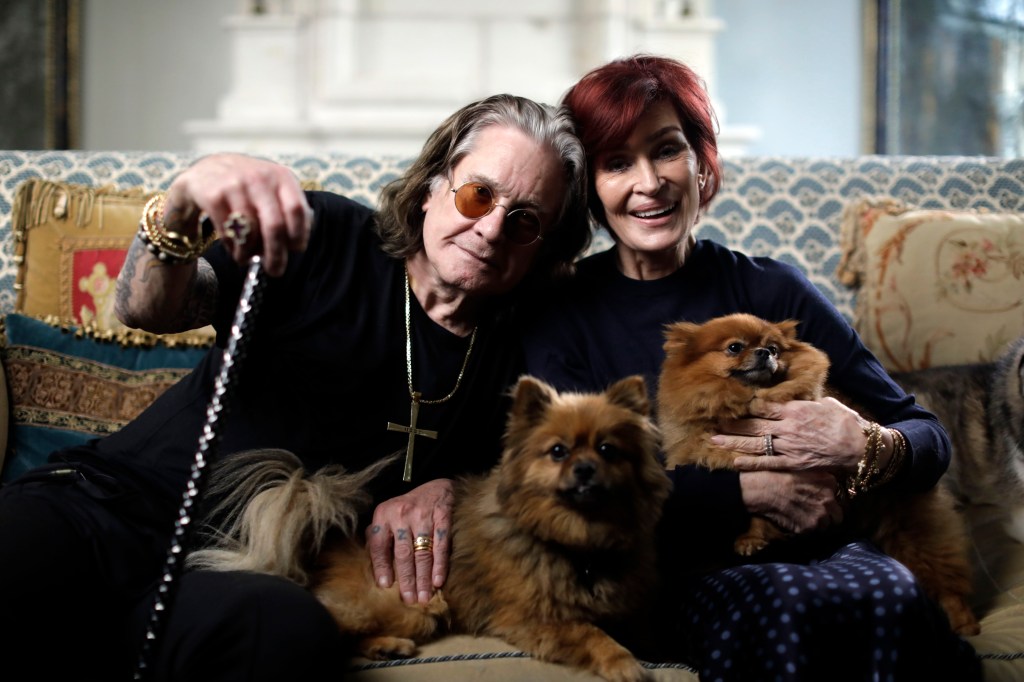
EXCLUSIVE: Peacock will show Sharon & Ozzy Osbourne: Coming Home having landed the U.S. rights to the poignant film. The NBCUniversal-owned streamer will launch the documentary on its service next week (Oct. 13).

This doc follows Ozzy and his wife Sharon as they plan their return to the UK from the U.S. and then finally make the move. Their kids, Jack and Kelly, also feature as the couple up sticks and head home.

It was produced by UK label Expectation in association with JOKS Productions. The film also chronicles the preparation for Ozzy’s huge Back To The Beginning farewell gig, as he struggles to overcome health issues in order to be able to perform. The concert featured Ozzy and the original Black Sabbath lineup as well as the likes of Metallica and Guns N’ Roses.

Osbourne died in July, aged 76. He achieved global fame having co-founded Black Sabbath, before going on to have a successful solo career. The star, once dubbed the Prince of Darkness, toured for years, living the rock ‘n’ roll lifestyle to the full. He was also a family man and cameras famously captured him at home with Sharon and the kids in the breakout MTV series The Osbournes.

The new film was commissioned by the BBC in the UK. It was originally destined to be a full-fledged series but ended up a single film as events played out. It went out in early October in the UK. The first title was Home To Roost, but the BBC and international title is now Sharon & Ozzy Osbourne: Coming Home.

Paramount+ also has an Ozzy Osbourne doc, Ozzy: No Escape From Now. The Expectation film, meanwhile, has footage and interviews with Ozzy, Sharon and family gathered over several years, and capturing the couple in reflective mood as they talk about their lives, family and relationships as they make the trans-Atlantic house move.

The film is sold internationally by Banijay Rights, which cut the U.S. deal. It’s a splashy distribution agreement days ahead of MIPCOM, the biggest TV sales market of the year, which kicks off next week in Cannes. Sharon & Ozzy Osbourne: Coming Home will be on the Banijay slate in Cannes, and it will be looking to close more deals on the film.

“To secure the US home for the final, inspirational chapter of Ozzy Osbourne’s life is an absolute privilege for us at Banijay Rights,” said Matt Creasey, the company’s EVP, Sales, Coproductions & Acquisitions. “We are pleased our partners at Peacock have committed to what is a deeply moving look at one of the world’s most well-known families.”

October 10, 2025 0 comments
0 FacebookTwitterPinterestEmail
Kaley Cuoco Thriller ‘Vanished’ Coming to MGM+
TV & Streaming

Kaley Cuoco Thriller ‘Vanished’ Coming to MGM+

by jummy84 October 8, 2025
written by jummy84

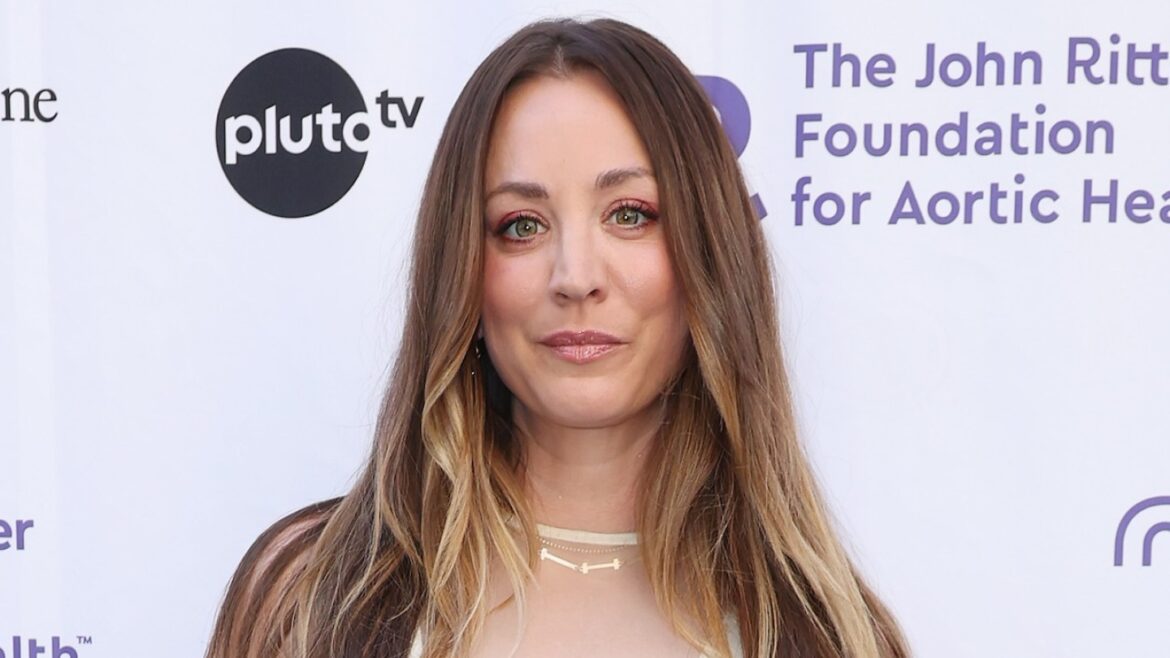
Kaley Cuoco’s next TV series has found a U.S. home.

Cable and streaming outlet MGM+ has picked up rights to Vanished, a four-episode thriller starring Cuoco (The Flight Attendant, The Big Bang Theory) and Sam Claflin (Peaky Blinders). MGM+ has also landed rights to the show, produced by AGC Television, in Spain, Italy, Belgium, Netherlands and Latin America; it will stream on Prime Video in other parts of the world (both are owned by Amazon).

The series is set to premiere in February 2026 on MGM+.

“We are thrilled to make MGM+ the home for Vanished in the U.S.,” said MGM+ head Michael Wright said in a statement. “This exciting and surprising mystery thriller features an exceptional cast, led by Kaley Cuoco and Sam Claflin, and unfolds against the stunning, cinematic backdrop of France. Vanished is a perfect fit with the MGM+ brand that showcases classic Hollywood storytelling for a modern audience.”

AGC Television launched sales of the project at Series Mania earlier this year. Vanished, created by David Hilton and Preston Thompson and written by Thompson, follows a couple’s trip to France that takes a dark turn. “With the sudden disappearance of her boyfriend Tom (Claflin) aboard a train to the south of France, Alice (Cuoco) is plunged into a web of intrigue and danger, uncovering shocking secrets about the man she thought she knew,” the logline reads. Karin Viard, Matthias Schweighöfer, Simon Abkarian and Dar Zuzovsky also star.

Cuoco’s most recent live-action series was Peacock’s Based on a True Story; she also stars in and executive produces HBO Max’s animated show Harley Quinn.

The executive producers of Vanished are James Clayton of Slow Burn Entertainment, David Kosse of Rockwood Pictures, director Barnaby Thompson (via Fragile Films), Preston Thompson, Cuoco and AGC’s Stuart Ford, Lourdes Diaz and Miguel A. Palos Jr.  

October 8, 2025 0 comments
0 FacebookTwitterPinterestEmail
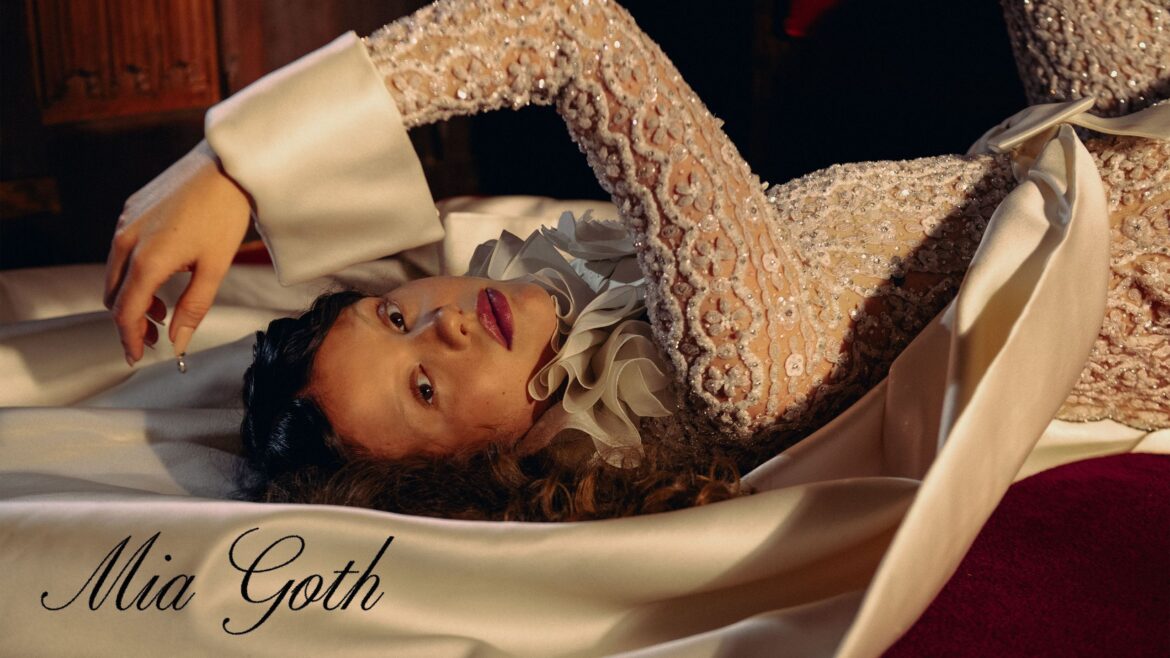
Hero image for the October cover story with Mia Goth. She is laying on the ground looking to the camera wearing a white crystal embellished bodysuit with ruffled collar detailing.
Fashion

Mia Goth on Frankenstein, Motherhood, and Her Monster Year Coming Up

by jummy84 October 8, 2025
written by jummy84

I meet Mia Goth in late August in Pasadena in a small park in the middle of the California Institute of Technology’s campus. She selects a bench in the shade, fronted by a series of small ponds and encircled by buildings housing the genius minds of tomorrow. It is rather on the nose, I tell her, given the day’s subject matter. She is the female lead in Guillermo del Toro’s Frankenstein, the celebrated director’s 149-minute, $120 million three-decades-in-the-making passion project about a cursed inventor, and here we are, poised between the natural world and the ever-widening reaches of scientific exploration. Goth looks over her shoulder at the Kellogg Radiation Laboratory. “That did cross my mind,” she says impishly. “Scientists…” Really, she says she chose this little park, with its boulders and terraced pools full of friskily scrumming turtles, because it doesn’t feel like L.A. (more on that later) and because she comes here regularly with her 3-year-old daughter, Isabel. It’s one of their favorite outings. “That’s one of the beautiful things about having a child. … Things that you used to take for granted or you just weren’t present for or just completely glazed over as an adult, she really slows down,” she tells me. “This, if I was on my own, I might just look at it and appreciate it. Move on. Turtles. But with her, it becomes a whole morning.” Goth is wearing no makeup (and not in the usual starlet no-makeup makeup way—really, none), and she is beaming. Parenthood, she tells me earnestly, “is the greatest gift of my life.”

(Image credit: Erica Snyder. Wardrobe: Marc Jacobs dress and bow.)

This, it must be said, differs wildly from Victor Frankenstein’s experience—as written by Mary Shelley in her iconic 1818 novel and as depicted in del Toro’s 2025 film, in theaters and on Netflix this fall. The director has taken some liberties with the text: his Dr. Frankenstein (Oscar Isaac) has a cruel, demanding father, and transforms the sorrow of losing his mother, played for a few scenes by an unrecognizable Goth (truly, I triple-checked it with both Netflix and personal reps), at a young age into the determination to create life out of pieces of recovered corpses. He makes himself a parent too— just a really, really bad one. His repulsion by and abandonment of his creation (Jacob Elordi) results in a lot of unnecessary death and destruction. It’s mayhem that could have been mastered by patience, understanding, and love—basically, good mothering (there’s a lot of Freudian emphasis on Victor’s preference for milk) but also a sense of humanity. There is a reason this story has remained relevant for over two centuries and has found its moral lesson applied to everything from the French Revolution to the creation of and increasing reliance on AI: Just because we can do something, Shelley’s work insists, doesn’t mean we should.

Mia Goth photo shoot for Who What Wear's October Cover Story. She is sitting on the floor, leaning on a velvet couch wearing a white crystal-embellished jumpsuit with satin bow detailing and ruffled collar.

(Image credit: Erica Snyder. Wardrobe: Richard Quinn look; Manolo Blahnik shoes.)

Mia Goth photo shoot for Who What Wear's October Cover Story.

(Image credit: Future)

Goth’s real role in del Toro’s film is playing Elizabeth Lavenza. In Shelley’s novel, she is Victor’s pure-hearted cousin and later wife, a benign victim who pushes the plot along. Here, the character is a refined young woman with a mind of her own who Victor finds himself inexplicably drawn to. (Could it be her uncanny similarity to his mother? There’s Freud again.) She is engaged to Victor’s guileless and kind younger brother and has a deep-pocketed uncle (Christoph Waltz) who is willingly and increasingly entangled in Victor’s experiments. Goth’s Elizabeth possesses a genuine appreciation for science, specifically entomology, and a love of both the natural and metaphysical worlds. She has spent her most recent years in a convent. The part is basically the human embodiment of pure female virtue turned all the way up to Virgin Mary levels—all quiet kindness, grace, and maternal instinct wrapped in the halo of a cerulean-feathered fascinator that highlights Goth’s eyes.

Goth spent time with some nuns in Alhambra, California, to prepare for the role, she tells me, and read the stacks of books that del Toro had given her (subjects: entomology; the book of Job; a biography of the 17th century Hieronymite nun, poet, and playwright Sor Juana Ines de la Cruz; a study of the fashions of the time). She also made a playlist, which she does for all of her film projects, mostly made up of scores by the Icelandic composer Jóhann Jóhannsson, though she later decided she needed to break up all the “composer energy” with songs by Jeff Buckley, Beirut, Eve, Big Sean, and Mariah Carey. She found the most success when she’d meditate and try to channel a higher spirit. “I started to realize that actually when I get quiet and I’m able to sit with myself and get silent and really connect to the most authentic part of me, that’s where she exists,” Goth says.

Mia Goth photo shoot for Who What Wear's October Cover Story. She is sitting on the ground next to a velvet coach wearing a white crystal-embellished jumpsuit with stain bow detailing and ruffled collar.

(Image credit: Erica Snyder. Wardrobe: Richard Quinn look; Manolo Blahnik shoes.)

Though she describes the shoot as magical (“I would have done anything Guillermo asked me to,” Goth says with a “pinch me” air. “I never got over the fact that I was a part of Guillermo del Toro’s Frankenstein. I still haven’t gotten over it”), the set was not a nonstop party. “I was taken by how focused and how quiet and how detail oriented the set was,” she says. “I mean, everyone knew what time it was and what this represented and what it could be if we made it work. I guess, in that sense, there were parts of the job that were quite lonely.” She often feels that the energy of the character and the story end up translating to the dynamic and the vibe of the set. She says, “I think just the nature of my character being a woman, the only woman, in a Victorian world is intrinsically lonely.”

Mia Goth photo shoot for Who What Wear's October Cover Story. Mia Goth is sitting on a bed with ornate headboard. She is wearing a blue velvet long sleeve dress with white tights and a white lace headscarf.

(Image credit: Erica Snyder. Wardrobe: Colleen Allen coat; Erik Charlotte bonnet; Falk tights; Alice Waese earring (worn as nail art); Tiffany & Co. ring; Stella McCartney shoes.)

Goth believes all storytelling is, in some part, biographical, and she thinks there was a part of Shelley in all of these characters. At the time of writing Frankenstein, the 18-year-old Shelley had run away with the married poet Percy Bysshe Shelley, just lost their out-of-wedlock child two years prior, and was pregnant with another. It was a period that The New Yorker, reviewing Muriel Spark’s 1951 biography of Shelley, summarized as “eight years of near-constant pregnancy and loss.” Shelley was no stranger to the latter: Her mother, the writer, philosopher, and women’s rights advocate Mary Wollstonecraft, had died soon after childbirth, and her father, the political philosopher William Godwin, rejected her at 16 for her trespasses with Shelley. The impetus for Frankenstein came from a bored Lord Byron (who, it has been suggested, served as a fair amount of the inspiration for the impulsive and morality-challenged Victor and who himself impregnated Shelley’s stepsister with a child he would effectively abandon a few years later). During a stormy weekend visit, he suggested a ghost story competition. Shelley’s story became Frankenstein: a parable of man’s genius perverted to folly, as expressed through the eyes of a hideous, powerful, innocent. (Ultimately, as is so often the case, the problem was other people; as Wollstonecraft had written in 1794, “people are rendered ferocious by misery.”) “I thought a lot about [Mary Shelley] and who she was,” Goth says. “At the core part of it, she was a very lonely woman. She created a friend in the creature,” who, like all infants, didn’t ask to be born and fumbles through the world looking for love and kindness and finds mostly cruelty and fear. “That’s something that I was drawn to in the character,” Goth continues, “this feeling of always feeling kind of an outsider myself.”

Mia Goth photo shoot for Who What Wear's October Cover Story. Top: Mia is seen lying on a bed. She is wearing a velvet long sleeve dress with white lace headscarf. Her arms are crossed by her chest. Bottom: A pull quote from the story that reads, "I always thought to myself, 'You can't have a plan B. You can't live your life like that because if you have a plan B, you're not going to work as hard on plan A. So you have plan A, or you're fucked."

(Image credit: Erica Snyder. Wardrobe: Colleen Allen coat; Erik Charlotte bonnet; Alice Waese earring (worn as nail art); Tiffany & Co. ring.)

***