celebpeek
  • Home
  • Bollywood
  • Hollywood
  • Lifestyle
  • Fashion
celebpeek
  • Music
  • Celebrity News
  • Events
  • TV & Streaming
Home » TV & Streaming » Page 185
Category:

TV & Streaming

How 'Slap Shot' Cut to the Soul of the American Character
TV & Streaming

How ‘Slap Shot’ Cut to the Soul of the American Character

by jummy84 August 20, 2025
written by jummy84

“The 1970s for those of you who missed them were a fabulous time to be young and brave…[Life] and what to make of it was up for grabs. And there was a tremendous feeling that all was new and beautiful if you had the nerve to make it so… The opposition to [the Vietnam War] had given an entire generation the will to break the rules. Our President, Nixon, had quit one step ahead of a prison term. One can always hope that might happen today.”— “Slap Shot” screenwriter Nancy Dowd, 2006.

Reggie Dunlop (Paul Newman) never received the memo that everything folds eventually. Or maybe he just refused to read it. The player-coach for perennial losers the Charlestown Chiefs, the minor-league hockey team in fictional factory town Charlestown, Pennsylvania, he can’t accept that he’s getting older and won’t be able to lace up his skates for much longer. Just like he can’t accept that his beloved team stinks so badly their few remaining fans show up to games only to jeer them, or that the Chiefs are on the chopping block once the local steel mill shutters and 10,000 workers go on waivers. 

SLY LIVES! (AKA THE BURDEN OF BLACK GENIUS), from left: director Ahmir Questlove' Thompson, producer Joseph Patel, on set, 2025. ph: Kelsey McNeal / © Hulu / Courtesy Everett Collection
Xala

“I was thinking about you the other day, tryin’ to imagine you when you’re through with hockey, and I couldn’t,” his estranged wife Francine (Jennifer Warren) gently tells him after the millionth failed attempt to reconcile with her. “There was nobody there,” she says with haunting finality, because Reggie and minor-league hockey are functionally synonymous. When she asks what he’s going to do when the Chiefs eventually go under, Reggie cheekily responds, “I’m gonna come back to you!” because he also can’t accept that their marriage is over.

Reggie’s resolve to fight against the rising tide inspires him to embark upon a harebrained scheme that involves con artistry and theatrical promotion. To fulfill the bloodlust of the Charlestown crowd, who enjoy watching players fight during games (possibly to vent their economic frustration), he unleashes the Hanson Brothers on the ice. The three childlike siblings, who all wear thick black-rimmed Coke-bottled glasses and often speak in cartoonish unison, were previously a cost-saving embarrassment for the Chiefs, but their penchant for brawling and immature antics quickly garner the team popularity as ruthless heels. As ticket sales skyrocket, Reggie manipulates the local media into talking up a fabricated story about a potential sale to Florida to motivate the players even more and hopefully generate real interest in the team.

Newman plays Reggie with a permanently mischievous glint in his eye and a schemer’s grin. By the late 1970s, the renowned American actor had become a member of the old guard, and yet he retained the boyish charm that propelled him to fame playing anti-authoritarian rebels and grifters in films like “The Hustler,” “Cool Hand Luke,” and “Butch Cassidy and the Sundance Kid.” Newman’s ingrained impish defiance combined with his salt-and-pepper good looks lends Reggie the perfect avatar for the reckless, anarchic tenacity that defines George Roy Hill’s cult comedy, a movie about self-destruction in the name of existential survival.

As long as there’s an NHL and recreational hockey endures as sport, “Slap Shot” will have its place as a locker room classic. The film not only understands the sport in its bones, but its combination of gleefully vicious violence and slobs-over-snobs goofiness can still energize any testosterone-filled group. At the same time, the proud vulgarity that courses through the movie feels like slight misdirection, a way to keep people in their seats while giving them another slightly more sophisticated narrative about privilege and power, deindustrialization and imbalanced labor relations, and a determination to be free even if you still have to serve somebody. 

“Slap Shot” is funny and profane, one of the all-time great bad-taste comedies of any era, but its canny, sensitive screenwriter Nancy Dowd had more on her mind than one might expect from a film that features Paul Newman taunting a rival player about how his wife “sucks pussy.” She infused the screenplay with rhetorical realism — the verbal texture of life lived amongst snarky grinders — and palpable nonconformist yearning, both of which stem from her own experience with family rebellion. Dowd acutely understood the experience of bucking expectations and giving the middle finger to anyone who tells you to fall in line. 

***

‘Slap Shot’

Dowd wasn’t supposed to be writing the screenplay for a movie like “Slap Shot.” The daughter of a wealthy machine-tool plant operator from a General Motors factory town, she was supposed to become a respectable member of society, fulfilling the destiny of “an ever upward American trajectory” established by her family’s noble immigrant pedigree. Instead, per her own words, “the rocket veered off course.” According to her father, Nancy was looking “like a railroad worker in jeans and a blue work shirt” instead of a candidate for marriage. Meanwhile, her college-educated brother Ned had turned away from the family business to start playing for a losing minor-league hockey team in a two-bit town.

Ned’s experiences with the Johnstown Jets, based in the eponymous Pennsylvania mill town, shaped the core of “Slap Shot.” Minor-league hockey in the ‘70s was a notoriously brutal sport: The potential for violence at games was often a primary selling point, and players often leaned into the expectation for clashes on the ice. (Reg’s wrestling-like ploy to boost profits by feeding off the public’s bloodthirst isn’t too far off from reality.) Nancy admitted to being fascinated by the fighting stories her brother would relay to him over the phone, and in the eventual script she incorporated many anecdotes of outrageous skirmishes, many of which involved Jack, Steve, and Jeff Carlson, the real-life inspiration for the Hanson Brothers.

But it was when Ned drunkenly called up his sister in the wee hours of the morning to inform her that the Jets were either folding or being sold that Nancy set out to write the film in earnest. In particular, it was Ned’s ignorance regarding the Jets’ owners that galled his sister. “It was incredible to me that my brother did not know who owned his team,” she once remembered. “If you didn’t know who owned you, what did you know?” Nancy channeled that mystery into “Slap Shot” as Reggie struggles to determine who actually holds the purse strings in order to properly appeal to their pecuniary interests.

Nancy had plenty of reasons to want to control her destiny. A second-wave feminist who grew up around enough bored suburban housewives to last a lifetime, she was determined not to be stuck at home raising children and cooking for a husband. Instead, she attended Smith College and studied abroad at the Sarbonne where she spent much of her time at the Cinémathèque Française. She later enrolled in the UCLA film program for a more formal education and worked as a student assistant under King Vidor. She befriended prominent figures like Jane Fonda, who asked her to collaborate on the anti-war documentary “F.T.A.” and eventually commissioned her to write the screenplay for Hal Ashby’s “Coming Home.” “I refused to be a 1950s zombie,” she insisted.

Nancy beautifully filters her own privileged background into “Slap Shot” through top-scorer Ned Braden (Michael Ontkean, who actually played Division I hockey) and his wife Lily (Lindsay Crouse). Both college graduates who could land well-paying jobs through their families just like the Dowds, they insead followed their bliss right up until it made them depressed. A stubborn idealist, Ned despises Reggie’s carnival-barking tactics and prefers to lose clean than win dirty. He takes out his frustrations with the Chiefs on Lily by treating her with unconscionable coldness when he’s not philandering around town. Meanwhile, Lily descends into acerbic alcoholism; she hates minor-league culture, the one-note wives she’s expected to pal around with, but mostly she hates herself for putting up with it all.

“It’s ridiculous for us to be here,” Lily sneers to Ned at one point. “We stick out like a couple of sore thumbs.” She might be right, but Dowd’s script emphasizes the ridiculousness of their entire environment. Victor Kemper’s grimy photography accentuates the depressed environment of a steel town corroded by economic stagnation, yet it exists in productive tension with George Roy Hill’s wide comic framing, which captures the absurdity of literally trying to fist fight despair. As the Hanson Brothers become borderline-criminalistic folk heroes and Reggie does everything to goose up excitement including calling for a bounty on a rival player’s head to boost on the radio, the Chiefs devolve into a crew of “actors and punks” rather than genuine athletes. All the while the public and the media eat it up seemingly because there’s nothing else to root for.

It’s only when Reggie finally meets owner Anita McCambridge (Kathryn Walker), the supercilious woman who holds the purse strings, that he realizes his soul-selling approach was for naught. Though she could probably sell the team for a decent amount, she would make more profit if she folded the team as a tax write-off. “We’re human beings, you know?” Reggie mutters pathetically, but what Dowd’s script acutely understands that anyone with authority over them — from their penny-pinching manager to the fans whose loyalty heavily depends on either the Chiefs record or their entertainment value — sees them as nothing more than cattle. Just like the mill turned its back on their workers, Anita cares about her bottom line infinitely more than whether the Chiefs’ players go hungry. It’s always been every sucker for himself.

***

‘Slap Shot’

American institutions have always been less sturdy than we were led to believe, and they’re eager to abandon individuals the second they stop being useful. Societal neglect will inevitably breed a coarseness in manner and language, exhibited by the uncouth nature of the Chiefs’ players as well as the public watching them. “Slap Shot” garnered quite a bit of notoriety upon release for its profanity, particularly because it was written by a woman. Vincent Canby of “The New York Times” described Dowd as “a young woman who appears to know more about the content and rhythm of locker room talk than most men,” while Frank Rich of “The New York Post” remarked that she “has an ear for American vernacular that even Ring Lardner might have appreciated; she realizes that cussing can be an exhilarating folk art.”

Dowd spent a month with her brother’s team as research and worked from tape recordings sent by Ned and his teammates to craft the dialogue in her slice-of-life screenplay. (In fact, Ned alongside many of his fellow players appear in the film in roles big and small.) “I used the exact language that the players did,” she said in an interview upon the film’s release and scoffed at the rumor that her name was a pseudonym for a man. “The world has a weird view of women,” she argues. “People seem to believe that we have to write about divorce or suicide or children…But we’ve been around. Women aren’t sequestered anymore.”

She similarly bristled at the accusations of sexism leveraged against the film, given her feminist bona fides. The boys in “Slap Shot” might look like they have all the fun, but it’s at the obvious expense of their brains and bodies. Meanwhile, the most perceptive characters are the women: despite her self-destructive behavior, Lily is hardly naïve about her choices in life or men. Francine knows enough about Reggie’s loopy charm that it’s bad news in the long run and leaves him for good even if he still holds out hope she’ll come back to him. Even Anita, the closest figure the film has to a villain, is merely playing the capitalist game just as well as her hypothetical male counterpart.

Unlike the profanity in “Slap Shot,” which now keeps pace with a world that becomes cruder by the minute, its homophobic language stands out as the film’s real obscenity to contemporary ears. It goes without saying that certain slurs and accusations were unfortunately part and parcel with the hyper-masculine milieu of the era. Sometimes it’s funny, like when Reggie, after being accused of sucking cock, says with a smile, “It’s all I can get!” Other times, it can leave an unproductively sour taste, like when Reggie antagonizes Anita on his way out the door by insinuating her young son “looks like a fag” who will “have somebody’s cock in his mouth” unless she gets married again. 

At the same time, however, the fragile masculinity neatly dovetails with the numerous ironies and contradictions that course through the film. The recurring motif on the soundtrack for a film populated by hotheaded, hyper-masculine athletes is Maxine Nightingale’s disco hit “Right Back Where We Started From.” Despite hailing from money, Ned and Lily are angrier and more depressed than any of the near poverty-stricken players with whom they hang around. One minute, Reggie will espouse progressive views when he’s in bed with a rival player’s ex-wife who has recently started sleeping with women by claiming that “women’s bodies are beautiful”; in the next, he will gleefully rattle that player during by taunting him about his wife’s sexuality.

But it all comes to a head in the film’s climactic scene, which throws the social hypocrisy inherent in the environment into sharp relief. After pledging to play a clean game for their last hurrah, the Chiefs get physically pummeled by the opposing team, who deliberately packed their lineup with vicious goons, during the first period; after learning that NHL scouts are in the audience, the team immediately reverts back to their violent ways. But upon seeing Lily in the stands, made over by Francine and cheering on the Chiefs, Ned decides to subvert the aggression by performing an elaborate striptease on the ice in a public display to woo his wife back.

“I don’t want any youngsters to get the idea that this is the way to play hockey!” exclaims the announcer, who was previously salivating at the chaotic bloodshed that occurred minutes prior. The rival player coach decries Ned’s perversion and demands the referee put a stop to his behavior. Ned views the team’s evolution from old-fashioned fundamentals to sideshow exploits as an existential threat rather than an enterprising venture because he’s innately someone who “don’t run with the traffic,” per Reggie. In the last game however, he joins the circus on his own terms and weaponizes the opposition’s gay panic to the point of them forfeiting the game. Dowd’s script stresses an obvious, potent takeaway: Violence might be socially acceptable, but public erotic displays, especially ones aimed at women, are obscene.

Dowd never again worked on a film without serious complications. Her original script for “Coming Home” was radically reshaped by multiple writers and personalities and publicly decried the revised version as “terrible” before the film even came out. (However, she still retained a “Story by” credit on the film and subsequently shared an Oscar for Best Screenplay.) Dowd walked off the set of “Ladies and Gentlemen, The Fabulous Stains,” a proto-riot grrl teen musical drama, after clashing with director Lou Adler on the ending and being groped by a camera operator; she ultimately took her name off the film and used the pseudonym “Rob Morton.” She used that same alias once again after Warner Bros. drastically recut the film “Swing Shift”  against the wishes of her and director Jonathan Demme. Dowd’s resumé is subsequently littered with pseudonymous credits and uncredited contributions on acclaimed films like “Straight Time,” “North Dallas Forty,” and “Ordinary People.”

Dowd’s commitment to uncompromising work within a business so indifferent to the value creative integrity likely pushed her out of Hollywood. But her righteous, empathetic voice still rings out in a film about people desperate to live on their own terms within a society so committed to capital they’re willing to squeeze out every ounce of beautiful, ugly humanity from the world. Her desire to be free, her abject refusal to “to stumble around in the darkness and waste my precious life,” into Reggie Dunlop, a man so determined never to work a bullshit nine-to-five job that he would put his body at risk to continue skating with his fellow tainted angels. Nancy Dowd, like Like M. Emmet Walsh’s sports writer Dickie Dunn, merely “tried to capture the spirit of the thing” with “Slap Shot.” Only the “thing” in question was the American character.

IndieWire’s ‘70s Week is presented by Bleecker Street’s “RELAY.” Riz Ahmed plays a world class “fixer” who specializes in brokering lucrative payoffs between corrupt corporations and the individuals who threaten their ruin. IndieWire calls “RELAY” “sharp, fun, and smartly entertaining from its first scene to its final twist, ‘RELAY’ is a modern paranoid thriller that harkens back to the genre’s ’70s heyday.” From director David Mackenzie (“Hell or High Water”) and also starring Lily James, in theaters August 22.

August 20, 2025 0 comments
0 FacebookTwitterPinterestEmail
Hayley Atwell, Rupert Everett Join 'Rivals' Season 2 at Disney+
TV & Streaming

Hayley Atwell, Rupert Everett Join ‘Rivals’ Season 2 at Disney+

by jummy84 August 20, 2025
written by jummy84

Disney+ has unveiled new casting additions for the second season of “Rivals,” with Hayley Atwell and Rupert Everett joining the ensemble as guest stars in the drama based on Jilly Cooper’s bestselling novel.

Atwell, known for “Mission Impossible” and “Agent Carter,” will portray Helen Gordon, the ex-wife of Rupert Campbell-Black and mother to his children Marcus and Tabitha. Everett, whose credits include “Napoleon” and “My Policeman,” takes on the role of Malise Gordon, Helen’s husband and Campbell-Black’s former show-jumping coach and mentor.

The Happy Prince production, part of ITV Studios, is currently shooting in the U.K.. Season 2 will expand to 12 episodes, building on the success of the first season which became one of Disney+’s most popular British original dramas.

Additional new cast members announced include Maxim Ays (“Boarders,” “Sanditon”), Holly Cattle (“Young Sherlock,” “Mr Loverman”), Oliver Dench (“Hotel Portofino,” “Domina”), Amanda Lawrence (“Malory Towers,” “Star Wars: The Last Jedi”), Bobby Lockwood (“Wolfblood,” “Here We Go”), Eliot Salt (“Slow Horses,” “Normal People”), and Jonny Weldon (“One Day,” “Brassic”).

The series brings back its original ensemble cast alongside an extensive list of returning supporting players, including Wendy Albiston, Jamie Bisping, Denise Black, and David Calder, among others.

Set in the glamorous world of 1980s British television against the backdrop of the Cotswolds countryside, the second season will feature heightened power struggles and deeper rivalries as careers, marriages and reputations hang in the balance.

“Rivals is a landmark series for Disney+, quickly becoming one of our most beloved British U.K. original dramas,” said Lee Mason, executive director of Scripted Originals, EMEA Disney+. “I’m delighted to welcome Hayley and Rupert to our extraordinary family of actors. They are a perfect match for the world of Rutshire, so lovingly created by Dame Jilly and the team at Happy Prince.”

Dominic Treadwell-Collins, chief creative officer of Happy Prince, and Alexander Lamb, creative director, added: “We are utterly thrilled to have Hayley and Rupert join us to play Jilly Cooper’s legendary characters Helen and Malise Gordon. Alongside our other new wonderful actors and truly brilliant returning cast, ‘Rivals’ series two absolutely showcases the best of British and Irish talent.”

The series is executive produced by Treadwell-Collins, Lamb, Felicity Blunt, Elliot Hegarty, Laura Wade, Cooper and Jonny Richards for Disney+ EMEA scripted content. Eliza Mellor serves as series producer.

“Rivals” will return to Hulu in the U.S. and Disney+ in the U.K. and internationally. The first season is currently available to stream on Disney+.

August 20, 2025 0 comments
0 FacebookTwitterPinterestEmail
Netflix Were "TV Tourists," Says Channel 4's Louisa Compton
TV & Streaming

Netflix Were “TV Tourists,” Says Channel 4’s Louisa Compton

by jummy84 August 20, 2025
written by jummy84

Channel 4 news boss Louisa Compton has accused Netflix of behaving like “TV tourists” over the streamer’s breakout hit Adolescence.

During the opening debate at the Edinburgh TV Festival, Compton described Channel 4 as “proud parents” of Adolescence because of the way in which the network blooded Adolescence co-creators Jack Thorne and Stephen Graham over many years and multiple shows. Thorne has made a number of Channel 4 shows down the years, including This is England ’86 and Help, both of which Graham appeared in.

“We’ve developed and nurtured the talent that has allowed Netflix to come in as TV tourists and effectively commission [Adolescence],” said Compton, who runs news, current affairs and sport for Channel 4. “Without us that wouldn’t have happened.”

“We nurture where the streamers don’t,” added Compton. “Where are the investigations on the streamers into Gaza or Trump? There’s no current affairs on the streamers. Everything is retrospective. [Current affairs] is a unique thing PSBs offer.”

Adolescence is Netflix’s second most-watched English-language show of all time. Execs from the broadcasters have previously said that the show would have been too expensive for them to make without co-pro money.

Line of Duty EP Simon Heath, who runs World Productions, said there is a risk that “you stop making shows like Adolescence” if UK producers become too tempted to only make internationally-facing shows, which need their budgets topped up from outside the UK.

“What happens is you change the nature of the show you are trying to make with more than half an eye on the international market,” added Heath. “The risk is that the chase for international funding fundamentally alters the kinds of stories we can tell.”

World Productions recently made splashy BBC-Netflix Lockerbie drama The Bombing of Pan Am 103 but Heath said this kind of co-pro is a “rarity.” “More and more streamers want to pursue their own shows, they don’t want to be in a co-pro situation,” he added.

World Productions launched three decades ago with a remit to “make low cost drama that gave us creative control,” according to Heath, and he said the ITV Studios-backed indie is now thinking about returning to those low-cost roots.

“But you’re in a world where audiences are seeking the production value of cinemas because of what the streamers are putting out there, and that’s a challenge,” he said.

Locking horns over in-house

Compton also locked horns with John McVay, the outgoing CEO of producer trade body Pact, about the controversial new Channel 4 in-house productions unit.

McVay called the unit “wrong” and a “waste of time and executive attention,” as he posited: “I’m not sure it will make the difference that Channel 4 needs.”

But Compton reminded McVay Channel 4 “did not ask for it” – the unit was in fact gifted to them by the government – and she said “everything we do is for the indie sector, and a robust and healthy Channel 4 is good for the indie sector.”

The group were speaking during the opening debate at the Edinburgh TV Festival before the likes of Shonda Rhimes, Tina Fey and Graham Norton.

August 20, 2025 0 comments
0 FacebookTwitterPinterestEmail
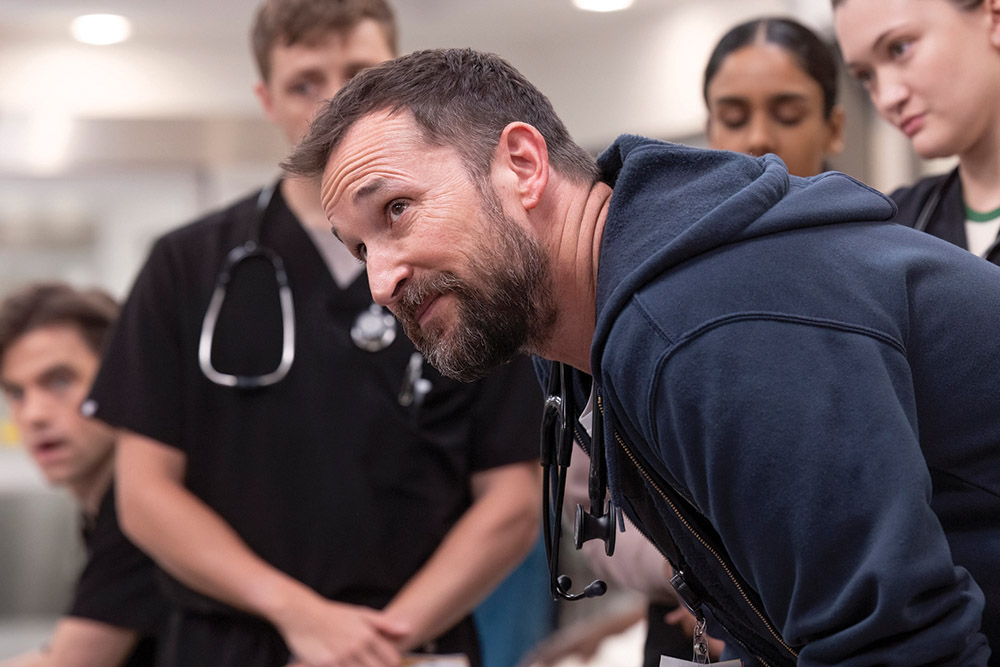
Noah Wyle as Dr. Robby Robinavitch on the HBO series.
TV & Streaming

R. Scott Gemmill on HBO Max’s Hit Medical Drama ‘The Pitt’

by jummy84 August 20, 2025
written by jummy84

The Pitt, which is nominated for 13 Emmys, has eerie parallels to the real world. Not only did its episode on measles debut the week of an outbreak in the U.S., but the HBO Max drama also grappled with a hospital’s lack of resources amid a larger culture of health care haves and have-nots, not unlike President Trump’s recent “Big Beautiful Bill” proposal that likely will lead to millions of people losing their Medicaid benefits.

Dr. Robby to the rescue? The Pitt’s creator and showrunner R. Scott Gemmill says only Noah Wyle could embrace the titular role in this timeless series. 

The show had an interesting trajectory in the way it got started. I know you said you never wanted to do a medical drama again after ER.

Yes correct. I didn’t want to do one. We had done what was I thought was considered the best version, and we had done so many stories. So it was like, what would you do differently? And I would always want to go back to the ER, because it’s the most dynamic place in medicine for me. I had a way to do it as a reboot for ER, and then when that didn’t work, we just walked away. We were back to square one. And then when HBO Max said they still wanted to do a medical show, then it was sort of a clean slate, other than it was going to be me, John Wells and Noah Wyle and my friend Joe. I wanted Joe Sachs to work on the show with me, but it was like, what does a new show look like in this era and for streaming? It was great because we got to reinvent what we’d done before, and build on what we knew worked, and try things that we were totally untested by us.

How did you settle on the idea of The Pitt? I know Noah was getting an influx of messages from health care workers during COVID about how hard it was in the sector.

That was happening to Noah, but I was unaware. After COVID, I was going to develop [an idea] with another writer friend. We’d worked on shows together, including ER, and were developing and weren’t having a lot of luck. Everybody was struggling. He said, “Why wouldn’t John [Wells, executive producer on ER and The Pitt] reboot ER?” And I gave him this list of why we would never do it again. And then I said, “If there was ever a way, it would have to be very different, but same.” And I came up with a way that involved Noah. I only was going to do it if it was Noah. I knew I would have access to the original footage of ER so I could do scenes with Noah as Dr. John Carter and flash back to him as John Carter as a med student. And never in the history of television has anyone had access to footage of an actor playing the same role 30 years earlier. It never got off the ground, unfortunately. So then HBO said, “We want a medical show. What can we do?” Noah was already involved. John was already involved. And that’s where we started.

And ultimately, you decided to do a series shot in real time.

With Noah playing a doctor and also playing, because we were post COVID, a doctor that I knew from the get go was probably going to be suffering from PTSD… that, between the Robbie character and the 12 hour shift, that was sort of the how it really all started.

The show has been lauded for its realistic portrayal of hospital care and the many details that make it authentic. For example, there’s no music.

That was a big idea to sell. I did at least two episodes of ER without any music, and I knew if it was written in a specific way, you can get by without the music. That was a bit of a challenge. Not everyone was as enthusiastic about the idea, and we even tried putting music in a couple of scenes, and it just doesn’t work. … If you’ve ever been in an ER, it’s noisy, it’s horrible. And the only way to really capture that was to not have any music, so you’re not telling anyone what to feel. 

What type of research goes into writing a show like this?

Research is a huge part of our show. For the mass casualty episode, we went through all the interviews that happened in Las Vegas at the mass shooting there, talked to experts who are responsible for prepping for the mass casualty situations. We even came up with some new things: The slap bands was something that we came up with for identifying patients in triage, to the point where we had people asking where they could get those. 

Which scene was the most challenging for you to write?

I think Robbie’s breakdown was a little difficult. I worked with Noah a lot with that, because it’s very easy for me to write, “Robbie breaks down.” I’m very, very sympathetic about acting, and I really encourage even my writers to spend some time acting so that they understand the dynamics of the scene. Every character has some sort of intention for a scene, and once you learn that, I think it makes you a better writer. So that’s really a collaborative process.

It is eerie that some storylines are playing out the way they are in real life. 

That happens more often than you realize. Our purpose is to predict a little bit. The mass casualty, that happens constantly; the measles outbreak was inevitable. The problems that Medicare and the Medicaid cuts are going to cause are inevitable, because once people can’t afford insurance, where do they go for medical care? They go to the free clinics, or they go to the ER, and they get busier and busier. We’re tapping into the experts all the time to get a leg up on, “What are the concerns?” Especially with medicine, you don’t want to be playing catch-up. Once it’s out in the open, it’s already a problem. And that’s what makes the ER so fundamentally great for storytelling is that everything shows up in the ER, and it usually shows up there before it shows up everywhere else. It’s like the canary in the coal mine. The ER has its pulse on what’s going on with society. 

What can we expect for S2?

Noah’s gonna write two epidodes, and I think he’s gonna direct at least one. He’s directing episode six. He wrote episode three. And I forget what other episode he’s gonna write. I guess he’s bored. We’ll see some new faces, which is nice. We’ll see some new med students and some new doctor faces, we’ll see some of the people from before, some returns. and hopefully we’ll see some revelations about some of our other characters.

This story first appeared in an August stand-alone issue of The Hollywood Reporter magazine. To receive the magazine, click here to subscribe.

August 20, 2025 0 comments
0 FacebookTwitterPinterestEmail
Alien: Earth release schedule – When is episode 4 out?
TV & Streaming

Alien: Earth release schedule – When is episode 4 out?

by jummy84 August 20, 2025
written by jummy84

Warning: Minor spoilers ahead for Alien: Earth episodes 1 and 2.

Alien: Earth has emerged as one of the buzziest shows of the year to date, wowing viewers with its high production value, atmospheric sequences and weighty sci-fi concepts.

So far, the first episode of the series has attracted more than 9 million views across Disney Plus and Hulu (according to Variety), with that number expected to grow as the hype continues to build.

The series stars Sugar’s Sydney Chandler in the lead role of Wendy – a human child’s consciousness in a synthetic adult body – who finds herself on a collision course with the franchise’s iconic monsters.

Fargo writer Noah Hawley has opted to largely ignore major canon changes from Prometheus, in favour of having free rein to imagine his own dystopian vision of the future.

If you can’t get enough of the ambitious new drama, here’s everything you need to know about when new episodes of Alien: Earth are out on Disney Plus.

When is Alien: Earth episode 4 released on Disney+?

Alien: Earth episode 4 will be released on Tuesday 26th August in the US and Wednesday 27th August in the UK.

The episode is titled Observation and is co-written by series creator Noah Hawley and former WandaVision scribe Bobak Esfarjani. Meanwhile, Icelandic director Ugla Hauksdóttir (The Power, Snowfall) helms the next instalment.

Alien: Earth release schedule – When are new episodes out?

New episodes of Alien: Earth are released every Wednesday in the UK.

You can find the full UK release schedule for Alien Earth below.

  • Alien: Earth episode 1 – Neverland – Wednesday 13th August 2025
  • Alien: Earth episode 2 – Mr October – Wednesday 13th August 2025
  • Alien: Earth episode 3 – Metamorphosis – Wednesday 20th August 2025
  • Alien: Earth episode 4 – Observation – Wednesday 27th August 2025
  • Alien: Earth episode 5 – In Space, No One… – Wednesday 3rd September 2025
  • Alien: Earth episode 6 – The Fly – Wednesday 10th September 2025
  • Alien: Earth episode 7 – Emergence – Wednesday 17th September 2025
  • Alien: Earth episode 8 – The Real Monsters – Wednesday 24th September 2025

Timothy Olyphant as Kirsh in Alien: Earth. Patrick Brown/FX

In the US, the rollout is just one day ahead – that release schedule is as follows:

  • Alien: Earth episode 1 – Neverland – 12th August 2025
  • Alien: Earth episode 2 – Mr October – 12th August 2025
  • Alien: Earth episode 3 – Metamorphosis – 19th August 2025
  • Alien: Earth episode 4 – Observation – 26th August 2025
  • Alien: Earth episode 5 – In Space, No One… – 2nd September 2025
  • Alien: Earth episode 6 – The Fly – 9th September 2025
  • Alien: Earth episode 7 – Emergence – 16th September 2025
  • Alien: Earth episode 8 – The Real Monsters – 23rd September 2025

New episodes of Alien: Earth will be available to stream on Disney+ every Wednesday. You can sign up to Disney+ for £4.99 a month or £89.90 a year now.

Add Alien: Earth to your watchlist on the Radio Times: What to Watch app – download now for daily TV recommendations, features and more.

Check out more of our Sci-Fi coverage or visit our TV Guide and Streaming Guide to find out what’s on. For more TV recommendations and reviews, listen to The Radio Times Podcast.

August 20, 2025 0 comments
0 FacebookTwitterPinterestEmail
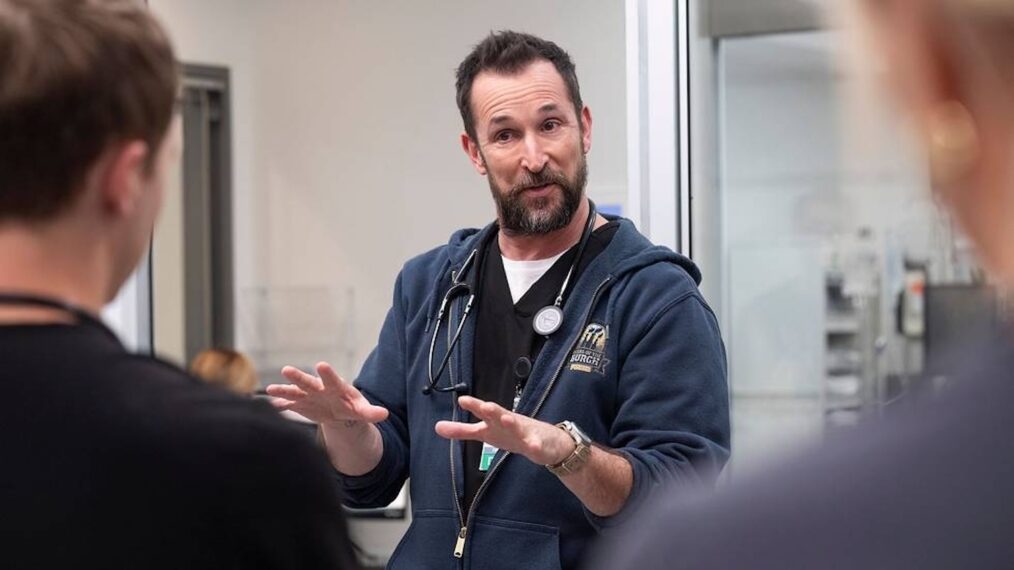
Noah Wyle as Robby —
TV & Streaming

Noah Wyle Is Directing Season 2 Episode

by jummy84 August 20, 2025
written by jummy84

When Noah Wyle stopped by TV Insider’s office during Season 1, he told us that he’d “very much like to” direct in Season 2. He’d previously directed episodes of Falling Skies, The Librarians, and Leverage: Redemption. In Season 1, he only added the titles of executive producer and writer to star. But that is changing for Season 2.

On Tuesday, August 19, Wyle shared a photo of the clapperboard from set, revealing he’s directing Season 2 Episode 6. “Never want to wake up from this dream,” read the caption.

Season 2 will pick up 10 months later, on Langdon’s (Patrick Ball) first day back at work following rehab. Wyle’s character Robby would have much rather not be working the same shift as the resident who betrayed him by stealing pills.

“Robby can be petty, and forgiveness is sometimes harder for some than others. And yeah, betrayal is a big deal,” Wyle told us in August. “Like anybody that has walls up, if they let their wall down for you and you are one of the few that get to share an intimacy, and then that turns into any kind of betrayal, the wall goes up twice as high as it was before, and that’s what we’re going to play with probably.”

Wyle previously admitted to us in Season 1 that he did think about directing in Season 1, “but this wasn’t an exercise in vanity. This wasn’t supposed to be, how many titles can I wear?” he explained in March. “This was, can we get this show on the air? And after seeing how we do it and how we make it, I think it would be advantageous to be sort of a player-coach working on the floor in both capacities. I don’t think it would be disruptive. I think it actually would be efficient.”

As for what he was looking forward to directing on The Pitt, at the time, he shared, “It’s about getting lots of different people to buy into one thing, and that’s something I’m getting better at and something I really enjoy doing. And I care so much about these characters in this arena, and it’s a world that I know really, really well, that there aren’t many areas where I can speak with this kind of confidence. So this is one I’d love to try.”

The Pitt, Season 2, January 2026, HBO Max

August 20, 2025 0 comments
0 FacebookTwitterPinterestEmail
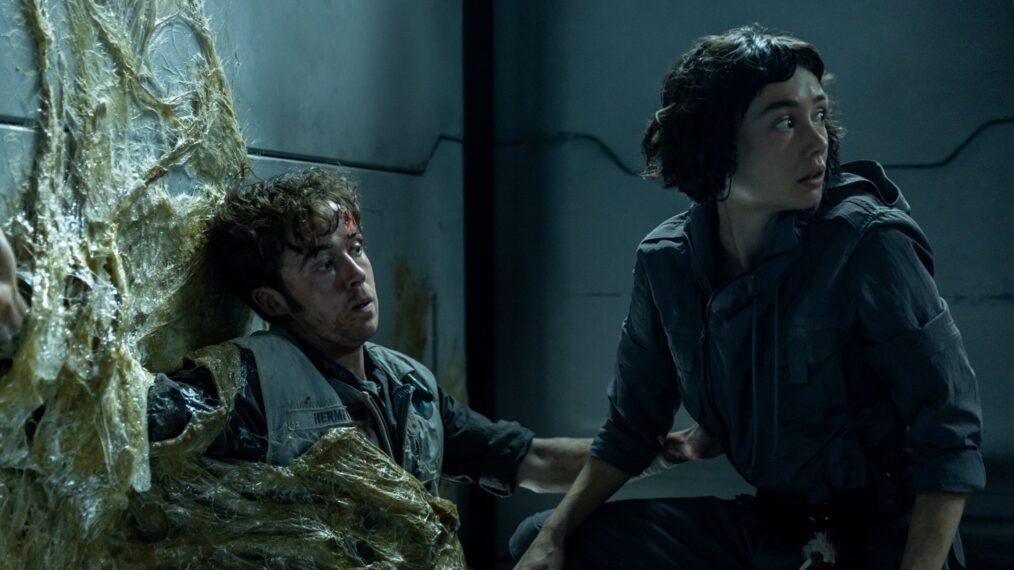
Alex Lawther and Sydney Chandler in
TV & Streaming

Premiere Date, Cast, Plot, and More Details

by jummy84 August 20, 2025
written by jummy84

FX‘s Alien: Earth continues to unfold on Hulu as the show explores the classic film franchise from a new TV perspective, but one big question lingers as we follow hybrid Wendy (Sydney Chandler) along for the Earth-based adventure. Will there be a Season 2?

While we will have to see the full season to tell whether the show from Fargo creator Noah Hawley sets up a storyline for Season 2, we’re holding out hope. Below, we’re breaking down everything we know about the potential for Alien: Earth‘s Season 2 return, but stay tuned for additional details as Season 1 continues to play out.

Has Alien: Earth been renewed for Season 2?

No, currently, Alien: Earth hasn’t been renewed for a second season, but the stats are promising. FX released that the show pulled in 9.2 million views globally in its first six days of streaming. Views are defined as the total stream time divided by runtime. And that’s just the start. There’s no telling how many people will be tuning in for later episodes as the show reaches the latter half of its eight-episode run.

What has been said about Alien: Earth‘s possible Season 2 return?

Patrick Brown / FX

In an interview with Variety, Hawley expressed interest in expanding the show to run several seasons, should it be successful. “Season 1 is the proof of concept,” he told the outlet. “And if it works commercially, then Season 2 is about building a model upon which we can envision making a Season 3, 4, 5.” In other words, there’s extreme hope for the show’s future beyond Season 1, if it gets the green light.

Who would star in an Alien: Earth Season 2?

While there’s no indication who would star in Alien: Earth Season 2, the series currently features Sydney Chandler, Timothy Olyphant, Alex Lawther, Samuel Blenkin, Babou Ceesay, Adrian Edmondson, David Rysdahl, Essie Davis, Lily Newmark, Erana James, Adarsh Gourav, Jonathan Ajayi, Kit Young, Diêm Camille, Moe Bar-El, and Sandra Yi Sencindiver. Stay tuned for any news, should the series be renewed for Season 2, for updates on casting.

What is Alien: Earth about?

Alien: Earth is set in the year 2120, on an Earth governed by five corporations. When the mysterious deep-space research vessel USSCS Maginot, owned by the corporation Weyland-Yutani, crashes in Prodigy Corporation territory, hybrid Wendy sets out with a ragtag team of tactical soldiers to make a fateful discovery that puts them face-to-face with the planet’s greatest threat. Along with the classic Xenomorph, the Maginot was harboring various other alien species that pose threats known and unknown.

Who makes Alien: Earth?

Alien: Earth is created for television by Hawley, who executive produces the series with Ridley Scott, David W. Zucker, Joseph Iberti, Dana Gonzales, and Clayton Krueger. X Productions.

Alien: Earth, Tuesdays, 8/7c, FX and Hulu

August 20, 2025 0 comments
0 FacebookTwitterPinterestEmail
How Two African Films from the '70s Examine Postcolonial Discontent
TV & Streaming

How Two African Films from the ’70s Examine Postcolonial Discontent

by jummy84 August 20, 2025
written by jummy84

Toward the end of her recently republished autobiography, “My Country, Africa,” the political organizer Andrée Blouin reflects on the failures of the independence movements that galvanized so many Africans, including herself, to fight their colonial oppressors. A crucial subject of John Grimonprez’s critically-acclaimed documentary “Soundtrack to a Coup d’Etat,” Blouin, served as the chief protocol of Patrice Lumumba’s nascent government in the Congo. Her role gave her access to both working class people, whose political force propelled the liberation strategies to success, as well as members of the new ruling class, who were statespeople tasked with filling newly formed power vacuums.

SLY LIVES! (AKA THE BURDEN OF BLACK GENIUS), from left: director Ahmir Questlove' Thompson, producer Joseph Patel, on set, 2025. ph: Kelsey McNeal / © Hulu / Courtesy Everett Collection
Slap Shot

“As I look back I think the hardest thing for us to bear during the long struggle for viable statehood has been the knowledge that it is not the outsiders who have damaged Africa most,” Blouin writes, “but the mutilated will of the people and the selfishness of some of our own leaders.” These politicians often prioritized their own economic comfort over that of their constituents, and contributed to a precarious post-independence landscape as a direct result. 

Many African filmmakers drew a similar set of conclusions in the 1970s, and spent the decade making works that addressed the realities of public officials who, in Blouin’s words, sold out “their black brothers and sisters” in service of neocolonialism. Films like Ousmane Sembène’s “Xala” (1975) and Souleymane Cissé’s “Baara” (1978) meditate on the disappointments littering post-independence African nations, and assess the weight of unrealized expectations on their people. They exist within the same family of work as Ayi Kwei Armah’s melancholic 1968 novel “The Beautyful Ones Are Not Yet Born,” in which the Ghanaian writer considers the rugged terrain of the Gold Coast country in the afterglow of independence.

In that text, an unnamed narrator struggles to make an honest living as a railway clerk. He watches his nation languish as former classmates, now public servants in Kwame Nkrumah’s government, shamelessly fill their coffers with bribes. Whereas Armah’s novel operates in the sorrowful register of existentialism, Sembène and Cissé’s films revel in the barbed parameters of comedy and trade as they visit comeuppance upon their corrupt leaders. Both directors rely on a kind of caustic humor to uncover the class struggle that has always complicated the colonial one. 

‘Xala’

“Xala,” which Sembène adapted from his 1973 novel of the same name, follows El Hadji Abdoukader Beye (Thierno Leye), a corrupt Senegalese businessman cursed with impotence after embezzling tons of rice in order to secure money to marry his third wife. The film treats El Hadji’s erectile dysfunction, and his bumbling quest to resolve it, as a metaphor for post-independence leaders with shallow commitments to liberatory politics. Instead of prioritizing their working class constituents, these politicians abandoned or sold them out. 

Sembène captures this betrayal in the film’s efficient opening sequence, during which a group of Senegalese leaders, including El Hadji, expel white French delegates from the country’s chamber of commerce. Dressed in traditional wear and moving with a studied solemnity, the men remove evidence of Europe from the office. Out go the white busts, hunting boots and the envoys tasked with managing affairs on behalf of the empire. “It is the sons of the people, who now lead the people, on behalf of the people,” says a never-identified narrator through voiceover. In theory, this transition inaugurates a chapter of enfranchisement, but in the next scene the Senegalese businessmen are in suits, and the white men return with briefcases full of money as bribes. The African leaders abandon Wolof for French; and the beginning of Senegal’s new economic future looks a lot like its old one.

El Hadji’s impotence becomes a source of great embarrassment for him, and he journeys around town trying to resolve it. He repeatedly insists that money is no object when it comes to reclaiming his manhood. Through El Hadji’s obsession with masculinity, Sembène also explores how the patriarchy shaped postcolonial nations by reinforcing neocolonialism. (It’s an observation that Blouin also makes in her autobiography, especially when it came to organizing in male-dominated spaces.) Some of the most affecting scenes in “Xala” involve confrontations between El Hadji and his daughter Rama (Myriam Niang). The young woman initially refuses to attend her father’s wedding to his third wife because she considers polygamy hypocritical. Offended by Rama’s audacity and, let’s be honest, rhetorical fearlessness, El Hadji slaps her and issues a chilling reminder: “It is people like your father who kicked out the colonizers and liberated this country,” he says to her. “Never forget I’m still in charge in this house.” The house, in this case, is both the physical space where this confrontation takes place as well as the broader nation-state. How ironic that those whose enlightened views of liberation do not extend to the home. 

‘Baara’

Men make similarly violent claims and patriarchal decisions in Souleyman Cissé’s evocative 1978 film “Baara.” The film opens with a Malian young porter by the name of Balla Diarra (Baba Niare) helping a woman whose husband has just kicked her out of the home. Like Rama’s mother (Seune Samb) in “Xala,” this woman is the man’s first wife and suffers the brunt of his disrespect. In the previous scene, her husband not only thows her belongings on the street, but also threatens to beat her with his sandal. This moment of intrafamily chauvinism unspools into a broader consideration of the patriarchy at work. 

“Baara” follows Balla Diaara as he starts working for a factory managed by Balla Traoré (Bubukar Keita) and owned by Sissoko (Balla Moussa Keita, who later starred in Cissé’s 1987 masterpiece “Yeleen”). The drama surrounding these three constitute the bulk of the film: Diarra struggles to make ends meet as a freelance porter and then factory worker; Traoré navigates the challenges of applying his newly acquired European intellectualism to his professional life and Sissoko juggles increasing debt. What’s notable about the latter two men is how their powerful positions and refined point of views do not extend to their marriages. Since returning from Europe, Traoré forbids his wife from working and Sissoko is abusive despite relying on his spouse Djeneba to bail him out of debt. At one point, Djeneba, sketched similarly to Rama, asks her husband to consider taking out his anger on a man. 

Both “Xala” and “Baara” dexterously weave their two principal threads — patriarchy and neocolonialism — taking care to show how they inevitably reinforce each other. Similar to Blouin, who was able to diagnose the issues plaguing liberation movements, it is the women in Sembène and Cissè’s respective works who speak the most clarifying truths and reveal that it’s useless to replace European colonialism — built on foundations of patriarchy — with an African system that idolizes similar standards. 

What’s particularly exciting about Sembène and Cissè’s films is how the director’s counter this tension with images showcasing the beauty and power of people within postcolonial cities like Dakar (“Xala”) and Bamako (“Baara”). In both films, the rich businessmen try to get rid of or hide the poor and working class people. “Xala” has a particularly jarring scene of a public official calling the police to essentially the unhoused people loitering near his office.

Still, there are moments of organizing and resilience. The cast out residents in “Xala” return to the city and organize among themselves, discussing in detail the hardships faced because of the newly installed government. While the factory workers in “Baara” plan unionization efforts despite protestations from the big boss. They discuss working fewer hours and getting paid more because it feels like they are always waiting for the first of the month. But these workers don’t only talk, they act too. Both “Xala” and “Baara” end on rousing notes — scenes in which the people, dissatisfied with their new leaders, inevitably fight back. 

IndieWire’s ‘70s Week is presented by Bleecker Street’s “RELAY.” Riz Ahmed plays a world class “fixer” who specializes in brokering lucrative payoffs between corrupt corporations and the individuals who threaten their ruin. IndieWire calls “RELAY” “sharp, fun, and smartly entertaining from its first scene to its final twist, ‘RELAY’ is a modern paranoid thriller that harkens back to the genre’s ’70s heyday.” From director David Mackenzie (“Hell or High Water”) and also starring Lily James, in theaters August 22.

August 20, 2025 0 comments
0 FacebookTwitterPinterestEmail
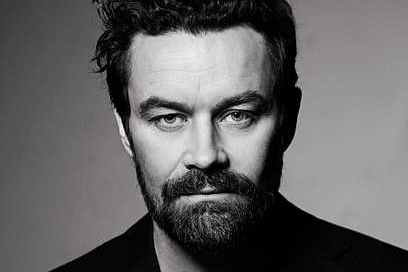
Björn Hlynur Haraldsson
TV & Streaming

Iceland’s Björn Hlynur Haraldsson to Direct ‘Klara’ From a Sjón Script

by jummy84 August 20, 2025
written by jummy84

Top Icelandic actor-writer-producer Björn Hlynur Haraldsson (seen in “The Witcher,” “The Borgias,” “Lamb”), also the co-showrunner of the Series Mania winning show “Blackport,” is teaming up with “Lamb” co-writer Sjón on the Icelandic romantic tragedy “Klara.”

Showcased this week at Haugesund’s Nordic Co-Production Market, the project is being produced by Iceland’s leading talent hub Vesturport, in co-production with the U.K.’s Boom Films, run by Noomi Rapace agent Stella Harnström.

Oscar-nominated for his lyrics of Lars von Trier’s “Dancer in the Dark,” and co-writer of the epic “The Northman” with Robert Eggers, Sjón also serves as producer, together with Vesturport’s Rakel Gardarsdóttir and Agústa M. Ólafsdóttir. 

Set in the early 1940s, the story turns on a female medium with a unique connection to the supernatural who approaches a grieving husband and police detective in Reykjavik, promising him news from the afterlife.

The seed for “Klara” came from an actual case in Iceland in the early 1940s involving a celebrated medium whose life intersected with crime, grief and wartime politics,” says Haraldsson who confesses having long harboured a fascination for “the blurred line between faith and deception, especially when people are grieving and looking for meaning.”

The multi-hyphenate talent says that after spending a decade in serialised drama “which is fantastic for character depth and long-form storytelling,” he felt “an urge to return to the concentrated power of cinema, where you can hold an audience in a single, sustained emotional and visual experience.“Klara” is the perfect bridge between those worlds: it has the layered complexity I love from television, but with the intimacy, atmosphere, and cinematic sweep of a feature film.”

Citing “the 1945 Gene-Tierney-led classic ‘Leave Her to Heaven’” as an inspiration for “the atmosphere, underlying ambiguity and lush Technicolor palette, Haraldsson says Iceland’s lavish landscape will also serve as a “vital reference – the sharp winter, the narrow wartime streets, a landscape that can shift effortlessly between beauty and menace.”

The busy actor, winner of a national Edda award for his supporting role in “Lamb,” is currently in early conversations with a few international actors for the leads, but he himself won’t play in it. “This movie requires for me to be fully behind the camera,” he says.

In Haugesund, both Haraldsson and Gardarsdóttir are on hand to find financing, co-production and distribution partners for the $5.8 million period drama. “I’m really excited about “Klara,” says the producer. “It’s such a compelling story. Everyone wonders what happens after we die, right? We’ve wrapped that universal question into a love story with thriller elements, which I think gives it a huge international appeal.”

Haraldsson, meanwhile, is preparing another commercially-oriented English-language project: “In a Lifetime,” which he’s written for Kristin Scott Thomas.

The talent collective Vesturport, which he co-founded, has several others projects spanning different formats and genres, including Season 2 of “Blackport” and “Frozen,” the musical to be staged in Copenhagen this year, according to Gardarsdóttir.

Haugesund’s New Nordic Films market runs through Aug. 22. 

August 20, 2025 0 comments
0 FacebookTwitterPinterestEmail
Olympic Champion Alice Bellandi Stars In Venice Film
TV & Streaming

Olympic Champion Alice Bellandi Stars In Venice Film

by jummy84 August 20, 2025
written by jummy84

EXCLUSIVE: Deadline can reveal the trailer for Giulio Bertelli’s directorial feature debut Agon, co-starring Italian judo athlete and Olympic Gold medallist Alice Bellandi, ahead of its premiere in the upcoming 40th edition of Venice parallel section Critics’ Week.

Set against the fictional Olympic Games of Ludoj 2024, the film follows three female athletes as they prepare and then compete in rifle shooting, fencing and judo.

The work explores the contradictions of these sports, which began as a practice for wartime in peacetime, evolved into professional sports and entertainment, and in recent times, embraced video games to create a new form of competitive sport

Italian judo champion Bellandi, who won a Gold Medal at the 2024 Paris Summer Olympics, plays herself. She is joined in the cast by actresses Yile Yara Vianello (The Beautiful Summer) and Sofija Zobina (La Chimera).

Bertelli is the son of fashion power couple Miuccia Prada and Patrizio Bertelli but is not involved in the family business.

He opted instead to study architecture before becoming a professional offshore sailor, and is now involved in the technical side of performance sailboat development among other activities, which also include visiting lecturer at the Architectural Association (AA) in London, focusing on the relationship between filmmaking, architectural design and scriptwriting.

The Critics’ Week premiere will be accompanied by a theatrical release for Agon in Italy by Mubi, while The Match Factory is handing international sales.

Agon is produced by MIA Film, Big Red Films and Art+Vibes, in co-production with Idev Sas and Financière Marigny Sasu.

August 20, 2025 0 comments
0 FacebookTwitterPinterestEmail
Newer Posts
Older Posts

Social Connect

Facebook Twitter Instagram Pinterest Youtube Snapchat

Recent Posts

  • 2009 feels like a whole other world away

  • Watch Ariana Grande and Jimmy Fallon Perform a History of Duets

  • Spotify’s Joe Hadley Talks ARIA Awards Partnership

  • Nick Offerman Announces 2026 “Big Woodchuck” Book Tour Dates

  • Snapped: Above & Beyond (A Photo Essay)

Newsletter

Subscribe my Newsletter for new blog posts, tips & new photos. Let's stay updated!

Categories

  • Bollywood (1,929)
  • Celebrity News (2,000)
  • Events (267)
  • Fashion (1,606)
  • Hollywood (1,020)
  • Lifestyle (890)
  • Music (2,002)
  • TV & Streaming (1,857)

Recent Posts

  • The Black Beauty Club Is Turning a Block Party Into a Shopping and Discovery Experience

  • Shushu/Tong Shanghai Fall 2026 Collection

  • Here’s What Model Taylor Hill Is Buying Now

Editors’ Picks

  • 2009 feels like a whole other world away

  • Watch Ariana Grande and Jimmy Fallon Perform a History of Duets

  • Spotify’s Joe Hadley Talks ARIA Awards Partnership

Latest Style

  • ‘Steal This Story, Please’ Review: Amy Goodman Documentary

  • Hulu Passes on La LA Anthony, Kim Kardashian Pilot ‘Group Chat’

  • Hannah Einbinder Slams AI Creators As “Losers”

  • Facebook
  • Twitter

@2020 - celebpeek. Designed and Developed by Pro


Back To Top
celebpeek
  • Home
  • Bollywood
  • Hollywood
  • Lifestyle
  • Fashion
celebpeek
  • Music
  • Celebrity News
  • Events
  • TV & Streaming