Entertainment Shows
Entertainment Shows
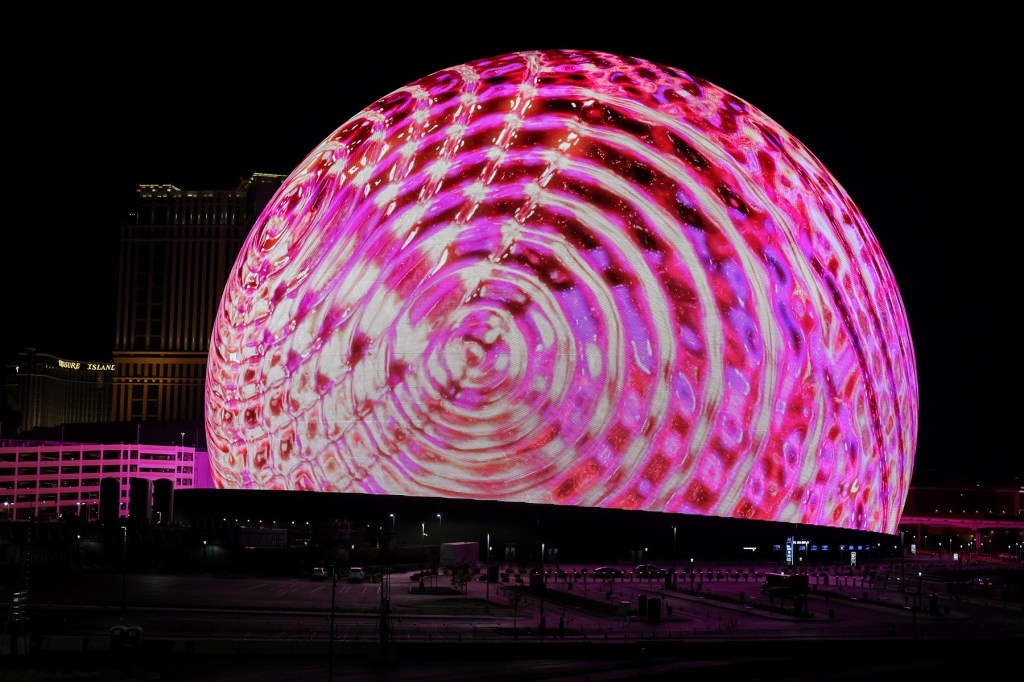
Buzz surrounding the return of Dorothy, Tin Man, Scarecrow and Cowardly Lion may have helped make Sphere Entertainment Co. the best-performing music stock for the week ended Aug. 29. Sphere Entertainment shares rose 6.8% to $45.35 in an otherwise muted week for music stocks.
On Thursday, the Sphere venue in Las Vegas debuted — to both positive and negative reviews — its revamped version of the 1939 film The Wizard of Oz. The premiere was prefaced by a heavy national media campaign that showed both the love for the 1939 original film and curiosity about the state-of-the-art, multi-sensory venue. To date, Sphere had sold 215,000 tickets for The Wizard of Oz at over $100 apiece.
Sphere Entertainment shares have gained 13.7% in the last two weeks, turning a 5.1% year-to-date loss into a 6.8% gain this year. Aside from the attention gained by The Wizard of Oz, the venue has racked up some wins in recent months. The Sphere recently concluded a Kenny Chesney residency in June and will commence with a Zac Brown Band residency in December. In addition, the venue added 14 additional Backstreet Boys performances to extend the group’s well-received run into February 2026.
The Billboard Global Music Index (BGMI), a float-adjusted index of 19 publicly traded music companies, fell 1.5% to 2,979.62 in its second consecutive weekly decline. (The index originally had 20 stocks, but Believe was taken private and no longer trades on the Euronext Paris exchange.) With a majority of music stocks in the red this week, the index’s year-to-date gain dropped to 40.2%.
U.S. indexes fell as core U.S. inflation, which excludes food and energy costs, rose to 2.9% in July, the highest level since February. The Nasdaq composite fell 1.6% to 21,142.01 and the S&P 500 dropped 0.1%. International indexes were mixed. The U.K.’s FTSE 100 fell 1.4% to 9,187.34 but South Korea’s KOSPI composite index rose 0.5% to 3,186.01 and China’s Shanghai Composite Index improved 0.8% to 3,857.93.
Other than Sphere Entertainment, only three stocks had gains above 1%: Cumulus Media (up 6.3%), Anghami (up 4.1%) and MSG Entertainment (up 3.5%). Three of the most valuable music companies had gains of less than 1%: SiriusXM (up 0.8%), HYBE (up 0.5%) and Live Nation (up 0.5%).
With most music stocks losing ground this week, the BGMI was dragged down by the losses of its three most valuable music companies. Spotify fell 1.5% to $682.34, taking the stock 13.1% below the all-time high of $785.00 set on June 27. Universal Music Group dropped 2.7%, bringing its year-to-date gain to 1.0%. And Tencent Music Entertainment sank 3.2% to $24.53, although a blistering first half of 2025 has helped put the stock up 120.0% this year.
Two K-pop companies were among the week’s worst performers. SM Entertainment fell 3.9% to 138,800 KRW ($99.82) and JYP Entertainment was down 5.6% to 72,700 KRW ($52.29). The biggest loser of the week was music streamer LiveOne, which fell 8.3% to $0.55 and extended its year-to-date loss to 59.9%.

Billboard

Billboard

Billboard

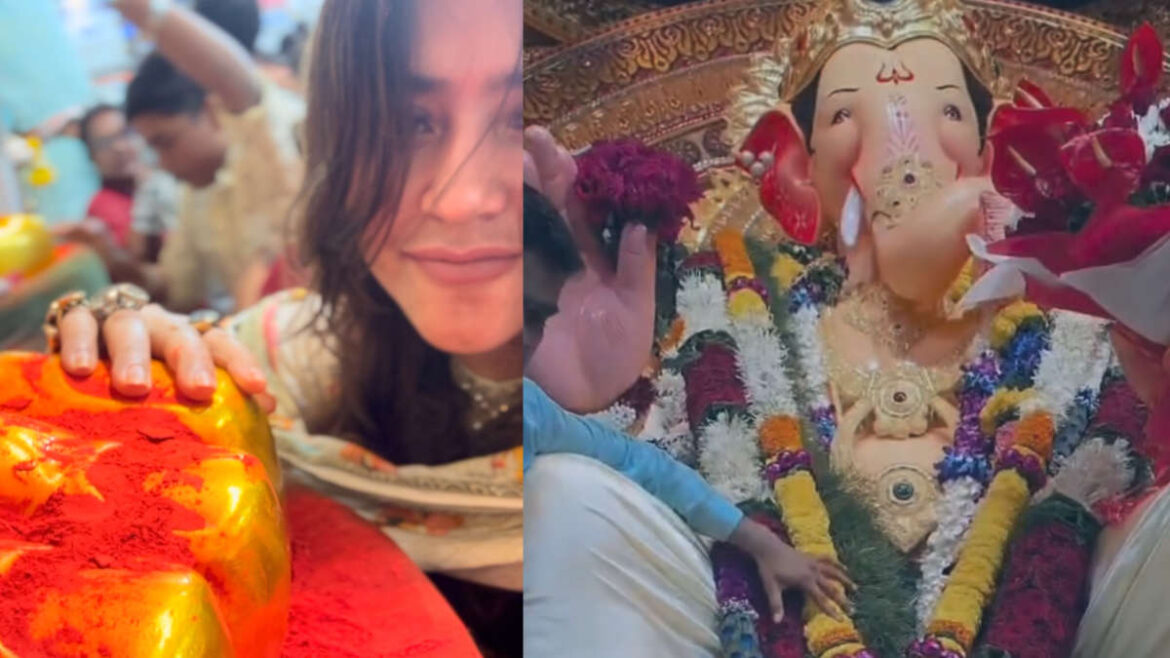
Producer and television pioneer Ekta Kapoor continued her long-standing tradition of visiting Mumbai’s iconic Lalbaugcha Raja during Ganesh Chaturthi. Known for her deep devotion to Lord Ganesha, Kapoor not only welcomes Ganpati Bappa into her home each year but also ensures a special darshan at the famed pandal. Sharing glimpses of her visit on Instagram, she captioned her post with heartfelt devotion: “LALBAUG CHA RAJA!!!! Bhappaaaaaaaaa.” The message touched the hearts of fans who generally connect her remarkable journey to her religious background.
Celebrating a Career Milestone
This year’s tour has particular significance as Kapoor celebrates three decades in show business. Over the last 30 years, she has revolutionized Indian television, pioneered the era of daily soaps, and created one of the most powerful production houses in India. Her 30-year odyssey, experienced through imagination and re-invention, continues to inspire countless generations of viewers.
National Award Honour
After her own celebratory festivities, Kapoor had also achieved a career-defining moment herself with her first National Award for co-producing Kathal. The Netflix satire, celebrated for marrying comedy and social commentary, showed her ability to provide support for pathbreaking and socially relevant content in addition to traditional work.
Exciting Line-Up of Projects
Far from slowing down, Kapoor has a massive slate of projects in the works. These include:
VVAN, a mythological extravaganza starring Sidharth Malhotra and Tamannaah Bhatia, co-produced with TVF. Bhooth Bangla, Priyadarshan’s horror-comedy starring Akshay Kumar.
A re-launch of old drama Kyunki Saas Bhi Kabhi Bahu Thi, bringing back one of Indian television’s most iconic shows to a new generation.
Faith Anchoring Storytelling
For Kapoor, religion and storytelling are inextricably linked. Her yearly round trip to Lalbaugcha Raja is not merely a matter of personal faith but also renewal—a sentiment befitting as she takes the plunge again into another decade of content creation.
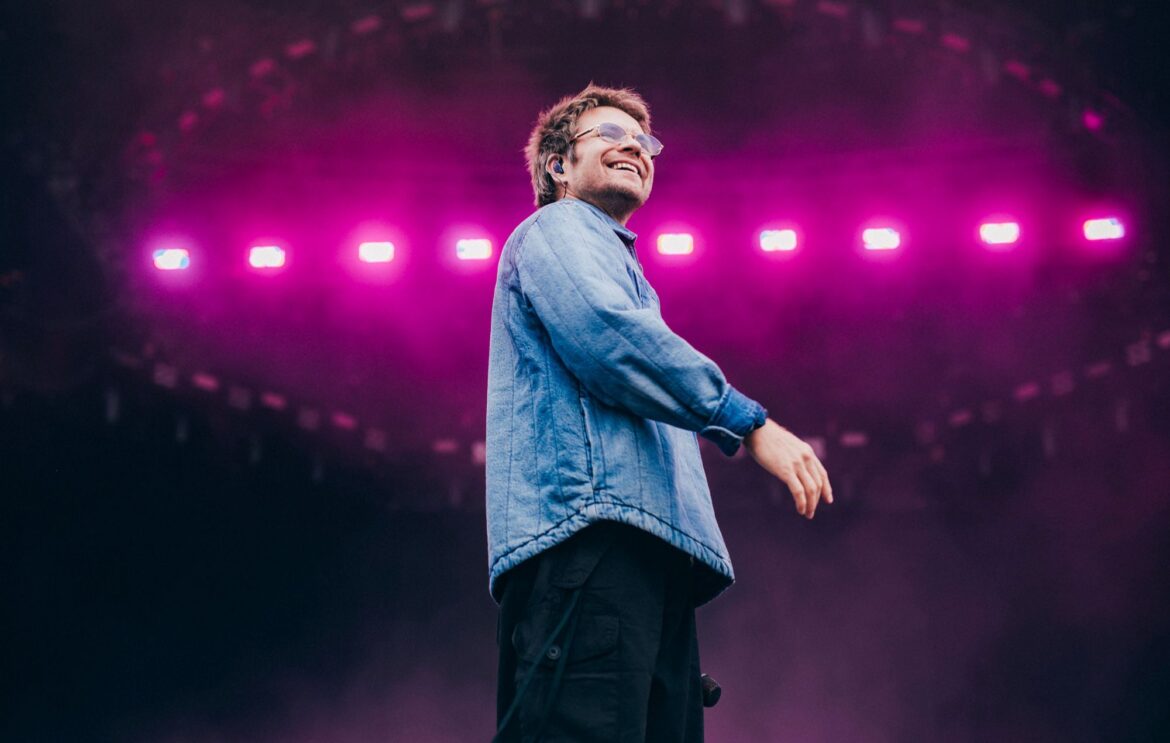
Rou Reynolds has spoken to NME backstage at Reading 2025, explaining why it is vital for Enter Shikari to keep using their platform to speak out in support of Palestine, as well as plans for new music and the momentum behind their £1 ticket levy to support grassroots venues.
The frontman opened up to us before his raucous set over at the main stage yesterday (August 23), which saw the band raise awareness for climate change, share their solidarity with the people of Gaza and look back at their long history with the dual festival.
Speaking ahead of the set, Reynolds looked back at how R&L provided not only their first festival set, but remains the only festival that Enter Shikari have “played probably 10 times, if not more.”
“There are so many memories here and a nostalgic excitement built into this festival. It’s the only one that will definitely give us butterflies before we go on,” he said. “Festivals are like the best part of this job, and it’s great that, even this morning when we were rocking up, we saw some of the same faces in the security. They’ve often said that we were like the house band for a few years, so it just feels like coming back home.”
Check out the full interview with Reynolds below, where he also tells us about their ‘Live At Wembley’ film, their plans for new music, the movement they started by trying to support grassroots venues and why speaking out against injustice is at the core of their identity. You can also watch the interview in full above.
NME: Hi Rou. Why was your performance at Wembley Stadium one that you wanted to capture and make into a live film?
Rou Reynolds: “It was the first time we played Wembley Arena! Before, we always chose Ally Pally, because I can walk there from my house. It has this beautiful history in it and we’ve had an amazing time there every time we played. But we thought it was about time we played Wembley Arena, and it felt like a big moment for the band – we’re about 20 years into it now. It just felt like a real occasion. It was the most theatrical we’ve been too. We’ve always been very much involved in every part of the show, but with that one, we really built this overarching themed show. It was great.”
Something that resonated with a lot of people at that gig was your impassioned speech supporting Palestine. Why was it important for you to do that?
“To be honest, it’s a natural thing for us to do because we grew up in a thriving local hardcore punk scene, and that’s what you did! It wasn’t even just the local bands; I grew up listening to Rage Against the Machine too. When I was 15, I didn’t know the intricacies of what Zach [De La Rocha, singer] was talking about, but that righteous rage and indignation, it was very, very alluring.
“I want to be involved in that. I don’t want to see our band as mindless entertainment. There’s space for escapism, and while we try to provide elements of that as well, at the end of the day, we are given a mic and there are things happening that shouldn’t be happening.”

You also joined names such as Pulp, Fontaines D.C., and IDLES in signing the petition defending artists’ right to freedom of expression. Would you say it’s at the core of Enter Shikari to use your platform to speak out for what you believe in?
“It’s been there from the beginning. With those early shows that we’d go to, there’d be all sorts of bands [speaking out]. Whether it was local politics and fighting against the council who were trying to close down youth centres, or discussing bigger things in the world, it seemed like creating a community was the main thing. People often say, ‘What’s the point in doing that or going to a protest?’, but with the connections you make there and the more emboldened you feel, the more people want to get involved.
“With the situation in Gaza… you think it’s got as bad as it can get, and then each day it just gets worse and worse. It would be harder not to say anything and to go and perform as usual. Say you’ve just been scrolling through a livestreamed genocide and now you’re on stage and like, ‘OK, let’s create escape and be happy and pretend everything’s fine’ — that’s cognitive dissonance. I can’t operate in these two worlds separately; they have to fuse somehow. If that makes for a slightly awkward little moment on stage, it doesn’t matter. At least you’ve used your platform for something.”
One way that you’ve spearheaded change is with your proposed ticket levy, which sees £1 from every ticket sold donated to supporting the UK grassroots music scene. Did you expect that it would be a movement that would see the likes of Coldplay, Katy Perry, and Sam Fender following suit?
“No. For us it came through frustration that people weren’t trying things. There was always this brick wall that you always came up against when you wanted support like grassroots venues. Ideas for change were just thrown out. But, because it was our tour, we were like ‘Well, we need to do something. Let’s tear down this brick wall’.
“Then to see the momentum that it’s gained since then has been awesome, and hopefully we keep it up. They do funding of the broad arts so much better in other countries. Here, we fund the higher arts quite well, but everything else gets cast aside. People often forget that art’s main purpose is to create human connections and community. It doesn’t matter where you sit in that hierarchy; it’s still doing society a service in some way. Grassroots venues were how we cut our teeth. We try to do tours every now and then that visit these places, because we wouldn’t be here without them. Same with most other acts.”

Last time we spoke to you, you hinted that you were going back to the studio and thinking about new music. Where are you up to now?
“It is a very slow process, this one. There are all sorts of life stuff happening too – some exciting, and some difficult – but we’re still working on it and don’t want to rush it. We’re seven albums deep, so there’s no reason for us to throw out another. We’d much rather think, ‘OK, how can we make the eighth album interesting and exciting for us?’ We never want to just replicate the same vibes or same musical alleys that we’ve gone down before… But we have got some stuff brewing for sure.”
Would you say that acting in the War Of The Worlds stage show has influenced it in any way?
“Yeah. I think with whatever you do, you absorb it and it will probably have some influence. There’s no way that that couldn’t! It was such an interesting, otherworldly experience. It felt like a dream. I was away for almost two months and was being a Victorian soldier in this crazy dream! So yeah, whether it’s stagecraft or the musicality of [producer/composer] Jeff Wayne, all that stuff will seep in whether it’s a conscious decision or not.”
Check back here for all of NME’s coverage of Reading & Leeds 2025 so far.
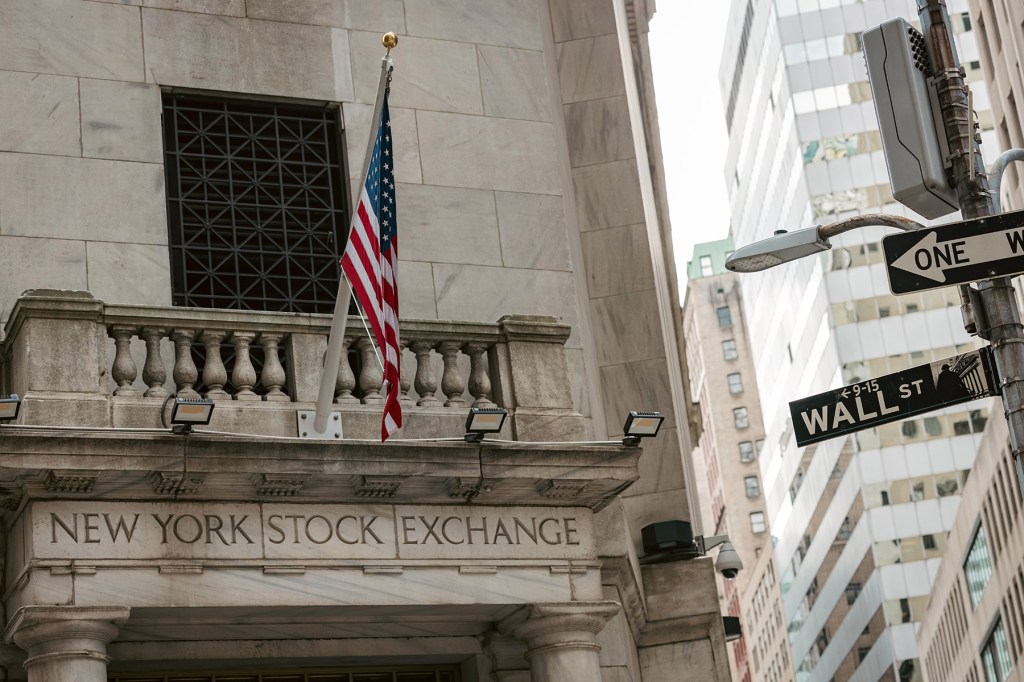
Gains by some live entertainment stocks and solid performances by multi-sector companies were overshadowed this week by German concert promoter CTS Eventim’s double-digit decline and a more modest single-digit drop from Spotify.
CTS Eventim shares fell 16.6% to 81.20 euros ($95.18) this week following Thursday’s mid-year results that showed a sharp decrease in adjusted EBITDA despite the concert promoter achieving record revenue. Numerous analysts reacted by decreasing their price targets. The most drastic revision came from Oddo BHF, which reduced its price target to 86 euros ($100.81) from 117 euros ($137.15) and downgraded its rating to “neutral” from “outperform.”
In addition, Bernstein lowered its CTS Eventim price target to 100 euros ($117.22) from 104 euros ($121.91) and maintained its “outperform” rating. Deutsche Bank dropped its price target to 109 euros ($127.77) from 117 euros ($137.15) but kept its “buy” rating. MWB Research lowered its price target to 100 euros ($117.22) from 105 euros ($123.08) and upgraded its rating to “buy” from “hold.”
The Billboard Global Music Index (BGMI) dropped 2.6% to 3,023.51, breaking a two-week winning streak and lowering the index’s year-to-date gain to 42.3%. Winners outnumbered losers 10 to 8, and one company, Deezer, was unchanged.
Major indexes were mixed this week. In the U.S., the Nasdaq fell 0.6% and the S&P 500 gained 0.3%. The U.K.’s FTSE 100 improved 2.0%. South Korea’s KOSPI composite index dropped 1.8%. China’s Shanghai Composite Index rose 3.5%.
Other than CTS Eventim, live entertainment companies posted solid gains. Live Nation reached a new record of $166.54 on Friday and closed at $165.72, up 3.0%. Earlier in the week, MoffettNathanson initiated coverage of Live Nation with a $195 price target and Wolfe Research increased its price target to $177 from $173.
The two Dolan family-controlled live entertainment companies bounced back from an off week. MSG Entertainment was the week’s biggest gainer, rising 6.8% to $39.33. Sphere Entertainment Co. rose 6.5% to $42.46. A week earlier, MSGE shares fell 3.1% after the company’s earnings announcement revealed a 74% decline in fiscal year net profit and Sphere Entertainment shares fell 1.0% following second quarter earnings.
Music streaming companies produced more losers than winners. Spotify fell 5.4% to $692.99, lowering its gain in 2025 to 48.5%. LiveOne slipped 6.3% to $0.60. Tencent Music Entertainment dropped 0.8% to $25.35, although it’s still up 127.4% this year. Netease Cloud Music gained 2.5% to 287.00 HKD ($36.73), bringing its year-to-date gain to 155.8%.
Multi-sector companies’ stocks performed well, with Reservoir Media (up 5.1%), Warner Music Group (up 3.8%), HYBE (up 0.7%) and Universal Music Group (up 0.6%) posting gains. SM Entertainment and JYP Entertainment fell 2.8% and 2.9%, respectively

Billboard

Billboard

Billboard