celebpeek
  • Home
  • Bollywood
  • Hollywood
  • Lifestyle
  • Fashion
celebpeek
  • Music
  • Celebrity News
  • Events
  • TV & Streaming
Home » Unpacks
Tag:

Unpacks

Karolina Wydra
TV & Streaming

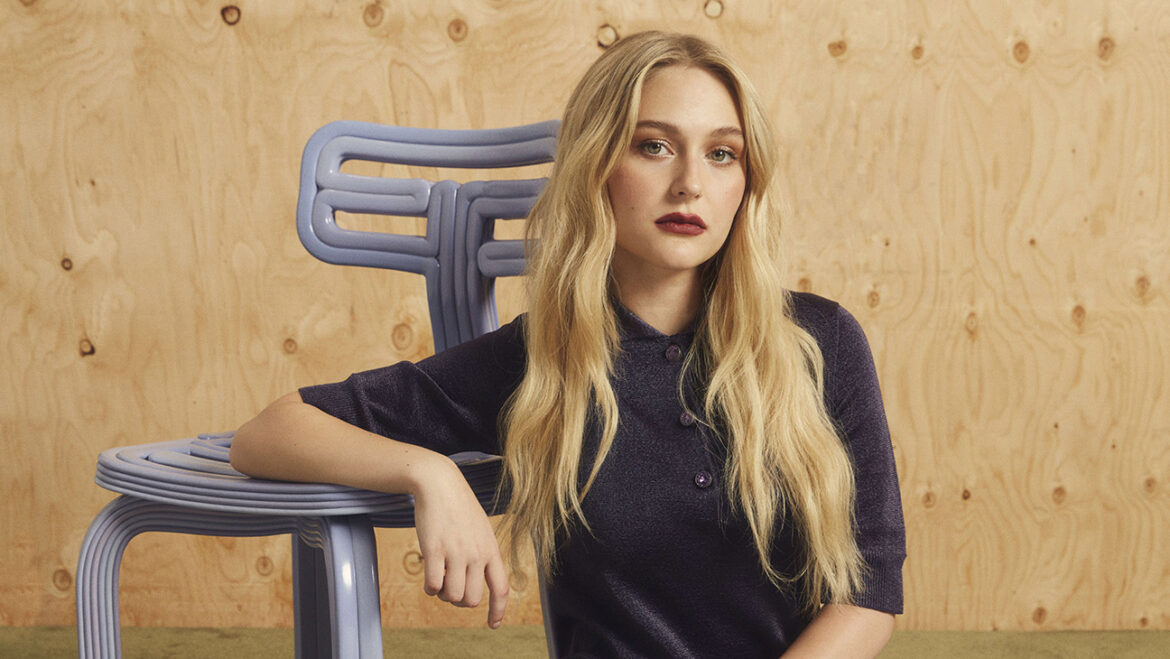
‘Pluribus’ Breakout Karolina Wydra Unpacks Her Mysterious Character

by jummy84 November 11, 2025
written by jummy84

[This story contains spoilers from the two-episode Pluribus premiere.]

When the audition for Vince Gilligan’s Pluribus came along, Karolina Wydra not only hadn’t acted in five years, she didn’t even have representation. 

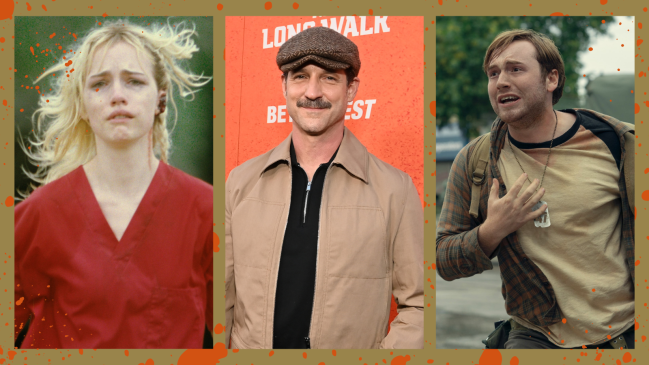
Bialy/Thomas & Associates — the same casting directors who cast all of the major players on Gilligan’s previous hit shows, including Breaking Bad and Better Call Saul — searched around the world until they remembered Wydra from a 2016 horror movie they’d assembled. They proceeded to request a tape through her commercial agent, however she was no longer a part of that agency’s roster either. The available information was so outdated that it only appeared as if she was.

As a devoted Breaking Bad fan, the Polish-American actor had been dreaming for years of landing an audition for Gilligan. Her ambition only intensified when she worked opposite Breaking Bad star Bryan Cranston a decade ago on Sneaky Pete, the crime series he co-created after wrapping the 12-time-Emmy-winning juggernaut. But Wydra soon abandoned her hope of working with Gilligan when no opportunities came her way during Better Call Saul.

Then, out of the blue, an audition for a highly secretive new Apple TV series came her way with Gilligan’s name attached. One would think she’d be doing cartwheels in response to this lucky break, but she initially hesitated, despite receiving the very chance she’d long wanted. After some inner back and forth, Wydra took the plunge anyway, later discovering that a familiar face happened to influence the fact that she was now in contention for a series regular role.

“At one point, [Gilligan] said, ‘I just spoke to Bryan Cranston about you.’ I was like, ‘What is happening? Where are the hidden cameras? Is this a joke? Here I am talking to Vince Gilligan, and he’s telling me that he talked to Bryan Cranston about me,’” Wydra tells The Hollywood Reporter.

She soon landed the mysterious role of Zosia opposite Rhea Seehorn’s Carol Sturka, and the two-episode series premiere has already made the case that Wydra is the latest example of Gilligan’s unique ability to turn journeyman actors into stars. “To be where I am today, I get emotional about it,” Wydra says as she begins to cry. “It’s beyond my wildest dreams — being employed by Vince Gilligan, holy shit.”

[Spoiler warning.] The sci-fi series begins with the global outbreak of an extraterrestrial “psychic glue” that forms a hive mind among the worldwide population. Carol, who’s somehow immune, lost her personal and professional partner, Helen (Miriam Shor), during the apocalyptic melee, so she rejects any and all overtures from the people she holds responsible, especially since they still want to try and turn her.

Written and directed by Gilligan, episode two, “Pirate Lady,” begins with Wydra’s Zosia cleaning up a dead body in Morocco. Suddenly, an impulse leads her to get on a motorbike and ride to an airfield so she can then fly a C-130 military aircraft to Albuquerque and serve as liaison to Carol on behalf of the collective known as “the Joined” or “the Others.” The Joined are able to tap into virtually any person’s existing thoughts, memories and know-how in order to achieve a particular task or objective, thus everyone can do everything and everyone knows everything. That includes flying a four-engine turboprop military transport aircraft. (In a previous conversation with THR, Seehorn insisted the series is not meant to be commentary on AI.) 

Carol still doesn’t react too kindly to her unsolicited chaperone, particularly because she sees through the Joined’s attempts to manipulate her by way of Zosia’s purposeful resemblance to an embryonic version of a pirate character she created for her Winds of Wycaro romance book series. Only she and Helen knew that the “haughty corsair” of Raban was originally a female character, leading to the unwelcome revelation that Zosia and the Joined possess all of Helen’s memories. She may have died from complications during the transitional event, but not before she joined long enough to have her innermost thoughts accessed.

Zosia’s offer to speak for Carol’s lost loved one is met with fiery rage, causing Zosia to convulse. This turn of events reveals that Carol’s emotions are the Joined’s kryptonite. If she gets mad enough, she can potentially kill millions of these interlinked people across the globe at the same time, just like the Joined did when their outbreak took the lives of nearly 900 million people worldwide.

With Zosia, Wydra had quite the tall order in playing a character who personifies practically everyone on the planet.

“It’s just too big to imagine playing the whole world,” Wydra says. “We would have conversations of who they are, and then I would tackle what was needed for each scene.”

She also had to maintain composure at all times to represent how serene it is to be among the Joined, thereby creating a contrast to the highly volatile Carol.

“I did a lot of [meditation and] body work to feel content and at peace so that Zosia wasn’t affected by whatever Carol was throwing at her,” Wydra says. “Zosia has to believe so deeply in ‘our’ cause and that our biological imperative needs to be shared. She believes the Joining needs to be experienced because it’s so good and so blissful. Whenever Carol is struggling, Zosia has to have that in mind, so that, in due time, Carol will also experience this, hopefully.”

Actors often feed off each other’s energy, so it was certainly awkward for Wydra to not be able to meet Seehorn’s intensity level at least halfway. “It was really challenging at times to watch somebody have their emotional journey and not be able to go on it,” Wydra admits. “I just had to trust that what I’m doing is not too robotic and find that sweet spot that ‘the Others’ live in.”

Below, during a recent conversation with THR, Wydra also addresses whether she knows who Zosia was before the Joining. 

***

Congratulations on being employed by Vince Gilligan. 

(Laughs.) Thank you for putting it that way. It’s true. 

There’s no question that Zosia is a career-defining role for you. Actors, by nature, have to be an optimistic bunch, but have you always been hopeful that an opportunity like this would come along?

I always had a dream to work with Vince Gilligan, but to think it would ever be a possibility, you have to be delusional. Every actor has to be delusional on some level to go to Hollywood. You have to have blind faith that, someday, it’s going to work out despite millions of other actors trying to work. But I’ve had this dream ever since I saw Breaking Bad. I was a huge, die-hard fan. I begged my team to get me in the room for Vince Gilligan. I didn’t care how big or how small the part was; I just wanted to work with Vince Gilligan. 

When I did Sneaky Pete, I worked with [Breaking Bad star] Bryan Cranston, who’s phenomenal. And as I was working with him, I kept thinking, “My God, I’m so lucky to work with Bryan. He’s incredible. I hope one day I get to have the experience that he got to have with Vince Gilligan.” But I never got an audition for Vince Gilligan during that time [of Breaking Bad and Better Call Saul], so I let go of that dream. But then I got an audition with his name attached, only I didn’t know what the project was. I didn’t know how big the character was. I just got the sides, so I knew nothing. It was one of those things where you get very little, and you have to make it your own. 

When I finally had that moment I’d dreamt of, my first reaction was, “Don’t do it. It’s never going to happen.” And then there was another part of me that said, “Karolina, just do it.” It’s such a funny thing about us humans. You think you’re going to react a certain way to something you’ve always wanted, but then you have another reaction. You just never know.

It also came at a time that I didn’t have an agent or a manager. If it wasn’t for casting [Sharon Bialy, Sherry Thomas, Russell Scott], I wouldn’t be here. They searched me out and contacted me. Vince told me they looked for my character for a very, very long time. They searched the world, and they couldn’t find her. So thank God to casting for remembering me [from 2016’s Incarnate] and getting in touch with my commercial agent that I wasn’t working with at the time to request my tape. I was still somehow on their roster.

So I was like, “You know what? I’m just going to give it a try.” And to be where I am today, I get emotional. [Wydra begins to cry.] “What is happening?” It’s beyond my wildest dreams — being employed by Vince Gilligan, holy shit. 

Wydra’s Zosia (right) with Rhea Seehorn’s Carol.

Courtesy of Apple TV

Do you know if Vince ever asked Bryan about you?

Yes, he did! Before we tested, Vince wanted to have a conversation on Zoom to tell me how the day was going to go and the process of the test and what it was going to look like. I had a million questions after I read the first two scripts. At one point, he said, “I just spoke to Bryan Cranston about you.” So that was another moment where I just was like, “Where are the hidden cameras? Is this a joke? Here I am talking to Vince Gilligan, and he’s telling me that he talked to Bryan Cranston about me.” The whole thing was so surreal, and getting the role was wild. I didn’t think this dream was possible, and even though it happened, I still feel like I’m dreaming in the best way. 

Bryan clearly gave a glowing review. 

He must have. I had so much fun working with him on Sneaky Pete. He’s one of a kind. 

I’ve covered a lot of different shows, and there’s definitely a lasting bond among Vince’s casts and crews that’s unique from most. (Even at the premiere, a lot of faces from each Gilligan show made a point to show up and support the latest endeavor.)

Vince creates that type of environment. Most of the crew has been with him since Breaking Bad and they keep coming back because of who he is. I feel very lucky to be a part of his creative family. No matter how big or how small your part is, you feel supported, welcome and safe. The cast on this show is so close. We genuinely have so much love for one another, and we support each other so much. It starts at the top with Rhea Seehorn. She is on another level, not just as an actress, but as a human being and a woman. She’s the real deal. I adore her and Vince so much. I have such adoration, respect and love for them. 

Rhea’s character, Carol Sturka, is described as the “most miserable person on the planet,” so were you directed to play the most blissfully happy person on the planet? 

Yes, I was. After the virus spreads, the world is utterly at peace. It’s happy, content and unflappable. There is no longer any suffering, prejudice and crime. There’s just pure goodness. They [the Joined] are really good.

Karolina Wydra as Zosia in Pluribus.

Courtesy of Apple TV

Yeah, that’s the thing, you’re not actually playing an individual person. How does one approach playing a character who is really a global collective?

It’s such a big idea and wild concept that you can’t tackle it like that. It’s too big to imagine playing the whole world. We would have conversations of who they are, and then I would tackle what was needed for each scene. 

I also did a lot of meditation in order to go in that state where you feel at one with the world. That’s what meditation does. If you do it long enough, you get into this particular state of being. I also did a lot of body work to feel content and at peace so that Zosia wasn’t affected by whatever Carol was throwing at her. She couldn’t go on the emotional journey with her, and she couldn’t react to what she was experiencing. Zosia has to believe so deeply in “our” cause and that our biological imperative needs to be shared. She believes the Joining needs to be experienced because it’s so good and blissful. Whenever Carol is struggling, Zosia has to have that in mind, so that, in due time, Carol will also experience this, hopefully. 

So it was really challenging at times to watch somebody have their emotional journey and not be able to go on it. I just had to trust that what I’m doing is not too robotic, and find that sweet spot that “the Others” live in.

We meet Zosia while she’s doing cleanup of a dead body in Morocco. Suddenly, someone arrives to replace her, and she motorbikes to an airplane that she herself flies to Albuquerque. From there, she disrobes in the middle of an airport and takes a shower. What was your first reaction upon reading that bonkers introduction on the page? (There’s a cool detail when Zosia enters the bathroom. Someone is curling hair extensions in order to make her look more like Raban.)

I was excited! I’ve never been asked to do anything like that. I thought, “What an epic journey for this character.” When you first meet her, you don’t know her past, but she already has the virus. So you watch her go on this journey, and see the flow and the choreography of how the Others move about the world. It’s a beautiful dance that they do, and it’s all silent because they’re communicating telepathically. So it was wild to read, and wild to shoot it. We did a bunch of rehearsals. 

On top of that, I really got to taxi the C-130 [aircraft]. It was me doing it. Vince asked the pilots if they would let me do it, and the pilots were not sure at first. But on the day of the rehearsal, I learned whatever they threw at me about the plane, and they realized that I am very committed to what I’m doing. So then they felt safe enough to let me do it at the Albuquerque Airport.

You alluded to her unknown past, and I’m very curious about who Zosia was before the Joining. Do you know that answer? Or is it still an open question?

To be honest with you, I didn’t ask Vince who she was, and we didn’t talk about it. I didn’t want it to color my performance because she is not who she was. We, as humans, come with a lot of history, and while that history can be positive or negative, that’s not who she is today. She’s not experiencing her past; she’s experiencing today. So my focus was only on who she is today, and that’s what’s fascinating about the beginning of episode two. So her past is very questionable. 

Vince and Rhea have both said Carol is a hero, which would imply that Zosia and the Joined are the villains. But to the Joined, Carol could easily be the villain since her anger is their kryptonite. She could potentially kill them all if she wanted. How do you view these hero-villain dynamics? 

Well, it’s interesting and very complex. If you ask Zosia, there’s a belief she lives by, and it’s that they have a biological imperative to spread the virus. She wants to have the “Old-Schoolers” come join them. Somebody might think that’s manipulative or villainous, but they really believe what they’re experiencing is worth experiencing. With Carol, Zosia already knows what it’s like to be her, but Carol doesn’t know what it’s like to be them. So the idea of Carol being a hero is based on her belief that fighting for individuality is more important. They both have two great points of view, and the perspective of who is the hero depends on how you are looking at it.

After the summit involving a half-dozen Old-Schoolers fails, why do you think Carol stopped Air Force One to reclaim Zosia from Mr. Diabaté (Samba Schutte)?

She’s in the grieving process. She suffers a great loss as you see in episode one. And if she goes off to be by herself, there’s an incredible loneliness she’ll experience. And Zosia being so kind and loving as her chaperone, she does help her feel less alone. So I think that’s why she decides it’s better to have someone than no one. Zosia is someone who has a familiar enough face to her own [fictional] creation of [Raban]. So that would be my guess.

Karolina Wydra’s Zosia (left) with Samba Schutte’s Mr. Diabaté in Pluribus.

Courtesy of Apple TV

There’s been a lot of questions so far about what the show is truly saying underneath its quirky sci-fi concept. Theories involving AI, political division and religion have all been bandied about, but besides those subjects, I actually glommed onto the idea that it’s Vince commenting on the celebrity he’s attained. Anyway, what themes resonated with you while inside of it?

To be honest, when we asked him those questions, he just said that an idea came to him and he ran with it. He wasn’t trying to think of all these political topics to write about; he just had an idea. So, for me, it’s about human nature. That’s why I love sci-fi. It brings up questions: “How would people behave if this happened, and what would the world look like?”

Are there similarities to AI? Are there similarities to what’s happening politically? Even if the intention is not there, great art brings up these questions for us to go, “Huh, isn’t it interesting how this is on par with what’s happening [in real life]?” Life is imitating art, and art is imitating life. 

So that’s why Vince is so brilliant because he’s created something that brings up so many questions, and they’re all valid questions and interpretations of the show. So all of them are going to be talked about, and you’ll have these conversations just like we had all these conversations on set. 

***
Pluribus’ two-episode series premiere is now streaming on Apple TV, with new episodes available every Friday. Read THR‘s previous interviews with creator Vince Gilligan and star Rhea Seehorn.
November 11, 2025 0 comments
0 FacebookTwitterPinterestEmail
Alyvia Alyn Lind
TV & Streaming

Alyvia Alyn Lind Unpacks Lingering Questions

by jummy84 October 6, 2025
written by jummy84

[This story contains major spoilers from Wayward.]

Wayward star Alyvia Alyn Lind knows you have unlimited questions about her new limited series that’s currently ranking atop the Netflix TV charts.

Created by Mae Martin, Wayward shines a light on the troubled teen industry through Vermont’s fictional Tall Pines Academy. The “therapeutic” school is run by Toni Collette’s cult-like leader, Evelyn Wade, who later takes a special interest in Lind’s Leila. The latter is a Canadian teenager who made the journey across the border in an effort to rescue her best friend, Abbie (Sydney Topliffe), from the clutches of this institution that her parents forced her to attend. However, Leila’s plan backfires, turning her into the latest enrollee.

Leila and Abbie were always mischievous partners in crime, but Leila’s drug use was far more serious than Abbie ever realized. The reason is due to the fact that Leila has yet to reconcile the traumatic drowning death of her older sister, Jess (Devin Cecchetto), which Evelyn picks up on in order to play her patented mind games. Leila is eventually subjected to a psychological experiment where she has to confront her potential involvement in Jess’ death, and the series ultimately depicts two different versions of the harrowing incident. 

In Lind’s mind, the version in which Jess accidentally drowns on her own is the more accurate portrayal, not the Evelyn-provoked account where Leila pushes an equally inebriated Jess in a swimming pool and opts not to save her. But Leila soon buys into the mindset that she’s a murderer, something Abbie disputes based on a phone call they shared in the direct aftermath.

“At the end of the day, I personally believe she did not intentionally push her sister [into the pool],” Lind tells The Hollywood Reporter. “It’s very common for people who have gone through traumatic experiences to have lapses in their memory and not remember exactly what happened. So it’s a perfect opening for Evelyn to go in there and pull at the strings until it’s all unraveled.”

After Jess’ death, Leila’s mother became completely withdrawn from her maternal duties, and now that Leila is in the hands of Tall Pines Academy, she appears to have no interest in her daughter returning home anytime soon. This turn of events ends up contributing to Leila’s unexpected decision to let Abbie complete their well-planned escape alone so she can stay at Tall Pines Academy.

“I think the reasons she gave Abbie for why she’s staying are true. She wants the community, she wants the family, and I think she genuinely does believe that. But I think that was all placed into her mind by Evelyn,” Lind says. “Evelyn saw her and saw her trauma and how tough her exterior was, and behind every tough exterior is an extremely soft center. So she wanted to rip that out, and I think she manipulated her.”

Wayward popped up on Lind’s radar shortly after the heartbreaking cancellation of her three-season series, Chucky, and the original audition email described the mystery-thriller as an “eight-episode limited series.” But with so many dangling threads, there’s already a clamor amongst the viewers and the cast/crew for another season.

“We were all aware [that it was a limited series] from the start, and we were all sad about it from the start. As the cast got closer and everybody had so much fun together, we got sadder and sadder as the season progressed,” Lind shares. “But you never know. Limited series get picked up [for more seasons] all the time now, so we’re just hoping that Netflix wants to push it further. We all want more for our characters, especially me. I want to see where Leila goes. I love her so much.”

Below, during a recent spoiler conversation with THR, Lind also discusses her unique upbringing in a showbiz family that includes her sisters, Natalie and Emily Alyn Lind, as well as matriarch Barbara Alyn Woods.

***

You started acting at such a young age. Do you have any memories that predate you being a working actor? 

Not really. Those memories would have to be before I started acting at 3 years old. But as I got older, my mom told me stories. My older sisters were in the industry from a very young age, and my mom has been doing it her entire life. My sisters would run their lines when I was only 2 or 3, and I would overhear and listen in the background. When they were done, I would come in and say, “My turn!” I’d then do their lines perfectly from top to bottom, and this was right after I’d learned how to speak. So it’s always been in my blood, and it’s always been inevitable that I’d end up wanting to pursue a career in it. I really don’t remember a time where I wasn’t working on a set. That could sound like a nightmare to some people, but it has been such a dream come true for me. 

Alyvia Alyn Lind as Leila in Wayward.

Courtesy of Netflix

When we’re kids, our parents sign us up for things just to see what sticks. And then, as we get older, we start to figure out what we actually like and don’t like. But it sounds like you knew you loved acting from the moment you started running lines for fun.

Definitely. The reason I love acting so much and have such a great relationship with it after all these years is because I always had a choice. It was never a situation where my mom was being a stage mom. She always gave all three of us the opportunity to stop whenever we wanted and go back to [more traditional] school. Growing up, we had conversations all the time about it. “You got another audition. Do you want to do it? Do you still like this? Are you happy?” All three of us just never wanted to stop. We all found such a strong love for it at such a young age, and we’re all so grateful for our mom’s guidance within this industry that we love so much. I was extremely lucky. It’s very unheard of to find the profession you want to pursue for the rest of your life at just 3 years old. 

When you watch your mom and sisters act, do you notice any mannerisms that all of you share?

It’s funny you ask that. I was literally watching Wayward with my family the other day, and I noticed for the first time that when I cry on screen, I look really, really similar to my oldest sister, Natalie [Alyn Lind]. I also make certain expressions or smirks or faces that remind me exactly of Emily [Alyn Lind]. I think I’m a perfect mix of both of their faces and expressions. So it’s both weird and interesting to watch myself on screen and be like, “Wait, there’s Emily. Wait, there’s Natalie.” But from growing up together and running lines with each other and just being there for one another during every project, I think that we’ve all adapted a few of each other’s little tricks. So we do have similarities, but we also have such different acting styles. We are all so distinct, even though we all had the same acting coach in my mother.

Did Wayward emerge right as Chucky ended? 

Chucky ended, and then Wayward came up. It was such an interesting time because we were obviously all so sad about Chucky being canceled. So I got the audition, and I was so grateful when I booked it. I then got to dive into the history of the [troubled teen industry], and it was a really exciting transition. Chucky was very campy and crazy and unrealistic in a lot of ways because it was a killer doll show. So getting to dive into something that’s real and terrifying in a more grounded way was really awesome.

Do you think the door is fully closed on Chucky? I know there was loose talk of trying to revive it in some form.

Oh my gosh, I have no clue. [Creator] Don Mancini holds the power. But whenever there is a revival, if there is one, I am so there. I’m down. Sign me up. I love that crew and that cast so much, and we had the most incredible time filming. I definitely would love to be involved and avenge the Terror Trio. I want them to have a better ending and not be stuck in dolls for the rest of their lives.

Chucky, Spiderwick Chronicles and Wayward all shot in and/or around Toronto?

Yeah, it’s not crazy to think that I’m a Toronto-based actor at this point because I film everything in Toronto. I’m half-Canadian, which is awesome. My dad’s side of the family is Canadian, and I have dual citizenship. So I love filming in Toronto so much.

Alyvia Alyn Lind as Leila in Wayward.

Courtesy of Netflix

Wayward is being billed as a limited series, but the ending leaves so many plates spinning that it seems ripe for a second season. Did you always know you were shooting a limited series?

Yeah, it was known from the start. When I got the audition in my inbox, it said, “eight-episode limited series.” So we were all aware from the start, and we were all sad. As the cast got closer and everybody had so much fun together, we got sadder and sadder as the season progressed. But you never know. Limited series get picked up [for more seasons] all the time now, so we’re just hoping that Netflix wants to push it further. Obviously, everybody involved in the show loves it so much, and we’re so proud of the outcome. We all want more for our characters, especially me. I want to see where Leila goes. I love her so much.

There’s a recent saying that the limited series is the new pilot, so anything is possible.

It would be a dream to do another season and explore these characters even further. If it ends up happening, I would be so excited and so on board. But if it doesn’t happen, then the place the characters ended up in is where they’re going to stay. Leila’s ending is so sad to me. I’m so protective over her, and I want her to get as far away as possible from that school. But she has to figure that out for herself. Unfortunately, I can’t protect my characters that much.

Her sister Jess’ death is a mystery throughout the season, and we’re given two different versions of the story. One was accidental, and the other was more intentional. Leila eventually thinks she killed her sister on purpose, but Abbie argues that’s not true because of a phone call they shared the day after it happened. Who do you think is right? 

Oh my gosh, I love this question so much. While filming the episode, everybody had their different speculations. I had a conversation with Brian Davids Mae [Martin] about it. I then had a conversation with that episode’s director [John Fawcett] just to figure out what is true in Leila’s head. At the end of the day, I personally believe that she did not intentionally push her sister [into the pool]. It’s very common for people who have gone through traumatic experiences to have lapses in their memory and not remember exactly what happened. So it’s a perfect opening for Evelyn to go in there and pull at the strings until it’s all unraveled.

So, truly, deep down, I believe that she did not kill her, but I also love that the episode has so many different versions of what happened. It creates a conversation. I’ve already been on socials to look through people’s posts about whether or not they think she killed her, and it’s so fun to see that everybody else has a different opinion. I’ve watched the show with many of my friends and family, and all of them have different opinions. So it’s really fun to see what people think because it really is up for interpretation. Whatever you want to think is what it can be.

Devin Cecchetto as Jess and Alyvia Alyn Lind as Leila in Wayward.

Courtesy of Netflix

We established earlier that being a sister is a major part of your life, so did you have a tough time filming that tragic backstory involving Leila’s sister?

That entire episode is so heavy. It was the episode I was the most excited to film while also being the most terrified to film. I really wanted to get it right, and show why Leila is the way she is. That episode is such a huge transitional moment for her. We filmed the pool sequence all night from 7 p.m. to 8 a.m. It was emotionally and physically exhausting, and terrifying. But those days are the most rewarding. So I’m really happy with the outcome, and I hope everybody else loves it, too.

Leila’s flashbacks took place while in the Mirror Room. Once she’s free, the camera lingers on her as she eats pizza and listens to Duck play Pink Floyd’s “Time.” She was listening to that song in the first episode too. What’s really on her mind there? Is it genuine enjoyment to set up her big choice to stay at Tall Pines in the finale? Or was she just trying to gain Duck’s trust like her and Abbie planned? It seemed genuine to me. 

That scene is another one of the big turning points that we see for Leila. It’s the first time that she truly sees humanity in this place. To that point, it’s been so rough and mean and aggressive and scary. Suddenly, she’s sitting there eating pizza, and this guy that she’s been terrified of the whole time is now playing her favorite song on the guitar. And for the first time, she thinks, “Maybe this place isn’t as bad as I thought it was. Maybe they were really just trying to fix me, and now that I’m getting better, it’s not as scary anymore.” It’s such a terrifying cycle of manipulation. But you can really see it in her face: “This could be my life. I could do this every day. I could sit here and eat pizza and listen to Pink Floyd every day.” So It’s a big transitional period for her to see that maybe this place isn’t as bad as she thought that it was.

Then she has a phone call with her mom, and she couldn’t have been less interested in Leila potentially coming home. So do you believe the explanation she gave Abbie as to why she’s staying? Or did Evelyn manipulate this outcome?

I think both can be true. I think that the reasons she gave Abbie for why she’s staying are true. She wants the community, she wants the family, and I think she genuinely does believe that. But I think that was all placed into her mind by Evelyn. Evelyn saw her and saw her trauma and how tough her exterior was, and behind every tough exterior is an extremely soft center. So she wanted to rip that out, and I think she manipulated her. 

She knew about how absent Leila’s mom has been since Jess’ death. So it was a perfect opportunity for her to take over that role. “I will be this mother figure for you. I will be this figure that will love you unconditionally, which is something that you’ve never had in your life. I will show you the ropes, and I will find you a family.” 

She does it in the same way that she does it to Laura [Sarah Gadon]. It’s really interesting how many similarities there are between Laura and Evelyn’s relationship and Leila and Evelyn’s relationship. So I think that everything that she’s saying to Abbie at the end of the show is true, but all of those things have been placed in her head by Evelyn.

Alyvia Alyn Lind as Leila and Toni Collette as Evelyn Wade in Wayward.

Courtesy of Netflix

What did you pay attention to most with Toni Collette? Was it her acting style, or was it more about the way she carries herself on set?

I learned so much from her and her energy on set. Just watching her is a masterclass. I watched her switch back and forth between her Australian accent and American accent, and it was so insane that it should be studied. She’s just such a powerhouse. I want to be her. I was such a superfan before we started filming, so I was terrified. But then getting to know her and being on set with her as much as I was, it was an honor to study her. She plays her character so insanely well, and getting to see her bring Evelyn to life up close was incredible.

Lastly, I have to follow up on something your sister Emily and I talked about during Ghostbusters: Frozen Empire. You’re friends with Mckenna Grace, and Emily played her friend of sorts in that movie. Was it pretty bizarre for you to watch given your connection to both?

It was so much fun! When I heard that Emily got the role in the new Ghostbusters, I was so excited because I knew Mckenna, but I didn’t know how close their storyline would be to each other. And when I learned that it was basically just going to be the two of them together the entire movie, I was so excited. I think it was also exciting for Emily because Mckenna is a familiar face. I’ve known Mckenna since I was four or five. We’ve both been in the industry that long together. So getting to see Mckenna at the premieres and watching them work together was so much fun, and it was never weird at all. I’m so glad that they had that experience together.

Emily did say that you wondered why you didn’t get to go out for it.

I remember being like, “I should have gotten this audition. I want to work with Mckenna. I love her so much. That would’ve been so much fun.” I was more just jealous that I didn’t get to work with Mckenna because we would’ve had such a blast on set. But Emily has such a ghostly energy. So the casting decision after seeing the movie makes so much sense. They were right on point.

***
Wayward is currently streaming on Netflix.

October 6, 2025 0 comments
0 FacebookTwitterPinterestEmail
'The Long Walk' Ending and More Explained: JT Mollner Unpacks Movie
TV & Streaming

‘The Long Walk’ Ending and More Explained: JT Mollner Unpacks Movie

by jummy84 September 18, 2025
written by jummy84

I’ve been pursuing an interview with JT Mollner ever since “Strange Darling” became one of my favorite movies last year — but it took the divisive screenwriter’s history-making adaptation of “The Long Walk” for Lionsgate to finally get him on Zoom. 

“You requested a ‘Strange Darling‘ conversation, and I didn’t do it. I’ve always felt bad for not doing it. But it was because at the time, there were so many things I didn’t want to explain to people, and you were going to ask me about exactly those things,” Mollner said.

Also known for 2016’s “Angels and Outlaws,” Mollner became a major name in suspense thanks to Magenta Light Studio’s demonic date night starring Willa Fitzgerald and Kyle Gallner. With Giovanni Ribisi as his cinematographer, Mollner’s jaw-dropping psychological horror movie was buzzy out of its 2023 premiere at Fantastic Fest in Austin, Texas — but it hit controversy going wide the next year. (Spoiler alert for that movie, too: “Strange Darling” got a bad reputation among some female genre fans thanks to its venomous antagonist, an emotionally war-torn woman drunk on her own trauma, who most controversially implies a false rape allegation to get away with murder.)

LONDON, ENGLAND - MARCH 20: Mike Figgis attends the premiere of his new film 'Megadoc,' the fly-on-the-wall documentary about the making of Francis Ford Coppola's Megalopolis, at Regent Street Cinema on March 20, 2025 in London, England. (Photo by Dave Benett/Getty Images for TANK Magazine)

“I was exhausted at the time with people misinterpreting what I was doing, and I didn’t want to get caught up in the minutiae of being defensive or over-explaining it,” said Mollner. “I made a decision to just step away.” He went on to describe a Q&A in 2018 for an unnamed film that disillusioned him with the idea of directors dissecting their own work. As a filmmaker himself, but not steering the ship here, Mollner made a special effort to support the vision of “The Long Walk” director Francis Lawrence.

“I had to get really zen about this,” Mollner said. “I knew that I was a piece of this puzzle, and I knew I was just a part of the tapestry, and that I was going to be able to contribute the source material for him to go but then watch him do his thing.” 

Now in theaters, the critically acclaimed film has been widely praised for its script, which sees Mollner adapt the supposedly “unadaptable” early novel written by Stephen King when he was just 19. The story — about a government-facilitated endurance test that sends innocent boys marching to their deaths —was published under the pseudonym Richard Bachman in 1979, more than a decade after King conceived it. As an adaptation, “The Long Walk” has only been toyed with until now.

“When I found out that George Romero and Frank Darabont had both attempted to make this movie, two of my very favorite directors, and I don’t think anybody’s ever been as good as Frank Darabont at adapting Stephen King, I was like, if neither one of these heroes of mine were able to get this done, what makes me think we can?” said Mollner. 

A mass casualty event set in a dystopian America seems like it should be more controversial than a cat-and-mouse game starring one of the most complex sadomasochists ever written, which is “Strange Darling.” But when Mollner and I finally spoke, the “Strange Darling” director brought up the earlier backlash he faced before I did. I’ve never had a problem with the gender politics of “Strange Darling”, and I didn’t waste anyone’s time asking about that nightmare here. Still, my overdue chat with Mollner explains why some writers — and King fans — understand each other better than others. 

The following conversation has been edited for length and clarity.

Tut Nyuot as Baker, Ben Wang as Olson, Jordan Gonzalez as Harkness, Charlie Plummer as Barkovitch, Joshua Odjick as Parker, Cooper Hoffman as Garraty, David Jonsson as McVries in The Long Walk. Photo Credit: Murray Close
‘The Long Walk’Murray Close/Lionsgate

IndieWire: Let’s start with your history with Stephen King and the Richard Bachman novels. What’s your experience with him as an author? 

JT Mollner: The first novel I ever read was a Stephen King book. It’s hard to believe, but I was 7 years old and it was “Carrie.” I was aware of Stephen King, even as a little kid, because I remember at five or six seeing a copy of “Cujo” on my mom’s dresser, and asking her about it. The cover was very striking to me, and I was always fascinated by scary things. I did not read “Cujo.” I was too young. I couldn’t really read at that point, but I was fascinated by it, and I’ll never forget seeing it.

Then, when I went on a trip to L.A. when I was a kid — we’d been living in Vegas — and we went to this bookstore called Bart’s Books in Ojai, and I saw a copy of “Carrie.” I was in second grade, and I was with my aunt. We bought it for a buck, and I took it to school, and I started reading through. I didn’t understand a lot of it. “Carrie” has a lot of very, very adult themes, but I eventually made it through the book.

I’ll never forget, I got sent to the principal’s office because I had this obscenity on my desk, this Stephen King novel, which was for adults. My mom had to come to school, and I remember her telling the principal, “I don’t let my kid watch rated-R movies or anything like that, but I’m never going to tell him not to read.” 

From that point on, I just remember being a constant Stephen King reader. I am to this day. He is so prolific every year in September, usually, because his birthday is September 21. But I share a birthday with him … I don’t know if that has something to do with why I was so drawn to him — or shared some of that artistic DNA? Almost every year, for the last 20 years or so, every September, I usually have a pre-order of one of his books, and it’s a yearly tradition.

Cooper Hoffman as Garraty and David Jonsson as McVries in The Long Walk. Photo Credit: Murray Close
‘The Long Walk’Murray Close/Lionsgate

He’s informed so much of my writing, my writing style, my desire to be a writer. I’m really big on original stories, and I have too many original ideas to ever make them. I’m not really obsessed with finding IP to adapt. It’s not like something I need to do. But I always knew that I wanted to adapt Stephen King. So, when [producer] Roy Lee called me and asked me if I wanted to adapt “The Long Walk” for Francis Lawrence, I was all about it, and I fought really hard to get the job.

Were you already familiar with “The Long Walk” and Richard Bachman? People have talked about this being unadaptable. You had a hell of a challenge. 

I’d read the book as a teenager. I read “Carrie,” and then after that I read “The Shining,” and I read “The Stand,” “The Dark Tower” series. Then, I was probably 16, so the age of the walkers in the book when I read “The Long Walk,” and it always stuck with me. 

Over the years, I wasn’t keeping up with the trades or anything, back when a lot of these other directors were trying to make the movie. So I wasn’t aware then. That was all very daunting at first, and it is challenging material to adapt. But I think Romero or Darabont could have probably done it. 

There was another script that was supposed to get made by somebody else shortly before I did, and I think there was a timing thing going on with that as well. It was a challenge to make “The Long Walk,” but also all the elements have to come together for a movie to come together, and the studio has to be ready to green-light it. With our situation, it was just very, very fast. The only thing that slowed us down was the writers’ strike, but once the writers’ strike was over, it never stopped. We were just right into production.

LOS ANGELES, CALIFORNIA - SEPTEMBER 08: (L-R) Roy Lee and J.T. Mollner attend “The Long Walk” Special Screening at American Cinematheque's Beyond Fest at The Egyptian Theatre Hollywood on September 08, 2025 in Los Angeles, California. (Photo by Jon Kopaloff/Getty Images for Lionsgate)
Roy Lee and JT Mollner attend ‘The Long Walk’ special screening in Los AngelesGetty Images for Lionsgate

People will make the thematic connection and say Francis is a perfect fit because of “The Hunger Games,” but you make it a digestible, directable challenge for him. How did you approach simplifying the story as a filmmaker yourself?

I am a director, and directors are control freaks. Not all directors maybe, but the type of director I am — I’m a control freak. I love to collaborate with department heads and actors, but I also have a very, very strong point of view as a director. When I was writing this, I started envisioning things a certain way, and then I had to get really zen about it. 

Because I thought, “Francis Lawrence is such an accomplished director. He’s made so many great movies. He’s a very different director than I am, so this isn’t going to be my movie. It’s going to be his movie.” I knew he was going to make a good movie, but I wasn’t sure if it would be my kind of movie.

Director Francis Lawrence, Cooper Hoffman as Garraty, and David Jonsson as McVries in The Long Walk. Photo Credit: Murray Close/Lionsgate
Director Francis Lawrence and stars Cooper Hoffman and David Jonsson on set for ‘The Long Walk’Murray Close/Lionsgate

I had ideas as I was writing the script, and I was fully expecting Francis to shoot things down or be like, “This is how I want this. This is how I want that.” But the beautiful thing about working with Francis was that he was very open-minded and he had no problem telling me if there was something I wanted to do that he didn’t like. That happened a couple times, and I was fine with it because once again, it’s a Francis Lawrence movie. But there were other times when I would come up with some crazy new idea, and I was like, “I wonder what Francis is going to think.” And he really got on board. 

Talk to me about some of the changes you made to adapt the book.

It was daunting because there were a hundred walkers, and there are so many things going on in the book that are so interesting for a 400-plus page novel. A lot of people mistakenly say this is a novella, or they remember it as a short story, but it’s a full-on novel. In the book, I think that Garraty [Cooper Hoffman] and McVries [David Jonsson] become the focus, but it spends a lot of time on all the characters. To make this palatable, digestible, and also cinematic in a way that would work in the under two-hour format, we had to figure out something else because I couldn’t include everything.

We reduced the character count to 50. Stephen King and Francis were really cool with that. Then, I just thought, “I want to really get into all these characters, but we’re going to have to eliminate some, and we’re going to have to amalgamate some.” Most stories are interesting to me, and I’ve never really written anything for the screen that hasn’t been a love story. So I thought, “What’s the love story here?” I decided to really focus on the relationship [between] McVries and Garraty. So it turns out to be their love story. These two guys who really are drawn to each other, who really inspire each other, and who bring out the best in each other.

With the change to the ending, that’s consistent with the DNA of King’s story. I hate the word “message,” but it’s true to his observations about the world. It was also the best way for me to articulate this love between these two characters, and thank God that Francis and Stephen King both were up for that.

LOS ANGELES, CALIFORNIA - SEPTEMBER 08: (L-R) Chris Lemaire, J.T. Mollner, Roy Lee, Charlie Plummer, Garrett Wareing, Ben Wang, Judy Greer, David Jonsson, Cooper Hoffman, and Mark Hamill speak onstage during “The Long Walk” Special Screening at American Cinematheque's Beyond Fest at The Egyptian Theatre Hollywood on September 08, 2025 in Los Angeles, California. (Photo by Gonzalo Marroquin/Getty Images for Lionsgate)
The premiere of ‘The Long Walk’ for LionsgateGetty Images for Lionsgate

You have an incredible partnership with Francis, but you also collaborated with Stephen King as a writer, on a project where you’re suggesting massive alterations to Stephen King’s work — to him. How did you meet him, and how did you not crack under the pressure?

You meet so many people when you start working in this business. With some people, you get starstruck and weird — and I respect a lot of people, but I’m not impressed or intimidated by a lot of people. He’s one of the people I’m impressed and intimidated by. [Laughs] So I’ve been terrified to meet him. Stephen King is one of those living iconic legends, so I was very nervous about what he would think. I really wanted to honor Stephen King, and I wanted to make sure that he was OK with everything. 

I had not directly interacted with him until about a month ago. During the entire writing process, even though he was a big part of the collaboration, there was never direct contact. It’s not that he doesn’t allow it or something. It just wasn’t that way. I have this feeling that he wants approval over everything because he really cares, but once he approves certain people, he also knows what it’s like to direct a movie. He directed “Maximum Overdrive.” He knows what it’s like to work on a movie. He’s acted in movies. He seems very respectful of [directors going] through an artistic process — the writer’s process. He could be totally precious and totally micromanaging, but he chooses not to be. 

Charlie Plummer as Barkovitch, Garrett Wareing as Stebbins, Cooper Hoffman as Garraty, David Jonsson as McVries, Tut Nyuot as Baker, and Joshua Odjick as Parker in The Long Walk. Photo Credit: Murray Close/Lionsgate
A scene from ‘The Long Walk’Murray Close/Lionsgate

We wanted to make sure he approved of big things, like that major, narrative, tectonic change in the ending. But we did not ask him to approve other, more peripheral things, like us eliminating a character or amalgamating a character into another. We didn’t ask about that. I would just write it. Then, we’d send him a draft and he’d either give a thumbs up or a thumbs down.

I thought we were going to wait a long time for him to read it, but I remember sending in the draft to the studio and them saying they wanted to do it, and then on Friday they sent it to Stephen King, and then they heard back on Sunday that he liked it — which is really weird and unheard of. But I think he read it over the course of a day and a half and said he liked it.

Charlie Plummer as Barkovitch, Garrett Wareing as Stebbins, Cooper Hoffman as Garraty, David Jonsson as McVries, Ben Wang as Olson, Tut Nyuot as Baker, and Joshua Odjick as Parker in The Long Walk. Photo Credit: Murray Close/Lionsgate
A scene from ‘The Long Walk’Murray Close/Lionsgate

In changing “The Long Walk,” people are going to come to it with their own interpretation as to why you made the choice you did. Do you pitch an explanation to Stephen King? Do you care about what that explanation is?

I wonder if I’ll be able to stick to this throughout my career, but especially as a director, I mean as a writer, I don’t feel like I have the right to explain during a Q&A or anything what it’s supposed to mean. That’s up to Francis.

I won’t say who the filmmaker was, but I remember one of my favorite movies of 2018 — a very controversial movie, one of my favorite directors — was open to so much interpretation. There was so much metaphor in the movie. It was so crazy, and it was a wild film, and all these people were interpreting it differently. I remember going to a screening, and the director was doing a Q&A, and I was so excited. He proceeded to spend 40 minutes explaining to the audience exactly what each thing meant and what each metaphor was, and it just ruined the movie for me, even though I had guessed most of his intentions.

STRANGE DARLING, Willa Fitzgerald, 2023. ph: Allyson Riggs / © Magenta Light Studios / Courtesy Everett Collection
Willa Fitzgerald as The Lady in ‘Strange Darling’ (2024)Courtesy Everett Collection

I remember someone saying to David Lynch once, something like, “What’s it mean? What’s the ending mean? I don’t understand.” And he was like, “The movie’s not meant to be understood. It’s meant to be felt.” I love it that people get different things from that. Everybody interprets things differently, and I think that’s what art is. Experiencing a movie or a painting or a book or poetry … should come down to, “What do they see in it?” But there are always intentions.

Here, I see [“The Long Walk”] as a tragedy because I believe a lot of the things that Pete’s saying during his monologues as he’s walking. I don’t think that violence is ever the answer. Violence begets more violence, and it’s a real tragedy if people succumb to their base instincts. The initial idea in this, all the sequence of events that happen in the last five minutes of the movie, was to have this mixture around that relationship, that central love story.

You get to see what people are willing to do for each other. We get to articulate loyalty and sacrifice and love. Then you see how sometimes love can drive you to the darkest places, even though the intention is good. It is really tragic to go to those dark places sometimes, and there’s a lot of that. It’s what I’m interested in exploring, and I explored it in “Strange Darling,” and I explored it in “Outlaws and Angels,” my first film. I don’t like this idea of vengeance being romanticized. There’s a real darkness surrounding that and a real tragedy surrounding that.

I would say there’s a clear message about authoritarianism in this book — and these ideologies have many, many faces and the people who are representing them. It doesn’t kill the ideology to go after those people. 

There’s something much bigger at play here, especially with The Major character [played by Mark Hamill]. We wanted him to represent something. He’s more of a construct, even though Mark Hamill does a great job fleshing him out, and there’s even dark comedic moments with him. He’s the least nuanced character in the movie and the book because he represents something. But we really wanted to know that group of walkers. We didn’t want there to be white hats and black hats, and good guys and bad guys, even though it seems like there are in the beginning. We wanted everybody to realize at some point that the enemy is on the outside.

Mark Hamil as The Major in The Long Walk. Photo Credit: Murray Close/Lionsgate
Mark Hamill as The Major in ‘The Long Walk’Murray Close/Lionsgate

King has described this as his bleakest novel, and he’s often talked about Bachman being this much angrier younger version of himself. I talked to Judy Greer about this, but there is a real hopeful core to the change that you’ve made to the ending. This ending is, in many ways, more true to the Stephen King we know now.

With this movie, I’ve read a few of the reviews. I used to tell myself I wouldn’t do that, but people have sent me some. There’s a few that are like, “This is so bleak and horrific,” and I just feel like everything’s relative. I feel like the movie’s very sentimental, and more so than I’m usually comfortable with. It’s weird. I really felt like I was drawn to this, even though there’s people getting killed all through it, and it couldn’t be much worse in the world than it is in this book.

You could work all your life to get all this money, and on one level, the Scrooge story comes to mind when I think of the themes in “The Long Walk,” because if you get to the end and you win and you get the prize and you get all the money, it’s getting to the end of life and focusing only on that and not having any relationships. It’s the relationships that mattered. That’s very universal and very accessible.

I don’t think Stephen King needed this to feel true to his alter ego sensibility, and I wasn’t really thinking about that. I feel like the Bachman thing now is just, it had a different meeting back then than it does now, and we really wanted it to feel like Stephen King country.

Judy Greer as Ginny Garraty in The Long Walk. Photo Credit: Murray Close/Lionsgate
Judy Greer as Ginnie Garraty in ‘The Long Walk’Murray Close/Lionsgate

You gave Ray’s mom a name, and she doesn’t have one in the novel. Ginnie is your mom’s name, right?

It’s funny. In the initial draft, her name was just Mrs. Garraty, and she appears here and there, and she is literally called “Mrs. Garraty” in the script. Then Judy Greer got the role, which I was really excited about, and I hadn’t met Judy yet, but Francis called me during their first meeting. And she said, “Can you give me a name? I need to have a name.” That’s something actors ask for a lot, and I should have anticipated that here because she’s a very pivotal character, even though she’s not in a lot of the movie.

So he said, “Of course, she can have a name.” And Francis has this really cool style where he lets his actors know what the character is, and then he says, “Go and pick your wardrobe,” or “Go and pick this and this.” There is a world in which Francis may have said to an actor, using that directorial style, “What name do you think you should have?” But he didn’t. He came to me, and I was like, “Oh, I can do that!” I ran away before we could talk much more about it. I knew what I wanted to do.

My mom’s name is spelled G-I-N-N-I-E, which is not common. People always mistake her. They always say “Jenny” or “Jeanie.” They always get her name wrong, and she has to explain it. So that ended up in there. There’s a scene in the movie where he has to explain how his mom’s name is spelled, and I got to sit in the premiere with my mom next to me as she was watching that scene. It was a surprise, and it was really cool. I’m very close with my mom and my dad.

Well, she was defending you for reading Stephen King in class! 

Yes, exactly.

“The Long Walk” is now in theaters.

September 18, 2025 0 comments
0 FacebookTwitterPinterestEmail

Social Connect

Facebook Twitter Instagram Pinterest Youtube Snapchat

Recent Posts

  • 2009 feels like a whole other world away

  • Watch Ariana Grande and Jimmy Fallon Perform a History of Duets

  • Spotify’s Joe Hadley Talks ARIA Awards Partnership

  • Nick Offerman Announces 2026 “Big Woodchuck” Book Tour Dates

  • Snapped: Above & Beyond (A Photo Essay)

Newsletter

Subscribe my Newsletter for new blog posts, tips & new photos. Let's stay updated!

Categories

  • Bollywood (1,929)
  • Celebrity News (2,000)
  • Events (267)
  • Fashion (1,605)
  • Hollywood (1,020)
  • Lifestyle (890)
  • Music (2,002)
  • TV & Streaming (1,857)

Recent Posts

  • Shushu/Tong Shanghai Fall 2026 Collection

  • Here’s What Model Taylor Hill Is Buying Now

  • Julietta Is Hiring An Assistant Office Coordinator In Dumbo, Brooklyn, NY (In-Office)

Editors’ Picks

  • 2009 feels like a whole other world away

  • Watch Ariana Grande and Jimmy Fallon Perform a History of Duets

  • Spotify’s Joe Hadley Talks ARIA Awards Partnership

Latest Style

  • ‘Steal This Story, Please’ Review: Amy Goodman Documentary

  • Hulu Passes on La LA Anthony, Kim Kardashian Pilot ‘Group Chat’

  • Hannah Einbinder Slams AI Creators As “Losers”

  • Facebook
  • Twitter

@2020 - celebpeek. Designed and Developed by Pro


Back To Top
celebpeek
  • Home
  • Bollywood
  • Hollywood
  • Lifestyle
  • Fashion
celebpeek
  • Music
  • Celebrity News
  • Events
  • TV & Streaming