celebpeek
  • Home
  • Bollywood
  • Hollywood
  • Lifestyle
  • Fashion
celebpeek
  • Music
  • Celebrity News
  • Events
  • TV & Streaming
Home » Stories
Tag:

Stories

Geena Davis Institute Study Shows Film Lacks Stories of Women Aging
TV & Streaming

Geena Davis Institute Study Shows Film Lacks Stories of Women Aging

by jummy84 December 5, 2025
written by jummy84

The Geena Davis Institute has unveiled a new study showing how menopause and aging are portrayed in the 100 top-grossing domestic films from 2009 to 2024 that prominently feature women ages 40 and older on screen.

Key findings in the study called, “Missing in action: Writing a new narrative for women in midlife on the big screen,” showed how menopause is nearly invisible: Of the 225 films prominently featuring a 40-plus female character released between 2009 and 2024, only 6% (or 14 films) mentioned menopause. These mentions were usually side comments. Only one film featured a prominent menopause storyline.

Furthermore, menopause was often used as a comedic device. When featured, it was used as a joke to explain women’s anger or mood swings, and even non-menopausal characters were assumed to be menopausal when they expressed anger.

The study also revealed that 40-plus female characters were appearing in fewer comedies, pointing to a strong link between menopause mentions and comedy.

The findings showed how general aging narratives were more frequent. Yet the narratives between men and women aging were vastly different. Women ages 40 and older on screen were twice as likely as men to have a narrative focused on physical aging (15% vs. 7%). Overall, 23 characters shown engaging in cosmetic treatments, 17 (74%) were women. Male characters’ treatments were minor (i.e., dye for graying hair, nose trimming, botox), while women’s treatments often involved surgery or fantastical interventions to restore youth (i.e., vaginal rejuvenation, brow lifts, liposuction).

Another finding showed the sad widow trope and how Hollywood narratives centered on grief and loneliness. In the 225 films that were analyzed, 19 featured “sad widows,” compared with eight featuring “sad widowers,” suggesting aging is more often framed as a story of loss for women than for men.

Findings showed there was a desire for better representation. Overall, 2 in 3 respondents (67%) agree on the importance of realistic portrayals of menopause on screen (72% men, 63% women). This signals a broad audience appetite for menopause stories that move beyond jokes or silence.

The report concluded that the absence of women over 50 in Hollywood, especially as romantic leads, likely reinforces negative stereotypes about women, aging and sexuality.

The study found that audiences across age, gender, and race want more realistic portrayals of menopause.

Madeline Di Nonno, President & CEO of the Geena Davis Institute said Hollywoood needs to do better. In a statement, Di Nonno said, “Womanhood is more than reproduction. One of the more damaging narratives about menopause is that it ‘feels like the finish line for women, whose value in society is being reduced to motherhood.’”

She went on to say, “Avoid characterizations of menopause that conflate womanhood with fertility, and work to provide a more nuanced and less reductive portrayal of womanhood that treats older women as multidimensional, fully fleshed-out characters. Laugh with menopausal women, not at them.”

The report will be unveiled at the Impact+Profit25 conference hosted by the SIE Society and Johns Hopkins Center for Communication Programs on Friday afternoon.

Actress Constance Zimmer, a panelist on at the conference commented on how menopause storylines almost never appear unless they’re comedic — and even then, they’re often inaccurate or dismissive. Zimmer called for Hollywood storytellers to be more authentic to female storytelling. In a statement, she said, ‘If we take my beloved character Quinn King for example, an unapologetic, revenge driven, crisis loving bad bitch who was clearly and silently going through perimenopause – i now know – having gone through it myself – that we missed so many layers to her story line. She wasn’t simply filled with rage – she was witnessing her entire life shift from the inside out. Menopause is not the side character – she is the leading lady.”

Dominique Debroux, producer of the documentary, “Wise Women” said, “The Geena Davis Institute’s data exposes these gaps, and the ‘Wise Women’ documentary adds the science showing that women’s contributions have always been far broader, strategic, communal, and essential to our successful evolution.” She went on to say, “The real barrier now is investment. There is no shortage of powerful stories about women’s identity, purpose, and wisdom. What’s missing is the willingness to finance them, somehow overlooking the size of the audience (70 million 50+ women just in the US & Canada). Hollywood needs to support stories that reflect women’s true range, not just their appearance.”

The study will be published here.

December 5, 2025 0 comments
0 FacebookTwitterPinterestEmail
Cricket in L1
Lifestyle

Art exhibition brings Australian indigenous stories to the city

by jummy84 November 22, 2025
written by jummy84

The capital received a vibrant dose of Australian First Nations culture on Friday as Songlines: Tracking the Seven Sisters opened at the Humayun’s Tomb Museum.

Songlines: Tracking the Seven Sisters (Raajessh kashyap)

The exhibition presents five sections of Indigenous Western and Central Desert songlines through nearly 300 paintings, objects, song, dance, photography, and multimedia. It tells the story of the Seven Sisters, or the Pleiades star cluster, fleeing across the desert while pursued by a powerful, shape-shifting male Ancestor linked to Orion. At the heart of the exhibition is the Songline, a spiritual and physical map defining sacred landscapes and preserving Tjukurrpa, or Aboriginal law, history, and survival knowledge. The journey spans three Indigenous lands: the APY (Aṉangu Pitjantjatjara Yankunytjatjara) people in the central desert, the Ngaanyatjarra in the west, and the Martu in north-west Australia.

“Australia has three main stories” said Philip Green, adding, “Settlers from Britain, migrants, and our Indigenous people, whose culture has thrived for 65,000 years. This exhibition brings that history, art, and tradition to life.”

One of the highlights of the evening was the immersive dome theatre that showcased animated paintings. The exhibition runs from 22 November 2025 to 1 March 2026.

November 22, 2025 0 comments
0 FacebookTwitterPinterestEmail
Chetan Bhagat
Bollywood

Chetan Bhagat On Being Called ‘Male-Fantasy Writer’: ‘If I Wrote Creepily, My Stories Would Collapse’

by jummy84 November 4, 2025
written by jummy84

Chetan Bhagat, one of India’s most popular and polarising authors, has once again found himself addressing long-standing criticism — that his books are written from an overwhelmingly male perspective. In a recent conversation, the author of 12 Years: My Messed-Up Love Story opened up about being labelled a “male fantasy” writer and defended his style, intent, and accessibility-driven storytelling.

In his interview with Pinkvilla, Chetan Bhagat was asked about trolls who claimed his latest novel romanticises immaturity rather than exploring a nuanced emotional relationship. The author, visibly exasperated by the perception, responded sharply: “How do I write a book then? Do I co-author the book with a woman? What is this nonsense? I have been writing for 21 years. If the story is not mature, it will not work. If I handle it in a creepy, vulgar way, it will just collapse.”

Also read: ‘I Used To Puke Putting Toothbrush In My Mouth To Lose Weight’, Ashnoor Kaur Recalls Early Days of Her Career

The writer — who has been both celebrated and ridiculed for his bestselling novels — admitted that he faces trolling long before his books even reach readers. “Even before I announce the book, people decide what they are going to say about it,” he said, pointing out that much of the criticism stems from preconceived notions about who he is and the kind of stories he tells.

Chetan Bhagat

Chetan Bhagat sees a hypocrisy in being stereotyped

Bhagat also reflected on what he sees as hypocrisy in the way audiences approach gender representation in writing. “That’s classic stereotyping. These people tell me that I stereotype, but they are stereotyping me,” he said, addressing those who assume that a middle-aged male author writing about younger female characters must be projecting personal fantasies. “They say that if a 45-year-old man writes about a 21-year-old woman, it must be a fantasy. But it is not my fantasy,” he clarified.

Expanding on his challenges as a writer, Bhagat highlighted how misunderstood authors can be in India’s literary ecosystem. “It’s very difficult to be in the writing profession. I am very sensitive to people who write. There is no money. There is no fame. You work for years and you get nothing,” he said, stressing that writing requires discipline and emotional vulnerability that readers often overlook.

He also explained why he keeps his language and storytelling simple — a deliberate choice, not a limitation. “My final presentation is very simple because I have to reach the common man,” Chetan Bhagat said. “I talk in Hindi and present myself as a grounded boy. The way I talk, the way I mention tea — it makes people think ‘isko baja bhi sakte hai.’ And I’m successful, so they see me as someone who doesn’t deserve it because they have struggled in their writing careers.”

In a moment of candid self-awareness, Bhagat added with a laugh, “If I weren’t Chetan Bhagat, I would have hated Chetan Bhagat.” The statement summed up his acceptance of his polarising identity — both admired by millions for democratising English fiction in India, and dismissed by purists who question his literary depth.

Bhagat also shared a rare moment of validation that came from one of Indian cinema’s most respected lyricists and writers, Gulzar. “One person who routinely sends me messages, talks about my columns, and praises my work is Gulzar sahab,” Bhagat revealed with pride. “One of the first things he told my mother was, ‘I wish I could write like your son.’ Nobody who is doing so well and is as successful ever says that.”

This endorsement, Bhagat implied, matters more than the countless anonymous critics online. For him, appreciation from a writer of Gulzar’s calibre underscores the universality and emotional resonance that even the simplest of words can hold.

Chetan Bhagat’s journey as a writer has been both meteoric and controversial. Since his debut with Five Point Someone in 2004, he has carved out a unique space in Indian publishing — not as a literary novelist, but as a storyteller for the masses. His novels, often exploring love, ambition, and middle-class aspirations, have become pop-culture milestones and Bollywood blockbusters. Five Point Someone inspired 3 Idiots; One Night @ The CallCenter was adapted as Hello; The 3 Mistakes of My Life became Kai Po Che!; 2 States mirrored his own inter-community marriage; and Half Girlfriend was turned into a romantic drama by Mohit Suri.

Despite his mass appeal, Bhagat continues to battle perceptions that his work lacks depth or gender balance. But his defence remains consistent: he writes stories that speak to ordinary people, not literary elites. His choice of words, tone, and characters is designed for connection — not for critical validation.

In an age where social media outrage often shapes public perception, Bhagat’s resilience stands out. Whether one sees him as a commercial craftsman or a flawed provocateur, he remains one of the few writers capable of sparking national debate with every release. As he puts it himself — “If I were really as immature or sexist as they say, my books wouldn’t have lasted 21 years.”

November 4, 2025 0 comments
0 FacebookTwitterPinterestEmail
Greil Marcus 2025
Music

Greil Marcus Tells His Stories About Others’ Stories » PopMatters

by jummy84 October 9, 2025
written by jummy84

Cultural critic Greil Marcus was at the vanguard of the first generation of rock critics—Nick Tosches, Jon Landau, Lester Bangs—when a record review could shape you as a person as if you were molten metal. At 23, Marcus began sending reviews to Rolling Stone in 1968, before becoming its first reviews editor. Afterwards, he wrote for Detroit-magazine, no-holds-barred, Creem.

Since then, Marcus has created an oeuvre that, in rock criticism, is daunting and unparalleled, which includes his seminal book, Mystery Train: Images of America in Rock ‘n’ Roll Music (1975), which contextualizes rock ‘n’ roll within the history of the United States: how, for example, the music of the Band encompassed Mark Twain, Herman Melville, and the American Civil War.

Greil Marcus went on to write other significant works: Lipstick Traces: A Secret History of the 20th Century (1989); Invisible Republic: Bob Dylan’s Basement Tapes (1997); and, more recently, Folk Music: A Bob Dylan Biography in Seven Songs (2022). His latest, What Nails It (2024), is part of Yale University Press’ series Why I Write, which PopMatters reviewed last year.

Also, Marcus’ work as an editor includes Stranded: Rock and Roll for a Desert Island (1979), an important early anthology of rock criticism; The Rose & the Briar: Death, Love and Liberty in the American Ballad (co-edited with American historian Sean Wilentz, 2005); and A New Literary History of America (with Harvard Professor of English and of African American Studies Werner Sollors, 2009).

PopMatters met Greil Marcus via Zoom to discuss the recent 50th anniversary edition of his groundbreaking text Mystery Train, as well as writing, music, the United States, Bob Dylan, Dock Boggs, and humor.

The Misery Behind Mystery Train

Mystery Train‘s 50th Anniversary Edition was recently published by Plume. A seminal text in Greil Marcus’ oeuvre, its creation was not as smooth a ride for him as it became for his readers.

Had you tested the ideas in Mystery Train in previous writings of yours, such as record reviews or essays?

Well, I didn’t try them out in the sense of writing about them. But all of that, as the book was originally published [Mystery Train], 50 years ago, came out of my time at the University of California, Berkeley, where I studied and later taught American Studies.

It was also influenced by the books I read at the time, the lectures I attended, and the classes I participated in. I learned about the Puritans, including John Winthrop, as well as Thomas Jefferson, Walt Whitman, Abraham Lincoln, Herman Melville, and Jonathan Edwards, among others. This really formed the template through which I was able to see contemporary performers—whether that was Elvis Presley, the Band, or Sly Stone—and get a sense of the vast terrain they were inhabiting, attempting to fill in their music or songs.

What were the roles they were acting out, I thought? So, it seemed to me they had real ancestors in American history. Now they have become ancestors themselves—see how many people who have followed in their footsteps.

Similar to Walt Whitman, looking toward future bards?

That’s right, fixing on Whitman is just perfect; he had such a sense that there were going to be armies of poets, following in his wake. He wanted that.

Would Mystery Train work if you changed one of the six artists who feature in the book?

I don’t know, because it’s not really an abstract question. I wrote the book; I wrote it when I wrote it, so I wrote about people whose work attracted me and that also seemed unsolved. That isn’t saying I solved it, just that there were open questions in their music. Why are people responding like this? Why do people seem to care so much? What’s special about the work of these people that makes them different from all the various performers around or before them?

Also, I felt like writing about people who, to me, hadn’t been written about well before. Obviously, a lot had been written about all these people, but I felt that it was all superficial, all gloss, all publicity. Nobody had really wrestled with their music. That is how I felt, anyway. Maybe that is a little egotistical, but that was my motive.

Does it strike you as young for having written Mystery Train in your late 20s?

No. I am the same person. I was writing the book. I was also married and a father.

Also, it was a wrenching, devastating, miserable experience writing that book. I don’t know how many times I thought, “I just could get in my car and drive off a cliff, and then I wouldn’t have to finish the book.” I felt like I would never be able to finish it. It was this enormous burden. I had never written a book before. I didn’t know how to do it.

I remember when I finished it—I finished it about two or three in the morning. It was the Band chapter. I fell asleep in the living room. My wife found me in the morning, fast asleep. I woke up, and I said, “I finished. It’s over.” And I meant it’s over. This horrible ordeal that I put myself, her, and the little girls through—it was over. I didn’t have to worry about it anymore; I didn’t care what anybody thought; I didn’t care about the reviews; I didn’t care about anything.

After that, it was in somebody else’s hands. I knew its weaknesses. I knew where the cheats were. I knew where I had fallen short. I was surprised by the reviews, which were positive and unquestioning. That was simply because no one had written about this subject on the level that I was trying to write about it on. That’s all.

Did writing other books get easier, then?

Easier in this sense: that I have written a book and finished it. I knew with other books that, ultimately, I would get there.

The next book I wrote was Lipstick Traces; Mystery Train took two years to write, and that took nine. Most of those years were spent writing. The research, interviews, and travel took about two years.

I remember saying to my wife at one point, when I was wrestling with the last 100 pages of Lipstick Traces, “I’ve been trapped in Paris in 1953 for three years and I don’t know how to get out.” She said, “Well, there are worse places to be.” That was tremendously liberating for her to say that.

Ultimately, I finished that book. Later, I wrote three books in one month each.

The first time was because I was asked to write a book while I was in the middle of writing something else. A publisher called me and said, “Did you know that next year will be the 40th anniversary of the release of ‘Like a Rolling Stone’?” I said, “No.” I mean, who thinks of 40th anniversaries? He said, “Well, it is. It is really going to be a big deal. We want to publish a book about that song, and we want you to write it.” I said, “Well, I am working on another book; I can’t write two books at once. So thank you very much.”

I told my wife about this. She said, “You didn’t tell them that it has been your favorite song since the first time that you heard it? That you have listened to it thousands of times?” “No, I didn’t tell them that.” She said, “Well, if you don’t write that book, someone else is going to write it, and that is going to make you very unhappy. I think you ought to call them back and figure out a way that you can write this book.”

So I came up with an absurd fantasy that I could take a month out of the other book, which was The Shape of Things to Come, and write this book on “Like a Rolling Stone”. It only has to be 35,000/40,000 words. I could conduct interviews, research, make notes, and think thoughts. Write the stuff.

I thought I could do it in a month, which is completely ludicrous. I called the guy back and I said, “I’d like to do it.” Then I did. I wrote it [Like a Rolling Stone: Bob Dylan at the Crossroads (2005)] in a month.

Greil Marcus’ Fascination with American Mythology

American flag guitar
Image: Bipul Kumar | AdobeStock

When reading Greil Marcus’ books, such as Mystery Train, one thing becomes clear: he deeply and compassionately cares about the United States; the country comes alive and dies and is reborn in a single paragraph. Like some great American thinkers, Marcus showcases his feelings of betrayal and love for the young country—a country founded upon an idea, which Americans, for better or worse, grapple with from the cradle to the grave.

This reverence Greil Marcus has for the United States sometimes—if not overtly—turns into sadness, a lament for never having fulfilled its promise to be a “city on a hill”, as John Winthrop declared in a sermon in 1630, a beacon of hope. Glimpses of its potential greatness have, ironically, come through, exposing its failings and acts of wantonness. This is heard in the songs of blues artists Son House and Skip James; country singer Buell Kazee; and folk artist Roscoe Holcomb. That is where Marcus takes his respite: the old-time religion of country blues.T

With the themes of American democracy and the American dream frequently appearing in your writings, I always thought Springsteen would make a perfect subject for you.

No. There is a way in which Bruce is so conscious of the kind of themes that I try to bring to bear in Mystery Train that he is a transparent figure. For me, the term “Mystery Train” really applies to everyone in the book; there is something elusive about where their music comes from, which is why their themes are so deep. It seems so different from the music of the people around them. I don’t get that sense of mystery in Bruce Springsteen’s work; it has many other qualities, but not that.

In your work, there is a breakdown between non-fiction and fiction. How important is the blurring of the two for writing about music?

That’s really endemic to criticism as such, as a mode of writing, as a mode of thinking. Here you’re writing about someone else’s work. You’re not writing a fictionalized autobiography. You’re not imagining characters out of whole cloth. You’re following someone else’s work and you’re trying to make sense of it. You’re trying to convey your enthusiasm, your disappointment, your shock, your gratification, whatever it might be.

You want to tell other people about this: ‘You gotta hear this. You gotta see this. Don’t go near it. It will reduce you as a human being.’ Whatever. It’s an argument you feel that you need to make.

It seems to me that, when you are doing this most intensely, you veer into fiction. That’s where you have to go. You have to tell a story to make sense of what you’re trying to see rather than to analyze or take it apart; no, you want a story that illuminates what you think is there. You’ve got to write your own story about someone else’s story.

I first found that in D. H. Lawrence’s Studies in Classic American Literature (1923). He’s a novelist; he has authority. He has an authority that most critics don’t have, and he brings that novelist’s ability to create new worlds in conversation with Herman Melville, Benjamin Franklin, whoever it might be in that book. You can find it in Pauline Kael‘s work, too.

You have a distinctive prose style. Did you try to emulate a writer in your early days?

No. I tried to emulate people in the sense that I liked to go as far as they did. I wondered how they did it. I don’t know how they got there, but I want to get there, too.

Some gave me ambition, but in terms of style, every writer has their own style. You learn to trust it. Sometimes you learn to rein it in. I have written sentences when I am using six em dashes. I thought, ‘You know, this is hard to follow. Maybe I should pull it back a little bit. Put a period here. It wouldn’t kill it.’

Some of the earliest cave paintings are called meanders. Usually, they are on the ceilings of caves, dating back 15,000 to 20,000 years ago. The people who made them were simply using their fingers for patterns on the ceilings of caves. The patterns are not random. They have direction. They reach a point where the story being told—trace lines—comes to an end, and another story begins. You can perceive this. So they’re not random. They’re not doodles. Yet they keep going.

I have some of that spirit in me when I want to keep going in a sentence. Not like the French, though [Marcus says with an impish smile].

When you are writing about something—a record, a book, or a movie, whatever, and addressing the invisible world out there, whoever might be reading you—it is because you think it will make their life bigger. It will show them something they’ve not seen before. You want to pass it on. You’ve received a gift; you want to pass it on.

You’ve Really Got to Listen

Lottery Shirley Jackson Bojack Horseman
Photo: Stock | Pixabay

Within our discussion, Greil Marcus’ unquenchable passion and intellectual acumen are infectious. He is the teacher that you wish you had; he has a mellifluous, Californian voice—perfect for lecturing. In fact, Marcus taught at the University of California, Berkeley, Princeton University, and the University of Minnesota. He is highly opinionated yet sensitive, intense yet light, precise yet loquacious. You wish you had experienced a front row seat to his classroom lectures.

In your book Folk Music, you point out that when Bob Dylan performs “No More Auction Block” in 1962, it serves as a powerful early manifestation of the quality that defines his music in its most uncanny moments throughout his life: empathy. I think this is an astute observation.

There’s nothing so brilliant about this insight; it’s simply listening to what Dylan says. About one point, he said, “I can see myself in others.” In “Positively 4th Street”, there is a lyric in which he sings, “I wish that for just one time you could stand inside my shoes / And just for that one moment I could be you.”

In other words, if you see through my eyes what I see when I see you. That is a very harsh song. And yet, there is love, connection, empathy. You’re a total loser. You’re a complete fraud. And I can look at you and feel how awful it must be to be that kind of person. So it is a cruel, put-down song, but it also has empathy at its core.

Sometimes, with any interesting artist, you pay attention to what they say; they will say, This is who I am. This is how I do it. So often people will say, ‘Oh, that’s so simplistic, he or she can’t really be telling us what we want to hear.’

Forget about what you want to hear; listen to what is there. I read Dylan saying that; it struck me as true. Then I began to hear it all through his work. It was magical to listen that way.

Was Lipstick Traces—which is partly about European art movements, such as Dadaism—a reaction against your previous book, Mystery Train, which is deeply embedded in the American experience?

No. It was an obsession that developed, and I tried to pursue that obsession as far as I could.

There is another thing too: everybody liked Mystery Train—it only got rave reviews. Like I said before, I knew, or it seemed to me, it wasn’t really as good as so many people thought. That there were problems with it. There were places where it fell short.

When I started writing Lipstick Traces, about a year or two into it, I thought, ‘you know, I’m writing a book that not everybody is going to like.’ That was very liberating because I didn’t care. As it is a tremendously long book, there was a point where finishing it was all that I cared about.

By the time I finished it, I was completely insulated from all the very bad reviews it got when it was published. Some of them were quite vicious. I didn’t care. I finished it. I spent nine years writing [Lipstick Traces]. It was published. It was the best that I could do. It went on, luckily, to live a life, despite the initial reactions.

Do you have a book of yours that you are most proud of?

Yeah. Lipstick Traces. I remember when I finished it, I thought, ‘This is the best that I can write.’ I will never write as well again.

I think that is probably true. Just the quality of the writing to me. Other people might not find it to be so well-written, but I know this is the best that I can do.

Then, Folk Music—I’m really proud of that book. I pursued or followed many lines as far as I could. You know, I spent 30 pages writing about different versions of the old folk song “Jim Jones”. It’s not really an obvious thing to do. I wanted to see if I could play out the string.

When you write with a sense of freedom, when you start with, ‘why would anyone want to read this? I am going to make a case so compelling that people have to read it.’ When you have that kind of ambition, that kind of energy, it becomes self-sustaining.

All the books that I have written, I remember the circumstances of writing them; some are gratifying, some are not. Some, you feel this is the best that I can do. Some, you feel like there is something off about this—it just doesn’t work, but I can’t fix it. There might be things wrong with it, but this is the best that I can do. I do not think that I dishonored the subjects.

He’s Got Dock Boggs in His Bones

Reading Greil Marcus for the first time was a revelation for me. It was his 1997 book, Invisible Republic, about Bob Dylan’s Basement Tapes. Marcus effectively bypasses the Basement Tapes to write about the Virginia old-time singer and banjo player Dock Boggs, who is resurrected so well that you can almost feel his breath on your neck; his otherworldly, quasi-yodeling voice from the very soul of Appalachia drives a stake through your heart.

Reading Marcus’ serpentine prose felt like an eternal return through a weightlessness in which life could come and go, and come again, and you, the reader, too, became a bigger part of this story, a hidden republic. Invisible Republic said: it did not matter who you were or about to become, if you never heard of Boggs, you were Boggs himself. You got lucky or lucked out, regardless of whether you’re young or old. In other words, Invisible Republic shows you a lot about yourself through the subconscious of the United States.

Did you think Invisible Republic—in which your famous coinage “old, weird America” derives from—was going to have such a cultural impact?

No. That book came out of the urge to write a book. I needed to write another book, but I didn’t have an idea or a subject.

Our oldest daughter’s then-boyfriend sent me a set of five CDs of basement tape bootlegs. Maybe 100 or 105 songs, including a lot I’ve never heard. A lot of fragments. A lot of unfinished pieces, along with unfinished songs that I had heard before, but also unfinished songs that nobody had heard.

I put those CDs in a little primitive car CD player while my wife and I drove to Montana, and back. When we got home, I said, ‘I could write a book about this stuff.’ There is so much in those fragments and songs.

I didn’t know what the book would be or what it would encompass. So I spent a couple of years working on that. I had a wonderful time doing it. It was play. I didn’t write it with the expectation that it would be a breakthrough, or that I would reveal things people didn’t know. It was just that I was having fun.

Had you listened to Dock Boggs before writing Invisible Republic?

I was listening to Dock Boggs for years, going back to probably 1970. After Altamont, which was the worst day of my life. Even before finding out somebody had been murdered at the concert while it was going on. Just the day, living through that violence, ugliness, selfishness, disrespect, mindlessness, god, it was awful. It was an ugly day.

After that, I didn’t want to listen to rock ‘n’ roll anymore. I spent a year listening to nothing but old country blues and pre-country music, such as Dock Boggs, which is really country blues; it just happens to have been made by a white man in the Virginia mountains in the 1920s. I listen to Dock Boggs over and over. He is part of my life, my whole frame of reference for what is good in the world.

When I was writing Invisible Republic, I wanted to write about Dock Boggs. I happened to meet Barry O’Connell [music researcher], who had spent years transcribing tapes of interviews that Mike Seeger [Pete Seeger‘s half-brother] had done with Dock Boggs. They were very long and elaborate, and often torturous interviews; they were less like interviews than two people spending time together, and one of them getting drunk and pouring out his heart to the other.

Barry told me about the work he had been doing. I told him how much I loved Dock Boggs, and he said, “Well, I will show you what I have done.”

So he gave me the transcripts of these conversations, then he gave me the actual tapes. Later, I became friends with Mike Seeger, who spoke about the circumstances of these conversations. Essentially, I had this unknown autobiography of Dock Boggs to accompany the music.

It was just shocking to listen to him. The things he said. The things he had done. The way he told his stories. It was another form of music. I have been listening to Dock Boggs for a long time, but through the interviews, I feel like I met Dock Boggs. He died in 1971, but in his music and interviews, he is present to me.

This was wonderful and really thrilling to write about it. I remember Nick Tosches writing in one of his books, I think it is in Where Dead Voices Gather (2001), about a conversation we had. ‘Greil was telling me about this book; he’s pretending it is about the Basement Tapes, but, really, it’s about Dock Boggs.’ He was right. In a way, I wrote Invisible Republic to have a nice framework so I could write about Dock Boggs.

Why did Dock Boggs, compared to Clarence Ashley or other old-time musicians, stand out to you?

Clarence Ashley‘s music is wonderful. Clarence Ashley is in Invisible Republic, too. So are many other musicians: Buell Kazee, and all the people you get to hear for the first time listening to Harry Smith’s Anthology of American Folk Music, which came out in 1952, and kind of snuck its way through culture over the decades, until people began to stumble upon it like I stumbled upon it in 1970. But there was something different about Dock Boggs. There was something bitter, unsatisfied, maligned, and self-loathing about his music.

In other words, this music did not explain itself. It said more than that: it said, you’re never going to understand. Well, that can be kind of alluring, if you have a certain cast of mind. I want to understand. I didn’t mean that I wanted to connect biographical details of his life to his music—I mean, I wanted to know how it feels to be so exiled from everyone else. To feel that nobody knows you. Nobody sees you. That is what I got from Dock Boggs. So it was a great mystery, not to try to solve, but to render on the page. That was what I was trying to do with Invisible Republic.

It seemed to me that Bob Dylan, who loved Dock Boggs, made that very clear. A lot of the Basement Tapes were saying, ‘I want to go as far as he went. I want to take someone as far as he took me.’ That seemed to me what part of the Basement Tapes were, and part of what was legitimate to write about.

Egoism Is a Funny Thing

Whereas Greil Marcus courts mystery—attracted and intrigued, content to keep it a mystery—Nick Tosches enters headfirst, wanting to unlock the enigma that is, say, Jerry Lee Lewis, and in so doing, he will come to understand a part of himself.

Marcus, on the other hand, walks through an invisible door—a metaphorical and metaphysical journey. He wrestles with what it means to be alive—weal and woe, joy and strife, pleasure and pain. He writes this process through his figures, whose voices are unheard, until, somehow, if it has been predestined or prewritten, their voices come alive from beyond the grave—and are heard with fresh ears. You could say, Greil Marcus resurrects the dead.

In 1993, Dylan explained to music writer Dave Marsh the difference between him and a later generation of musicians, such as Bruce Springsteen, “They weren’t there to see the end of the traditional people. But I was.” What are your thoughts?

To me, what he meant was that he saw Dock Boggs, Clarence Ashley, Skip James, Mississippi John Hurt, and Son House. He got the sense that these people had lived lives and learned things that, when they died, would go out of the world, would never be there anymore. It was going to be up to him to pass on what he had learned from them. His responsibility.

That is the egotism of the artist. ‘I have to do this. No one else can. It’s my burden. It’s my privilege. I’m the only translator. No one else understands who these people really were, but, somehow, I have to pass on whatever it is that I can.’ Dave Marsh said when these people die, something is going to go out of the world. It’s going to be gone. That’s a very sobering thought.

In your book, Bob Dylan by Greil Marcus: Writings 1968–2010, there is an essay entitled “Desolation Row”, in which you discuss how, when Dylan first performed “Desolation Row” live in 1965, the audience couldn’t stop laughing. In the piece, you compare the carnival-esque world of “Desolation Row” to Christ’s Entry into Brussels in 1889, by the Belgian painter James Ensor. What inspired the idea for the piece?

It was someone else’s idea. The Getty Foundation in Los Angeles acquired Christ’s Entry into Brussels in 1889, James Ensor’s huge mural painting, which is this horrible, vulgar commercial fare. The curator said, “This painting reminds me of ‘Desolation Row’; it is the same world: malevolent, threatening, dangerous, crazy, carnival-like. We would like you to write an essay about this and come down to give a lecture about it.”

It was such an odd assignment. I said, “Okay, I’ll do it.” So it was somebody else’s idea. It was not my idea; I just tried to play out the string. I grew fascinated with Ensor, and I spent a lot of time looking at his work, seeing the affinity for others that he had seen and shown in his art. I thought that this would be fun to write about and work with.

How important is humor in music writing?

You know, you have to bring a certain disrespect to criticism—a disrespect to the object of your attention, and a disrespect of yourself. In other words, if this isn’t fun, it isn’t worth doing. If it’s fun, you know some cruel and outrageous comment is going to occur to you, and you’d better put it in. Better not leave it out, ‘cause that is part of your response.

At the end of our conversation, I suggested that I see the influence of F. Scott Fitzgerald in Greil Marcus’ writing (the elegiac nature of his work, regarding the ever-present yet evanescent, almost graspable, American past). “I’m no Fitzgerald,” Marcus drolly responds, with a mischievous smile and a twinkle in his eye; his reverence for Fitzgerald too great to go there.

Greil Marcus might be no F. Scott Fitzgerald, but what he has achieved through his writings is to articulate how the United States has shaped the mythology of rock ‘n’ roll. Moreover, he has brought musicians to life through his prose, and in doing so, delineates how music can literally change the way you see them, yourself, and how you see the world.

Martin Scorsese once quipped, “Your job is to get your audience to care about your obsessions.” This is what it is like to read Greil Marcus: he makes you care about his subjects. Did I care about Dock Boggs before reading Invisible Republic? No. Before Invisible Republic, Dock Boggs was a stranger, a specter, a name without a soul. Now, Dock Boggs is like a remembered friend. When he opens his parched lips trying to keep death at bay in “Oh Death”—though knowing that it is a futile task—it is difficult not to weep: for the narrator, for Dock Boggs, and for humankind.

After our conversation has finished, it dawns upon me that, despite the disparate themes and meanderings of it, much like Greil Marcus’ sinuous prose, it has direction and form. The patterns of our conversation are not random.

October 9, 2025 0 comments
0 FacebookTwitterPinterestEmail
bitchy | Samantha Markle calls out TMZ & the Daily Mail for the ‘Thomas is fine’ stories
Celebrity News

bitchy | Samantha Markle calls out TMZ & the Daily Mail for the ‘Thomas is fine’ stories

by jummy84 October 5, 2025
written by jummy84

This week, Samantha Markle popped up online to claim that her father, Thomas Markle, was stuck in a building in the Philippines following a massive earthquake in the country. Samantha put the blame squarely on the Duchess of Sussex’s shoulders, because clearly, if Meghan would only allow the white trash side of her family to exploit her, then Toxic Tom wouldn’t be in the Philippines in the first place. Well, funny story. Toxic Tom called up TMZ and said Samantha was lying. I added an update with the TMZ link in the post a few days ago, but here’s the story:

Thomas tells TMZ … he’s safe in his hotel room, and in no way is he “trapped” and “unable to walk” … claims made by his daughter Samantha Markle on X, in which she said her dad was stuck on the 19th floor of a building after a massive 6.9-magnitude earthquake shook the province of Cebu on Monday.

Thomas tells us his hotel wasn’t even impacted by the quake at all, adding “The epicenter was 100 miles from here.”

As for his daughter Samantha’s claims, Thomas says he hasn’t even spoken to Samantha, so he isn’t sure why she claimed he was trapped.

Instead, TM insists he’s living pretty well, adding … “I’m currently sitting on the couch in my hotel room, with my feet kicked up and watching Charlie Chan movies. I’m quite comfortable.”

[From TMZ]

Many outlets updated their stories, and some outlets devoted new pieces on what seemed like a breakdown in communications between batsh-t crazy father and daughter. The Daily Mail did a new story in which they linked back to TMZ and basically called Samantha crazy.

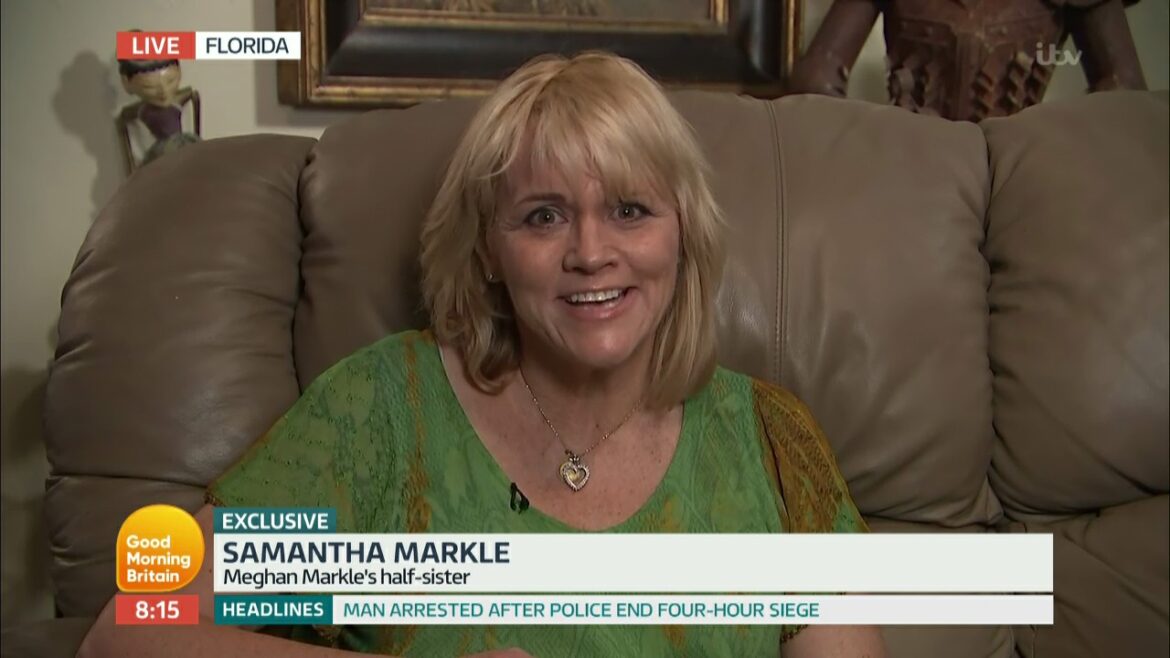
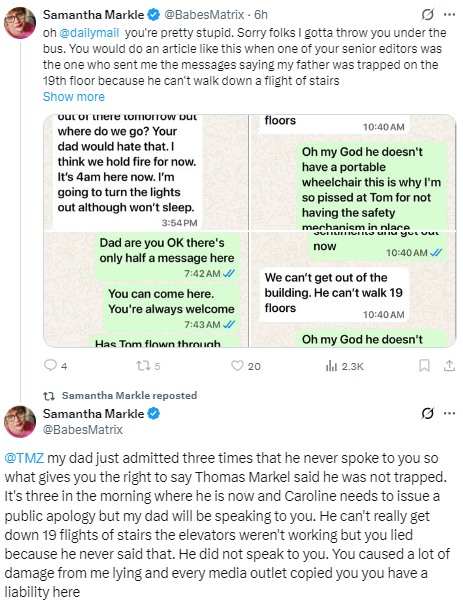
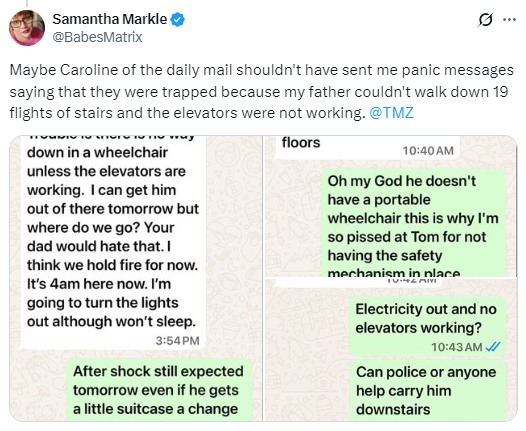
Well, funny story. Samantha is now calling out the Daily Mail, and she’s posted a bunch of text messages between herself and the Daily Mail editor Caroline Graham, who was in the Philippines with Thomas Markle? Previously, Graham also moved down to Rosita, Mexico to coach Tom and exploit him against Meghan. Samantha is also calling out TMZ and saying that Thomas never spoke to them either? Here’s my larger question: why the f–k is the Daily Mail’s Caroline Graham still *this* invested in Thomas Markle? They’ve already proven that they can get him to repeat their unhinged scripts, they’ve already paid him to sell out every single thing about Meghan. It’s been seven and a half years since Meghan cut him off – she’s not going to suddenly change her mind. This is sunk-cost fallacy on the Mail’s part.

Photos courtesy of Wenn/Avalon.

Samantha Markle discusses her tell-all book, ‘The Diary of Princess Pushy’s Sister’ on ‘Good Morning Britain’. Broadcast on ITV1,Image: 353689044, License: Rights-managed, Restrictions: WENN does not claim any ownership including but not limited to Copyright, License in attached material. Fees charged by WENN are for WENN’s services only, do not, nor are they intended to, convey to the user any ownership of Copyright, License in material. By publishing this material you expressly agree to indemnify, to hold WENN, its directors, shareholders, employees harmless from any loss, claims, damages, demands, expenses (including legal fees), any causes of action, allegation against WENN arising out of, connected in any way with publication of the material., Model Release: no, Pictured: Samantha Markle, Credit line: /Wenn/Avalon
Samantha Markle talks to the panel about paparazzi shots of her father and not being invited to the wedding of her sister Meghan and Prince Harry on ‘Loose Women’. Broadcast on ITV1,Image: 371638275, License: Rights-managed, Restrictions: WENN does not claim any ownership including but not limited to Copyright, License in attached material. Fees charged by WENN are for WENN’s services only, do not, nor are they intended to, convey to the user any ownership of Copyright, License in material. By publishing this material you expressly agree to indemnify, to hold WENN, its directors, shareholders, employees harmless from any loss, claims, damages, demands, expenses (including legal fees), any causes of action, allegation against WENN arising out of, connected in any way with publication of the material., Model Release: no, Pictured: Samantha Markle,Samantha Grant, Credit line: /Wenn/Avalon
Samantha Markle talks about her sister Megan and is coy when asked about her upcoming appearance on Big Brother ‘Good Morning Britain’. Broadcast on ITV1,Image: 379091972, License: Rights-managed, Restrictions: WENN does not claim any ownership including but not limited to Copyright, License in attached material. Fees charged by WENN are for WENN’s services only, do not, nor are they intended to, convey to the user any ownership of Copyright, License in material. By publishing this material you expressly agree to indemnify, to hold WENN, its directors, shareholders, employees harmless from any loss, claims, damages, demands, expenses (including legal fees), any causes of action, allegation against WENN arising out of, connected in any way with publication of the material., Model Release: no, Pictured: Samantha Markle, Credit line: /Wenn/Avalon


October 5, 2025 0 comments
0 FacebookTwitterPinterestEmail
'Sunfish and Other Stories on Green Lake'
TV & Streaming

‘Sunfish and Other Stories on Green Lake’

by jummy84 September 16, 2025
written by jummy84

Sierra Falconer’s Sundance gem is a rare bird: an anthology film that feels truly alive and interconnected. The filmmaker tells IndieWire how she decided to use such a tricky format to build her close-to-home stories into one wonderfully cohesive film.

September 16, 2025 0 comments
0 FacebookTwitterPinterestEmail

Social Connect

Facebook Twitter Instagram Pinterest Youtube Snapchat

Recent Posts

  • 2009 feels like a whole other world away

  • Watch Ariana Grande and Jimmy Fallon Perform a History of Duets

  • Spotify’s Joe Hadley Talks ARIA Awards Partnership

  • Nick Offerman Announces 2026 “Big Woodchuck” Book Tour Dates

  • Snapped: Above & Beyond (A Photo Essay)

Newsletter

Subscribe my Newsletter for new blog posts, tips & new photos. Let's stay updated!

Categories

  • Bollywood (1,929)
  • Celebrity News (2,000)
  • Events (267)
  • Fashion (1,605)
  • Hollywood (1,020)
  • Lifestyle (890)
  • Music (2,002)
  • TV & Streaming (1,857)

Recent Posts

  • Shushu/Tong Shanghai Fall 2026 Collection

  • Here’s What Model Taylor Hill Is Buying Now

  • Julietta Is Hiring An Assistant Office Coordinator In Dumbo, Brooklyn, NY (In-Office)

Editors’ Picks

  • 2009 feels like a whole other world away

  • Watch Ariana Grande and Jimmy Fallon Perform a History of Duets

  • Spotify’s Joe Hadley Talks ARIA Awards Partnership

Latest Style

  • ‘Steal This Story, Please’ Review: Amy Goodman Documentary

  • Hulu Passes on La LA Anthony, Kim Kardashian Pilot ‘Group Chat’

  • Hannah Einbinder Slams AI Creators As “Losers”

  • Facebook
  • Twitter

@2020 - celebpeek. Designed and Developed by Pro


Back To Top
celebpeek
  • Home
  • Bollywood
  • Hollywood
  • Lifestyle
  • Fashion
celebpeek
  • Music
  • Celebrity News
  • Events
  • TV & Streaming