Etro Spring 2026 Ready-to-Wear
Etro Spring 2026 Ready-to-Wear
Onitsuka Tiger Spring 2026 Ready-to-Wear
And just like that, it’s time to say “cheers” to London Fashion Week Spring 2026, and “ciao” as Milan Fashion Week begins. But before we set our eyes on the Italian fashion capital, scroll below to see all of our Spring 2026 coverage from London’s standout designers. Do you have an emerging …
Continue reading
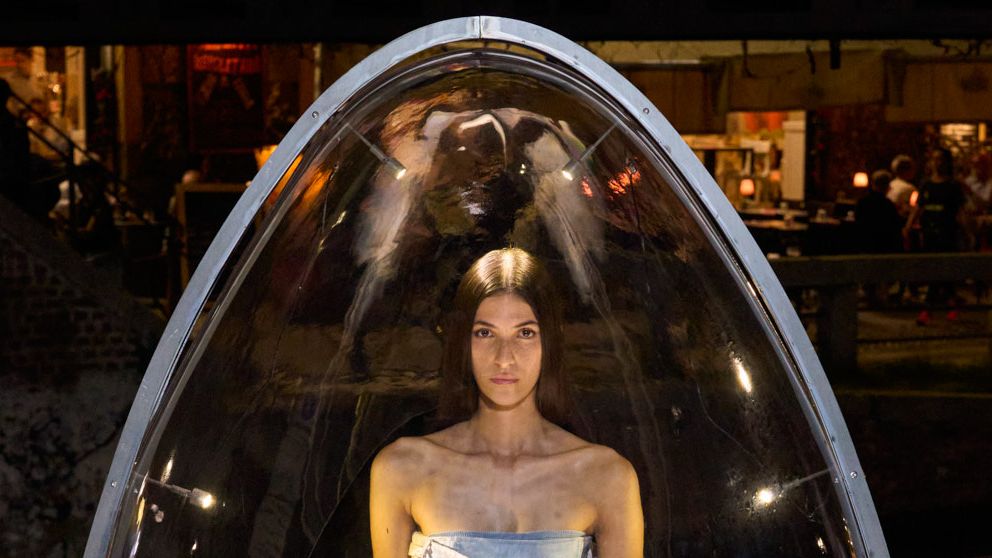
What do New York City’s mayoral frontrunner Zohran Mamdani and Diesel’s creative governor Glenn Martens have in common? They both love a scavenger hunt. Following last month’s “Zcavenger Hunt” that brought 2,000 followers out for Mamdani, Martens threw a similar event in Milan tonight—the Diesel Egg Hunt—that attracted more than 3,000 pre-registered participants.
Both men’s initiatives were designed to rally the public behind their relative causes. As Martens declared via his press release soapbox: “This is Diesel for the people, a collection discovered by the public at the same time as everyone else.” Everyone else was that shadowy fashion elite, the sinister cabal of editors, buyers and influencers that might typically expect to sit front row at a Diesel show and decree it a hit, miss or meh. Tonight, however, Martens left these illuminati in the dark.
Instead of showing his looks on a closed runway, he took them to the streets. Diesel dressed 55 models and installed them in 34 “eggs”— large, open-backed oval vitrines—which were then distributed at locations around Milan (with the support of the city’s mayor). As Martens explained in a pre-hunt briefing, each egg was labelled with a QR code. He added: “The first five people who find all of the eggs will win a full look of their choice from the collection, tailored for them. And the second five will win any Diesel denim look of their choice. And then the next ten get to choose an accessory. And for anyone who wants to be part of it without going on the hunt, we’ll be having a party in Piazza Beccaria where everyone can come together. There’ll be a free concert and drinks. Cute huh?”
And it actually was. Martens himself has quite enough runway on his plate over at Maison Margiela right now. Plus the schedules are heaving with so many shows that this one-season runway sabbatical made sense, at least on paper. In practice it’s too early to say, because at the time of writing the Diesel Egg Hunt is still going on.
Despite Martens’s democratic instinct, realpolitik demanded he play nice with Big Fashion. Which is why Vogue Runway and a few other powerful lobbyists were allowed to glimpse the collection immediately before Diesel’s eggs were hatched. The designer was especially proud of a newly developed fabrication that saw recycled poly-satin interwoven with denim, which was then distressed and treated to create iridescently surfaced dresses and biker-accented outerwear.
Womenswear bi-material jumpsuits seemed partially torn asunder at the crotch, but kept just barely in place by web-hemmed panels of knitwear. Floral dresses were embedded below layered manes of distressed chiffon at the shoulder. Tailoring was shaped in protective double-neoprene, and was sometimes patterned via a sort of x-ray process through which bleach applied through lining and construction left a rough outline stenciled on the surface of the garments.
The wildness of pattern, proportion and presentation reflected the brief Martens had shared with his design team: “the animal within.” This looked to be another effective campaign moment in the designer’s ongoing term as Diesel’s elected top dog.
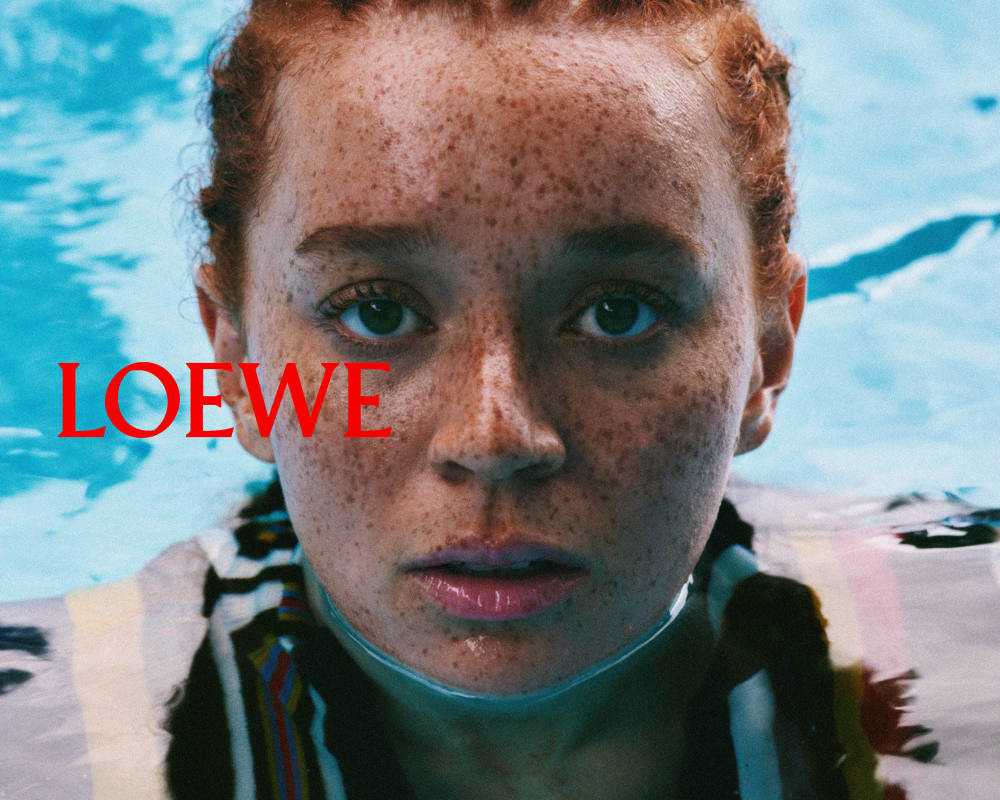
These are the stories making headlines in fashion on Tuesday. Ahead of Jack McCollough and Lazaro Hernandez’s Loewe debut, the designers released a teaser campaign for the Spring 2026 collection. Photographed by Talia Chetrit, it stars up-and-coming actors Erin Kellyman, Eva …
Continue reading
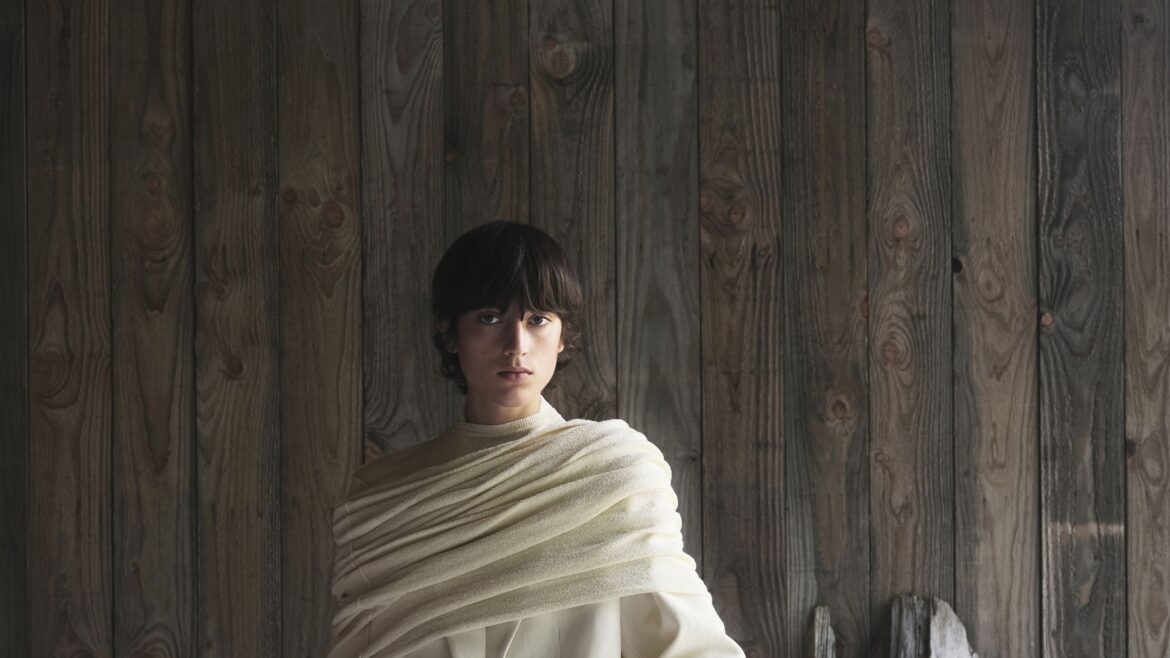
Co’s Stephanie Danan began our appointment talking about how the spring collection was about “fluidity” and the “unexpected way of mixing our sportswear with our eveningwear.” She continued, “As the collection came together with the styling and the location there was a sense of escape a little bit. Living in a bubble and just kind of not listening to the noise right now of what we want to wear, what we should wear, what’s going on in fashion, what’s going on in the world.”
She certainly cut out the noise, delivering a pared-back collection of a handful essential pieces. A light maxi knit “T-shirt” dress that she and Samuel Drira, her stylist and collaborator, layered over a linen suit, and over fringed separates, scrunched up around the shoulders as a kind of looped shawl. There were light, garment-dyed poplin separates—a trench coat, a button down shirt, narrow trousers; a truly terrific leather “poet blouse” jacket; and a handful of low-key, airy gowns including one in devoré velvet worn backwards and layered with “a bunch of skirts underneath just to elevate the whole thing.” There were no pops of color, just a sea of whites, black, and washed out military greens, everything worn with everything else. The point was not necessarily high/low dressing or the theory of opposites, but more simply a matter of why not just wear everything you love. “During our fittings with Samuel and the design team we just thought, ‘let’s get radical here,’” Danan added, after a string of “no, no, no’s” of all the things they’d rejected. “We’re just like, ‘this is who we are. This is our identity. This is what we think that you will love from us.’”
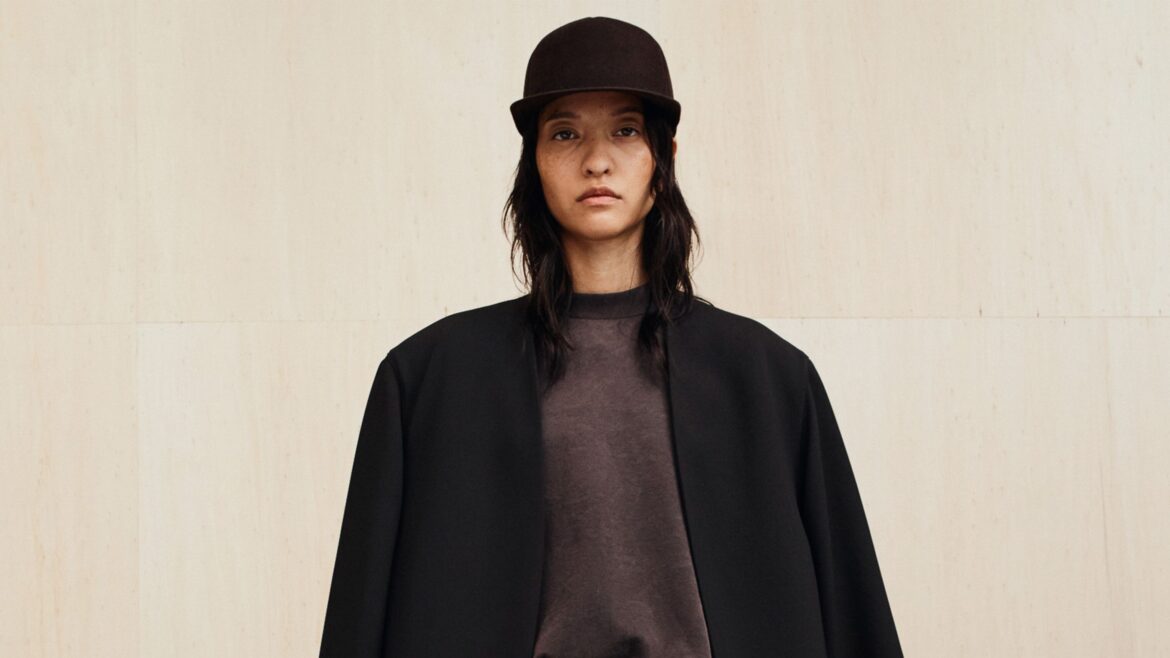
Twelve years and nine collections in, Jerry Lorenzo has stepped up to the plate with the launch of his first full Fear Of God mainline womenswear collection. After an initial first meet-up to see it on the rail in Paris during menswear this June, Lorenzo hopped on a call last Friday to bring Vogue Runway up to speed on the release of his label’s long-gestated entry into this fashion league of its own. “I finally felt I was at the point where I could transmit ease and elegance through construction and lightness,” he said.
Lorenzo is extremely completist in his approach to design: so did this leap from menswear, where he has an inbuilt affinity with his target audience, challenge that? “In menswear, I’m chasing a feeling, and it’s a feeling I know instinctively. So not being a woman puts me at somewhat of a disadvantage, because I can’t innately understand what that feeling is. That for me was the toughest part,” he said.
Part of the collection was rooted in a territory Lorenzo knows extremely well: sportswear, and particularly baseball attire. Here you could see him apply the processes of refinement and elevation of sportswear codes that he has long developed in menswear to womenswear pieces including a cropped, sculpturally shaped hooded jacket and matching drawstring waist paint in slate-shaded nylon taffeta, and a black double faced wool/cashmere coat with baseball collar and sidesplit hem.
Elsewhere, Lorenzo adapted his sensibility to this entirely new playing field without any apparent training wheels drawn from his menswear experience. A spaghetti-strap slip dress in sheer wool-viscose voile was effectively bias cut and body-skimming. Lorenzo said of it: “I just love the simplicity, that you can wear it as it is in the lookbook, super chic and straightforward. Or you could throw it on with some Doc Martens and a flannel, you know, and be super tough. It’s meant to seem simple, but it took 12 or 13 samples to get right.”
Elsewhere the vented hem of a dark ochre boat neck dress in wool was weighted to gather and fold with movement. A floor-length dress shirt was shaped to a familiar architecture but in a fluidly skittish hammered silk chiffon. Working in this as well as other unfamiliar fabrics including sheer jerseys and lightweight cashmeres was both “fun and frustrating,” said Lorenzo. Frustration or no, womenswear represents a learning curve he is determined to surmount: “I feel like this is the biggest thing—the most exciting new frontier for the house.”
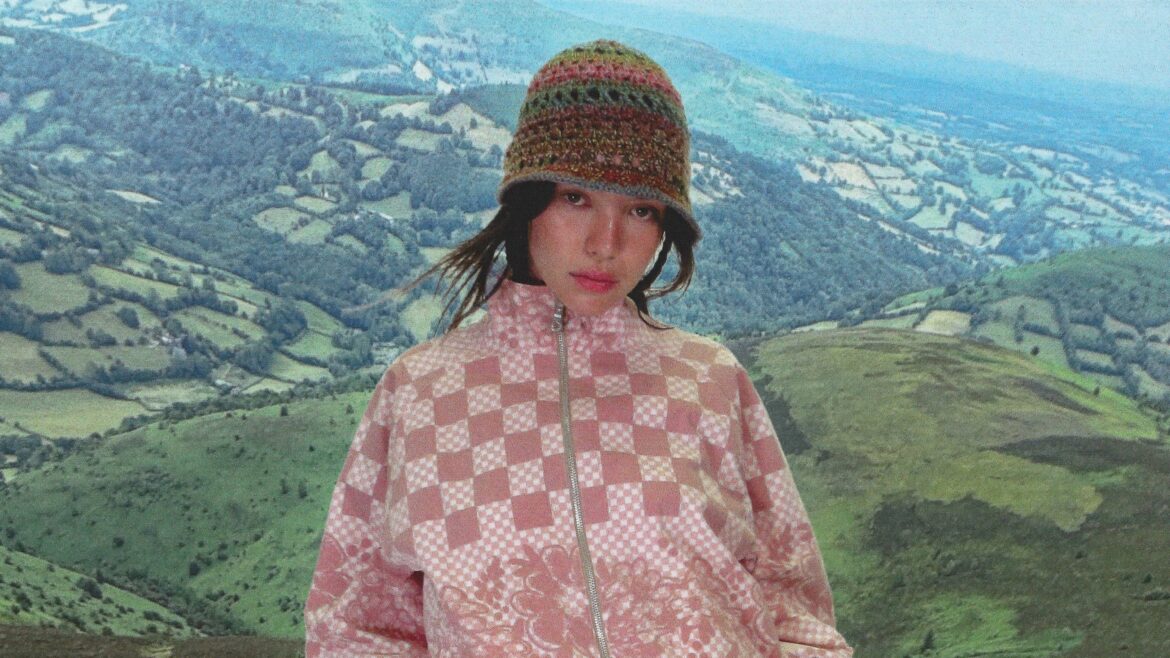
The starting point for Paolina Russo’s spring 2026 collection came during a research trip to Ilsan, northwest of Seoul—a city known for its vast array of vintage shops. “They have these mountains of vintage, from America, the UK, everywhere,” the brand’s namesake co-founder Paolina Russo said in a preview. The brief? To find archival designs that read “Laura Ashley meets sport”—which, unsurprisingly, was a near-impossible task. “There weren’t any clothes exactly like that, but we were kind of clashing together silhouettes,” Russo explained.
Laura Ashley’s ditzy florals might seem a million miles away from Paolina Russo’s trademark jersey tops and optical illusion prints, but Russo and co-founder Lucile Guilmard wanted to explore a more feminine side this season. This could be seen via the lightweight chiffon handkerchief dresses, adorned with a combination of Liberty-esque florals and graphic sports jersey numbers—collaged together using blown-up photographs of archival designs from previous seasons. The pastoral theme (also reflected by this season’s deliberately low-fi lookbook, featuring photographs taken by Russo during a hike in Wales) continued with the pair’s “girly” take on a tracksuit, in the form of an elasticated maxi skirt and matching zip-up jacket, featuring distorted picnic blanket checks.
The brand’s lighter, more wearable knits were also new for this season—painstakingly developed in collaboration with a vertical factory in Hong Kong that manufactures everything from “fiber to final garment.” While in the past, Paolina Russo has arguably found more success with its fall collections—thanks to its popular warrior princess knits and laser-printed denim—spring 2026 marked a pivotal moment in the brand’s development. “We feel like it melds all the things that we’ve been building for the past few seasons, but it’s now more of an expanded wardrobe,” Russo said. “It’s one of our favorite collections.”
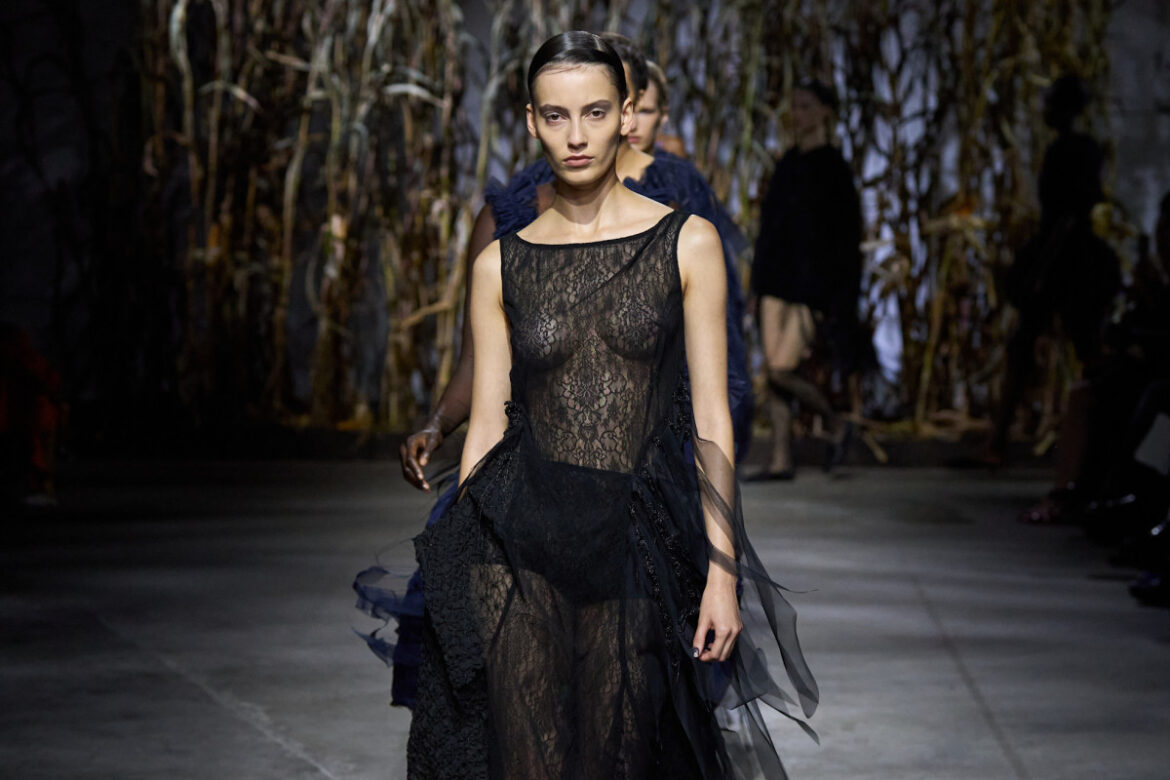
“People are telling me that they’re feeling a new energy,” British Fashion Council CEO Laura Weir told me from the front row on Sunday. “There’s a feeling of revitalization in the city — from dawn until dusk, there’s so much happening. It’s a new era for British fashion.” Indeed, the Spring 2026 …
Continue reading
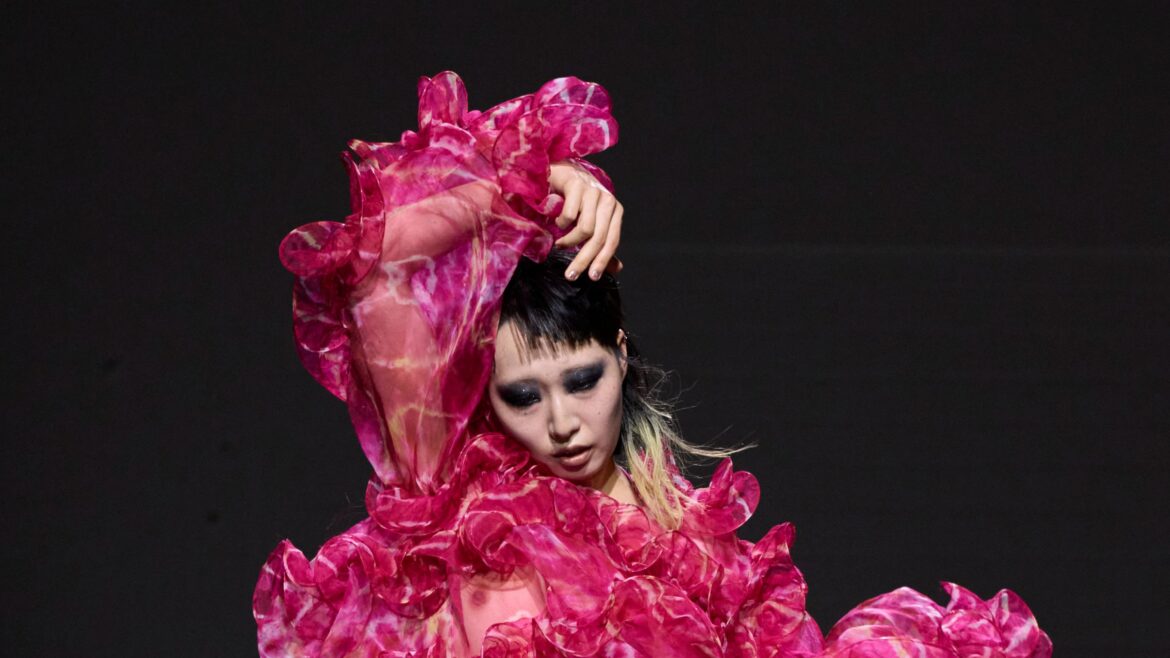
This was one of those rare, impossible-to-stop-watching shows during which your phone warns you that you’re running dangerously low on storage. Ashish Gupta might not be the most fashionable of fashion designers on the London schedule—he’s been around way too long to ever be the next big thing—but he absolutely ranks among the very best.
This show illustrated precisely why: here is a designer who possesses not only an instinctual litmus for cultural atmosphere, but also the capacity to meaningfully react to it through the creation of artful, soulful fashion. As he outlined in a show note poem entitled Autobiography of a Dress, this collection was meant as “an antidote to anti-boats,” a gesture of resistance above and beyond this particular moment of dismal social division, both in the UK and beyond.
The show was cooked up with performance artist Linder Sterling. Together they put out a casting call for dancers, and whittled down the 300 respondents to around 40. As Gupta rightly observed backstage: “I was terrified because dance shows can be a little bit cringe.” To give the performance a bit of structure, he and Sterling determined that it should be shaped around the notion of this being the last party in the world: “And that’s kind of where the concept came from.”
As well as being a wonderful advertisement for the elasticity of his garments in the face of extreme movement, the show was emotionally moving. “You have to remember what you are fighting for,” said Gupta. “It’s like something that Arundhati Roy wrote: ‘you have to seek joy in the saddest of places.’” The models, freed to dance like it was their last time on the floor, threw shapes as diversely individual as they were: once they had completed the circuit around the spotlit runway they gathered in its center to keep on moving.
The collection was mostly drawn in sequins, the shiny building block of Gupta’s signature practice. Across a wide range of party-ready garments for men and women these sequins came choreographed in check, tie-dye, Shibori and other patterns which, as the designer observed, have all evolved across time, borders and cultures. The collection also included a few pieces, including the funkily colored faux furs, plucked from the designer’s upcoming collaboration with UK retailer Debenham’s: hats off to them for having the sense to hitch their wagon to Ashish.
Although this collection and show was called Fresh Hell after the atmosphere Gupta and Sterling were kicking against, watching it was heavenly. I personally have an extremely low tolerance for fashion shows that incorporate dance—they often really do make you cringe— but this was an awesome exception. Backstage, wearing one of the Fashion Not Fascism T-shirts created with artist Rachel Louise Hodgson, Gupta said: “The point of it was to say we’re not going to be sad about this shit: we’re going to fight.”