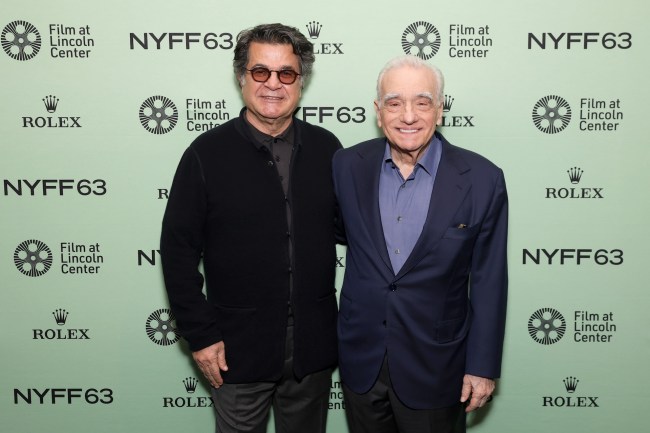
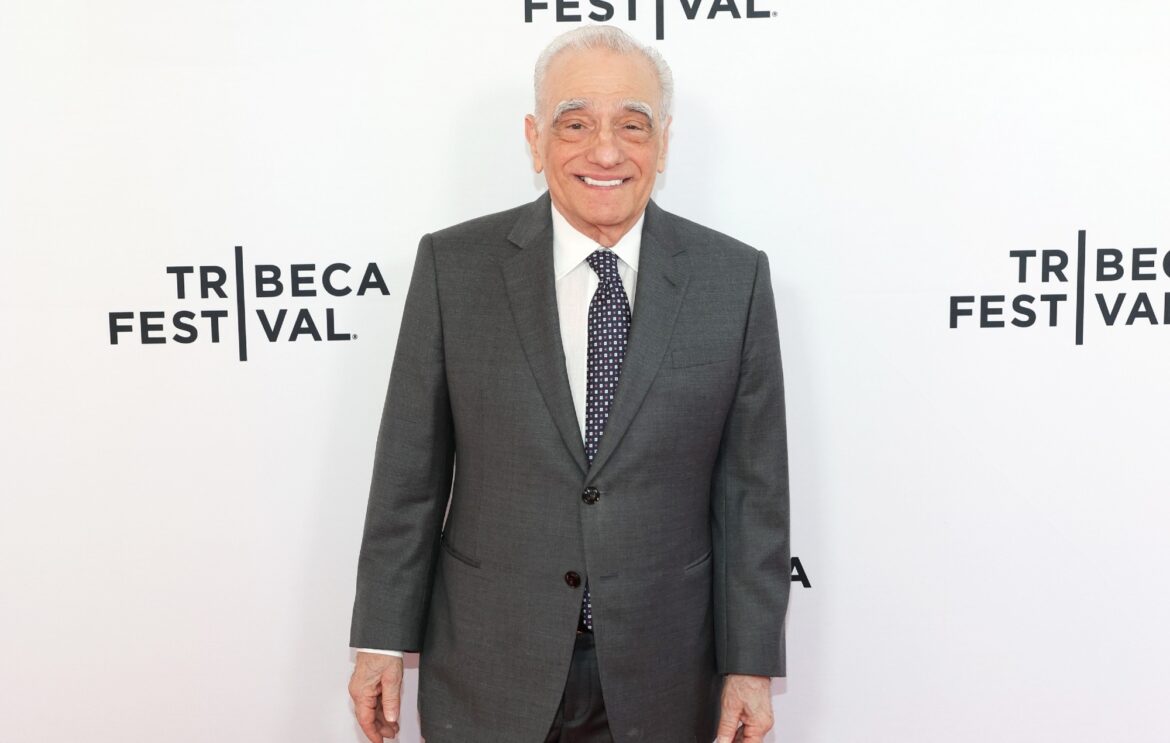
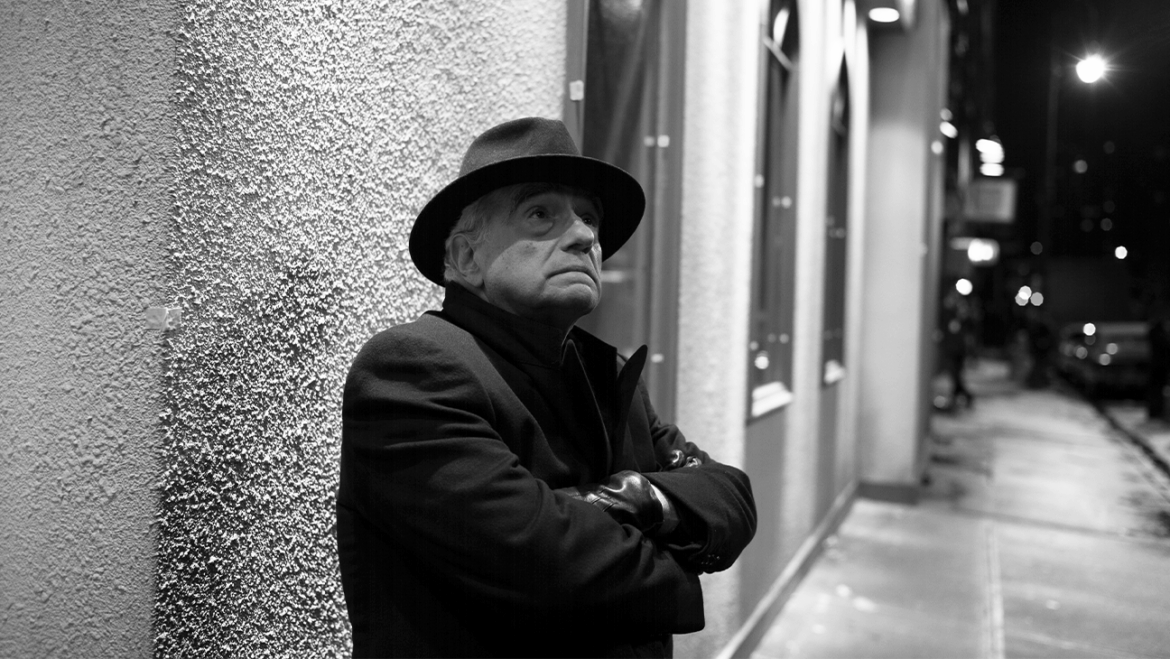
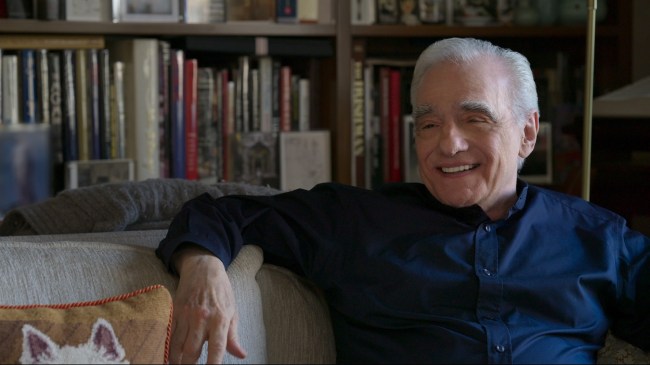
Sitting across from him is the highest point in my career in cinema. Mr. Martin Scorsese, the EP on #Homebound hosted a screening and did a QnA with me in NYC!
I was obviously nervous and sweating about doing a QnA with the master. Mr. Scorsese saw that in the green room. He… pic.twitter.com/QwWbzGT0Wt
— Neeraj Ghaywan (@ghaywan) November 8, 2025
Scorsese
After initially being canceled due to visa issues, New York Film Festival audiences on Friday were treated to a warm and wide-ranging conversation between Jafar Panahi and Martin Scorsese. The two titans of cinema took to the stage of the Walter Reade Theater (plus Panahi’s translator) to discuss the Iranian filmmaker’s career, including the many incidents that have forced him to work in secret, plus his latest film, Palme d’Or winner “It Was Just an Accident.”
Panahi’s latest is his first feature since he was incarcerated for several months in 2023 for criticizing the Iranian government. As he has often been forced to do in recent years, Panahi shot the film in secret. The film was inspired by his own experiences in prison.

At the conclusion of the hour-long-plus discussion, Scorsese asked Panahi what he thinks the future of Iranian cinema is these days, particularly in light of the departure (and exile) of many of Panahi’s contemporaries, such as Bahman Ghobadi and Mohammad Rasoulof.
“After the revolution, these waves of migration, forced migration almost, started as unwanted exile,” Panahi said through his translator. “Many of the actors and directors who were at the height of their careers were forced to leave Iran. … This became more and more and it was really difficult to bear, especially in the first decade after the revolution. … All the backbones of Iranian filmmaking are out. I really miss all those films that they could have made in Iran and that they didn’t. Some of them were able to adapt and stay [there] and work [there], but then there are others like myself who cannot leave Iran.”
As our own Anne Thompson told it best in her recent profile of “It Was Just an Accident” filmmaker and auteur Panahi: “Over the past 15 years, [he] has been imprisoned, blindfolded, interrogated, and put under house arrest with a 20-year ban on making films” by his native country. But on Friday, Panahi was firm: He’s not leaving Iran, and he’s excited about the filmmaking community that endures.

“I don’t have the courage and I don’t have the ability to leave Iran and stay out of Iran,” Panahi said. “I have stayed there and I am going to work there. But there is something else I want to add, there are a lot of young filmmakers who are coming and who are making the best films of Iranian cinema in the same style that we are making films. And they are not going to accept censorship whatsoever. And it has become so common that even within the film circles in Iran, everyone is talking about taking these people seriously, people making films clandestinely, whereas there was a time that no one really paid attention.”
He added, “Although we are not concerned about the future of Iranian cinema, we very much would love for all of our friends who left to return one day,” noting that Rasoulof in particular is looking for ways to return to his home country to work.
Scorsese, who is clearly a huge admirer and fan of Panahi and his work, was quick to offer his ideas for how the work of these rising filmmakers can and should be seen: in short, widely.
“This has to be supported by the international distribution [world], I would think, streaming platforms, film festivals, et. cetera, these films have to be supported that way, for us to see them,” Scorsese said. “Streamers have a lot of room, and they throw things that are just not up to the same level [on to their platforms]. There’s no reason why a Criterion, a Mubi, an Amazon, all of that couldn’t show these films.”
The filmmaker and champion of film also noted that the impact could be profound, not just on cinema, but Iran itself.
“I mean, neorealism from Italy in 1945, it gave the heart back to the Italian people that was destroyed during the war and with everything that happened,” he added. “The film themselves, it gave their soul back, through cinema, and that was neorealism. So cinema can be very powerful, everybody can see that. So it’s really getting to see these films. It’s not just putting them on something, and putting them up on, what are they called? Tiles? You have to kind of curate them, so you know where you’re going, you know what you’re looking at.”
Scorsese and his light disdain for streamers’ homepage tiles was greeted with applause, and both Scorsese and Panahi, who ended their chat with a long hug on stage, were met with a standing ovation. This one was worth the wait.
Neon will release “It Was Just An Accident” in theaters in New York and Los Angeles on Wednesday, October 15, with a national rollout to follow.
Martin Scorsese almost became a priest but was kicked out for bad behaviour
Martin Scorsese has revealed that he trained for the priesthood in his younger years, until being kicked out for bad behaviour.
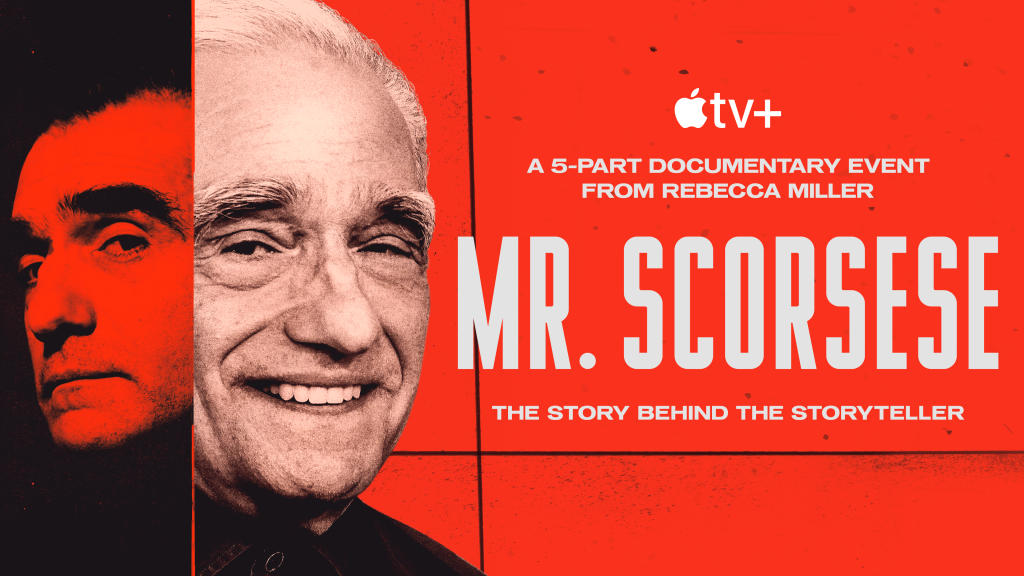
Mr. Scorsese, a new documentary series, delves into the filmmaker’s life and achievements, and charts his rise to becoming the Oscar-winning director behind cinematic classics such as Raging Bull, Taxi Driver, and Goodfellas. An article by Variety quotes a moment in the series where he discusses a moment early in his life where he could have taken another path.
Raised Catholic, Scorsese attended mass at St. Patrick’s Cathedral in New York City from a young age, and his faith inspired him to start studying for the priesthood. “There was a preparatory seminary, and that was on 85th Street somewhere. I did okay for the first few months, but something happened,” he said.
While Scorsese didn’t specify the incident, he explained: “I began to realize the world is changing. It was early rock and roll and the old world was dying out. I became aware of life around me. Falling in love or being attracted to girls, not that you’re acting out on it, but there were these feelings, and I suddenly realized it’s much more complicated than this. You can’t shut yourself off.”
He concluded: “The idea of priesthood, to devote yourself to others, really, that’s what it’s about. I realized I don’t belong there. And I tried to stay, but they got my father in there, and they told him, ‘Get him out of here.’ Because I behaved badly.”
While best known for his films based in the world of organised crime, Martin Scorsese has directed some religious stories as well. In 1988, he made The Last Temptation Of Christ, a depiction of Jesus’ (Willem Dafoe) imagined personal struggles that drew criticism from Christian groups at the time.
He would also make 1997’s Kundun, based on the life of the 14th Dalai Lama, and 2016’s Silence, about the quest to find a missing Jesuit priest.
Mr. Scorsese airs on Apple TV+ on October 17.
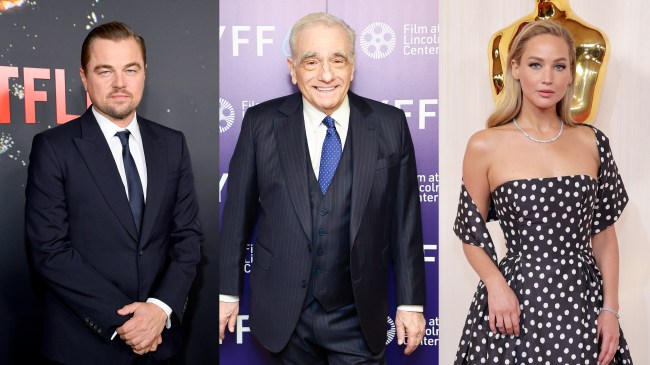
Last month, it was revealed Scorsese would be reteaming with regular collaborator Leonardo DiCaprio on ghost story What Happens At Night.
An early montage in Rebecca Miller‘s montage-heavy five-part documentary on Martin Scorsese focuses on the ways that friends, loved ones and collaborators address the Oscar-winning director.
There are several “Martys” among the ultra-familiar, a lot of “Martins” among the respectfully familiar, and a few “Mr. Scorseses” among the familiar but deferential. (“Martin Scorsese” would be reserved for the respectfully distant and, of course, “Scorsese – Monster: The Martin Scorsese Story” for Ryan Murphy.)
Mr. Scorsese
The Bottom Line
Conventional but utterly engaging.
Venue: New York Film Festival (Spotlight)
Airdate: Friday, October 17 (Apple TV+)
Director: Rebecca Miller
Miller’s docuseries is titled Mr. Scorsese and that encapsulates her approach as well: This overview of Scorsese’s career is thorough, peppered with warmth and affection, but perhaps just a shade more conventional and, yes, deferential, than the subject matter might ideally require. Especially in its second half, Mr. Scorsese becomes a little bit of a laundry list, and its attempts to tie together aspects of Scorsese’s career feel a little rushed. But the series has enough wonky inside-baseball film conversation for serious fans — in its best moments, it could nearly be called Ms. Schoonmaker — and enough clips and colorful stories to inspire casual observers to seek out a couple more semi-obscure Scorsese titles.
Scorsese’s life and work, still ongoing thank heavens, have been given a rather simple five-act structure for purposes of the documentary. Miller starts with Scorsese’s early biography and his evolution from aspiring priest to student filmmaker to first-time feature director on the Roger Corman-produced Boxcar Bertha. Then it’s over to Mean Streets, Scorsese’s early Robert De Niro collaborations, cocaine and over-exertion. Then more cocaine, plus Raging Bull and the director’s mid-80s wandering in the cinematic desert. Then the series concludes with Last Temptation of Christ and Goodfellas, followed by the Leonardo DiCaprio years, resolving with pre-production on Killers of the Flower Moon.
For the most part, Miller has access to all of the people you need to tell Scorsese’s story — starting with Scorsese, who clearly sat for a lot of in-depth interviews in a variety of locations, including what appears to be a waterside vacation house; a cluttered urban office; and, best of all, several darkly lit restaurants, where he gets to gab with friends from childhood as they remember their rough-and-tumble upbringing with a mixture of candor and nostalgic romanticization. Miller sits down with all three of Scorsese’s daughters, ex-wife Isabella Rossellini, peers like Brian De Palma and Steven Spielberg, stars such as De Niro and DiCaprio (along with the likes of Miller’s husband Daniel Day-Lewis, Margot Robbie and Sharon Stone), and an assortment of regular collaborators, with longtime editor Thelma Schoonmaker and writing partners like Paul Schrader and Jay Cocks among key behind-the-scenes figures.
Rounding out the documentary are younger directors following to varying degrees in Scorsese’s footsteps, like Spike Lee, Ari Aster and both Safdie brothers. Journalist/film scholar Mark Harris pops up late in the series to smooth some intellectual transitions. These relative outsiders offer some insight, but rarely feel as seamlessly integrated into Miller’s story as the people who were there.
The first two episodes, which lay the foundation for all of Scorsese’s fixations and themes, were my favorites, with Scorsese and his assortment of matured tough-guy pals steering anecdotes interspersed with storyboards drawn by a young Scorsese and footage from his acclaimed student films. Miller is never formally adventurous, though some of the art/artist parallels are illustrated in thoughtful split-screens. From the violence he witnessed in the streets to the escape offered by secure and air-conditioned movie theaters to the moral inquiry prompted by his immersion in Catholicism, this is Scorsese in a nutshell, delivered with the director’s trademark volubility that remains delightful even if most of the background was conveyed in documentaries like Italianamerican and A Personal Journey With Martin Scorsese Through American Movies.
Martin Scorsese has always been an open book, a storyteller who has offered his autobiography freely and an auteur whose deepest philosophical themes have been recurring and explored in bold type. That he’s never been an “Oh, I’d prefer to let the work speak for itself” recluse is to Miller’s advantage. But she has to push to get different or deeper engagement, leaving many of her questions and conversational detours audible.
Given that it could easily have become oversaturated with testosterone, it’s obvious that Mr. Scorsese benefits from being made by a director who isn’t simply a giddy fanboy. It’s in moments like Miller’s inquiry about the use of hands as a motif in The Age of Innocence that you can see Scorsese relax and embrace a topic that isn’t the usual gabbing about violence and Catholic guilt and whether or not he can be classified as a gangster filmmaker — not that those topics are excluded.
Nothing is exactly off-limits, but one can sense Scorsese trying to de-sensationalize his drug use or the work-related obsessiveness that led to his many divorces so thoroughly that there’s nothing for Miller to dwell on. This makes the version of Scorsese’s life presented here follow a very familiar “Rise, slight fall, rise again” arc, along with a “Sexagenarian or septuagenarian gets another chance at fatherhood and corrects the mistakes he made the first time, much to his older children’s resignation/chagrin” formula that has become so common for documentaries about men of a certain age.
Scorsese’s big movies get the most extensive focus, and the truth is I could happily watch five hours of Scorsese and Schoonmaker breaking down tape on Raging Bull, Goodfellas and Mean Streets. But it’s often just as interesting when Scorsese goes somewhat deep on a less expected film, like the long-term dream project Gangs of New York, or a less universally adored project like Casino.
Miller is so eager to at least touch on everything on Scorsese’s resumé that the few gaps stick out. I’m pretty sure, for example, that Scorsese’s only scripted feature not to get even a token mention is Hugo. Do I need a deep exploration of Hugo? Nah, but Scorsese’s ability to adapt to and evolve with cinematic technology is a big part of his venerability. Do I need deep dives into Boardwalk Empire or Vinyl? Probably not, but those HBO dramas, one a reasonably large success and the other a large failure, represent a not-insignificant portion of Scorsese’s output from the past 15 years.
I’m also a bigger fan of Scorsese’s documentary work than Miller seems to be. While The Last Waltz gets ample attention, it’s odd that Mick Jagger is in the documentary for basically one quote about the way music is used in Casino, without mentioning the Rolling Stones concert film Shine a Light.
Again, though, what’s missing in Mr. Scorsese stands out because so much is present, and present in such solidly rendered ways. Scorsese is an always entertaining raconteur; the footage and outtakes from his films fuel an instant desire for a career retrospective binge; and his daughters (especially Francesca, whose social media posts with her dad have often gone viral) round out the character portrait beyond his normally fast-talking, excitedly curmudgeonly persona. I never wanted anything different, just slightly more, from the docuseries.
In the second episode of Rebecca Miller‘s enthralling five-part documentary on Martin Scorsese, the chronological review of his life and career reaches the 1976 classic “Taxi Driver.” Jodie Foster, sitting for a new interview on a film she’s been discussing for almost five decades, recounts how “gleeful” her director was to be making movies. “He was excited about how the blood got made,” Foster says, her eyes widening to mimic Scorsese’s delight. “And, when he was gonna blow the guy’s head off, how they put little pieces of Styrofoam in the blood so it would attach to the wall and stick there.”
“We had a great time,” Scorsese says. But then he pivots. He starts talking about how the studio “got very angry at us because of the violence,” because of the language, because of the “disturbing” depiction of New York City’s “seedy” underbelly. When the MPAA slapped “Taxi Driver” with an X-rating, Columbia Pictures told Scorsese to edit it down to an R-rating — or they would.


“That’s when I lost it,” Scorsese says. Miller pipes in to ask what he did, exactly, and Scorsese — visibly irked by the memory — repeats himself, stammers a bit, and then breaks into a wide grin. He knows the story from there, but the documentary allows Steven Spielberg (who Scorsese called for advice at the time) and Brian De Palma (who remembers Scorsese “going crazy”) to set up what happens next. All Scorsese has to explain is whether he had a gun (he says he didn’t) and why he was “going to get one.” “I would go in, find out where the rough cut is, break the windows, and take it away,” he says. “They were gonna destroy the film anyway, you know? So let me destroy it.”
Thankfully, it never came to that, but the director’s two extremes — the divine joy Scorsese finds through making movies set against the near-total ruination he’s endured for his art — rest at the center of what Miller aptly designates “a film portrait.” While touching upon all his feature films (almost), including new interviews from famous collaborators like Robert De Niro and Leonardo DiCaprio, as well as childhood friends and family members (including his three daughters), the series juxtaposes the angels and demons that have long defined one of cinema’s true “cornerstones” (as Spielberg calls him) in order to better appreciate how he’s interrogated them, year after year, right in front of our eyes.
Yet for as heavy as “Mr. Scorsese” can get — addressing modern America’s scourge of Travis Bickles, the rise of the religious right (timed to “The Last Temptation of Christ”), and Scorsese’s brush with death, four divorces, and bout with depression — it’s also enormously entertaining. Miller launches right into her invigorating assessment and keeps the pace up throughout.
The first hour is largely biographical, covering Scorsese’s early days in New York from childhood through film school. Archival interviews with his parents (many of which come from Scorsese’s own 1974 documentary, “Italianamerican”) help contextualize Scorsese’s own candid memories.
“I did see serious stuff,” he says, before a pointed pause. “Violence was imminent all the time.”
Miller also features a few of Scorsese’s childhood friends who, in addition to the standard one-on-one interviews, gather around a barroom table to reminisce with Scorsese and, later on, De Niro. They remember their Lower East Side neighborhood as the “hub of the five mafia families” and share one harrowing story about finding a dead body that implies such sightings weren’t all that unusual.

Scorsese clearly experienced plenty first-hand, but his asthma also kept him in his room for extended periods, where he’d watch the neighborhood drama play out from window pane to window pane — perhaps, as screenwriter Mitch Pileggi suggests, priming him to see the world through film frames. (Scorsese credits the formative vantage point for why he loves high-angle shots, while Spike Lee pops in to say, on behalf of all cinephiles, “Thank God for asthma!”)
After acknowledging the impact Catholicism had on a young Scorsese (which never fully left him) and traveling out west for his initial days in L.A. (which never quite fit), the premiere ends by teeing up “Mean Streets” — with an irresistible kicker of a smirking De Niro — and the series shifts into a movie-by-movie narrative structure. While working through his oeuvre, identifying thematic overlap and stylistic progression (with notable assists from legendary editor Thelma Schoonmaker, operating her editing bay, as well as animated renderings of Scorsese’s first hand-drawn storyboards), Miller particularly excels at balancing her subjects.
She brings in the real-life inspiration for De Niro’s Johnny Boy to answer questions about the character. (He does not disappoint.) She prods her husband, Daniel Day-Lewis, to link “The Age of Innocence” to the rest of Scorsese’s movies by citing the “savagery of it.” And when Scorsese admits “there were some drugs going on” during production on “New York, New York,” Paul Schrader provides a blunter, more colorful description: “These were the cocaine years,” he says, “[and] ‘New York, New York’ was a very coke-y set.”
Isabella Rossellini serves a similar function when elucidating her ex-husband’s near-death experience in 1978 and his destructive temper in the years after. “He could demolish a room,” Rossellini says. She remembers mornings he would wake up angry, muttering “fuck it, fuck it,” over and over, without explanation, but she also recognized that he would channel that anger into his work. “[It] gave him the stamina” to get through shoots, she says, shortly before Scorsese credits therapy for saving his life. “If it wasn’t for the doctor — five days a week, phone calls on the weekend, strong steady work on straightening my head out — I’d be dead.”
The director’s devotees and film scholars at large may recognize material covered in Miller’s five-hour documentary. Fans of certain movies may also be disappointed with the time allotted for each of them (especially if you love “Hugo,” the only feature to get no dissection whatsoever), and it’s a little annoying that an episodic series (that’s nicely broken into episodic arcs) chooses to exclude all of Scorsese’s TV work. (No “Boardwalk Empire,” no “Pretend It’s a City,” and — least surprisingly — no “Vinyl.”)
But “Mr. Scorsese’s” entertainment value is without question. Where else can you hear about Scorsese throwing a desk out a window on the set of “Gangs of New York” during a fight with Harvey Weinstein? Or Schoonmaker remembering how Scorsese would direct his own mother in movies? (“He would literally just say, ‘OK, Mother, start now’” — giving her the first line and then asking her to improvise the rest.) Or a plainly uncomfortable DiCaprio saying the words “woman’s buttocks” while breaking down the opening shot of “The Wolf of Wall Street”?
Nor could anyone dismiss the value of Miller’s analysis. From the opening song (“Sympathy for the Devil,” of course) playing under a montage of existential questions invoked by his movies to the closing message that Scorsese literally lives for filmmaking (even if it kills him), “Mr. Scorsese” confronts her subject’s lifelong dichotomies while defining how each of his films helps unite and define them.
To close out her introductory thesis, a TV host says to Scorsese, “You once said, ‘I am a gangster, and I am a priest.’” Scorsese replies, “I said to Gore Vidal one day, ‘There’s only one of two things you can be in my neighborhood. You can either be a priest or a gangster.’ And [Vidal] said, ‘And you became both.’”
To paraphrase Spike Lee, thank God he did. Thank God he could. And thank God he found so many ways to share himself with the world.
Grade: A-
“Mr. Scorsese” premiered Saturday, October 4 at the New York Film Festival. Apple will release all five episodes on Friday, October 17.
Apple TV+ on Wednesday released the trailer for Mr. Scorsese, its five-part documentary series from Rebecca Miller about 11-time Oscar-nominated director-writer-producer Martin Scorsese.
The docuseries is gearing up for its world premiere Saturday in the Spotlight section of Scorsese’s hometown New York Film Festival. That comes ahead of an October 17 release date on the streamer.
Mr. Scorsese features never-before-seen footage and in-depth interviews with those closest to Scorsese, with a talking-heads list that includes his frequent leading actors Robert De Niro, Daniel Day-Lewis and Leonardo DiCaprio along with Mick Jagger, Robbie Robertson, Thelma Schoonmaker, Steven Spielberg, Sharon Stone, Jodie Foster, Paul Schrader, Margot Robbie, Cate Blanchett, Jay Cocks and Rodrigo Prieto; his children; wife Helen Morris; and childhood friends.
Along with interviews with Scorsese, the interviewees and his own artistic output will help paint a picture of the man whose singular filmography grapples with the question of whether humans are intrinsically good or evil (“I struggle with that all the time,” he says in the trailer), beginning with 1967’s Who’s That Knocking at My Door starring Harvey Keitel and includes such wide-ranging titles as Mean Streets, Taxi Driver, Raging Bull, The Last Temptation of Christ, Goodfellas, Gangs of New York, The Aviator, The Departed (his only Oscar Best Director win so far), The Wolf of Wall Street and his last pic, 2023 Best Picture Oscar nominee Killers of the Flower Moon.
(Upcoming addition to the list: As Deadline broke earlier this month, Scorsese just locked in his next film, with DiCaprio and Jennifer Lawrence set to star in the ghost story thriller What Happens at Night.)
“I knew I could express myself with pictures,” Scorsese says. “But I had to find my own way.”
Executive producers of Mr. Scorsese include Miller and Damon Cardasis, Cindy Tolan, Rick Yorn, Christopher Donnelly and Julie Yorn. Ron Burkle is producer of the docuseries, which is presented by Expanded Media and Round Films in association with LBI Entertainment and Moxie Pictures.
Check out the trailer above.
There have probably been five or six “next projects” that Martin Scorsese has been reported to be directing after he did “Killers of the Flower Moon” in 2023, but this one may finally have some real legs to it.
Scorsese has committed to directing “What Happens at Night,” which is a creepy ghost story adaptation of a 2020 book by Peter Cameron, an individual with knowledge of the project told IndieWire. Leonardo DiCaprio, naturally, would be starring in the film alongside Jennifer Lawrence. Apple Original Films is also circling the project, with an eye to finance and produce it alongside Studiocanal, which developed the script.

What makes “What Happens at Night” seem like this really is the next one is that there’s a pretty-soon start date of January being eyed (though wouldn’t Leo be in the midst of an Oscar campaign for “One Battle After Another?”). Apple though also has first look deals with Scorsese’s Sikelia production banner and DiCaprio’s Appian Way, so the reunion after “Killers of the Flower Moon” makes sense.
It also has a script! Patrick Marber (“Closer,” “Notes on a Scandal”) wrote it, with Studiocanal developing it since 2023, way back when Scorsese at that point was just interested in producing. The story has some serious “The Shining” meets “Shutter Island” vibes about a couple who travels to Europe and checks in at a mysterious hotel to adopt a child, only to see that nothing is as it seems and as the wife of the couple is ill with a cancer diagnosis.
But let’s not forget that Scorsese has been kicking around several projects since “Flower Moon” that all made just as much plausible sense. There was a “Sinatra” biopic we’ve been hearing about forever, and that one would’ve also starred DiCaprio and Lawrence as Ava Gardner. There was a report of a crime drama set in Hawaii that would’ve starred Dwayne Johnson. There was “The Life of Jesus,” which was paused for script revisions. Apple was also reportedly circling another Scorsese/DiCaprio project that would’ve been based on the “Gilead” series of books. And we were also told that another long-gestating project that has changed a ton of hands, “The Devil and the White City,” was being revived at 20th Century with, you guessed it, DiCaprio attached again. We know he’ll pick up the phone anytime Marty calls. This would be their 7th movie together.
DiCaprio for what its worth has also been attached to a ton of projects, with no clear indication of what his next would be. Damien Chazelle wanted to do an Evel Knievel biopic, and that may have finally fallen through.
Lawrence meanwhile starred in Lynne Ramsay’s “Die, My Love” that premiered at Cannes and was acquired by MUBI, and she’s also been circling a couple of A24 films as well.
Whatever Scorsese does direct next, let’s hope it’s soon for the 82-year-old legend.
Deadline first reported the news.