celebpeek
  • Home
  • Bollywood
  • Hollywood
  • Lifestyle
  • Fashion
celebpeek
  • Music
  • Celebrity News
  • Events
  • TV & Streaming
Home » Review » Page 18
Tag:

Review

Teja Sajja's Mirai review
Bollywood

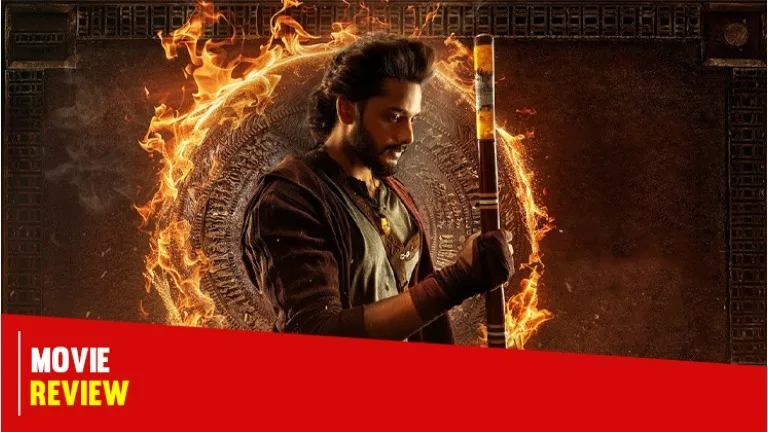
Mirai Review: Indian Mythology Meets Super Yodha Action In Teja Sajja’s Adventure

by jummy84 September 11, 2025
written by jummy84

Film:
Mirai

Bubble Rating:

3.0 stars

Director: Karthik Gattamneni

Writer: Karthik Gattamneni, Manibabu Karanam

Cast: Teja Sajja, Manoj Kumar, Ritika Nayak, Jagapathi Babu, Shriya Saran, Jayaram

Platform: In theatres

Runtime: 2 hours and 49 minute

Mirai Review

Mirai stands out with its ambitious attempt to blend Indian mythology with a modern superhero template. The storyline revolving around the search for the 9th scripture (Granth) offers a Ramayan-inspired twist, making the film unique compared to typical superhero dramas. 

Mirai follows the extraordinary tale of Ambika (Shriya Saran), a mother who sacrifices her life to protect humanity and safeguard the nine sacred scriptures that hold the power to transform mortals into deities. From her sacrifice is born Veda (Teja Sajja), destined to become the Super Yodha, a warrior chosen to savr the final and most powerful scripture the 9th Granth, Mirai. Standing against him is Mahavir Lama (Manoj Kumar Manchu), a ruthless asur who seeks the scripture to ascend as God. The film unfolds as a mythological superhero saga of sacrifice, destiny, and cosmic battle.

What Works

The scale is massive, with stunning visuals across the Himalayas, Varanasi, Hyderabad, Japan, Tibet, and Morocco, giving the film an international feel. Action sequences are choreographed with flair, and the mythological undertones provide a cultural depth that resonates with Indian audiences.

Teja Sajja power-packed performance in Mirai is the USP of the film. He effortlessly balances the intensity, emotion, and heroism in this fantasy adventure. His screen presence and action sequences make him a compelling super yodha. Director Karthik Gattamneni crafts a visually stunning spectacle, blending mythology with modern storytelling, while keeping the narrative engaging and larger-than-life.

What Doesn’t Work

While the film dares to be ambitious, the execution falters in parts. The screenplay sometimes feels stretched, with uneven pacing between the myth-lowkey dialogues and superhero action. Emotional beats don’t always land, and certain CGI portions fail to match the grandeur promised. The villain arc, though menacing, could have been more layered.

Technical Analysis

The cinematography is a major strength, capturing diverse landscapes beautifully. The VFX ranges from breathtaking to inconsistent, but the effort to create a larger-than-life superhero universe is commendable. The music and background score elevate key moments, though the editing could have been sharper to trim down the runtime.

Star Performances

Teja Sajja as Veda transforms into a compelling Super Yodha, balancing innocence with intensity. He carries the film’s weight on his shoulders.

Manoj Kumar Manchu as Mahavir Lama (Black Sword) delivers a striking performance as the ruthless asur bent on destroying mankind for the scripture.

Ritika Nayak as Vibha provides grace and emotional depth and is one of the most important character in the story. 

Shriya Saran as Ambika brings elegance to her divine role. Her sacrifice for the people will touch your heart, also the performance is magnetic on screen. 

The supporting cast including Tanjq Keller, Jagapathi Babu, Jayaram, Raghu Ram, Koushik Mahata, and Sriram Reddy add presence and give their valuable contribution to the storyline. 

Conclusion

Mirai is a bold step in Telugu cinema’s superhero genre mythology meets Marvel-style spectacle. While not flawless, it’s a visual adventure that entertains and introduces audiences to a Ramayan-inspired superhero saga. Worth a watch for its scale and Teja Sajja’s committed performance, though it leaves room for sharper storytelling in a potential sequel.

Watch the trailer of Mirai here:

For more news and updates from the entertainment world, stay tuned to Bollywood Bubble.

Also Read: Baaghi 4 REVIEW: ‘Ronnie’ Tiger Shroff, ‘Chako’ Sanjay Dutt Epic Clash Is An Action Entertainer Amid Delusion And Reality Of Love
Manisha KarkiManisha Karki

Manisha has established a reputation for insightful and engaging storytelling with over six years of expertise in the industry. With a deep passion for cinema, she brings a unique perspective to her coverage, making it a trusted voice in the entertainment world.

September 11, 2025 0 comments
0 FacebookTwitterPinterestEmail
james K: Friend Album Review
Music

james K: Friend Album Review

by jummy84 September 11, 2025
written by jummy84

Though she’s an established collaborator in New York’s experimental and club scenes, Jamie Krasner’s solo work as james K has always felt much more hermetic. Her collagist style holds complicated emotions in dreamy suspense, conjuring a zone apart where she alone controls the weather. Swerving between dusky trip-hop, pummeling shoegaze, and hazy ambience, her music captures fraught feelings in queasy panoramas. Her prior albums, 2016’s PET and 2022’s Random Girl, contained their shimmer and chaos like freshly shaken snow globes, leaving Krasner’s presence only half-discernable beneath flurries of synths and industrial squall. The moments when the air cleared were spellbinding, though it felt like only a matter of time before she again slipped out of view.

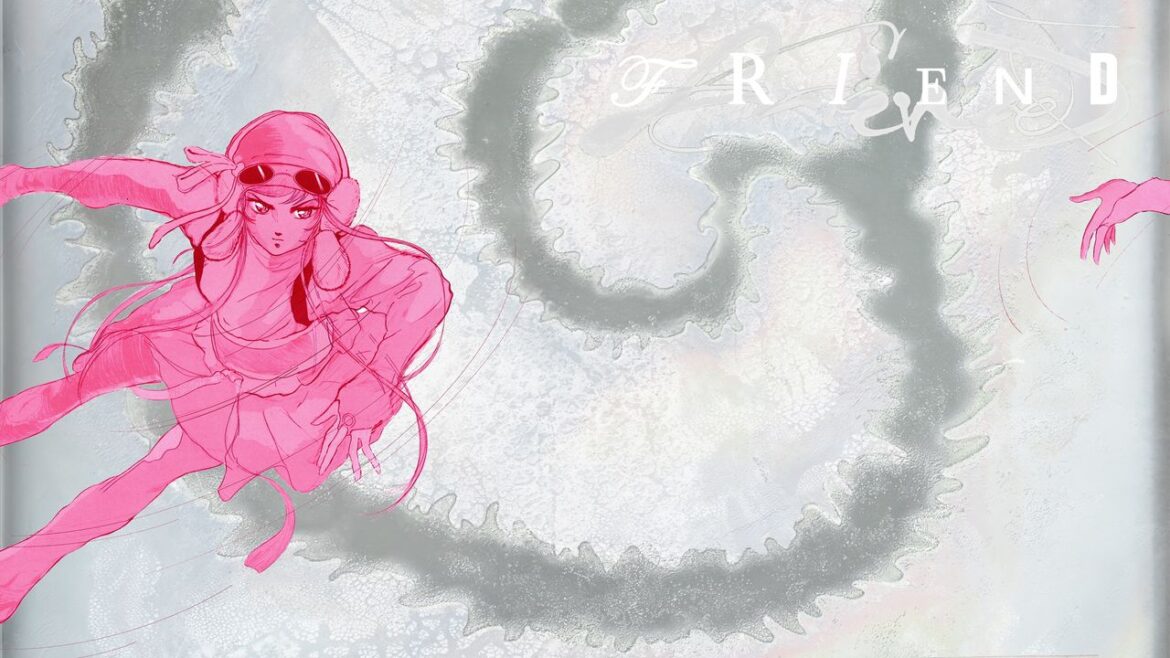
The third james K album, Friend, is remarkable enough as a piece of pop craftsmanship, but its real achievement is in how beautifully Krasner is able to chart a path from her private realm into our own. She distills the musical eclecticism of her earlier work into a crystalline interpretation of dream pop, using the surface blur and forward motion to keep weighty ideas in flight. Her production is still suffused with mist, but it’s grown bigger, brighter, and more fun. The pillowy atmosphere supporting her voice now has a rapidly shifting and dynamic ground floor beneath it, one that veers from drum’n’bass to downtempo, IDM to G-funk. With some slight tweaks, the musician preserves the signature hazy dream logic of her lyricism while coming more fully into her own complications.

Unlike her prior albums, which were self-produced, Krasner developed Friend alongside a clutch of collaborators including Patrick Holland (aka Project Pablo), Priori, ex-terrestrial, Ben Bondy, and the Berlin-based Special Guest DJ. With their help, she manages to give her music a new cinematic sweep and propulsion. “Blinkmoth (July Mix)” begins at a whisper and conjures a full horizon. Modulating a gasping, processed sample of her voice so that it runs parallel with the dusky house beat, Krasner creates a stuttering vocal hook that’s almost indistinguishable from the peal of an electric guitar. As the song builds to a head, she reminds you of her ear for texture by barreling into the already panoramic sound with the sort of aqueous, side-long guitar solo that Alex Scally uses to light up the best Beach House songs.

Krasner’s facility for reverb-drenched instrumentals makes comparisons to the greats of shoegaze and dream pop inevitable. But she also has an easy intimacy to her singing that evokes Dido or Sarah McLachlan and could have made her a trillionaire in the Starbucks CD economy. This is a quality used sparingly on previous releases, but what’s brilliant about Friend is how clear and direct of a presence Krasner is. A song like “On God” ranks among her most full-on pop moments: Krasner pirouettes through a crush of reverbed guitar while weighing deep questions about trust and faith. Her lyrics and delivery are cryptic but conversational, the existential ponderings of a slightly stoned best friend. “Doom Bikini” turns Krasner’s introversion inside out, weaving daydreams and anxiety into a tapestry celebrating an overactive life of the mind. Her sly sense of humor is written all over the song, which peaks with the sudden whine of a G-funk synth, another wild flare-up from her imagination.

September 11, 2025 0 comments
0 FacebookTwitterPinterestEmail
'Honey Bunch' Review: TIFF Retro Thriller
TV & Streaming

‘Honey Bunch’ Review: TIFF Retro Thriller

by jummy84 September 11, 2025
written by jummy84

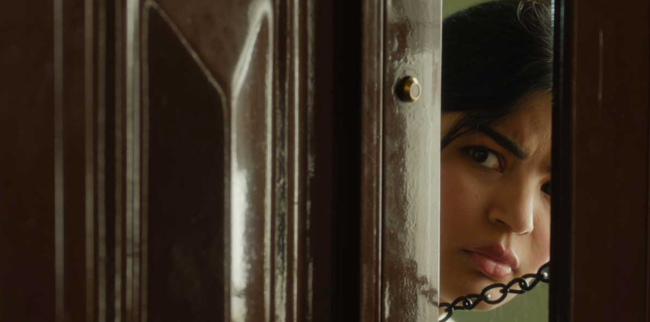
Like “The Shining,” Dusty Mancinelli and Madeleine Sims-Fewer’s “Honey Bunch” begins with its characters heading deep into a rural countryside that immediately suggests isolation from the wider world. Its central couple, Homer (Ben Petrie) and Diana (Grace Glowicki), are en route to an experimental therapy institute where they hope the latter’s memory and motor control lapses from a bad car accident might be healed.

No sooner does the pair arrive at this backwoods facility than the film adopts the aesthetic of throwback ‘70s madhouse thrillers like Gore Verbinski’s “A Cure for Wellness” and Peter Strickland’s neo-gialli. Homer and Diana emerge from their car to a disembodied POV shot gazing down at them from a window and slowly zooming in with surveilling paranoia. One of the institute’s medical personnel, Farah (Kate Dickie), greets them with the kind of clinical cordiality that undercuts its outwardly soothing welcome with unnerving detachment.

'The Fence'

For the film’s first hour, “Honey Bunch” moves at a deliberate crawl, sinking into the simultaneously soothing and alienating qualities of the baroque manor that the institute repurposed into a therapy center. Slow pans and zooms take in large hallways within and ample grounds surrounding the building, the placating pace not quite disguising the subtle emphasis on the center’s total isolation from the outside world and the many places within its walls where it might hide secrets. Rooms are filmed in golden hues of sunlight beaming through windows, rendering everything in a bright, gossamer haze that prefigures Diana’s increasingly fraught visions of recovered memories and other, less personal hallucinations of mysterious, distorted figures in various states of illness who haunt the corridors and parlors of the vast estate.

While these unsettling details accumulate, the actors use the time to build their characters out from simple genre types to more complicated human beings. Glowicki initially has little to do as Diana other than to struggle through therapy sessions involving hypnosis and other techniques, but as Diana recovers more of her lost memories, she begins to chafe against her previously compliant, docile nature. Increasingly suspecting both her doctors and her husband, Diana nonetheless also finds moments to connect deeper with them as her inquisitiveness extends to basic human interaction alongside sleuthing for clues. Diana, already struggling to regain her full mental faculties, is loath to call attention to these misgivings, and Glowicki excels for underplaying the kind of role that tends to descend into expressionistic displays of madness in favor of subtle cues — a darting second glance, a forced tone of innocent curiosity used to phrase prying questions — to signal the woman’s mounting stress.

Similarly, Petrie strikes a careful balance between the doting, attentive husband seeking to help his wife heal and flashes of a darker side to his personality. Homer’s constant hovering can be overbearing, and there are hints that his suffocatingly intense focus on Diana’s recovery masks a guilt over some past difficulties in their marriage. By the same token, the earnest warmth with which Homer attempts to help Diana prevents the character from too quickly coming across as a controlling spouse. Both leads lean into the ambiguities of the story to explore the contours of a long-term relationship and the ways that a major trauma complicates it, in ways that can be as positive as they are frustrating.

At the halfway mark, the film shifts away from a slow-burn madhouse thriller toward a more grotesque entry in the latter-day body horror revival as the true nature of the facility’s treatment is revealed. This transition initially throws off the rhythm, losing the careful parceling out of character detail in favor of a series of plot complications and reversals and largely swapping out one set of cinematic reference points for another. To the film’s credit, it’s one of the few of the recent batch of body horror pictures to recognize the genre’s capacity for tragedy over allegorical statement and shock value. 

Nonetheless, the directors get sidetracked poring over all the sordid mutations suddenly on display to the detriment of both the narrative tension and the leads’ nuanced performances. Glowicki and Petrie spend an extended portion of the second half shedding their naturalistic body language and ambiguous behavior in favor of explicit confrontations that too boldly underline what had been left unsaid to that point. Diana, Homer, and supporting characters like Farah repeatedly state aloud the film’s themes or, worse, give protracted recaps and explanations of twists as they happen.

Only in the final minutes does “Honey Bunch” regain its footing, bringing together its various stylistic and plot elements into a cohesive and thought-provoking rumination on the hazy line that separates the moral imperatives of lifelong commitment to another person from the selfishness that can ultimately undermine care for that person. Harking all the way back to Mary Shelley’s “Frankenstein,” irresolvable questions arise regarding the ethical imperatives born of embracing technological breakthroughs too rashly. Unlike many of its obvious influences, “Honey Bunch” is built on a foundation of its characters’ genuine love and desire to help, but in some ways that makes their actions all the more horrific and troubling.

Grade: B-

“Honey Bunch” premiered at the 2025 Toronto International Film Festival. Shudder will release it in the United States.

Want to stay up to date on IndieWire’s film reviews and critical thoughts? Subscribe here to our newly launched newsletter, In Review by David Ehrlich, in which our Chief Film Critic and Head Reviews Editor rounds up the best new reviews and streaming picks along with some exclusive musings — all only available to subscribers. 

September 11, 2025 0 comments
0 FacebookTwitterPinterestEmail
Little Amélie or the Character of Rain Review: A Small Animated Wonder
TV & Streaming

Little Amélie or the Character of Rain Review: A Small Animated Wonder

by jummy84 September 10, 2025
written by jummy84

Possibly the first bonafide coming-of-age movie about a two-year-old girl who learns her place in the world and how it works, Maïlys Vallade and Liane-Cho Han’s “Little Amélie or the Character of Rain” might operate on a similar emotional wavelength as recent genre classics like “Boyhood” or “Lady Bird,” but this animated bildungsroman — impressionistically adapted from an autobiographical novel by the Belgian novelist Amélie Nothomb — feels as though it belongs to a different universe altogether. 

For one thing, its chubby-cheeked namesake believes that she’s God. Or, begrudgingly, at least a god. Buddhist tradition holds that children are “of the gods” until the age of seven or so, when they make their transition into the mortal world, but something must have gotten lost in translation for the French-speaking Amélie, who was born to Belgian parents in the mountains of Japan toward the end of the 1960s. The youngest of three children, Amélie is so slow to develop that a doctor tells her parents that she’s a vegetable, and instructs them to place her in a protective bubble. “God did nothing, and was forgotten,” says her constant and precocious inner monologue (voiced by the older Loïse Charpentier). 

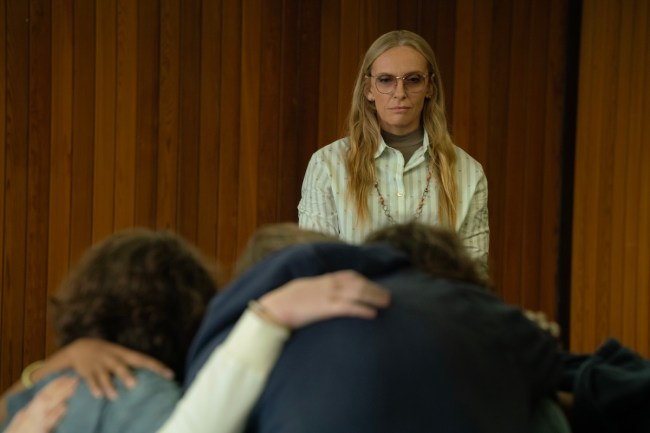
'Wayward,' a Netflix series, stars Toni Collette as Evelyn Wade, shown here watching over group therapy

And then, one fateful day, her visiting grandmother (Cathy Cerde as Claude) feeds Amélie a piece of Belgian white chocolate and the little girl erupts in a blaze of light like something out of “Dragonball Z.” From that point on, the former “vegetable” is a walking, talking vessel of wonder. And the movie around her — which is just as short, strange, and suspended between reality and imagination as its pint-sized heroine — is likewise open to the mysteries of the universe, as “Little Amélie or the Character of Rain” blossoms into a uniquely childlike meditation on all of the beauty that life has to offer, and on all of the loss which makes that beauty worth cherishing while you can. 

As anyone who’s ever had a two-year-old could tell you, kids that age don’t quite see things in such abstract terms. And yet, Vallade and Liane-Cho Han’s borderline anthropomorphic film is so arresting for how beautifully it approximates a child’s experience of entering the world, and of realizing that it extends beyond the limits of their gaze. That it existed before they were born, and doesn’t revolve around any single one of us. 

That awakening is both subject and story for “Little Amélie,” and yet it would be hard to imagine a less didactic approach to the lessons involved. Plotted like a series of ever-expanding bubbles, the movie is primarily driven by splendor more than anything else, and by the sheer joy of discovering what life has to offer for the first time. Amélie’s world is a feast for the senses, and the rotoscope-like style of the film’s digital animation — not performance-captured, but illustrated to make it look as though a soft and hyper-vivid filter has been placed over reality as we know it — transforms even the most ordinary kitchens or flower gardens into the stuff of core memories. 

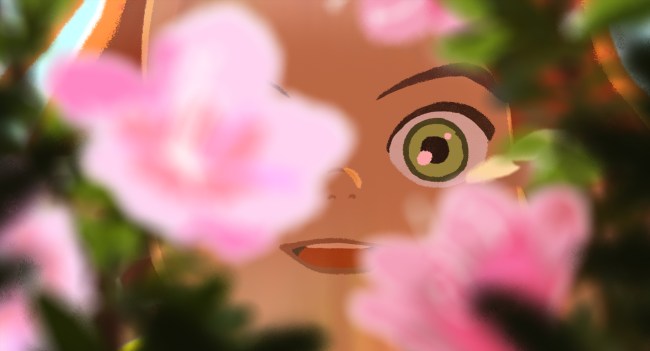
The girl’s massive green eyes constantly re-center the movie around the act of looking, and that focus — when combined with the overall aesthetic — has the added effect of making everything she encounters seem equally real. When Amélie imagines her mean older brother as a mindless carp sucking away at the surface of a pond, we understand that’s how she thinks of him in her mind’s eye. When she becomes convinced that her mother’s vacuum cleaner must also be a god (how else could it make things permanently disappear like that?), there’s no sense in doubting her conviction. 

In the film’s most effective sequence, Amélie’s loving young housekeeper — a Japanese woman who’s either fluent in French for some reason or our first hint of the movie’s interchangeable approach to language — uses a rice cooker to explain the horror of the bombs that rained down on the country during the war, and to do so in a way that a (super-advanced) two-year-old might be able to understand. There isn’t so much as a hint of violence, and yet the image of grains being separated from each other amid the void of a closed pot offers a potent evocation of what it must be like to hear about and process such things for the first time.

Voiced by Victoria Grobois, Nishio-san will become Amélie’s best friend and most beloved teacher. The child’s world literally grows more fleshed out as a result of their time together, and while “Little Amélie” is rarely suspenseful or meaningfully story-driven, its visual progression from vague color splotches to Monet-like detail offers a compelling kind of plot development unto itself. 

The film gets sadder as it goes along and forces Amélie to contend with a handful of uncomfortable realities (including the reasons why their Japanese landlord is so standoffish towards her foreign tenants, and the fact that Amélie’s family won’t be staying in the country forever), but it becomes more beautiful at exactly the same rate. Lasting only 71 minutes, or just a little bit longer than a sunshower, sunshower, “Little Amélie and the Character of Rain” isn’t a moment too short for its material, and yet its brevity allows it to maintain that delicate balance between joy and grief — discovery and heartache — from start to finish, and to use the sweet cocoon of childhood as a way of crystallizing how that dynamic grows with us as we get older. “Life is a great chomping mouth that spares nothing,” Amélie surmises at her lowest moment, but there’s oh so much to see between each bite.

Grade: B

“Little Amélie or the Character of Rain” screened at the 2025 Toronto International Film Festival. GKIDS will release it in select theaters on Friday, October 31, and nationwide on Friday, November 7.

Want to stay up to date on IndieWire’s film reviews and critical thoughts? Subscribe here to our newly launched newsletter, In Review by David Ehrlich, in which our Chief Film Critic and Head Reviews Editor rounds up the best new reviews and streaming picks along with some exclusive musings — all only available to subscribers.

September 10, 2025 0 comments
0 FacebookTwitterPinterestEmail
Justin Bieber: SWAG II Album Review
Music

Justin Bieber: SWAG II Album Review

by jummy84 September 10, 2025
written by jummy84

Tha Carter VI. Jaws: The Revenge. Ghoulies III: Ghoulies Go to College. Vultures 2. The cultural landscape is littered with unnecessary sequels, so it is not exactly an effrontery that Justin Bieber has released a follow-up to his alt-leaning SWAG less than two months later, but wow, is it a chore to get through. On SWAG II, redundancy is twofold: It tacks on another 23 tracks to the senior SWAG’s already overlong 21, resulting in over two hours of music between the two volumes and very little to say. The novelty has worn off.

Appealing as it was to hear Bieber adopt the beguiling sonic-stew aesthetic of his collaborators Dijon (who’s back to co-produce six SWAG II tracks) and Mk.gee (who, as last time, lends his services to just one), it is now clear that Bieber’s take is lite-r in every way. It’s less robust, less intense, less blissfully chaotic. The elements are there—the R&B-inflected singing (though Bieber’s comes out more like R&B-affected), guitars so bleary they sound hungover from last night, lite-rock keyboards, little wild squiggle fills—but the dynamism has been flattened, perhaps by other collaborators (Carter Lang, Dylan “Sir Dylan” Wiggins, and Eddie Benjamin are again behind the boards for the majority of SWAG II). Minor distinctions speak volumes as Bieber’s secondhand sound circles back to the gel-slicked textures of its original source material. Try playing “Open Up Your Heart” alongside Breathe’s 1988 soft-focus adult contemporary smash “How Can I Fall?”; they flow together so well that Bieber is effectively making music that one could peacefully buy adult diapers to.

On its face, SWAG II is fine in small doses. It is not as ignorable as it is interesting, as Brian Eno said about ambient music, but it is pleasantly ignorable. Scrutiny, though, reveals the majority of these songs to be single-sentiment affairs, and many play as sketches. Some have only one verse; “Poppin’ My Shit” features only Bieber on the chorus while Hurricane Chris raps a few bars, concluding with the fawning, “Once I hit, you gon’ get hooked and ain’t gon’ never leave me/Got some friends and they all love Justin Bieber.” What is this, a cabinet meeting?

There are odes, perhaps directed to wife Hailey Bieber, though the treacliest, “I Think You’re Special” casts its message of inner peace more generally. It also squanders the presence of Tems, who is almost relegated to background vocals. There are sexual slow jams, probably also about Hailey Bieber. “You got me singing, I, I, oh man,” is some faint praise Bieber offers in one. There are songs about arguments, and in the most scabrous, “Petting Zoo,” Bieber seethes amid a solo-electric arrangement: “I told you that you fuckin’ with a man/Yeah, I told you I don’t play that shit, no cap/Bitch, I told you I’m not doin’ tit-for-tat, no/Don’t make me say some shit I can’t take back.” At least there’s something courageous in being willing to sound like a total prick in public. Even when he’s being affectionate, there’s sometimes an edge. “Nobody gets to touch you/I do,” he sings, hardly the most romantic definition of monogamy.

September 10, 2025 0 comments
0 FacebookTwitterPinterestEmail
‘Wayward’ Review: Toni Collette Leads a Quirky Cult for Kids in Mae Martin’s Curious Netflix Thriller
TV & Streaming

‘Wayward’ Review: Toni Collette Leads a Quirky Cult for Kids in Mae Martin’s Curious Netflix Thriller

by jummy84 September 10, 2025
written by jummy84

The “Feel Good” creator and stand-up comedian toys with a new genre in “Wayward,” a mystery-thriller about a therapeutic boarding school whose eerie local influence and harsh psychological “treatments” prompt the small town’s newest deputy to ask questions no one wants to answer.

September 10, 2025 0 comments
0 FacebookTwitterPinterestEmail
Music Review: Jon Batiste opts for chill vibe on stripped-down album, 'Big Money'
Bollywood

Music Review: King Princess scoffs at heartbreak on ‘Girl Violence’

by jummy84 September 9, 2025
written by jummy84

LOS ANGELES — It’s impossible to hear King Princess groan “I’m a loser” on their ambitious third album and not think of Beck singing the same line in his canonical slacker anthem released more than three decades ago.

Music Review: King Princess scoffs at heartbreak on ‘Girl Violence’

Although “Alone Again” is more of an angsty breakup song than an ode to sloth, the evocation of Beck’s “Loser” is fitting for the 26-year-old born Mikaela Straus. In both Straus’ guitar-driven pop music and her public persona, the singer, songwriter and multi-instrumentalist exemplifies an offhanded irreverence that artists who aren’t men rarely afford.

Unlike their previous album, “Hold On Baby,” which veered into a solemnity so full of ballads that it sometimes felt in conflict with Straus’ playfulness and snark, “Girl Violence” is a return to form.

“I’m sorry my love / You’re insane,” she sneers on the album’s ambient opening title track.

In “Jaime,” Straus seeks to play coy and appear unflappable toward the object of her desire. That concerted effort eventually belies a desperation.

“You’re just a fly in my glass,” Straus sings coolly at the beginning of the track. But by the end, they surrender — accompanied by a cacophony of shoegaze-y synths, guitars, percussion and a Mellotron. “I’ve been secretly wishing you’d date me / Despite all the times you were wack / If you told me I’m cool, I’d collapse.”

That sonic and lyrical contrast exists throughout “Girl Violence.” Scoffs mask tears. Tenderness glistens beneath declarations of violence. “You prep my despair / You know I like it,” she croons on “Girls,” a torch song about self-destructive queer lust. Sultry instrumentation and doo-wop-esque background vocals evoke both melancholic longing and excitement.

Even as Straus sings about heartbreak and insecurity, the album remains mostly tonally upbeat. “Everybody wants me / Just ask your man, babe,” she taunts on “Cry Cry Cry” over punchy drums and her warm electric guitar.

However, a couple songs struggle to find their place on this record. “Origin Story” and “Say What You Will” come to mind. Those moments would have fit better on Straus’ mostly moody, midtempo first album.

By large, that Straus is a bona fide rock star is more apparent when she plays live than on their restrained recorded pop songs. But she occasionally shows off her virtuosic skill on her records, like with the crunchy guitar solo at the end of the otherwise laid back “I Feel Pretty.”

That oscillation — between gritty and pretty — is a defining theme of “Girl Violence.”

Three and a half stars out of five.

On repeat: “Get Your Heart Broken”

Skip it: “Origin Story”

For fans of: Maggie Rogers, St. Vincent, dirtbag feminism, trolling the internet with Christine Baranski

This article was generated from an automated news agency feed without modifications to text.

September 9, 2025 0 comments
0 FacebookTwitterPinterestEmail
Ghostface Killah: Supreme Clientele 2 Album Review
Music

Ghostface Killah: Supreme Clientele 2 Album Review

by jummy84 September 9, 2025
written by jummy84

You would be forgiven if the first couplet had you fooled. On “Iron Man,” the opening song from Supreme Clientele 2—the titles of two masterpieces leveraged, diminished, thrown into the SEO fire—Ghostface Killah headfakes like he really has something. “The stamp on the dope was Ronald Reagan with fronts,” he raps, the kind of absurdist and hyperspecific detail that dotted the crime vignettes from the illustrious first half of his career. “My man ran over his legs, all we heard was the crunch,” the last word accentuated by Foley work you might have heard in a 1950s radio play. It’s enough to recall the rumbling Jeeps, spilled tartar sauce, and glass caskets that launch his oddest, most engrossing stories.

That the rest of “Iron Man,” and the rest of Supreme Clientele 2, falls far short of this standard should not be a surprise; it’s an extraordinary image. And the album is certainly not the nadir for late-period Ghost, who over the last decade has frequently sounded strained and depleted, and who has spent significant time of late writing in staid formats that are poor vehicles for his once phantasmagoric style. It’s sturdy, at times truly fun. But this is also an album that—even when stripped of cynical readings of its commercial proposition and taken on its terms as a creative work—is doomed by the backwards gaze that doubles as its premise.

The one thing that prevents the Reagan-with-fronts line from sounding as if it could be lifted from the original Supreme Clientele is the voice in which it’s delivered. Whether the result of marathon nightclub tours, working with different engineers in new recording software, or simply aging, the “Tasmanian Devil who knows where you can get PCP” vibe of Ghost’s youth is gone, replaced by something gruffer, scratchier, more evocative of your blowhard uncle. Compounding those qualitative changes is the decision, not uniform but frequent enough across SC2, to double his vocals. This all has the effect of making Ghost’s music sound the one thing it never did before: effortful.

From 1995 through 2006—that would be Raekwon’s Only Built 4 Cuban Linx… through Fishscale and the wildly underrated More Fish—Ghost was the most singular writer in hip-hop, perhaps in its history. The verses could be dense, even labyrinthine, but all carried the energy of ecstatic, impulsive imagination. In the 2010s and early ’20s, this has been replaced by a flood of painfully ordinary material that includes a pair of LPs with Adrian Younge, a half-baked concept record on Tommy Boy, and a smattering of forgettable single-producer collaborations. In addition to the thinning out of his syntax, Ghost’s narrative writing drifted toward longform character sketches scrubbed of nearly all eccentricity and mapped onto predictable plot beats.

September 9, 2025 0 comments
0 FacebookTwitterPinterestEmail
Hot Chip: Joy in Repetition Album Review
Music

Hot Chip: Joy in Repetition Album Review

by jummy84 September 9, 2025
written by jummy84

The career retrospective is something of a lost art in the streaming era. But the indietronica institution Hot Chip have tackled theirs with aplomb. True to form for a group that balances earnestness with a finely honed deadpan sensibility, Joy in Repetition encases a few emotional truths within a self-deprecating title. The main reference is the chorus of 2005’s “Over and Over,” the London quintet’s breakthrough single and defining hit. More broadly, the album title captures both the essence of dance music and Hot Chip’s penchant for borrowing: They nicked it from Prince.

To their credit, Hot Chip never hid their debts—they said they were down with Prince from the beginning. The band didn’t set out to be a dance-rock powerhouse that would remix the singles of half the Western world. “We didn’t have the production value to do a Destiny’s Child-style show,” singer Alexis Taylor said in 2016. “And yet, that was the music that was exciting to us. We weren’t referencing the tradition of New Order or Depeche Mode.” They were five young multi-instrumentalists who shared an interest in Black pop and indie rock, a combination that was quickly becoming the default for a generation of hipsters. Their 2004 debut, Coming on Strong, was as overloaded as the fake synth on the cover: soul balladry and back-porch picking, smooth sax solos and tiny-desk techno. It was shaggy and languid and intimate, like the Beta Band if they were into Angie Stone instead of the Stone Roses.

Coming on Strong is the only Hot Chip album not represented here, possibly because it received the deluxe-reissue treatment last year, or because its muted, bedroom-to-blogroll aesthetic—to say nothing of its crazy-ass white-boy lyricism—might slouch in the presence of sturdier company. (It’s spiritually represented by “Look at Where We Are,” a Rodney Jerkins-style ballad from 2012 that’s only R&B by process of elimination.) The press material describes this collection as “less a Best Of, more like a Best Loved”—their most popular live songs, in other words. (Only studio recordings are included: no live versions, and no remixes of their own songs or others’.)The phrasing suggests yet another, more cynical riff on the title: the complacent audience, craving more of the same.

But Hot Chip never fell into that trap, even as they became a pop commodity. Visiting his girlfriend in New York, Taylor happened to run into James Murphy and Jonathan Galkin of DFA Records; Hot Chip signed with DFA soon afterward. The move felt like a fait accompli at the time, and even though Taylor and Joe Goddard remained the band’s producers, 2006’s The Warning had the whiff of DFA’s astringent house style. Going forward, Hot Chip’s timbres were crisper, their mixes were fuller, the saxes now skronked. Soul signifiers took a backseat to gurning electro, a sound the band metabolized with startling ease.

September 9, 2025 0 comments
0 FacebookTwitterPinterestEmail
'Unidentified' Review: Haifaa Al-Mansour Returns
TV & Streaming

‘Unidentified’ Review: Haifaa Al-Mansour Returns

by jummy84 September 9, 2025
written by jummy84

“It’s easier to get away with killing a woman. Sadly, society doesn’t care as much when a woman dies.”

That’s the reality of life in Saudi Arabia, said writer-director Haifaa Al-Mansour at the post-screening Q&A of her new film “Unidentified.” The film, which premiered at Toronto International Film Festival, opens with a truck speeding off after having deposited the body of a teenage girl dressed in a school uniform on an isolated desert peak.

The peach-tinted coloring of the sand fills the frame with quiet solemnity. Visually, Al-Mansour’s approach is middle-of-the-road: it gets the job done without flair. The pacing feels right from the beginning: as the story unravels, the plot points neither dawdle nor lurch too quickly forward.

'Light of the World'

Al-Mansour — probably the most well-known and one of the first women filmmakers in Saudi Arabia —returns with the final film in her trilogy featuring protagonists all with the surname Al Safan, each possessing an unshakeable will to assert her rights as a woman in a society where doing so is often dangerous.

In the first feature of the trio, “Wadjda” (2013), a girl fights for the right to ride a bicycle, released five years before women gained the right to drive cars in Saudi Arabia. In “The Perfect Candidate” (2019), a young woman (Mila Al-Zahrani) runs for municipal office, something women in Saudi Arabia first gained the right to do, along with voting, just four years prior to its release. And in “Unidentified,” a recently divorced young woman (again Mila Al-Zahrani) moves to the city to live alone and work as a file clerk at a police station when the murder of a teenage Jane Doe compels her to solve the case. (The Saudi Personal Status Law was enacted in 2022, expanding legal pathways for women to initiate divorce.)

In each of these films, the subtext is always to showcase the humanity and courage of women in Saudi Arabia, to put a face on the real-life reforms and make them seem less like the exception and more like the rule. And Al-Mansour, with an original script co-written with her husband Brad Niemann, well knows that creating complicated characters forced to navigate tricky situations is more compelling than a heavy-handed sermon to a largely Western audience whose understanding of the Saudi cultural context rarely extends beyond honor killings and the merits of the hijab. That is to say, what Westerners know about Saudi is often skewed or incomplete. As the last film in Al-Mansour’s trilogy, “Unidentified” turns up the heat, making a decided turn into genre filmmaking — the murder mystery — where there’s room (finally) for Saudi women to be villainous.

Mila Al-Zahrani, as the lead character Noelle, ably delivers a deeply grounded performance, embodying her steely will and relentless pursuit of the girl’s killer, paired with her ever-present stylish black leather bag. Spurred on by her obsession with the videos of an influencer who combines makeup tutorials with true crime distillations, she uses gender roles to her advantage, getting closer to the women in the victim’s orbit than any policeman could in this observant Muslim country.

Still, the stakes could’ve been amplified: every time Noelle disobeys the orders of her father-like police sergeant, Majid (Shafi Al-Harthi, who also appeared in “Wadjda”), she receives little blowback. As she gets very close to solving the case, beyond the subtle eerie noise in Noelle’s apartment on the top floor of her building, intimidation by the killer surfaces too late in the story, muting the viewer’s sense of her being in danger. There is a big twist at the end, that one doesn’t see coming, which impresses. The surprise is clever, but undercuts its emotional impact by arriving without sufficient setup.

If the only way this film distinguishes itself is in its ability to humanize and complicate flat depictions and erasure of Saudi women, that is no small feat. Many different types of women surround Noelle as she attempts to identify the Jane Doe: rebellious teenagers, school principals, widows who value tradition, entrepreneurs, a police officer at her station, even the medical coroner who lets her inspect the body for clues. That kind of intentionality around the ability of fictional narratives to change concrete realities — the ability to visually imagine change — creates a living, breathing empathy “machine,” to borrow Roger Ebert’s phrase. Al-Mansour not only reminds us that movies are supposed to generate empathy, she shows us precisely how.

“As women from the Middle East, we are often portrayed as victims with no agency. That’s not the full picture. Arab women have sass, hustle, and complexity,” continued Al-Mansour at the post-screening Q&A. “Life in the Middle East can be harsh and demoralizing, and women are a part of that reality too. But we’re not always innocent angels. We don’t always need to be the moral backbone of a society; we can be flawed, conflicted, and problematic.”

In “Unidentified,” women are good, women are bad, and women are everything in between. In a society where a woman’s death can easily go unnoticed, this film makes sure the audience pays attention.

Grade: B+

“Unidentified” premiered at the 2025 Toronto International Film Festival. Sony Pictures Classics will release it at a later date.

Want to stay up to date on IndieWire’s film reviews and critical thoughts? Subscribe here to our newly launched newsletter, In Review by David Ehrlich, in which our Chief Film Critic and Head Reviews Editor rounds up the best new reviews and streaming picks along with some exclusive musings — all only available to subscribers. 

September 9, 2025 0 comments
0 FacebookTwitterPinterestEmail
Newer Posts
Older Posts

Social Connect

Facebook Twitter Instagram Pinterest Youtube Snapchat

Recent Posts

  • 2009 feels like a whole other world away

  • Watch Ariana Grande and Jimmy Fallon Perform a History of Duets

  • Spotify’s Joe Hadley Talks ARIA Awards Partnership

  • Nick Offerman Announces 2026 “Big Woodchuck” Book Tour Dates

  • Snapped: Above & Beyond (A Photo Essay)

Newsletter

Subscribe my Newsletter for new blog posts, tips & new photos. Let's stay updated!

Categories

  • Bollywood (1,929)
  • Celebrity News (2,000)
  • Events (267)
  • Fashion (1,605)
  • Hollywood (1,020)
  • Lifestyle (890)
  • Music (2,002)
  • TV & Streaming (1,857)

Recent Posts

  • Shushu/Tong Shanghai Fall 2026 Collection

  • Here’s What Model Taylor Hill Is Buying Now

  • Julietta Is Hiring An Assistant Office Coordinator In Dumbo, Brooklyn, NY (In-Office)

Editors’ Picks

  • 2009 feels like a whole other world away

  • Watch Ariana Grande and Jimmy Fallon Perform a History of Duets

  • Spotify’s Joe Hadley Talks ARIA Awards Partnership

Latest Style

  • ‘Steal This Story, Please’ Review: Amy Goodman Documentary

  • Hulu Passes on La LA Anthony, Kim Kardashian Pilot ‘Group Chat’

  • Hannah Einbinder Slams AI Creators As “Losers”

  • Facebook
  • Twitter

@2020 - celebpeek. Designed and Developed by Pro


Back To Top
celebpeek
  • Home
  • Bollywood
  • Hollywood
  • Lifestyle
  • Fashion
celebpeek
  • Music
  • Celebrity News
  • Events
  • TV & Streaming