celebpeek
  • Home
  • Bollywood
  • Hollywood
  • Lifestyle
  • Fashion
celebpeek
  • Music
  • Celebrity News
  • Events
  • TV & Streaming
Home » Oscar
Tag:

Oscar

Guillermo del Toro, Oscar Isaac Talk 'Frankenstein' with Patti Smith
TV & Streaming

Guillermo del Toro, Oscar Isaac Talk ‘Frankenstein’ with Patti Smith

by jummy84 December 13, 2025
written by jummy84

Guillermo del Toro has never met a Q&A he doesn’t like. More than most, he enjoys sharing his enthusiasm with moviegoers and smart interlocutors like poet-musician-author Patti Smith (her latest memoir, “Bread of Angels,” is in bookstores). Oscar Isaac joined them for a lively conversation about the awards contender “Frankenstein,” which is currently streaming on Netflix. Watch the video exclusively above.

Here’s the December 2 New York Q&A, edited for brevity and clarity.

Patti Smith: In the early 50s, when I was a child, I saw, as we all did, James Whale’s “Frankenstein” and “The Bride of Frankenstein” and was greatly beguiled and saddened. But when I read, as you did, “The Modern Prometheus” by Mary Shelley, I saw that there was a whole world of imagination and thought processes and the evolution of the creature. And [I] wish that James Whale was still alive and would do another one. But we didn’t need him, because you came along and you gave us really something so much more akin that merged your sensibilities with Mary Shelley’s. Give us a little bit of you as a child. What world of books? I know how it happened to me. I want to hear about you.

Models show walk up stairs at the 2007 Oscar Fashion Preview at the Academy of Motion Pictures Arts and Sciences on January 30, 2007 in Los Angeles, California.

Guillermo del Toro: I was weird. I was extremely thin. I’m not joking. I used to button my shirt all the way up, and had a bowl haircut. I was like a Rutger Hauer son. almost albino, very pale. And in 1969, my father won the National Lottery, and he became a millionaire, and he bought a house, and somebody told him that he needed a library, because he was now a cultured gentleman. So he bought a huge library, which he never visited, and I read everything in there.

I read an encyclopedia of art that made me know as much about painting or sculpture as I would have a comic book artist: Jack Kirby or Monet or Manet or Renoir, they were all mixing in my imagination. I read an encyclopedia of health that made me the youngest hypochondriac in history. I stayed and read. And that was part of the disappointment. “This child is not well.” They sent me to a psychologist, and he gave me clay and said, “Could you do something with this?” And I did a skeleton. It didn’t go well.

Patti Smith: I’ve seen this movie now three times, on a little screen, on the airplane, on a bigger screen… One thing that always intrigues me is Victor Frankenstein’s body language. It’s almost like an artless choreography that becomes art. You’re always in motion. You make everything seem almost like a dance. It gives the film almost an operatic sensibility. I wanted to ask you about your body language, if that was a choice.

Oscar Isaac: It was very much in the conversation with Guillermo. The camera never stops moving. It’s always moving, and so often I’m moving in counterpoint to the camera. It always felt very musical. The whole thing, that first scene, when he’s in the medical conference, it feels very much like an aria. There were times when I was filming it where I was expecting people to start singing; the sets were so operatic as well. And a lot of the movement came from Kate Hawley’s incredible costumes.

Patti Smith: You can see the fabric, like in your shirts, and the threads.

FRANKENSTEIN, Jacob Elordi as The Monster, 2025. ph: Ken Woroner / © Netflix / courtesy Everett Collection
‘Frankenstein’©Netflix/Courtesy Everett Collection

Oscar Isaac: There was a lot of pleasure in wearing those little black high-heeled boots and running up and down the stairs in those plaid pants and the things that she would put me in, that crazy robe. It also came a lot from Guillermo. He’s a fucking superhero of pain (laughs) and darkness and hilarity and absurdity. And so, we became completely linked and synchronized, for better or worse.

Guillermo del Toro: We’re still trying to shake it off.

Oscar Isaac: The movement was like a symbiosis that happens.

Patti Smith: The creature, like you and Jacob — that’s like ballet movement. Then, when you’re giving the exhibition to the courtroom, it’s a different sweeping, and then you take Elizabeth in your arms and a different kind of sweeping, the whole thing, your body language is fantastic.

Guillermo del Toro: We actually designed the wardrobe to look like ’60s London, like he would be coming out with The Rolling Stones or Jimi Hendrix. We wanted him to feel like a rock star.

Oscar Isaac: Yeah, you talked about, especially that scene, that you wanted that swagger, to command that, the flowing shirts. But even using that cape is almost like a matador, yeah, it’s expressive, heightened.

Guillermo del Toro: And a lot of hips.

FRANKENSTEIN. (L to R) Mia Goth as Elizabeth and Oscar Isaac as Victor Frankenstein in Frankenstein. Cr. Ken Woroner/Netflix © 2025.
‘Frankenstein’Ken Woroner/Netflix

Patti Smith: You’re right about the sets. They’re so majestic. You should do [the opera] “Parsifal,” the holy fool. Just throw out Wagner’s “Parsifal,” do some of it!

Guillermo del Toro: Like a Mexican “Parsifal.” Well, we tried to design as if it was an opera, the big Medusa, the minimal elements that are around everything. I always say there’s no eye candy in my movies. There’s high protein, because we’re telling the story. I can take you through the shapes and the colors, precisely why we designed them like that, but we wanted to make it as a novel, as epistolary. And one of the things that Gothic romance does is have a story within a story within a story. So I wanted to have self-contained color and camera language and shape language in each of the points of view, and if I made the fabric of the main characters, we wove. We didn’t buy it. We made it. We hand-embroidered it, we printed it, we dyed it, everything. We created rolls of fabric because all the language and the clothes is from nature, like Elizabeth has natural patterns from minerals, from butterfly wings. Her shawls are X-rays. Victor has the embroidered circulatory system. The vest had that. And we wanted to create this world of natural anatomical fields, and we repeat the patterns of the sets on the clothes, etc.

It’s impossibly rich, all those things. And even with the movement, again, to talk about it, starting in this vital place, alive with movement. And slowly calcifying as he gets more angry and more regret[ful]. And then he becomes more creature-like, even with those costumes and the prosthetic leg, as the creature becomes more human. So even those two are rising in opposite ways.

Patti Smith: I was so in love with that ship. I love all the Antarctic explorers and Shackleton.

Oscar Isaac: Imagine rolling up to the Netflix studio, and there’s a fully-sized ship, like the huge, actual-size ship, on gimbals in the parking lot. That was one of the first things that I saw when I arrived.

Patti Smith: It looks like these glass pictures, found in Antarctica. It almost made me feel nauseous, in a good way.

Guillermo del Toro: My producing partner felt nauseous when I said, “We’re building it for real,” but I was making a point that it should be a handcrafted movie by humans, for humans. There’s something that happens when 90 percent of what you’re seeing has a physical component. Yes, we built a ship. When he moves the ship, it’s on motors, and he’s moving the ship with all the sailors on top. When you see the ship, every shot you see is a real ship. We covered the parking lot with ice. We came up with a method to sandwich translucent solids on the icebergs. And we were inspired mainly by Caspar David Frederick, the glass plates from Shackleton, whatever has been found undocumented. We went to the places in Scotland, the UK. We shot in real locations. And we built full-size sets.

Patti Smith: How you worked is the same process as Victor, because when he’s making the sinews of [the creature’s] fingers and all the details of how he’s putting them together and stripping the other bodies, it’s all by hand. It’s a metaphor for your work.

Oscar Isaac: What’s beautiful is that, as opposed to it being this horror scene, it’s lit so beautifully. There’s this beautiful waltz playing, it’s him at his most calm and peaceful.

Guillermo del Toro: He’s happy.

Oscar Isaac: Yeah, that’s what he knows how to do, make his creature…It’s fast, it’s passion, it’s heightened. This isn’t naturalism. We watched movies, different films, to find the tone of it. Oliver Reed was somebody that we watched; what a complicated, huge, magnetic, and scary person. And Pedro Infante, we watched these 1930s Mexican films. We spoke a lot in the words of telenovelas. [Guillermo] would say, “I need you to give me the Maria Cristina. Come on.” We spoke in Spanish the entire time to each other. For me, it is the mother tongue. My mother spoke to me only in Spanish, even though I grew up here since I was a year old. But there was something about speaking that way, that unlocked a mode of unconscious expression, and giving over to that kind of unbridled expression.

Patti Smith: Of the female characters, like Ofelia [“Pan’s Labyrinth”], who I love so much, and Elisa [“The Shape of Water”], and now Elizabeth, and they all give themselves. They all feel empathy with something that everyone else would be frightened of or repelled by, they’re all drawn. And I wrote my notes, “Who are you in all these films?” I think you’re the little girls. You have that eternal young girl longing for a pure love, and they all find it even in death.

FRANKENSTEIN, from left: Mia Goth, Oscar Isaac as Victor Frankenstein, 2025. ph: Ken Woroner / © Netflix /Courtesy Everett Collection
‘Frankenstein’©Netflix/Courtesy Everett Collection

Guillermo del Toro: The Catholic part is to suffer. But there is a pristine way of looking at life in all its ups and downs. And if you don’t look for perfection, if you look for imperfection, but necessarily, you can either accept or let go. That’s about it. And both are in the lexicon of existing. Elizabeth is the only modern character [in “Frankenstein”] and the only character that is not alone. It’s about loneliness so much, and then for a moment, a brief moment, [she and the creature] are together. The creature and Victor are always in the mirror together because they’re part of one single soul, which is what fatherhood and being a child is. You don’t realize it’s a soul that has been split in two, but Elizabeth and the creature are an emptiness split in two, and they attract each other because they feel that they both were broken in the same way. The tone visually has to be of a piece with the tone of the actors. When you think of Jimmy Cagney or Oliver Reed, they’re not naturalistic, but they’re real.

I like the heightened sensation that you’re in a movie, you’re not in the real world. But all that goes to hell if Elizabeth looks at the creature and she sees makeup. She has to see it like a real soul. So, every time they were together, I would shoot them at 36 frames. So I would be able to slow down when she enters with the dress, it floats, and when she’s looking at him, I speed it up to 18 frames so her face is vibrating. And when she’s looking at him, all these little things that you learn through 30 years of craft are invisible, but her performance being real is the key, the performance of Victor and the creature has to be real. Their arc starts in opposites. Victor finishes his life’s work the night the creature starts his life. And also, he’s so heartbreaking; they’re never going to see eye to eye. He basically becomes a mother in the first four weeks of postpartum. Those three characters form a single soul, Elizabeth, Victor, and the creature for me.

Patti Smith: He starts his sorrow the minute he achieves his goal, when he sits on those steps and thinks that there’s no more, forget what he says about the horizon, it’s done. He’s finished his course, and now the debris of all his work is going to haunt him. But as a girl, I was attracted to the creature. Frankenstein, the monster as James Whale gave us, I was never attracted to him. I felt empathy for him always, even when he accidentally killed the little child; you still have pain for him, but the way that I felt about your creature was completely different. He gave me hope, the idea that he would achieve another level of intelligence or answers to immortality. How did you decide how his countenance would look?

Guillermo del Toro: The two main inspirations were a statue of Saint Bartholomew in Rome, which is made of alabaster, and the lines are anatomically incorrect, but they’re beautiful. They’re almost Art Deco, and the head was designed after the patterns of phrenology that were created as a pseudoscience in the 1800s. There are so many echoes of Christ in the movie with the creature, and we can go through them and raising him, the crown of thorns, the red mantle on his shoulders, the wound on the side when he resurrects after three days, but it’s also Adam expelled, and finding a tree with red fruit, and getting to know pain through that. So all the biblical beauty, for me, tells you this is not a repair job, it’s a newly minted soul. Therefore, the ruining of it is more painful. They’re not ruining something they patched up. They’re ruining something that he minted.

And the pursuit has to be the red of the mother. The color red of the mother pursues Victor through the film and comes back with Elizabeth, the scarf, the gloves, the batteries, the angel, blah, blah, blah. He says he’s interested in life. He’s interested in vanquishing death. The way he treats life is completely cavalier. So the creature needs to be on the same color palette as Elizabeth, and they achieve this sort of translucent alabaster, nicotine oyster grace. And they come together at the end on their wedding night, which I wanted to make the one moment they have together. And the creature becomes, first, a baby, and the reactions are completely clean. And it’s very hard for an actor to do nothing, but he achieves it. Jacob, and then I give him three words: Victor, Elizabeth, friend, and the more he accumulates words, the more he knows pain. And with pain comes questions, and with questions comes the need for answers, and he finally achieves Grace at the end of the film.

He’s brutal with those that are brutal with him, he’s loving with those that are loving, and at the end, he is loving with those that were brutal with him, and accepts the grace of the son. So his performance tracking from Jacob was far from Victor’s part from Oscar, because they have such a beautiful arc together. For that, forgiveness seemed to work. I was betting on one gesture, and that’s the hand grabbing the hand. Oscar found it on the day. The first scene we shot together with the two guys was that scene.

Oscar helped me so beautifully. I wrote it for him, so I would send him pages before anyone, and we found the pentameter, so to speak, the rhythms of the language, so that 90 percent of the dialogue in the movie is completely new. It doesn’t come from the book, but he needed to have the same poetic breath of the book, and we found that.

FRANKENSTEIN, Oscar Isaac as Victor Frankenstein, 2025.  © Netflix / courtesy Everett Collection
‘Frankenstein’©Netflix/Courtesy Everett Collection

Patti Smith: When [Elizabeth] said, “Who hurt you?” I felt like that phrase hovered over the entire film. I felt like it was echoing over and over, even when the brother died, when the brother says, “You are the monster who hurt him.” He has this realization of how no one really hates the other, it’s just human nature or animal nature…The world consciousness, everything.

Guillermo del Toro: Pain is basically inevitable, and because we are mammalian hunter-gatherers, we’re going to necessarily get in the way, because your hope and my hope are never going to fully coincide all the time. And that’s why I wanted to paraphrase the book in giving the creature its own voice and [making] it a fairy tale. And he learns from the animals, the ravens give birth to him. The deer teach him violence. Then the mice adopt him, and then the wolves are the world. The wolves don’t care, but they’re going to hurt you, and that’s a fact. My father was kidnapped in 1998, kept for 72 days. And we had to go through it, and continue functioning, because you cannot stop functioning. You have to stay yourself. And the final image comes from that. When my father was kidnapped in the middle of the kidnapping, I resented the sun. I said, “Why does the sun rise, when I’m in pain?” And then the question became, “Why am I in pain when the sun rises?” You have to give yourself to that grace of a metronome that is much larger than your woes. And if you give in to that metronome, then you find release. So brutality is part of the language that structures reality. I don’t say I’m in favor of it existing. I was so familiar with loss when I was a kid. The familiarity that I have with Mary Shelley, my mother had many miscarriages. I had two siblings younger than me, and whenever she went to the hospital, I thought s”he’s gone, she’s not coming back.” “Who hurt you?” comes from a fairy tale, Oscar Wilde’s “The Selfish Giant.” When he raises the baby Jesus and he says, “Who hurt you?” I love that.

Horror, parable, and fairy tale are closely related. Horror articulates trauma in a way that no other genre does, except fairy tale and parable. And that’s why we are so moved by things that are intangible. Hans Christian Andersen and Oscar Wilde are the masters of pain and beauty. Those are two guys that are as much in touch with the brutality as they are in touch with the beauty. Every other tale can be sadistic or not, and in a more Jungian way. But those two, they are turning to aesthetics, pain, horror, and beauty.

Patti Smith: Well, thank you for being the eternal child. Thank you, Oscar. You’re both awesome.

“Frankenstein” is now streaming on Netflix.

December 13, 2025 0 comments
0 FacebookTwitterPinterestEmail
'Sirat' Director Oliver Laxe on His Stealth Oscar Entry
TV & Streaming

‘Sirat’ Director Oliver Laxe on His Stealth Oscar Entry

by jummy84 November 13, 2025
written by jummy84

Just as “Sirāt” is a twisty thriller that takes you unexpected places on its tragic journey into the dystopian desert unknown, the heady filmmaker behind it, Oliver Laxe, is not your average interview. His fourth European feature, “Sirāt” is his breakout: It wowed critics at Cannes, shared the Jury prize, and won the Cannes Soundtrack Award for Best Composer for Kangding Ray.

Neon picked up “Sirāt” as one of the company’s five international features vying for a slot in the final Oscar five. I’ll wager the movie will wow the stateside arthouse box office as it has France and Spain and four other countries (worldwide gross: $9 million). Audiences have never seen anything like it. (IndieWire’s critics poll voted “Sirāt” the best film in Cannes.)

THE ALABAMA SOLUTION 2025. © HBO Max / Courtesy Ev,erett Collection

This shocking piece of cinema is best left undiscussed. The less you know about it going in, the better. The French-Spanish-Galician filmmaker is begging folks not to share its secrets.

For context, the movie starts at a rave in North Africa: Huge speakers amplify the booming beat against looming cliffs as ravers dance in delirious abandon. Winding through the crowd is a Spanish father (Sergi López), his son, and his dog. They are doggedly searching for their missing daughter/sister, who has left home to follow rave culture. As the military arrives and shuts down the rave and directs traffic away, the family jumps into their car to follow a caravan into the mountains. They befriend a small commune of nomadic ravers seeking their next high. Somewhere in the distance, a war is raging. As the group drives into more rigorous and remote areas, they band together to survive the obstructions coming their way.

We met at Neon’s offices in New York, as Laxe, 43, sincerely lays out his filmmaking philosophy. “For me, the ontology of cinema [is] images,” he said. “If a film is connecting with people, it is because, in my films, in terms of proportions, there is a spiritual geometry in my images. They are connected with my unconscious and with the collective unconscious.”

Why is the movie reaching so many audiences? “The film is a medicine,” he said. “Sometimes, when it doesn’t taste good, we put honey on the edge of the glass [so that] it’s sweeter. People think the film is sexy, for the music, the techno. A lot of young people are coming in France, youngsters are watching, are connected with the film. That was one of my intentions: to make a film for young audiences, to invite them to come to the film theater.”

No question, Laxe takes his filmmaking seriously, on many levels. During the writing and pre-production process, he struggles to be strong enough to protect his fragility, he said, so that “the images arrive alive at the end in the edit process. I’m sorry to say, but most images, nowadays in cinema, they have too much weight, because images are used to say something, to tell something. And they don’t. They are not alive anymore.”

'Sirât'
‘Sirāt’Neon

The reason “Sirāt” has so much force: “Our images can penetrate the human metabolism because they are still not domesticated,” he said. “Filmmakers have to know where, when to stop. We have to stop at the right time in order to not put too much weight into the images. And David Lynch was an expert on this: He’s still the guy who knew how to keep this unconscious imagery, all our fears, all our desires, all our dreams, all our nightmares. I’m making sorcery like him.”

Of course, Laxe studied “The Wages of Fear” and “Sorcerer” when preparing to shoot his hazardous North African road movie. But the movie is more than just road scares. “‘Sirāt’ has three dimensions,” he said. “The physical dimension, the physical adventure. That’s where these films and ‘Mad Max’ are dialoguing with ‘Sirāt,’ or we are dialoguing with them. We were joking that we were making ‘Mad Max Zero,’ the pre-apocalypse. But these films, they are not much existential or transcendental.”

That brings the next dimension. “There is another layer that is existential,” he said. “And for this dimension, we were inspired about American movies from the ’70s: “Vanishing Point,” “Two Lane Blacktop,” “Apocalypse Now,” “Easy Rider.” All these films, we don’t know what they are about, but they were expressing the fears and the desire of the American society in the ’70s, and we can feel all the energy of this decade, the angst. This is powerful. That’s why we want to make films: We want to be connected with our time.”

And the third dimension? “That is the more metaphysical,” said Laxe. “For me, obviously, my master is [Andrei] Tarkovsky, and in particular, for ‘Sirāt,’ was ‘Stalker’ and ‘Nostalgia.’”

Oliver Laxe at the Neon offices
Oliver Laxe at the Neon officesAnne Thompson

“Sirāt” is filmed in Super 16mm. “Chemistry,” he said. “My purpose is to make images that will be with a spectator after watching the film for a long time. It’s better to work with this alchemy. Obviously, after the film, art is digitalized … a digital image can also penetrate a spectator, but not at the same level. There is imperfection. It. Art is about mistakes.”

The sound design, meanwhile, is extraordinary, especially at the start of the film, when Laxe mounts a rave in the desert, surrounded by massive cliffs. “I discovered that I’m a musician making this film. For the first time I had the opportunity to work with a musician, Kangding Ray, before the shooting for one year and a half. We went to shoot with most of the music. The idea was to build a sound landscape, to watch the sound and to hear the image.”

After living in Morocco for more than a decade, Laxe absorbed his surroundings. “I see all this landscape, with all this erosion, all this violence,” he said. “This erosion is made by the snow, by the wind. We feel small. In ‘Sirāt,’ it works like this. We are in the mountain, so we feel that we are small. We are nothing, and we go to the desert. The mountain in Morocco is existentialist. ‘Who am I, what I’m doing here? I will die. I’m nothing.’ The desert is this abstract space where human beings cannot hide ourselves. We have to look inside. We look to the sky.”

As the caravan climbs into more precarious terrain, they have to overcome each obstacle thrown their way. Laxe loves to shoot in nature, “not because nature is beautiful,” he said. “It’s because nature is a manifestation of this creative intelligence that is behind things, call it God. So to shoot in nature, nature is manifesting. I like limits, as a human being, as a filmmaker. I like to be tested by nature, because I like to surrender myself to this, because I know that even if it shakes me, it is taking care of me. Life doesn’t give you what you are looking for. No, life gives you what you need. And there is a difference between one and the other, and that’s why human beings are, from time to time, frustrated. That’s why filmmaking is frustrating, because we are looking for something. But life is shaking you, giving you what you need. That’s why my films are really risky.”

In order to cast the film’s motley crew, Laxe turned not only to lauded actor Lopez, but some non-pros, friends he’s known for years. “Bigui [Richard Bellamy] was a friend from 15 years ago,” he said. “He’s on the script since the beginning when I’m writing. He’s a poet. He’s a Peter Pan. He lost his hand three years before the shooting. I had doubts if I [would] shoot him or not, because we already had someone who doesn’t have legs. I don’t like when you feel the intentions of the filmmaker: The filmmaker has to hide the proof of the crime. So I was afraid of having two people with deficiencies… At the end, I accepted that. I mean, I love them. I wanted them on my film. So I assume the consequences. It worked. It’s life who wanted them on the film, because at the end, it’s a film about the wound, about the pain of the war today.”

By using non-actors who have endured the vicissitudes of the world, Laxe didn’t have to develop the characters in a conventional way. “People watch too [many] series, so they are used to how the characters, the plots are developed,” he said. “But I don’t need this. My images say things and evoke things. I don’t need to develop the characters. You feel their gesture, their silence, their scars. Do you feel their wound exactly? You feel their soul. What else do you want we express about them?”

“Sirāt” feels like a message from the future. At the end of the film, a train appears, carrying refugees across the arid landscape. “This train is the future,” said Laxe, “[carrying] human beings, from different regions and races. We will go on the same train; we will be pushed. It’s difficult for us to change. The only hope is that life will oblige us to change. Life will push us to a limit, to an edge that we will be obliged to ask ourselves, ‘What is it to be human? Climate change, artificial intelligence, what is it to be human?’ The answer will be: more human. I have a lot of hope.”

Neon will release “Sirāt” in New York and Los Angeles on Friday, November 14.

November 13, 2025 0 comments
0 FacebookTwitterPinterestEmail
'Die My Love' Oscar and Box Office Chances Unpacked
TV & Streaming

‘Die My Love’ Oscar and Box Office Chances Unpacked

by jummy84 November 7, 2025
written by jummy84

MUBI goes wide, sans platform release, this weekend with Lynne Ramsay’s psychosexual postpartum frenzy “Die My Love” in theaters around the country. It’s the distributor and streamer’s widest release since “The Substance” took a similar trajectory last year, ultimately earning more than $17 million in the U.S.

The film stars Jennifer Lawrence in a performance as confrontational and abrasive as the one she gave in Darren Aronofsky’s “mother!” Here, she plays a sputtering-out writer suffering depression and psychosis after giving birth to her first child. Lawrence, who was in the second trimester of her second pregnancy while filming, shot the movie in Calgary, Canada, with co-stars Robert Pattinson (who plays her hapless husband), Sissy Spacek, Nick Nolte, and LaKeith Stanfield.

The Obsessed

Some minor editorial reshapings were done, as Ramsay explained to IndieWire in a recent interview, since the movie premiered at Cannes in May. “Die My Love” is not going to repeat horror movie “The Substance’s” box office numbers by any means for MUBI, but the point of the wide release isn’t that: It’s to lure more subscribers to its arthouse streaming platform.

Screen Talk podcast hosts Anne Thompson and Ryan Lattanzio reassess “Die My Love” post-Cannes on this week’s episode. Lawrence has to knock out one in a stacked deck of Best Actress Oscar contenders — Jessie Buckley, Renate Reinsve, Emma Stone, Rose Byrne, and Cynthia Erivo — to make it into the final five.

Elsewhere on this week’s episode, we also look at the state of the race for Netflix’s slate of awards contenders, with Guillermo del Toro’s “Frankenstein” rising among Academy voters Anne has spoken to as the movie enters its first weekend of streaming. Anne and Ryan both have a good feeling about “Train Dreams” scoring a Best Actor Oscar nomination and a Best Adapted Screenplay nomination for Clint Bentley and Greg Kwedar. “Jay Kelly” is also playing well for hometown industry voters, and up against another industry movie but one flung to Norway, Joachim Trier’s “Sentimental Value.” Netflix’s “A House of Dynamite,” meanwhile, has struggled since playing festivals after Venice despite strong streaming showings in the Netflix top 10 the last two weeks.

Listen to the podcast in the episode below.

November 7, 2025 0 comments
0 FacebookTwitterPinterestEmail
Neon Releases French Animated Feature Oscar Contender
TV & Streaming

Neon Releases French Animated Feature Oscar Contender

by jummy84 November 6, 2025
written by jummy84

The final trailer for “Arco,” one of the main contenders for the Best Animated Feature film at the Oscars this year, has arrived.

Directed by first-time feature filmmaker Ugo Bienvenu and produced by Natalie Portman, “Arco” is a French film that takes visual inspiration from Studio Ghibli, with a blend between hand-drawn and CG animation. The trailer, soundtracked by a lilting piano melody, reveals the basic premise of the film, which focuses on a young boy named Arco from a distant and peaceful future, where humans live in the sky and use rainbow suits to fly through the air.

When he disobeys his parents and goes on a flight by himself, Arco winds up in the slightly more contemporary world of 2075, where humanity still lives on the ground, but has robots and other advanced technology and is contending with encroaching threats of climate change. There, he meets a girl named Iris, and sets out on a journey to find a way back to his own time.

Resurrection

“Arco” made its world premiere at the 78th Cannes Film Festival in May, where it played in the festival’s Special Screenings section. The movie received positive reviews from critics out of the festival; writing for IndieWire, Christian Blauvelt gave the film a “B-” and called it an “emotional sci-fi epic.” The film additionally won the Cristal Award for Best Feature Film at the 2025 Annecy Film Festival, and also played at the Animation is Film Festival in Los Angeles.

For its American release, the film will screen with an English dub that first premiered at the Toronto International Film Festival in September. Child actors Romy Fay and Juliano Valdi voice Iris and Arco in the English version, while additional cast members include Portman, Will Ferrell, America Ferrera, Flea, Mark Ruffalo, and Andy Samberg. The original French version of the film included several prominent French film stars including Swann Arlaud of “Anatomy of a Fall” and Louis Garrel from “Little Women.”

Neon will release “Arco” in select theaters in New York and Los Angeles on Friday, November 14. Watch the trailer for the film below.

November 6, 2025 0 comments
0 FacebookTwitterPinterestEmail
Hugh Jackman, Kate Hudson Neil Diamond Movie
TV & Streaming

How Gotham Awards and AFI Fest Impact the Oscar Race

by jummy84 November 2, 2025
written by jummy84

Another day, another awards season week in the bag. In the last gasp of October, both the Gotham Award nominees unveiled as did the finish of Los Angeles’ AFI Fest. While the Gotham Awards are an early indicator of where some favorites lie, remember that these nominations (of which “One Battle After Another” reigned supreme after the formerly indie film ceremony eliminated its budget cap) are chosen by high-minded clusters of critics and film programmers. They are not reflective of Academy tastes, though a number of the films get a boost as voters elsewhere do a search on who’s in the running as they ready their ballots.

On this week’s episode of IndieWire’s “Screen Talk” podcast, co-hosts Anne Thompson and Ryan Lattanzio take a look at who got a boost from the Gothams. The indie spirit of the nonprofit Gotham Film & Media Institute — with awards formally dating back to 1991 — was retained in Best Feature picks like “Lurker,” “East of Wall,” and “Familiar Touch.” A24’s “Sorry, Baby” and “If I Had Legs I’d Kick You” also scored multiple nominations in this category and more, but they’re up against “Sinners,” “Hamnet,” and “One Battle After Another,” largely expected to be the top three vying for Best Picture at the Oscars. As of now, anyway. The race can change like the weather.

'Bugonia'

“Bugonia,” “Train Dreams,” and “The Testament of Ann Lee,” which Searchlight picked up some time after its Venice premiere, are also up for Best Feature. Anne finally caught up with “Ann Lee” at AFI Fest and is more an admirer than passionate fan; Ryan commends how Mona Fastvold finds a parallel in her own massive directing effort to the utopia built by the titular Shaker movement leader.

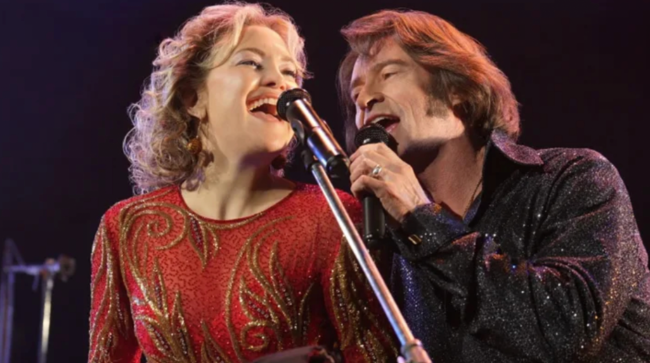
Elsewhere at AFI Fest, Craig Brewer’s “Song Sung Blue” made its world premiere to decent reviews. The true story stars Kate Hudson and Hugh Jackman as a pair of down-on-their-luck performers who start up a Neil Diamond tribute band. It seems more like a Golden Globes play in the Musical/Comedy category than a movie bound for Oscar; it’s not releasing until Christmas, so potential audience enthusiasm could tip its favor.

All of that’s to say that these latest developments in the awards season race don’t mean a hell of a lot. Just yet.

Listen to this week’s episode below.

November 2, 2025 0 comments
0 FacebookTwitterPinterestEmail
'Godland' Filmmaker's New Oscar Entry
TV & Streaming

‘Godland’ Filmmaker’s New Oscar Entry

by jummy84 October 31, 2025
written by jummy84

Icelandic filmmaker Hlynur Pálmason has proven to be uniquely skilled at capturing seemingly small moments and making them feel truly grandiose. While his last effort, “Godland,” took that to extreme, gorgeous ends, his newest film narrows the scope down to a single family.

In “The Love That Remains,” Pálmason follows a family during a complex period of change. The filmmaker’s own children (Ída, Grímur, and Þorgils) play the offspring of Anna (Saga Garðarsdóttir) and her fiancé, the endearing Magnús (often shortened to Maggi, and played by Sverrir Guðnason) as they navigate a slow-speed break-up. The film’s first trailer only gently hints at what’s to come, but in a thrilling and oftentimes oddly fun spirit, as if we’re watching a nature video about a nuclear family.

The Beatles Cast

In our review from this year’s Cannes, critic David Katz wrote, “Pálmason is an exacting image-maker, giving us crystalline natural panoramas that apportion their beauty carefully, yet his screenplays are deliberately more fragmented, often to their detriment. In ‘Godland’ and his Cannes Critics’ Week calling-card ‘A White, White Day,’ this shattered sense of trajectory spiraled into hypnotic bleakness; here, he braids various fragments to relate a time-honored story of love lost, yet the immaculacy of the construction doesn’t help us feel it as viscerally as he’d like.”

The film world premiered in the non-competitive Cannes Premiere section in May. Its standout canine star, sheepdog Panda, ultimately won the Palm Dog at the festival. The film’s (human) cast includes Saga Garðarsdóttir (“Woman at War”), Sverrir Gudnason (“Borg vs. McEnroe”), Ída Mekkín Hlynsdóttir (“Godland”), Þorgils Hlynsson (“Nest”), and Grímur Hlynsson (“Nest”).

“The Love That Remains” was selected in August as Iceland’s entry to the Best International Feature Film category for the 98th Academy Awards. Pálmason’s previous film, “Godland,” premiered in Cannes Un Certain Regard in 2022 and went on to be shortlisted as Iceland’s candidate for the 2023 Oscars. While it did not make the final nomination cut, the film was critically beloved, including here on IndieWire.

Janus Films will release “The Love That Remains” in theaters on Friday, January 30, 2026. Check out its first trailer below.

October 31, 2025 0 comments
0 FacebookTwitterPinterestEmail
Oscar Winners Ben Proudfoot and Kris Bowers Talk 'The Eyes of Ghana'
TV & Streaming

Oscar Winners Ben Proudfoot and Kris Bowers Talk ‘The Eyes of Ghana’

by jummy84 October 25, 2025
written by jummy84

Their most creative collaboration, 2023’s “The Last Repair Shop,” led director Ben Proudfoot and Kris Bowers to a Best Documentary Short Oscar win the next year. But it wasn’t a given Bowers would compose the score for Proudfoot’s feature debut, “The Eyes of Ghana.”

“Because it’s a lot of work, right? It’s like, ‘OK, it’s six months of my life,’” Proudfoot told IndieWire during an interview at the 2025 Middleburg Film Festival. “When you decide, ‘OK, this project feels like it’s part of my body of work,’ it’s a big decision, one that I take seriously.”

Though he has mostly worked as a film and TV composer on projects like “Green Book,” “Bridgerton,” and Original Score nominee “The Wild Robot,” Bowers’ work with Proudfoot also includes the Oscar-nominated short “A Concerto Is a Conversation” as co-director. But joining him on this newer, longer, global venture has the composer excited “just be a part of what was already being created.”

Linda Blair in 'Exorcist II: The Heretic'

“The Eyes of Ghana” is seen through the eyes of Chris Hesse, a Ghanaian filmmaker who documented the rise of President Kwame Nkrumah, known as the man who liberated the African continent. Furthermore, when colonizers attempted to burn all evidence of Nkrumah’s time as a revolutionary leader, Hesse snuck his reels out of Ghana, and into a London vault, where the footage has spent decades inside, waiting to be digitized.

As someone who grew up in Nova Scotia, Proudfoot was completely unaware of most of this history. While in Ghana during the COVID-19 pandemic, shooting a film for UNICEF, “the whole van of us, the crew, we’re driving down this main thoroughfare, and I saw this unusually shaped building and a statue of a man pointing. And I said, ‘What’s that?’ They said, ‘Oh, that’s the mausoleum for Kwame Nkrumah.’ And I said, ‘Who’s Kwame Nkrumah?’ Every Ghanaian in the vehicle turned around and looked at me like ‘What the hell?,” said the director. “We know Gandhi, we know Martin Luther King Jr., we know all these figures from history who are responsible for leading a movement that changed the course of a continent or hundreds of millions of people. But Kwame Nkrumah, I opened the file folder of my mind, and there’s nothing there.”

'The Eyes of Ghana' director Ben Proudfoot and composer Kris Bowers speak to a fellow attendee of the 2025 Middleburg Film Festival.
‘The Eyes of Ghana’ director Ben Proudfoot and composer Kris Bowers speak to a fellow attendee of the 2025 Middleburg Film Festival.Shannon Finney

Naturally curious, Proudfoot inquired whether he could speak to anyone who knew the politician, and his crew excitedly pointed him toward Hesse, a now-nonagenarian who worked as Nkrumah’s personal cinematographer, shooting everything on 16mm and 35mm. Though they were 60 years and an ocean apart, Proudfoot and Hesse became fast friends united in the idea of getting the word out there to maintain this treasure trove of footage. “That’s my mission in life,” Hesse told the director.

Nkrumah was crucial in jumpstarting the Ghanaian film industry, building a studio to produce work that conveys an Africa that defies the expectations promoted by colonizers. “If I say, ‘Oh, here’s a documentary set in Africa,’ you immediately have certain expectations of what that might be, based on documentaries you’ve seen in the past or world hunger infomercials on the TV or whatever. Which is not a broad understanding of what’s going on, which was Kwame Nkrumah’s whole point in the first place,” said Proudfoot. 

Through the subject of his film, the director shows how an important part of Ghana’s modern history is entwined with a love of cinema. “We’re making a film not about Kwame Nkrumah, not about Ghana, we’re making a film about Chris Hesse and his experience and how he views it. And Chris Hesse is an extraordinary film artist, a cinematographer,” said Proudfoot. “So if you’re making a film about a filmmaker, you need to bring the best of everything to the table.” The director boasted how “huge swaths of the movie are shot in IMAX 70mm,” particularly in the film’s emotional conclusion, which was shot on 5-perf, 65mm celluloid on an IMAX camera. “That literal camera that we used, that came to Ghana, came from the set of ‘Sinners.’ Same camera.”

Like Proudfoot, Bowers had not heard of Nkrumah, nor had he been to Ghana. Bower said, “I’ve always just been really curious about any sort of scoring of an African project.” Upon formally accepting the offer to once again work with his friend Proudfoot, Bowers said, “I’m aware of the deep history and tradition with music, and so that was my first bit of excitement as a composer, trying to figure out how to incorporate some of that into the score.”

The gyil, the atenteben, and the talking drum were the three key instruments that helped him achieve a more African sound. “I would ask about the gyil, which is a mallet instrument, and was asking, ‘What key does that play in typically?’ So if I write, I can write in that key. And the musician I was speaking with was like, ‘Well, actually that’s usually tuned to whomever the singer is.’ And so that made me inspired to tune themes to each of the characters’ speaking voices and [spend] time transcribing the way they spoke, to see what key range did they speak in.” For instance, the charismatic Hesse was in the key of F Mixolydian. 

Composer Kris Bowers at the 2025 Middleburg Film Festival.
Composer Kris Bowers at the 2025 Middleburg Film Festival.Shannon Finney

To play the atenteben, a bamboo flute, Bowers recruited Dela Botri based on impressive videos of the Ghanaian musician performing. “You could watch him playing jazz riffs and all this stuff. So we were like, ‘OK, we’ve got to get that guy,’” said the composer. Bowers was hesitant to use the talking drum after the instrument’s prominence in Ludwig Göransson’s Oscar-winning “Black Panther” score, but ultimately, “it’s such a huge part of Ghanaian history that it felt like I can’t not put that in there. And also, it felt weird that ‘Black Panther’ for some reason would make it so that I can’t use an instrument when I’m writing a score for an African film.”

Bowers did, however, come to a point where inspiration began getting in the way of execution. “My first pass of writing some of the cues, taking all this information, again, I spent a month studying this stuff, I tried writing a score from a Ghanaian perspective. And it was something that wasn’t quite fitting with the film,” said the composer. “The more Ben and I talked about it, the more I realized it was my own fear of not representing the country well, and music well in that way… This movie is about the power of and the love for cinema, and so [Ben] really encouraged me and helped me embrace just taking everything I know about film music, and I’ve learned now about Ghanaian music, and just try to make this as great as possible.”

He concluded, “I’m not Ghanaian. It actually would be more disrespectful for me to try to pretend like I could write this Ghanaian score. But more so, just try to take as much information as I can and be influenced and informed by that and write music from my heart at that point.”

Nana Adwoa Frimpong, Ben Proudfoot, guests, Brandon Somerhalder and Anita Afono attend the premiere of 'The Eyes of Ghana' during the 2025 Toronto International Film Festival.
Nana Adwoa Frimpong, Ben Proudfoot, guests, Brandon Somerhalder, and Anita Afono attend the premiere of ‘The Eyes of Ghana’ during the 2025 Toronto International Film Festival.Olivia Wong/Getty Images

Producer Moses Bwayo (and co-director of recent Best Documentary Feature nominee “Bobi Wine: The People’s President”) helped convince the prolific, Oscar-winning shorts director Proudfoot to make this his feature directorial debut.

“My philosophy is that it is our duty as filmmakers not to waste anybody’s time. And sometimes when you make a movie, the idea is that people want to escape. Certainly, I do. When I turn on a movie before I go to bed or on a Saturday afternoon or whatever, I want to go into a world for a few hours. I’m happy that it’s long,” he said. “But oftentimes with documentaries … you want to understand, you want to learn something, you want to solve the mystery, you want to meet these people, you want to come out enlightened, informed, inspired. And so if that’s the reason why you’re watching the movie — which is different, there’s a different kind of intention — you don’t want to spend more time than you need to. A lot of documentaries, especially over the last 10 years, have been designed to suck up as much of your time as possible. That’s why I’ve been so interested in short films, because it’s the opposite.”

He added, “With this film, even though it’s in the category of a feature-length documentary, it’s a lot packed into 89 minutes. As my career has gone on, what I’m committed to less so is format, of short form or feature film, and more just elegance and a richness. It couldn’t have been any shorter. And that the audience feels like, ‘Wow, I took in a lot, I went from knowing nothing about this to knowing a lot, caring a lot,’ that interests me.”

Ultimately, “The Eyes of Ghana” stealthily circles back to the kind of format Proudfoot is known for, making reference to producer and film subject Anita Afonu’s project “Perished Diamonds,” which covers the history of Ghanaian cinema in 40 minutes, plus all of Hesse’s work. “Those reels that are in the archive, they’re mainly short documentaries. So at the end, it might be a feature documentary, but it’s about an archive of short documentaries, so I can’t escape it,” said the director.

'The Eyes of Ghana' subject Chris Hesse.
‘The Eyes of Ghana’ subject Chris Hesse.Breakwater Studios

This resurfacing of Hesse’s footage is “the opposite of what’s happening in America and a lot of the world, which is history being erased, not being able to talk about a war on information. And this is an opening and a blooming of new history, which I think is very exciting,” said Proudfoot. “We’re very proud to be a part of that and drawing attention to that, not just in Ghana, but really across all Africa. Chris traveled all across the continent telling stories in all kinds of countries, because Kwame Nkrumah would lend out his film unit to all these other liberation movements. So it’s continent-wide, really.”

“The Eyes of Ghana” is the first independent feature produced by Barack and Michelle Obama’s production company Higher Ground, and has yet to find a distributor, but Proudfoot’s urgency lies more with encouraging the digitization of Hesse’s archive than rushing into a deal to release the film in theaters. “It’s just about remembering why we made this movie and continuing to pound the pavement and find people who get it, who understand it, and who believe this is an important story that must be told,” he said. “These kinds of stories, often African narratives, they just get left off. ‘It’s not relevant, it’s not important.’ It is important.”

Proudfoot added, “Part of what we’re doing with the film is helping Chris in his mission to reframe this archive, not as a nice-to-have, but as an essential piece of history.”

To Proudfoot, “The highest and best use of documentary is to get people to pay attention, and let’s face it, do something about it. Not just say, ‘That’s a nice documentary.’ [claps] ‘Here’s an award,’ or ‘We think you’re great.’ So what? This archive, if we don’t pay attention, it’s going to be gone in 15 years,” he said. “That’s what happens to cinema, that’s what happens to celluloid. So that’s our hope, whether it’s the distributor or whether it’s finding somebody who really cares about this, who has a connection to it, it must make a difference in the world. Entertainment, for me, it’s not enough. I think it must help solve that problem.”

“The Eyes of Ghana” world-premiered at TIFF before playing Middleburg. It is currently seeking a U.S. distributor.

October 25, 2025 0 comments
0 FacebookTwitterPinterestEmail
Annemarie Jacir's International Oscar Submission
TV & Streaming

Annemarie Jacir’s International Oscar Submission

by jummy84 October 23, 2025
written by jummy84

Annemarie Jacir’s Oscar hopeful “Palestine 36” has released its first trailer, offering a powerful glimpse into what the acclaimed Palestinian filmmaker calls “the project of my life.”

The historical drama, which is Palestine’s official submission for the 2026 Academy Awards in the international feature category, is set during the Arab Revolt of 1936 — a period Jacir describes as “a major turning point in our history.”

The Arab Revolt was a “large-scale uprising against British colonial rule,” Jacir tells Variety. “That moment set the stage for everything that was to come, and it’s a legacy we still live today.”

The film, which Jacir has spent eight years developing, centers on a group of Palestinian villagers whose lives are upended by British occupation, tracing the birth of a national movement that reverberates through generations. With a visual palette both intimate and sweeping, the trailer hints at a story grounded in resistance, memory and collective identity.

“‘Palestine 36’ tells a story vital to our history, yet one that has never been told on film,” Jacir says. “And while I made this film for Palestinians, I hope it also speaks to colonized people everywhere who continue to feel the echoes of that past.”

Jacir, who previously represented Palestine with “Wajib” (2017), “When I Saw You” (2012) and “Salt of the Sea” (2008), has long been regarded as one of the most influential voices in Arab cinema. With this fourth Oscar submission, she continues her mission of reframing Palestinian narratives through authenticity and artistry.

“I hope audiences will be open to receiving a story from the other side — from those who were colonized,” Jacir shares. “History is not only written by the winners. Through this film, I wanted to center Palestinian voices and bring them to the screen with honesty and strength.”

The critically acclaimed drama stars Hiam Abbass, Kamel El Basha, Yasmine Al Massri, Jalal Altawil, Robert Aramayo, Saleh Bakri, Liam Cunningham and Jeremy Irons.

Murtada Elfadl wrote in his Variety review, “Jacir’s film reminds that history is not abstract, but lived through families and small moments of solidarity and conflict. By uniting epic scope with intimate detail, it delivers a portrait of a people fractured yet unbroken.”

The film had its world premiere in the Gala Presentations section of the Toronto International Film Festival back in September. Following its Oscar-qualifying run last month by Watermelon Pictures, “Palestine 36” will have its L.A. premiere at the AFI Film Festival on Oct. 25. The U.S. release is set for early 2026.

Watch the full trailer below.

October 23, 2025 0 comments
0 FacebookTwitterPinterestEmail
'The Perfect Neighbor' Heads for the Best Documentary Oscar
TV & Streaming

‘The Perfect Neighbor’ Heads for the Best Documentary Oscar

by jummy84 October 20, 2025
written by jummy84

We’ve seen police cam footage on many true crime shows. But we haven’t seen a movie like “The Perfect Neighbor,” which goes back in time to stitch together a chilling portrait of a murder.

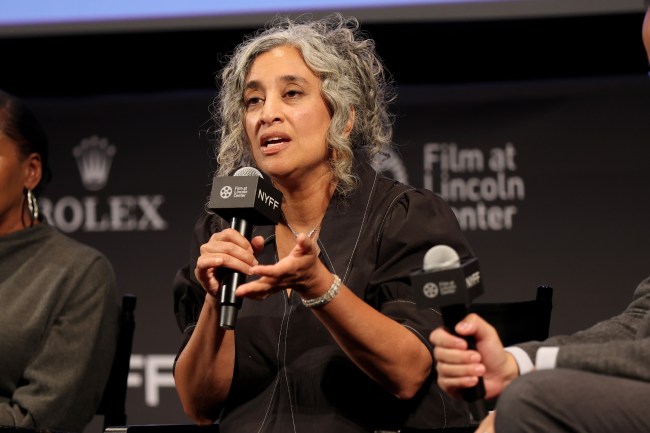
When the film won the Sundance 2025 U.S. Documentary Directing Award, editor-turned-director Geeta Gandbhir knew “there was probably nothing like it,” she said last week on Zoom. Already, the film has earned six nominations for the Critics Choice Documentary Awards, as well as a spot on the Oscar-predictive DOC NYC Short List.

When Gandbhir first found out about the murder of Ocala, Florida resident Ajike “AJ” Shantrell Owens, 35, who left four children motherless on June 2, 2023 when her white neighbor, Susan Lorincz, shot and killed her, Gandbhir was mourning a family friend.

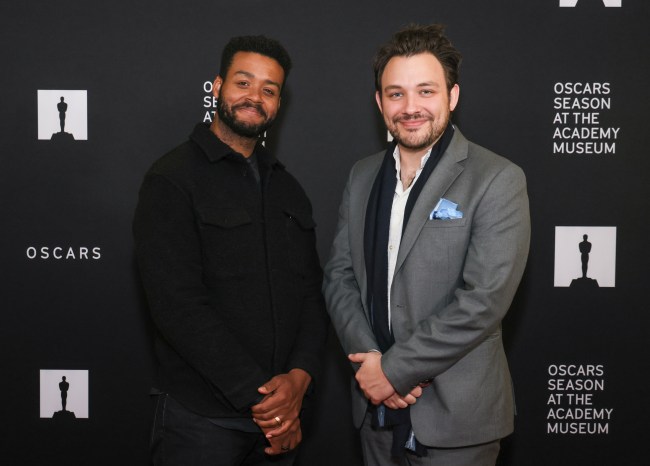
NEW YORK, NEW YORK - SEPTEMBER 02: (L-R) Paul Mescal, Oliver Hermanus and Josh O'Connor attend "The History Of Sound" New York Premiere at Walter Reade Theater on September 02, 2025 in New York City. (Photo by Jamie McCarthy/Getty Images)

“It was grief work for us,” she said. “It was my way of processing what had happened. Ajike was close to two of my husband’s cousins, we’re all very close. That connection felt personal. The making of the film, because I have no other skills, frankly, and I don’t know how to do anything else, was what I had to offer the family, and also a way of processing. I wanted to understand how this could happen: how does someone pick up a gun and murder their neighbor over such a trivial dispute, over some nonsense like kids playing in a yard?”

While the filmmaker had edited many film and TV documentaries, and turned to directing fifteen years ago (winning Emmys for “When the Levees Broke: A Requiem in Two Acts” and “By the People: The Election of Barack Obama”), she often shared directing credit. Not this time.

When Gandbhir first got her hands on the video footage in September 2023, it was overwhelming. “All the material that pertained to the case came to us through the lawyers for the family.” Everything came from the police on a thumb drive: Ring camera, dash cam, cell phone, and body camera footage, detective interviews, 911 calls from both Susan and the community.

‘The Perfect Neighbor’

“It came in a jumble,” said Gandbhir. “It was not organized in any way. I took it upon myself to string it out. We were able to watch through it in pieces, but we didn’t understand how many police were on scene. Sometimes there were two, sometimes there were 15, or some much larger number. We needed to figure out the chronology. I’d never seen any footage proceeding a crime like this, material that went back two years. So I took that material and strung it out into a timeline and spent a couple of weeks literally syncing it. It was detective work. I felt compelled, I had to know. There was this need to understand.”

Once the material was stretched out in a line, Gandbhir saw a movie in it. “We got the footage in September,” she said. “By October, which is when I had strung it out: ‘Holy shit, we could do this.’”

Gandbhir and fellow producer Nikon Kwantu both saw how to use the police cam footage: “It functioned inadvertently, like multi-camera,” she said. “One would split off and talk to this person, another would split off and talk to that person. And, we’ve all been obsessed with films like ‘Paranormal Activity’ or ‘Cloverfield’ or ‘The Blair Witch Project,’ where it’s that first-person POV. It looked immersive. After those two months: ‘There’s a film. I know how to make this.’”

First Gandbhir got permission from Ajike Owens’ mother, Pamela Diaz. “She wanted her daughter’s name not to be forgotten. She takes a lot of strength from Mamie Till, Emmett Till’s mother, who opened the casket at the funeral for him after he was lynched, and told the reporters to come and take pictures, because she really wanted the world to know what happened to her baby,” she said. “[Pamela] wants to push back, turn her pain into purpose, and hopes that this gun violence wouldn’t happen to another family. We thought we would try to do something quick.”

Recognizing the daunting task ahead, Gandbhir brought in her own editor, Viridiana Lieberman. “We started together and made the commitment to live in the body camera footage,” said Gandbhir. “The body camera footage is undeniable. There’s no reporter on the ground. I’m not on the ground. We’re not there influencing things, in this time period where people are constantly questioning the media, and what bias there might be. Sure, you have the cops who are an institution in themselves, but this is an interaction free of a journalist being there. It’s just what happened, right? So we felt that for an audience, the footage would be undeniable.”

The Perfect Neighbor
‘The Perfect Neighbor’Courtesy of Netflix

What the filmmakers were able to do was recreate two years of incidents leading up to the crime. “These crimes unfortunately happen like every week,” Gandbhir said. “You get gun violence, but you only see the aftermath. You never get to see the community as they were before, in such detail. And again, police body camera footage is for people of color: it’s a violent tool of the state, right? It’s often used to criminalize us, dehumanize us. It’s used for surveillance. It’s used to protect the police. But I wanted to subvert that.”

The movie, somewhat surprisingly, reveals a multi-racial Florida community raising children together, mostly in harmony, except for the one single white woman who keeps calling the cops. “You do see this in Florida,” said Gandbhir, “having this social network, a safety network for their children. You see the father who says, ‘I take care of all these kids like they’re my own,’ the mother who says, when the cop [asks], ‘Which kid is yours?’ she [says], ‘They’re all mine.’ You see the kids are safe. They feel safe. They feel secure. They know that they have multiple parents watching out for them. … It’s not a wealthy neighborhood by any means. But again, that safety network where the kids can just play safe in the street.”

And “The Perfect Neighbor” shows the cops in a southern state behaving in relatively benign, empathetic ways. “The issue of the police is fascinating, because it evokes different things for different people,” said Gandbhir. “The police, we don’t see them come in guns blazing, beating people or anything. But they never see Susan as a threat. Susan weaponized her race and privilege, and she tried to weaponize the police against the community. Susan used hate speech against children. She waved a gun at them. She was constantly harassing and threatening her neighbors. She called the police. She kept abusing the 911 emergency services. By the third time she called, she should have been flagged, right? They just treated her as this nuisance.”

While the police put in an awful lot of time on these calls, “they didn’t protect the community from her,” said Gandbhir. “They didn’t tell the community what they could do: you could also file harassment charges against her. They didn’t tell Susan: ‘Your behavior is actually inappropriate, your behavior is threatening. You need to stop.’ The police are not trained in mediation. They’re trained to deal with crime. And if they could not manage it, then the social workers should have been called in. But instead, they left it to fester, even though Susan also showed erratic behavior. She drove her truck into a gate multiple times, then claimed that she had a panic attack. And yet, she was able to buy two guns. What we see is that the system failed the community, but it also failed Susan. It didn’t save her from herself. She’s in prison for almost the rest of her life because of this. The police were kind, the majority of them were polite, as individuals. But it’s the system. The system is not equipped. The system failed.”

What would Gandbhir change? Among other things, the Stand Your Ground laws that led to the death of Trayvon Martin and people shooting strangers approaching their front door. “People are emboldened by this law,” said Gandbhir. “They essentially commit crimes and then claim that they were fearful of their life. And particularly for Black and Brown folks who are so often criminalized and perceived as a threat due to implicit bias, racism, that makes it really dangerous. And the laws exist in different forms across about 38 states under the Castle Doctrine: You have the right to protect your castle. But unfortunately, like so many things in this country, reform is deeply needed.”

The film avoids labeling Susan Lorincz as “crazy” or “mentally ill.” “There was a psychiatric assessment of her prior to the trial to see if mental illness played into her committing this crime,” said Gandbhir. “They found there was none. The judge ruled that she shot more out of anger than fear. We are careful around the mental illness thing, because the majority of people who have mental illness harm no one. Often, when people commit violent crimes, that is raised, ‘Oh, the person is mentally ill.’ But it was not a factor in the case.”

A still from The Perfect Neighbor by Geeta Gandbhir, an official selection of the 2025 Sundance Film Festival. Courtesy of Sundance Institute.
‘The Perfect Neighbor’Cinetic

So her aberrant behavior was anxiety-driven? “The judge ruled that he gave her five years off because he thought she may have had some PTSD from a traumatic childhood,” said Gandbhir. “You can see this in the trial. She’d never committed a crime before of that gravity. So the maximum is 30 years. She got five years off for manslaughter.”

There is some supplemental new footage in the film to give the audience a rest. “We shot some stuff on the ground, for sure, when we were first there,” said Gandbhir. “We shot some vigils. But we didn’t do sit-down interviews. We shot B roll, and under that we put the police or detective interviews. Those were meant to be interstitials, to give people a break, because the body camera footage is relentless. And we needed the community to weigh in. There is a lot of Susan, obviously, and her complaints, and there’s some of Ajike, but in order to get the full picture, the community was really important. So we wanted them to have a voice.”

When Netflix picked up “The Perfect Neighbor” out of Sundance, after they recouped their costs, the filmmakers put the lion’s share of the licensing fee into a fund for Diaz and the kids. “We need a groundswell around this issue,” said Gandbhir. “We need a global audience. I made the film to be a piece of art, but I’m hoping to inspire people to take action.”

Will the film set a new narrative video trend, much like the Oscar-nominated short “Incident” or even the fictional scripted “Adolescence”? “We’re living in a world where it’s familiar,” she said. “You look at Tiktok, you look at all the social media, it’s all user-generated content, right? We live in a world where it is not just that cinema reflects the world and the world reflects art. We’re like cinema. Certainly, in this doc genre, they’ll be demanding more as we have maybe set a trend in that way, but it’s something that exists all around us.”

“The Perfect Neighbor” is now streaming on Netflix.

Next up: For the series “Katrina: Come Hell or High Water,” which has played well on Netflix, Gandbhir and Spike Lee both directed episodes. And a short just came out on HBO: “The Devil Is Busy,” partnered with Soledad O’Brien productions.

October 20, 2025 0 comments
0 FacebookTwitterPinterestEmail
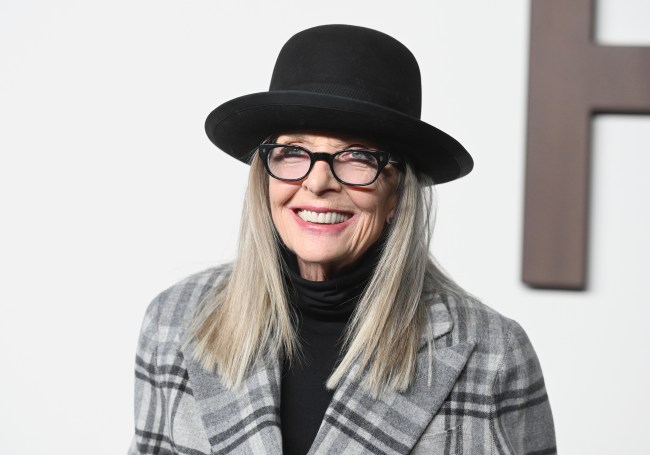
Dieane Keaton Dead: Oscar Winner Was 79
TV & Streaming

Dieane Keaton Dead: Oscar Winner Was 79

by jummy84 October 11, 2025
written by jummy84

Diane Keaton, the iconoclastic and left-of-center Oscar-winning film and fashion icon, has died, according to a family spokesperson who shared the news with People magazine. She was 79 years old. Further details about her death were not made available. She received four Academy Award nominations, winning in 1977 for “Annie Hall,” the film that turned her into a household name and one of the most recognizable figures in American movies. Keaton received an AFI Life Achievement Award in 2017.

Her collaborations with Woody Allen began onscreen with director Herbert Ross’ “Play It Again, Sam” in 1972, the same year she starred as Kay Corleone in Francis Ford Coppola’s “The Godfather.” Her comedic appeal was cemented in Allen films — the two were also romantically involved — like “Sleeper’ and “Love and Death” before the title character in “Annie Hall” changed the course of her career and the course of movies. Before that, though, she had starred with Allen in the stage version of “Play It Again, Sam” in 1969 and in the musical “Hair,” propelling her from her birth city of Los Angeles to New York. Keaton for most of her life resided in Los Angeles, where she flipped and designed houses. As a single parent — she made being single and evasive of later romantic partnerships part of her identity, too — she adopted her daughter Dexter in 1996 and son Duke five years later.

Jafar Panahi and Martin Scorsese

She never quite fit into any box comfortably, but brought to her roles both a nervous energy and focused intensity. The same year as “Annie Hall,” she also starred in the controversial, cautionary morality tale “Looking for Mr. Goodbar” as a schoolteacher of deaf children who is tormented by the men she dates in New York City; it’s certainly her darkest role and was an early beacon of a propensity for drama as much as comedy.

After her Best Actress win for “Annie Hall,” she also received Oscar nominations for “Reds,” “Marvin’s Room,” and “Something’s Gotta Give,” the Nancy Meyers film largely seen as her big-screen comeback in 2003. That was also the film that launched a late-career stretch of romantic comedies and movies for older audiences in which she largely plays a version of herself: neurotic, quirky, unfiltered, and in impeccable head-to-toe tailoring.

Making guardedness and affable self-deprecation part of her identity, Keaton was known for wearing turtlenecks, gloves, and hats that kept her largely covered up, saving emotional vulnerability for her performances. Ralph Lauren gave much of the credit for the “Annie Hall” costumes to Keaton herself, and wide-legged pants, blazers, vests, ties, and oversized hats — all a playful, Chaplinesque spin on tailored menswear — became signatures in her look: Keaton is recognizable in any of her films because she always appeared to have a hand in her characters’ styling.

The recent “Book Club” films exemplify her late-career attitude. There was a sense in Keaton’s late years that she wanted to have a good time onscreen with collaborators she enjoyed, such as the “Book Club” series co-stars Jane Fonda and Candice Bergen.

MANHATTAN MURDER MYSTERY, Diane Keaton, 1993. (c) TriStar Pictures/ Courtesy: Everett Collection.
‘Manhattan Murder Mystery’©TriStar Pictures/Courtesy Everett Collection

A throughline of her film career was working with top filmmakers to deliver complicated performances that pushed her against comfortability, whether in Allen’s darker efforts (like “Interiors,” or aspects of “Manhattan” as a self-defeating intellectual) or with Coppola, Warren Beatty (“Reds,” and another collaborator with whom she was romantically involved), or a box-office favorite like Charles Shyer with the 1987 feminist comedy “Baby Boom.” In 1993, she reteamed with Allen for the last time on the delightfully anxious New York comedy “Manhattan Murder Mystery.”

Around that time she had been at the end of a relationship with her “Godfather” co-star of all three films, Al Pacino. She detailed that relationship movingly in her wonderfully frank and fresh memoirs “Then Again” (2011) and “Let’s Just Say It Wasn’t Pretty” (2014), two books where you really feel her voice ringing through rather than a ghost memoirist taking dictation.

Comedies really became Keaton’s preferred genre in the last 30 years or so, from the delightfully camp “The First Wives Club” in 1996 to films like “And So It Goes,” “The Book Wedding,” and “The Family Stone” more recently. Don’t forget she also played Justin Bieber’s grandmother in the 2021 music video “Ghost” and starred as a sparky nun on HBO’s “The Young Pope.”

She also had credits behind the camera, including as the director of “Hanging Up” and the documentary “Heaven” as well as episodic television, including on Season 2 episodes of “Twin Peaks” in its early run. These directorial projects were less successful; those “Twin Peaks” episodes especially are not in the series’ annals even as she was largely following the series rulebook on a job for hire. But they showed a curiosity and collaborative spirit, which she maintained through to the end. The last movie she starred in was 2024’s “Summer Camp” with Kathy Bates and Alfre Woodard.

Her belovedness was no better exemplified recently than in 2017 when Woody Allen, then already well into being on shaky ground with Hollywood, made a rare public appearance at the AFI Life Achievement Award ceremony to present the honor to his dear friend, ex-partner, and most important collaborator. As far as American movies are concerned, she’s up there as one of the most recognizable, inimitable, and singularly stamped stars of all time; her impact on Hollywood will be impossible to recreate, but it’s not like any of the essential films she starred in is going anywhere any time soon.

October 11, 2025 0 comments
0 FacebookTwitterPinterestEmail
Newer Posts
Older Posts

Social Connect

Facebook Twitter Instagram Pinterest Youtube Snapchat

Recent Posts

  • 2009 feels like a whole other world away

  • Watch Ariana Grande and Jimmy Fallon Perform a History of Duets

  • Spotify’s Joe Hadley Talks ARIA Awards Partnership

  • Nick Offerman Announces 2026 “Big Woodchuck” Book Tour Dates

  • Snapped: Above & Beyond (A Photo Essay)

Newsletter

Subscribe my Newsletter for new blog posts, tips & new photos. Let's stay updated!

Categories

  • Bollywood (1,929)
  • Celebrity News (2,000)
  • Events (267)
  • Fashion (1,605)
  • Hollywood (1,020)
  • Lifestyle (890)
  • Music (2,002)
  • TV & Streaming (1,857)

Recent Posts

  • Shushu/Tong Shanghai Fall 2026 Collection

  • Here’s What Model Taylor Hill Is Buying Now

  • Julietta Is Hiring An Assistant Office Coordinator In Dumbo, Brooklyn, NY (In-Office)

Editors’ Picks

  • 2009 feels like a whole other world away

  • Watch Ariana Grande and Jimmy Fallon Perform a History of Duets

  • Spotify’s Joe Hadley Talks ARIA Awards Partnership

Latest Style

  • ‘Steal This Story, Please’ Review: Amy Goodman Documentary

  • Hulu Passes on La LA Anthony, Kim Kardashian Pilot ‘Group Chat’

  • Hannah Einbinder Slams AI Creators As “Losers”

  • Facebook
  • Twitter

@2020 - celebpeek. Designed and Developed by Pro


Back To Top
celebpeek
  • Home
  • Bollywood
  • Hollywood
  • Lifestyle
  • Fashion
celebpeek
  • Music
  • Celebrity News
  • Events
  • TV & Streaming