celebpeek
  • Home
  • Bollywood
  • Hollywood
  • Lifestyle
  • Fashion
celebpeek
  • Music
  • Celebrity News
  • Events
  • TV & Streaming
Home » Momoa
Tag:

Momoa

Jason Momoa Goes Inside ‘Chief of War’ Finale, Epic Ending
TV & Streaming

Jason Momoa Goes Inside ‘Chief of War’ Finale, Epic Ending

by jummy84 September 23, 2025
written by jummy84

[This story contains major spoilers from the season one finale of Chief of War, “The Black Desert.”]

Come hell or high water, Jason Momoa was going to do everything in his power to execute his ambitious creative vision for the season finale of Chief of War, which he considers to be the apex of his three-decade action career.

“At first, no one really thought it was going to be possible. And when we were at the very end of it, people that I really, really respect were like, ‘I’ve never seen anything like that in my life,’” Momoa, who co-wrote and directed the finale, tells The Hollywood Reporter. “But I knew we only had a certain amount of time, and the only way to pull off something of this magnitude was to shoot it a certain way.”

The synopsis of the final episode — which co-creators Momoa and Thomas Pa’a Sibbett confirm to THR is meant to function as a season, rather than a series, finale — may sound relatively simple. After Kamehameha finally comes around to the idea of using Ka’iana’s “red-mouthed weapons” — the firearms that Ka’iana had acquired during his travels abroad — in battle, the two chiefs and their small but mighty army go head-to-head with the forces behind power-hungry kings Keōua (Cliff Curtis) and Kahekili (Temuera Morrison) on the volcanic terrain known as Hawaii’s “Black Desert.” The brutal battle is a decisive victory for Ka’iana and his allies, thanks in large part to their formidable fighting skills and their use of those devastating weapons.

But anyone who has watched the finale knows that summary just barely scratches the surface of the this cinematic ending. “When people are talking about episode nine, that conversation really needs to include Jason as a director,” Sibbett says. Shooting in Hawai’i — much less over the real-life lava fields of Kalapana in the middle of the night — was actively “discouraged,” but Apple TV+ executives eventually signed on to the idea at the insistence of Momoa, who pulls quintuple duty on the series as star, co-creator, co-writer, executive producer and now director.

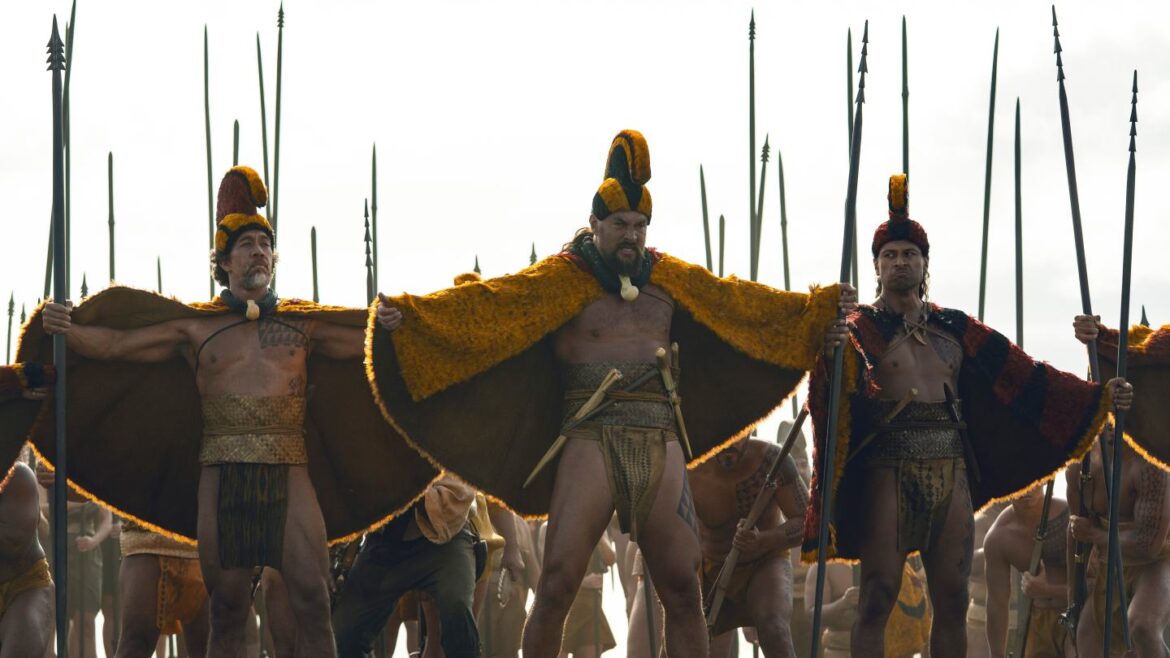
“Keeping it in Hawaii allows the inhabitants of that area, other people from across the island, to participate,” Sibbett adds. “They get to be the wearers of the feather capes. They get to be the warriors that hold the spears. The impact that has on a people, the impact that has on a culture that has never been shown at this level — I think that sets [Momoa] apart in this conversation.”

Early on in the writing process, Momoa had a clear idea of how he wanted to helm the finale. “I’ve directed quite a few times before this, and I’ve always wanted to shoot in really good light,” says Momoa, whose prior directorial experience included the 2014 indie film Road to Paloma and his recent HBO Max docuseries On the Roam. “Not being able to have money or have the crew that could pull off maybe what some larger [productions] could, I’d always have to really scout it, dial it in, and shoot in the right light.”

Momoa knew he wanted the battle to end with Ka’iana holding Keōua at gunpoint, just before Keōua was killed in a rush of lava. “I wanted to have that moment where I’m staring [Keōua] down be right at the last bit of that blue light with the lava going off and the ash coming down,” he says. Since he wanted the battle to start in the early afternoon and spill into the late evening, the production had to work backwards and shoot the entire sequence in reverse.

With the help of the same stunt team that he has worked with for decades, Momoa meticulously planned out every scene of the battle long before cameras started rolling. “I would shoot four to five units at the same time,” the director reveals. “I had to pick the storylines that I wanted to shoot within each of the other three to four units, so that I was getting what was going on with me, what was going on with Kamehameha, what was going on with my brothers and my wife. I had to make sure I blocked out correctly all those moments.”

“Don’t be fooled by his abs and physique. He’s got a great frontal cortex going on,” jokes Curtis. “I’ve worked with brilliant people, so I know what it looks like and smells like. James Cameron’s got a similar facility — perhaps on a different scale — to understanding the complexity of how to manage multiple units, and Jason’s definitely got that facility. It’s very, very impressive to see him map it all out in his mind before it happened.”

A lot of people, however, were not convinced that Momoa would be able to pull off what would typically be a weeks-long shoot on another production in just eight days.

“The producers were very scared, but I was like, ‘We’re going to shoot early, and we’re going to end not too far after noon and get some of the daylight.’ We got up at 3 a.m., started at 4 a.m., and we’d probably end at 2 or 3 p.m., and then I’d stay and prep for the next [night],” Momoa says. “You could have shot this in a Walmart parking lot, and you could probably put green screens up, like we normally do on other things, and just put down black and use it as lava fields. But you’re going to feel that we were there when the volcano went on.”

Momoa enlisted the rest of his producing and filmmaking team to oversee each of the units, and he would always be running between scenes, if not acting in them. “I had just done this LeBron James Nike commercial, so I had these lavender trainers on with my Malo, and my ass was just running from one side to the other,” Momoa recalls with a laugh, evoking quite a striking visual. “And it’s a lava field, so you fall. I think I’m the one that got messed up the most, but thank God we had no accidents. But I was just running, because I had it all in my head. This is how I like to direct. Most people don’t know that, but I’ve been doing it for a long time.”

As Momoa puts it, the Hawaiian gods seemed to be on his side during the grueling shoot. A few hours before they were set to begin their first late-night shoot of the finale, Mauna Loa, the nearby volcano, erupted for the first time in 38 years. After pausing production for a day to review the air quality, the cast and crew resumed production. The next day, another mountain, Kīlauea, became active, but the smoke blew away from the set. “Obviously, many volcanoes did create the Hawaiian Islands, but in our written history, it has never been documented that they both went off at the same time. That happened as we started,” Momoa says.

After a little bit of rain on the first day, the weather was clear for eight days in a row. But the day they wrapped, it started pouring rain and Mauna Loa stopped erupting, recalls Momoa. “It was the biggest, most beautiful omen. We stirred up so much [energy], and it just felt like we were doing the right thing. It’s powerful, man. There’s footage of us there dancing in the rain with all the extras [after] fighting on lava. Nothing will ever come close to that, ever.”

Momoa was also not afraid to take some creative liberties with the historical facts. Before they officially started attacking each other, the two sides would first engage in a kind of spiritual battle. Their respective kahunas would do their chants, the volcanoes would go off, and then the two sides would engage in a kind of rap battle in Ōlelo Hawaii, where they would taunt each other. In this case, ‘Ōpūnui spoke for Keōua, while Ka’iana spoke for Kamehameha.

“When we came up with this [scene], I was like, ‘What’s the most disrespectful thing [Ka’iana] could do? He’s on his enemy’s side, he’s on their land — and he’s going to speak English,’” Momoa says. “I said, ‘Listen, if I look to Kamehameha and I ask for permission, and he gives me the nod, I’m going to say this shit [in Engish], and our audience will be able to understand me, my team will understand me, and Keōua won’t. That will infuriate him. Being able to have that moment in English, the audience understands that it raises the bar.’”

Momoa knows that he may catch a little flack for deviating from the historical record in that scene. But what he ultimately wanted to accomplish from a storytelling perspective was to piss Keōua off so much that his troops would try to attack the other side with spears — only for them to be wiped out one-by-one by the red-mouthed weapons that Ka’iana and his allies had hidden in their capes. “It wasn’t necessarily what happened, but that idea came out of a place of me just as an actor going, ‘What would I do? How do I get him to charge me?’”

That wasn’t the only choice that Momoa made from his character’s perspective. As an inside joke, Keōua’s kahuna, whose tongue Ka’iana rips out of his mouth in front of Keōua during the hectic battle, is played by Kahoʻokahi Kanuha, Momoa’s ʻŌlelo Hawai’i coach.

“That’s the guy who lived with me and taught me the Hawaiian language. So he obviously can do these amazing chants, and he can speak the language, but he knows my frustration with it,” says Momoa, who learned the critically endangered language specifically for the role. “I’m like, ‘I’m going to rip your tongue out, and I’m going to eat it, dude.’ So [that scene’s] just two buddies just being silly. But it was something that would’ve happened; it’s something I would’ve done.”

Momoa was also keen to give each of the other core group of characters their own moment in the spotlight. For most of the first season, Ka’iana and his wife, Kupuohi (Te Ao o Hinepehinga), have largely been unable to see eye-to-eye. He has been permanently changed by all of the pain and suffering he has seen abroad, and she believes he is no longer the man she fell in love with. “Kupuohi’s put in positions where she should blow her top, snap, and just lose her mind so many times, and she doesn’t. Every time she goes, ‘No, I’ll stay strong. I’ll stand beside my man. I will not break. I will not cry,’” O’Hinepehinga explains.

But Momoa always wanted to give Kupuohi a moment of catharsis. One day while shooting the finale, he came running up to O’Hinepehinga with a giddy look on his face. “He’s like, ‘We’re going to stab you right here,’ and he grabs my waist,” she recalls of shooting the moment that Kupuohi gets stabbed during the battle. “And I’m like, ‘I’m sorry. What? You didn’t say I died?’ And he’s like, ‘No, no, no. He’s just going to stab you really lightly.’ And he comes in, and I’m shish-kabobed! He’s like, ‘We talked about it, remember? There would be a moment. This is the moment — [this] scream is a release of every single moment you have wanted to scream ever.’

“I don’t know if you’ve ever experienced this, but when I’m overwhelmed with situations or emotions or just work in general, I don’t have a chance to express it. So it all just bubbles to the surface until eventually it blows — and it’s in the aftermath of the blow where I find clarity in all the things that I’m confused [about],” O’Hinepehinga continues. “I wanted that for Kupuohi. Yes, she’s emotionally intelligent and strong, but a person can only take so much.”

Kupuohi ultimately survives being stabbed. But immediately following the conclusion of the battle, Kupuohi watches from afar as Ka’ahumanu (Luciane Buchanan) — the wife of Kamehameha who has clearly been harboring feelings for Ka’iana — rushes to Ka’iana’s side to make sure that he survived being knocked unconscious. O’Hinepehinga sees Kupuohi’s final look at Ka’iana and Ka’ahumanu as not one of “pain” or “jealousy,” but of “clarity.”

When Kupuohi sees her husband embracing another woman after the battle, “she’s able to see clarity not only in her future, but her relationships with the people around her. It’s terrifying, but I think there’s liberation in having a complete understanding of where you are in this world and who you are in this world,” O’Hinepehinga says. “I don’t know what that looks like in the future, but a woman liberated is a terrifying thing, I’ll say that much.”

That love triangle could very well play into future seasons of the show. Momoa notes that, historically, Ka’iana was accused of having an affair with Ka’ahumanu, with whom he shared a similar pessimistic worldview. To complicate matters further, by the end of the first season, Ka’ahumanu has officially joined her husband’s council. “But when she can’t have his kid, there’s a lot of stuff that happens coming up in the future, and I think things shift,” he says.

“You have to understand our system is completely different from what the modern system is right now. So if a woman wanted to upgrade and make her bloodline stronger, she could leave and go and be with the chief with more stature,” he adds. “Kamehameha had many aikāne [or same-sex relationships]. Kahekili had endless aikāne. They had men and women, so it’s something that we can’t wrap our heads around. We kept it smaller the first season. But it’s a very complex and beautiful system that happened in Hawaii, so I’m sure that did happen.”

The other character who has a real moment of catharsis during the battle is Kupuohi’s sister, Heke (Mainei Kinimaka), who lost the love of her life, Ka’iana’s brother, Nahi (Siua Ikale’o), in the penultimate episode. In the finale, Heke brutally slashes, gouges, poisons and then stomps ‘Ōpūnui — the man who presumably sexually assaulted her after Nahi’s killing — to death.

At the end of the finale, after learning that Ka’iana and Kamehameha obliterated Keōua’s troops, the more sinister Kahekili declares war on Hawai’i. “I’m building something that’s even more crazy. So not to give away a spoiler, but I’m going to have a super monster soon,” Momoa teases of what that ending means going forward. “I’m setting up things, which I like to do. Whether we get greenlit or not, my intentions are there. So there’s a lot of foreshadowing; there’s a lot of things that I want to happen in the future.”

For those who are familiar with English literature, Sibbett likens the story of Ka’iana and Kamehameha to that of King Arthur and Lancelot. “They needed to come together by the end of episode eight. It needed to be understood that they are not the same person,” he says. “They have a completely different way of thinking and how they view the world, but bringing them together creates the strongest force possible, and we were able to accomplish at least the friendship in episode eight, and by episode nine, it’s showing why it works, how it works, and that they are better off together.”

So much of the first season was about trying to unite the two men “so that we can now really dive into the building of Camelot,” Sibbett explains. Looking ahead, “if you’re thinking of it in terms of King Arthur and Lancelot, I want to expose the world to Camelot. I want to expose them to the world now as we’ve built it, as we’ve seen it, and to really get an idea that Camelot’s not the only kingdom.”

Whereas the first season largely centered around Ka’iana and consisted of “seeing the world through his eyes,” the second season would “be about really looking at Hawai’i a little bit more from that bird’s eye view, and really starting to see how these kingdoms interact with each other,” Sibbett teases. “I want us to expand the world, if we get a season two, so we can really get an idea of the functionality and how everything works.”

While the co-creators are feeling positive about a renewal — especially after the overwhelmingly positive responses they have received from critics and the people of Hawai’i and Aotearoa — Momoa and Sibbett insist that “it’s still too early” for them to pitch a second season. But that does not mean that they have not been tracking the response to the show on social media.

“People are really being drawn into not just our big storylines, but even some of these smaller ones. These are actually areas that we would like to build and go deeper into. It’s just a matter of [considering], what’s the public’s taste, and what are they eager for?” says Sibbett, who has noticed that some viewers have gravitated toward the prophetess Taula (Roimata Fox) and Prince Kupule (Brandon Finn), the son of Kahekili, in particular. “Of course, we can tell Ka’iana, Kamehameha and Ka’ahumanu all day. But to see that people are enjoying all these little sub-stories as well is really enjoyable, because we can definitely build more and more.”

Regardless of what happens, the cast and crew — most of whom identify as Polynesian — have been forever changed by the experience of retelling a key part of Hawai’i’s history. “Chief of War is such an emotionally liberating story for a lot of us here in Polynesia for so many different reasons, whether it be [speaking] Olelo Hawai’i, or just representation, or the fact that we get to be at the forefront of telling our own stories,” O’Hinepehinga says.

During her final day (or night) of shooting the chaotic finale, O’Hinepehinga turned a corner and saw and heard “this sea of brown people chanting” Kamehameha’s name. “We had 500 to 800 Polynesians standing there chanting that statement for the scene, and most of our crew, they were all Kanaka or they had been living on Hawai’i, so they were very committed to living the authentic Hawaiian experience,” she recalls. “I turned and I saw one of our cameramen with tears rolling down his face. He was like, ‘This is the moment.’ And in that moment, we went, ‘I don’t care if it succeeds or fails or wins every award out there — this is what it’s about, this is what it’s for.’ You could just feel it, this sense of pride and achievement.”

***

The full first season of Chief of War is now streaming on Apple TV+.

September 23, 2025 0 comments
0 FacebookTwitterPinterestEmail
Jason Momoa Had Visceral Response to Nahi's Death
TV & Streaming

Jason Momoa Had Visceral Response to Nahi’s Death

by jummy84 September 17, 2025
written by jummy84

[This story contains spoilers from season one, episode eight of Chief of War, “The Sacred Niu Grove.”]

Jason Momoa has taken a lot of blows onscreen over the years, but shooting the penultimate episode of Chief of War required him to endure a different kind of gut punch.

“Even talking about it now is making me emotional,” Momoa tells The Hollywood Reporter. “The sounds that are coming out of my body, I haven’t heard before. I’ve never experienced that. I didn’t have to act any of that. I’m really going through the horrors of that [trauma].”

Written by Momoa, Thomas Pa’a Sibbett and Doug Jung, and directed by Momoa’s long-time producing partner, Brian Andrew Mendoza, the eighth episode of the Apple TV+ historical drama finds Momoa’s native Hawaiian warrior Ka’iana enduring one personal tragedy after another. At the end of the previous episode, Ka’iana watched in horror as Captain Simon Metcalfe (Jason Hood) and his crew of “paleskins” murdered hundreds of innocent Hawaiians — a massacre that could have been prevented if Chief Kamehameha I (Kaina Makua) had listened to Ka’iana’s warnings about European settlers over the counsel of his chief advisor, Moku (Moses Goods).

But rather than admitting they had been mistaken, Kamehameha and Moku not only kick Ka’iana off Kamehameha’s council, they also initially decline to use the “red-mouthed weapons,” or guns, that Ka’iana had procured from abroad to assist them in their impending battles with the blood-thirsty, power-hungry kings, Keōua of Hawai’i (Cliff Curtis) and Kahekili of Maui (Temuera Morrison). Without the protection of Kamehameha, who is also Keōua’s estranged cousin, Ka’iana sees no choice but to flee with his family. But before Ka’iana can get the rest of his loved ones on board with his new plan, Keōua effectively declares war on Ka’iana by killing his younger brother, Nahi (Siua Ikale’o).

Avenging Nahi’s death will be the driving force behind Ka’iana and his family heading into the season finale, which drops this Friday. While Chief of War was originally ordered and billed as a limited series, co-creators Momoa and Sibbett decided, five weeks before the start of production, that they wanted to plant a bunch of seeds that could come to fruition in future seasons.

“We were like, ‘Man, we have to tell more. We have to open this [story] up.’ But when we changed the structure, we knew that Nahi was going to have to die,” Sibbett tells THR. “It was also one of the areas that I veered away from history a little bit. Nahi didn’t die this way, but I knew for story [purposes], it was going to create the maximum amount of emotional impact that we need to carry us into the finale and then hopefully give us that draw for a season two. We needed the family to lose something significant.”

Like the viewers, those who worked on Chief of War had a similar reaction to the news of Nahi’s untimely demise. “I remember when we put those pages out, the crew were reading and getting really upset. I had people coming up to me like, ‘What are you doing? He can’t die! Why are you doing that?’ There was even this really small, for a short time, #SaveNahi campaign,” Sibbett recalls with a laugh. “The fact that people were reacting that way about Nahi told me we actually made the right decision, because nobody wants [him to die],” Sibbett adds. “If they’re upset and really frustrated, that’s actually a good thing because that means they’re going to need to see how it pans out, and audiences will keep coming back to find out more.”

Jason Momoa as Ka’iana and Kaina Makua as Chief Kamehameha I in the penultimate episode.

Ikale’o, a Tongan-American actor who made his TV debut a few years ago in an episode of NCIS: Hawaii, had an inkling that his character would be killed off. “I had to check my ego and prioritize the message,” he says. “Some of these deaths in major shows really, really get you. So I thought about it, like, ‘Okay, my job now is to serve that purpose of that scene,’ and I had made my peace with it before I signed on to this show.”

The little research that Ikale’o was able to do in preparation for the role always described Nahi in relation to his older brother. “Nahi wants to be somebody [on his own], but I think he figures that his place in the family is to be the follower of Ka’iana, to be the supporter of Ka’iana, and also a fierce protector of the ohana, the unit. He was always idealizing and idolizing Ka’iana as the go-to for everything,” Ikale’o explains. The fact that Ka’iana returns from his travels with a newfound wariness — when he used to fear nothing or nobody on the islands — leaves Nahi feeling “deeply crushed,” even if Nahi “held on for so long to this idea of getting together again” and going back to normal.

Over the course of the season, Nahi developed an attraction to Ka’iana’s wife’s sister, Heke (Mainei Kinimaka). In true Romeo & Juliet fashion, Nahi and Heke finally consummate their relationship in episode eight — only for them to end up surrounded by Keōua, who challenges Nahi to a one-on-one fight to the death, and his men.

“Nahi’s journey is always looking for a place to belong, because we were originally from Maui, we went to Kauai, and now we are kind of fugitives of Maui, but we’re now foreigners living in Hawai’i. He’s always looking for a place to put his feet and call home. Finally, when he gives into Heke, he realizes Heke is home [for him],” Ikale’o says of his character’s headspace in his final moments. “So when you get to this final moment where home is being threatened, Nahi’s brain immediately goes into, ‘This is where I’m going to give everything.’”

Using only his hands, Keōua beats Nahi’s face into a bloody pulp and then leaves him paralyzed on the ground — all while a physically restrained Heke can do nothing but watch and scream in horror. After she is presumably sexually assaulted by Keōua and his men, a despondent Heke returns home to deliver an ominous message to Ka’iana, who, along with his other brother Namake (Te Kohe Tuhaka), rushes to find Nahi’s dead body in the woods. (Momoa says he intentionally didn’t want to see Ikale’o until they shot that harrowing post-mortem scene.)

“Everybody’s reaction to Nahi’s death was so beautiful and so real,” Ikale’o says, his eyes welling up mid-sentence. “The way Ka’iana and Heke had mourned and how it transformed them into the fierceness of their retaliation and revenge was so beautiful, and also it feels like a compliment to me, too.”

Siua Ikale‘o (center) as Ka’iana’s younger brother, Nahi.

Apple TV+

During the writing process, the creative team decided to give Nahi a traditional chief burial. While not originally scripted, Momoa, an avid rock climber, wanted to find a way for Ka’iana to scale a cliff to bury his brother’s remains. “Brian found the right places where we could climb up and do what is traditionally what you would do,” Momoa explains. “You’d take his bones, clean his bones, wrap them up in tapa and hide them. And the person who took it up there wouldn’t come back either because it would [have to] be a secret.”

After hiding Nahi’s bones on his own, Ka’iana lets out a deeply visceral, guttural shriek in agony. “That moment on the edge of the cliff is hands down the worst place I’ve ever been in my life as an actor, because I was just in so much pain,” Momoa admits. “That was just a time in my life where I was in a lot of fucking pain.

“We had to shoot that whole scene in reverse, and once we had it, Brian asked for one more [take]. I was like, ‘I don’t want to do this anymore.’ I was at a place where I was just … shook,” Momoa continues. “I think a lot of actors want to stay in that [headspace] and keep digging deeper, and of course, you could probably get deeper and you could come across many more amazing moments as an actor. But I was like, ‘I have to tap out. I don’t want to be in that pain anymore.’”

In the finale, which Momoa also co-wrote and directed, Ka’iana will channel all of that pain into facing off against Keōua, played by Momoa’s former Aquaman co-star Morrison. “The finale was a dream for me to be able to do. I was very, very specific on how I wanted to shoot it,” Momoa teases. “It was the most brilliant thing to have full control over what you want to do and go like, ‘This is my life’s work. This is what I want to paint, and hold me accountable for [my choices]. Every choice in this is mine.’ It’s a beautiful thing to finally be able to tell your ancestors’ story.”

For Morrison, an accomplished Māori actor who even helped facilitate the show’s shoot in New Zealand, playing Keōua was particularly challenging because he had to find a way to honor the real-life historical figure — who still has living descendants — while being forced to tell a more simplified version of his story for the purposes of this show. Morrison ultimately found ways to distinguish his version of Keōua from his real-life counterpart — he opted for a significantly different hairstyle, and he didn’t want to be decked out in any kind of tattoos because his Keōua would think that his “blood was too sacred.”

In Chief of War, Keōua was in line to inherit the Hawai’i throne from his father, King Kalani’opu’u — only for his cousin, Kamehameha, to be unexpectedly named as his father’s successor. “My interpretation is that [Keōua] was a traditionalist and a conservative, and there are rules to being a part of a royal lineage. [He believes] that those rules had been transgressed and that his cousin should never have accepted what was bestowed upon him,” Morrison says.

“My character’s point of view is that, ‘No good will come from this breaking of our traditions, from usurping my right to serve my people in the way that I see fit,’” he adds. “[Doing] that will be to the detriment of my people, and I will fight for that. I believe in my gods, I believe in my traditions, I will not take up the gun, and I will not put on pants. And in order to fulfill my destiny or my obligations as a king, I must earn that by going to war and beating my cousin.”

In order to defeat Keōua, Ka’iana will once again have to lean on the two most important women in his life: his wife Kupuohi (Te Ao o Hinepehinga), who is essentially his moral compass, and Kamehameha’s wife, Ka’ahumanu (Luciane Buchanan), with whom he shares a pessimistic worldview and an undeniable connection.

Moses Goods as Moku with Momoa and Te Kohe Tuhaka as Namake in the finale.

The title Chief of War may suggest a male-dominated story, but it is really the women who are calling many of the shots from behind the scenes. By the end of the penultimate episode, Kupuohi and Ka’ahumanu are able to convince Kamehameha to use Ka’iana’s red-mouthed weapons in order to have a fighting chance against Keōua’s army. But the actors hesitate to say that Ka’iana is embroiled in some kind of love triangle.

“When we’re coming from the western industry, we automatically go, ‘This is a love triangle. These two girls are going to hate each other.’ But throughout the process, me and Luciane were like, ‘No, no, no. We don’t want to be pitted against each other,’” O’Hinepehinga says. “It’s not this woman versus this woman, because love does look different in Indigenous cultures. It wasn’t considered wrong or offensive for them to take lovers outside of their marriage. That wasn’t something that was frowned upon. From my understanding, [Ka’ahumanu] wanting to get in with Ka’iana doesn’t undermine that. Those relationships can be separate.

“There’s this dynamic between Kupuohi and Ka’ahumanu where they have this mutual respect and understanding, and a lot of that did come from the fact that Kupuohi, prior to falling in love with Ka’iana, had actually been married to a chief,” continues O’Hinepehinga. “I think in a lot of ways, she saw a lot of herself in Ka’ahumanu and a lot of the struggles and obstacles that she was facing, and she went, ‘Here is an opportunity for me to support, to uplift another wahine who’s going through that same thing.’”

Momoa promises that future seasons of Chief of War would delve further into the lives of these women, who are just as — if not more — adept at navigating the turbulent politics of that era as the men are. Although “nothing’s for certain yet,” especially given the show’s high price tag, Momoa says he feels “very positive” about a renewal.

“The show’s doing really well with critics, with fans. I get so many compliments about it, and I haven’t [heard] any really bad things. It just makes my heart feel beautiful, and Hawaii’s happy. I think Apple [execs] are very happy, and we have a great relationship,” Momoa says. “Listen, if people really resonate with it, there’s so many possibilities of what can happen. Next season, if there is one, oh, it’s all [coming] out, because this story is fucking huge, dude … and that’s why it’s taken time.”

For now, the action star is doing everything he can just to convince people to watch his life’s work. “Most people wait and binge, and I get it. But my biggest hope now that it’s out is to go, ‘Get on it right now, watch up to episode eight, and just sit with it for the week.’ I want you to watch and be like, ‘Fuck, there’s only one [episode] left,’” Momoa says. “And you ain’t going to see me for a very long time! I haven’t shot anything new yet. So enjoy what you have right now and sit with it for the week. We gave it our all. And if you love anything that I’ve done, this is the best I’ve ever given — and this is the best that I got.”

***

Chief of War is now streaming on Apple TV+, with the season finale set to drop on Sept. 19.

September 17, 2025 0 comments
0 FacebookTwitterPinterestEmail
Jason Momoa Talks 'Ultimate Horror' in Horrific 'Chief of War' Episode
TV & Streaming

Jason Momoa Talks ‘Ultimate Horror’ in Horrific ‘Chief of War’ Episode

by jummy84 September 10, 2025
written by jummy84

[This story contains spoilers up to episode seven of Chief of War, “Day of Spilled Brains.”]

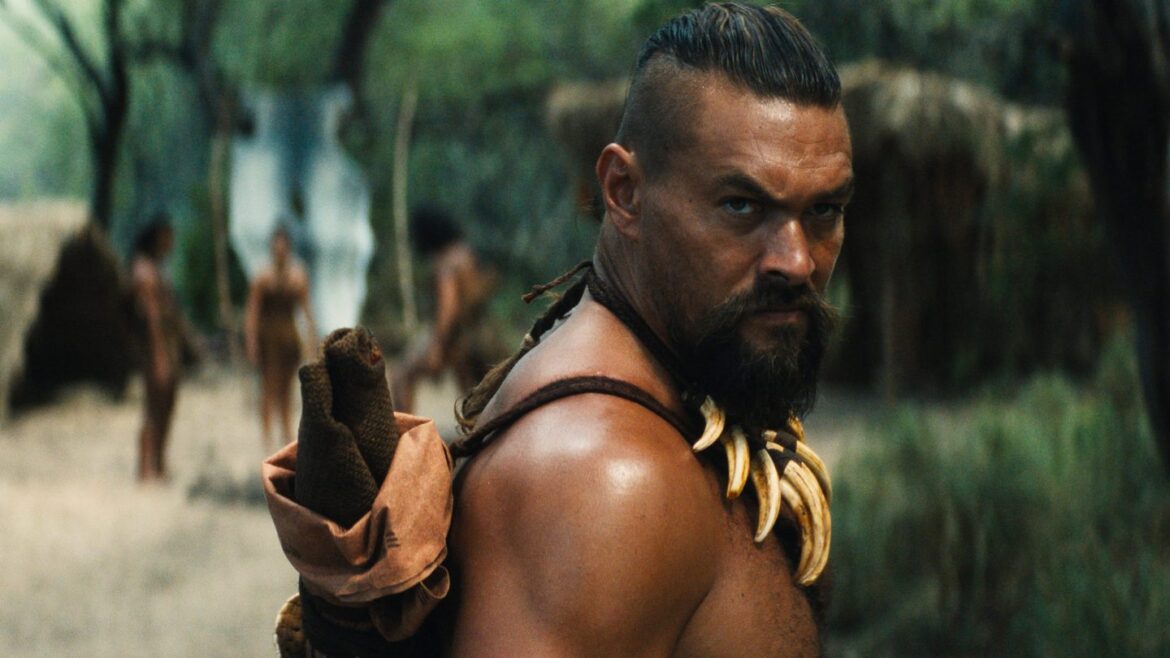
Jason Momoa has waited his entire life to make Chief of War, the ambitious new Apple TV+ series that dramatizes the reunification of Hawai’i in the late 18th and early 19th centuries. After making a career largely out of playing fictional action heroes — Aquaman in the DC Universe, an ill-fated nomadic warlord in Game of Thrones, a swordmaster in the Dune movies — the 46-year-old finally gets to play a real-life superhero in a passion project set in his father’s homeland.

Co-created by Momoa and Thomas Pa’a Sibbett, the nine-part series — which could be renewed for more seasons — stars Momoa as Native Hawaiian warrior Ka’iana. Over the course of the first season, Ka’iana returns home from traveling overseas — where he witnessed the horrors of slavery, famine and monetary greed — with the goal of unifying the four warring kingdoms of the Hawaiian Islands to save his own people from the threat of colonization. However, he is ebuffed at every turn by his fellow chiefs, most notably Kamehameha I (Kaina Makua), who later becomes the conqueror and first ruler of the Kingdom of Hawai’i.

The series features a cast of predominantly Polynesian actors speaking in multiple languages and was filmed in Hawai’i and New Zealand as an unprecedented retelling of Hawaiian history from a distinctively native perspective.

“Everyone that has come here has these vacations and brings home these memories, but they fall in love with Hawaii. Now, they’re going to be in the comfort of their home watching the history — stuff that they didn’t even know about,” Momoa tells The Hollywood Reporter on a recent video call from Hawai’i. “But what it’s going to do for us, for Indigenous [actors], and how it resonates with our people — that’s all I care about. We are the great, great grandchildren bringing all of this back and trying to inspire the next generation.”

At a time when history is being erased in classrooms across the country, Momoa adds, “I don’t think anyone knows a part of this American history, so I think there’s a lot of things that people are going to be like, ‘Holy shit!’ And they’re going to get a big deep dive into what went on here. I think they’re going to be really interested.”

Below, executive producers and longtime collaborators Momoa and Sibbett open up about why they decided to use Ka’iana as the entry point in this retelling of Hawaiian history, how they thought about the interplay between the English and ʻŌlelo Hawai’i languages, and how the end of the seventh episode — titled after the real-life “Day of Spilled Brains,” a tragic moment in Hawaiian history — sets the tone for the life-and-death stakes of the final two episodes.

***

You two were first approached to tell the story of Kamehameha I about a decade ago, but you chose to include that historical figure in a larger series centered around Ka’iana. What do you remember from your initial conversations with each other about this project, and how did that idea evolve into the final product we see in Chief of War?

JASON MOMOA We actually had a different script.

THOMAS PA’A SIBBETT Tthe truth is that Kamehameha’s story would be a slam dunk for Hollywood. It’s got all the [elements] you need and would want. So we did talk about it. It was something we thought about, and ultimately it just wasn’t our place to tell it. There was a lot involved with that, culturally speaking.

MOMOA Also, I would never play Kamehameha. I would never have the balls, to say the least, to actually think I could play someone with that stature. So we wanted to find a story that could encompass the whole world, because there were many people like Kahekili or Kamāmalu. So Thomas did come up with an idea for the story of Ka’iana. He was actually the most famous Hawaiian at that time, because he had set sail around the world and went to so many different places that he was very well-known.

So that became very interesting, as a journeyman myself, to go, “Wow, what an interesting story to come from this world, to be a reluctant war chieftain who felt like he was done wrong and then actually betrayed again, and then he flees where he’s from — only to see slavery, sickness and just everything as he went around the world.” [He was able] to go up to Alaska and then bring back 10 war canoes filled with weapons to then help unify the islands because [he thinks they] need to get everything together because of what’s coming [to their shores].

To have that kind of perspective is a disease, in a way. He can never go back [to his old way of thinking] because of what he has seen, and then he can’t really connect to anyone in his culture, but he also wants to help them and save them because he knows what’s coming and [the importance of] being able to trade with the rest of the world. So I feel like that story is very complex. I’ve never quite played a character like that, and I don’t necessarily agree with a lot of the views that he has.

A lot of these characters — the things they have done — it’s pretty crazy to connect [the events]. We have [to go from point] A to B, but there’s so much we had to fill in that we don’t know. So it’s been an amazing partnership and the time to create worlds like this is exciting. If people love this, this show opens up — it gets even bigger. And that’s exciting, once you go down the rabbit hole of the history. We’re hitting historical moments, but also, we’re condensing time in some ways.

SIBBETT It is wonderful to be able to attack a story this way, and realistically, it’s what happens when stories can be built from the inside out. That was the other approach we had. We realized that, yes, Kamehameha is a story that would work and people would enjoy that. But if you ask us, we know our history [so well] that it’s like, “Well, look, if you shift the perspective just a little bit, you hit this guy instead of that guy.” Now we have a whole other world that audiences would’ve never known about.

Ka’iana is such a lesser well-known story. Despite his positioning in that time period, he was truly the only Hawaiian that people ever talked about. They were coming to the islands looking for him. They had heard about him or worked with him. Captains were like, “Now we know these islands exist. So where is he? Can he guide us? He can help us.” What a great fertile ground for storytelling, and the story that I don’t think anybody else would’ve found if they didn’t have that insider connection to Hawai’i itself.

Jason Momoa as Ka’iana in Chief of War.

Apple TV+

Jason, to your point, Ka’iana was the first chief to travel around the world, and he returned with a very clear understanding of the threat that colonization would pose to his people, even though the four islands were warring at the time. How did you think about creating an emotional arc for him over the course of these nine episodes? How did you want him to evolve as a leader?

SIBBETT We’re trying to be careful, because to talk about Ka’iana is to talk about his whole journey, which is a story that we still want to tell. So if we’re just keeping it within the context [of this season], it really is everything that Jason described. He’s a guy who ends up in a foreign land and his eyes are being opened. It would be the equivalent of landing on the moon and seeing aliens and how they operate, and then having to go back home and warn people the aliens are coming. It’s great for character, and that’s really what we can explore this season. Him seeing the danger, trying to ring the alarm — and how do you do that to people who have never seen the moon?

MOMOA Ka’iana is struggling because he wants to] revolt against his king, to go against Kamehameha, knowing that these guys are bad, that this white man is bad, that he’s twisted these things. And then [he has] to go, “No, this is māmalahoe. We don’t do this. These are our rules and our laws. But you know that he’s going to hurt people, and you have to go against your king” — and that’s just the human condition going, “Fuck, they’re wrong and you’re wrong. This needs to stop.” You’re in the same position going, “Oh man, we know this is what’s going to happen [to these Hawaiians],” so you’re torn as an audience member.

SIBBETT But that urgency causes them to make mistakes. What’s great about the story is that just because you know something doesn’t mean you’re making the right decisions. We are following this character, we’re trusting him — and then all of a sudden he messes up, or he’s in a situation where he is 100 percent correct, and they better listen to him. This story is as universal as anything else, and we were excited to dig into it and allow the story to be told to introduce us to this world, but really follow all of these great characters that lead us to a really great story.

I’m very fascinated by the way you balance ʻŌlelo Hawai’i with English in this show. The first two episodes are entirely in the native Hawaiian language, and the arrival of some non-Hawaiian characters — mostly white stowaways and a Black slave — gradually introduces English into the mix. At some point later in the season, some Hawaiian characters only want to speak in their native language, some only want to speak in English, and some switch seamlessly between the two languages depending on the situation or the person they’re interacting with. How did you think about the interplay and interaction of language in this show?

SIBBETT When you take a step back and look at the big picture, language is also a representation of what we give and take when cultures are mixed and start to come together. There’s some good things, there’s some bad things. Communication’s obviously key. Hawaiians actually had an edict from a king that said, “I want you all to learn to read and write English.” Within 50 years, Hawai’i’s 97 percent, almost 98 percent completely literate — the highest literacy rate of any country around the world. So it’s understanding that Hawaiians were adaptive, that they actually valued learning, and we get to show that through this course of language.

MOMOA I sometimes get extremely pissed off when you watch a movie, and you’re like, “Why am I watching this guy do it in a Native American accent? It’s a French movie.” There’s always those choices that you have to make, but there’s just no way you would ever make this without it being in the Hawaiian language — and it’s the most beautiful language in the world. Having said that, my character obviously travels outside of there. If you were going to be a war chief, the first thing you’re going to know is your enemy. You’re going to know your surroundings, you’re going to learn the [enemy’s] language. You would be an idiot, a horrible chief of war, if you did not understand the other language of everyone. So it is very essential for me to learn.

We condensed time, but he went on many journeys and then came back. Obviously, we wanted everyone else to be learning too, because Kamehameha had advisors, they had stowaway white guys who were teaching the language to them, and we wanted them to be educated and get through it quickly. But certain people like Keōua, Kahekili, Kamehameha — [the English language] makes no sense to them. They can have their advisors be [focused on] all that [English]. So it was a nice blend.

Moses Goods in “Day of Spilled Brains.”

Apple TV+

Each episode feels epic and cinematic in scope and scale, but one of the most gut-wrenching moments happens at the end of episode seven, when Captain Simon Metcalfe (Jason Hood) and his crew, after their offer of trade was kindly but firmly rejected by Chief Kamehameha, go to the nearest bay, fill their canons with nail bombs, and opens fire on hundreds of innocent Hawaiians. Jason, can you give voice to what is going through Ka’iana’s mind as he watches his worst nightmare — the senseless killing of his own people at the hands of the “paleskins” — come true from afar?

MOMOA That was the ultimate horror. It’s to come back, know what’s coming, and then voice what you’ve seen, and not be trusted and then also have to live by some laws that you necessarily don’t believe in anymore. [Ka’iana now believes] there aren’t these gods, they aren’t going to look after us, and these people are going to hurt us if we don’t get aligned. So to be muzzled and not be heard, but also be poisoned by the outside rule, I feel like he’s coming back [to Hawai’i] and carrying that [burden]. He feels inflicted when he comes back, but he can’t let that go.

The king says, “You are not allowed to do this. You can’t retaliate.” But then when [the massacre] happens, all these people were murdered for nothing because they didn’t listen. You’re in these places where they’ve never been this way before. These are the first times this [kind of outside violence] has ever happened to these people — and it’s frustrating for the audience, it’s frustrating for the characters even when we’re both wrong in many ways.

Ka’iana constantly keeps trying to do stuff, and the door keeps shutting. When you look at all the advisors, some of the main advisors are stowaways. These paleskins were probably the lowest of lows [in the social hierarchy in England], but they just happened to survive, and they’re the advisors to Kamehameha because they’ve seen the world. So imagine that: Someone who isn’t necessarily a high-ranking [official], but because they’re there and can advise and whisper in the ear of our king, they can spread rumors about everyone, really.

SIBBETT One thing to point out, because you’re talking about something really specific, is that this whole section is actually historically accurate. There was that confrontation on the ship beforehand where Ka’iana just believed that they couldn’t allow Captain Metcalfe to continue to operate in Hawai’i. Kamehameha turned it down and said, “No, man, I don’t know why you would want to kill him.” And he didn’t quite understand that. So Ka’iana did try to sneak on board with his men, and they did try to take out Captain Metcalfe, but he was stopped by Kamehameha. They argued in Hawaiian, and the crew didn’t quite understand what was going on. So for Jason, as an actor, he had to then fill in the gaps to figure out, “Well, now what kind of emotion does that evoke?” Because history wrote that story for us.

The massacre that happened [in this episode] really did take place. It’s a real thing that happened at Olowalu. It has to be something that the character goes through because we are still dealing with the trauma of that event today. When Simon Metcalfe left [Hawai’i in real life], he didn’t technically go into the next harbor; he went to the next island. But for us, it was a way for us to be able to say, “Look, this is a real story. The only difference in the writing was to make sure that Ka’iana’s character gets to experience it.” Our characters are all impacted by it, because the truth is we’re still affected by it today. The name of the episode is “Day of Spilled Brains,” because in Hawaiian we refer to that event as Kalolopahu, or “Day of Spilled Brains.”

How did you figure out the logistics of shooting that massacre scene? Did you ever consider having that attack play out in a different way?

SIBBETT It was tricky, because Hawaiians actually went out to sea to meet him [in real life], and the first version of the story was Hawaiian canoes were getting shot and people were getting hit and being dragged out of the water. It’s a lot. So to make it easier, we decided to do it where the ship is there [on the water], and they shoot onto land. Of course, that in and of itself is still impactful and traumatizing, but it’s not near as bad as it really was. But if you want to talk real logistics, that particular scene was actually shot in Aotearoa [New Zealand], and we needed to make sure that we were okay with the tribes to shoot on their land and to tell the story of this type of significance. [We asked] whether or not we should even put explosives underneath the sand — is that going to cause issues to their local marine life and all of that? So there was a lot taken into account for that scene — from the writing to the location to making sure that we were also culturally appropriate to the tribes in that area.

Jason Momoa and Luciane Buchanan in “Day of Spilled Brains.”

Apple TV+

Circling back to the start of this conversation, there are decades of history you could retell in this show, but you had to figure out what to include and not include in just nine episodes — with the hope of potentially returning to tell more of that story in subsequent seasons. How did you settle on the “Day of Spilled Brains” as a launching-pad into the final episodes of season one? Did you always know you wanted to include this horrific moment in history?

SIBBETT I think we were always planning on doing it. It is the wounded knee of Hawai’i. It’s important because it enables us to really look at this point in history and dissect what went wrong. Not everything about cultures coming together is bad, but this was one of them. History gives us the ability to look back and see what led to it, what caused it, what was the mindset, and for us to make sure we’re not making these types of mistakes again. Story-wise, it was just a matter of figuring out how we’re going to make it fit, and what parts of it needed to be dramatized in order for it to work. But a lot of the history was there.

I always thought it was fascinating from that point of view to say, “So if Ka’iana had killed Captain Simon Metcalfe, then that massacre would’ve never happened.” But on the flip side, you could argue, “Well, was [Ka’iana] one of the reasons why [Metcalfe] did it?” So it becomes this really interesting moment in history where everybody could take blame for it. Simon Metcalfe clearly takes blame for it, but everybody, depending on how you’re looking at the story, can take some blame.

***

Chief of War is now streaming on Apple TV+, with the season finale set to drop on Sept. 19.

September 10, 2025 0 comments
0 FacebookTwitterPinterestEmail

Social Connect

Facebook Twitter Instagram Pinterest Youtube Snapchat

Recent Posts

  • 2009 feels like a whole other world away

  • Watch Ariana Grande and Jimmy Fallon Perform a History of Duets

  • Spotify’s Joe Hadley Talks ARIA Awards Partnership

  • Nick Offerman Announces 2026 “Big Woodchuck” Book Tour Dates

  • Snapped: Above & Beyond (A Photo Essay)

Newsletter

Subscribe my Newsletter for new blog posts, tips & new photos. Let's stay updated!

Categories

  • Bollywood (1,929)
  • Celebrity News (2,000)
  • Events (267)
  • Fashion (1,605)
  • Hollywood (1,020)
  • Lifestyle (890)
  • Music (2,002)
  • TV & Streaming (1,857)

Recent Posts

  • Shushu/Tong Shanghai Fall 2026 Collection

  • Here’s What Model Taylor Hill Is Buying Now

  • Julietta Is Hiring An Assistant Office Coordinator In Dumbo, Brooklyn, NY (In-Office)

Editors’ Picks

  • 2009 feels like a whole other world away

  • Watch Ariana Grande and Jimmy Fallon Perform a History of Duets

  • Spotify’s Joe Hadley Talks ARIA Awards Partnership

Latest Style

  • ‘Steal This Story, Please’ Review: Amy Goodman Documentary

  • Hulu Passes on La LA Anthony, Kim Kardashian Pilot ‘Group Chat’

  • Hannah Einbinder Slams AI Creators As “Losers”

  • Facebook
  • Twitter

@2020 - celebpeek. Designed and Developed by Pro


Back To Top
celebpeek
  • Home
  • Bollywood
  • Hollywood
  • Lifestyle
  • Fashion
celebpeek
  • Music
  • Celebrity News
  • Events
  • TV & Streaming