celebpeek
  • Home
  • Bollywood
  • Hollywood
  • Lifestyle
  • Fashion
celebpeek
  • Music
  • Celebrity News
  • Events
  • TV & Streaming
Home » Luminary
Tag:

Luminary

Shira Ghertner: A Luminary in Contemporary Filmmaking
Hollywood

Shira Ghertner: A Luminary in Contemporary Filmmaking

by jummy84 November 14, 2025
written by jummy84

Shira Ghertner is carving a niche for herself in the world of contemporary filmmaking, marked by her distinctive voice and dedication to avant-garde storytelling. Based in Tel Aviv, Ghertner’s work challenges traditional cinematic norms and illuminates underrepresented narratives, establishing her as a pioneer in the film industry.

Growing up in a vibrant cultural landscape, Ghertner found herself drawn to the arts from an early age. She pursued her passion through formal education at Minshar for Art in Tel Aviv, immersing herself in film production. This educational journey was not just about acquiring skills but fostering a deep understanding of visual storytelling that resonates with audiences. Her academic experience was complemented by extensive training in theater at Sela – The Performing Arts Studio, where she developed a strong foundation in narrative construction and character dynamics. This duality of education has equipped her to tackle various storytelling mediums, allowing her to blend cinematic and theatrical elements in her films effectively.

Ghertner’s filmography is a testament to her innovative spirit and artistic vision. Her breakout film, Soft Sign, explores intricate themes surrounding identity and social acceptance, capturing the struggles and triumphs of the queer community. The film portrays a nuanced perspective on love, resilience, and the quest for self-acceptance, themes that resonate deeply with many viewers. Its success at international film festivals illustrates her ability to weave personal stories into broader societal contexts, earning her critical acclaim and respect within the filmmaking community.

Additionally, her role as a producer on projects like Broken Mirrors further demonstrates her prowess in the industry. This film, which examines the impact of personal and collective trauma, showcases her commitment to exploring complex emotional landscapes. Ghertner works diligently to ensure that her productions maintain high artistic standards, focusing not only on visual aesthetics but also on meaningful, thought-provoking narratives.

What sets Ghertner apart is her commitment to exploring complex human experiences through her films. She skillfully navigates themes of love, identity, cultural conflict, and interpersonal dynamics, resonating deeply with audiences. Her characters are richly drawn and relatable, inviting viewers to empathize with their journeys.

In an era where many filmmakers resort to formulaic storytelling, Ghertner’s work stands out for its authenticity and emotional depth. She often draws inspiration from her own life experiences and the diverse backgrounds of those around her, weaving these influences into narratives that speak to universal truths. This authenticity not only enhances the relatability of her films but also positions her as a crucial voice in a cinematic landscape that increasingly values representation.

Ghertner is also a staunch advocate for diversity and inclusion within the film industry. Recognizing the barriers that many underrepresented voices face, she actively collaborates with emerging talent from various backgrounds. She believes that film is a powerful medium for social change, and through her projects, she aims to elevate stories that reflect the rich tapestry of human experience.

Her commitment to diversity goes beyond mere representation; it involves fostering an inclusive environment that encourages collaboration among diverse filmmakers, writers, and artists. By creating opportunities for marginalized voices, Ghertner is helping to break down the walls that have historically restricted access to the film industry. This approach not only enriches her own work but also contributes to a broader movement toward equitable representation in cinema.

In the rapidly changing landscape of filmmaking, Ghertner is keenly aware of the role technology plays in shaping narratives and audience engagement. She embraces new media and digital platforms as essential tools for reaching wider audiences and presenting stories in innovative ways. This adaptability has allowed her to explore hybrid forms of storytelling, blending traditional cinematic techniques with modern digital artistry.

The rise of streaming platforms and social media has also transformed how films are distributed and consumed, providing independent filmmakers like Ghertner with opportunities to share their work with global audiences. She is leveraging these platforms not only to showcase her films but also to spark dialogues around the themes she explores. By engaging with her audience directly, Ghertner creates a sense of community that further amplifies her message.

As Ghertner continues to evolve as a filmmaker, she is expanding her horizons into television and digital media. Her upcoming projects promise to push the envelope further, with a focus on inclusive storytelling that reflects the diversity of human experiences. By venturing into television, she aims to explore longer narrative arcs, allowing for more character development and intricate plots that delve deeper into the lives of her characters.

With several new projects in the pipeline, Ghertner is keen on collaborating with writers, directors, and creatives from various cultural backgrounds to enrich her stories. She is particularly interested in exploring themes related to contemporary societal issues, including mental health, social justice, and the intricacies of modern relationships. These subjects are not only timely but crucial in fostering conversations that matter within society today.

Shira Ghertner represents a new generation of filmmakers who are redefining the art of storytelling. Her innovative approaches and dedication to authenticity make her a trailblazer in contemporary cinema. As she forges ahead, the film community eagerly anticipates the next chapter in her impressive career.

Through her work, Ghertner not only entertains but also educates and inspires, proving that film has the power to shape perceptions and foster empathy. She embodies the future of filmmaking, a future that is diverse, inclusive, and committed to exploring the rich complexities of the human experience.
 

November 14, 2025 0 comments
0 FacebookTwitterPinterestEmail
Revolutionary Funk-Soul Luminary » PopMatters
Music

Revolutionary Funk-Soul Luminary » PopMatters

by jummy84 October 30, 2025
written by jummy84

When a great artist passes, we often say that they were “larger than life”. While this was true of D’Angelo in many ways, it doesn’t exactly do his legacy justice. D’Angelo‘s presence certainly loomed large over the neo-soul scene throughout the 1990s and 2000s, but his music stood out not for its largeness, but its lightness—its subtlety, sparseness, and deftness of touch. It was as smooth as “chicken grease”, to borrow an oft-cited phrase from his musical icon, Prince, at once as sensual and soulful as Motown in its heyday and as effortlessly cool as the best of old-school hip-hop. 

Since his passing on 14th October, many tributes have been paid to D’Angelo, born Michael Eugene Archer, calling him a hitmaker. Yet calling him a hitmaker seems to miss the mark. Yes, he did score a top 10 hit in “Lady”, and a top 25 hit in “Untitled (How Does It Feel?)”, but D’Angelo’s true gift was not as a hitmaker. 

Instead, his music skirted around the rough edges of R&B, the seedy underbelly of 1970s funk. It took the drugged-out, dirt-encrusted sound of Sly Stone and P-funk and pared it down to its barest elements. D’Angelo knew how to both move the listener and restrain them at the same time—keeping them guessing and allowing them to fill in the gaps of his music, both literally and figuratively.

That is evident even in his most ‘billboard’ moments, like “Untitled”, where the oddly syncopated 6/8 beat almost seems to create a delay in the music, an extra space for the listener to fill. The additional space heightens the sexual tension within the track, dramatizing D’Angelo’s impassioned pleas for his lover to come closer, stop playing silly games, and “take the walls down” with him. 

Indeed, if there was one word that truly defined D’Angelo, it may have been just that: space. That was true of the way he made music, but it was also true of the way he treated the musicians who worked with him. As his tour manager, Alan Leeds said:

“D’Angelo always surrounds himself with great musicians, but most importantly, he gives them space. I don’t think I’ve ever worked with a frontman artist as unselfish musically and on stage as D’Angelo is. He’s like a jazz guy doing funk. I think he intrinsically gets the idea that’s foreign to so many musicians today that the beauty of the musical art form is the interplay.” 

Perhaps more than any other artist of his generation, D’Angelo knew how to let the music breathe. He knew that there is wisdom in letting your collaborators find their own rhythm, and that inspiration is something you have to sit with and wait on, not force. As a result, there isn’t a wasted note in his discography, nor is there a bad album. All three of his studio LPs—released in three separate decades—reflect a painstaking work ethic and a patience that verges on legendary. They are all certified stone classics, as virtually any R&B head worth their salt knows. 

D’Angelo has often been compared to Prince, and although the two share a clear sonic lineage—both steeped in the great American funk-soul continuum—in many respects, they are polar opposites. Prince’s music was huge and theatrical; D’Angelo’s was primarily marked by restraint and subtlety. It’s fitting, then, that D’Angelo’s favorite Prince song was “I Wonder U”, arguably the subtlest moment in Prince’s whole discography. 

The beat in “I Wonder U” is even sampled in “Africa”, the closing track on Voodoo. “Africa” was written as a tribute to D’Angelo’s newborn son, Michael, and it’s breathtakingly beautiful—a lullaby with a twinkle in its eye, sleepy, backward guitars merging with D’Angelo’s half-whispered vocals about spirituality and the blessings of “African descent”.

To sum up their differences: Prince made music for the party; D’Angelo made music for the after-party—steamy, slow-burning funk for bleary-eyed dancers taking one more hit of the joint, drinking “one mo’ gin”. It was the kind of music you put on in the wee AM hours when you were tired, high, and could no longer tell the difference between dreaming and waking. 

Yet this isn’t to say that all of D’Angelo’s music was marked by restraint and subtlety (just as not all Prince’s was power-ballad bombast). When the time was right, D’Angelo knew how to let fly and flat-out rock, like on his epoch-defining, 15-years-in-the-making comeback album Black Messiah. 

The album’s central highlight is probably “1000 deaths”, which opens with the sermonizing screed of black revolutionaries Khalid Abdul Muhammad and Fred Hampton and then comes totally unglued, the low-slung, bass-driven groove giving way to an epic wail of gun-slinging, turbine-roaring guitars. D’Angelo, deep in the mix, cries out in a plaintive and desperate battle cry: “You know a coward dies a thousand times, but a soldier only dies just once.”

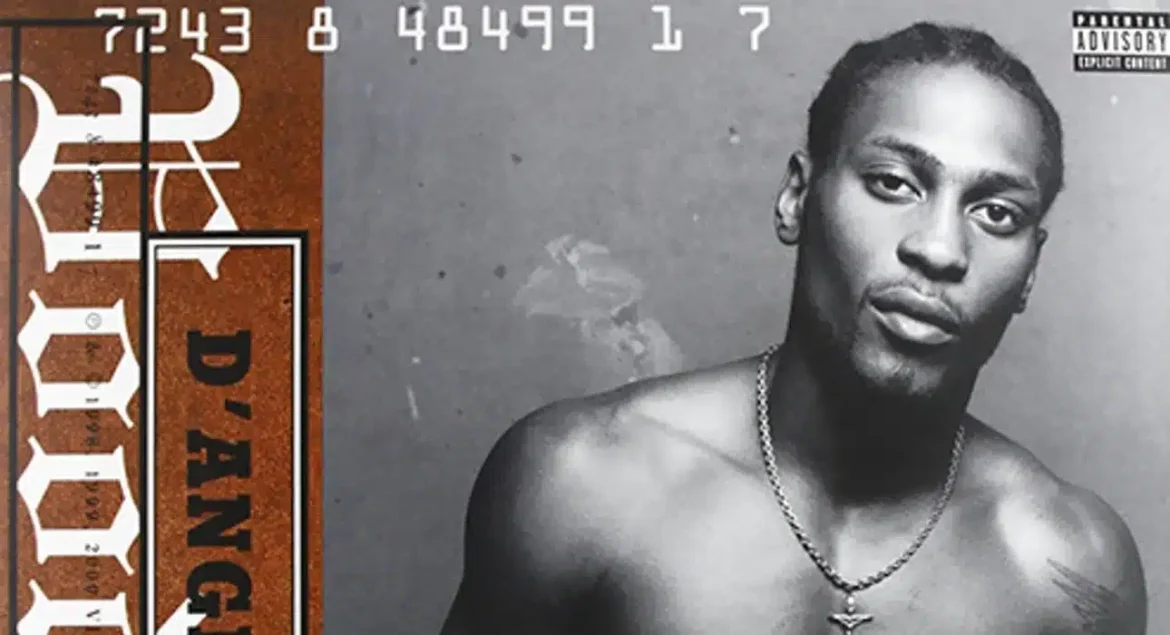
You could say that D’Angelo’s music bore the best of both worlds—romantic and revolutionary, soft and hard, tender and machismo, masculine and feminine. Nowhere is this world of contrasts more beautifully exemplified than on Voodoo; he appears shirtless, chiseled, and dripping with sex appeal on the cover (just as in the famous music video), but the music itself feels almost supremely feminine and understated—the vocals airy and free-floating, the production minimal and crisp, the lyrics primarily tender and openhearted. Indeed, Voodoo is that rare thing: a 1990s hip-hop record that seems connected to the divine feminine. It doesn’t stand out in the records of the time; it exists in a category entirely separate from them. 

It’s ultimately impossible, in the space given here, to do adequate justice to D’Angelo’s legacy. Suffice it to quote the closing lyrics on “Africa”: “From which you came was love / And that’s how it all should be / You and my soul are one / Through all the time and history / And I thank you, thank you.”

Thank you, Michael Eugene Archer, for gracing this planet with your delicate and beautiful sound. 

October 30, 2025 0 comments
0 FacebookTwitterPinterestEmail

Social Connect

Facebook Twitter Instagram Pinterest Youtube Snapchat

Recent Posts

  • 2009 feels like a whole other world away

  • Watch Ariana Grande and Jimmy Fallon Perform a History of Duets

  • Spotify’s Joe Hadley Talks ARIA Awards Partnership

  • Nick Offerman Announces 2026 “Big Woodchuck” Book Tour Dates

  • Snapped: Above & Beyond (A Photo Essay)

Newsletter

Subscribe my Newsletter for new blog posts, tips & new photos. Let's stay updated!

Categories

  • Bollywood (1,929)
  • Celebrity News (2,000)
  • Events (267)
  • Fashion (1,605)
  • Hollywood (1,020)
  • Lifestyle (890)
  • Music (2,002)
  • TV & Streaming (1,857)

Recent Posts

  • Shushu/Tong Shanghai Fall 2026 Collection

  • Here’s What Model Taylor Hill Is Buying Now

  • Julietta Is Hiring An Assistant Office Coordinator In Dumbo, Brooklyn, NY (In-Office)

Editors’ Picks

  • 2009 feels like a whole other world away

  • Watch Ariana Grande and Jimmy Fallon Perform a History of Duets

  • Spotify’s Joe Hadley Talks ARIA Awards Partnership

Latest Style

  • ‘Steal This Story, Please’ Review: Amy Goodman Documentary

  • Hulu Passes on La LA Anthony, Kim Kardashian Pilot ‘Group Chat’

  • Hannah Einbinder Slams AI Creators As “Losers”

  • Facebook
  • Twitter

@2020 - celebpeek. Designed and Developed by Pro


Back To Top
celebpeek
  • Home
  • Bollywood
  • Hollywood
  • Lifestyle
  • Fashion
celebpeek
  • Music
  • Celebrity News
  • Events
  • TV & Streaming