celebpeek
  • Home
  • Bollywood
  • Hollywood
  • Lifestyle
  • Fashion
celebpeek
  • Music
  • Celebrity News
  • Events
  • TV & Streaming
Home » Jazz
Tag:

Jazz

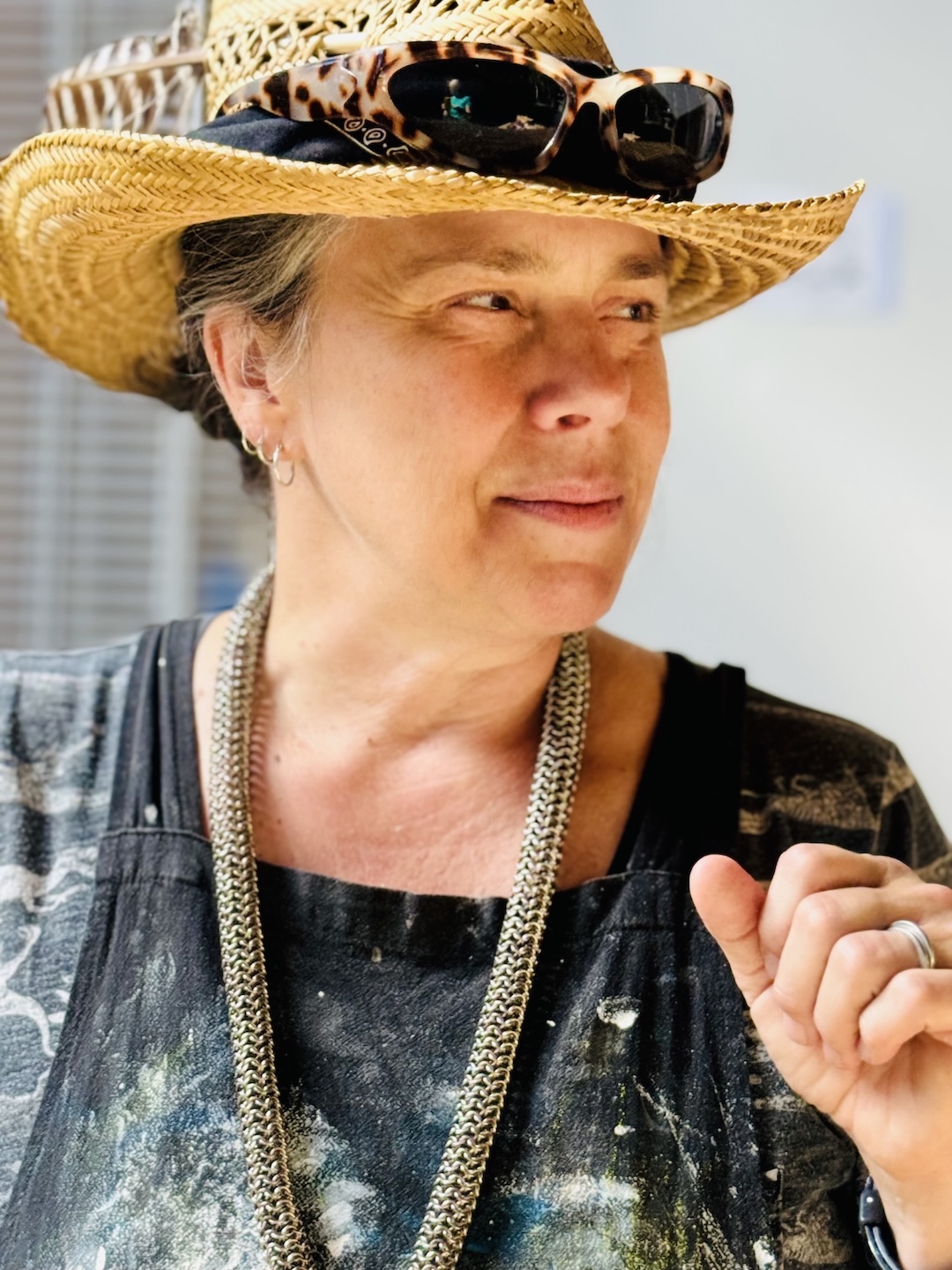
Susan Weinthaler in her Narrowsburg, NY studio. (All photos by Liza Lentini.)
Music

This Artist is Turning Jazz into a Visual Form

by jummy84 November 12, 2025
written by jummy84

Once Upstate New York locals sense that an early winter is on its way, they can count on a few short weeks of spectacular weather, where amber-leafed sugar maples and auburn birches sway in the warm breeze. At the end of a rocky dirt road, surrounded by this cinematic countryside, is the bright blue barn where Susan Weinthaler has her home and studio, a somewhat refreshingly expected modern cliché of the city slicker planting their artsy ideal, somehow blending perfectly with nature. Purchased in 2002, the rustic 7 acres were eventually tamed to accommodate the creative dwelling she shares with her husband and adult son. While still keeping their NYC West Village apartment, the family only moved (mostly) full-time to Narrowsburg, about 100 miles from Manhattan, in 2023.

Susan, wearing a paint-stained apron and straw Western hat with feathers, greets me with a big, easy smile accompanied by her elderly shepherd mix, Bacon. Around the back of the barn are large, moveable walls, 16-foot by 16-foot when open; Susan easily pushes them from side to side to work, as she says, in plein-air. In every way, this is where nature meets art. And vice versa.
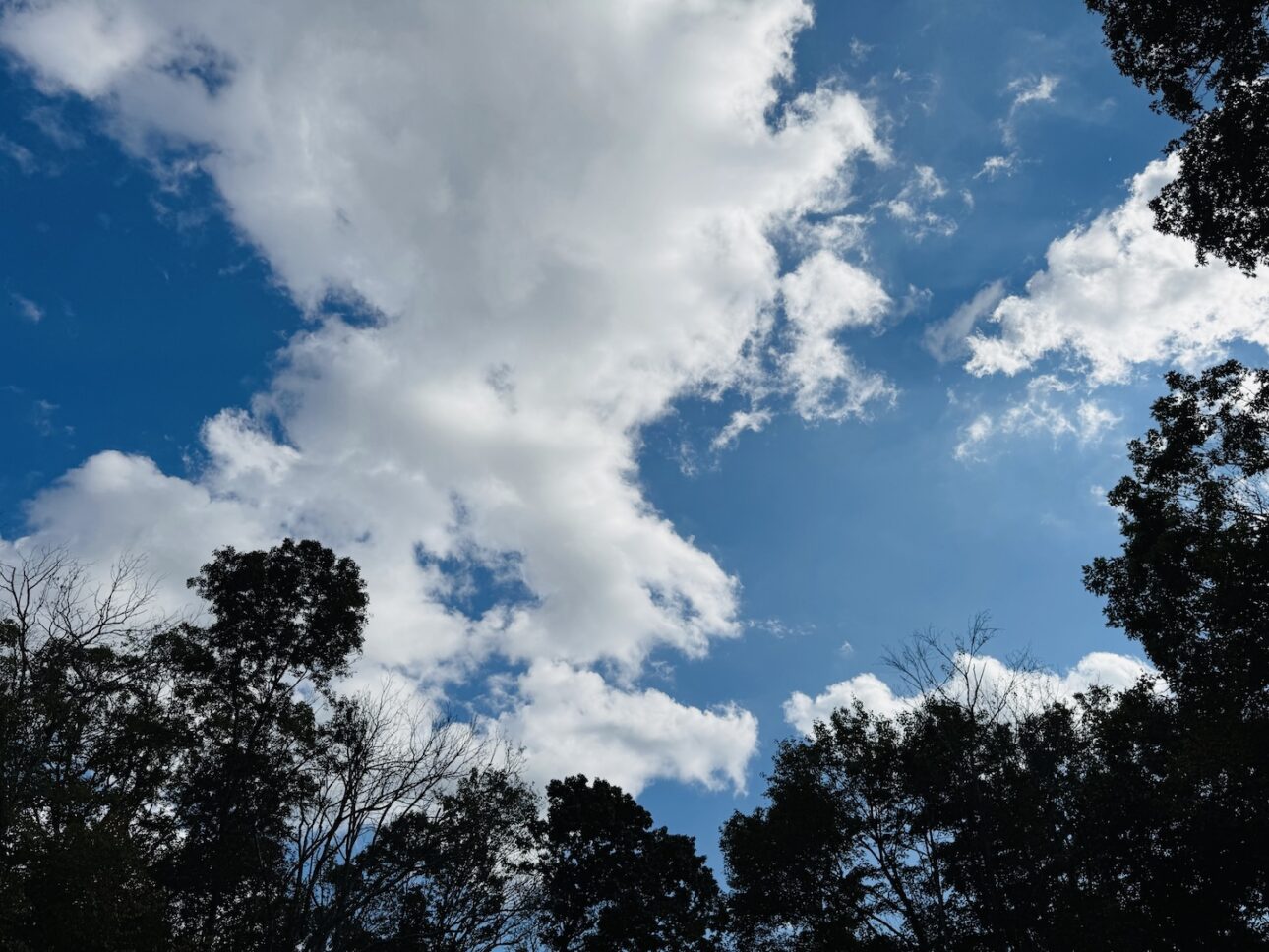
“What do you see when you look out here?” I ask her, staring over the somewhat manicured lawn towards the wild carrot-colored woodlands.

“Waves,” she says, of the major visual theme within her art, including her most-recent work-in-progress, a representation of jazz. Energy waves, air waves, magnetic waves, sound waves: she’s right when she says that once you start “going there in your mind” it’s easy to get sucked in. While she’s a devoted student of wave theory, she’s quick to say she’s doing her own thing: “I’m just taking it in my own different direction.”
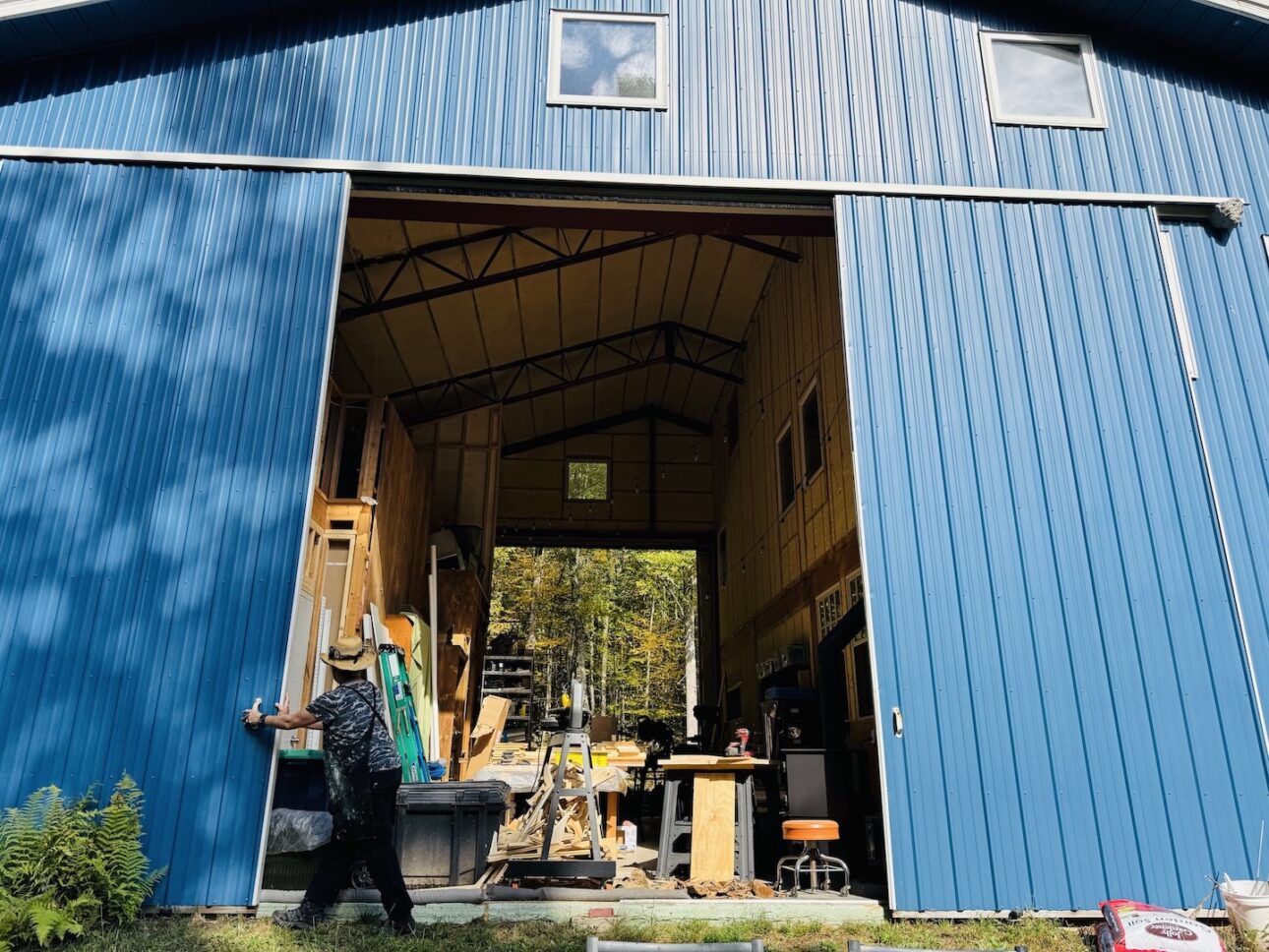
Once inside the parted walls there’s talk about the construction of the place, how her background in theater made her a skilled carpenter and not afraid of heights, helpful when the house arrived in a kit and she and her husband, Josh, set to assemble the barn mostly themselves. They have been working on the Barn—in this context she uses a capital “B”—for over 20 years. “You could hang a car from those trusses,” she says pointing proudly upward towards the 27-foot peak. The room is a very full, fascinating spot, with wood planks and pieces assembled or contained on and in nearly every surface, pine being her current base of choice. A precision saw, speckled in sawdust, sits on a pedestal in the back of the room overlooking the landscape. To its right, two bins collect curve-cut pieces: One is for keeps, the other discards. To me, they look similar, but to Susan, the second bin will eventually be used for firewood. Maybe. Sometimes she changes her mind. “How does anyone decide anything?” she asks with a shrug, noting that trusting her gut is everything, worrying that humans are devolving out of their own intuition.
These pieces of wood are her signature—handheld flat-ish blocks of various sizes she refers to as Bits. Once shaped and carved, she then designs each piece to come together as a cohesive work or theme. The result is an intriguing sculptural story, alone or together. They are backed with magnets that will— if she has anything to say about it—adorn any metal surface, with or without invitation: gallery doors, city lampposts, cars. And, of course, for her commissions with Starbucks, Google, and the Bill & Melinda Gates Medical Research Institute (to name a humble few), as well as private clientele, they install steel walls to display her art in their space. 

Her earlier question—“How does anyone decide anything?”—is both answered and not answered throughout her art, as each piece is meant to be moveable to create something new based on whoever is interacting with it. And yes, this is art that’s meant to be touched, moved, changed, and even stolen (which delights her), never the same from moment to moment. This is also art that’s meant to stay the same, until someone intervenes. By this theory, Susan’s work is as guerilla and as high-end as the piece dictates; as personalized and as “for the people” as she and the client choose. (Or, perhaps, as the beholder chooses.) At Starbucks in Williamsburg, Brooklyn, the entire piece got stolen, Bit by Bit. “I knew it would,” she says cheerily.
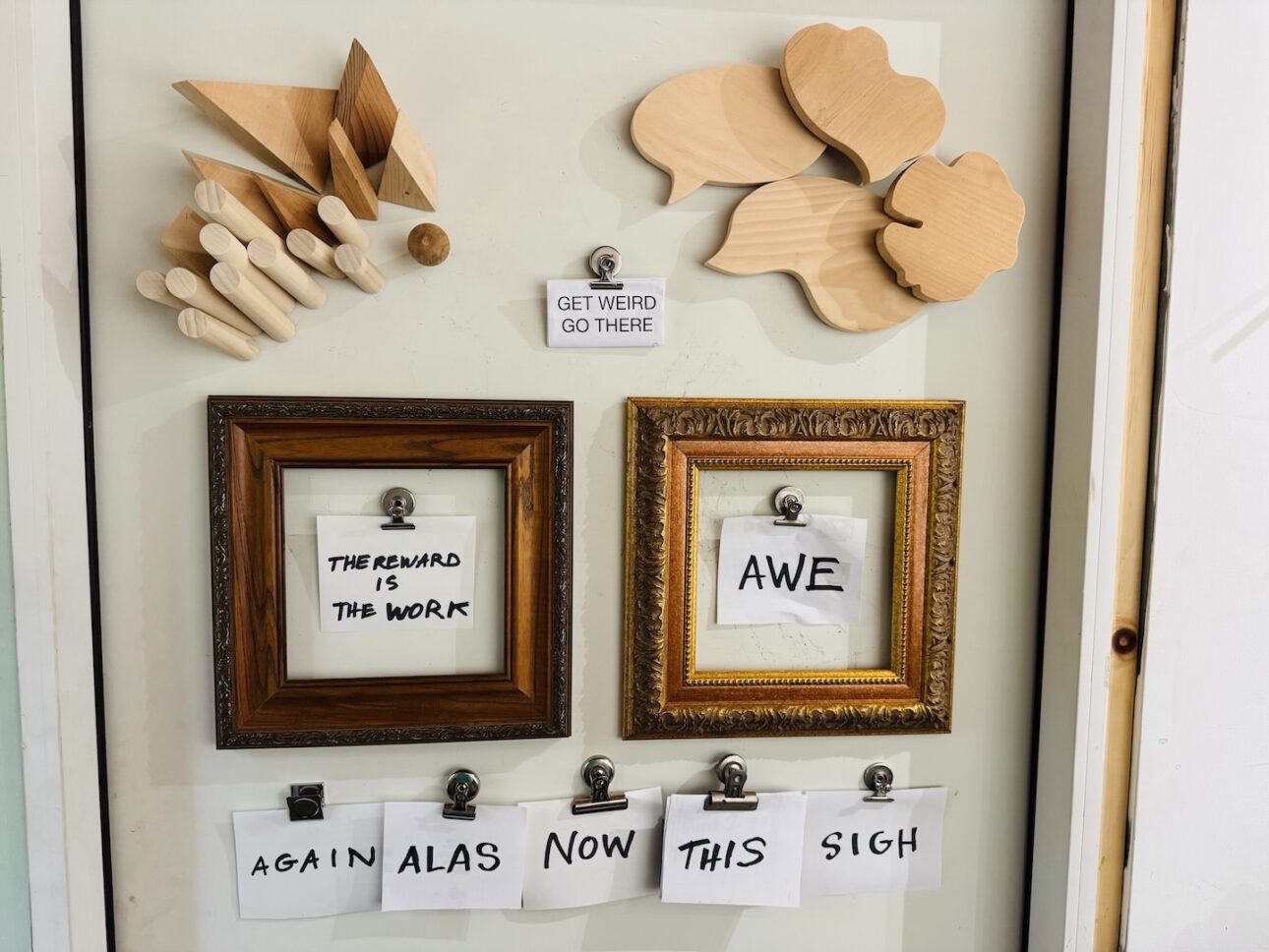
This isn’t the running ethos of most creatives, specifically visual artists who often “complete their work.” So, the answer to “How does anyone decide anything?” is that when it comes to Susan’s art, they don’t have to.

“When you come down to infinite possibilities, you have to let that go, too because there’s so many possibilities,” she says. “How can I even expect to get the right one? Maybe I get lots of right ones. That’s why I’ve designed my artwork the way I did it, so it was infinitely flexible. Because I think as an artist, that is one of the hardest things. When you have a blank canvas, and you look at it, and you’re about ready to start, that is the most exciting and terrifying time of an artist. When you have infinite possibility, and you’re like, ‘I have to make a choice back to the decision-making. How do I decide what is more important and what goes together?’ When I was developing this notion of Bits and magnetic artwork, what drew me to it, magnetically speaking, pun intended, is that I would never have to make those decisions. I would create the parts, the Bits, hence the name Bits, and then who am I to say what the right one is? It’s so liberating giving that up.”

It is, however, the ethos of musicians, who actively know and understand that their work is a literal living, breathing thing. Jazz—scat or otherwise—is specifically renowned for its lack of permanence. Thus, Susan’s newest project: her signature Bits as jazz.
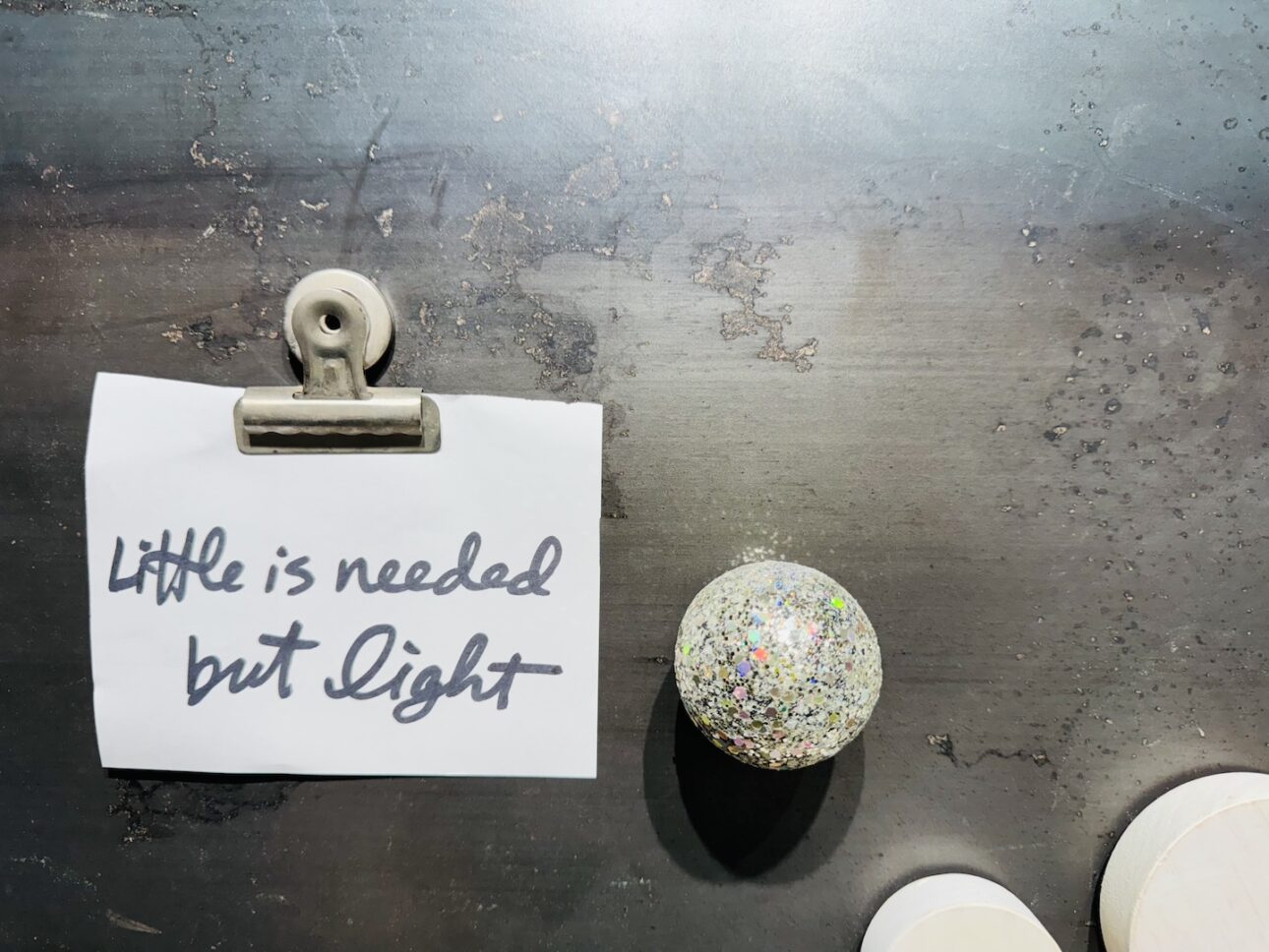
“Why am I making art about music? Because music is an integral part of all life, invisible and powerful, like magic. It’s an elemental force of nature I want to explore and understand better.” When her grandmother was 16 she played the piano for silent films and later had an all-women’s jazz band in Ithaca in the 1920s while attending Cornell. “She was a fierce pianist, and I feel her blood in my body,” Susan says.  When she was a girl, Susan played both piano and saxophone, but stopped making music in high school when a guidance counselor told her it wasn’t possible to do both art and music, and she had to choose between them. “Alas, I did. I chose art,” she says.

Music, however, always remained an influence. In college, while studying print-making, she discovered Matisse’s Jazz, first published in 1947, a collection of his works created from 1943 to 1947. “He captured the essence of jazz with shapes and colors, but one thing eluded him. He couldn’t harness improvisation, the true soul of jazz. It can’t be static, it needs infinite flexibility, and my work can do that. It can improvise. It is designed for jazz.”

We discuss how change is the only constant, while standing in her studio and looking out at the soon-to-be-bare autumn trees. “Improvisation is the key element of life, the quintessential nature of nature,” she says. “Existence, instinct, and evolution all rely on it, and that is certainly worth making art about. I’ve been thinking about this piece for years, I can hardly wait to sink my teeth in. “
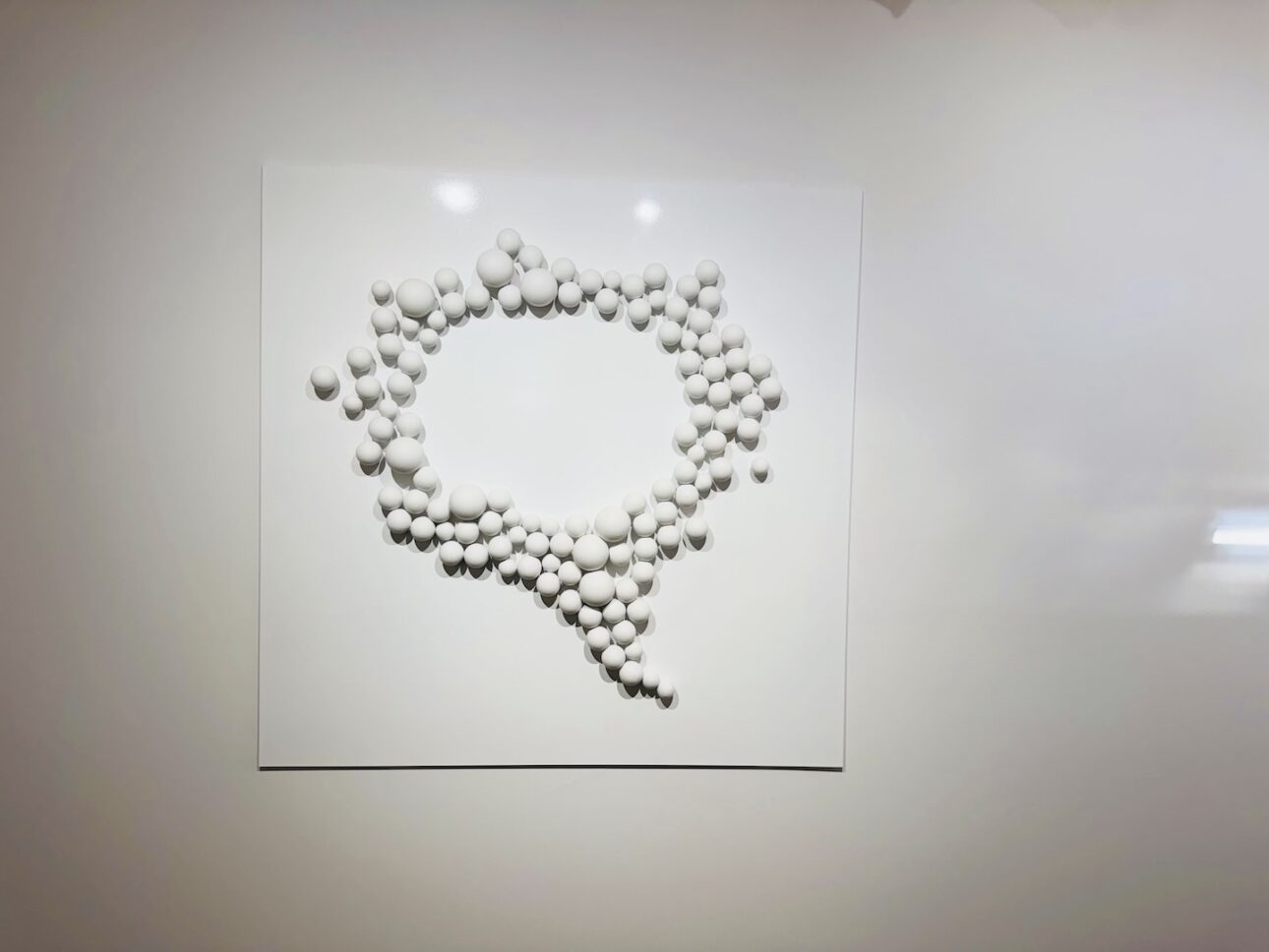
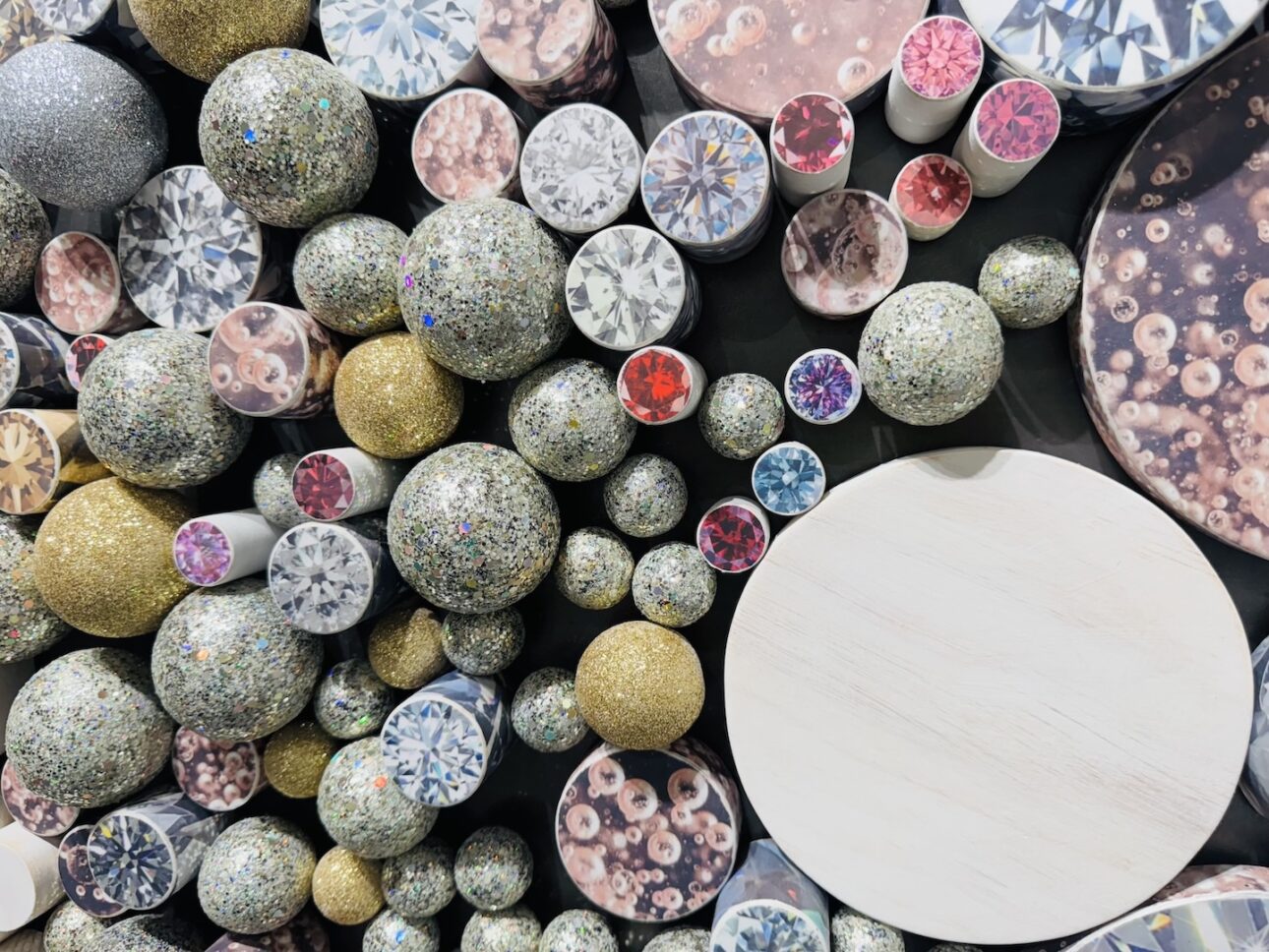
We wind around to her office, a stark, organized room with track lighting, a desk, and a long table where she sits down with agents and clients to talk commissions. It’s very white, including the art. One piece is created out of different sized balls, currently assembled in a thought-bubble pattern on a white wall. If you’re like me, you’re trained not to touch such things that look perfect and deliberate. I’ve already learned that if you voice this, Susan will immediately pluck a piece from the wall and shift it elsewhere, because, as she says, that’s the whole point. 
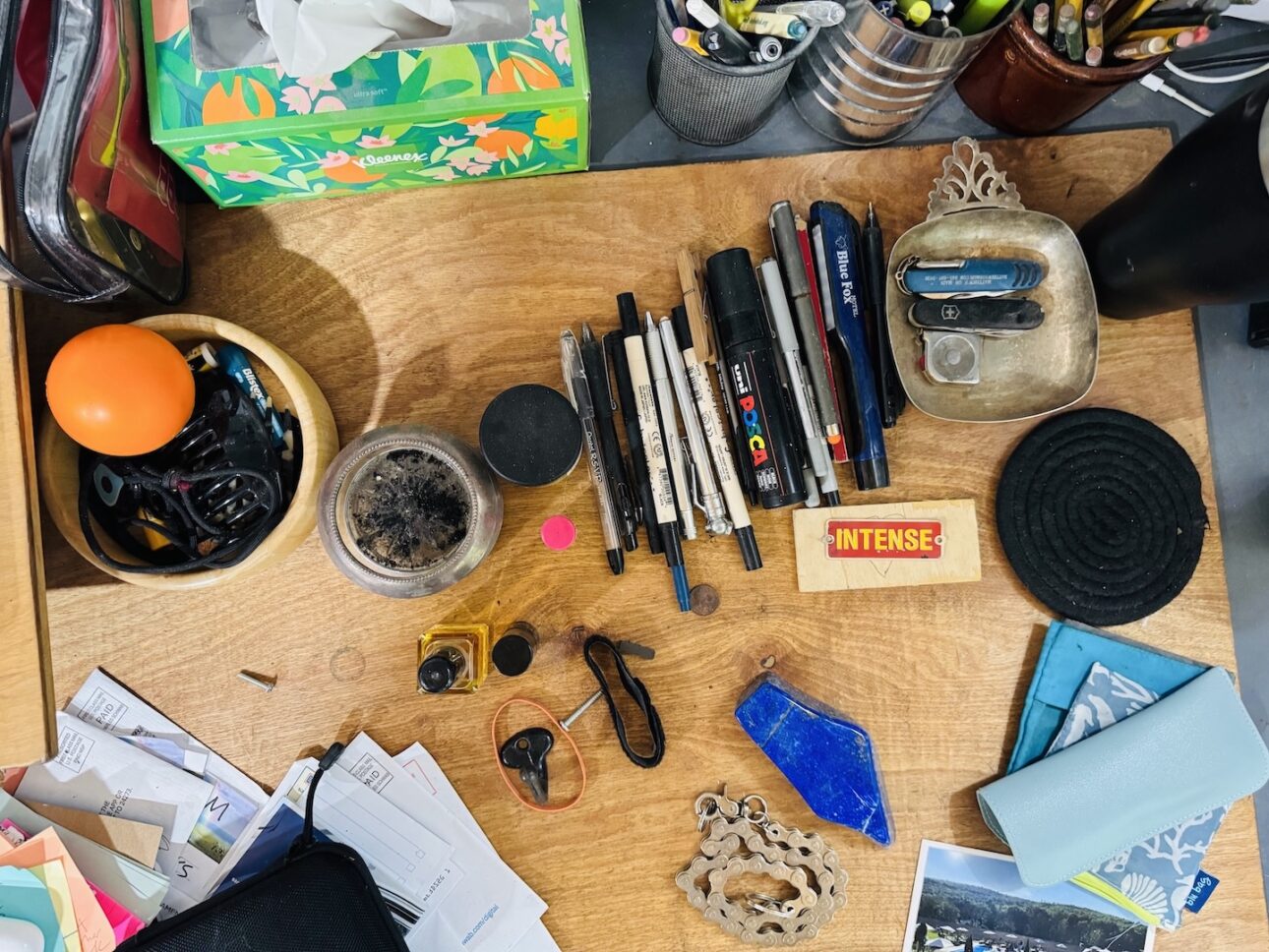
“I’ve had potential clients who’d be like, ‘Oh my God, I can never rearrange it. I need for you to come over and do arrangements for me.’ I’m like, ‘Then you can’t buy it because that’s the whole point.’ The people who buy my art are the ones that are like, ‘Awesome, I’m going to keep it moving.’”
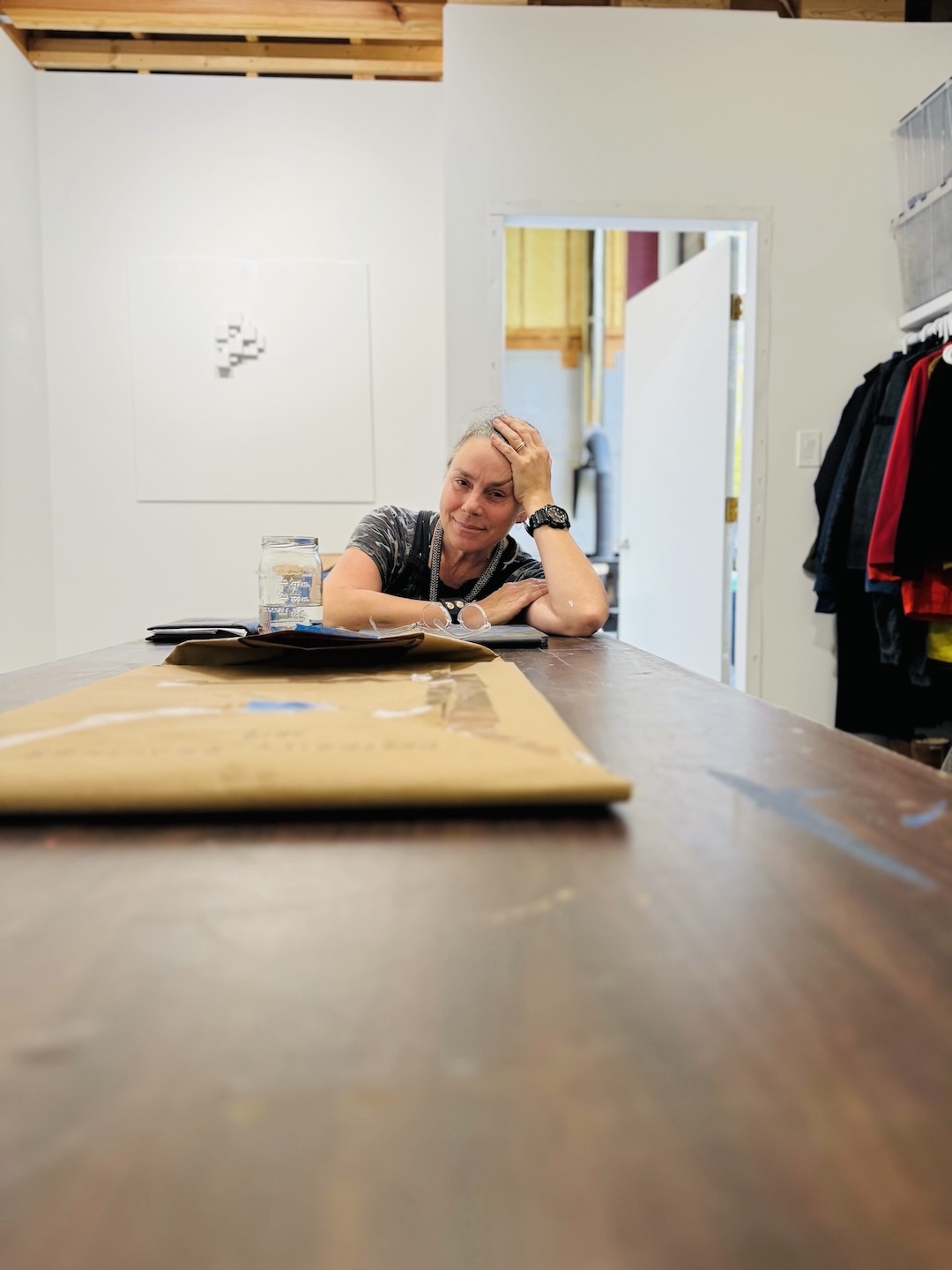
It’s not that she can’t make something permanent. If it serves a client, sure. For the installation at Nordstrom in New York City, it wasn’t possible to have a flexible piece. “I have compromised my vision in the pursuit of trying new things and doing bigger projects, and eating. Oh, there’s that eating part. Getting paid. I don’t like making art that’s fixed. I’ve done it. The piece at Nordstrom in the lobby on Broadway is 19 feet long by 11 feet high. It’s so big, but it’s all fixed. You cannot steal it. That’s just an apple compared to an orange.”
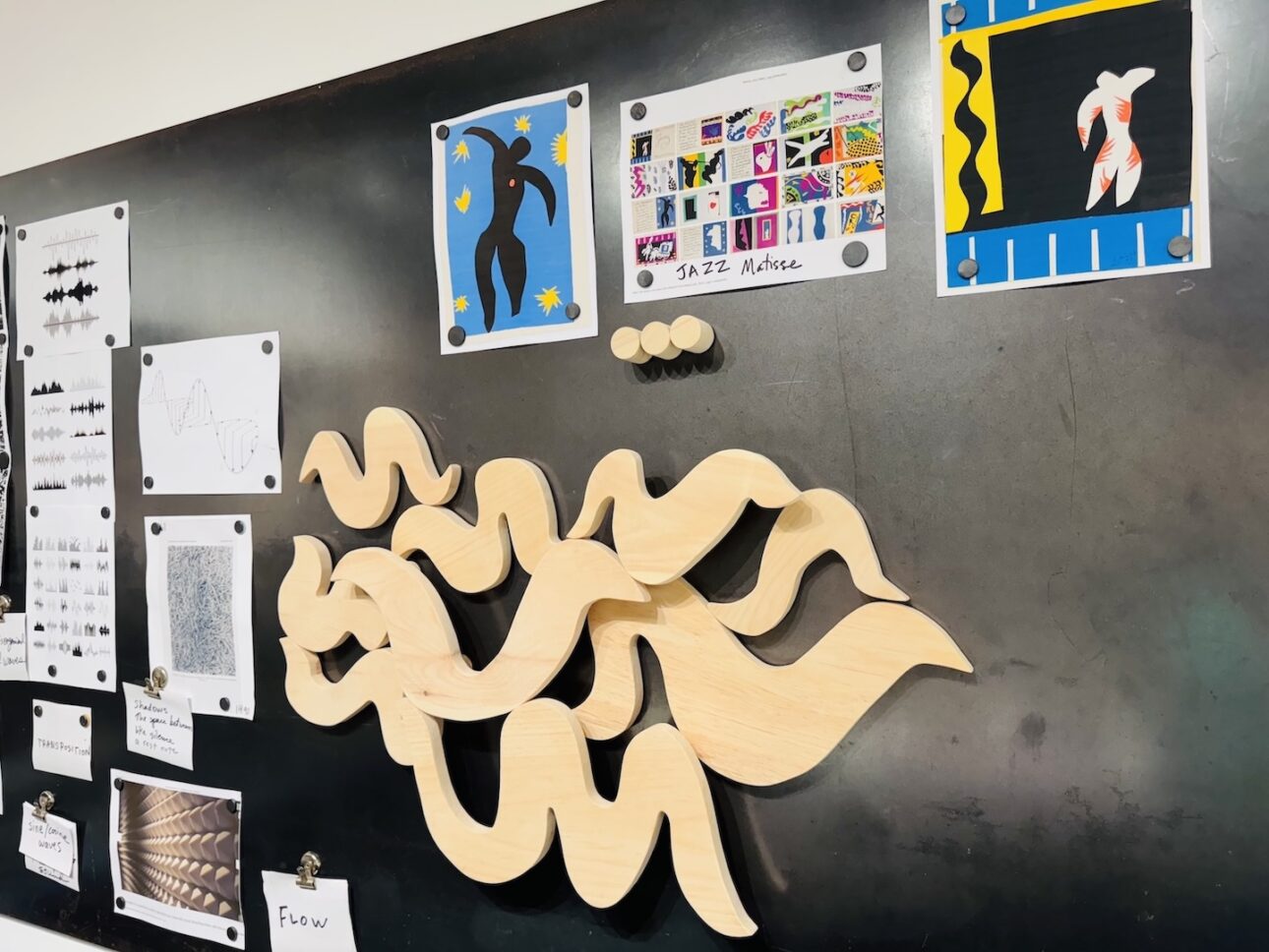
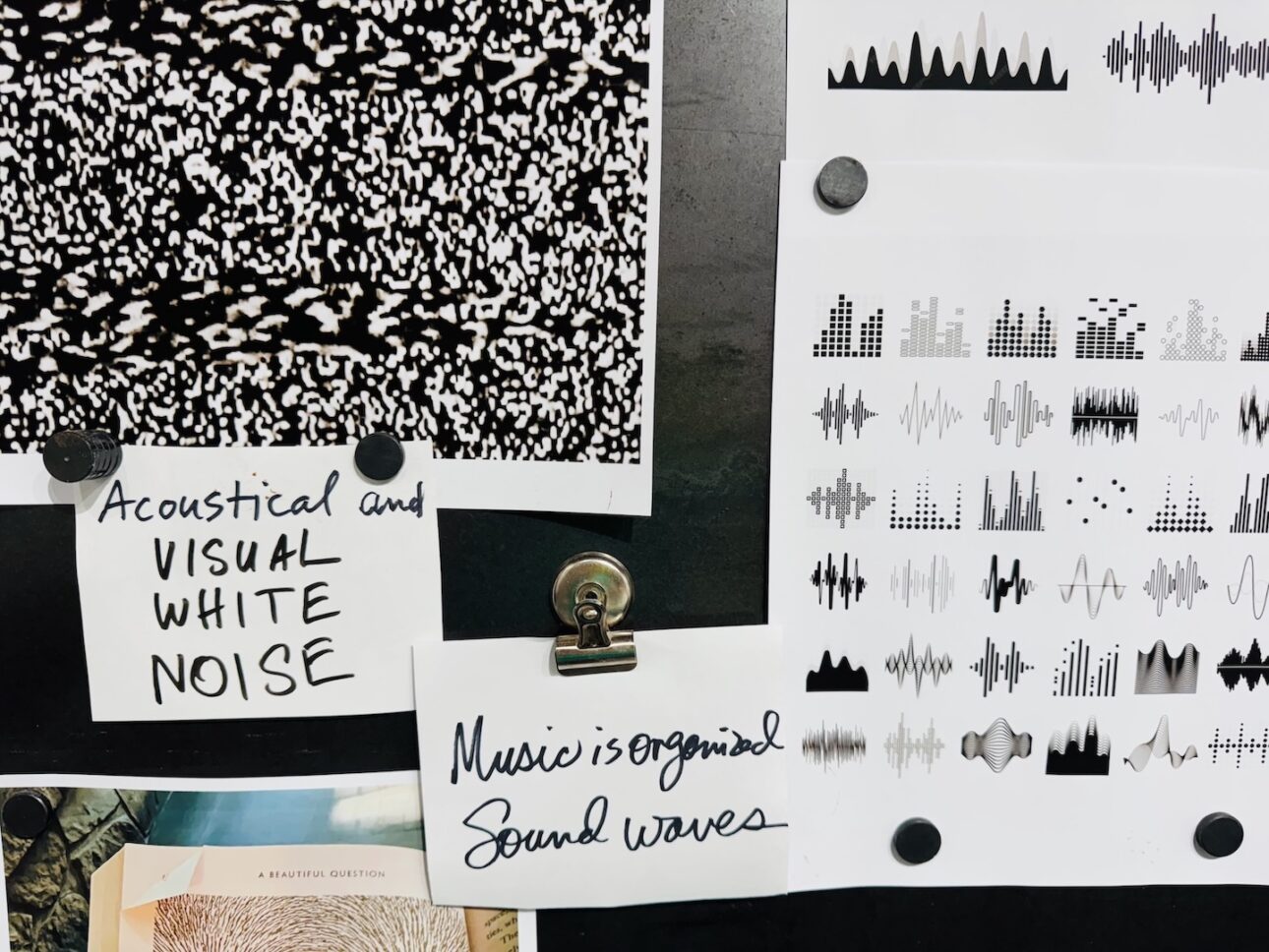
We drift into the last room of her studio tour, which has a large draft table in the middle. Black steel panels line two walls with projects on them. To the left is an inspiration board, combined with some “Bits” from a commission. She pulls a lugnut from the board and presents it to me; it has three silver, sparkly metal bulbs on top, secured by magnets. A ring. I slide it on my hand as she talks about a piece she made in February called “Bling,” which eventually evolved into a portrait. 
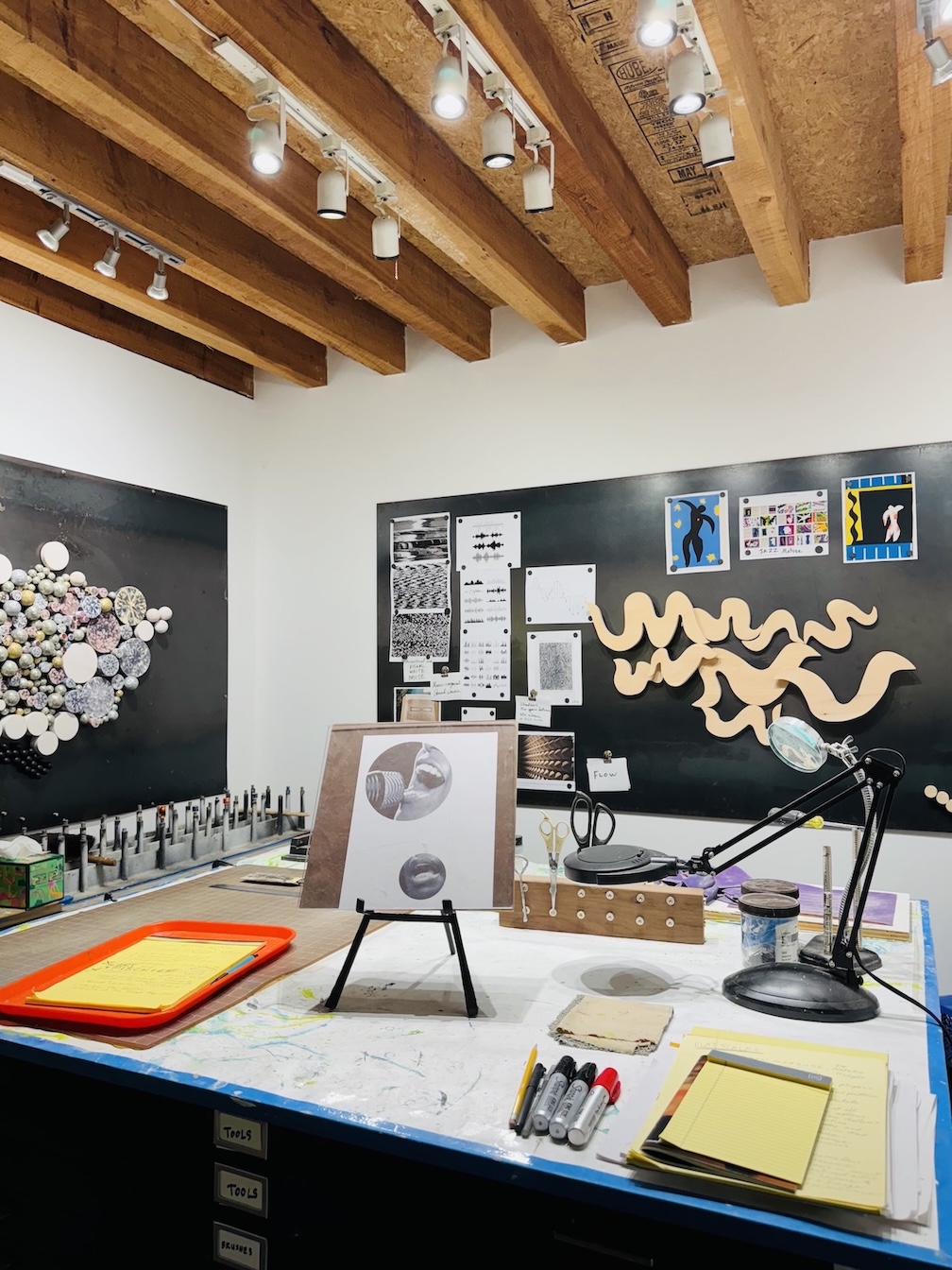
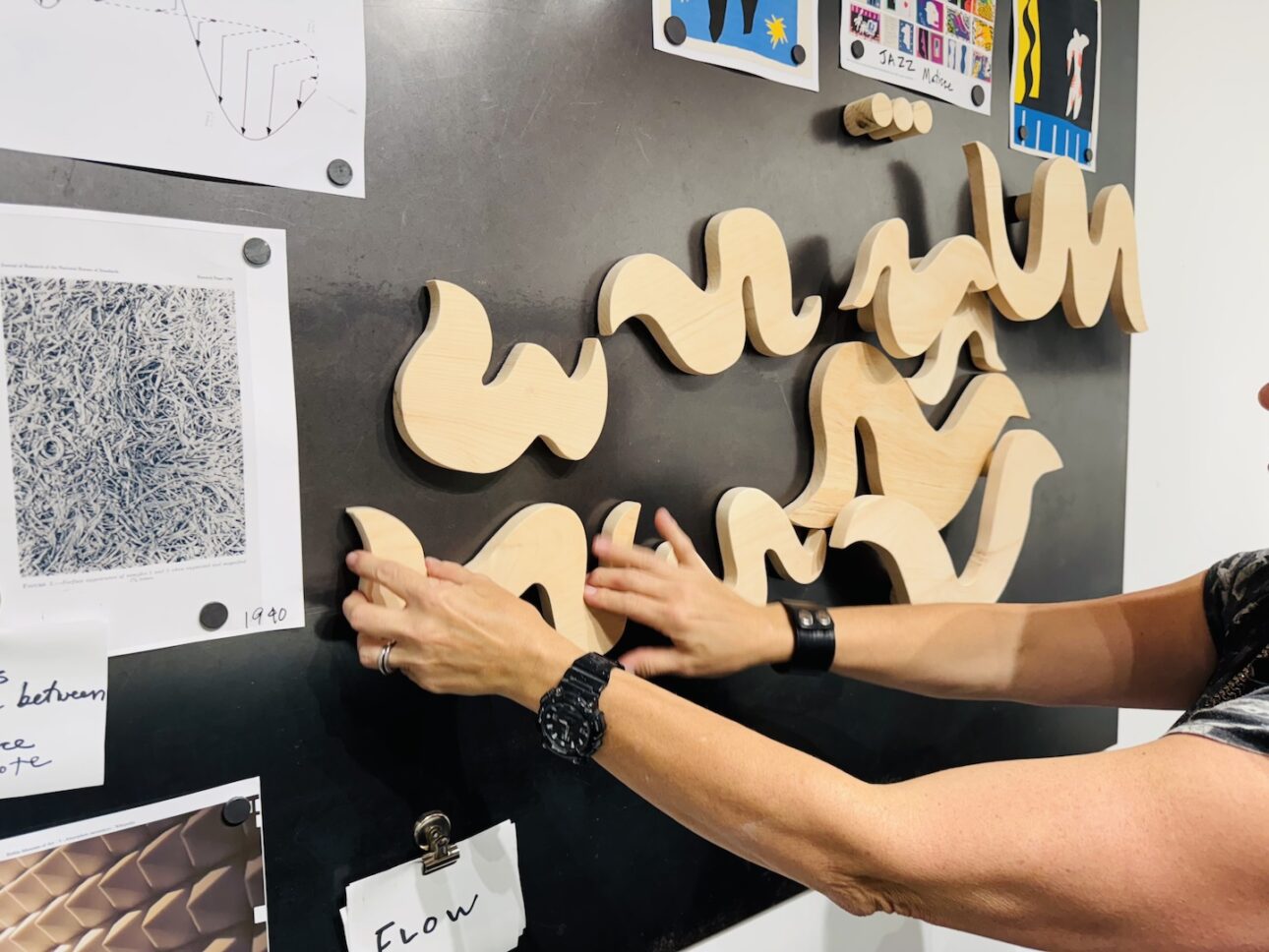
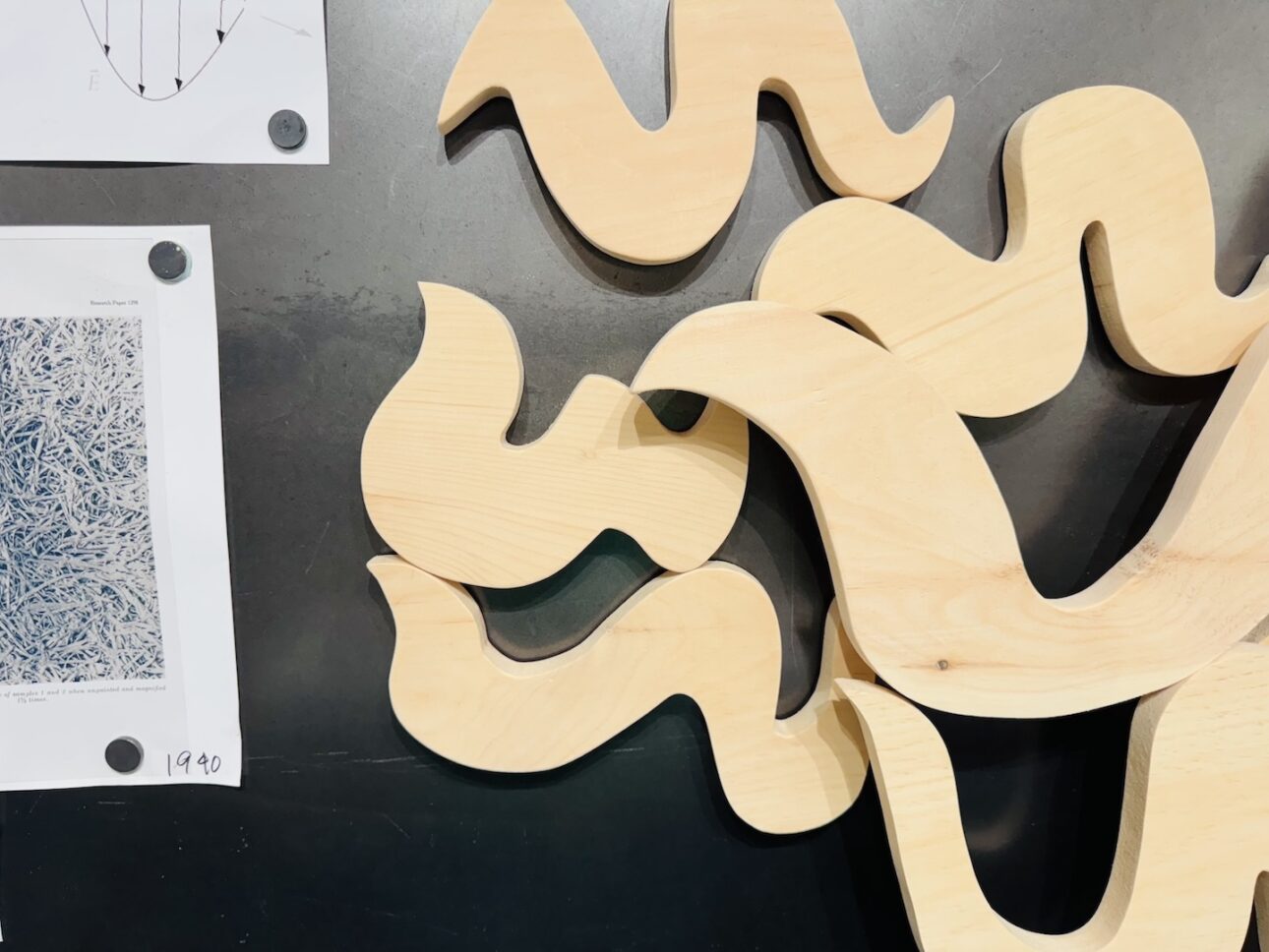
The jazz piece, in progress, is to the right. It’s currently bare wood arranged in her perception of the genre: waves upon waves, with inspiration and research hung up next to it. “Jazz, it’s improvisation that is such a huge influence on this organism that I’m making, and it’s the flexibility where it’s never the same twice,” she says. “That’s so exciting because you don’t know what’s going to come out. Even in an orchestrated piece, it’s never the same twice. All performances are different. Yes, jazz, improvisation. Totally, dude.”

In music, there can be collaboration, something Susan says she misses sometimes. “I’m a solitary creature out here in the woods, and that’s cool. That’s a choice. One thing I love about musicians is you do it with people. You’ve come to this plane, they call it flow, where your minds all meet and you groove out. I am so jealous of that. That’s what I’d like to capture, too, in this piece.”

The current arrangement of the jazz piece, to me, looks perfect as is. Before I can get too used to it, she goes over and starts shifting the pieces around. “Music is organized sound waves, so that’s what I’m making. I’m making waves. Ha!”

To learn more, visit weinthaler.com. 
November 12, 2025 0 comments
0 FacebookTwitterPinterestEmail
Patricia Brennan Creates Otherworldly Jazz » PopMatters
Music

Patricia Brennan Creates Otherworldly Jazz » PopMatters

by jummy84 November 4, 2025
written by jummy84

Patricia Brennan is a master composer and improviser on mallet percussion, and her last album, Breaking Stretch, was a high-arcing highlight of 2024 in jazz. The follow-up, Of the Near and Far, is also one of the best and most exciting albums of this year in creative music.

Although Breaking Stretch incorporated subtle electronic elements through Brennan‘s use of percussion instruments, it was primarily a jazz septet album, featuring trumpet, two saxophones, bass, drums, and hand percussion, as well as her vibraphone and marimba. Of the Near and Far cuts, the jazz group revert to a quintet (featuring pianist Sylvie Courvoisier, guitarist Miles Okazaki, bassist Kim Cass, and drummer John Hollenbeck), but expands the whole band to include a string quartet and the electronic musician/turntablist Arktureye. The result is a brand new sound like no other “jazz” record out there.

Simply put, it is as good if not better than Breaking Stretch — yet another revelation and breath of creative fresh air from Brennan. It is more melodic and beautiful than its predecessor, but in no way less daring. If you like the New Jazz of this century but want more of it to provide you with elation, then Of the Near and Far is going to knock your socks off.

The excitement at the center of this record feels new and old at once. It has been 50 years since I last heard a jazz record that fizzled my brain with excitement the way, say, Birds of Fire by the Mahavishnu Orchestra did. That music was complex and rich, but had the power and thrill of the rock of that era. So listen to “Andromeda” on Of the Near and Far, a chattering blend of percussion and strings rat-a-tats for a moment before Patricia Brennan’s vibes bring in a cycling melodic pattern.

It seems like a slippery slice of percussive jazz/rock that is suddenly taken up by the strings. However, before you can absorb it entirely, Okazaki is unleashed with distortion, improvising over a slamming groove. His solo might evoke that Mahavishnu flavor, but it is also electrifying to hear Brennan’s overdriven/distorted vibes, followed by a Sylvie Courvoisier piano solo that blends seamlessly into the ecstatic union of every element of the band. This, my friends, is a whole me kind of fusion.

Recent music under the “jazz” umbrella has learned that adding strings to a project does not have to sound like the old jazz albums where some sweetening was inartfully added to a swinging session. However, Of the Near and Far incorporates its two violins, viola, and cello with unprecedented deftness. At times, you hear a fiddle interacting with the leader or her “jazz band” (“Antlia”), at other times, you cannot find daylight between the string quartet and Arktureye’s electronic textures (“Citlalli”). The strings can be just as percussive as a marimba at times (the very start of “Antlia”). When Patricia Brennan puts the quartet out front melodically, such as on the start of “Lyra”, they are artfully blended with Okazaki’s flowing guitar and the pulse of Cass’s plucked bass.

If this new album seems slightly inaccessible, with all its wild parts, check out “Aquarius”. Gorgeous impressionistic waves of strings, vibes, and piano gather themselves into a syncopated funk that bobs in measures of loping 5/4. The melody that emerges is melancholy, led by Brennan’s vibes but shadowed by the strings. The vibe is relaxed yet haunting, and the melody keeps turning over, repeating and shifting, developing increasing power as Hollenbeck subtly ramps up the heat from his drum kit. There are no solos, just enchantment.

“When You Stare Into the Abyss” is also a tone poem that paints a beautiful picture. Electronics dominate for a couple of minutes, building to a shimmer before the rhythm section and strings enter quietly. Brennan asks the strings to bend notes in harmony as her marimba, the piano, and percussion move along the edges. Slowly but surely, a major-keyed melody grows up through the mist.

It is also notable that Patricia Brennan deviates from the jazz norm in several refreshing ways. While there is plenty of room for improvisation on Of the Near and Far, it rarely takes the form of a string of “solos” sandwiched between statements of a melody. Even on one of the most conventional structures, this is the case. Miles Okazaki’s improvisation on “Antlia” grows gradually out of a chattering ensemble section. We almost don’t realize what we are hearing at first. However, Okazaki is soon in the midst of a passionate statement. Brennan’s solo vibes follow, yes, but it is hard to determine when they end and when the theme returns.

The romantic opening to “Lyra” soon reveals itself to be a suite of connected themes. The string quartet and jazz guitar enchant in the first section, which develops into a pulsing 13/8 pattern that remains danceable. This theme is reflected and altered somewhat in the faster and more urgent closing section, which features Brennan’s most exciting and potent solo of the record. Those bookends are connected by an astonishing piano/vibes fantasia that may be the most magical portion of the album.

Patricia Brennan and Courvoisier play without a set tempo but in a rattling rhythmic thrum that sounds like two pianos and two vibraphones at once. That perfectly sets up the last four minutes of the suite: a return of composed melody and then an opportunity for the string quartet to improvise collectively over a clattering groove until Brennan enters for that great solo.

There is one other notable feature to Of the Near and Far that can be obscured when you drill down on each track as its own astonishing composition. About half of the tracks, as sequenced on a record, quietly bleed into each other. For example, the shimmering “Aquila” ends with the band in a hushed hum and a final cymbal shimmer from Hollenbeck. The split-second pause before the synth shimmer of “When You Stare Into the Abyss” isn’t really noticeable, and you are transported from one of Brennan’s extraordinary sonic dreams into the next.

The backstory of Patricia Brennan’s music often relates to her interest in astronomy, and she has written that most compositions here were derived from applying mathematical data related to constellations to the musical mathematics of the “cycle of fifths”. Perhaps this helps to explain why these constructions and musical settings in no way sound tired — like regurgitations of old forms, such as harmonic patterns from a thousand other “standards”, or the “jazz” you sense you have heard before, even if you can’t name it.

That Brennan has also assembled a unique ensemble featuring strings and electronics, in addition to a jazz quintet, also helps propel Of the Near and Far into the realm of the new and revelatory. Whatever the method, she continues to bend our ears toward astonishment.

November 4, 2025 0 comments
0 FacebookTwitterPinterestEmail
Jack DeJohnette, Towering Jazz Drummer and Bandleader, Dies at 83
Music

Jack DeJohnette, Towering Jazz Drummer and Bandleader, Dies at 83

by jummy84 October 27, 2025
written by jummy84

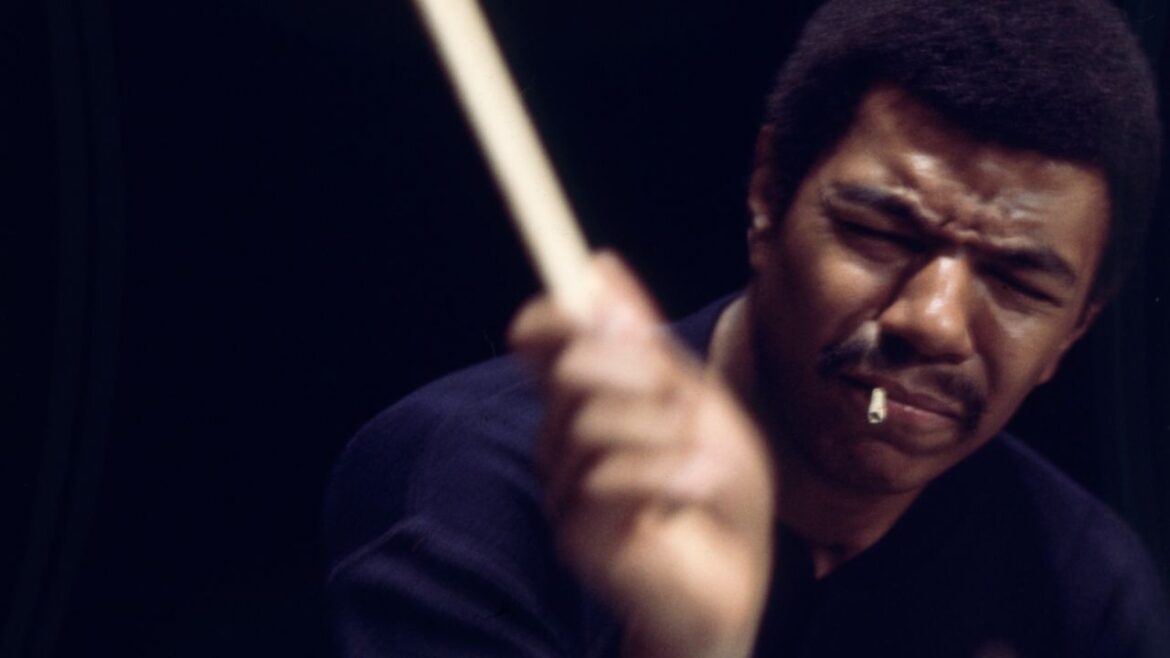
Jack DeJohnette, the jazz drummer, pianist, and bandleader who played on Miles Davis’ Bitches Brew and worked closely with Sonny Rollins, Keith Jarrett, and many other jazz luminaries, has died. His longtime label ECM Records confirmed the news, and his personal assistant told The Guardian the cause of death was congestive heart failure. DeJohnette was 83 years old.

Born in Chicago, in 1942, DeJohnette grew up in a mostly segregated neighborhood, raised primarily by his grandmother and poet mother. From the age of five or six, he studied traditional piano with a neighborhood teacher; back home, his uncle was filling the house with jazz records by the likes of Duke Ellington and Billie Holliday. When that uncle, Roy Wood, became the first Black news announcer on a white Chicago radio station, DeJohnette gained access to an endless supply of jazz records that fueled an early infatuation with the genre. In a newly integrated high school at the dawn of rock’n’roll, he sang doo-wop and played in dance bands—occasionally on acoustic bass—formed by students exposed to a network of legendary Chicago jazz and blues labels like Chess and Vee Jay.

When a drummer friend left his kit in DeJohnette’s basement, he took up playing along to his uncle’s Max Roach, Clifford Brown, and Charlie Parker records and discovered he was a natural. Kicked out of high school for skipping class, he took up serious music study and played with a local quintet specializing in Thelonious Monk and Art Blakey arrangements. When his grandmother died, he bought a car, a drum set, and a Wurlitzer electric piano and hustled solo keyboard gigs at Chicago bars, practicing in the daytime for three hours apiece on the drums and piano.

His growing curiosity and expertise brought him into the orbit of Chicago’s avant-garde scene. After watching Sun Ra and His Arkestra rehearse at a nearby tavern, DeJohnette was invited into the fold and played drums for the outfit in an ad-hoc arrangement that continued into the 1960s as his status grew. Sun Ra and a new generation of jazz masters—particularly Miles Davis and John Coltrane—were coming into their own as composers, and DeJohnette would catch their shows at local club McKee Fitcher’s. “I’d go almost every night to hear Coltrane,” he told the Smithsonian in 2011, “and it was… what can I say? It was the most amazing experience of hearing music.” One night, when Coltrane drummer Elvin Jones was late for a set, the club owner yelled at Coltrane to “Let Jack DeJohnette play.” He joined the band for three songs—“a great physical and spiritual experience,” DeJohnette said. “John was like a train. He was like a magnet and you felt this pull.”

October 27, 2025 0 comments
0 FacebookTwitterPinterestEmail
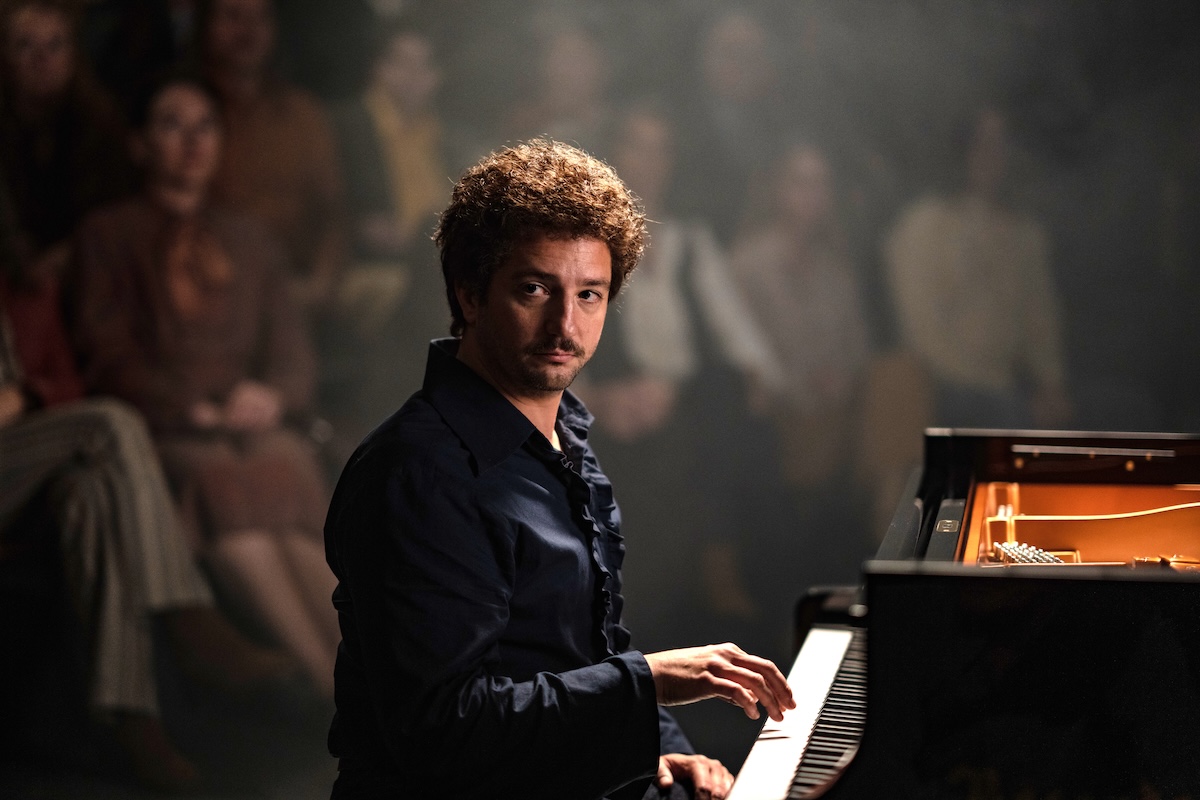
John Magaro as Keith Jarrett in a scene from Köln 75. (Courtesy of Zeitgeist Films / Kino Lorber)
Music

A Broken Piano, An Exhausted Pianist, and the Album That Changed Jazz

by jummy84 October 26, 2025
written by jummy84

For a lot of years, Vera Brandes couldn’t listen. Not once had she heard the bestselling solo jazz album of all time—Keith Jarrett’s passionate and sublime The Köln Concert—though she’d been essential to making it happen in 1975 as an 18-year-old music promoter in Cologne, West Germany.

It wasn’t the first show organized by the teenage music fanatic, but it was her most challenging, and almost didn’t happen at all. “It was such a traumatizing situation for me that night that I never listened to the record,” says Brandes, whose real-life struggle to make the concert happen is the subject of an engaging new film, Köln 75.

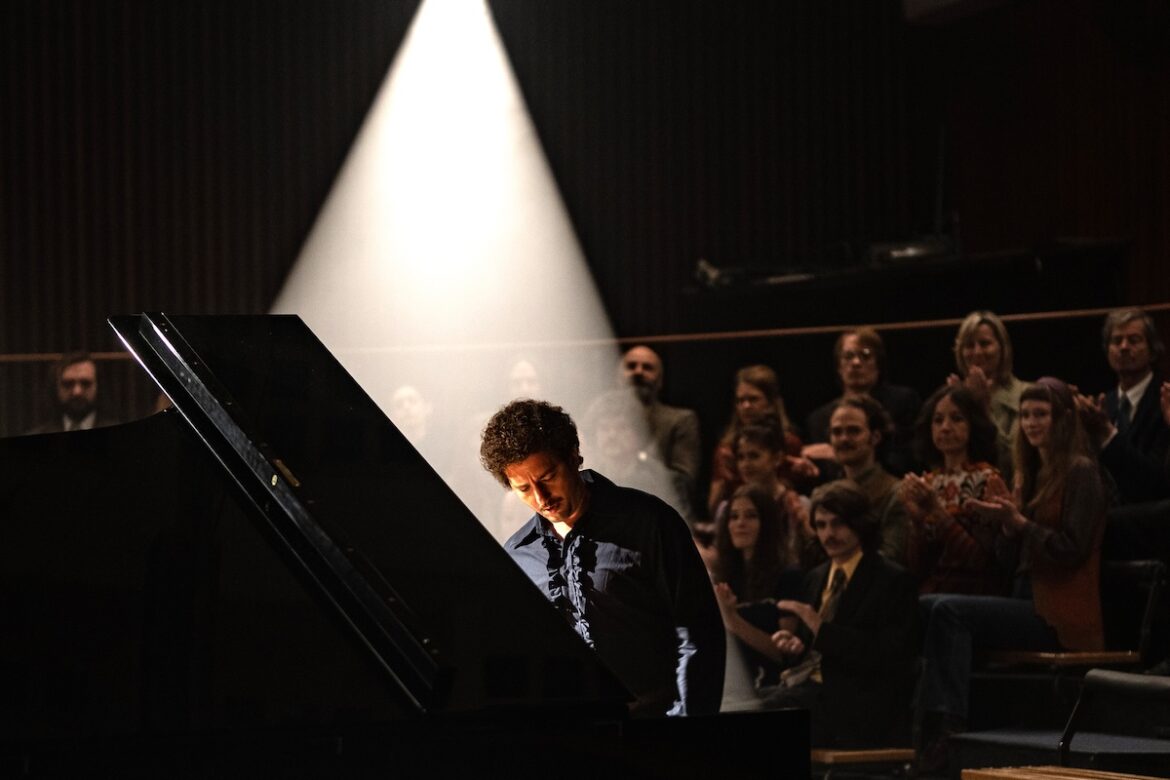
When Jarrett, then 29, arrived at the Cologne Opera House to perform on January 24, 1975, he hadn’t slept in 24 hours and was dealing with serious back pain. Even worse, the magnificent Bösendorfer Concert Grand 290 Imperial piano he’d requested was not waiting for him. Instead, he was provided an out-of-tune baby grand with a broken pedal.

By then Jarrett was already an acclaimed jazz player who had recorded with Miles Davis, Art Blakey, and many others. But his European solo tour was a low-budget operation, and he was traveling by car from city to city, aggravating his back issues. When he saw the piano in Cologne (Köln in German), he initially refused to play the concert.

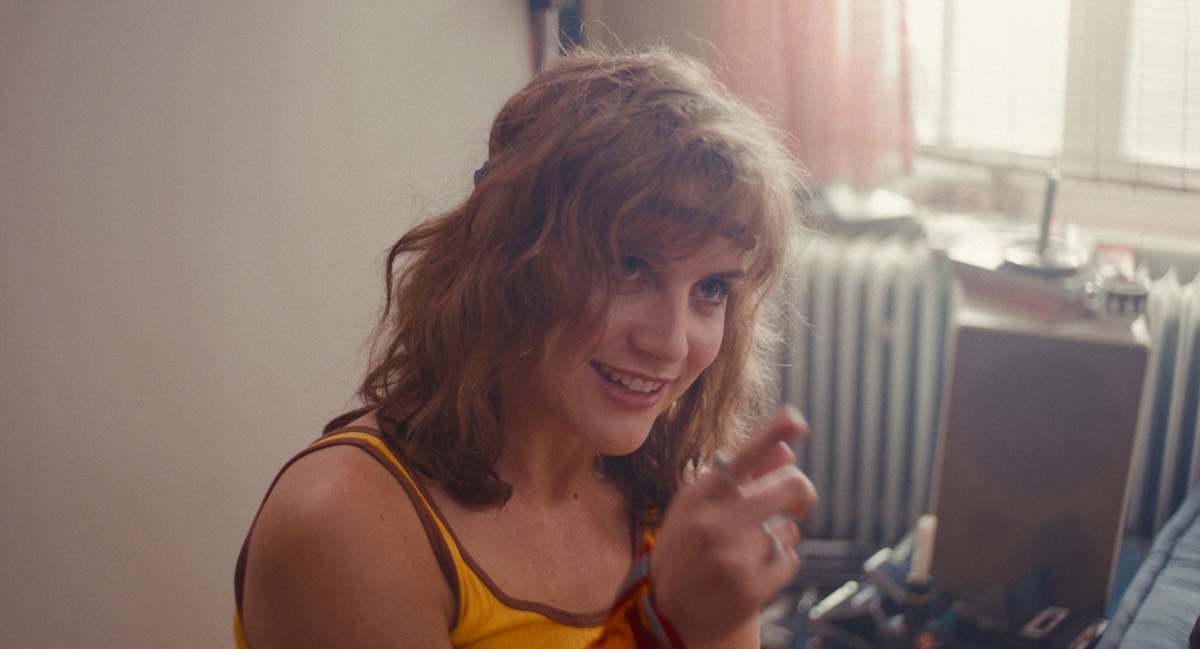
The scramble of Vera (played by Mala Emde) and her young team to salvage the night—and convince Jarrett to perform—is the story told by the alternately playful and dramatic Köln 75, written and directed by Ido Fluk. The bilingual English and German language movie follows the desperate search for a suitable instrument, with the help of two heroic piano tuners, and the overflowing passions of a young woman putting on a show. 

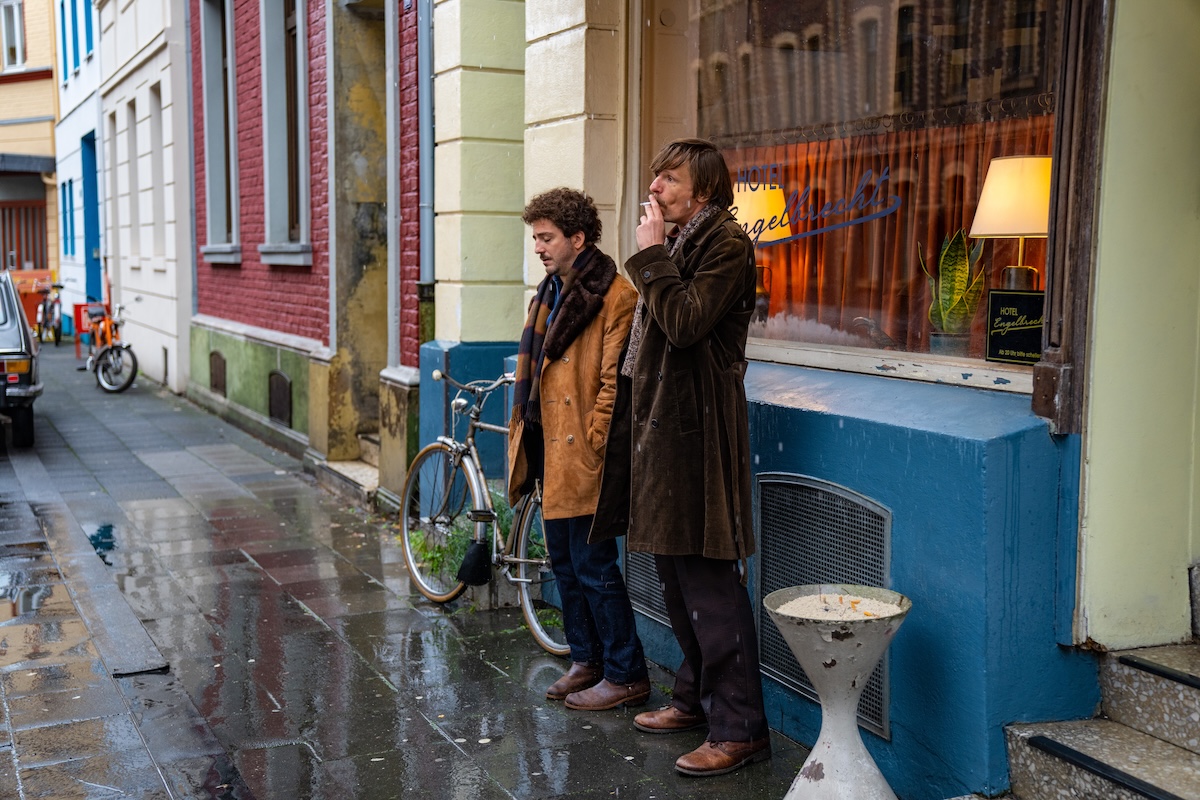
(Courtesy of Zeitgeist Films / Kino Lorber)

Köln 75 debuted October 17 in New York, and opens October 24 in Los Angeles and Houston, and several other cities through December. (See zeitgeistfilms.com/film/koeln-75.)

The real-word result of that crisis was a hugely successful live album, recorded by the Munich-based label ECM Records, released as the 4 million-selling The Köln Concert. The hour-long record was pure improvisation and deeply rhythmic, with elements of classical and American gospel. Because of his substandard rehearsal piano, Jarrett focused on the instrument’s middle-register, and created spontaneous melody in a flow of inspiration.

The resulting music touched a popular nerve, and its immediate pleasures provided a doorway to jazz for new listeners, much like other top-selling recordings, like Kind of Blue by Miles Davis and A Love Supreme by John Coltrane.

Brandes didn’t hear the record until many years later, when it came on at a lemonade stand while on vacation with some friends on the Spanish island of Formentera. “All of a sudden I hear this music, and I said, ‘Shit, I know this from somewhere,’” she recalls with a smile, on a video call. “Then I realized this was the album. And from that moment on, it started to haunt me.”

It has also haunted the pianist who made it. Jarrett, now 80, has grown increasingly frustrated by the outsized notoriety the album has had in his career. Jarrett and ECM weren’t involved in the movie, and did not allow the Köln recording to be used.

John Magaro as Keith Jarrett in a scene from Köln 75. (Courtesy of Zeitgeist Films / Kino Lorber)
(Courtesy of Zeitgeist Films / Kino Lorber)

Fluk was previously aware of the Köln album, but knew nothing of the drama behind the scenes until he read a short magazine article about the substandard piano used and Brandes’s role. “I thought, what an incredible story about every piece of art ever made—like how important it is to face obstacles and how that makes art better,” says Fluk, calling from his home in Brooklyn.

Once he began talking to Brandes, the filmmaker was pulled deeper into her backstory, from conflicts with her parents to the obstacles for a young woman in 1975 putting on such a large concert. Fluk spent eight hours interviewing Brandes about her story.

In preparation for Köln 75, Fluk immersed himself in German culture, learning the language, watching German films, and studying the music of the period. In the film, he also puts the concert in a larger musical context, not just within jazz, but the vibrant musical landscape of West Germany at the time.

“So much happened back then musically, like Kraftwerk coming from Düsseldorf, inventing electronic music,” says Fluk, who was born in Tel Aviv and grew up mostly in Paris and New York City. “Then you have all this psychedelic rock and Kraut rock, with Can and Neu! and protopunk happening there. You also, by the way, have David Bowie and Iggy Pop moving to Berlin.”

As a young music fan and concert promoter, Brandes was engaged in many sounds and genres. “The story we’re dealing with is a jazz concert, but it’s a punk rock story, and I think the character is a punk rock character,” Fluk says of Vera. “She just did not listen to anyone who told her what to do, and she just did whatever she wanted.”

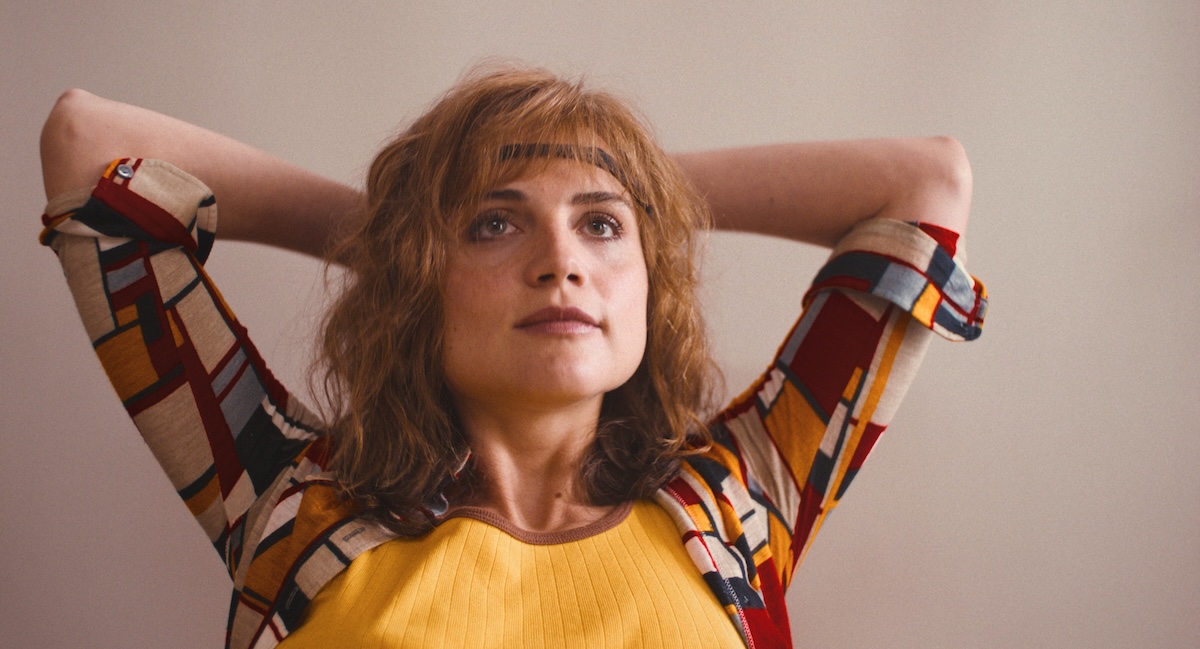
Mala Emde as
Vera Brandes in a scene from Köln 75. (Courtesy of Zeitgeist Films / Kino Lorber)
Mala Emde as Vera Brandes in a scene from Köln 75. (Courtesy of Zeitgeist Films / Kino Lorber)

At the invitation of British jazz musician Ronnie Scott, Brandes booked her first tour at age 16 and began her career in music. Soon she was putting on her own shows in Cologne. She wasn’t a neophyte when she brought Jarrett to town, but the 1,400-capacity Opera House was her largest venue yet.

It also represented a big financial risk. Among the many miracles along the way was that her mother unexpectedly provided the 10,000 Deutsche Marks needed to rent the hall. Vera had to agree to leave the music business if she couldn’t pay back the loan. 

Though she had once dreamt of being a jazz singer herself, Brandes embraced the role of concert promoter. The mid-’70s was an exciting time to be engaging with art, music, and politics, she says.

“It was such a cultural explosion that was going on, and there was no separation of the arts and no separation of age groups,” she remembers. “We were all in this together as so many things went on politically—the peace movement, the anti-atomic power movement, and women’s liberation. You know, ’75 was the international year of the woman. Everything was going on at the same time.” 

At the beginning of the movie’s production, Brandes was welcome on the set, and she was curious to watch it come together. The day before shooting began, she made an encouraging speech to the cast and crew that Fluk says “gave everyone a sense of mission.” Then, the first day with cameras rolling focused on the family conflicts between Brandes and her parents, in particular, her disapproving father.

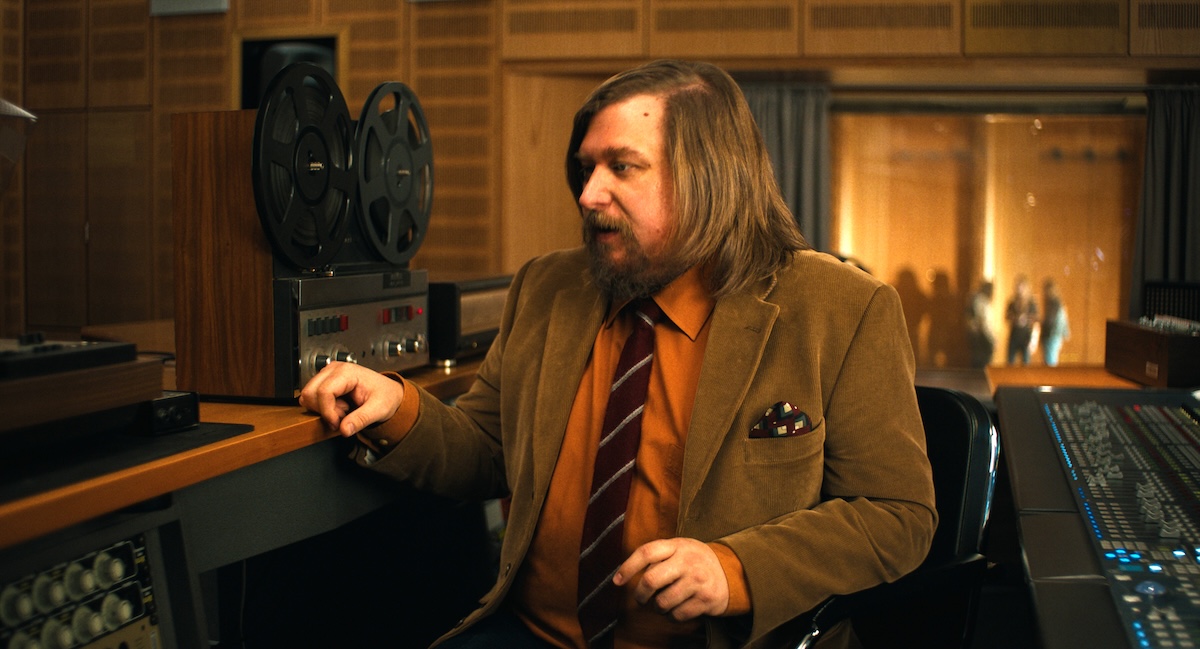
Michael Chernus as Michael Watts in a scene from Köln 75. (Courtesy of Zeitgeist Films / Kino Lorber)

In the scene, young Vera is quietly returning home late at night, slowly coming up the stairs with her boots off, when the light goes on, and her father confronts her in German: “I can smell cigarettes. I’m talking to you, young lady! Like a whore, coming home in the middle of the night … You went to that jazz club, didn’t you?”

Watching the actors bring her memories to life was too much. “I saw them redo the scene a few times, and I realized I had to leave because my mirror neurons were dancing the polka,” she says. “All the fear that my whole early part of life was associated with came up crawling through the soles of my feet. And I just couldn’t stand watching it.”

The struggle of Brandes to make the concert happen is the heart of the film, but it also spends significant time with Jarrett on the road, leading to his troubled physical state on the night of the concert. Köln 75 offers a deeply empathetic portrayal of the pianist, as played by John Magaro.

“He was clearly under an enormous amount of stress. He was rather shy. He was not a friendly creature,” Brandes recalls.

Jarrett adapted to the circumstances, and improvised his way to the creation of the most popular album of his career. As time went on, Jarrett grew less interested in talking about the concert. While the album has never been taken off the market, and has been reissued in different editions and formats multiple times (including a new 50th anniversary edition), Jarrett has often dismissed it entirely. 

(Courtesy of Zeitgeist Films / Kino Lorber)

Jarrett, who can no longer perform after suffering two strokes in 2018, was not interested in participating in the film.

Fluk says he understands Jarrett’s feelings, and he compares the Köln record to Radiohead’s early hit “Creep.” For a time, the British rock band expressed a similar resentment toward the early hit song as they pursued more challenging work, but have become a lot more relaxed about it in recent years. Jarrett seems only less inclined to celebrate it.

“Musically speaking, I think he has better concerts, better live recordings, but everyone wants to just speak about this concert, and the record sold so much more than anything else,” says the director. “I understand that for him, this has become kind of like an albatross. I respect that.”

That said, Fluk wasn’t going to allow Jarrett’s disinterest get in the way of telling Brandes’s story. 

“She was never really given the credit that she deserves,” Fluk says. “We live in a time where there’s a lot of music movies being made, and they all focus on the artist, and they all almost tell the same story, just with a different soundtrack. That’s fine, and I enjoy those. But I thought, here’s an opportunity to focus the spotlight on someone we usually don’t see. There’s so many invisible people in making movies, in making music, and in the entire artistic endeavor. 

(Courtesy of Zeitgeist Films / Kino Lorber)

“The Cologne concert is the spark that happens when two great improvisers meet. One’s great at improvising on the keys, the other’s great at improvising at life. And I was not going to let anyone tell me I’m not able to make a film about this woman.”

After the Cologne concert, Brandes continued promoting concerts in Germany, and founded her first record label, CMP, in 1977. There were more labels in Europe and the U.S., including Intuition Records, which became Blue Note’s world music sister label. Since 2000, she has been focused on the use of music in alternative medicine. 

Brandes has had very little contact with Jarrett in the years after their famous concert, and her few experiences mirrored the pianist’s increasingly negative attitude about the Köln album. A few years after the Cologne concert, Jarrett was playing in a nearby town with his quartet. Brandes met him there. 

“I took him after the concert from the venue to his hotel, and we had a very friendly conversation,” she recalls. “We even had dinner together, but that was it.”

About 10 years ago, she saw him again at a show in Toronto, and Jarrett didn’t even shake her hand. And then, shortly before his strokes in 2018, Brandes was invited backstage at a show in Vienna, where she again extended her hand to say hello. “He didn’t take it,” she says. “He was a little obnoxious. He said, ‘Oh, they’re telling me you are the woman with the piano in Cologne.’ It was crystal clear he had absolutely no interest in talking to me, so I said goodbye.”

Regardless, their names will now be linked forever with the release of Köln 75. Brandes has seen the film several times at premieres and festivals, but plans to soon put it aside.

“I’m trying to keep the original memory as much as I can, which is why I probably don’t want to see it a lot more,” Brandes says, though she hopes a new generation watches. “It’s such a positive movie, telling people there is just absolutely nothing that cannot be done. That’s a spirit that is so important.” 

October 26, 2025 0 comments
0 FacebookTwitterPinterestEmail
Jon Irabagon 2025
Music

Jazz Saxophonist Jon Irabagon Is a Magician and Shapeshifter » PopMatters

by jummy84 October 18, 2025
written by jummy84

Someone to Someone

Jon Irabagon and PlainsPeak

Irabbagast

15 August 2025

Saxophonist Jon Irabagon is a magician and shapeshifter, a composer whose imagination goes from lyrical grace to controlled chaos and back again. As often as not, his sonic creations are capable of existing in both states simultaneously.

His newest recording, with a quartet he calls PlainsPeak for its grounding in the Chicagoland Midwest, is Someone to Someone. It marks one of Irabagon‘s periodic returns to playing acoustic jazz in a conventional setting: his alto saxophone, trumpet (Russ Johnson, a New York trumpet phenom for 25 years, originally from Wisconsin), bass (Clark Sommers, a top-echelon Chicago player), and drums (Dana Hall, originally from the East Coast but based in Chicago). The format recalls Irabagon’s membership in Mostly Other People Do the Killing, a quartet with the same instrumentation that featured elastic and joyful melodies, inspiring organic, harmonically adventurous improvisations.

Someone to Someone exceeds that standard. All the compositions are by Iabagon, and they are each immediately engaging while leaving every possibility open.

Take “At What Price Garlic”, a loping tune in 5/4 with a sly and conversational melody, but that includes a section of 3/4 waltz time that builds urgency using syncopated sets of three notes, articulated in unison. Your whole body will sway as you listen to this track, immune to the changes in time signature, and by the time Irabagon’s swirling solo begins, with the drums improvising with equal fervor along with the saxophone, you will be all in for the thrill it brings. “The Pulseman” similarly engages with an immediate rhythmic groove — a repeated bass line slides under a modified 4/4 swing. Then, the trumpet and saxophone play a harmonized series of shapes that swing, bop, and chirp before the solos begin in a conventional jazz manner.

Conventional? Ah, Jon Irabagon typically resists that adjective, and thank goodness.

If you step back just one release to his February 2025 recording, Server Farm, you can hear melodies that are just as engaging, but come from a powerfully unconvential ten-piece band of cutting edge improvisers — two guitars (Miles Okazaki and Wendy Eisenberg), mad keyboards (piano, Rhodes, and Prophet synth from Matt Mitchell), trumpeter Peter Evans (also from the original Mostly Other People quartet), vocals and violin (Mazz Swift, no relation I will assume), both electric and acoustic basses (Chris Lightcap and Michael Formanek, respectively), drummer Dan Weiss, and percussion/laptop from Levy Lorenzo.

Server Farm may just be one of the jazz albums of the year. “Colocation” comes flying out of the gates with a brass melody (with the leader playing tenor saxophone rather than alto) that snaps like a Basie lick. The rhythm section rushes forward as wildfire, first to promote a capacious Mitchell solo on Rhodes and then to lift a dense ensemble passage with both written and freely improvised elements. It all breaks out into noise for a few moments before building up a new melody that balances the horns against the violin over a serene ensemble vamp.

“Routers” finds Irabagon playing dreamy and echoey tenor over a dancing figure featuring vibes. Meanwhile, “Graceful Exit” begins as a pensive Formanek bass solo that evolves into a lushly written bass/violin/tenor saxophone chart, allowing Evans, Irabagon, and Formanek to play sensual melodies. It is gorgeous — Duke Ellington/Charles Mingus gorgeous — even as it too evolves into sections of mildly atonal improvisation.

One last mention of Server Farm: the very best track is “Singularities”, which kaliedoscopes through several sections, including a soul-jazz episode that sounds like the best CTI album ever made, with Evans, Irabagon, and the guitars wailing over a super-hip chord pattern laid down by Mitchell on Rhodes. As this part flattens out into a new bass pattern, a polyrhythmic section rises to climax with the whole band coming together — leading to a reprise of the first theme. It is an achievement.

Yet the new album, as different as it is, may be just as good. After all the frenzy of “Singularities”, a track from Someone to Someone like “Tiny Miracles (A Funeral for a Friend)” comes as a revelation. It also sounds BIG, despite featuring only four acoustic instruments, and it also builds intensity across a gradual transition from melody to stupendous collective improvisation and back again. Irabagon and Johnson play primarily within the harmonies of the “song”, but their improvisation is highly vocal and full of feeling. It sounds just as “free” as the most “out” jazz hopes to be.

The title track is another example of Irabagon’s range of sound. The dramatic head arrangement features the horns slowly and luciously interweaving over Sommers’ bowed bass. When the band chucks the tempo for a short open jam, you might wonder: Is this mainstream jazz or something avant-garde? It is neither/both, and so wonderfully played that the distinction evaporates. The parade groove “Buggin’ the Bug” sets up with just bass and drums in a funk as irresistible as a chocolate chip cookie, then Irabagon’s fun and swinging melody rides on top to give it a walking groove. The decision to have the horns trade eight-bar phrases is perfect fun, feeding into overlapping blues playing that absolutely kills.

It is a particular blessing that artists like Jon Irabagon are unafraid to defy convention, playing music that is both challenging and satisfying, rich in feeling but daring to have an edge. Someone to Someone from his acoustic PlainsPeak quartet is every bit the adventure that the earlier Server Farm was, making Irabagon two for two in a very creative 2025.

October 18, 2025 0 comments
0 FacebookTwitterPinterestEmail
ALL THAT JAZZ Podcast | Comedy, Cinema & Culture
Hollywood

ALL THAT JAZZ Podcast | Comedy, Cinema & Culture

by jummy84 September 28, 2025
written by jummy84

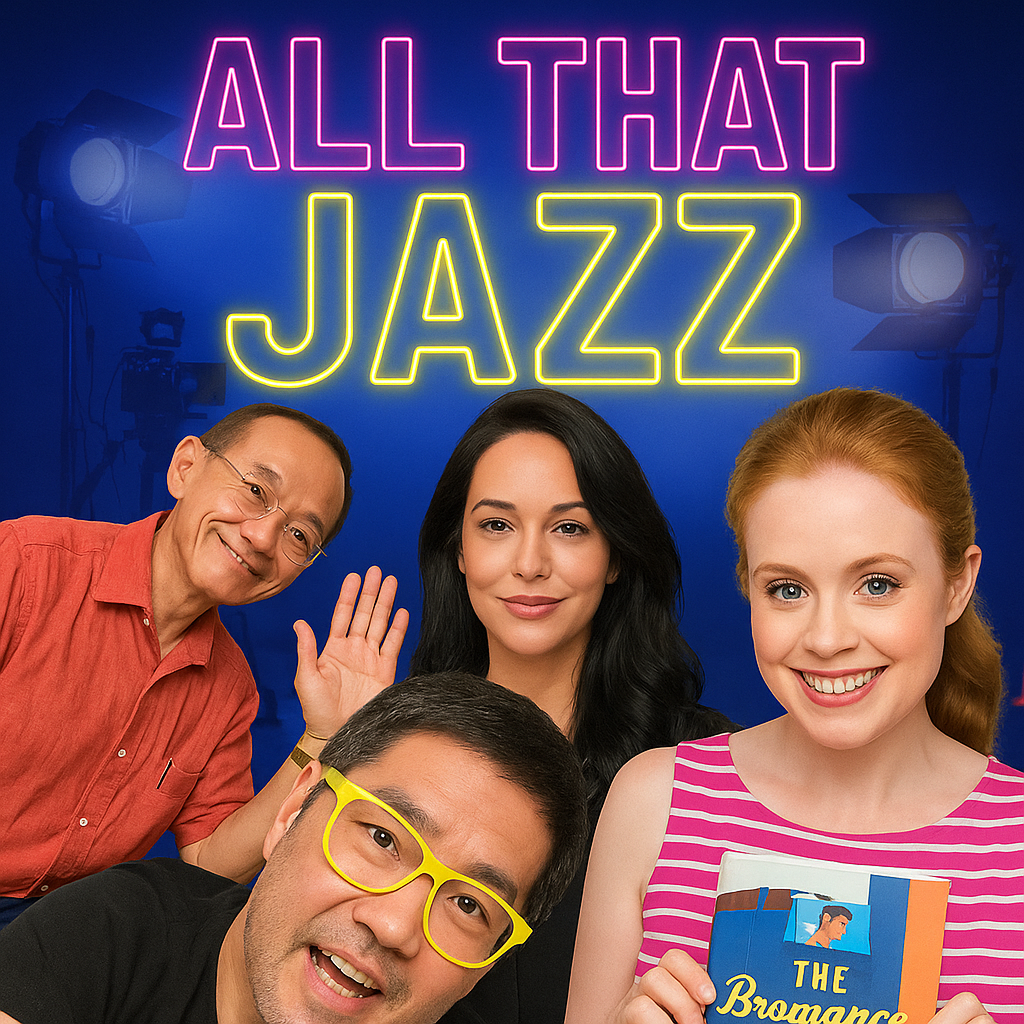
Podcasts are everywhere these days. They soundtrack commutes, workouts, and late-night scrolling. But every so often one stands out—not because it’s neatly packaged or algorithm-friendly, but because it feels alive. ALL THAT JAZZ, hosted by indie filmmaker Gregory Hatanaka, actress-director Nicole D’Angelo, cultural commentator Warren Hong, and cinephile guest host Jessica Brainard, is one of those rare shows.

It isn’t just about movies, though it dives into them with obsessive energy. It isn’t just about culture, though that’s always in play. And it isn’t just about comedy, though the laughs are constant. Instead, ALL THAT JAZZ thrives on intersections—the unpredictable moments where cult cinema, anthropology, politics, and absurd humor all crash into each other like a jam session gone gloriously off-script.

The Origin Story The seed of ALL THAT JAZZ was planted in off-the-record conversations. Gregory, Nicole, and Warren had spent years talking movies, distribution, and the culture that surrounds them. Jessica, a cinephile with a sharp cultural perspective, joined in naturally. Eventually, the idea hit: why not record it?

What makes the show different is its refusal to over-produce. Episodes unfold the way real conversations do—messy, funny, digressive, surprising. “We’re like one of those hidden mystery shops of wonders,” Gregory says. “You can discover things you never knew existed.”

That sense of stumbling onto something unexpected—like finding a forgotten record in the back of a dusty shop—is exactly what defines the show.

The Vibe Drop in on an episode and you never know where you’ll land. One moment the hosts are swapping stories about why Fast Times at Ridgemont High’s VHS release had the wrong soundtrack. The next, they’re debating the anthropology of endangered languages, unpacking Wade Davis’s TED talk, or explaining the Sapir-Whorf hypothesis. Before you catch your breath, the conversation may have swerved into fragile states like Syria or Haiti, or back into the trenches of indie film contracts and production war stories.

The hosts keep the vibe electric. Gregory brings encyclopedic knowledge and war stories from the indie film frontlines. Nicole anchors the show with warmth, honesty, and philosophical reflections on art and life. Warren adds the sharp edges, mixing pop-culture humor with cultural critique. Jessica bridges cinema and culture, connecting forgotten movies to broader social and historical patterns.

https://www.youtube.com/watch?v=videoseries

Nicole sums it up best: “It means so much to have a place where we can tell the world about adventures—and even spiritual experiences—that shape the way we see life.”

Jessica adds: “I’ve always loved discovering new films and how they connect to the bigger picture of culture. On the podcast, I get to chase that curiosity every week.”

And Warren? He embraces the chaos. “The best part is the chaos—we don’t always know where we’re going, and that’s the thrill.”

The Unexpected The joy of ALL THAT JAZZ lies in its unpredictability. Listeners have tuned in to hear detailed breakdowns of why John Cassavetes’ A Woman Under the Influence plays differently across formats, only to find themselves swept into discussions of white-collar crime and the shocking statistics that show its cost in lives and dollars. What begins as a film conversation might twist into a sociology seminar, complete with reflections on deviance theories and corporate accountability.

And then, just as quickly, the conversation will shift gears again—into the spiritual, the personal, or the absurd. In one episode, the hosts bounced from discussing fragile states like Syria and Haiti to joking about food rituals. The phrase “fried chicken, yeah!” somehow became a mantra. It’s that unpredictability—never knowing if you’re about to learn something, laugh out loud, or both—that gives the show its charm.

Gregory thrives on that wide range. “To me, cinema has always been connected to everything else—politics, history, even spirituality. The podcast just makes those connections visible.”

Why the Range Matters The range of topics isn’t a gimmick; it reflects the way culture really works. Movies aren’t just entertainment—they’re tied to music rights, to the sociology of who gets represented, to the politics of which films get distributed. Anthropology doesn’t live in a classroom—it informs how we think about rituals in movies, why certain languages vanish, or how ancient civilizations like the Hittites understood the world. Even jokes, chants, or surreal tangents are part of culture.

In other words, ALL THAT JAZZ mirrors life: messy, interconnected, and unpredictable.

Meet the Hosts Gregory Hatanaka is best known as the filmmaker and distributor behind Cinema Epoch and Cineridge, labels that have brought everything from cult curiosities to ambitious indie projects to audiences worldwide. On the podcast, he draws on decades of experience in the trenches of indie cinema, mixing war stories with sharp insights.

Nicole D’Angelo has built her reputation as an actress, director, and writer who explores themes of intimacy and identity. On the show, she’s the grounding presence, often guiding the conversation into deeper waters about spirituality, memory, and personal journeys.

Warren Hong is the wildcard—funny, insightful, and unafraid to push the conversation into unexpected directions. His commentary ranges from sharp critiques of politics to surreal one-liners that leave the group in stitches.

Jessica Brainard brings her lifelong cinephilia to bear, connecting forgotten films to bigger cultural narratives. Whether she’s exploring why a VHS edit matters or tracing how a cult movie reflects generational shifts, she brings both passion and clarity.

The Bigger Picture So why does this podcast resonate? Part of it is the eclecticism. But more than that, it’s the sense of community the hosts create with listeners. By diving into subjects as varied as Dario Argento’s Tenebre, the anthropology of endangered languages, the rise and fall of ancient civilizations like the Hittites, or the controversies of corporate crime, ALL THAT JAZZ opens up cultural rabbit holes that most shows wouldn’t dare attempt.

It’s also a reminder that culture isn’t made of neat categories. A discussion of VHS soundtracks isn’t just nostalgia—it’s about economics, law, and how art circulates. A conversation about fragile states isn’t just political—it ties back to stories we tell in movies and the ways we understand identity. The absurdist riffs and surreal humor? That’s culture too, alive and evolving.

At its best, ALL THAT JAZZ feels like a cultural conversation that refuses to stay still. It’s a film school, a comedy club, and a philosophy seminar rolled into one—and then something stranger and funnier still. In an age where most podcasts chase niches, ALL THAT JAZZ dares to be messy, eclectic, and alive. That’s exactly why it works.

September 28, 2025 0 comments
0 FacebookTwitterPinterestEmail
Blue Note Jazz Fest 2025: Napa Valley Recap
Music

Blue Note Jazz Fest 2025: Napa Valley Recap

by jummy84 September 10, 2025
written by jummy84

The Blue Note Jazz Festival made its way back to the Napa Valley on Labor Day weekend.

Held at The Meritage Resort and Spa, this year’s lineup featured headlining performances from Jazmine Sullivan, Questlove, Earth, Wind & Fire, Yebba, and of course, artist-in-residence Robert Glasper. “Black Radio Experience and Robtober are the platforms I use to bring all my favorite artists and collaborators together as one big family reunion and this year is no different!” Glasper said in a statement. “I’m honored to be part of such an amazing community and bring that community back together for another dope weekend in Napa.”

Guests also enjoyed riveting performances from WILLOW, Aneesa Strings, D-Nice, Slick Rick, Anthony Hamilton, Terrace Martin, Kenyon Dixon, Big Daddy Kane, Lupe Fiasco, and other indelible talent.

Back in 2022, when VIBE spotlighted the inaugural experience, Glasper explained that its conception stemmed from the intimate nature of the Blue Note clubs.

“What really draws people into the Blue Note is that it’s a small club. So even when you’re in the audience, it’s kinda like you’re part of your show,” he explained, noting that that type of intimacy is just as attractive to artists as it is for the audience. The festival “mirrors” the residency in that way.

Glasper added, “It’s not a huge festival [and] that’s on purpose. We want to have that feeling of ‘Wow, this is special. Everybody couldn’t get in here.’ And you can really feel what’s going on, like you’re part of the family.”

Check out highlights below, as well as the new Blue Note in Los Angeles.

September 10, 2025 0 comments
0 FacebookTwitterPinterestEmail
Wynton Marsalis to Premiere 'Afro!,' to Open Jazz at Lincoln Center
TV & Streaming

Wynton Marsalis to Premiere ‘Afro!,’ to Open Jazz at Lincoln Center

by jummy84 August 25, 2025
written by jummy84

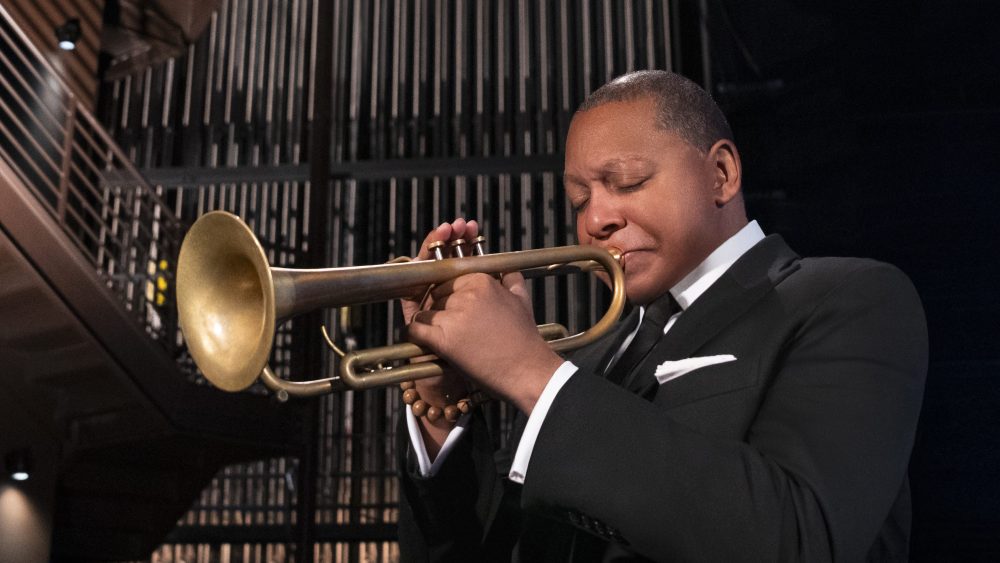
Jazz at Lincoln Center will launch its “Mother Africa” season with the world premiere of “Afro!,” a new commission by managing and artistic director — and jazz legend — Wynton Marsalis, on Sept. 18–20 at 7:30 p.m. in Rose Theater at Jazz at Lincoln Center’s New York home, Frederick P. Rose Hall.

Performed by the Jazz at Lincoln Center Orchestra with Marsalis, Djembefola (master of the djembe drum) Weedie Braimah, and vocalist Shenel Johns, “Afro!” opens Jazz at Lincoln Center’s 2025-26 season of concerts, education programs, and other events celebrating Africa’s influence on jazz.

Following its New York premiere, the Jazz at Lincoln Center Orchestra with Wynton Marsalis alongside drummer Herlin Riley, Braimah, and Johns will take Afro! and other selections from its celebrated repertoire on the Orchestra’s first multi-city tour of Africa.

Nearly 20 years ago, in 2006, Marsalis premiered “Congo Square,” which evoked the spirit of the historic New Orleans site — at one time, the only place in America where African slaves were allowed to dance and play drums. Composed for the Jazz at Lincoln Center Orchestra and Odadaa!, a nine-piece Ghanaian percussion and vocal ensemble, the piece celebrated the cultural roots and mythic birthplace of jazz.

“Afro!” explores the deep ties between jazz, the African continent, and its diaspora, a leitmotif that the Orchestra previously addressed in other past Marsalis opuses as “Blood on the Fields” (1996), “Ochas” (2014), and the fresh big band arrangements comprising its “The South African Songbook” concert (2019).

Tickets for Wynton Marsalis’ Afro! with Weedie Braimah and Shenel Johns: The Ertegun Jazz Concert include access to a pre-concert lecture in the The Agnes Varis and Karl Leichtman Studio at 6:30 p.m. on Sept.18-20. Audiences are welcome to a free performance by the Zwelakhe-Duma Bell le Pere Quartet in the Ertegun Atrium at 6:30 p.m. and during intermission on Sept.18 and 19. Ticket prices begin at $30.

The Sept. 18 performance will live stream exclusively on jazzlive.com.

In addition to concerts in convention centers and open-air venues, the Orchestra will perform or collaborate with local musicians in each city, and host education initiatives at local schools.

“The earliest and most fundamental human mythology is African,” Marsalis says. “From Venda to Igbo to a host of other belief systems across the continent, there are viable solutions to today’s challenges.” 

“Our ancestors had cogent and powerful thoughts on who we are as individuals as we pass through the natural cycles of life, how we should relate to one another socially, and how to be one with the universal spirit that inhabits all,” he continues. “In their globally influential music and dance concepts, we can perceive how to find harmony and balance with nature, how to perceive and interact with the supernatural, and how to create endless variations on fundamental themes in pursuit of a good time.”

Jazz at Lincoln Center Orchestra with Wynton Marsalis
Tour Dates

Thursday, September 18-Saturday, September 20, 2025
Rose Theater in Jazz at Lincoln Center’s Frederick P. Rose Hall

New York, NY

Friday, September 26, 2025
Standard Bank Joy of Jazz
Johannesburg, South Africa

Sunday, September 28, 2025
Standard Bank Joy of Jazz
Johannesburg, South Africa

Wednesday, October 1, 2025
BC International Jazz Festival
Tamarind Tree Hotel: Misumi Garden  
Nairobi, Kenya

Thursday, October 2, 2025
BC International Jazz Festival
Tamarind Tree Hotel: Misumi Garden 
Nairobi, Kenya

Sunday, October 5, 2025
Landmark Centre
Lagos, Nigeria

Friday, October 10, 2025
+233 Jazz Bar and Grill / Ghana Jazz Foundation
Accra, Ghana

Saturday, October 11, 2025
+233 Jazz Bar and Grill / Ghana Jazz Foundation
Accra, Ghana

August 25, 2025 0 comments
0 FacebookTwitterPinterestEmail

Social Connect

Facebook Twitter Instagram Pinterest Youtube Snapchat

Recent Posts

  • 2009 feels like a whole other world away

  • Watch Ariana Grande and Jimmy Fallon Perform a History of Duets

  • Spotify’s Joe Hadley Talks ARIA Awards Partnership

  • Nick Offerman Announces 2026 “Big Woodchuck” Book Tour Dates

  • Snapped: Above & Beyond (A Photo Essay)

Newsletter

Subscribe my Newsletter for new blog posts, tips & new photos. Let's stay updated!

Categories

  • Bollywood (1,929)
  • Celebrity News (2,000)
  • Events (267)
  • Fashion (1,605)
  • Hollywood (1,020)
  • Lifestyle (890)
  • Music (2,002)
  • TV & Streaming (1,857)

Recent Posts

  • Shushu/Tong Shanghai Fall 2026 Collection

  • Here’s What Model Taylor Hill Is Buying Now

  • Julietta Is Hiring An Assistant Office Coordinator In Dumbo, Brooklyn, NY (In-Office)

Editors’ Picks

  • 2009 feels like a whole other world away

  • Watch Ariana Grande and Jimmy Fallon Perform a History of Duets

  • Spotify’s Joe Hadley Talks ARIA Awards Partnership

Latest Style

  • ‘Steal This Story, Please’ Review: Amy Goodman Documentary

  • Hulu Passes on La LA Anthony, Kim Kardashian Pilot ‘Group Chat’

  • Hannah Einbinder Slams AI Creators As “Losers”

  • Facebook
  • Twitter

@2020 - celebpeek. Designed and Developed by Pro


Back To Top
celebpeek
  • Home
  • Bollywood
  • Hollywood
  • Lifestyle
  • Fashion
celebpeek
  • Music
  • Celebrity News
  • Events
  • TV & Streaming