Inspire
Paul Costelloe nods to 1960s, broken dolls inspire Bora Aksu at London Fashion Week
LONDON, Sept 19 – Irish designer Paul Costelloe took fashionistas back to 1960s California while Turkish-born Bora Aksu celebrated cracks and imperfections at London Fashion Week on Friday.
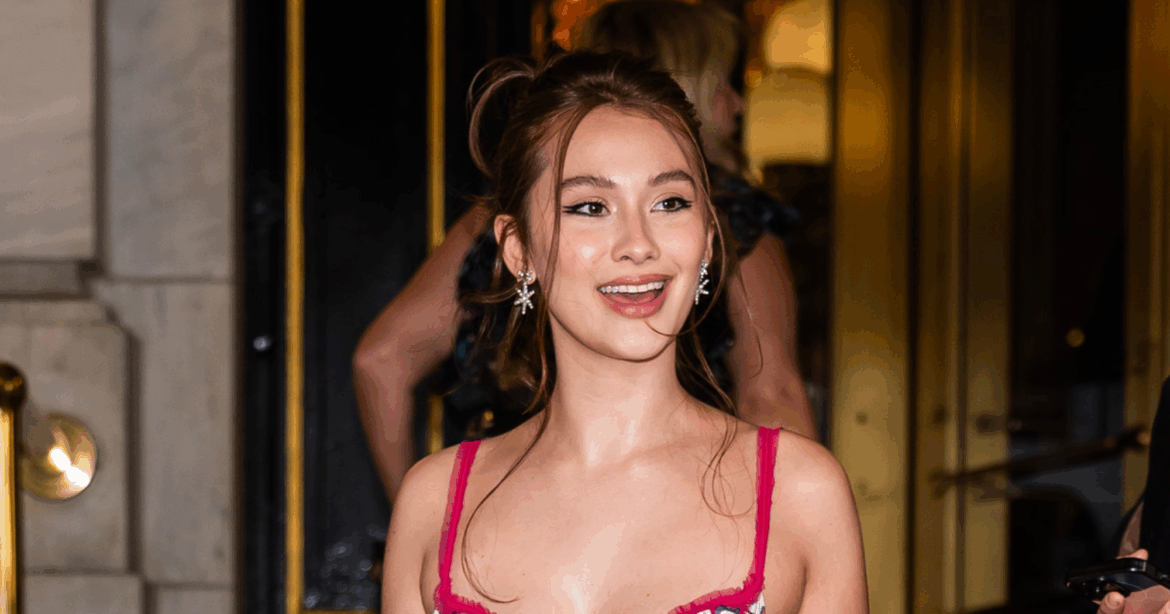
Setting the scene on Rodeo Drive in 1967, Costelloe opened his “Boulevard of Dreams” spring-summer 2026 presentation with short feminine creations in pale pink, yellow and blue. There were jackets with pointy collars or bows, embellished minis and shift dresses. All were paired with matching platform shoes.
Models wore floral and frilly designs that nodded to 1960s fashion, including plenty of short dresses as well as cut-out gowns.
“It’s a very happy collection. It very much reflects California in the late sixties,” Costelloe told Reuters. “The inspiration has been from the ‘Valley of the Dolls’… It’s very much West Coast of America and it’s very chic, very fresh, very exciting.” Aksu said that this season he turned to his own collection of broken dolls for inspiration.
Models wore dresses embellished with layers, embroidery and plenty of lace trimmings.
Aksu put frills on sleeves, large shiny sequins on skirts and see-through gloves and intricate florals on frocks.
The looks were layered: tiered dresses or jackets over long blouses that hung over skirts. Models also wore bonnet hats tied under the neck and adorned with bows or sequins.
“I feel like we are like the dolls… we have… our hearts broken or we go through things. But… we still kind of survive and then it becomes part of us,” Aksu told Reuters.
“With the dolls, with all these cracks and defects, I was thinking, I want to keep this and I bring it to… life again. So it’s not about covering their cracks but it’s about embracing them.”
London Fashion Week, which kicked off on Thursday evening and runs until Monday, is the second leg of the spring-summer 2026 catwalk calendar, which began in New York and then heads to Milan and Paris.
On the programme are 157 designers and organisations, including 50 catwalk shows and a mix of emerging as well as established designers like Erdem, Roksanda and fashion giant Burberry.
This article was generated from an automated news agency feed without modifications to text.
“Kim Novak‘s Vertigo” has one of the more heartwarming and, frankly, historically significant, codas to a film-focused documentary in recent memory. It’s such a special moment that it mostly justifies the way the film has been assembled before it.
Until then, it’s quite an uneven and unstructured cinematic portrait, and one of the weaker efforts from its director Alexandre O. Philippe. The Swiss-born cinephile has become a kind of cross between Laurent Bouzereau and Mark Cousins with his succession of documentaries about iconic films and film subjects.
Novak is certainly a worthy subject for a documentary. She’s not only the last survivor of the film that many consider the greatest ever made, Alfred Hitchcock’s “Vertigo,” but she is the nexus of obsession in a film about obsession that has inspired so much obsession in the 67 years since its release itself. At 92, her star power is as grand and magnificent as ever. But more than commanding your gaze as any great star does, and as Hitchcock certainly did in that ultimate film about “the gaze,” Novak also holds your attention as a uniquely thoughtful artist in her own right.

Philippe takes us on a journey through her career. Born Marilyn Novak and assigned the name Kim by the tyrannical Columbia Pictures head Harry Cohn, Novak existed in a constant state of tension in Hollywood. She bristled against what she calls the “overdone” acting of ’50s movie stars and prized naturalistic “reacting” instead. And she wanted meatier, more substantive roles that the industry simply would not give her at the time: Having worked as a model, Novak, to the powers that be, embodied glamour above all else, and the moguls had no use for other types of meaning she could create and represent. They wanted to focus on her surface appeal, on her mystique. That she was a source of desire rather than a subjective force in her own right.
If anything, Novak herself added depth and dimension that the suits didn’t want or ask for in their desire to make her the industry’s number-one box office star — which, in the late ’50s, she indeed became. The number of great films to her name, then, is arguably limited: Joshua Logan’s “Picnic,” Otto Preminger’s “The Man with the Golden Arm,” Richard Quine’s “Bell, Book, and Candle,” and of course, “Vertigo.”
“Kim Novak’s Vertigo” shows some of the misogynistic indignities she had to endure onscreen, with clips from “Pal Joey” and “Kiss Me, Stupid” that probably added to Novak’s ultimate desire to leave Hollywood altogether, which she had mostly done by the late ’60s. The documentary is most interesting when it doesn’t linger on clips from her movies, but when it focuses on her in the present at her home in Oregon. An avid painter for decades, Novak is seen at her easel putting brush to canvas and creating paintings of extraordinary swirling, whirlpool-like complexity. One definitely thinks of the spiral motif in “Vertigo.” And in several works, she’s outright created her own version of “Vertigo” fan art, recreating images of her Madeleine and Judy from the film.
“Vertigo” has clearly haunted her the way that it has generations of film lovers. Aside from its reputation and its inherent artistic greatness on many levels, it’s the one time in any movie that Novak was able to interrogate the very thing that frustrated her so much about her Hollywood career: That the industry was unable to see beyond the surface of her. And so she talks at length about how the characters of Madeleine and Judy speak to her deeply and remain with her and part of her. She talks about “Vertigo” as if both an insider and outsider — yes, she’s in the movie and the very heart of it, but, perhaps because of Hitchcock’s way of moving actors around like chess pieces, as objects for him to control, the way she talks about it is still somewhat removed, like that was another person onscreen and her at the same time.
That means that, when she speaks about “Vertigo,” it’s not that different from what any diehard obsessive of it would have to say, even as her experience is fundamentally singular. It lays bare the gulf between what’s onscreen and what’s real life, quite potently. Between the surface and what lies beneath. Between Kim Novak the movie star and Kim Novak the person.
She’s articulate and searching throughout, the movie even opening with narration that you might think had come from Jonas Mekas more than from Novak — because of course at the height of her fame she wasn’t allowed to be expressive like this. “I hesitate to even be recording this because I don’t know what’s gonna come out of what I say, what I mean,” she began. “What do I mean? Is that what it’s about: What do I mean? What do I think? What do I feel? I don’t know what’s expected of me to feel, or to think, or even to be, for that matter.”
In every sense, what’s most interesting about “Kim Novak’s Vertigo” comes from Novak herself. Philippe’s filmmaking seems especially rudimentary here, far more than in his William Shatner portrait “You Can Call Me Bill.” It’s powerful and compelling that Novak can occupy the role of fan of “Vertigo” the way she does — less interesting is Philippe’s own fan gushing. He has abandoned the close textual analysis of his other Hitchcock study, “78/52,” which precisely dissected how the “Psycho” shower scene achieves its effect, in favor of choosing not to give much perspective here at all. He just wants to revel in the feeling of “Vertigo,” the feeling of knowing Kim Novak, this time around — not examine what’s at the root of those feelings.
As a film then, “Kim Novak’s Vertigo” is disappointing. It feels like a beautiful portrait without a frame. A worthy companion to her receiving the Golden Lion for Lifetime Achievement at the 2025 Venice Film Festival, but not much of a cinematic achievement in its own right.
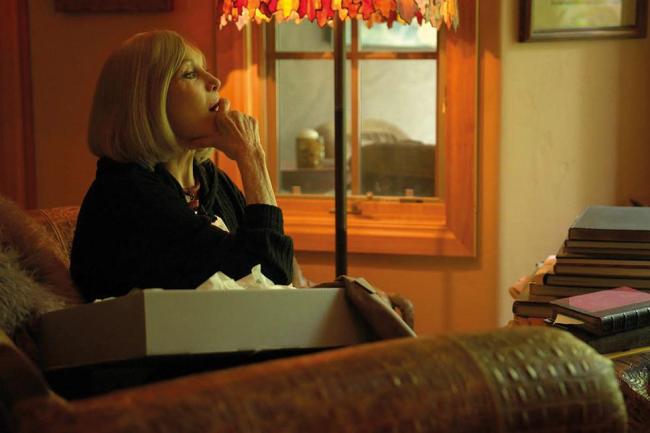
And yet, just as “Kim Novak’s Vertigo” appears to occupy that space of 2024’s “Merchant/Ivory” documentary — another doc made by a fan without much to say other than gush — it features a coda of jolting consequence. Novak goes through her belongings, collected over decades and in boxes for all that time, and comes upon what may be the most iconic suit-dress in movie history. The grey suit that Madeleine had worn and that Judy wears at the end of “Vertigo” in the moment that she’s revealed to have been Madeleine all along. It’s been sitting in a box in Novak’s possession for 67 years.
She pulls it out, and it’s still soft and totally unfaded as if it were 1958 all over again. She sniffs it, to make it that much more a part of herself. And cries in gratitude over seeing it again and being with it again. Suddenly, film history is so very alive in that moment. Immediate and eternal all at once. Just like “Vertigo.”
Grade: B-
“Kim Novak’s Vertigo” premiered at the 2025 Venice Film Festival. It is currently seeking U.S. distribution.
Want to stay up to date on IndieWire’s film reviews and critical thoughts? Subscribe here to our newly launched newsletter, In Review by David Ehrlich, in which our Chief Film Critic and Head Reviews Editor rounds up the best new reviews and streaming picks along with some exclusive musings — all only available to subscribers.
Watch Janhvi Kapoor’s Viral Airport Video: The Actress’s Chic And Comfy Look Will Inspire Your Next Travel Outfit! | Glamsham.com
Janhvi Kapoor remains the reason why she’s a Gen-Z fashionista, successfully merging glamour with tradition. The actress was recently seen at the airport, making it her own catwalk with a fabulous ethnic look. Wearing a blue traditional outfit, Janhvi appeared elegant but clearly exhausted. The clip, posted by Instant Bollywood, soon went viral as fans filled up the comments section with heart emojis and appreciation for her elegant avatar.
Janhvi and Sidharth’s Chemistry On Screen Creates Stir
Janhvi Kapoor is now preparing for the launch of her new romantic comedy Param Sundari, in which she would work with Sidharth Malhotra for the first time. The two were spotted recently visiting the Maddock Films office in Mumbai, increasing excitement for their new pairing. Janhvi appeared gorgeous in a printed dress with soft curls and less makeup, while Sidharth remained cool in casuals. Their chemistry and chic look were appreciated by fans, who eagerly wait to witness their on-screen chemistry.
New Song ‘Sunn Mere Yaar Ve’ Strikes a Chord
Adding to the growing excitement around Param Sundari, the third song from the film, titled *Sunn Mere Yaar Ve, has just been released. Unlike the retro-styled *Pardesiya or the sensuous Bheegi Saree, this track offers a fresh, contemporary soundscape. Sung by Aditya Rikhari and composed by the duo Sachin-Jigar, the song features Sidharth Malhotra expressing heartfelt emotions for Janhvi’s character. The film, with its stunning visuals and romantic scenes between the leads, is being lauded for its cinematic beauty and emotional depth. With its memorable tune and contemporary romantic feel, the song is rapidly becoming a fan favourite.
All About Param Sundari
Helmed by Tushar Jalota, who directed the recently released Dasvi, Param Sundari is a heartwarming cross-cultural romance that follows the life of a North Indian boy and a South Indian girl. Against the picturesque landscape of Kerala, the movie weaves Maddock Films’ inimitable charm with colorful visuals. The trailer, recently released, gives us a glimpse of drizzly roads, calm backwaters, and heritage buildings, which sets the tone perfectly for a love story that cuts across language and cultural barriers. Param Sundari will release on August 29, 2025.
Janhvi Kapoor’s Upcoming Projects
Besides Param Sundari, Janhvi Kapoor is also spotted in Sunny Sanskari Ki Tulsi Kumari, which is opposite Varun Dhawan. Directed by Shashank Khaitan, the movie will release on October 2, 2025, adding another promising title to the versatile filmography of Janhvi.