celebpeek
  • Home
  • Bollywood
  • Hollywood
  • Lifestyle
  • Fashion
celebpeek
  • Music
  • Celebrity News
  • Events
  • TV & Streaming
Home » insane
Tag:

insane

Shah Rukh Khan
Bollywood

When Sulakshana Pandit Declared: Those Who Call Me Insane Are Just Jealous of Me – Throwback

by jummy84 November 9, 2025
written by jummy84

This article was first published in the print edition of Filmfare in August 2002. We recreate this rare interview for our readers and fans of Sulakshana Pandit. The senior actress-singer passed away at the age of 71 on November 6, 2025. The article has been republished in it’s final print form. Read on…

I hesitate to enter the open doorway before me. Surely no one could be living here. The walls are bare, the rooms bereft of furniture, clothes lie strewn all over the floor. A door on the right leads to the kitchen, in which I can see only a gas stove. A meal couldn’t have been cooked here in months. As I move warily into the living room, my escort addresses a figure on the four-seater sofa that has obviously seen better days. “There’s someone to meet you.”

The face that looks at me is familiar. But a far cry from the Sulakshana Pandit I knew, a woman who loved piling on the make-up, the clothes, the jewellery. The woman in front of me is dressed in a faded nightie teamed with a salwar, her neck weighed down by a massive brass figurine of Balaji hanging on a nada.

The one thing that’s intact about Sulakshana is her complexion. She may well have just stepped out of the beauty parlour after an expensive facial. Her glazed eyes try to focus on the unaccustomed sight of a visitor and when I introduce myself, she excuses herself to freshen up.

I look around the living room. It is a large one by Mumbai standards two flats have been combined to make up one comprising around 2000 square feet. Parts of the false ceiling have given way. There are no lights or fans. A wall unit stands, bare. A huge Ganpati calendar is stuck on the wall near a window that opens onto the sea. Returning, Sulakshana leads me to a smaller room.

Here, too, pieces of cloth lie scattered on the floor. A wall cupboard has obviously been removed from the room, but a full-length mirror still dominates a wall. She promptly heads for it to check her face. And then gestures me to sit down on the floor for a chat.

“How I wish I’d won some prestigious awards so that film-makers and music directors would know that I’m still around,” she sighs. “Somehow, I stopped getting work quite some time ago. But people still tell me that I have a good voice and that I should return to playback singing.

“Whenever I’m alone, I go to my shack on the beach and sing with my harmonium or tanpura. I know I can no longer return to lead roles in Hindi films but my voice is still good.”
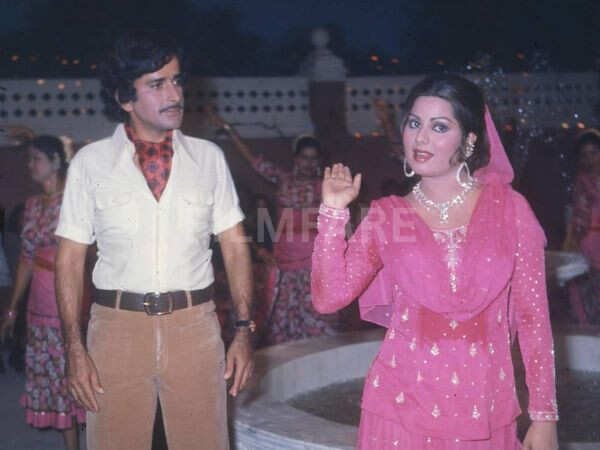
Sulakshana Shashi Kapoor

In her days, Sulakshana acted in over 50 films with the top heroes and banners of the time. She sang most of her own songs and, apart from the solos, had the opportunity to sing with Lata Mangeshkar, Mohammed Rafi, Mukesh and Manna Dey.

She longs to sing again. “I’d feel highly obliged if my brothers (composers Jatin-Lalit), Anu Malik or AR Rahman gave me a chance,” she says softly. “My brothers feel I’m not big enough a name today. I agree that they needed to work with well-established singers like Kavita Krishnamoorthy and Alka Yagnik when they were just starting out and needed to find a foothold in showbiz. But once they’d done that, they could have given me some songs to sing. Lataji is still going strong at 70-plus. I’m only 40-plus. If they’d helped me out, I wouldn’t be in the situation I’m in today. But I’m glad that the singers my brothers have worked with have brought them popularity.”

She then recalls the day Jatin had come over to show her his new car. “He asked me whether I’d like to keep it. Of course I couldn’t. As it is, I hardly go out. He needs it more. I love Jatin, he’s the son I never had,” she smiles faintly.

And says in an aside, “I wish they’d been given Devdas to score. They would have been ideal since we belong to Kolkata and they have the necessary classical background.”

A long pause. Then, tears welling up, she gasps, “I’ve been very upset ever since my mother passed away three years ago. A very spiritual lady, she was the one who provided me with strong moral support all through my life. I know it’s said that I’m pagal. Well. Dil to pagal hai hi. By the grace of God. I’m okay. There’s been no one to look after me since. Zindagi veerana ho gayee hai.”

Wiping her eyes, she continues, “I know it’s said that I’m pagal but that’s not true. Music is constantly on my lips. And like so many other singers, I use my hands freely while singing. Is that pagalpan? Well, dil to pagal hai hi. Those who call me insane are just jealous of me. By the grace of God, I’m okay.”
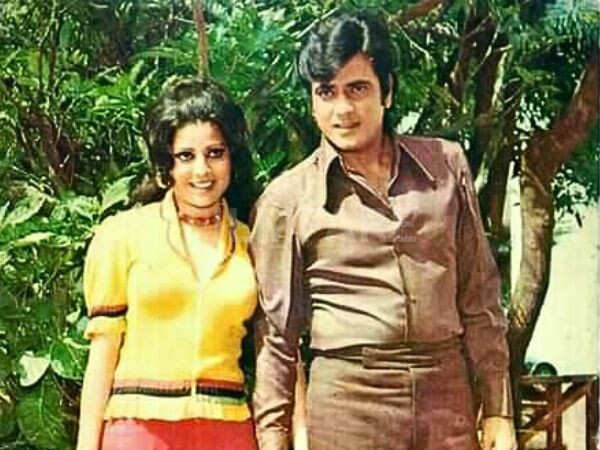
Sulakshana Jeetendra

Sitting up suddenly, she says with a determined look, “It was from my mother that I learnt never to give up. Even after my father left us, she single-handedly brought up the seven of us three brothers and four sisters. I looked after my brothers and sisters, I did whatever my mother asked me to do for them, no questions asked. But I’m not God, I’m just a human being. I’ve learnt that helping your family is fine but that you have to think of yourself and your last days too.”

For now, she has her elder sister, Maya, and her 20-year-old nephew Varun living with her. She tells me pointedly, “But I haven’t asked anyone for money. Roti-dal to kha hi leti hoon. I’ve done a lot for others. I’m confident that when I die, my brothers and sisters from the film industry will mourn me. The colleagues I worked with were always nice to me, they respected me. In fact, they’re upset that I no longer have a car or even a telephone. But I’m above such material things.”

How does she manage to survive? By Sulakshana’s account, Jatin and Lalit give her some money every month. Her sisters Vijayeta and Sandhya help, too. Vijayeta provides the rations and visits her, while Sandhya pays her electricity bill, she says.

Tears flood her eyes yet again as she veers off into a memory and confides: “I loved Sanjeev Kumar so much. He was so nice. He’d given me a set made with yellow sapphires. But he spoiled my life. One day, after his bypass operation, we had gone to a Hanuman mandir in Delhi. I told him that I loved him and asked him to put Sindoor in my parting. I told him to marry me so that I could look after him. But he refused, saying that he could never forget his first love, Hema Malini. He used to cry for her. His death shattered me.”

She reflects, “Life is so short. Why fight? Each one of us has to go some day. What do you get by hurting others? Why get intoyeh tera hai, yeh mera hai? Iske saath kaam karo, uske saath nahin. Why such politics? That’s a dirty game. Keep away from it.”
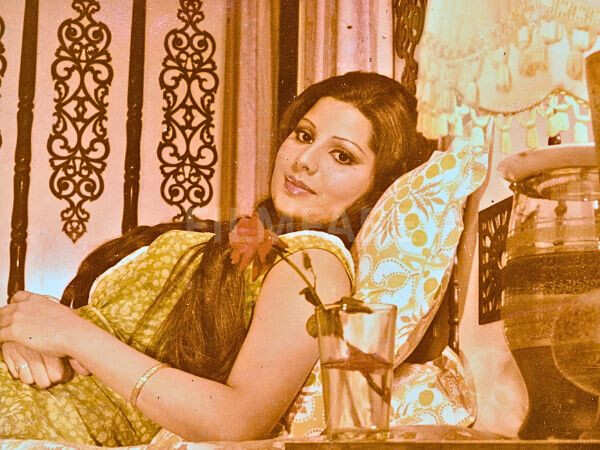
Sulakshana Pandit

Music is her only solace, she says. Whenever reality gets too much to bear, she sings herself a song from Hum Dono; she calls it the song of her life:

Mein Zindagi ka saath nibhata chala gaya
Har fikra ko dhuen mein udata chala gaya
Barbadiyon ka sog manana fizul tha
Barbadiyon ka jashna manata chala gaya
Jo mil gaya ussiko muqaddar samajh liya
Jo kho gaya main usko bhulata chala gaya
Gham aur khushi meinfarqa na mehsus ho jahan
Mein dil ko us maqaam pe laata chala gaya…

Her song plays in my mind as I prepare to make my exit. She waits with me for the lift. “It was nice speaking to you,” she smiles. “Dil halka hua.”

Read Also

The life and times of the singer and star of the ’70s – Sulakshana Pandit
November 9, 2025 0 comments
0 FacebookTwitterPinterestEmail
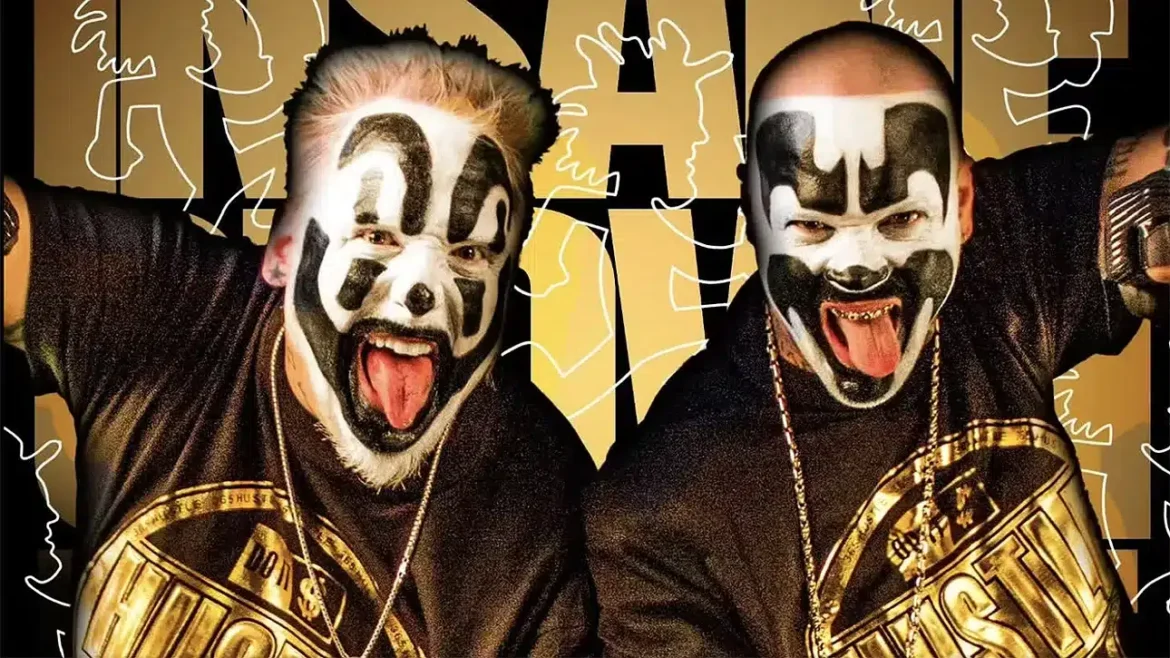
Insane Clown Posse
Music

An Insane Clown Posse Hatchetman for Every Deathmatch » PopMatters

by jummy84 October 10, 2025
written by jummy84

Deathmatch wrestling thrives on the margins of mainstream wrestling. It’s a world of blood, shattered glass, and extreme violence that embraces pain as spectacle. Its practitioners are often seen as society’s outcasts, those willing to risk everything for their art.

Over the last few decades, one curious visual and cultural symbol has become deeply ingrained in the fabric of deathmatch wrestling: the hatchetman. The hatchetman uses he iconic logo of the Insane Clown Posse and its Juggalo fan base.

You see it inked on bodies, on gear, blasted from speakers in the form of Insane Clown Posse or Psychopathic Records music during wrestler entrances. Even deathmatch performers from places as far-flung as Russia, like Alex Nabiev, adopt the imagery.

This raises the question, Why is the hatchetman everywhere in deathmatch wrestling? Is it a genuine identity — or a convenient shortcut to belonging?

Insane Clown Posse in the Ring

I like Insane Clown Posse. I respect what they’ve built not just as musicians, but as wrestlers, promoters, and creators of a subculture that gave deathmatch wrestling a stage when few others cared. This isn’t coming from a place of ignorance or mockery.

However, liking Insane Clown Posse doesn’t mean I want to see every other wrestler use the same three tracks for their entrance music. After the tenth guy in a local gym walks out to “Chicken Huntin’”, it stops feeling like rebellion and starts feeling like routine. That’s where this critique begins, not in contempt, but in a desire for evolution.

Embracing the Juggalo

From Insane Clown Posse’s perspective, Juggalos represent a family for outsiders. They champion the misfits — people rejected by mainstream society — embracing the weird, the scarred, the angry. Insane Clown Posse’s own history is rooted in outsider status, fighting major label rejection and mainstream disdain.

That same philosophy carried over into wrestling. In 1999, Insane Clown Posse founded Juggalo Championship Wrestling (a promotional vehicle built to spotlight hardcore, comedic, and deathmatch wrestling, the kind of performance that didn’t fit neatly into mainstream wrestling’s polished mold. Through Juggalo Championship Wrestling and their annual Gathering of the Juggalos festival, they provided a stage for underground wrestlers long before it was profitable or considered cool.

For many, Juggalo Championship Wrestling was the first platform that took their brand of chaos seriously. From their perspective, supporting deathmatch wrestling wasn’t a gimmick; it was an extension of the world they’d already built.

During the heyday of World Wrestling Entertainment and World Championship Wrestling, fans often brought hatchetman signs to wrestling events, forging a unique connection between the underground music scene – particularly the Juggalos and Insane Clown Posse culture – and professional wrestling. These signs weren’t just fan props; they became powerful symbols, linking the hatchetman emblem with the wrestling world and serving as a visual rallying point that united like-minded fans.

This crossover helped embed the hatchetman deeply into deathmatch wrestling’s fabric, illustrating how music subcultures and wrestling fandoms often overlap. The presence of these signs at wrestling events reflected a broader cultural exchange where Juggalos found a home in the violent, rebellious spectacle of hardcore and deathmatch wrestling.

It’s important to remember that Insane Clown Posse aren’t just a symbol; Violent J and Shaggy 2 Dope trained as wrestlers, took bumps, traveled extensively, and faced the same grind and rejection as countless others trying to make it in the business. While they’re better known for creating and promoting their own wrestling company, Juggalo Championship Wrestling, than for in-ring accolades, their deep involvement in the wrestling world lends authenticity to the underground scene they helped shape.

They didn’t just slap the hatchetman on merchandise; they personified it. Loud, theatrical, defiant, and determined to be heard on their own terms, Insane Clown Posse as wrestlers and promoters lived the same struggles many deathmatch performers know intimately: being misunderstood, dismissed, and still stepping through the curtain to perform for those who do get it.

Juggalo Championship Wrestling became a dedicated platform for hardcore and deathmatch wrestling. The promotion offered consistent exposure and opportunity to wrestlers who embraced extremity, absurdity, and outsider identity. This solidifies the hatchetman as more than a fan symbol, but as an organizing force in the underground wrestling circuit.

It’s also worth noting that Insane Clown Posse, during their stints in World Championship Wrestling and World Wrestling Entertainment, were never positioned as main-event talent. Their roles were mostly mid-to-lower card; sideshow attractions, comedic violence, or cult favorites. That’s not a knock; they knew their lane and embraced it.

When wrestlers today adopt Insane Clown Posse themes, entrance music, or iconography, they’re not just aligning with an aesthetic; they’re signaling their identity as underground performers, intentionally or not. There’s nothing inherently wrong with that. Still, it reflects an important reality: embracing Insane Clown Posse often comes with an unspoken admission: “I’m not here to go mainstream. I’m here to go hard.”

Insane Clown Posse’s wrestling influence didn’t end with World Championship Wrestling and World Wrestling Entertainment. In Total Nonstop Action wrestling, their connection to wrestling continued to make waves. Perhaps most notably, when wrestling legend Scott Hall made a memorable ringside appearance alongside Insane Clown Posse, it highlighted how Juggalo culture had become deeply embedded in wrestling, allowing it to be embraced by iconic figures. This moment stands as a testament to Insane Clown Posse’s lasting footprint, bridging underground culture and broader wrestling audiences.

Insane Clown Posse’s presence extended beyond live wrestling and music. They were also playable characters in the 2004 video game Backyard Wrestling 2: There Goes the Neighborhood, further spreading their hardcore, theatrical style to gaming audiences and amplifying their crossover appeal.

Originality Over Imitation

Hardcore and deathmatch promotions, such as Combat Zone Wrestling and Independent Wrestling Association Mid-South, also embraced Insane Clown Posse’s music and cultural aesthetic. While no official catalog of entrance themes exists, Insane Clown Posse and other Psychopathic Records tracks have become something of a default soundtrack in these circles.

This musical overlap links Insane Clown Posse’s horrorcore style with the brutal spectacle of hardcore wrestling. Deathmatch wrestling may not have grown the way it did without Insane Clown Posse’s support. Over time, however, what began as a welcoming subculture started to feel more like a uniform. The hatchetman tattoo, the music, the merchandise — they became almost expected in deathmatch circles.

Consider legends like Mick Foley, Sabu, and Necro Butcher — all worked JCW, but none relied solely on Juggalo culture to define themselves. Wrestlers often signal their proximity to Juggalo culture through clothing, music, or stable affiliations, which complicates the idea of belonging.

Raven, for instance, wore an Insane Clown Posse “Great Milenko” shirt on World Championship Wrestling broadcasts and briefly aligned with the Juggalo-associated stable, Buddy Van Horn’s 1988 dark comedy, The Dead Pool, which included Insane Clown Posse and Vampiro. Still, his character remained distinct: dark, brooding, and psychologically layered — separate from carnival theatrics.

Later, Great Muta joined World Championship Wrestling’s Dark Carnival, also featuring Insane Clown Posse and Vampiro. Despite the alliance, Muta remained unmistakably himself: a mystical figure drawn from Japanese wrestling tradition, not Juggalo culture.

Vampiro, on the other hand, perhaps did more than any mainstream wrestler to promote Insane Clown Posse from within. He wore clown makeup, leaned into the mythos, and helped Insane Clown Posse’s aesthetic bleed further into televised wrestling.

These examples illustrate the key point: association is not the same as identity. Many wrestlers borrow from the Juggalo image for storyline or spectacle, but maintain personal uniqueness beyond the paint and soundbites.

In contrast, Japanese deathmatch legends such as Mitsuhiro Matsunaga, Atsushi Onita, Jun Kasai, and Masashi Takeda forged identities rooted in themes of samurai honor, punk, nihilism, and horror. No hatchetman. No clown gimmicks. Just personal visions of violence.

So why do international wrestlers adopt Juggalo imagery? Russian deathmatch performer Alex Nabiev wears a hatchetman tattoo. Whether it’s sincere fandom or a symbolic shortcut, the answer points to one thing: a sense of belonging.

Known for his extreme self-destructive style, Nabiev pushes boundaries with no-limits violence, sometimes wrestling in brutal “Blood and Sand” matches outside traditional rings — literally battling in sand-filled yards. Like the Russian GG Allin of wrestling, he carves a legacy defined by nihilism, shock, and unpredictable intensity. While the hatchetman marks his connection to the underground, what Nabiev brings to the ring is entirely his own sickness.

This pattern extends beyond wrestling. Many rap and horrorcore artists adopt Insane Clown Posse’s lingo, face paint, and the hatchetman symbol to build identity and community. Like wrestlers, they find in Insane Clown Posse a ready-made mythology and fanbase that signals outsider status and rebellion. While this can create strong bonds, it also risks diluting individuality, turning vibrant artists into echoes of a dominant iconography rather than innovators in their own right. The question then becomes, “How do you honor your roots without becoming a copy?”

Deathmatch wrestling is filled with loners and outsiders. Juggalo culture provides a ready-made identity and a built-in fan base. For some, that’s survival. For others, it’s a creative crutch. That shortcut comes with a cost. It can dilute originality, turning unique voices into copies of a louder one.

Pain alone isn’t enough in deathmatch wrestling anymore. If everyone bleeds, wears the same shirt, and walks out to the same songs, what sets anyone apart? The best deathmatch wrestlers don’t cosplay rebellion; they invent it. They build personas out of trauma, vision, and risk.

Insane Clown Posse gave deathmatch wrestling a megaphone when few others did. That’s worthy of respect. For the scene to grow, however, it needs new voices, not just hatchet-wielding echo chambers.

October 10, 2025 0 comments
0 FacebookTwitterPinterestEmail
Ashlee Simpson-Ross reflects on 'insane' SNL bullying
Celebrity News

Ashlee Simpson-Ross reflects on ‘insane’ SNL bullying

by jummy84 August 22, 2025
written by jummy84

22 August 2025

Ashlee Simpson-Ross experienced an “insane” level of “bullying” after her infamous performance on Saturday Night Live.

Ashlee Simpson-Ross faced a backlash after her 2004 SNL performance

The 40-year-old singer became the first musician to walk out of a performance on SNL back in 2004 when her single Pieces of Me incorrectly began to play before she raised her microphone to perform Autobiography, sparking a huge backlash.

And Ashlee – who returned to the show before the credits rolled to try and explain her decision to lip sync was due to a flare-up of acid reflux – isn’t sure she’d have faced the same level of criticism if something similar happened today.

Speaking on Pod Meets World, she said: “I think it’s a different era … I think during that time, I mean, the bullying was insane.”

Ashlee has felt the need to repeatedly explain herself to people.

She said: “But then my whole life, I had to tell people, ‘Oh, but I perform every night.’ My fans know. I had to know that in my heart.

“Yes, I’ve had ups and downs just like every other human.”

The former Melrose Place actress – who has Bronx, 15, with ex-husband Pete Wentz and Jagger, eight, and Ziggy, three, with spouse Evan Ross – thinks the way the internet responds to public mistakes has evolved “but also it hasn’t in some ways”.

She added: “I think it’s different now. For us, we had the magazines and this. Now everything’s kinda more fleeting.”

At the time, the SNL backlash felt like it was on her “shoulders forever”.

But she added: “And I think now everything is, like, a little bit more fleeting and fast.”

Ashlee has previously spoken of how “cruel” the world felt in the wake of the SNL ridicule.

Speaking on her Ashlee + Evan reality show in E! in 2018, she said: “The world hated me for this SNL moment I had.

“I was such a young girl, and the world can be a cruel place. But I learned at that time in my life to believe in my work and in my album and to get up and keep fighting and carrying on.”

“I had amazing fans that stood by me. And I learned to be strong and stand up for yourself.”


August 22, 2025 0 comments
0 FacebookTwitterPinterestEmail

Social Connect

Facebook Twitter Instagram Pinterest Youtube Snapchat

Recent Posts

  • 2009 feels like a whole other world away

  • Watch Ariana Grande and Jimmy Fallon Perform a History of Duets

  • Spotify’s Joe Hadley Talks ARIA Awards Partnership

  • Nick Offerman Announces 2026 “Big Woodchuck” Book Tour Dates

  • Snapped: Above & Beyond (A Photo Essay)

Newsletter

Subscribe my Newsletter for new blog posts, tips & new photos. Let's stay updated!

Categories

  • Bollywood (1,929)
  • Celebrity News (2,000)
  • Events (267)
  • Fashion (1,605)
  • Hollywood (1,020)
  • Lifestyle (890)
  • Music (2,002)
  • TV & Streaming (1,857)

Recent Posts

  • Shushu/Tong Shanghai Fall 2026 Collection

  • Here’s What Model Taylor Hill Is Buying Now

  • Julietta Is Hiring An Assistant Office Coordinator In Dumbo, Brooklyn, NY (In-Office)

Editors’ Picks

  • 2009 feels like a whole other world away

  • Watch Ariana Grande and Jimmy Fallon Perform a History of Duets

  • Spotify’s Joe Hadley Talks ARIA Awards Partnership

Latest Style

  • ‘Steal This Story, Please’ Review: Amy Goodman Documentary

  • Hulu Passes on La LA Anthony, Kim Kardashian Pilot ‘Group Chat’

  • Hannah Einbinder Slams AI Creators As “Losers”

  • Facebook
  • Twitter

@2020 - celebpeek. Designed and Developed by Pro


Back To Top
celebpeek
  • Home
  • Bollywood
  • Hollywood
  • Lifestyle
  • Fashion
celebpeek
  • Music
  • Celebrity News
  • Events
  • TV & Streaming