celebpeek
  • Home
  • Bollywood
  • Hollywood
  • Lifestyle
  • Fashion
celebpeek
  • Music
  • Celebrity News
  • Events
  • TV & Streaming
Home » Hamlet
Tag:

Hamlet

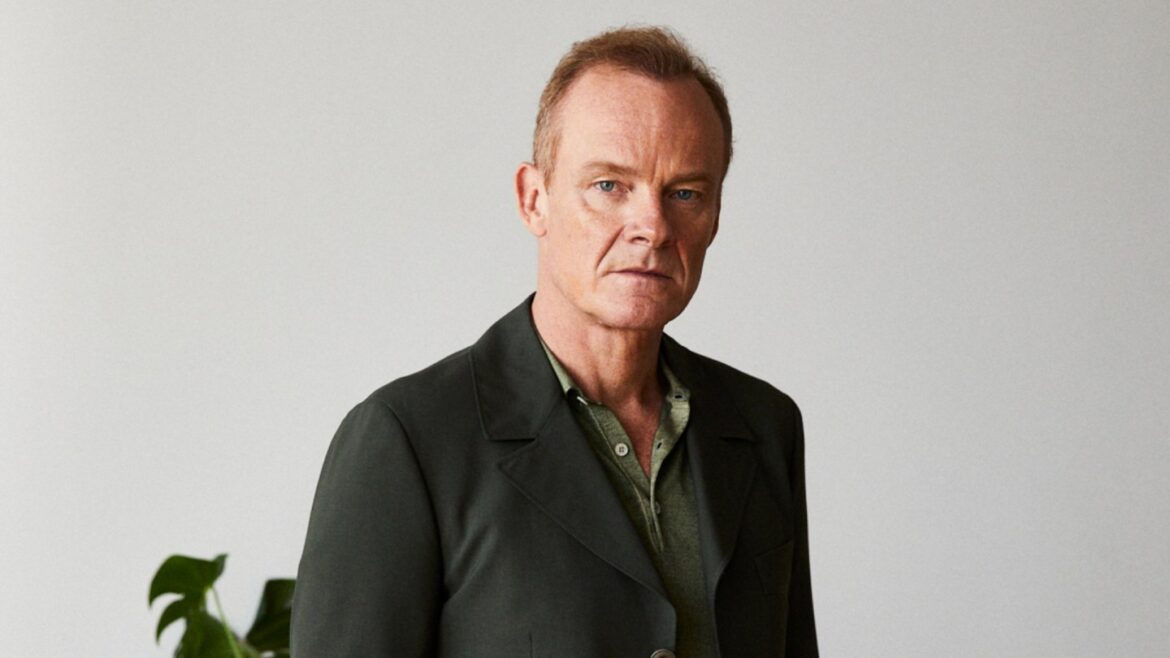
Alistair Petrie on 'Sex Education,' 'Hamlet' and Playing the Villain
TV & Streaming

Alistair Petrie on ‘Sex Education,’ ‘Hamlet’ and Playing the Villain

by jummy84 October 7, 2025
written by jummy84

Alistair Petrie is no stranger to villains. The British star has played some of television’s most notorious, especially as the stone-faced, unfeeling headteacher Mr. Groff in smash hit series Sex Education, which saw his icy glare pierce through screens in over 55 million households worldwide across its four seasons.

But as hardcore fans of Netflix’s sex-positive teen dramedy might remember, Michael Groff’s redemption arc was undeniably one of the show’s more moving plot points. Petrie’s character, once practically vibrating with resentment and shame, learns to shed his steely exterior and make amends with his son Adam (Connor Swindells), with whom he had a fraught relationship. It’s an ending only made possible by the work of Petrie who, unlike the men he often portrays, is attentive, warm and softened by a palpable adoration of the craft.

“I think the villainous roles are hugely fun to play, but a lot of a lot of them can be underwritten from time to time,” confesses Petrie, also known for roles in Star Wars spinoff Andor and the BBC’s Sherlock. “The hero’s journey needs to be figured out and the villains can sometimes [fall] by the wayside. That’s what I find so entertaining when I read them — certainly the ones I take on — because you think: ‘Who is the human being? Where’s the villainy come from?’ It doesn’t just appear,” he continues to The Hollywood Reporter over Zoom in late September. “And in that sense, you’re being asked to elevate the material from where it was originally conceived. Every good story needs a villain, and how do you fulfill that? You try and find the human being within it.”

It’s this search for humanity that makes Petrie the perfect fit for theater’s biggest baddie: King Claudius, uncle to Shakespeare’s Prince Hamlet. The 55-year-old leads a mighty ensemble cast currently performing at the National’s Lyttelton Theatre until November, with Life of Pi‘s Hiran Abeysekera embodying our protagonist with a mischievous sense of frenzy through Robert Hastie’s sharp, contemporary take on the classic.

“What I love about playing Claudius on stage is that he has such main character energy,” says Petrie about the king-slayer, whose act of fratricide in a bid for the Danish throne sends his nephew spiraling. “When the curtain goes up, Claudius firmly believes that he’s in a play called Claudius. He’s not in a play called Hamlet. This is his moment.”

Alistair Petrie, above left, plays King Claudius of Denmark in Robert Hastie’s Hamlet at the National Theatre.

Sam Taylor

It’s something that Petrie finds brilliantly inspiring on the stage, a place he describes as “an amazing actor’s medium, whereas film and television are much more of a director’s medium.” Hamlet marks his return to theater after 11 years, and the Brit casts his mind back to a stint in Declan Donnellan’s West End production of Shakespeare in Love, in which he played Lord Wessex.

It’s not an experience he thinks back on entirely fondly, as Petrie found himself pulled between the painstaking demands of theater and family life. “I’m certainly not frightened of hard work — I revel in it — but I value my other real-life roles as a partner and a husband and a father,” he explains. “I blithely thought that you can live slightly out of London and still commute in and quickly do a West End Show in front of an audience and then just pop home and carry on as normal. But you can’t. It requires extraordinary reserves of energy, really, and something had to give.”

Petrie, married to actress Lucy Scott with whom he shares three sons, also admittedly found himself a little bogged down by the expectations placed upon the cast in the stage adaptation of the Oscar-winning film Shakespeare in Love (1998). “It was a very big-budget show. It had very grand plans. It was sort of Disney-backed,” he says, “and I think the expectations were so high and that was slightly thrust onto us. … When we finally finished, I had no desire to step on stage again. It wasn’t so much the doing of it. It was more [about] how it collides with your life, and I just wasn’t prepared to give that up.”

With his theatrical mojo rediscovered, Petrie finds himself back in front of a live audience. And after over a decade away, he’s relishing the thrill. “As an actor, I love the sense of being part of of a group, of an ensemble,” he says. “I do think if we search for anything in life, we do look to belong somewhere — I mean, a psychologist could have field day with me,” he jokes, “but I think it’s very much tied into the notion of being brought up as a military kid and moving around a lot. You’re desperate to fit in, and as soon as you find yourself as a part of something, you’re on to the next thing. There’s a certain masochism to being an actor.”

One set that Petrie found himself immediately at home on was the fan-favorite Sex Education, an experience that he continues to feel the ramifications of to this day. “It permeates throughout everything in the most glorious way. Sex Education is a gift — not was a gift. I put it in the present tense,” the actor says about his time as Mr. Groff.

In the early throes of production when fellow cast members Asa Butterfield, Emma Mackey, Ncuti Gatwa, Aimee Lou Wood and Connor Swindells were yet to reach the dizzy heights of stardom, he admits there were concerns about how the show would land with Netflix audiences. “Given the explosion of all the streamers and all the platforms and all the curation that people could do,” says Petrie, “would we find an audience? Or would we be buried in some kind of algorithm, in the bowels of Netflix? And it was just the most glorious reverse,” he smiles about the show, which debuted to critical and audience acclaim. “You couldn’t have predicted how people would receive it, of all age groups and demographics all over the world.”

Sex Education is a part of his life Petrie would never abandon in the face of snobbery, notably because it’s provided him with some of the strongest off-screen relationships of his career. In particular, Petrie is close with his on-screen son and Barbie actor Swindells, and last year officiated his wedding to fellow thespian Amber Anderson.

“I talk to Connor literally every day,” says Petrie. He pauses, recalling his first few days on the Sex Ed set. “I am absolutely a 50-something-year-old man trapped in a 22-year-old person’s body. There’s no question I’m a complete labrador when it comes to working in this industry. And within seconds, I thought, ‘Oh, this is going to be great.’ We were just one happy gang. I couldn’t give a rat’s ass whether I was comfortably nearly double their age — watching them all soar as they are, I look on it with almost a parental pride.” He’s working on a new series with Sex Ed alumn George Robinson, Petrie tells THR, who fans will know as Isaac Goodwin.

From left: Petrie and Connor Swindells as father-son duo Michael and Adam Groff in ‘Sex Education.’

Netflix

But Mr. Groff was a role that nearly escaped him. In 2019, Petrie found himself down to the final two for Prince Philip in another Netflix behemoth: The Crown. The part eventually went to Tobias Menzies, but disappointment was soon eclipsed by a phone call asking him to read for a thrilling new show about the sex lives of eager teens.

“The scripts were obviously so good,” Petrie says about the material crafted by The Crown mastermind Peter Morgan. “I thought, ‘Gosh, this is a character I really want to to investigate. Tobias and I are different, and it was either going to be him or it was going to be me. And he was magnificent — he’s a mate and a wonderful actor — and when I saw it, it made perfect sense to me.” Within an hour of being told Menzies nabbed the role, Petrie got the call about Groff. “Serendipity hovers over my being quite a lot,” he says, “and I will accept that. If serendipity is my God, I’ll take it.”

Another serendipitous development that’s got Petrie excited is the upcoming second season of The Night Manager with Tom Hiddleston, the British spy thriller adapted from John le Carré’s 1993 novel. In the first season, which had us gripped all the way back in 2016, Petrie played Lord Alexander “Sandy” Langbourne, financial director to the cunning Richard Roper (Hugh Laurie).

What was supposed to be a miniseries is now returning on Amazon Prime Video for a hotly anticipated second installment that, at certain points, didn’t involve Petrie at all. “I would get a phone call probably about once a year: ‘We think we’re on,’” says the Briton. “I was like, ‘Great.’ And then I get a phone call about a year later, and it would be like, ‘We are going to do it, but you’re not in it.’ I went, ‘That’s totally fine. All good.’” He remembers phoning up good pal Laurie, who serves as an executive producer on both seasons. Laurie said something to the effect of: “‘If you’re standing on set one day and the camera’s on you and I’m standing behind the camera as an exec producer, then I guess we’re doing it.’”

Eventually, after hours-long conversations about how to “crack” a le Carré-esque story that isn’t entirely based on any of the author’s work, season two of The Night Manager was a go, Petrie included. “Eventually, [writer] David Farr was available,” explains the actor. “I think he sat down and said, ‘OK, this is what I would do’ and presented it. There was a general sense of, ‘Oh, OK, this is a story worth telling.’” He also sings Laurie’s praises: “He’s so wise and brilliant about le Carré’s work. As an exec producer, he’s always going to be creatively involved. I think read it and looked at it amongst everyone else and there was a decision: ‘This is the one. I think this is it.’”

The Night Manager is expected to return to screens imminently. Petrie also says the cast is supposed to be filming a third season next year. “David has delivered a Shakespearean tragedy, I think it’s wonderful,” he teases. “This is just based on what I’ve read, but it’s going to be enormous. We’re supposed to be doing a third one next year and I really hope we do, because the people in it and around it are just wonderful.”

With Shakespeare in Love, Hamlet and now a Shakespeare-adjacent season of The Night Manager ahead, Petrie can’t help but think about the bard’s artistic impact on his career so far. “He wrote about all the great themes that run through our emotional lives,” ponders Petrie. “He wrote about power and love and madness and revenge and mortality and jealousy and the fear of God, and he did it pretty well.”

This time around, with his sons all grown up, Petrie’s got the work-life balance a little more figured out. What remains is sheer pride. “In amongst the crash bang of this industry, we raised three well-adjusted, decent human beings,” he beams. “We’ve managed to figure it out, my wife and I, because we are such a team. So the emotion of doing all this is running beautifully high at the moment.”

Hamlet is on at the National’s Lyttelton Theatre until Nov. 22, 2025.
October 7, 2025 0 comments
0 FacebookTwitterPinterestEmail
Riz Ahmed’s Hamlet Is For Anyone Feeling “Powerless” & “Gaslit” In This Political Moment
Fashion

Riz Ahmed’s Hamlet Is For Anyone Feeling “Powerless” & “Gaslit” In This Political Moment

by jummy84 September 11, 2025
written by jummy84

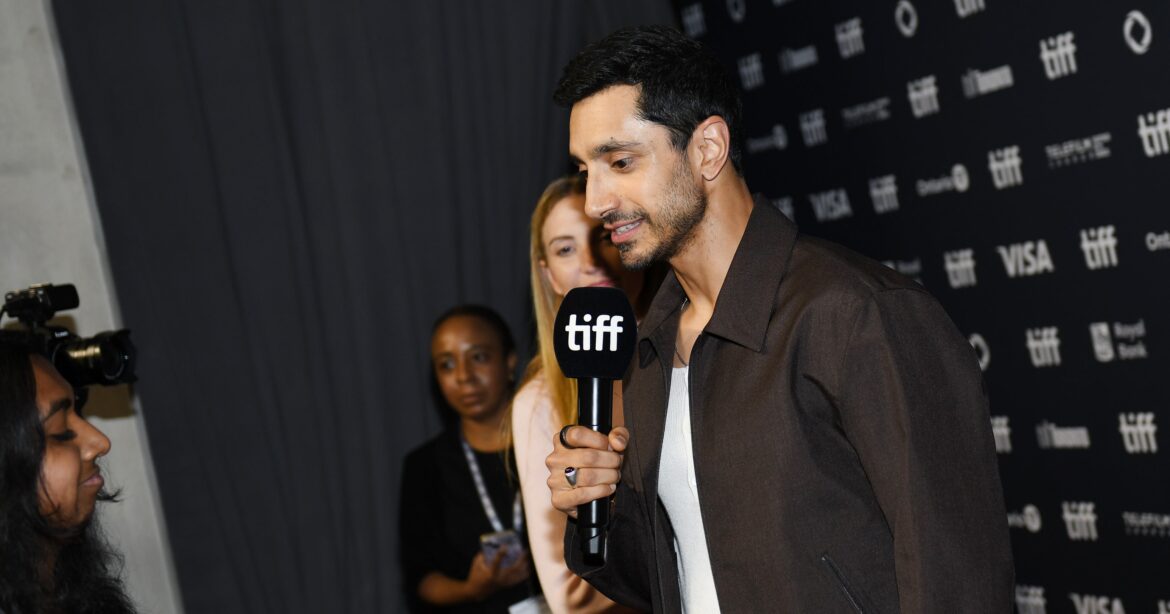
TORONTO, ONTARIO – SEPTEMBER 05: Riz Ahmed attends the premiere of “Hamlet” during the 2025 Toronto International Film Festival at TIFF Lightbox on September 05, 2025 in Toronto, Ontario. (Photo by Harold Feng/Getty Images)

When you think of the world of English playwright William Shakespeare, chances are you’re not picturing his Early Modern English text interspersed with Hindi. But maybe you should be. In Hamlet, the 2025 reimagining of Shakespare’s play about a Danish prince who, seeking to avenge his father’s death, slowly descends into madness, filmmaker Aneil Karia transports the infamous story to the streets of London and the city’s vibrant South Asian community. In this re-telling, starring The Night Of’s Riz Ahmed in the titular role, Hamlet’s family aren’t actual royalty, but rather real estate royalty. His father is the head of Elsinore, a lucrative real estate empire changing the landscape of London; his clothes aren’t made of luxuriously spun fabrics or lush velvet, but instead consist of a plain white kurta; the court surrounding Hamlet’s family (in this case business associates and a mix of aunties and uncles) don’t feast on hearty meats and wine, but rather samosas and traditional Indian sweets. And everyone speaks Hindi. It’s safe to say, this isn’t your English teacher’s version of Hamlet.

The project, which premiered at the 50th annual Toronto International Film Festival, was almost 14 years in the making, championed by Ahmed who had a longtime dream of taking on the role of the infamous antihero. While it was a long process to see the movie through to its premiere, the wait was arguably worth it, considering it’s a story that — although written over 400 years ago —  is timelier than ever. “Hamlet is about grief, and Hamlet’s grieving his father, but he’s also grieving an illusion of how he thought the world was,” Ahmed tells Refinery29. “He thought it was a much more fair and just place than it’s turning out to be.”

A lot of injustice is presenting itself to us in a way that’s shocking, and we’re all feeling a bit powerless in the face of it, a little bit gaslit about it as well… we’re feeling complicit in it.

riz ahmed

If that sounds familiar, reflecting, say, the entries of your own journal or conversations you’re having within your own circle of friends and group chats — that’s exactly the point. Around the globe, social and political injustices, the reappealing of human rights,  ongoing genocide, and climate disasters have remained a constant and incessant onslaught. “I think a lot of people are feeling that way right now, right?,” Ahmed says of Hamlet’s realization. “A lot of injustice is presenting itself to us in a way that’s shocking, and we’re all feeling a bit powerless in the face of it, and we are feeling a little bit gaslit about it as well, and then we’re feeling complicit in it.”

While the particulars may be different, In essence, Ahmed adds, this idea of feeling powerless and trying to do something to change that  is Hamlet’s journey. “Shakespeare wrote that storyline 500 years ago, and here we are today, still going through that journey.”

The decision for Ahmed and Karia to situate the story in a South Asian community is one that came easily. Given Ahmed’s own background, it made the most sense. “It’s as simple as I connected to this play and I wanted to play this role,” Ahmed says. “Riz is South Asian so that means his family has got to be South Asian,” Karia adds. “And suddenly there you go, we have a South Asian Hamlet.” 

TORONTO, ONTARIO – SEPTEMBER 05: (L-R) Aneil Karia and Riz Ahmed attend the premiere of “Hamlet” during the 2025 Toronto International Film Festival at TIFF Lightbox on September 05, 2025 in Toronto, Ontario. (Photo by Harold Feng/Getty Images)

While the decision to situate this particular version of Hamlet within the South Asian diaspora of London was one made out of necessity — the fact that Ahmed himself is South Asian and drawing from his own experiences is natural for such a closely held project, you can’t help but feel like telling the story within this particular community in this particular time period is the only way a filmmaker could have brought the story into the 21st century, at least in an authentic and believable way. 

“It became so much more rich than we could ever imagine,” Ahmed says of grounding the story in this community. Karia adds: “We were constantly being surprised by how these somewhat archaic and kind of whimsical or fantastical details in Shakespeare, like the ghost world, family, honor, remarrying within the family and things like this, which can feel fantastical in some adaptations, started to feel relevant to contemporary South Asian communities.” 

“It felt like there was some conversation between modern South Asian existence and this ancient text, which was really interesting.” 

Integral to Shakespeare’s original play is the idea of legacy and lineage. It’s the reason why, upon his return to Denmark, Hamlet is initially so quick to fall into line, accepting his Uncle Claudius as the new King and his own step-father (if only in public). He’s guided by an allegiance to his mother and the belief that this is what’s best for the country and the lineage. And it’s what, as Hamlet pursues the truth about his father’s death, motivates him to do so by any means necessary, following the notion that he’s avenging, but also preserving, his father’s legacy through justice.

It felt like there was some conversation between modern South Asian existence and this ancient text, which was really interesting.

director Aneil Karia

In Ahmed’s 2025 adaptation, the stakes — and reasoning — remains the same, but is emboldened by the shift to a South Asian community, in which duty to one’s family remains a strong tenet that carries with it generational expectations and weight. Not to mention the emphasis on respect and deference to one’s elders. We see this from the moment the movie opens when Hamlet, taking part in traditional funeral rites for his father, openly looks to his Uncle Claudius (played by Art Malik) for guidance on what to do.

In the world of Ahmed’s Hamlet, as within the diasporic community both on-screen and in real life, living up to familial expectations is of the utmost importance. And viewers watch Ahmed navigate that push and pull between duty and desire on-screen as he navigates first his grief, then his torment, and finally his rage. 

This rage, ignited when Hamlet is visited by the ghost of his father, who reveals he was murdered by Hamlet’s Uncle Claudius, is what changes the course of the play and the trajectory of Hamlet’s life. While the original play presents Hamlet as slowly going mad, with his visions of his father framed as ghostly hallucinations, the contemporary take leaves more room for interpretation. Instead, and minor spoilers ahead, it leans into the idea of spirituality, a large part of many South Asian communities and identity. 

While this spirituality is inherent within the culture presented onscreen, seen through rituals and ceremonies, Hamlet is also faced with symbols of Hindu deities, one in a particularly pivotal moment, causing internal reflection. By introducing these deities and the idea of spirituality in this way, Hamlet’s beliefs aren’t represented as delusions, but are instead rooted in something real — or at least believable: Faith.  Meaning that when Hamlet does finally reach his breaking point, in a pivotal and incredibly public moment (one in which Ahmed, who frantically fluctuates between devastatingly desperate and comically unhinged, shines), audiences are presented not necessarily with a man who’s gone mad, but one who is valid in his feelings of grief — making his eventual end all the more devastating. 

While the outcome of Karia and Ahmed’s Hamlet remains the same as the play, the way in which we view the titular character and his actions has changed. And that feels like a very 2025 update. 

Like what you see? How about some more R29 goodness, right here?

Riz Ahmed Just Proved He's Officially A Wife Guy

Riz Ahmed Secretly Got Married

Francesca Amewudah-Rivers Can Play Juliet. Period.

September 11, 2025 0 comments
0 FacebookTwitterPinterestEmail
Mamoru Hosoda Returns with a Bloody Anime Hamlet
TV & Streaming

Mamoru Hosoda Returns with a Bloody Anime Hamlet

by jummy84 September 4, 2025
written by jummy84

It’s been said that several filmmakers at Venice are showing up with their “state of the world” movies. Whether that’s Luca Guadagnino with his take on cancel culture, Yorgos Lanthimos satirizing alt-right-style radicalization, or Kathryn Bigelow depicting our mutually-assured madness in nightmarish fashion, many of our most famed directors seem to be looking at a world in flux and asking: “How did we get here?”

Hosoda, a former Studio Ghibli animator who went freelance and has since become one of Japan’s most successful auteurs, is no different. His last film, 2021’s “Belle”, was a sci-fi adaptation of “Beauty and the Beast.” For his latest act, Hosoda hasn’t traveled too far from that baroque fantasy setting, which was already more idealized than the relative normality of his mainstream breakthrough hit (and Oscar nominee) “Mirai.” “Scarlet” is a loose but clearly intended rendering of Hamlet, with all of its castles and knights, ghosts and traitorous uncles — and lots that isn’t in Shakespeare’s play, too.

"Street Fighter V"

One of the first lines of dialogue is Claudius (Kôji Yakusho) plotting the murder of his brother; “I have long dreamed of pouring poison into his ears”, he says, but the King is too popular and Claudius must instead frame him for plotting with a neighboring country, thus enabling his execution. Scarlet (Mana Ashida), a young princess, watches on distraught as her father’s ruthless executioners seem to relish in their task. After Claudius poisons her, Scarlet begins her exile into the “Otherlands,” a sort of purgatory, where she plots her revenge alongside a horde of people who feel similarly wronged by their too-short lives.

But this is a Hosoda movie, so things will become considerably more complicated from there. Much like Mirai’s acceptance that he’s no longer the man of the house, Scarlet’s most important journey is one of self-discovery — a quest far from the violent quest for justice undertaken by the original Prince of Denmark. But there is some of that, too. The Otherlands is a community of struggling people from all places and time periods, who can nevertheless understand each other despite their differences. Scarlet’s journey through them will lead her to cross paths with a variety of characters, starting with Hijiri (Masaki Okada), a nurse from modern-day Japan who refuses to convince that he should have died. Soon thereafter, Scarlet encounters a little girl who says that if she were a princess, she would spend her life making sure the world was livable for little girls like her. It’s enough for Scarlet to realize that vengeance might be a bit self-centered; there are bigger fish to fry.

The politics of the lost masses without food or a home is not far from James Gunn’s “Superman”, another well-intended but fairly vague expression of struggling peoples and the evil rulers depriving them of life and dignity. Scarlet’s venture is even more consciously informed by “Dune”, whose heir to the throne is radicalized to embrace the cause of his former antagonists. Hosoda’s film poses a similar question to Scarlet as Frank Herbert’s saga did to Paul Atreides: How much is this story all about her? Hijiri is a paragon of selflessness who teaches Scarlet that living for others is the only fulfilling way. Hijiri even questions her ruthless approach to warriors sent by her uncle to finish her off, telling Scarlet: “The ultimate warrior fires invisible arrows from an invisible bow.” That isn’t really Scarlet’s style, and it’s probably too much to ask to put the weapons down while she’s actively being hunted. But Scarlet does realize she has the power to improve the lives of all the people in the Otherlands — and perhaps even stop some of them ending up there.

Unfortunately, Hosoda’s ideas in “Scarlet” never get more incisive or interesting than that. There’s an over-sweet centre at the middle of it. Its ending is a feast of sincerity that, not just tedious in its own right, feels unrepresentative of the irreverent character with whom we’ve just spent two long hours. Despite bloody violence throughout, “Scarlet” lacks the edge that would make this culture clash of seminal western tale and Japanese art form as memorable or significant as it ought to be. The first few minutes of the film are a breathless, almost wordless introduction to the Otherlands, with Scarlet trapped under rotting hands clamoring to keep her there. But Hosoda’s expressionism virtually disappears thereafter, and a dry sense of order exerts itself once the story is spirited back towards Elsinore.

To that end, “Scarlet” amounts to a frustrating waste of animating and directorial skill for the price of an excessively ordinary story. The sheer scale of Hosoda’s success may have softened his storytelling instincts, even if the aesthetics are occasionally remarkable. Having written his past four movies alone, it may be time for Hosoda to consider collaborating once again. And maybe not with Shakespeare.

Grade: C+

“Scarlet” premiered at the 2025 Venice Film Festival. Sony will release the film in U.S. theaters on Friday, December 12.

Want to stay up to date on IndieWire’s film reviews and critical thoughts? Subscribe here to our newly launched newsletter, In Review by David Ehrlich, in which our Chief Film Critic and Head Reviews Editor rounds up the best new reviews and streaming picks along with some exclusive musings — all only available to subscribers.

September 4, 2025 0 comments
0 FacebookTwitterPinterestEmail
'King Hamlet' Review: Oscar Isaac Documentary Charms
TV & Streaming

‘King Hamlet’ Review: Oscar Isaac Documentary Charms

by jummy84 August 30, 2025
written by jummy84

There are a lot of lessons that Elvira Lind’s “King Hamlet” seems to want viewers to learn: The timeless language of Shakespeare remains a source of wisdom for those going through hard times. Life is a cycle, and the sting of watching loved ones pass away can be soothed by the joy of welcoming new babies into the world. And the opinions of critics are far less valuable than the people who pour their own blood, sweat, and tears into making art together. But even if it sets its sights on loftier ideas, there’s one point that it drives home far more than any other: even when he’s Going Through It, Oscar Isaac is incredibly handsome and charming.

Join Judy Greer and IndieWire for 'The Long Walk' on September 4 in Los Angeles

All mortals have flaws, so I find it highly unlikely that Isaac is the first truly perfect human ever to walk the Earth. But after watching this breezy documentary directed by his wife, which documents the actor as he plays Hamlet in a New York production during a year when he lost his mother and became a father, I don’t think the possibility can be ruled out. That’s to be expected from a film whose production was such a family affair, and “King Hamlet” is better understood as a feel-good collection of memories that Lind and Isaac deemed worthy of preservation than a true behind-the-scenes look at the Broadway creative process. But what the documentary might lack in rigor, it makes up for with charm and a well-intentioned message about the healing power of art.

2017 was a big year for Oscar Isaac. The Juilliard graduate and lifelong Shakespeare geek was finally getting the chance to play his dream role in a Public Theater production directed by Tony winner Sam Gold, and he was relishing every step of the creative process. But in between debates about how changing the spelling of a single word can change the meaning of an entire line, he had a lot of personal problems to juggle. His mother was dying after a long hospital stretch, and Lind was pregnant with their first child. He had spent months at his mother’s side reading passages from “Hamlet,” as a means of both creative preparation and mutual grief processing, and was now returning to New York to dive head-first into rehearsals before a grueling summer of two-shows-a-day with a new baby at home. All while to managing his mother’s affairs, consoling his grieving extended family, and occasionally flying to London for “Star Wars” reshoots.

Even while overwhelmed with the burdens of life, Isaac’s enthusiasm for Shakespeare is infectious, and there’s joy to be found in watching him process his own pain through the act of creation. He has his share of painful moments when the pressure briefly becomes too much, but watching him bond with his newborn son while running lines and having creative discussions with Gold over speakerphone is a reminder of one of life’s most bittersweet lessons: it goes on. We never forget the people we love, but darkness is eventually supposed to fade enough for us to make new happy memories. Watching Isaac and Lind navigate it all leaves you with a cosmic sense of satisfaction that things are working the way they’re supposed to.

Lind is the only person who could have possibly directed “King Hamlet,” as the film’s greatest strength is its sense of intimacy. Nobody else’s camera would have ever been welcomed into their home so frequently during the first month’s of their son’s life, and Isaac’s genuine relaxation around her gives the film a fly-on-the-wall quality that feels more like home movies (with better cinematography!) than typical documentary footage. Her pacing is perfectly elegant, allowing Isaac’s grief and joy to unfold in equal measure from the beginning of the rehearsal process through the end of the production, allocating just enough time to the darker moments without dragging the mood down for too long.

If “King Hamlet” has any legacy as a film, it will likely be as a comfort watch for Isaac’s superfans and Shakespeare devotees. It won’t be joining the canon of great nonfiction cinema, but I have no doubt that many viewers will find that watching a shirtless Oscar Isaac play with an adorable baby while quoting Shakespeare is a great use of 89 minutes.

Grade: B

“King Hamlet” premiered at the 2025 Telluride Film Festival. It is currently seeking U.S. distribution.

Want to stay up to date on IndieWire’s film reviews and critical thoughts? Subscribe here to our newly launched newsletter, In Review by David Ehrlich, in which our Chief Film Critic and Head Reviews Editor rounds up the best new reviews and streaming picks along with some exclusive musings — all only available to subscribers. 

August 30, 2025 0 comments
0 FacebookTwitterPinterestEmail
Riz Ahmed Brings South Asian Touch To 'Hamlet' Premiering At Telluride Festival
TV & Streaming

Riz Ahmed Brings South Asian Touch To ‘Hamlet’ Premiering At Telluride Festival

by jummy84 August 29, 2025
written by jummy84

EXCLUSIVE: Riz Ahmed was after the Crown Jewels. Along with filmmaker Aneil Karia and screenwriter Michael Lesslie, he wanted to take Hamlet, the most iconic of British plays, and do it about Britain today from the perspective of South Asian Hindu culture.

It’s their up-to-the-minute version of Shakespeare’s centuries-old tale about a troubled Danish prince who is visited by the ghost of his dead father who asks him to avenge his death and follow the trail of blood all the way to his supposed favorite uncle, Claudius.

To cap it all, Claudius has gone and married his late brother’s wife.

None of that’s new. We know that story. We’ve seen the stage productions. Some were godawful, but in my time, I have seen Jonathan Pryce, Kenneth Branagh, Ben Wishaw, Rory Kinnear and a handful of others excel. Benedict Cumberbatch starred in what was known as the “Barbican Hamlet” at the Barbican in London. 

It was a production of such gargantuan proportions that the poetry was squeezed out of it.

This film adaptation is the complete antithesis. It’s lean, mean and dangerous. The filmmakers have stripped it back so that cinemagoers will see only what the title character does. Lesslie assures that, while the tale has been set in an area of London inhabited by those from the global south, the verse has not been tampered with. This was strictly adhered to when I visited the set on a snowy, freezing-cold day way back in late December 2023.

For starters, the ensemble was made up of top-flight actors who knew their way around the Bard’s verse. 

Ahmed’s Hamlet was challenging his mother, Gertrude, played by Sheeba Chaddha, about her seemingly sudden decision to marry Art Malik’s Claudius. Then he was having a go at Timothy Spall’s cunning Polonius while Joe Alwyn’s smooth Laertes was waiting to wade in.

We were in this ugly, sprawling mansion located on the outskirts of Guildford, Surrey. Away from the main property was a pool house reached via brick steps covered with grit to prevent us slipping on any icy bits. This reporter, in a most ungentlemanly fashion, did go — as one crew member put it — “Arse over tit.” I jumped right up because the last thing a reporter wants to be on a film set is a dickhead invalid.

In any case, there was something appealing about being in this Succession-like, almost Trumpian estate. It made sense because in this version, Hamlet’s father, Old Hamlet, is a reviled real estate tycoon who founded the Elsinore Construction Group. Old Hamlet’s retainers acquired crumbling public housing estates turning out occupants enabling them to build showy apartments for cash buyers.

Both Ahmed and Karia spoke of family members having seen ghosts at funeral ceremonies, which made sense of the visitations Hamlet’s father makes after death.

‘Hamlet’

Courtesy Hamlet Film Production

Lesslie notes that the juxtaposition of “heightened spiritual poetry and the banality of everyday London” makes perfect sense when key characters are of South Asian backgrounds.

Living in an area of London, as I do, where there’s representation from all parts of Asia, the film reflects a city of vibrancy with menace not far beneath the surface. 

For instance, the character of stately soldier Fortinbras has been upended by BAFTA winner Jasmine Jobson. Now Fortinbras is the leader of the militant opposition to Elsinore Construction Group’s lack of concern about making thousands homeless.

In the late ’90s, says Ahmed, sitting in the pool house between scenes, he won a place at a private school. It was a time, the actor recalls, “where you had this generation of children of immigrants entering institutions like that. And there were these growing pains and there were these clashes.”

But there was a teacher — ”a Jewish guy from Wolverhampton who spoke Punjabi” — and he took Ahmed and two other pupils under his wing for English. They studied Hamlet, and Ahmed related to the idea of how “a lot of people kind of develop an obsession with his play in their adolescence because it’s about how it feels to be misunderstood and having to compromise and live in a kind of corrupt society or system, or be surrounded by values that are not aligned with your own.

“And for whatever reason, the world that I’ve grown up in is one where that conflict still remains, I think, for me and for many other people,” he explains. “Just how connected I felt to it emotionally, how much the themes of the play connect to some of the societal struggles we’re seeing where people feel like we’re in a system that is not responsive to our needs, that is corrupt, that we need to push back against.”

There was, he adds, “that personal thing, that societal thing, but then also a cultural thing came in for me where for a lot of these classic, these canonical stories, it’s actually immigrant cultures or cultures in the global south that can bring them to life in the most immediate way.

“Because for us spirits of your dead relatives, that’s real. We grow up within those belief systems of who you can and can’t marry based on their family background, which is the thwarted romance of Romeo and Juliet or of Ophelia and Hamlet. That’s real for people today.”

And to the point of the play’s narrative where Hamlet’s uncle Claudius marries Gertrude, Ahmed states that he knows “people who’ve married their sister-in-laws after their brothers have died. It’s a cultural tradition. It’s how you take care of the kids.”

The version of Hamlet that’s been bubbling inside Ahmed since his senior school days receives its world premiere Saturday at the Telluride Film Festival. 

Ahmed and Lesslie both were at Oxford but barely knew each other during their college days. However, they linked up when legendary theater producer Thelma Holt was the Cameron Mackintosh Professor of Contemporary Theatre at Oxford, and she sent a group to Japan to perform Shakespeare. Several years later, Lesslie’s play The Prince of Denmark, a prequel to Hamlet, opened in London to great success. 

Ahmed saw it and decided that he wanted to collaborate with Lesslie on a Hamlet film.

Originally, it was set up at Netflix. This was before they had a production hub in London.  

The deal fell through following a change of personnel at Netflix in L.A. The new people there weren’t interested in a costume drama “with verse,” Lesslie explains.

‘Hamlet’

Courtesy Hamlet Film Production

The rejection, Lesslie insists, did them a favor. That’s when they approached BBC Film and the BFI. Not long after, Ahmed made the Oscar-winning live short The Long Goodbye with Karia.

It was his use of handheld cameras and direct, in-your-face style that appealed to Ahmed and Lesslie. 

Karia also knew about ghosts. “That was a breakthrough,” the director says. “I went to many more Hindu funerals than I did British funerals when I was a kid.”

It was during a ritual at a house, “and it was the moment the soul was supposed to be released, and a cousin of mine felt that the spirit had actually taken house inside her, and it was a very intense experience for her.”

Karia didn’t share the years-long obsession with Hamlet in particular and Shakespeare in general. “I thought it felt British, I thought it felt establishment. It felt impenetrable in its sort of complexity and language.” But when he revisited Hamlet later, it didn’t feel so uncomfortable.

He liked how amazing the screenplay read and “found myself connect to it in a very different way.”

Karia says that as he read the script he was pleasantly surprised how “relevant and modern” it was in its themes.

“Here’s someone who’s coming back, who feels estranged from their family, where the corruption and grubby ethics of it all feel so shamelessly out in the open.”

Also, it was “quite useful” that Karia didn’t have that “reverential relationship with it. I could be a little bit carefree in my suggestions.”

It took them awhile to come up with the cinematic language that allowed a sense of a camera showing us what Hamlet saw and not scenes that he hadn’t witnessed himself.

One of this Hamlet’s signature moments is the “To be, or not to be” soliloquy.

Stuart Bentley, left, and Aneil Karia

Courtesy Hamlet Film Production

All three of them — Ahmed, Karia and Lesslie — came up with a variety of ways of staging that moment.  

Ahmed says that sometimes “we can fall into the tradition of the traditional way of doing things.”

He cites the famous essay “The Quality Most Needed” written by the extraordinary American stage and silent-screen star Laurette Taylor in 1914, where she dared thespians to use their imaginations and not to overly concern themselves about physical beauty or personality.

Actors often can fall into the patterns of doing things how they’ve been done before. “So what we end up doing,” says Ahmed, “is paying an homage to the way that things are done rather than really, really getting back into the DNA of something. … There’s so many incredible interpretations of this character, of his story that continued to inspire me. But my own interpretation was, it is not so much a soliloquy. That’s an introspective moment of ‘should I live or not?’“

A year spent studying Shakespeare under Rob Clare at London’s Central School of Speech and Drama allowed him to poke around the text and fully comprehend the “To be, or not to be” scene. 

I won’t spoil what they’ve done with it, but it’s an electrifying moment. BBC Film chief Eva Yates was on set the day I visited. We shared a vegetarian curry on the train home with set publicists from Premier Communications, and Yates told me to look out for what the filmmakers had done with “To be, or not to be.”

It’s certainly an unforgettably hair-raising sequence. It works too. I saw the film back in London and I’ll see it again here, but I’m fascinated to see it again with a younger audience in the UK, to see how they react not just to “To be, or not to be” but to the film overall. It’s not for old codgers who expect conformity and cardboard stiffness.

We talk about Baz Lurhmann’s Romeo+Juliet and how that cut through the stiffness. 

There’s something in “the DNA of these stories that is so mythic and timeless and potent and powerful that if you can really kind of step into it, it can really speak to people and speak to our time. He mentions that when Romeo+Juliet came out, the No. 1 album in the world was Spice Girls’ Spice. 

“And now today we are making Hamlet,” he says as we ate snacks in the pool house near Guildford. “I remember when we finally got the green light to make this, the No. 1 album was Kendrick Lamar’s Mr. Morale &  the Big Steppers. And it kind of spoke to me about a kind of cultural shift whereas back then, Romeo + Juliet and the kind of poppy romantic feel of it was the Zeitgeist feel, but like now we are in a time that is more introspective, that is perhaps brooding with discontent and wants to find a place to put that and push back.”

I ask Ahmed to comment on Hamlet’s family and how his father is this greedy developer and how that might come across. In short: Old Hamlet’s a bad guy when, perhaps, he could have been painted in a slightly less harsh way.

As soon as I’d made my point, I realize how soft it sounds.

“ I’d like to think that all these characters are so nuanced,” Ahmed responds. “That’s the thing about stepping into material like this. This would be a more three-dimensional, complex portrayal of characters of  color. … I certainly don’t think it’s about goodies and baddies. 

“I think that this material is much more rich and much more layered than that,” he argues.

“But speaking to your point of immigrants climbing a greasy pole, climbing a ladder of corruption in order to enrich themselves and maintain their own status at the expense of others like them, is that something that is real sometimes for some people. … Is it because they’re evil people or is it because we’ve created a system whereby your own safety and security is often premised on denying someone of their own of theirs? I think so, yeah. “

He feels there’s a critique of the heart of this play. “Hamlet is full of his own self-criticism. It’s a critique of our own moral compasses. It’s our own inability to act. It’s a societal and systemic critique. But I think a question really at the heart of this version — and I think that’s really alive in the play — is, to what extent are you complicit in the stuff that you disagree with?”

Well, that’s why I love Shakespeare. His work can fit into any age and any culture. And now and again, it’s good to see a movie where I imagine folk are going to have differing points of view. Yeah, let’s fight — sorry, argue about Hamlet.

Hamlet is a BBC Film and BFI production and producers include Ahmed, James Wilson, Michael Lesslie, Allie Moore and Tommy Oliver.

August 29, 2025 0 comments
0 FacebookTwitterPinterestEmail

Social Connect

Facebook Twitter Instagram Pinterest Youtube Snapchat

Recent Posts

  • 2009 feels like a whole other world away

  • Watch Ariana Grande and Jimmy Fallon Perform a History of Duets

  • Spotify’s Joe Hadley Talks ARIA Awards Partnership

  • Nick Offerman Announces 2026 “Big Woodchuck” Book Tour Dates

  • Snapped: Above & Beyond (A Photo Essay)

Newsletter

Subscribe my Newsletter for new blog posts, tips & new photos. Let's stay updated!

Categories

  • Bollywood (1,929)
  • Celebrity News (2,000)
  • Events (267)
  • Fashion (1,605)
  • Hollywood (1,020)
  • Lifestyle (890)
  • Music (2,002)
  • TV & Streaming (1,857)

Recent Posts

  • Shushu/Tong Shanghai Fall 2026 Collection

  • Here’s What Model Taylor Hill Is Buying Now

  • Julietta Is Hiring An Assistant Office Coordinator In Dumbo, Brooklyn, NY (In-Office)

Editors’ Picks

  • 2009 feels like a whole other world away

  • Watch Ariana Grande and Jimmy Fallon Perform a History of Duets

  • Spotify’s Joe Hadley Talks ARIA Awards Partnership

Latest Style

  • ‘Steal This Story, Please’ Review: Amy Goodman Documentary

  • Hulu Passes on La LA Anthony, Kim Kardashian Pilot ‘Group Chat’

  • Hannah Einbinder Slams AI Creators As “Losers”

  • Facebook
  • Twitter

@2020 - celebpeek. Designed and Developed by Pro


Back To Top
celebpeek
  • Home
  • Bollywood
  • Hollywood
  • Lifestyle
  • Fashion
celebpeek
  • Music
  • Celebrity News
  • Events
  • TV & Streaming