celebpeek
  • Home
  • Bollywood
  • Hollywood
  • Lifestyle
  • Fashion
celebpeek
  • Music
  • Celebrity News
  • Events
  • TV & Streaming
Home » Guillermo
Tag:

Guillermo

Guillermo del Toro, Oscar Isaac Talk 'Frankenstein' with Patti Smith
TV & Streaming

Guillermo del Toro, Oscar Isaac Talk ‘Frankenstein’ with Patti Smith

by jummy84 December 13, 2025
written by jummy84

Guillermo del Toro has never met a Q&A he doesn’t like. More than most, he enjoys sharing his enthusiasm with moviegoers and smart interlocutors like poet-musician-author Patti Smith (her latest memoir, “Bread of Angels,” is in bookstores). Oscar Isaac joined them for a lively conversation about the awards contender “Frankenstein,” which is currently streaming on Netflix. Watch the video exclusively above.

Here’s the December 2 New York Q&A, edited for brevity and clarity.

Patti Smith: In the early 50s, when I was a child, I saw, as we all did, James Whale’s “Frankenstein” and “The Bride of Frankenstein” and was greatly beguiled and saddened. But when I read, as you did, “The Modern Prometheus” by Mary Shelley, I saw that there was a whole world of imagination and thought processes and the evolution of the creature. And [I] wish that James Whale was still alive and would do another one. But we didn’t need him, because you came along and you gave us really something so much more akin that merged your sensibilities with Mary Shelley’s. Give us a little bit of you as a child. What world of books? I know how it happened to me. I want to hear about you.

Models show walk up stairs at the 2007 Oscar Fashion Preview at the Academy of Motion Pictures Arts and Sciences on January 30, 2007 in Los Angeles, California.

Guillermo del Toro: I was weird. I was extremely thin. I’m not joking. I used to button my shirt all the way up, and had a bowl haircut. I was like a Rutger Hauer son. almost albino, very pale. And in 1969, my father won the National Lottery, and he became a millionaire, and he bought a house, and somebody told him that he needed a library, because he was now a cultured gentleman. So he bought a huge library, which he never visited, and I read everything in there.

I read an encyclopedia of art that made me know as much about painting or sculpture as I would have a comic book artist: Jack Kirby or Monet or Manet or Renoir, they were all mixing in my imagination. I read an encyclopedia of health that made me the youngest hypochondriac in history. I stayed and read. And that was part of the disappointment. “This child is not well.” They sent me to a psychologist, and he gave me clay and said, “Could you do something with this?” And I did a skeleton. It didn’t go well.

Patti Smith: I’ve seen this movie now three times, on a little screen, on the airplane, on a bigger screen… One thing that always intrigues me is Victor Frankenstein’s body language. It’s almost like an artless choreography that becomes art. You’re always in motion. You make everything seem almost like a dance. It gives the film almost an operatic sensibility. I wanted to ask you about your body language, if that was a choice.

Oscar Isaac: It was very much in the conversation with Guillermo. The camera never stops moving. It’s always moving, and so often I’m moving in counterpoint to the camera. It always felt very musical. The whole thing, that first scene, when he’s in the medical conference, it feels very much like an aria. There were times when I was filming it where I was expecting people to start singing; the sets were so operatic as well. And a lot of the movement came from Kate Hawley’s incredible costumes.

Patti Smith: You can see the fabric, like in your shirts, and the threads.

FRANKENSTEIN, Jacob Elordi as The Monster, 2025. ph: Ken Woroner / © Netflix / courtesy Everett Collection
‘Frankenstein’©Netflix/Courtesy Everett Collection

Oscar Isaac: There was a lot of pleasure in wearing those little black high-heeled boots and running up and down the stairs in those plaid pants and the things that she would put me in, that crazy robe. It also came a lot from Guillermo. He’s a fucking superhero of pain (laughs) and darkness and hilarity and absurdity. And so, we became completely linked and synchronized, for better or worse.

Guillermo del Toro: We’re still trying to shake it off.

Oscar Isaac: The movement was like a symbiosis that happens.

Patti Smith: The creature, like you and Jacob — that’s like ballet movement. Then, when you’re giving the exhibition to the courtroom, it’s a different sweeping, and then you take Elizabeth in your arms and a different kind of sweeping, the whole thing, your body language is fantastic.

Guillermo del Toro: We actually designed the wardrobe to look like ’60s London, like he would be coming out with The Rolling Stones or Jimi Hendrix. We wanted him to feel like a rock star.

Oscar Isaac: Yeah, you talked about, especially that scene, that you wanted that swagger, to command that, the flowing shirts. But even using that cape is almost like a matador, yeah, it’s expressive, heightened.

Guillermo del Toro: And a lot of hips.

FRANKENSTEIN. (L to R) Mia Goth as Elizabeth and Oscar Isaac as Victor Frankenstein in Frankenstein. Cr. Ken Woroner/Netflix © 2025.
‘Frankenstein’Ken Woroner/Netflix

Patti Smith: You’re right about the sets. They’re so majestic. You should do [the opera] “Parsifal,” the holy fool. Just throw out Wagner’s “Parsifal,” do some of it!

Guillermo del Toro: Like a Mexican “Parsifal.” Well, we tried to design as if it was an opera, the big Medusa, the minimal elements that are around everything. I always say there’s no eye candy in my movies. There’s high protein, because we’re telling the story. I can take you through the shapes and the colors, precisely why we designed them like that, but we wanted to make it as a novel, as epistolary. And one of the things that Gothic romance does is have a story within a story within a story. So I wanted to have self-contained color and camera language and shape language in each of the points of view, and if I made the fabric of the main characters, we wove. We didn’t buy it. We made it. We hand-embroidered it, we printed it, we dyed it, everything. We created rolls of fabric because all the language and the clothes is from nature, like Elizabeth has natural patterns from minerals, from butterfly wings. Her shawls are X-rays. Victor has the embroidered circulatory system. The vest had that. And we wanted to create this world of natural anatomical fields, and we repeat the patterns of the sets on the clothes, etc.

It’s impossibly rich, all those things. And even with the movement, again, to talk about it, starting in this vital place, alive with movement. And slowly calcifying as he gets more angry and more regret[ful]. And then he becomes more creature-like, even with those costumes and the prosthetic leg, as the creature becomes more human. So even those two are rising in opposite ways.

Patti Smith: I was so in love with that ship. I love all the Antarctic explorers and Shackleton.

Oscar Isaac: Imagine rolling up to the Netflix studio, and there’s a fully-sized ship, like the huge, actual-size ship, on gimbals in the parking lot. That was one of the first things that I saw when I arrived.

Patti Smith: It looks like these glass pictures, found in Antarctica. It almost made me feel nauseous, in a good way.

Guillermo del Toro: My producing partner felt nauseous when I said, “We’re building it for real,” but I was making a point that it should be a handcrafted movie by humans, for humans. There’s something that happens when 90 percent of what you’re seeing has a physical component. Yes, we built a ship. When he moves the ship, it’s on motors, and he’s moving the ship with all the sailors on top. When you see the ship, every shot you see is a real ship. We covered the parking lot with ice. We came up with a method to sandwich translucent solids on the icebergs. And we were inspired mainly by Caspar David Frederick, the glass plates from Shackleton, whatever has been found undocumented. We went to the places in Scotland, the UK. We shot in real locations. And we built full-size sets.

Patti Smith: How you worked is the same process as Victor, because when he’s making the sinews of [the creature’s] fingers and all the details of how he’s putting them together and stripping the other bodies, it’s all by hand. It’s a metaphor for your work.

Oscar Isaac: What’s beautiful is that, as opposed to it being this horror scene, it’s lit so beautifully. There’s this beautiful waltz playing, it’s him at his most calm and peaceful.

Guillermo del Toro: He’s happy.

Oscar Isaac: Yeah, that’s what he knows how to do, make his creature…It’s fast, it’s passion, it’s heightened. This isn’t naturalism. We watched movies, different films, to find the tone of it. Oliver Reed was somebody that we watched; what a complicated, huge, magnetic, and scary person. And Pedro Infante, we watched these 1930s Mexican films. We spoke a lot in the words of telenovelas. [Guillermo] would say, “I need you to give me the Maria Cristina. Come on.” We spoke in Spanish the entire time to each other. For me, it is the mother tongue. My mother spoke to me only in Spanish, even though I grew up here since I was a year old. But there was something about speaking that way, that unlocked a mode of unconscious expression, and giving over to that kind of unbridled expression.

Patti Smith: Of the female characters, like Ofelia [“Pan’s Labyrinth”], who I love so much, and Elisa [“The Shape of Water”], and now Elizabeth, and they all give themselves. They all feel empathy with something that everyone else would be frightened of or repelled by, they’re all drawn. And I wrote my notes, “Who are you in all these films?” I think you’re the little girls. You have that eternal young girl longing for a pure love, and they all find it even in death.

FRANKENSTEIN, from left: Mia Goth, Oscar Isaac as Victor Frankenstein, 2025. ph: Ken Woroner / © Netflix /Courtesy Everett Collection
‘Frankenstein’©Netflix/Courtesy Everett Collection

Guillermo del Toro: The Catholic part is to suffer. But there is a pristine way of looking at life in all its ups and downs. And if you don’t look for perfection, if you look for imperfection, but necessarily, you can either accept or let go. That’s about it. And both are in the lexicon of existing. Elizabeth is the only modern character [in “Frankenstein”] and the only character that is not alone. It’s about loneliness so much, and then for a moment, a brief moment, [she and the creature] are together. The creature and Victor are always in the mirror together because they’re part of one single soul, which is what fatherhood and being a child is. You don’t realize it’s a soul that has been split in two, but Elizabeth and the creature are an emptiness split in two, and they attract each other because they feel that they both were broken in the same way. The tone visually has to be of a piece with the tone of the actors. When you think of Jimmy Cagney or Oliver Reed, they’re not naturalistic, but they’re real.

I like the heightened sensation that you’re in a movie, you’re not in the real world. But all that goes to hell if Elizabeth looks at the creature and she sees makeup. She has to see it like a real soul. So, every time they were together, I would shoot them at 36 frames. So I would be able to slow down when she enters with the dress, it floats, and when she’s looking at him, I speed it up to 18 frames so her face is vibrating. And when she’s looking at him, all these little things that you learn through 30 years of craft are invisible, but her performance being real is the key, the performance of Victor and the creature has to be real. Their arc starts in opposites. Victor finishes his life’s work the night the creature starts his life. And also, he’s so heartbreaking; they’re never going to see eye to eye. He basically becomes a mother in the first four weeks of postpartum. Those three characters form a single soul, Elizabeth, Victor, and the creature for me.

Patti Smith: He starts his sorrow the minute he achieves his goal, when he sits on those steps and thinks that there’s no more, forget what he says about the horizon, it’s done. He’s finished his course, and now the debris of all his work is going to haunt him. But as a girl, I was attracted to the creature. Frankenstein, the monster as James Whale gave us, I was never attracted to him. I felt empathy for him always, even when he accidentally killed the little child; you still have pain for him, but the way that I felt about your creature was completely different. He gave me hope, the idea that he would achieve another level of intelligence or answers to immortality. How did you decide how his countenance would look?

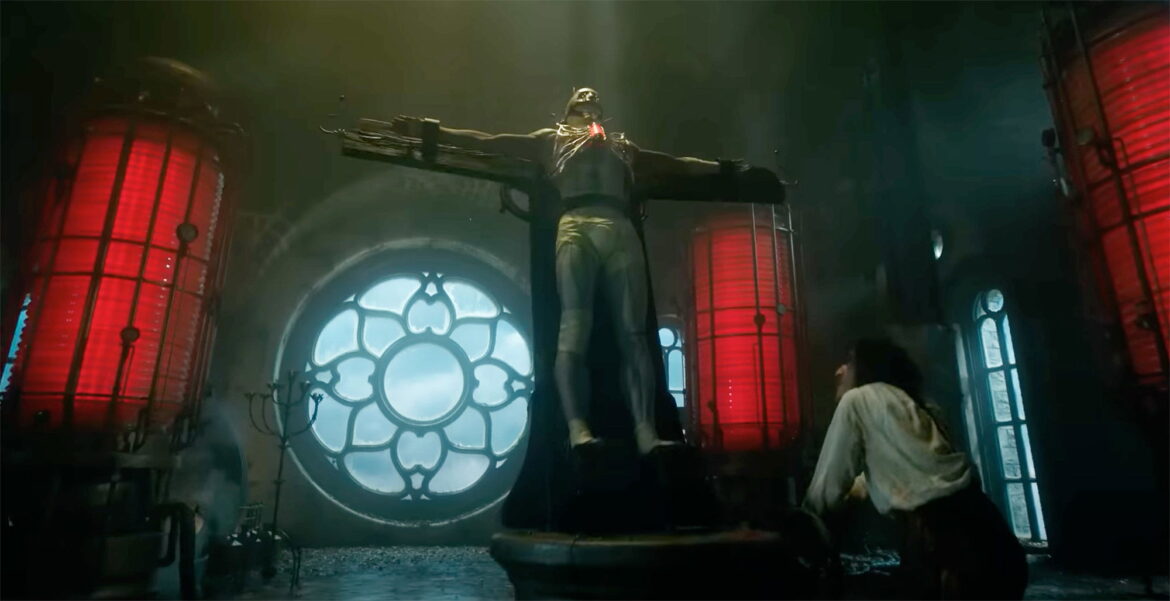
Guillermo del Toro: The two main inspirations were a statue of Saint Bartholomew in Rome, which is made of alabaster, and the lines are anatomically incorrect, but they’re beautiful. They’re almost Art Deco, and the head was designed after the patterns of phrenology that were created as a pseudoscience in the 1800s. There are so many echoes of Christ in the movie with the creature, and we can go through them and raising him, the crown of thorns, the red mantle on his shoulders, the wound on the side when he resurrects after three days, but it’s also Adam expelled, and finding a tree with red fruit, and getting to know pain through that. So all the biblical beauty, for me, tells you this is not a repair job, it’s a newly minted soul. Therefore, the ruining of it is more painful. They’re not ruining something they patched up. They’re ruining something that he minted.

And the pursuit has to be the red of the mother. The color red of the mother pursues Victor through the film and comes back with Elizabeth, the scarf, the gloves, the batteries, the angel, blah, blah, blah. He says he’s interested in life. He’s interested in vanquishing death. The way he treats life is completely cavalier. So the creature needs to be on the same color palette as Elizabeth, and they achieve this sort of translucent alabaster, nicotine oyster grace. And they come together at the end on their wedding night, which I wanted to make the one moment they have together. And the creature becomes, first, a baby, and the reactions are completely clean. And it’s very hard for an actor to do nothing, but he achieves it. Jacob, and then I give him three words: Victor, Elizabeth, friend, and the more he accumulates words, the more he knows pain. And with pain comes questions, and with questions comes the need for answers, and he finally achieves Grace at the end of the film.

He’s brutal with those that are brutal with him, he’s loving with those that are loving, and at the end, he is loving with those that were brutal with him, and accepts the grace of the son. So his performance tracking from Jacob was far from Victor’s part from Oscar, because they have such a beautiful arc together. For that, forgiveness seemed to work. I was betting on one gesture, and that’s the hand grabbing the hand. Oscar found it on the day. The first scene we shot together with the two guys was that scene.

Oscar helped me so beautifully. I wrote it for him, so I would send him pages before anyone, and we found the pentameter, so to speak, the rhythms of the language, so that 90 percent of the dialogue in the movie is completely new. It doesn’t come from the book, but he needed to have the same poetic breath of the book, and we found that.

FRANKENSTEIN, Oscar Isaac as Victor Frankenstein, 2025.  © Netflix / courtesy Everett Collection
‘Frankenstein’©Netflix/Courtesy Everett Collection

Patti Smith: When [Elizabeth] said, “Who hurt you?” I felt like that phrase hovered over the entire film. I felt like it was echoing over and over, even when the brother died, when the brother says, “You are the monster who hurt him.” He has this realization of how no one really hates the other, it’s just human nature or animal nature…The world consciousness, everything.

Guillermo del Toro: Pain is basically inevitable, and because we are mammalian hunter-gatherers, we’re going to necessarily get in the way, because your hope and my hope are never going to fully coincide all the time. And that’s why I wanted to paraphrase the book in giving the creature its own voice and [making] it a fairy tale. And he learns from the animals, the ravens give birth to him. The deer teach him violence. Then the mice adopt him, and then the wolves are the world. The wolves don’t care, but they’re going to hurt you, and that’s a fact. My father was kidnapped in 1998, kept for 72 days. And we had to go through it, and continue functioning, because you cannot stop functioning. You have to stay yourself. And the final image comes from that. When my father was kidnapped in the middle of the kidnapping, I resented the sun. I said, “Why does the sun rise, when I’m in pain?” And then the question became, “Why am I in pain when the sun rises?” You have to give yourself to that grace of a metronome that is much larger than your woes. And if you give in to that metronome, then you find release. So brutality is part of the language that structures reality. I don’t say I’m in favor of it existing. I was so familiar with loss when I was a kid. The familiarity that I have with Mary Shelley, my mother had many miscarriages. I had two siblings younger than me, and whenever she went to the hospital, I thought s”he’s gone, she’s not coming back.” “Who hurt you?” comes from a fairy tale, Oscar Wilde’s “The Selfish Giant.” When he raises the baby Jesus and he says, “Who hurt you?” I love that.

Horror, parable, and fairy tale are closely related. Horror articulates trauma in a way that no other genre does, except fairy tale and parable. And that’s why we are so moved by things that are intangible. Hans Christian Andersen and Oscar Wilde are the masters of pain and beauty. Those are two guys that are as much in touch with the brutality as they are in touch with the beauty. Every other tale can be sadistic or not, and in a more Jungian way. But those two, they are turning to aesthetics, pain, horror, and beauty.

Patti Smith: Well, thank you for being the eternal child. Thank you, Oscar. You’re both awesome.

“Frankenstein” is now streaming on Netflix.

December 13, 2025 0 comments
0 FacebookTwitterPinterestEmail
Is Netflix's 'Frankenstein' Guillermo Del Toro's Last Monster Movie?
TV & Streaming

Is Netflix’s ‘Frankenstein’ Guillermo Del Toro’s Last Monster Movie?

by jummy84 November 9, 2025
written by jummy84

Mary Shelley’s “Frankenstein” is Guillermo del Toro’s bible. When he was 11 years old, the novel and subsequent movies were not only his first love, they were how he processed his relationship with his father, and wrestled with his Catholicism.

“I do believe the book questions God for why are we here and what makes us human,” said del Toro. “So the perfect analogy for me, between me and my father, Catholic dogma, the idea that God sends Jesus to be crucified and experience pain and death. And I always wondered as a kid, ‘Why did he do that?’”

While as a kid the story became how del Toro started articulating his feelings about his Catholicism, as an adult, he built a room in his house dedicated to Shelley, a life-size silicon recreation of the author at her desk. His Los Angeles “living room” is dedicated to the various movie incarnations of Victor Frankenstein’s monster through the years, including eight statues.

"Little Amélie or the Character of Rain"

And as a filmmaker, del Toro’s dream of making “Frankenstein” dated back to his childhood years as an 8mm auteur. The director said all the hyperbole —  life’s quest, North Star, Mount Everest — applies, and while on the podcast, admitted his previous films were some version of him trying to tell the “Frankenstein” tale:

“Cronos”: “A 100 percent [“Frankenstein” inspired]. The scar is a Frankenstein scar on his forehead, he is about eternal life and he welcomes the sun in a translucent skin.”

“Blade II”: “Completely a ‘Frankenstein’ story with the villain Nomack [Luke Goss] and his father who sent him out into the world, and says, ‘Why did you make me like this?’”

“‘Hellboy’ is sort of half Frankenstein.”

“Mimic”:  “The science experiment gone awry, where somebody called the creatures ‘Little Frankensteins.’”

One of the defining characteristics of del Toro’s career has been his movie monsters, the pinnacle of which was his desire to make the most “beautiful” version of Victor Frankenstein’s creation imaginable, so much so that his decades-long collaboration with creature designer Mike Hill was a dress rehearsal.

“If Victor has been thinking about making this thing for 20 years or so, he would make a beautiful thing. He wouldn’t look like an ICU victim,” said Del Toro on how he envisioned the skin of the cobbled together monster. “That I’ve been rehearsing, if you watch my movies, the pale vampire on ‘Blade II,’ the pale vampire on ‘Cronos,’ is the same look I was trying to rehearse for ‘Frankenstein.’”

FRANKENSTEIN, from left: director Guillermo del Toro, Oscar Isaac, on set, 2025. ph: Ken Woroner / © Netflix / courtesy Everett Collection
Guillermo del Toro, Oscar Isaac, on the ‘Frankenstein’ set©Netflix/Courtesy Everett Collection

But when it came time on set for Dr. Victor Frankenstein (Oscar Isaac) to finally assemble del Toro’s dream of the perfect monster (Jacob Elordi), it was the filmmaker who felt unexpectedly transformed.

“Something happened when Victor was doing the anatomy assembly. Oscar and I were really linked, and I looked at him, he looked at me, and without saying anything, we felt something had changed,” said del Toro, who after having time to process the moment, has concluded, “I had dreamt of that scene so long, and all of a sudden we’re shooting it and I felt like something left — it was something to do with monsters, something to do with my filming language. Something changed and I think it’s never felt like that ever.”

While on the podcast, del Toro stated he didn’t know if he was done with movie monsters. He is deep in the process of making a stop motion animated version of Kazuo Ishiguro’s fantasy novel “The Buried Giant,” which does feature some creatures, but said his curiosity for the first time lies away from the movie monsters that have defined his career.

But it’s not just creatures, it’s his filmmaking. The polished, precise, colorful, grand, sweeping soundstage craft he has been perfecting for decades — much like Elordi’s monster — seems to have also culminated on “Frankenstein.” In particular, del Toro talked about how he had been sharpening his mastery of camera movement with his last four films, growing to the point he was shooting almost exclusively on a technocrane, as he learned how to dial into the exact emotional rhythm and feeling of a moment with how his camera moved through space.

“I thought about [camera movement] like a symphony, but I want to do something rougher, I want to try different uses of light on set,” said del Toro. “I’m very intrigued by the ’70s. I’ve never allowed cuts to not breathe, I leave every moment to breathe.”

On the podcast, del Toro talked about wanting to make his version of a grounded, gritty ’70s film, with films by Sidney Lumet, Don Siegel, Alan Pakula, and what he calls the “ugly Paris trilogy” of Roman Polanski (“The Tenant,” “Frantic”), calling his name. In other words, the polar opposite of the filmic language he’s been honing for 30 years.

Del Toro, 61, admitted age does have something to do with wanting to mix it up for the first time — inspired by his friend, the sci-fi body horror master David Cronenberg’s 2005 shift to more grounded thrillers, “A History of Violence” and “Eastern Promises.”

“When I talked to David Cronenberg when he turned 74, he said to me, ‘I’m trying to scare myself into being young. You have to, or it goes away.’ And he did ‘A History of Violence’ — it’s a departure, but it’s not,” said del Toro, referring to the fact Cronenberg’s POV as filmmaker is still recognizable in his later films. “So, I’m sure I will not be unrecognizable,  but it would be pushing myself to something else.”

To hear Guilermo del Toro’s full interview, subscribe to the Filmmaker Toolkit podcast on Apple, Spotify, or your favorite podcast platform.

November 9, 2025 0 comments
0 FacebookTwitterPinterestEmail
Guillermo del Toro’s Frankenstein Review: Best Movie Yet
Music

Guillermo del Toro’s Frankenstein Review: Best Movie Yet

by jummy84 October 16, 2025
written by jummy84

It can’t be said that we, as a culture, are in desperate need of new movies about Dr. Victor Frankenstein and his monster. Literally hundreds of these adaptations have been made since the dawn of the moving image, every year bringing at least one new interpretation of Mary Shelley’s classic tale. In 2022, Rob Zombie remade The Munsters; in 2023, Yorgos Lanthimos brought us the Oscar-winning Poor Things; in 2024, Zelda Williams made her directorial debut with Lisa Frankenstein. And now it’s Guillermo del Toro’s turn.

The Oscar-winning auteur’s big-budget, sumptuously made Frankenstein features Oscar Isaac as the titular scientist, with Jacob Elordi as his creation. Many of the familiar plot beats from Mary Shelley’s original novel are present, including the framing device of Victor Frankenstein telling his story to a ship captain who has led his crew on a potentially doomed expedition to the Arctic. However, del Toro has remixed much of the original plot, keeping many of the characters and details but shifting them around to serve his vision.

Del Toro begins with a prelude in which an injured Victor Frankenstein is found on the Arctic ice and brought to the relative safety of the ship. Then, we get the story of Victor’s less-than-idyllic childhood, leading up to Victor’s attempts to win over the era’s most notable medical minds with his bold ideas about reanimating flesh. They reject his work, but enter Harlander (Christoph Waltz), a rich businessman — and uncle to Elizabeth (Mia Goth), the fiancee of Victor’s brother William (Felix Kammerer) — who’s willing to fund Victor’s experiments.

Related Video

A lot of money and accumulated body parts later, Victor has assembled his “modern Prometheus” and used an electrical storm to bring him to life. Unfortunately, he soon writes the Creature off as a failure after said Creature fails to develop a capacity for language quickly enough, kicking off a series of tragic events that bring the story to its climax.

In a sense, del Toro’s entire career has been building to this moment: Not only has the director talked frequently about his love for the classic Frankenstein in the press, but a parade of painfully human monsters have appeared in past movies like Hellboy, Pan’s Labyrinth, and The Shape of Water. That latter film won four Oscars, including Best Picture and Best Director, a remarkable achievement considering how that movie is most often remembered as “the one where Sally Hawkins has sex with the fish man.” (It is a beautiful movie beyond that fact — or perhaps because of it. What better way to explore the nature of humanity?)

Fueled by that creative passion, not to mention a lot of Netflix’s money, del Toro incorporates some steampunk flair to the action without overdoing it. Really, every period detail on screen is rendered beautifully, from the production design to the costumes — even the effects are downright flawless, with the line between digital and real smoothed other by both brilliant puppetry and CGI. The colors throughout tell a story, red and blue in strict opposition to each other, while del Toro finds just the right balance between too much and too little grotesquerie appropriate to the story.

Frankenstein (Netflix)

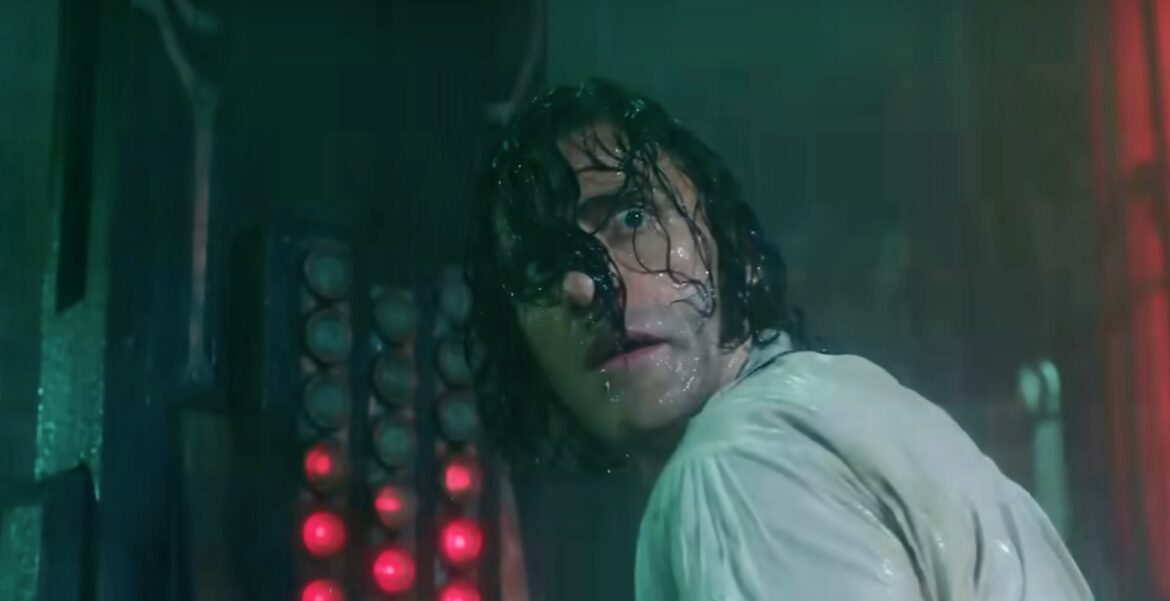
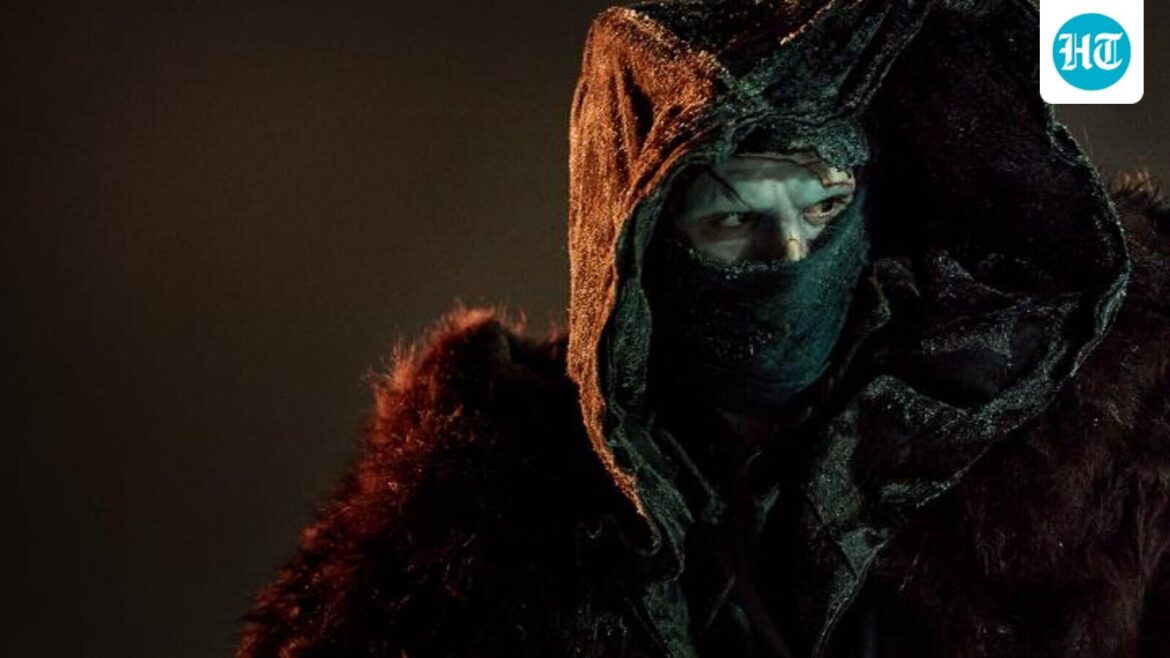
None of these aesthetic achievements hold back the cast, either. Oscar Isaac’s eyes capture the necessary madness, but his performance overall stays so grounded and believable that it feels totally separate from any of the many actors who have played the role in the past, from Peter Cushing to Gene Wilder. And as his creation, Jacob Elordi is pretty genius casting when one considers that full articles have been written about how maybe he’s just too tall. But beyond his height, he brings a level of innocence and hurt that really works here, and the prosthetic makeup doesn’t prevent him from drawing out everything vulnerable and relatable about his character. Netflix is keeping his full transformation under wraps (the press site includes no clear images of the Creature design), but the design beautifully captures both his humanity as well as his otherworldly nature.

The supporting cast pales a bit by comparison, largely due to the way they’re incorporated into del Toro’s remix. Christoph Waltz’s character ends up feeling like more of an afterthought/plot contrivance, while Mia Goth gets plenty of opportunity to distinguish herself as more than just a simpering bride-to-be; that character development unfortunately doesn’t translate into much in the way of active participation in the plot. Still, as complaints go they’re mild enough, especially given the depth of thought del Toro has put into the meat of his approach.

What’s most intriguing about often-adapted texts like Frankenstein is what we can learn from the choices made in the adaptation. As one example, Danny Boyle’s 2011 National Theater production of Frankenstein famously featured Benedict Cumberbatch and Jonny Lee Miller trading off the roles every night, pushing the idea of man and his creation as a duality.

Del Toro’s approach, though, involves exploring this narrative as a story of creation as well as of fathers and sons. Hence the early scenes of the film, as the script gives us everything we need to understand Victor as a character, and thus his subsequent actions, by letting the tragic story of his childhood unfold. Victor inflicts the same sort of upbringing upon his creature that his own abusive father (Charles Dance, steely perfection) gave him, only realizing too late his mistakes.

Meanwhile, on the page, Shelley’s Creature was far more violent than del Toro’s; here, Victor ends up being responsible for far more of the story’s carnage, while the Creature retains more innocence. It doesn’t take too deep a dive into del Toro’s past work to suss out the reasons for why he wants his audience to feel more sympathy towards the monster; that’s always where his sympathies have been. And thanks to the love and care he’s put into telling this story, it’s not at all a challenge for the audience to go there with him.

Fueled by that love, the end result is something beautiful and meaningful — an adaptation where one never questions the need for it to be made. And that in itself is quite an achievement: Robert Eggers’ 2024 adaptation of Nosferatu was also beautifully crafted, but never felt essential. By comparison, there’s such humanity and spirit to what del Toro has done that despite the narrative differences, it genuinely feels like the definitive take on Shelley’s classic tale. He’s said what he wants to say about his beloved Creature, and we are better for it.

Frankenstein escapes the lab for a limited release on Friday, October 17th. It makes its Netflix debut on November 7th. Check out the latest trailer below.

October 16, 2025 0 comments
0 FacebookTwitterPinterestEmail
Frankenstein trailer: Jacob Elordi and Oscar Isaac unleash horror in Guillermo del Toro's vision | Watch
Bollywood

Frankenstein trailer: Jacob Elordi and Oscar Isaac unleash horror in Guillermo del Toro’s vision | Watch

by jummy84 October 1, 2025
written by jummy84

Netflix has unveiled the trailer for Guillermo del Toro’s upcoming directorial, Frankenstein. Following a praiseworthy run at the film festivals, the movie will now be available to stream for the audience in the comfort of their homes. As the trailer for the new horror-thriller film was dropped on October 1, the audience got a deeper glimpse into the characters of Jacob Elordi and Oscar Isaac. Mia Goth will also portray a pivotal role in the film.

Frankenstein trailer introduces Jacob Elordi as resurrected monster: WATCH(X/@Netflix)

Watch Frankenstein trailer

The new Guillermo del Toro directorial is about an egoistic yet brilliant scientist, Victor von Frankenstein, played by Oscar Isaac, who brings a dangerous monster, played by Jacob Elordi, to life during an experiment. His daring move, however, causes a havoc-like situation for the creator, as well as the world. The trailer gives the audience a deeper look into Elordi’s character as he transforms into a resurrected monster.

The official synopsis of the movie reads, “Oscar winner Guillermo del Toro reimagines Mary Shelley’s classic tale of a brilliant scientist and the creature his monstrous ambition brings to life.”

Apart from the visuals, the viewers can also hear multiple voice-overs by the Euphoria star. The movie is an adaptation of the epic Mary Shelley novel, and the filmmaker has been working on it for over a decade.

As for Frankenstein’s run at the film festivals, the director, along with his team, premiered the cinematic piece at the Venice Film Festival, the Telluride Film Festival, and the Toronto Film Festival. The film was announced to be the runner-up at the TIFF for the fest’s coveted People’s Choice Award.

Also read: Guillermo Del Toro’s Frankenstein shakes up Venice Film Festival, gets longest standing ovation so far

Guillermo del Toro reflects on Frankenstein

While speaking to Variety, Guillermo del Toro revealed that Frankenstein, for him, is about the “human spirit.” He said, “The usual discourse of Frankenstein has to do with science gone awry. But for me, it’s about the human spirit. It’s not a cautionary tale: it’s about forgiveness, understanding, and the importance of listening to each other.”

Frankenstein will be available in select theaters on October 17 and to stream on Netflix from November 7.

FAQs

Q1. When will Frankenstein release on Netflix?

Frankenstein will release on Netflix on November 7, 2025.

Q2. Who is the director of Frankenstein?

Frankenstein is directed by Guillermo del Toro.

Q3. Is Jacob Elordi in Frankenstein?

Yes. Jacob Elordi will play the role of the monster in Frankenstein.

October 1, 2025 0 comments
0 FacebookTwitterPinterestEmail
Guillermo del Toro and Yeon Sang-ho Talk Creative Process at Busan
TV & Streaming

Guillermo del Toro and Yeon Sang-ho Talk Creative Process at Busan

by jummy84 September 20, 2025
written by jummy84

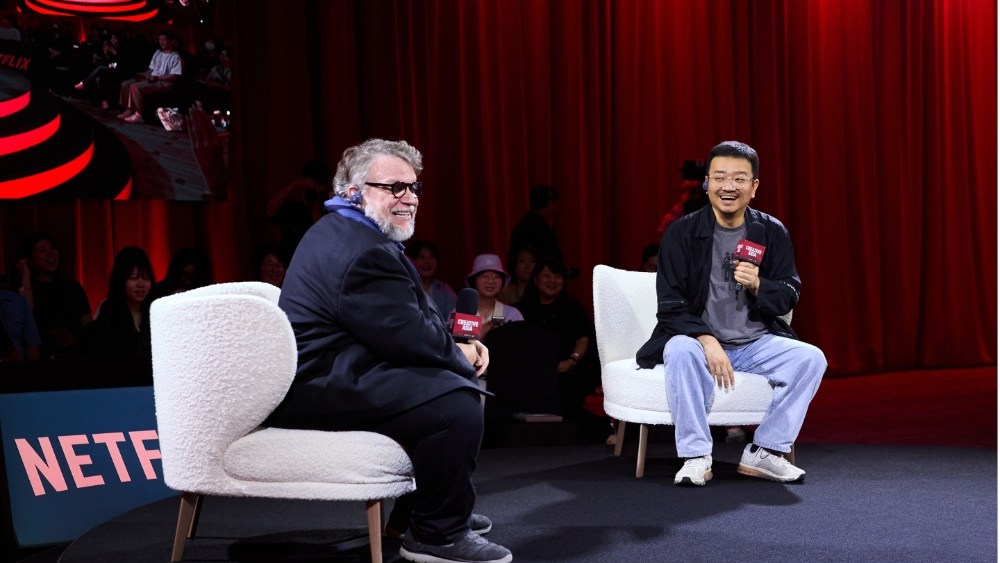
Two of cinema’s most imaginative voices came together at the Busan International Film Festival for an intimate conversation about their creative processes, revealing surprising connections between their work despite being separated by continents and cultures.

Guillermo del Toro and Yeon Sang-ho, both masters of blending the fantastical with deeply human stories, participated in a session at Netflix‘s Creative Asia conference. The conversation offered insights into how both directors approach their craft.

Both filmmakers traced their creative origins to childhood encounters with monsters and Japanese animation. Speaking about his formative years, del Toro said: “I’m not a good outdoorsy guy. I’m an indoor observer, reader, consumer of audiovisual media, storyteller. You know, if there was no movies, they would throw me out of a cliff to die.”

The Mexican filmmaker revealed how Japanese tokusatsu shaped his worldview: “So we watched all the series, not only Osamu Tezuka, but we watched all the Tsuburaya series, Ultraman, Ultraseven, Ultra Q. So I grew up like a Japanese kid.”

Yeon shared similar influences, explaining: “Actually, I think it’s right to say that I get inspiration from everything in life. But when I was young, at that time in Korea, Japanese animation was on TV, and I’m not a good sportsman.”

The conversation turned to their approaches to adapting existing material. On his adaptation of Mary Shelley’s “Frankenstein,” playing at Busan, del Toro detailed his decades-long relationship with the source material: “I saw the movie when I was seven, I read the book when I was 11, and since that time until now, I have made it a point to study… the lives of the Romantics. Percy B. Shelley, Mary Shelley, Lord Byron.”

His philosophy on adaptation is deeply personal: “You study all of that through decades and decades and decades and it becomes part of you. And then what you do is like you sing the same song with your own voice with different arrangements and it feels new because it matters to you.”

Yeon, who is adapting the Japanese manga “The Human Vapor,” expressed surprise at del Toro’s deep knowledge of obscure Japanese works, including the 1960 film “The Human Vapor,” demonstrating the cross-cultural pollination of genre filmmaking.

Praising Yeon’s transition from animation to live-action, del Toro called it “very rare that an animation director transitions so beautifully to live action.” He emphasized animation as “a pure form of art,” particularly stop-motion, which he continues to pursue alongside his live-action work.

Yeon reflected on the different strengths of each medium: “Animation and live-action have somewhat different appeals. In animation, almost all drawing styles exist. You can convey something just through the shape of appearance, which is a really big appeal, and depending on how you make it move, the way emotions are expressed changes a lot, so it has a broader range for conveying emotions. Live-action films definitely have authenticity that comes from the talents that actors possess, so there’s definitely a different kind of delivery power from that.”

He continued: “Since I’m doing a lot of live-action film series now, I have a desire in one corner of my heart to someday make some legendary animation like Osamu Tezuka or works like those I loved so much when I was young. When I work on projects with creatures, there’s somewhat the joy I had when doing animation.”

Both directors shared stories about embracing unexpected moments during production. Recalling the “Train to Busan” production, Yeon shared a specific example: “Originally, since I did animation, I try not to draw as much as possible. But when some explanation is needed, I do draw. The most representative case was when filming ‘Train to Busan’ – there was a scene where zombies were being dragged away in the ending, but that scene didn’t exist originally. We said we should add such a scene, but the staff couldn’t accurately understand what kind of scene it was, so I spent about a day drawing that scene. Amazingly, it’s almost identical to the image that appears in the movie now.”

He also shared another production story: “We had a past scene, so we worked quite hard to do the set dressing. We came after setting it up, but the night before, there was an incredibly heavy rain. It rained and all the mud was washed away, and the floor we had set up became completely muddy. At first, we thought we were unlucky and tried to clean it up, but as we tried to clean it, the look itself matched so well with the past. When such accidents happen, the accident isn’t really an accident but makes the film really special.”

Expanding on this philosophy, del Toro said: “As you age, you learn to, when you’re a young director, you talk a lot. When you are older, you listen a lot. And you know who’s talking all the time? The movie… And if you learn to listen, you make a better movie by realizing that accident is telling you this is what the movie wants to be.”

When asked about maintaining human elements within spectacular set pieces, del Toro emphasized that “everything is drama” regardless of scale. He described filmmaking as “poetry with hardware,” explaining how technical elements like camera movement and editing create emotional impact.

“Film is poetry with hardware,” he said. “You have a dolly track, you have a lens, you have a camera… you’re using hard things to produce symphonic movement.”

Both directors stressed the collaborative nature of their work. Noting that all visual elements work together, del Toro said: “Wardrobe is set design. Set design is cinematography. Cinematography is wardrobe. There’s no difference. You’re creating a single image.”

He shared advice from makeup effects master Dick Smith, quoting Laurence Olivier: “When you’re an actor in a rain scene, let the rain do some of the acting for you.” This philosophy extends to every element of production, where “everything is acting.”

The conversation touched on handling negative criticism. Yeon offered his perspective: “Actually… I feel what kind of thoughts critics have about certain works. I feel it, and sometimes there might be a gap between that person and me. When there’s a gap, I try to respect and understand it enough, but it doesn’t have a big influence on my work.”

Meanwhile, del Toro revealed he no longer reads reviews, positive or negative: “If you believe the good ones, you have to believe the bad ones. And I don’t want to.”

He emphasized depth of connection over breadth of audience, sharing how Terry Gilliam’s “Brazil” transformed him despite playing to an empty theater: “It doesn’t matter how many people liked it or not. It changed my life.”

Addressing the current industry landscape, Yeon drew historical parallels: “I think this way. Since I did animation, those who really like animation will know, but there used to be something called videodeck. When videodeck first started to emerge, a genre called OVA (Original Video Animation) began to appear in Japan.” He noted that while streaming offers global simultaneous release, theatrical films have different timing across countries and provide different depths and delivery methods, making them “completely different” experiences.

Focusing on the “size of ideas” rather than screen size, del Toro noted that content must work effectively in both home and theater environments.

The session concluded with advice for first-time directors. Offering a marriage metaphor, del Toro said: “Making a movie is not a date, it’s a marriage. So don’t marry that easy. Marry people you really give a fuck about.”

September 20, 2025 0 comments
0 FacebookTwitterPinterestEmail
Guillermo del Toro insists his version of Frankenstein is not a warning about AI
Celebrity News

Guillermo del Toro insists his version of Frankenstein is not a warning about AI

by jummy84 August 31, 2025
written by jummy84

31 August 2025

Guillermo del Toro insists his forthcoming film Frankenstein is not a warning about artificial intelligence.

Guillermo del Toro insists his forthcoming film Frankenstein is not a warning about artificial intelligence

The 60-year-old director – whose earlier work The Shape of Water won the Golden Lion at Venice in 2017 – addressed questions about AI at the film’s official press conference on Saturday (30.08.25) afternoon ahead of its world premiere, when his $120 million monster movie, starring Jacob Elordi and Oscar Isaac will debut in competition for the festival’s top prize.

Revealing his new adaptation of Mary Shelley’s novel is about humanity, imperfection and power rather than technology, Guillermo said: “It’s not intended as a metaphor for that (the dangers of AI.)

“We live in a time of terror and intimidation, certainly.

“And there’s no more urgent task than to remain, in a time where everything is pushing towards a bipolar understanding of our humanity.

“The movie tries to show imperfect characters and the right we have to remain imperfect, and the right we have to understand each other under the most oppressive circumstances.”

He added with a smile: “I’m not afraid of artificial intelligence. I’m afraid of natural stupidity.”

In the new version of Frankenstein, Jacob plays the creature locked in conflict with his creator Victor Frankenstein, played by Oscar.

Guillermo added he imagined the film not as a conventional horror story but as a layered family drama. He said: “I’ve been following the creature since I was a kid.

“I waited for the movie to be done in the right conditions, both creatively in terms of achieving the scope to make it different, and to make it at a scale that you could reconstruct the whole world. I’m in postpartum depression now that it’s finished.”

Jacob was asked at the same event who in society he views as monstrous.

He answered: “Men in suits.”

Guillermo interjected: “Very well tailored (suits.)”

Oscar was also at the event and recalled his first conversations with Guillermo about taking the role of Victor.

He said: “I can’t believe that I’m here right now. I can’t believe we got to this place from two years ago, sitting at (Guillermo’s) table eating Cuban pork and talking about our fathers and our lives, to him saying, ‘I want you to be Victor,’ then not really being sure if it was true or if I was just dreaming. It just seemed like such a pinnacle.”


August 31, 2025 0 comments
0 FacebookTwitterPinterestEmail
Venice 2025: Guillermo del Toro's 'Frankenstein' is All Cinema Can Be
Hollywood

Venice 2025: Guillermo del Toro’s ‘Frankenstein’ is All Cinema Can Be

by jummy84 August 31, 2025
written by jummy84

Venice 2025: Guillermo del Toro’s ‘Frankenstein’ is All Cinema Can Be

by Alex Billington
August 30, 2025

“In seeking life, I created death.” The timeless story of Dr. Frankenstein and his Monster returns to the big screen again in this brand new version of Frankenstein. For his 13th movie, Mexican maestro Guillermo del Toro adapts Mary Shelley’s 1818 novel of the same name and brings his vision of this tale to screens – with a gothic, macabre, brutal, and mesmerizing take on this well-known story. Much like del Toro’s version of the classic story of Pinocchio from a few years ago, he infuses this Frankenstein with so many unique and intriguing ideas, expanding upon the original story and adding depth into every single frame of it. I LOVED this movie. Right from the start, with an action-packed opening scene set on a Danish ship trapped in ice, I knew we were in for a magnificent tale of madness and this delivers on that promise. Part creature feature, part emotional exploration of what makes us human, part horror, part love story, it’s a mash-up of all of del Toro’s favorite things in one spectacular cinematic creation. Yes it is yet another Netflix movie destined for streaming but I don’t care, it’s beautiful creation no matter what. I’m especially lucky to have had a chance to view it on the big screen and enjoy every last second of it as a thrilling, heart-pounding, vivid experience.

Everyone already knows that Guillermo del Toro is a master storyteller & cinema maven. He’s won plenty of Oscars already, he’s even won the Golden Lion at the Venice Film Festival before (for The Shape of Water in 2017). He is still as voracious and masterful as ever and Frankenstein is one of his best. Del Toro is also credited as the sole writer on this adapting Mary Shelley’s original story about Dr. Victor Frankenstein and his Monster creation. He sticks closer to what is in the book and does not attempt to reinvent or re-imagine this story in any new way, which is fine, he doesn’t need to as it’s still a riveting story to tell especially with his vision. What he does do is embellish in the visuals and the emotions – letting all the extraordinary sets & cinematography become characters of their own. Del Toro’s Frankenstein tells the original 1800s version of the story following Victor, played with exceptional verve by Oscar Isaac, as he grows up through a troubled childhood to become a mad scientist / surgeon hellbent on figuring out how to stop death. This ultimately leads him to exploring the uncanny act of creating life from death – and his greatest experiment involves putting together a body from various parts and re-animating it with the electricity captured from lightning.

Goodness it is always so refreshing & thrilling when a filmmaker actually has a VISION for their work. Not just someone shooting what’s in the script and getting it on screen in the most generic way. A real visionary filmmaker has a complete focus on the details & every last part of the film so that that there’s real meaning and depth in every shot. Everything matters. This is the true glory of fantastic cinema. Guillermo del Toro is one of the greatest filmmakers of our times whose vision remains entirely singular & cinematically exciting. This story obviously means a great deal to him and it feels like his life’s work to adapt the classic tale of The Monster with his distinct flourishes. He knocked this one out of the park. It’s everything that cinema should be – beautiful, thrilling, engaging, emotional, satisfying. The score, sets, cinematography, performances are all ravishing. I am buzzing thinking about and writing about this movie. There’s a propulsive, powerful drive del Toro’s storytelling that pulls viewers in and keeps them hooked. This drive is also what keeps the movie’s pacing lurching forward – it’s nearly 2 & 1/2 hours long but there is a lot to get through, from his childhood, to the birth of The Monster, to the violent aftermath, to the Monster’s own story when it all comes full circle.

My favorite segment of the movie is in the second half when The Monster himself, played by Jacob Elordi, finally gets to tell his side of the story. This seems to be where other reviewers have been getting frustrated as it humanizes The Monster in a way that gives him more depth than the classic version of this character presented iconically by Boris Karloff. It’s actually quite stirring to switch to this side and learn about what makes us human – which is an important aspect in the emotional core of del Toro’s take on Mary Shelley’s tale. Guillermo is often at his best when he lets the wise old man teach us about life – one of my favorites in his filmography is John Hurt as “Broom” in the first Hellboy. In this movie we get British character actor David Bradley as the Blind Man. In fact, all the performances are tremendous. Finally we get Oscar Isaac digging into a role again (it has been a bit), giving it all his all, confronting his darkness and presenting a well-rounded take on this character. Del Toro said during the press conference that this Frankenstein movie is about the various flaws in all people and how these flaws, these imperfections, are part of humanity, part of our existence, part of what makes us all unique. Isaac embraces that uniqueness ever so (ahem) perfectly.

I can’t wait to watch it again. Del Toro’s Frankenstein is a cinematic triumph. It represents his growth as a filmmaker and exemplifies his storytelling prowess. Much like Hayao Miyazaki’s masterpieces, I can sense every storyboard, every decision that led to every single shot working as wonderfully as it does on screen. The cinematography by DP Dan Laustsen is to die for – and be brought back to life by because it’s awe-inspiring to look at all the time. Light pouring in from everywhere, lush colors, vivid details. It’s not exactly realistic, but neither is this story, it’s a fantastical tale of darkness. Maybe this fancy, showy cinematography style won’t work for everyone, but I loved everything about it. As an example of the attention to detail, the way Del Toro makes sure that glowing orange embers float away from The Monster’s robes after he is shot represents how this kind of tiny, usually unnoticeable detail is part of the magic of visionary filmmaking. Frankenstein isn’t a completely new reinvention but is now the best version of Victor & The Monster’s story made for the screen. An instant favorite. This is why I go to the movies – for this kind of enchanting cinema.

Alex’s Venice 2025 Rating: 9 out of 10
Follow Alex on Twitter – @firstshowing / Or Letterboxd – @firstshowing

Share

Find more posts in: Review, Venice 25

August 31, 2025 0 comments
0 FacebookTwitterPinterestEmail
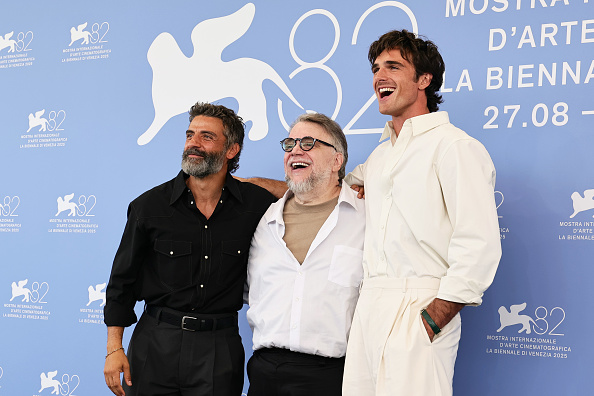
Oscar Isaac, Guillermo del Toro and Jacob Elordi
TV & Streaming

Guillermo Del Toro On ‘Frankenstein’, Netflix, Theatrical And AI

by jummy84 August 30, 2025
written by jummy84

Guillermo del Toro‘s adaptation of Mary Shelley’s Frankenstein launches at the Venice Film Festival today and the filmmaker, cast and backers Netflix were at the film’s Lido press conference.

Oscar Isaac stars as Dr. Victor Frankenstein, the brilliant but egotistical scientist who brings a creature (Jacob Elordi) to life in a monstrous experiment that ultimately leads to the undoing of both the creator and his tragic creation.

Oscar winner Del Toro was asked by a journalist — sitting a row back from Netflix co-CEO Ted Sarandos — whether he would have liked more than a three-week theatrical run for his big-budget spectacle?

Del Toro quipped initially: “Yeah. I mean, look, look at my size. I always want more of everything,” before adding of the $120M movie: “To me, the battle we are going to fight in telling stories is on two fronts, obviously the size of the screen, but the size of the ideas is very important. The size of the ambition. Can we reclaim scale, and reclaim scale of ideas. It’s a dialogue, and it’s a very fluid dialogue. I’m very happy. You never know what’s going to happen….To reach more than 300 million viewers, you take the opportunity and the challenge to make a movie that can transform itself and that evokes cinema.”

Del Toro said of his inspiration for making the movie: “It was a religion for me. Since I was a kid — I was raised very Catholic — I never quite understood the saints. And then when I saw Boris Karloff on the screen, I understood what a saint or a messiah looked like. So I’ve been following the creature since I was a kid, and I always waited for the movie to be done in the right conditions, both creatively in terms of achieving the scope that it needed for me to make it different, to make it at a scale that you could reconstruct the whole world.”

Del Toro was asked about the danger AI and technology poses to humanity: “We live in a time of terror and intimidation, certainly. And the answer, which art is part of, is love. For me, forgiveness is part of love and so many other things. And the central question in the novel from the beginning is, what is it to be human? What makes us human? And there’s no more urgent task than to remain human in a time where everything is pushing towards bipolar understanding of our humanity…I think that the movie tries to show imperfect characters and the right we have to remain imperfect, and the right we have to understand each other under the most oppressive of circumstances. It is very biographical to me, but it is, I think, biographical for anyone that tries to preserve their soul in the times we’re living in. And to me, artificial intelligence I’m not afraid of; I’m afraid of natural stupidity, which is much more abundant.”

Oscar Isaac described the journey he had been on since meeting Del Toro about the part two years prior: “I can’t believe that I’m here right now. I can’t believe we got to this place from two years ago, sitting at your table [looking at Del Toro] eating Cuban pork; just talking about our fathers and our life too…It was like a fusion. I just hooked myself into Guillermo, and we flung ourselves down the well.”

Elordi said he poured his whole being into the role of the monster: “It was a vessel that I could put every part of myself into. From the moment that I was born to being here with you today, all of it is, is in that character. And in so many ways, the the creature that’s on screen in this movie is the sort of purest form of myself. He’s more me than than I am.”

At Netflix’s Tudum event earlier this year, Del Toro called the film “the culmination of a journey that has occupied most of my life,” adding, “Monsters have become my personal belief system. There are strands of Frankenstein through my films.”

Coming off his third Oscar win for Guillermo del Toro’s Pinocchio, another literary adaptation for Netflix, Del Toro’s Frankenstein also stars Mia Goth (X), Felix Kammerer (All Quiet on the Western Front), Lars Mikkelsen (The Witcher), David Bradley (Guillermo del Toro’s Pinocchio), Christian Convery (Sweet Tooth), Charles Dance (Game of Thrones) and Christoph Waltz (Inglourious Basterds).

Del Toro directed from his own script and produced alongside J. Miles Dale and Scott Stuber.

August 30, 2025 0 comments
0 FacebookTwitterPinterestEmail

Social Connect

Facebook Twitter Instagram Pinterest Youtube Snapchat

Recent Posts

  • 2009 feels like a whole other world away

  • Watch Ariana Grande and Jimmy Fallon Perform a History of Duets

  • Spotify’s Joe Hadley Talks ARIA Awards Partnership

  • Nick Offerman Announces 2026 “Big Woodchuck” Book Tour Dates

  • Snapped: Above & Beyond (A Photo Essay)

Newsletter

Subscribe my Newsletter for new blog posts, tips & new photos. Let's stay updated!

Categories

  • Bollywood (1,929)
  • Celebrity News (2,000)
  • Events (267)
  • Fashion (1,605)
  • Hollywood (1,020)
  • Lifestyle (890)
  • Music (2,002)
  • TV & Streaming (1,857)

Recent Posts

  • Shushu/Tong Shanghai Fall 2026 Collection

  • Here’s What Model Taylor Hill Is Buying Now

  • Julietta Is Hiring An Assistant Office Coordinator In Dumbo, Brooklyn, NY (In-Office)

Editors’ Picks

  • 2009 feels like a whole other world away

  • Watch Ariana Grande and Jimmy Fallon Perform a History of Duets

  • Spotify’s Joe Hadley Talks ARIA Awards Partnership

Latest Style

  • ‘Steal This Story, Please’ Review: Amy Goodman Documentary

  • Hulu Passes on La LA Anthony, Kim Kardashian Pilot ‘Group Chat’

  • Hannah Einbinder Slams AI Creators As “Losers”

  • Facebook
  • Twitter

@2020 - celebpeek. Designed and Developed by Pro


Back To Top
celebpeek
  • Home
  • Bollywood
  • Hollywood
  • Lifestyle
  • Fashion
celebpeek
  • Music
  • Celebrity News
  • Events
  • TV & Streaming