On April Fool’s Day, Skrillex surprise-released his album Fuck U Skrillex You Think Ur Andy Warhol But Ur Not!! , which recently earned him Grammy nominations for Best Dance/Electronic Album and Best Dance/Electronic Recording (for “Voltage”). He dropped a new single called “Fuze” with ISOxo last month, and today he’s got another new one. Enticingly, the hyperactive and high-octane “hit me where it hurts” pairs our boy Sonny with longtime collaborator Dylan Brady (also of 100 Gecs fame) and none other than Caroline Polachek, whose vocals from Pang track “Hit Me Where It Hurts” are threaded throughout. Listen below.
Tag:
Dylan
Bob Dylan: Through the Open Window: The Bootleg Series Vol. 18 Album Review
by jummy84
written by jummy84
In one of the finest moments of sequencing on this set, the next song up is “Boots of Spanish Leather,” an outtake from the Freewheelin’ sessions with Tom Wilson (Dylan would eventually re-record it for The Times They Are A-Changin’ in 1964). The contrast between the rousing chorus of “Blowin’ in the Wind” and the stillness of “Boots” is jarring enough to bring out new aspects of each song, with “Boots” sounding even lonelier, even more despairing. Written during a trip to Italy as his relationship with Suze Rotolo appeared to be crumbling, it sounds intimate and unguarded, intensely private rather than public; he needs a quiet moment to himself in order to rouse an audience with his friends.
Though known in folk circles, Dylan was still struggling to find a larger audience and break through to the pop market. He signed with Columbia in late 1961, which is roughly where Act II begins. He recorded his self-titled debut with John Hammond producing, but it was not the breakout anyone expected. Here’s where you might want to place your bookmark and give that album another listen, just to get a feel for how this young man presented himself to the world; unexpectedly, Bob Dylan might work better as an addendum to this bulky novel than as a standalone release. Even Dylan considered it a failure, both commercially and creatively, and he was moving so fast that these traditional tunes and talking blues were old news by the time it was released.
His follow-up, The Freewheelin’ Bob Dylan, did not come easy. He worked through a series of aimless sessions over several months, finally piecemealing an album that wasn’t too dissimilar from his debut. At the last minute Columbia decided that “Talkin’ John Birch Society Paranoid Blues” was potentially libelous and removed it from the album. Dylan was irate, but it worked out in his favor, as it gave him a chance to quickly record several new songs and redo about half the album, including “Girl from the North Country” and “Masters of War”—two of his best compositions from the era. The new tracklist sharpened his Cold War fears while also introducing more intimate struggles, in particular his insecurities about Rotolo. The album toggles gracefully between the public and the private, each lending weight to the other, which contributes to its status as Dylan’s breakthrough as well as just one of the best folk albums ever made.
Today’s Dylan Dreyer and Husband Brian Fichera Break Up After 12 Years of Marriage
Dylan Dreyer is weathering a new family dynamic.
Months after sharing she and Brian Fichera were divorcing, the Today meteorologist detailed how the breakdown of their marriage ultimately gave them the gift of co-parenting their children Cal, 8, Ollie, 5, and Rusty, 4.
“Everybody has their reasons for what leads to a separation or divorce right?” Dylan told Jenna Bush Hager as she cohosted Today with Jenna & Friends on Nov. 5. “Like that’s another story with a lot of wine for another time. But either way, we’ve gotten to this place. And there’s something freeing for Brian and I, where whatever reasons, whatever broke your marriage, you could either fix it if you can, and ideally you would. Or you accept that it’s broken, and you take this new step forward.”
“There was something we couldn’t fix,” she continued. “So now we have reframed our relationship that we are no longer husband and wife. And all those things that were broken, I don’t hold them against you, because we’ve accepted they’re broken that’s why we separated. So, now let’s move forward as friends.”
W
What did you hear? Really. Blonde on Blonde’s nasally whine or Nashville Skyline’s country croon? Which one is Bob Dylan’s real voice? Despite, or perhaps because of, Dylan’s vocal masks, his voice rings true. Or, according to Steven Rings, author of What Did You Hear? The Music of Bob Dylan, you believe it does. Yes, Dylan is an impersonator, weaving lies to tell truths, bolstered through imperfections, changing from nothing to one—a prestidigitator. You’re believing his every word.
Steven Rings, an Associate Professor of Music and the Humanities at the University of Chicago, has written a highly engaging and accessible book in What Did You Hear?, without compromising depth and theory. Its main proposal is that Dylan’s sonic imperfections are key to understanding his songs and their impact, offering a refreshing and new framework through which to view Dylan’s music.
Also, it is a framework that is seemingly close to Bob Dylan’s modus operandi, in which the emotional weight of a song—for example, “No More Auction Block”, where Dylan’s pathos-laden moans and cyclical guitar strumming contain the cruel fate that awaited thousands of American slaves—matters more than technical perfection. Additionally, in 1979, Dylan saw humanity’s imperfection revealed through God’s light. “Talk about perfection, I ain’t never seen none,” Dylan fulminates in “Ain’t No Man Righteous, No Not One”.
The Carver-esque book title playfully asks, “What Did You Hear?” It seems simple. Obvious. Intrusive. Once you read What Did You Hear?, though, you realize that it is a question with a purpose: to investigate what we are hearing. With an adept ear and an in-depth understanding of music theory, Rings helps readers understand Dylan the performer, rather than the lyricist or songwriter. In other words, it isn’t about Dylan’s compositions but rather a breakdown of how he performs them, live or in the studio.
Bob Dylan’s Perfect Imperfection
Have you ever wondered about Dylan’s upsinging in the wee small hours? How does the music inform the pronunciation of a lyric? No? I understand—you have a life. However, for those of us who don’t, music theorist Rings provides these answers. Furthermore, Rings showcases Dylan’s multifaceted techniques on various instruments, including voice, guitar, harmonica, and piano, all of which are explained without being overly saturated with music theory, and thus potentially denuding Dylan’s music of its poetic appeal.
Helpfully, especially for a book concerned with sound, Rings has a website, which includes all of the book’s audio and video examples. For certain, this is useful, though the book works just as well without referring to the audio examples.
What Did You Hear? is a welcome and indispensable addition to Dylan scholarship—not an easy task, due to the abundance of books written on the elusive subject. What makes this different, though, is that it puts Dylan as a performer first and foremost, with a particular emphasis on his live performances.
In the introduction, Rings postulates that there has been little written about Bob Dylan’s music; instead, the focus has either been on Dylan’s lyrics or him as a cultural/political figure. However, when Rings creates an inventory of books, with its focus primarily on Dylan’s music, it does not cite Todd Harvey’s 2001 book, The Formative Dylan: Transmission and Stylistic Influences, 1961-1963, which seems worthy of inclusion (Harvey is cited on p. 267 and in the references).
Further in the introduction, Rings posits that, in the early 1960s, Bob Dylan blended African American influences with white folk musicians, such as Woody Guthrie, which is, of course, correct. However, what is incorrect, as Rings implies, is that the two sources of Dylan’s influences were separate. Although influenced by white musicians, such as the Carter Family and Jimmie Rodgers, Guthrie was also influenced by African American musicians: Blind Lemon Jefferson and T-Bone Walker; the latter inspired Guthrie’s vocal phrasing.
Apart from the above-mentioned oversights, What Did You Hear? is scrupulously detailed and exhaustively researched. One of the central premises of What Did You Hear? is that, despite many vocal and musical changes, as well as various personae, Dylan always sounds like himself. To a certain extent, this is a novel idea, as Dylan is often portrayed as a shapeshifting figure with each iteration a stranger to the last.
Yet, it makes sense that there would be distinguishable characteristics of Bob Dylan in each of his transformations; this is not unlike what Dylan writes about Dion DiMucci in his 2022 book The Philosophy of Modern Song (a text filled with self-referential remarks), “Dion DiMucci evolved throughout his career, changing outwardly but maintaining recognizable characteristics across every iteration.”
As Rings writes, “…the critical commonplace that Dylan’s voice is merely a series of ‘masks,’ with no persisting core voice. But any fan also knows that one can always perceive Dylan within or behind the mask.” Also, Rings establishes that the quiddity of Bob Dylan is best personified when the singer-songwriter imitates other singers. Put differently, Dylan, paradoxically, becomes more identifiable himself when adopting different personae and masks. This is just one of the numerous astute observations Rings makes in What Did You Hear?
The most interesting section of What Did You Hear? is Part 1: Voicing, especially chapter four. There Rings delineates a spectrum between speech and song, in which he lists five different nodal points: metered speech (e.g., “Frankie Lee and Judas Priest”); syllable-emphatic style (e.g., “Memphis Blues Again”); chant (e.g., “Subterranean Homesick Blues”); contour-inventive style (e.g., “Jokerman”); conventional melody (e.g., “Make You Feel My Love”). In his syllable-emphatic (Rings’ coinage) delivery, Dylan seizes on syllables that we would typically accent, but exaggerates the contrast to the point of mannerism. As Rings writes, “we hear the contours of everyday speech, but in a funhouse mirror.”
Rings addresses another misconception that Dylan’s “true” voice is raspy. As stated by Rings and others, Dylan’s “Nashville Country voice” can be heard in the bootleg recorded at the apartment of Karen Wallace in St. Paul, Minnesota, in May 1960, which, obviously, precedes his rough-hewn folk voice. Thus, what is Dylan’s true voice?
As it is known, Bob Dylan was a rock ‘n’ roller before he became a folk artist, but the two are not mutually exclusive, as Rings points out. The influence of rock ‘n’ roll can be found in his folk period, and vice versa.
As Rings suggests, Dylan’s pedal-to-the-metal acoustic guitar strumming during his folk period was like Buddy Holly, while he was strumming like a folkie when he played the electric guitar in live performances in 1966, which Robbie Robertson disliked. At the Newport Folk Festival, when Dylan went electric, he barely played the electric guitar; it was a symbolic move. Instead, it was Mike Bloomfield, the primary guitarist of Howlin’ Wolf, who made his guitar bleed and scream like Willie Johnson.
One of the main ideas in What Did You Hear is “flaw imperfection” and “change imperfection”. Essentially, the former refers to an imperfection as a flaw, although it can be purposefully incorporated in old-time music and bluegrass. In contrast, the latter is the difference that arises from repetition, such as when Dylan performs live. Or, as Rings put simply, “he repeats and he differs”.
What Did You Hear? is the musical and vocally equivalent of Christopher Ricks’ book Dylan’s Visions of Sin (2004). Whereas Ricks gave a close reading of Dylan’s lyrics and contextualized them in a literary tradition, mostly in Elizabethan and Romanticism literature, and modernism (cue, T. S. Eliot), Rings exemplifies how Dylan’s music and vocals work in the context of predecessors within different genres: folk, blues, and rock ‘n’ roll.
There has been a paradigm shift in Dylan scholarship aimed at bridging the gap between academia and popular writing, as seen in historian Timothy Hampton’s Bob Dylan: How the Songs Work (2019), one of the best books ever written on Dylan. Indeed, What Did You Hear? showcases that Rings has a sharp mind, abetted by his generosity of spirit. He never overexplains or treats the reader like a fool; he makes his points with a deftness.
There are moments in What Did You Hear? when Rings lets go of formality and becomes a writer with a gut-punch swagger. For example: “There is still some wobble in the voice, but the overall tone is one of fuck-you confidence, of definitely claiming an identity in the face of bourgeois reproach. Instead of balled fists, a middle finger.”
These sections are surprising as they are refreshing; they punctuate the text with a humanity, and display a writer who takes his ideas—not himself—seriously. (For What Did You Hear?, Rings hasn’t thankfully adopted academic writing, which is often as lifeless as a mortuary, leaving you feel as dead as the body of the text, and wishing that you were dead, as at least then you wouldn’t have to read desiccated prose.)
There is a scintillating idea on p.186, where Rings links Dylan’s harmonica playing to the accordion, after reading a quote by Dylan, in which he said he plays the harmonica like an accordion. Rings traces it to Robert Zimmerman’s childhood in Hibbing, when, in the 1950s, polka bands performed in taverns on Saturday nights. However, I wished Rings had expanded on the point (I like the idea; I’m already half-convinced), and listed examples of polka artists/bands Zimmerman would have heard—Six Fat Dutchmen, Whoopee John Wilfahrt, and Harold Loeffelmacher—and linked them to his harmonica playing, if, of course, the theory holds up.
In the postscript, Rings interestingly states that Bob Dylan’s sounds approach a second-order perfection in their fidelity to imperfect life, an emotional truth which is perhaps a kind of perfection. Indeed, What Did You Hear? carries a lot of emotional truth. Is What Did You Hear a perfect book? I‘ve never read one, and, like listening to Bob Dylan’s imperfect voice, I don’t expect that I ever will.
‘Dancing With the Stars’ Dylan Efron Suffers Injury — Will He Dance on Halloween Night?
by jummy84
written by jummy84
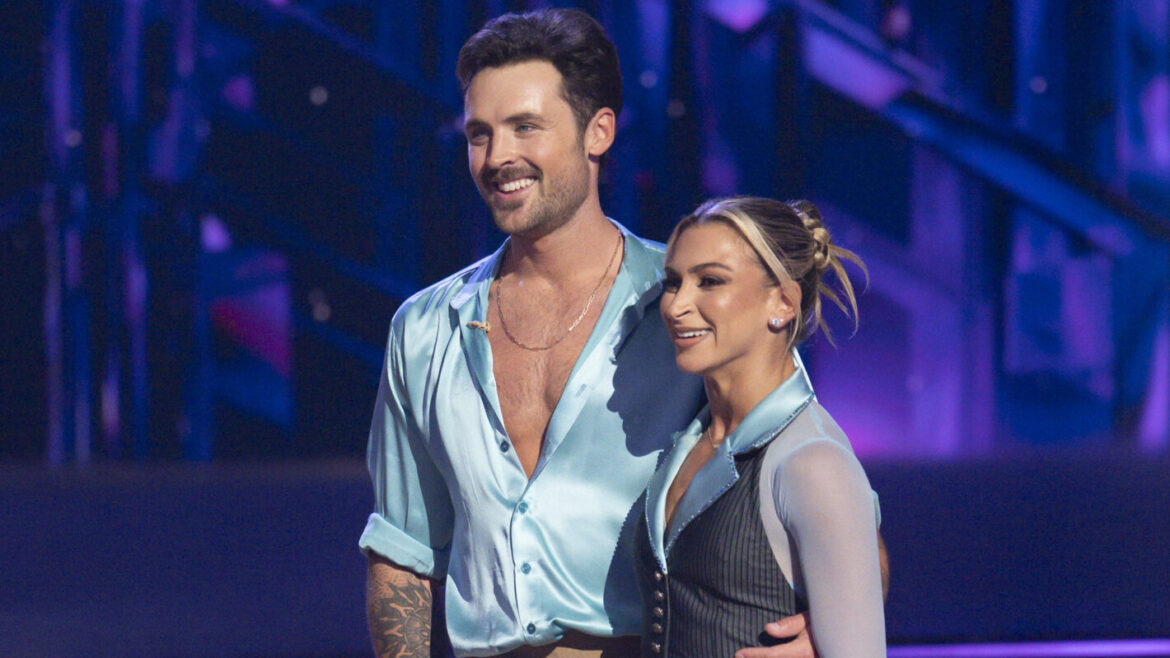
Three days before he’s due to hit the dance floor again, Dylan Efron has been injured. The Season 34 Dancing With the Stars contestant shared an unexpected update with fans on Saturday, October 25, along with photos from his visit to the doctor.
“Broke my nose, but dont need it to dance 🕺,” he captioned an Instagram post, confirming that he’ll still be able to dance with his pro partner, Daniella Karagach, during Tuesday’s live show. He also thanked Karagach, her husband, Pasha Pashkov, and Pashkov’s Season 34 partner, Danielle Fishel, for supporting him amid the setback.
“I’m seriously all good- but I’ll never forget the way Dani, Pasha and Danielle WOULDN’T leave me side when it happened, warms my heart to have friends like them ❤️,” he concluded.
The comments section was filled with supportive messages. “I hope you’re ok brother. sending you love,” Season 34 pro Mark Ballas wrote, while Valentin Chmerkovskiy said, “Oh em gee.” Emma Slater added, “WHAT?!! @dylanefron hope you’re ok!” to which Efron replied, ” all good 🙂 already back and practicing.”
Of course, Efron’s pal from The Traitors, Rob Mariano, also weighed in, writing, “Keep him in line @daniellakaragach ❤️.”
Efron and the other eight remaining contestants will perform again on October 28 for Halloween Night. This week, Efron and Karagach are dancing a Viennese waltz to “Can’t Help Falling in Love (Dark)” by Tommee Profitt & Brooke.
So far, Week 5 was Efron’s standout week. He danced a contemporary routine that he dedicated to his younger sister, Olivia, and earned a 36 out of 40 from the judges. The high score put him on top of the leaderboard for the first time.
During Week 6, Efron was more towards the bottom of the pack, scoring a 32 out of 40 for his rumba on Wicked night. The competition is heating up now, so he and everyone else will have to bring it to stay in the competition.
Dancing With the Stars, Season 34, Tuesdays, 8/7c, ABC
Break a leg? Er, something like that.
Ahead of Dancing with the Stars’ Halloween week, Dylan Efron revealed he broke his nose during a rehearsal with partner Daniella Karagach.
“We were trying a new move and I took an elbow right here,” he said, pointing to his face in an Oct. 25 Instagram video taken from the hospital. “And, it made a really loud crack. So, not how I wanted to end the rehearsal day, but we’ll be back dancing tomorrow.”
After all, he’s not about to tap out when the Mirrorball is in sight.
“I’m seriously all good,” the 33-year-old insisted in the caption before shouting on Daniella’s husband Pasha Pashkov and his partner Danielle Fisher. “I’ll never forget the way Dani, Pasha and Danielle WOULDN’T leave me [sic] side when it happened, warms my heart to have friends like them.”
In fact, he’s got a whole dance troupe cheering him on.
View gallery
Dylan Sprouse and Barbara Palvin are happily married, and now she’s having a major Victoria’s Secret moment. The Hungarian model (and former VS Angel) returned to the 2025 Victoria’s Secret Fashion Show in Brooklyn on October 15, strutting the runway despite a recently broken foot, as Dylan proudly revealed on the pink carpet. Earlier this year, Barbara also shared that surgery for endometriosis helped her feel “like herself again.”
The couple, who wed in 2023 after years of low-key romance, continue to be fan favorites for their playful support of each other, with Dylan cheering her on as VS confirmed her comeback for the show. If you missed it, the 2025 show streamed live on Prime Video and the brand’s socials.
Find out everything you need to know about Dylan’s wife here.
Barbara Is A Model
Like her husband, Barbara is also in the entertainment business, but a very different side of it. While Dylan is an actor, she’s a model! She’s currently represented by IMG Models Worldwide, according to her Instagram bio. She’s appeared in a bunch of different fashion publications, like Vogue, Glamour, Elle, and more. She’s also appeared in campaigns for H&M, Armani Exchange, and Victoria’s Secret. She became a Victoria’s Secret Angel in 2019 and walked the runway at the 2024 and 2025 Victoria’s Secret Fashion Show. She has also modeled in fashion shows for major designers such as Louis Vuitton, Vivienne Westwood and others.
She Was Born & Raised In Hungary
Barbara grew up in Budapest, Hungary, where she was born and got married. She was discovered to model when she was just 13. She opened up about getting discovered in a 2010 interview with W magazine. “[I grew up] In an average family in Budapest. I was born there and we still live there. We often went out of town to a small village in the countryside to visit my grandmother and great-grandmother,” she said. “I was walking on the street with my mother in Budapest, near where I live, when Balazs, who’s now my manager (Icon Model Management), saw me. He asked me if I could go to their office and took some test photos. Then I started modeling.”
As part of their courtship, Barbara brought him to meet her parents in Hungary, she revealed in a 2019 interview with W. Dylan admitted that there was a bit of a language barrier, but the model still gave him advice on Hungarian traditions.
She’s Dabbled In Acting
While she’s primarily a model, Barbara is also a bit of an actress. She made her movie debut in 2014 in a live-action adaptation of Hercules, where she played Antimache. She’s also appeared in the TV show Love Advent and the movie Tyger Tyger. Her most recent appearance was in the 2023 short film Serpentine, per IMDb.
She Started Dating Dylan In 2018
Dylan and Barbara’s love story began how many modern romances do: over social media. The actor revealed that he met her at a party and decided to shoot his shot. “She followed me, so I was like, I guess I’ll give her something. And I slid into her DM,” he said in the previously mentioned W interview.”I was like, ‘Hey, I don’t know if you’re in New York for very long, but we should hang out if you want to. Here’s my number.’ And she didn’t message me for six months.”
He revealed after she didn’t respond to his message, he went out to China to work on a movie, and it wasn’t until months later that she messaged him back. The rest, as they say, is history!
Her Favorite Models Are Kate Moss & Natalia Vodianova
As a rising star in the modeling world, Barbara has drawn comparisons to some of the biggest names in the business, most notably Natalia Vodianova. She revealed that Natalia along with Kate Moss were some of her faves in a 2010 Q&A with Blue. She said that she looked up Natalia after the comparisons. “A lot of people say to me I look like [Natalia Vodianova], so I looked her on the internet and I fell in love with her!” she told the outlet.
Send Help Trailer: Rachel McAdams and Dylan O’Brien Stranded on a Deserted Island
by jummy84
written by jummy84
The first poster and trailer for Send Help, a darkly comedic psychological thriller from Sam Raimi, are finally here, giving us our first real look at the film before it hits theatres in January 2026. Known for his unique mix of suspense, humour and thrilling twists, Raimi promises a story that keeps audiences on edge while sneaking in unexpected laughs along the way.
The story follows Linda Liddle, played by Rachel McAdams, and Bradley Preston, played by Dylan O’Brien, two coworkers who survive a plane crash only to find themselves alone on a deserted island. What starts as a fight for survival soon becomes a tense and unpredictable game of wits as old tensions and personal conflicts come to the surface. It’s a story that shows how isolation and extreme situations can bring out both the best and worst in people, with moments that are as funny as they are intense.
Raimi says he’s always been drawn to stories where interesting characters are pushed to their limits. “The power shifts create an escalating situation that’s brimming with unexpected turns and suspense,” he says. The trailer gives a taste of this, teasing clever strategies, tense confrontations and plenty of darkly funny moments that keep you guessing what will happen next.

Alongside McAdams and O’Brien, the film features Edyll Ismail, Dennis Haysbert, Xavier Samuel, Chris Pang, Thaneth Warakulnukroh and Emma Raimi. Produced by Raimi and Zainab Azizi, with a screenplay by Damian Shannon and Mark Swift and music by Danny Elfman, Send Help isn’t just a survival story. It’s a thrilling, darkly funny look at human nature and how far people will go when pushed to the edge. It’s set to release in Indian cinemas in January 2026, offering audiences a tense, gripping and surprisingly witty ride from start to finish.
Also Read: Amitabh Bachchan arranges buses to send migrants to their homes in UP
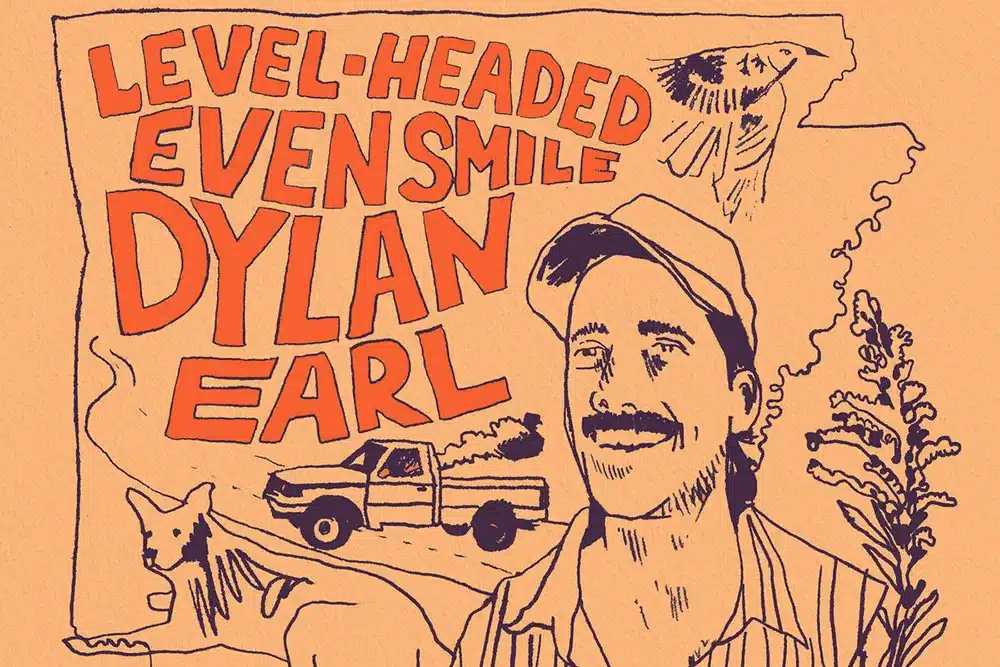
Dylan Earl is that friend your parents never wanted you to hang out with. They knew he had a healthy disrespect for authority and would rather drive around smoking than do anything constructive. His love of nature trumped his desire to do chores. He wasn’t lazy; he just didn’t understand what was better than hanging out in the woods or cruising the byways. At least, that’s how he comes across on his latest album, the complacently titled Level-Headed Even Smile. He’s sitting on top of the world on his “Lawn Chair” and invites you to accompany him in the backyard. You can hear him pop a top as he invites one to join him.
The Arkansas traveler wants you to “Get in the Truck”, where the radio and the road take one wherever one’s going. He gets high just being in the Ouachita National Forest in the Natural State. The simple pleasures of mountain life in the “White River Valley” (a Jimmy Driftwood cover) can be found in bird songs and the sighing of pine trees. Earl can be corny and old-fashioned, but his smooth voice bleeds sincerity. There are traces of classic country in his purposeful Merle Haggard-style delivery. Earl never seems to strain to reach a note.
That doesn’t mean the singer-songwriter’s content. Earl sings about hitting rock bottom in Little Rock and clearly enjoys hitting the bottle too much to deal with the pain of heartbreak. “I guess I’ll sober up when I’m dead,” he sings with a smirk. That contrasts with the satisfied persona who finds solace in nature. He needs a dose of wildlife to insulate him from the hurt of daily life. This push and pull keeps the album from sounding too similar from one track to the next.
Something is missing here, and that’s other people. Earl may have friends and family, but they scarcely make an appearance in his lyrics. He claims to be “Two Kinds of Loner”, but we really don’t know why. Sure, hell can be other people, but so can heaven.
Earl’s sense of humor keeps things from getting too heavy. His take on outlaw country inverts the Charlie Kirk perspective on empathy. He notes “White privilege is real” and rails against the hypocrisy of those with authority and sings with an affected drawl to show his Southern roots. Why, he’s just a good ol’ boy, NOT! He’s funny, but he is serious.
As the title song says, the singer-songwriter aspires to be on even keel. That mostly means being alone while complaining about or celebrating being alone. He can find that mental state somewhere in the Arkansas woods, in the bottom of the bottle, or just taking a drive through the country, but it does seem that he can’t stay levelheaded for long. There is always something to disrupt his inner peace. Dylan Earl needs a friend or more friends or even a lover, but he seems like the character one’s parents warned about. He may waste your time, but he would be a good pal.
Making waves on TV runs in Dylan Dreyer‘s family history.
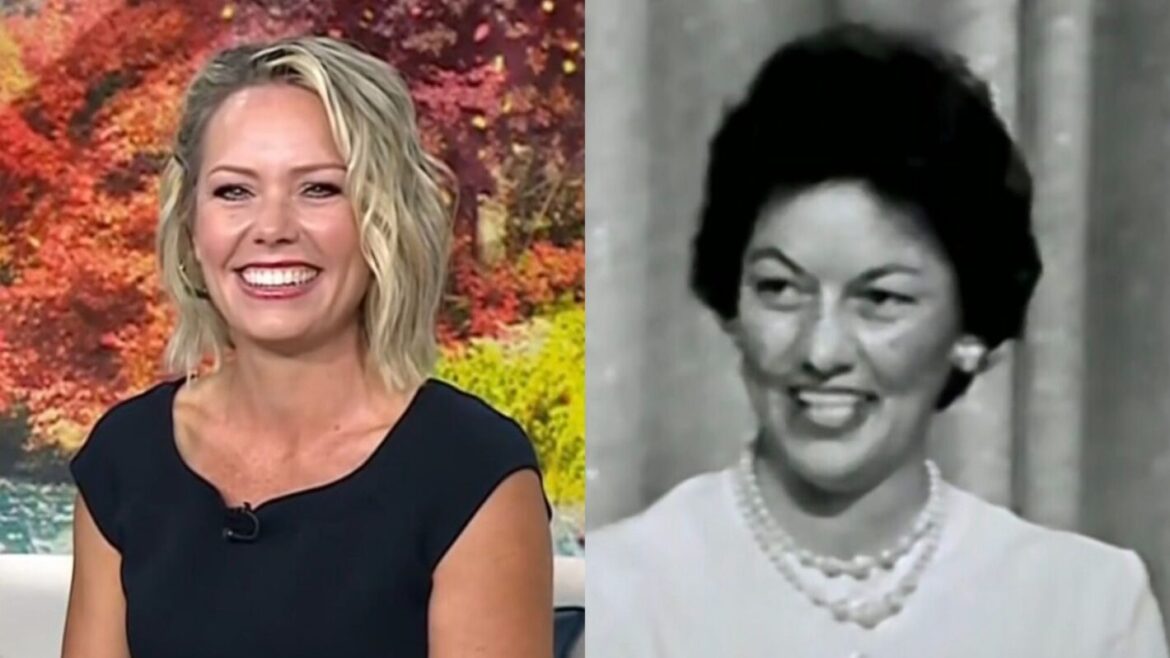
“Yesterday, we were talking about how Dylan’s grandmother was on The Price is Right,” Sheinelle Jones said during the third hour of Today‘s Tuesday, October 7, episode. “That was all the way back in 1963. So, of course, we had to dig up the footage ’cause Craig [Melvin] didn’t remember.”
The show went on to air a clip of Dreyer’s grandmother, Doris Milke, winning big on the game show. “She’s won more merchandise than anyone ever has in all the years. A total of $72,769,” former The Price Is Right host Bill Cullen said in the footage.
“Aw, I just miss her smile and her laugh,” Dreyer said in reaction to the clip. “I called her Gram. And, I mean, $70,000 back then is like $700,000 today. She’s still one of the most winningest contestants on The Price is Right.”
As for what her grandmother won on The Price is Right, Dreyer shared, “She won a house in Florida. She won an ice cream truck, lots of fur coats, and a couple of Jaguars, like, actual cars.”
NBC
The Price Is Right originally premiered on NBC in 1956 before moving to ABC in 1963. The series has aired on CBS since 1972.
Dreyer went on to explain that at the time her grandmother was on the game show, contestants would keep returning to continue their winning streak, like Jeopardy! “Every time you won, you would keep going back,” she stated.
Though Milke won several prizes on The Price Is Right, Dreyer said her family no longer owns all of her winnings. “They did sell the house in Florida, but my brother has some of the furniture from hers,” the meteorologist shared.
Dreyer previously opened up about her grandmother’s history on The Price Is Right on Today in July 2016. “After six weeks of competing, Grandma Doris came home a winner with the prizes to prove it,” she said in a prerecorded segment of herself visiting the game show’s set.
In addition to chatting with host Drew Carey, Dreyer got to step into her grandmother’s shoes by becoming a contestant on the show. After her name was announced to “come on down,” Dreyer accidentally ran up on stage rather than join her fellow contestants.
Before leaving the set of the CBS series, Dreyer tried her luck on the Big Wheel. By a stroke of luck, she hit the $1 spot on her first try.
“I swear, I have the video. That was my first try,” Dreyer assured her Today colleagues at the time, joking that her family has “a lot of luck on The Price Is Right.”
Third Hour of Today, Weekdays, 9 a.m. ET, NBC
The Price Is Right, Weekdays, 11/10c, CBS
Newer Posts