celebpeek
  • Home
  • Bollywood
  • Hollywood
  • Lifestyle
  • Fashion
celebpeek
  • Music
  • Celebrity News
  • Events
  • TV & Streaming
Home » Devils
Tag:

Devils

D'Angelo's 2019 Documentary, 'Devil's Pie': Review And Recap
Music

D’Angelo’s 2019 Documentary, ‘Devil’s Pie’: Review And Recap

by jummy84 October 16, 2025
written by jummy84

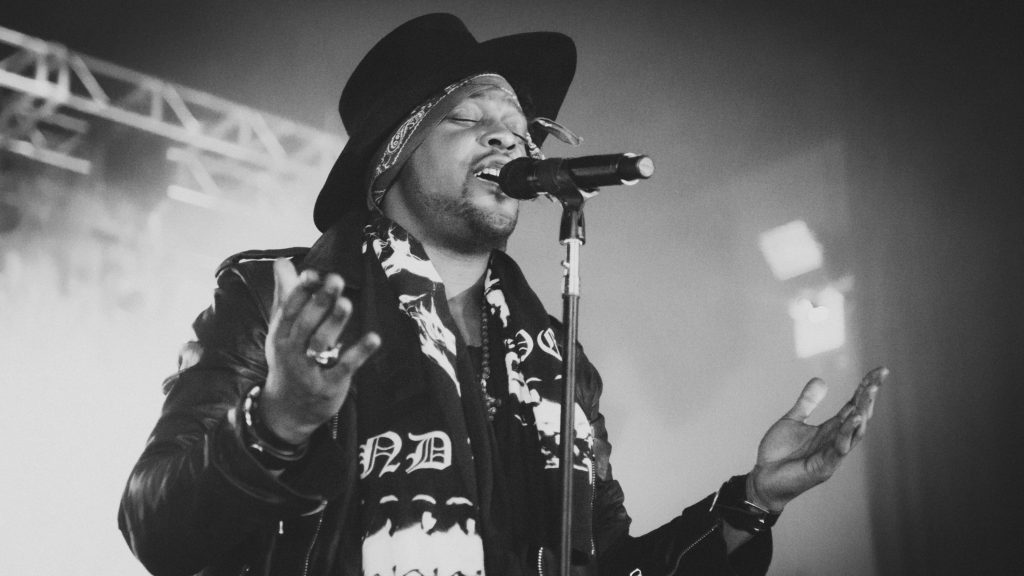
In 2019, D’Angelo allowed fans an intimate look into his life — the indelible highs and complicated lows — through the lens of his documentary, Devil’s Pie.

Named after a record from his second album, Voodoo, the Carine Bijlsma-directed film is full of archival anecdotes and behind-the-scenes moments as he prepared for his return in tandem with the release of his 2014 album, Black Messiah — which was described on Letterboxd as the “soundtrack of the lost years.”

Throughout the 90-minute film, we unpack his choice to step out of the spotlight at the height of his career, his spiritual foundation, the distinction between Michael Archer and D’Angelo, and the layers of what entails being a “Black genius.”

The documentary isn’t currently available to stream, but there are links floating around social media. If you get the chance to view it, we implore that you do. However, VIBE breaks down the top three takeaways from Devil’s Pie below.

  • The Complexities Of A Black Genius

    D'Angelo documentary recap
    Image Credit: Shahar Azran/Getty Images

    Within the first few minutes of the film, Questlove described D’Angelo as the “last pure singer on Earth,” but somberly added that the crooner “tends to hide.”

    The doc labeled him “elusive,” saying in 2000, he was “poised for superstardom” — thanks to Voodoo. Then, he disappeared for over a decade. His then-tour manager, Alan “Pops” Leeds, faulted “the media” for “playing up” the crooner’s arrests and unfortunate 2005 car accident, which left him critically injured.

    “Nothing beats D’Angelo. That gift only comes once in a blue moon,” said Questlove. He felt that D’Angelo battled with fears associated with being “the chosen one,” explaining that “To thine own self be true” was his mantra.

    D’Angelo even discussed the internal struggle, noting that following one arrest, he was upset with himself because he could’ve been in the studio instead. “I was bulls**tting [but] I’m sitting here,” he stated.

    In the third act of the documentary, he discussed the “power” of his music and referenced the quote: “With great power comes great responsibility.” He explained, “If Yahweh grants you that gift and you’re not being responsible about it, then it gets perverted and that can be very scary. That’s some place I don’t ever want to be.”

  • The “Untitled” Downfall

    D'Angelo documentary recapD'Angelo documentary recap
    Image Credit: Vinnie Zuffante/Getty Images

    After the video for “Untitled (How Does It Feel)” was released, D’Angelo became an instant sex symbol. However, the burden of that ideal plagued him. He hated the sexualization of his image and was part of the reason why he proverbially shut down.

    Questlove recalled during the Voodoo tour, they’d planned a “very meticulous two-and-a-half hour show,” but “18 minutes into it, women were screaming, ‘Take it off.’”

    Leeds felt that the fantasy of D’Angelo grew bigger than the music, which frustrated the crooner. D’Angelo played Quest a “crude demo” of what became “1000 Deaths” off Black Messiah. Leeds feared that the downward spiral following the “Untitled” visual would have caused catastrophic results.

    Questlove called D’Angelo “Superman, but he’s a kryptonite-filled Clark Kent trapped in his soul.”

    During that time, however, the singer also was navigating grief. His uncle and grandmother passed and a close friend died by suicide. This was the catalyst to his substance abuse. He attempted rehab twice before it worked, detailing that working on music led to him getting clean.

    He explained, “I was getting f**ked up and I never did that. I never got so f**ked up that I couldn’t make music, or that I was dysfunctional while I was in the studio […] The third rehab was when it really sunk into me that I had a problem and had to deal with it.”

  • D’Angelo Vs. Michael

    D'Angelo documentary recapD'Angelo documentary recap
    Image Credit: Vinnie Zuffante/Getty Images

    There was a fine line toed between Michael Archer, the man, and D’Angelo, the musician. He reportedly “wrestled” with pursuing a career in “secular music” due to his religious upbringing. However, his grandmother was the person who inspired him to pursue what he loved— which was always music in whatever capacity.

    During the documentary, his faith remained a constant fixture. “I trust in God. I trust in the spirit and the love that brought us together and in the gifts that God gave us. When we pray at night, it’s not a game and it’s very real. We walk out on faith. We got this far by faith and that’s how we walk out there and the way I feel, when I come out there and have that love, that spirit and that authority with me, it’s nothing that can stop us,” he said.

    He reflected on the “high” he felt while being onstage, but once the show is over, “you go back and it’s just you again.” He even confessed that there isn’t much separating Michael from D’Angelo. “To actually leave [D’Angelo] there on the stage is kind of hard,” he expressed. “I think a lot of times, I’m too real for that s**t. So, I have to leave him there.” He felt bringing his persona into his personal life caused it to become “murky and cloudy.”

    The crooner described the music industry as a “contact sport” and blamed the “business” for why many “didn’t make it.” There were even things about the business that he wouldn’t discuss because it was “deep s**t.”

    For D’Angelo, it seemed his mission was having God live within him and freeing himself of the “distractions” that would take him away from that. Music was his gateway and purpose. The documentary ended with the singer listening to the gospel song, “Lord, Plant My Feet On Higher Ground” and confirmed that he was working on his fourth album.

October 16, 2025 0 comments
0 FacebookTwitterPinterestEmail
From the ‘devil’s interval’ to ‘Louie Louie’: Crazy moments in music censorship - National
Celebrity News

From the ‘devil’s interval’ to ‘Louie Louie’: Crazy moments in music censorship – National

by jummy84 September 21, 2025
written by jummy84

We all know that music is a powerful and empowering thing. It affects our emotions, our psyches, our very souls — and that’s exactly the kind of thing that frightens certain people about music.

They believe that music can be dangerous and needs to be carefully supervised, regulated and sometimes banned — all in the name of… well, something. Morality? Humanity? Some twisted political reason? Check, check and check.

In many cases, the morality police choose to blame the messenger — the music or the musician — instead of looking at why the song seems to resonate so strongly. But they know that societal and political change is often presaged by messages and movements in popular culture. They hope that by blocking the message and restricting the movement, they can stop or even reverse change.

The music morality police have been around for centuries. The word “censor” was used to describe the Roman official in charge of the census. Through a roundabout way, he also had the job of monitoring public morals. For example, if you were found singing an “evil” song — which could be, say, something unflattering about the emperor — the Code of Twelve Tables, a law passed in 450 BC, decreed that you were to be put to death by clubbing.

Story continues below advertisement


Click to play video: 'Jimmy Kimmel suspension: Comedians express concerns over free speech censorship'

4:34
Jimmy Kimmel suspension: Comedians express concerns over free speech censorship


The Qin dynasty, which reigned in China some 2,200 years ago, was big into restricting art and literature. The emperor declared music to be a “wasteful” pastime and ordered all musical instruments and songbooks destroyed.

It is said that the Roman Catholic Church was big on something it called “the devil’s interval,” a particularly dissonant playing of three notes: diabolus in musica — the devil in music. The devil’s chord. Because it sounded evil, it must be evil. That’s why the use of this combination of notes was effectively banned from all western European music. The notes were suppressed so that any evil feelings were avoided. No evil feelings, no evil deeds.

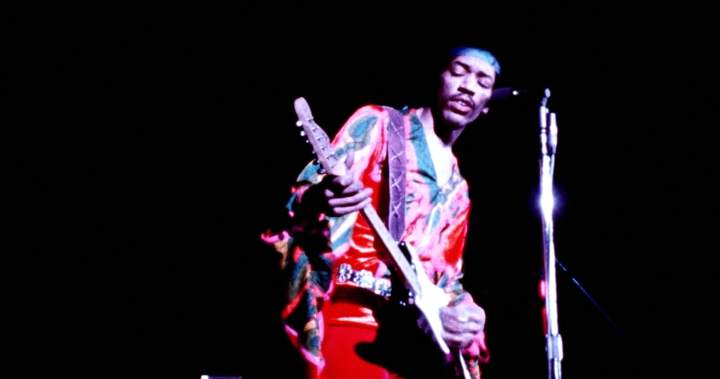
Things have changed a little. The opening chords of Jimi Hendrix’s Purple Haze might have gotten him burned at the stake a thousand years ago. Black Sabbath would have been branded as witches and demons. And had this by Blur been released in 1543, it would have literally been the death of them.

Story continues below advertisement

Actually, information has come to light that the devil’s tritone was not banned by the church, though the myth still resonates.

Speaking of 1543, that’s the year Henry VIII banned the printing of sheet music because it could “subtly and craftily instruct the king’s people and the youth of the realm.”

And the Nazis had their issues with music. During the occupation of Europe, the Reich’s Gauleiter for the Nazi protectorate of Bohemia and Moravia issued a 10-point decree regulating the playing of jazz.

I could read them out, but instead, I turn your attention to a song by Canadian violinist Hugh Marsh. In 1987, he released an album titled Shaking the Pumpkin. It featured a song called Rules Are Made to Be Broken featuring Robert Palmer and Dalbello on vocals. Have a listen.

Story continues below advertisement

When rock and roll was born in the 1950s, so was a never-ending campaign to have it banned. Parents, politicians, preachers and even doctors got involved. A certain Dr. Francis Braceland, who worked as a psychiatrist at a facility in Connecticut, was quoted in the media as saying rock music was a “cannibalistic and tribalistic form of music … a communicable disease … appealing to adolescent insecurity and driving teenagers to do outlandish things.”

Get the day's top news, political, economic, and current affairs headlines, delivered to your inbox once a day.

Get daily National news

Get the day’s top news, political, economic, and current affairs headlines, delivered to your inbox once a day.

Pablo Casals, the famous classical cellist, called rock “poison put to sound.” Mitch Miller, the head of talent development at Columbia Records in the 1950s and early ’60s, hated rock music. He passed on Elvis, Buddy Holly, and some English group called “the Beatles.” I quote from Miller: “Rock ’n’ roll is musical baby food: it is the worship of mediocrity, brought about by a passion for conformity.”

Rock? Conformity?

Story continues below advertisement

Here’s another example of a piece of music that was banned by certain radio stations. This censorship had nothing to do with its lyrics, because it’s an instrumental. Stations refused to play it just because it sounded dangerous.

But here’s the best censorship story of the era. In 1963, a garage band from Portland, Ore., called the Kingsmen made a record called Louie Louie. They had no money. All they could afford was a cheap studio and one overhead mic dangling about 10 feet above the band.

Everyone had to be arranged around that one mic, including singer Joe Ely. He had to sing with his head all the way back, effectively singing straight up into the microphone. Complicating things was the fact that he had some big, heavy braces on his teeth. No wonder no one can make out what he’s singing.

Story continues below advertisement

Before we go any further, give this a listen and see if you can make out what’s going on.

Did you get any of that? Well, some politicians and parents thought they could. Rumours began to circulate that the lyrics were unbelievably dirty. Unspeakably dirty.

The governor of Indiana declared that the song made his “ears tingle” and imposed a statewide ban on it. Complaints from teachers, preachers and parents reached all the way to the office of the U.S. attorney general. No less than J. Edgar Hoover of the FBI was called in to investigate.

People were questioned. The recording was subjected to analysis. It was played forward and backward at a variety of speeds. The investigation lasted two years. And when the final FBI report came out on May 25, 1965, it was 118 pages long. The conclusion? “‘Louie Louie’ is unintelligible at any speed and is probably not obscene. Probably.”

Story continues below advertisement

Nothing gets a song banned faster than S-E-X. Such has been the case for centuries. I could quote you some lyrics from blues songs from the early 20th century that would get me fired. No wonder they didn’t make it on the radio. And if you want to have a little fun, do some Googling on the phrase “jelly roll” and you’ll begin to understand why so many blues songs use that phrase.

In the 1950s, some cities banned jukeboxes, which were cesspools of vice, apparently. And if you followed American law precisely, you could get busted for sending “lewd and lascivious” records through the mail. What constituted “lewd and lascivious” depended on who was doing the inspecting, I guess.


From the ’50s through to the ’80s, everyone from Chuck Berry and the Rolling Stones to the Beatles and the Doors had their problems with censorship crusaders. And one of the most severe was the British Broadcasting Corporation.

Trending Now

  • Grammy-winning songwriter Brett James dies in plane crash

  • Canadians aren’t mad at America anymore. We’re hurt, suspicious, and moving on

If you look at the history of the BBC, you might come away with the idea that they’re one of the most uptight broadcasters in the world — and you may be right. In the mid-30s, the BBC banned jazz. In 1959, it banned the song Charlie Brown by the Coasters because it contained the offensive word “spitballs.” No, really.

In January 1984, the producer of a BBC radio show came home to find his kids in front of the telly, watching the video for a song called Relax from this new band called Frankie Goes to Hollywood.

Story continues below advertisement

No big deal. He’d heard the song a number of times because the BBC had added it to the daytime playlist. In fact, the song had been aired close to 90 times by this point. But it wasn’t until he saw the video that he realized that — gasp! — it was about homosexual sex.

The next day, Jan. 11, 1984, he went into work and explained to his boss, DJ Mike Read, what he had learned. Read was the host of the morning show and had millions of listeners every day. After playing the song one more time, he, too, saw the light.

He branded the song obscene and announced that he would never, ever play it again. This put management in a tough spot. Their biggest star had made this outburst. Any attempt to countermand that would look bad. So the next day, Jan. 12, 1984, a memo went out across the BBC declaring that Relax should never, ever grace Her Majesty’s airwaves again — radio and TV.

There was just one exception: the weekly chart show. I don’t get that, but that’s the way it was. You know what happened, right? One week later, the biggest song in all of Britain was Relax by Frankie Goes to Hollywood. It stayed at No. 1 for five weeks. It sold a million copies in less than a month and 13 million worldwide. Thank you, Mike Read.

Story continues below advertisement

The BBC seems to get extra prickly about music in times of war. In 1982, Margaret Thatcher went to war with Argentina over the Falkland Islands in the South Atlantic. It was a controversial war, given that the fight was over a bunch of rocks that were home to more sheep and penguins than people.

Regardless, Her Majesty’s armed forces were sent to recapture these rocks, which they did over the course of 10 weeks. About a thousand people died, 255 of them British soldiers.

During this time, the ever-sensitive BBC was on guard, making sure that any songs critical of the government were not played on Her Majesty’s airwaves. This song — which had nothing to do with a war, a navy, or Argentina — was deemed unplayable.

Story continues below advertisement

The BBC also banned Everybody Wants to Rule the World by Tears for Fears during the first Gulf War. And during the invasion of Iraq in 2003, it banned the song Bandages by Victoria’s Hot Hot Heat. They thought the chorus would cause undue stress on relatives of soldiers fighting in the region.

Then, of course, there was 9/11. You may have heard about an infamous list of songs issued by Clear Channel, the big radio conglomerate in the States. This list did exist — but it wasn’t a list of banned songs. It merely contained suggestions of songs that might cause issues with the audience during such a sensitive time.

For example, the document urged programmers to think about airing songs with the word “jet” in the title: Bennie and the Jets by Elton John, Leaving on a Jet Plane by Peter, Paul and Mary, and Jet Airliner by Steve Miller.

There were 165 songs on this list, including this one, which completely baffles me. Is it the triggering word “fly?”

Story continues below advertisement

This has been just a short discussion of how music and censorship have intersected. We could go on for days and days and days on the subject: the issue of the Canadian Broadcast Standards Council and its Money for Nothing decision; the blowback caused by the Cure’s Killing an Arab; the crackdown on pop and rock music in Malaysia.

As long as there’s music and as long as there are people who are afraid of it, there will be censorship.

Curator Recommendations

  • Best air purifiers to improve air quality in your home

  • Ditch the rake: Smarter ways to keep your yard leaf-free

September 21, 2025 0 comments
0 FacebookTwitterPinterestEmail
Safehouse Thriller 'All the Devils Are Here' Trailer Feat. Eddie Marsan
Hollywood

Safehouse Thriller ‘All the Devils Are Here’ Trailer Feat. Eddie Marsan

by jummy84 August 29, 2025
written by jummy84

Safehouse Thriller ‘All the Devils Are Here’ Trailer Feat. Eddie Marsan

by Alex Billington
August 28, 2025
Source: YouTube

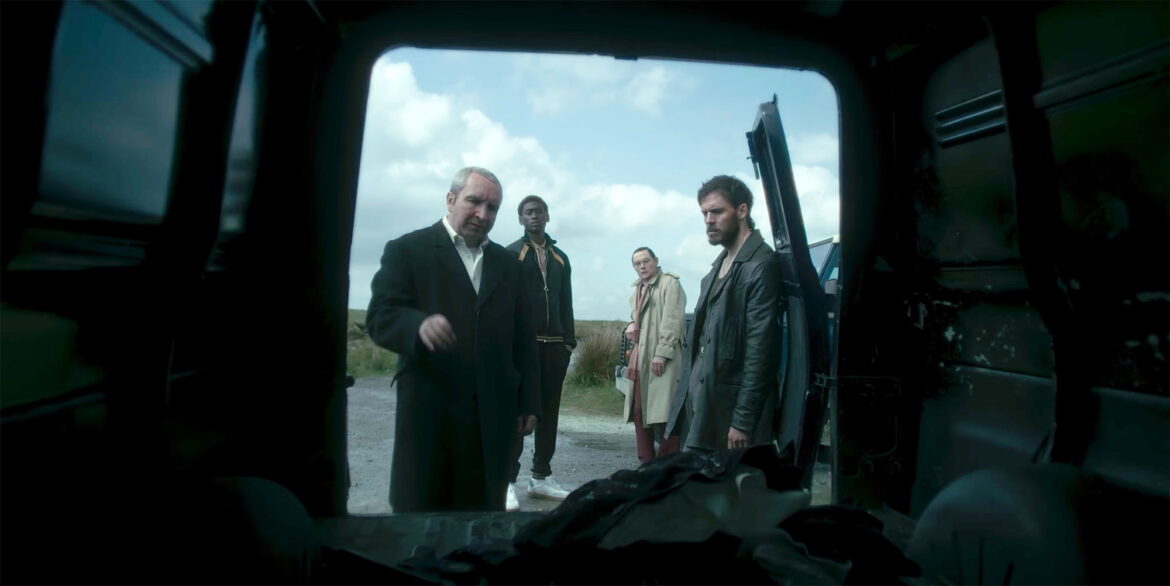
“We’ve now reached what you might call… the moment of crisis.” Republic Pictures has unveiled the main official trailer for contained thriller movie titled All the Devils Are Here, marking the feature directorial debut of music video director Barnaby Roper. The film just premiered at the 2025 Edinburgh Film Festival up in Scotland, and will be released to watch on VOD starting in September in a few more weeks. Secluded in the middle of Dartmoor, four thieves find themselves hiding out with nothing to do but count the money and time to kill. After a heist, four criminals lay low in a remote safehouse, waiting for orders. As paranoia builds, one thing becomes clear—the real threat may not be outside, but right in there among them. The film stars BAFTA-nominated Eddie Marsan, Sam Claflin, Burn Gorman, breakout star Tienne Simon, Suki Waterhouse and Rory Kinnear. So who is who, and what is what? This is massively impressive cast for what looks like a tiny indie thriller set mostly at one location – a rundown old house. Take a look below.

Here’s the official trailer (+ poster) for Barnaby Roper’s film All the Devils Are Here, from YouTube:

All the Devils Are Here Trailer

All the Devils Are Here Poster

A taut psychological crime thriller where guilt festers, loyalties shift, and the codes that bind men begin to break. When a group of London criminals retreat to a rural hideout, it’s meant to be a brief stay. But as days drag on, tensions rise and control begins to slip. Eddie Marsan & Sam Claflin deliver commanding performances in this stylish and brooding British thriller. Blending tightly controlled violence with quiet reflection, this is a gripping portrait of moral unravelling building towards an explosive reckoning. All the Devils Are Here is directed by British filmmaker Barnaby Roper, making his feature directorial debut after many other short films & music videos previously. The screenplay is written by John Patrick Dover. Produced by Ben LeClair and Leopold Hughes. This recently premiered at the 2025 Edinburgh Film Festival earlier this month. Paramount / Republic Pictures will debut Roper’s All the Devils Are Here film in select US theaters + on VOD starting September 26th, 2025 coming up. Anyone interested in this? Look good?

Share

Find more posts in: To Watch, Trailer

August 29, 2025 0 comments
0 FacebookTwitterPinterestEmail

Social Connect

Facebook Twitter Instagram Pinterest Youtube Snapchat

Recent Posts

  • 2009 feels like a whole other world away

  • Watch Ariana Grande and Jimmy Fallon Perform a History of Duets

  • Spotify’s Joe Hadley Talks ARIA Awards Partnership

  • Nick Offerman Announces 2026 “Big Woodchuck” Book Tour Dates

  • Snapped: Above & Beyond (A Photo Essay)

Newsletter

Subscribe my Newsletter for new blog posts, tips & new photos. Let's stay updated!

Categories

  • Bollywood (1,929)
  • Celebrity News (2,000)
  • Events (267)
  • Fashion (1,605)
  • Hollywood (1,020)
  • Lifestyle (890)
  • Music (2,002)
  • TV & Streaming (1,857)

Recent Posts

  • Shushu/Tong Shanghai Fall 2026 Collection

  • Here’s What Model Taylor Hill Is Buying Now

  • Julietta Is Hiring An Assistant Office Coordinator In Dumbo, Brooklyn, NY (In-Office)

Editors’ Picks

  • 2009 feels like a whole other world away

  • Watch Ariana Grande and Jimmy Fallon Perform a History of Duets

  • Spotify’s Joe Hadley Talks ARIA Awards Partnership

Latest Style

  • ‘Steal This Story, Please’ Review: Amy Goodman Documentary

  • Hulu Passes on La LA Anthony, Kim Kardashian Pilot ‘Group Chat’

  • Hannah Einbinder Slams AI Creators As “Losers”

  • Facebook
  • Twitter

@2020 - celebpeek. Designed and Developed by Pro


Back To Top
celebpeek
  • Home
  • Bollywood
  • Hollywood
  • Lifestyle
  • Fashion
celebpeek
  • Music
  • Celebrity News
  • Events
  • TV & Streaming