celebpeek
  • Home
  • Bollywood
  • Hollywood
  • Lifestyle
  • Fashion
celebpeek
  • Music
  • Celebrity News
  • Events
  • TV & Streaming
Home » Define
Tag:

Define

Appearance doesn't define your worth
Celebrity News

Appearance doesn’t define your worth

by jummy84 October 31, 2025
written by jummy84

31 October 2025

Jonathan Van Ness has insisted he is still “all about body neutrality” after losing 70lbs.

Jonathan Van Ness has lost 70lbs

The Queer Eye star has shed the pounds after turning to a weight-loss medication but he’s responded to critics who have claimed he is “not a body positive person anymore” and insisted people are always “worth love and celebration”, regardless of their shape or size.

He said in a TikTok video: “I’ve lost 70 pounds in the last year and [there has been] so much conversation around my weight loss.”

Referencing the “gigantic conversation” about his outlook, he continued: “What do you mean? I’m all about body neutrality.

“The way that you look does not define your worth, doesn’t define your lovableness. You are worth love and worth celebration no matter what your body looks like.

“That’s what’s so important is that we are all worthy of love. We’re all worthy of celebrating.”

The Getting Curious podcaster began using the medication as a result of a health scare back in 2023.

He said: “I decided then that after the medical issue, I was going to get a colonoscopy, and if I didn’t have anything severely wrong with me, I was going to go on a GLP-1, because I just didn’t feel good.”

And now, while Jonathan has always “felt cute”, he feels “good” too thanks to his body transformation.

He said: “As I’ve lost weight and I got into [Pilates classes at] Solidcore, my body has never looked like this.

“My body’s never in my whole life—I’ve always wanted to have an ab. I’ve never had abs. And I feel really good, so I’m taking my shirt off a lot.

“I just want to get one thing straight: I was always really cute, and I always felt cute, but I just didn’t feel good. And now I feel good.

“I feel like a f****** minx right now. When I’m 80, I want to see pictures of me when I was in my 30s looking cute. So, that’s why the top’s off, because I feel really cute.”

The 38-year-old hairstylist previously credited the medication for helping him get his binge eating disorder under control.

He said in a previous TikTok video: “I, for the first time in my life, got control over my food intake. It helped me so massively, and that’s part of why I wanna be honest with you about it because I know how important asking for help is, and how much asking for help can change your life in terms of healing.

“I needed help.”


October 31, 2025 0 comments
0 FacebookTwitterPinterestEmail
Ryan Reynolds
Bollywood

Monsters That Made Us: How Universal’s Icons Still Define What We Fear

by jummy84 October 31, 2025
written by jummy84

Before the word “franchise” meant superheroes and crossovers, Universal Pictures built an empire of the undead. The studio’s 1930s run of horror classics did not just change cinema. It redefined how we see fear, beauty, and even ourselves.

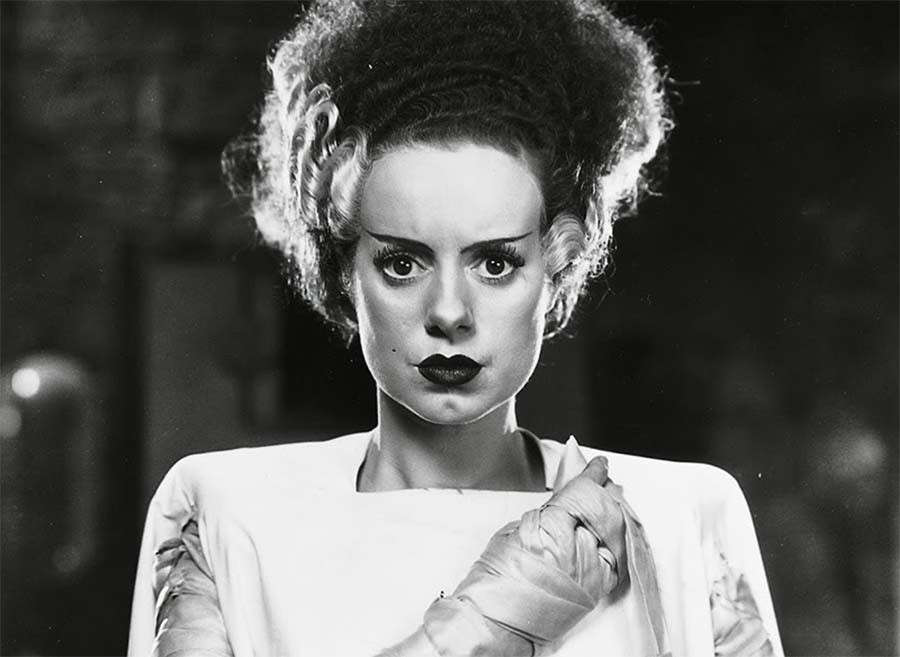
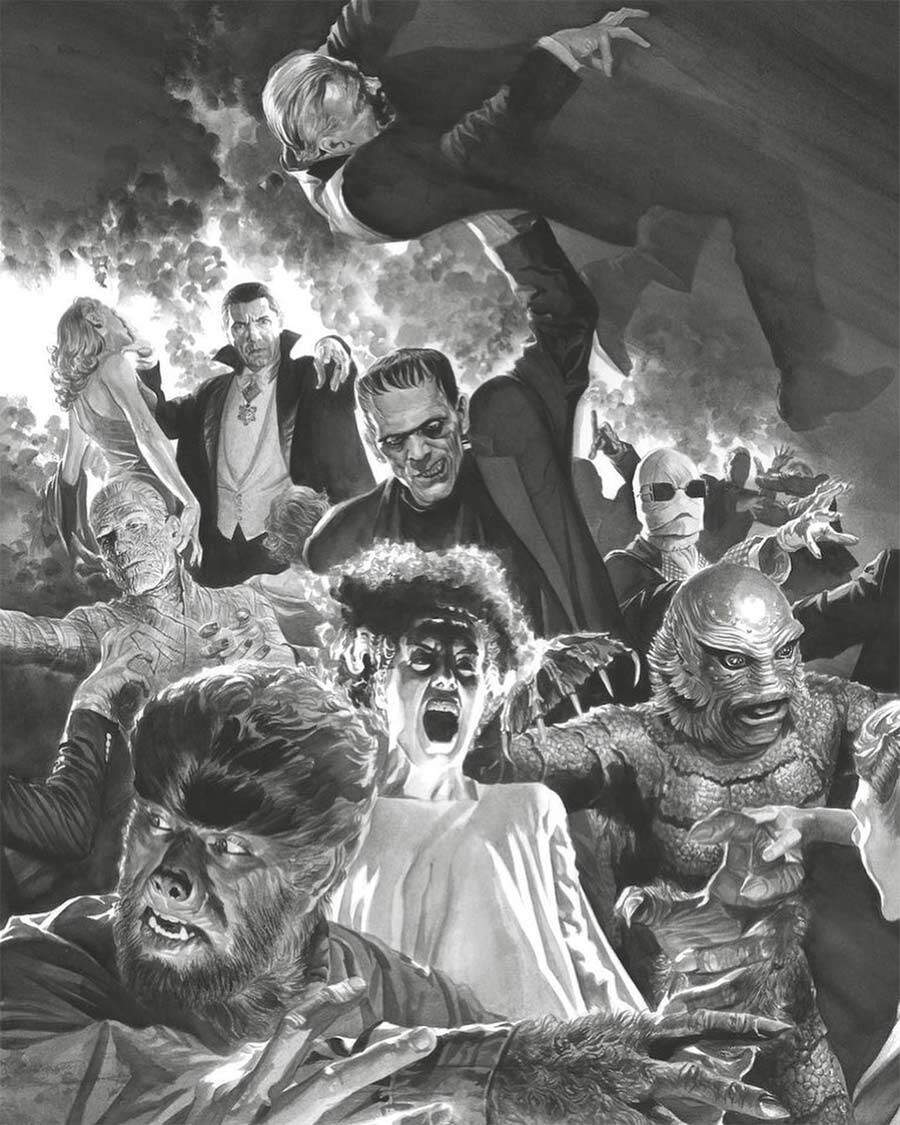
When Dracula arrived in 1931, followed by Frankenstein, The Mummy, The Invisible Man, Bride of Frankenstein, and The Wolf Man, the world was only beginning to crawl out of the Great Depression. These were not escapist fantasies. They were reflections of unease, uncertainty, and guilt. Directors like Tod Browning, James Whale, and Karl Freund turned flickering shadows into psychological mirrors. They borrowed the visual grammar of German Expressionism, full of crooked lines, tilted worlds, and faces half-swallowed by light, and gave audiences a language for their fears.

It was never just about the monsters on screen. It was about what they said about us.

When Horror Learned to Feel

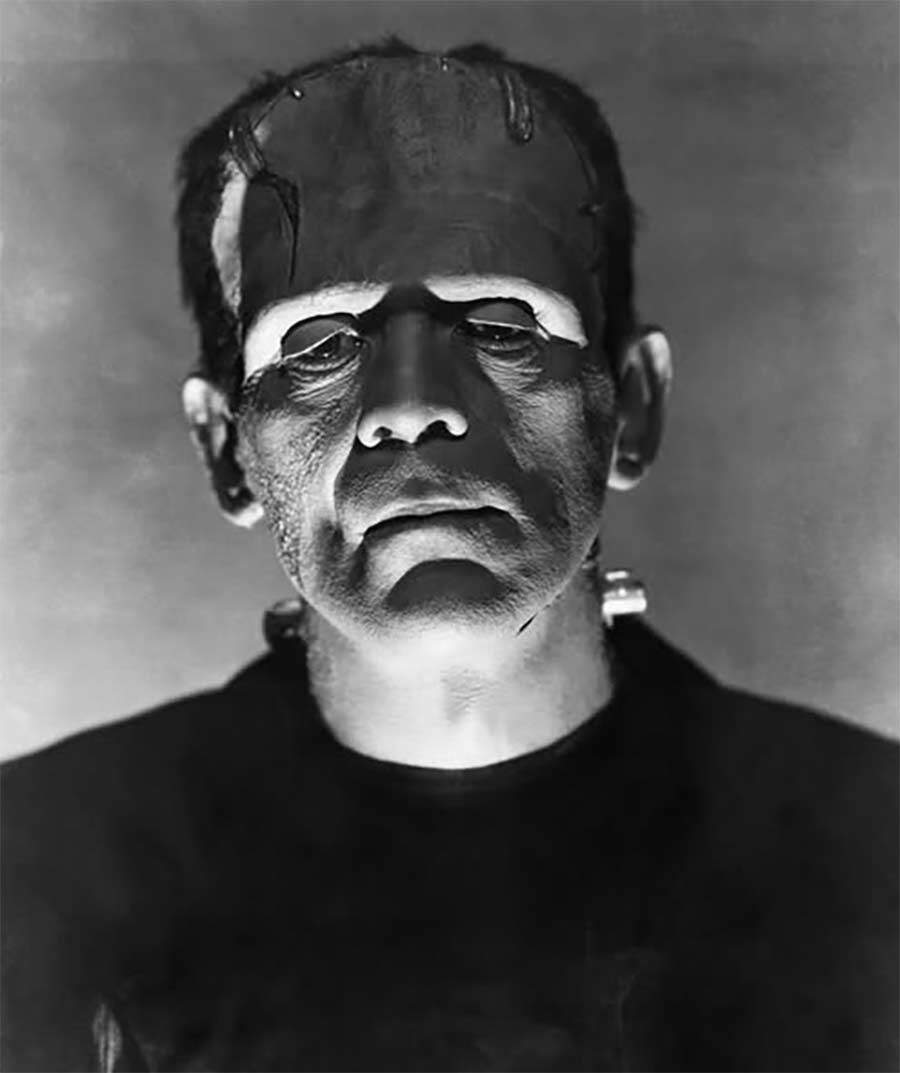
Boris Karloff’s Frankenstein’s Creature changed everything. Under thick makeup and silent agony, he brought a soul to horror. In one unforgettable scene, the creature kneels by a lake beside a little girl. She hands him a flower, he smiles, and then, not understanding his own strength, he throws her into the water. The moment is heartbreaking because it is human.

James Whale’s direction turned what could have been grotesque into something strangely poetic. The monster was never evil. The cruelty came from the villagers, from science without conscience, from a creator who abandoned his creation. That tragedy made audiences weep even as they recoiled. You can trace that same empathy in Edward Scissorhands, The Shape of Water, and King Kong. Horror became a place where compassion and terror could exist together.

If Karloff gave the genre its heart, Bela Lugosi gave it its swagger. His Dracula was not a beast hiding in shadows. He was the shadow. Every movement was measured, every syllable a seduction. Fear became something elegant. Since then, every vampire, from Anne Rice’s tormented Louis to Robert Pattinson’s glittering Edward, has borrowed a little from Lugosi’s cape.

Monsters That Made Us: How Universal’s Icons Still Define What We Fear

The Birth of the Modern Monster

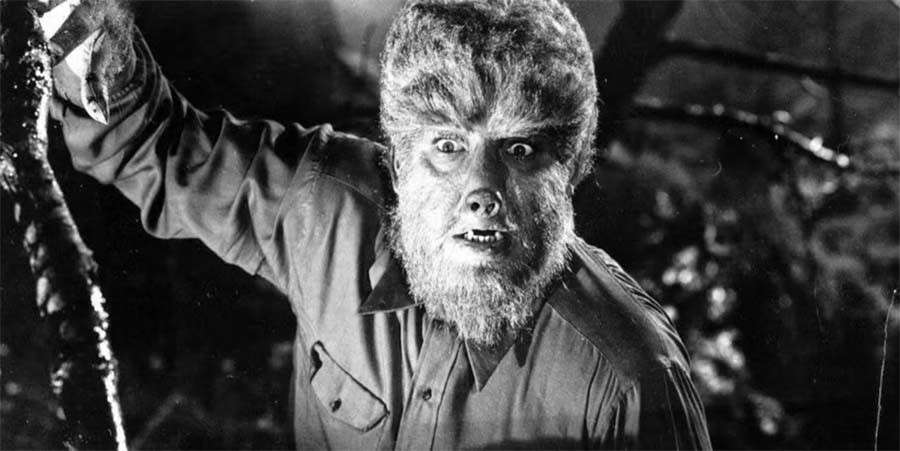
What Universal created was not just a set of films. It was the genetic code for horror as a genre. The misunderstood outsider in Frankenstein became the foundation for a thousand sympathetic monsters. The cursed soul of The Wolf Man showed that true horror often comes from within. The Invisible Man captured the madness of power. The Mummy turned the ancient past into an eternal haunting.

Even today, when Jordan Peele examines the dark reflection of self in Us or when The Babadook explores grief made manifest, they are still walking the same haunted corridors Universal built nearly a century ago. Those films taught us that monsters are not alien. They are metaphors made flesh.

From Page to Shadow

The Universal cycle was built on some of literature’s deepest nightmares. Mary Shelley’s Frankenstein, Bram Stoker’s Dracula, and H. G. Wells’s The Invisible Man were born from a world wrestling with science, morality, and faith. Shelley questioned creation long before bioethics was a word. Stoker’s Dracula was a vessel for Victorian terror about disease and sexuality. Wells’s invisible man embodied the dangers of ego without empathy.

Universal did not simply adapt these stories. It transformed them. The gothic prose became chiaroscuro. The philosophy turned into performance. In that translation, these creatures stopped belonging to books and began to belong to everyone.

When you picture Frankenstein today, you do not see Shelley’s articulate and tragic creature. You see Karloff’s green skin, square head, and sadness in the eyes. The films rewrote the mythology so completely that they replaced the originals in the public imagination.

Monsters That Made Us: How Universal’s Icons Still Define What We Fear

Why We Cannot Stop Looking at Monsters

Every October, the same faces return. Dracula, Frankenstein, the Wolf Man, the Mummy, or the Gill-man from Creature from the Black Lagoon. They have outlived the stars who played them, the studios that made them, and the wars that raged outside the theatres. The reason is simple. Monsters let us meet ourselves.

Psychologically, horror is a rehearsal for danger. We confront what we fear in a safe space and leave feeling alive. But there is something deeper. Carl Jung called it the “shadow self,” the part of us we hide. The Universal Monsters gave that shadow a face. Watching Karloff or Lugosi was never just entertainment. It was catharsis. They showed the pain of rejection, the hunger for belonging, and the fear of desire. Horror made those emotions visible, forgivable, even noble.

Larry Talbot in The Wolf Man says, “Even a man who is pure in heart,” and it still cuts to the bone. Every man and woman carries a beast. The movies simply had the courage to show it.

Monsters That Made Us: How Universal’s Icons Still Define What We Fear

The Fear That Built the Century

The Universal Monsters were not born in a vacuum. They emerged from a world changing too fast for comfort. The 1930s brought industrial innovation, social upheaval, and the first stirrings of modern war. Frankenstein warned of science outrunning its soul. Dracula personified fear of the foreign and the forbidden. The Mummy reflected guilt over colonial plunder. The Wolf Man captured the trauma of losing control in a violent world.

Their relevance has not faded because the same anxieties keep evolving. Today’s fears are digital, viral, and artificial. But the emotional core remains. Every panic about AI, every film about contagion or isolation, still carries the fingerprints of those black-and-white classics. The faces have changed, but the psychology has not.

Monsters That Made Us: How Universal’s Icons Still Define What We Fear

The Curse of Living Forever

Universal has tried to bring them back many times. The 2017 Mummy reboot, meant to launch a shared “Dark Universe”, collapsed under its own ambition. What it proved was that you cannot manufacture myth. The originals endure not because they were franchises, but because they were sincere.

There was honesty in their terror. The sets were handmade, the lighting theatrical, and the effects charmingly crude. But the emotions were raw. They were not trying to sell sequels. They were trying to understand what it means to be human. Modern filmmakers like Guillermo del Toro, Mike Flanagan, and Robert Eggers carry that spirit forward. They use monsters the way James Whale did, as lenses to study loneliness, faith, and decay. Del Toro once said, “Monsters are the patron saints of imperfection.” That could easily be the motto of the entire Universal canon.

Monsters That Made Us: How Universal’s Icons Still Define What We Fear

Why They Still Matter

As Halloween rolls around again, the streaming shelves fill with jump scares and gore fests. But the Universal Monsters endure because they offer something rarer: empathy. They remind us that horror is not about the thing in the dark. It is about the heart that beats inside it.

Dracula’s hunger, Frankenstein’s confusion, and the Wolf Man’s guilt are all fragments of the same truth. Fear is never just about death. It is about being seen, being judged, being alone. A century later, the old monsters still walk. And maybe they always will, because they are us.

Also Read: Ram Charan, Allu Arjun to Attend Allu Sirish and Nayanika’s Engagement Tomorrow

October 31, 2025 0 comments
0 FacebookTwitterPinterestEmail
10 Fashion Week Trends Set to Define Spring/Summer 2026
Fashion

10 Fashion Week Trends Set to Define Spring/Summer 2026

by jummy84 October 18, 2025
written by jummy84

It was the season of creative director debuts and new ideas. There were upward of 15 new designers who took the helms at some of the biggest houses across the industry during the spring 2026 shows with highly anticipated debut collections, including Dario Vitale at Versace, Louise Trotter at Bottega Veneta, Jonathan Anderson at Christian Dior, and Matthieu Blazy at Chanel, who brought some of the most high-impact moments. This went in tandem with strong sophomore collections, where designers including Michael Rider at Celine and Haider Ackermann at Tom Ford continued to carefully construct and refine their visions.

Conversations throughout fashion month centered on the wave of change that is thrusting us into the future of fashion. It was a season about newness and challenging old ideas as designers presented collections that were doing something fresh and different. It was a palpable shift that ushered in shows that were cinematic, disruptive, bold, and optimistic. Sex appeal returned to the runway with seductive and provocative looks, off-kilter silhouettes reimagined femininity in fashion, and inventive styling including bold color clashing and advanced layering will influence editorial moments, red carpet looks, and how the fashion set is getting dressed. It was arguably the biggest fashion month ever, marking an unprecedented moment that will undoubtedly begin a new chapter in fashion. Ahead, read more on the 10 spring 2026 trends that are set to dominate fashion.

(Image credit: Launchmetrics Spotlight)

The Great Debut

Debuts! Debuts! Debuts! There was an undeniable sense of newness on the runways that stemmed from the fresh creative leadership. At Chanel, Blazy took this head-on. “We can go two ways,” Blazy told Tim Blanks in an interview for Business of Fashion. “Either we do a clean, modern, by the codes, by the book Chanel show, and it’s a first step. Or we do this show as if it was our last. I took the last option.” The collection he unveiled was confident and new, including the finale look that embodied the joy and renewed energy we’ve been eager to see unfold. Though it infused the heritage and house codes from Coco Chanel, it was distinctly Blazy. This was mirrored at other debut shows too, including Anderson at Dior, Vitale at Versace, Trotter at Bottega Veneta, Pierpaolo Piccioli at Balenciaga, and Jack McCollough and Lazaro Hernandez at Loewe, who each brought their distinct visions to the runways.

A photo of 7 models from the S/S 26 runway shows wearing sexy looks against a white background. On top, the title is, "SEXUALLY EXPLICIT" in black capital letters.

(Image credit: Launchmetrics Spotlight)

Sexually Explicit

If there were one collection from the entirety of the spring 2026 runway season that proved without a shadow of a doubt that sex is back in fashion, it was Hermès, a brand known to many for its more modest, sophisticated approach to dressing. The French house strayed from the norm this season, though, with Creative Director Nadège Vanhée embracing tighter and more revealing silhouettes made almost exclusively out of supple leather. Hermès wasn’t the only brand to err on the risqué side this season, though. Mugler’s new creative director, Miguel Castro Freitas, used his debut as a chance to do what the house has always done best: explicitly seductive tailoring. Meanwhile, Haider Ackermann’s second Tom Ford collection brought back the provocative look the brand’s founder is known for introducing at Gucci when he took the helm in 1994. From the ambiance to the clothes, everything at Ackermann’s sophomore show was both daring and sensual, bringing sexy back in a way that fashion people were all too willing to give a blatant two thumbs up for.

zara, Pleated Lace Top

Straight Nappa Leather Midi Skirt

Massimo Dutti

Nappa Leather Midi Skirt

Francoise Boots in Smooth Leather

Saint Laurent

Francoise Boots

A photo of 7 models from the S/S 26 runway shows wearing bourgeois looks against a white background. On top, the title is, "GONE BOURGEOIS" in black capital letters.

(Image credit: Launchmetrics Spotlight)

Gone Bourgeois

A bourgeois aesthetic has been percolating in fashion. Rider kicked the aesthetic off for spring 2026 at his debut Celine collection in July and doubled down on it for his summer 2026 sophomore show. Rider is distilling Left Bank Parisian style and American sportswear through a modern eye, making classic pieces like satin scarves, tailored trench coats, and colorful accessories feel cool and covetable once again. Rider has stated that his vision for Celine is built on “quality, for timelessness and for style,” and his designs emphasize well-crafted, collectible pieces that are meant to last and be worn for the long run over ephemeral trends. This attitude toward design was mirrored on the runways at more brands with a vision of the modern investment wardrobe. At Bottega Veneta, sumptuous pastel knits were styled with suiting. At Kallmeyer, printed satin scarves were draped over sleek navy jackets. At Tom Ford and Ralph Lauren, crisp white suiting interplayed with shirting and tied-up knits. It’s peak good taste.

Polo Ralph Lauren, Double Breasted Wool Melton Blazer

Polo Ralph Lauren

Double Breasted Blazer

Amiya, Nevia V Neck Sweater

Amiya

Nevia V-Neck Sweater

CELINE, Bandana in Heritage Silk Twill

A photo of 7 models from the S/S 26 runway shows wearing optimistic fashion against a white background. On top, the title is, "OPTIMISM! JOY! DELIGHT!" in black capital letters.

(Image credit: Launchmetrics Spotlight)

Optimism! Joy! Delight!

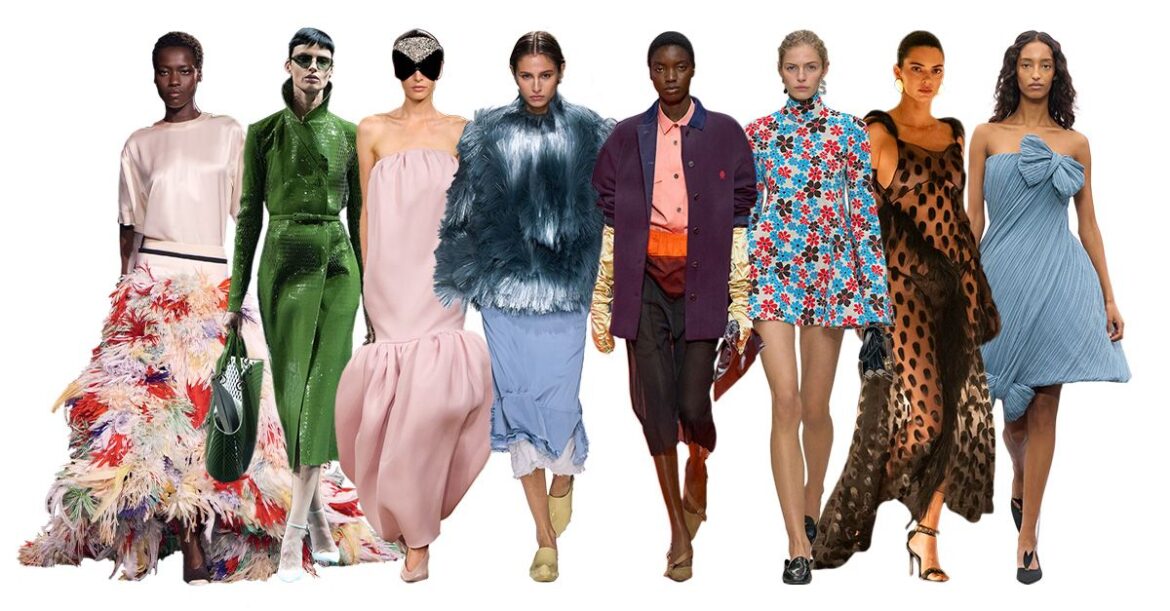
With so much happening in the world around us, our phones constantly buzzing with alerts about another piece of bad news, it felt like a welcome reprieve to see fashion that felt optimistic and full of joy for once, instead of muted and minimalist. It wasn’t just bright colors, either. Though, those certainly did show up at Tom Ford, Jacquemus, and Chloé. Better, however, was the overall fresh energy, with floral patterns big and small mimicking the start of a new season for top houses like Chanel, Bottega Veneta, and Balenciaga. This feeling of delight was perhaps best seen at Blazy’s Chanel debut, when he stepped out from behind the metaphorical curtain to receive his standing ovation from the awed crowd, as well as an ear-to-ear smile and hug from his first Chanel bride, played beautifully by Awar Odhiang, who donned a skirt covered in a feathery melange that met the moment immaculately.

Thin-Strap Mini Dress in Cotton Jersey

CHLOÉ

Thin-Strap Minidress

Henna Brooch

By Malene Birger

Henna Brooch

Boxy Belted Coat in Silk Satin

Saint Laurent

Boxy Belted Coat

A photo of 7 models from the S/S 26 runway shows wearing layered outfits against a white background. On top, the title is, "ADVANCED LAYERING" in black capital letters.

(Image credit: Launchmetrics Spotlight)

Advanced Layering

While designers are presenting silhouettes and ideas that are entirely new this season, they’re also challenging us to rethink how we’re wearing the clothes that are already sitting in our closets. Inventive styling on the runways brought the most dialed-back staples such as button-down shirts, pencil skirts, and gloves together in fresh ways that breathe new life into them with layering. At Loewe, poplin shirts were worn one on top of the other in too many layers to count. At Prada, button-down shirts, sheer skirts, exposed underwear, and stackers were sandwiched together. At Versace, cardigans were tied around the waist, fanning open from where a single button was secured at the top. This will shake up personal style and open up an aspirational way to dress with advanced layering.