One of the key issues at the World Soundtrack Awards Music Days, one of the leading events for film composers, was how to negotiate a fair contract. The closing panel of the industry program looked at the question in depth, examining the hidden contradictions and complexities of publishing rights and buy-outs in screen music.
Held in partnership with the European Composer and Songwriter Alliance, the conversation used the alliance’s recently published report “Audiovisual Composers’ Contracts: Current Practices, Challenges and Recommendations” as a starting point. In it, ECSA says that the profession is becoming increasingly precarious, stating that “the secrecy surrounding contractual practices as well as the absence of comprehensive legal or contractual guidance” makes creators vulnerable.
“In recent years, this problem has been compounded by the increasingly high level of concentration of the European audiovisual market, and the rising market share of non-European video-on-demand platforms,” continues the report, emphasizing how this landscape has seen composers “negotiating in the dark,” giving up royalties for “an often meager” lump-sum payment and reducing the sustainability of their careers. “If they refuse such contracts or wish to challenge their terms, they face the risk of being blacklisted and excluded from future work opportunities.”
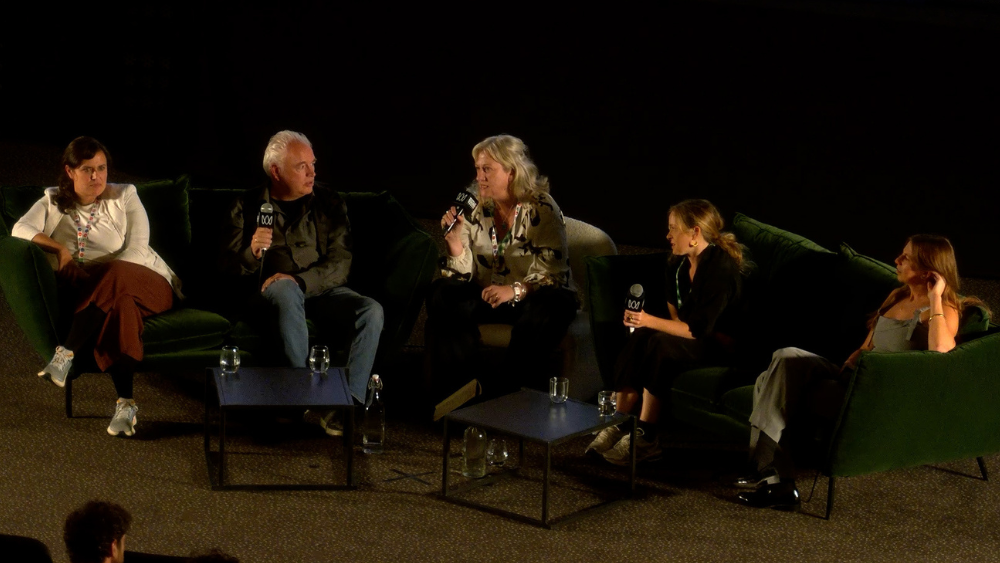
To discuss best practices and key struggles, the WSA gathered a panel consisting of the CEO of the Screen Composers Guild of Ireland, Sarah Glennane; founder of screen composers agency Strike a Score, Valerie Dobbelaere; commercial rights director at Faber Music, Harriet Moss; media composer and copyright and contract law teacher Johan van der Voet; and Dutch/Irish composer Aisling Brouwer (“The Buccaneers”). Below, you’ll find five takeaways from their conversation:
Know as much about music rights as you do about music technology
Glennane brought up the above, based on a quote by British composer Kevin Sargent, as a way of highlighting how important it is in the industry to be on top of creative legal rights. “There’s a base level to that,” added Moss. “If you have a contract, it has got to be in writing. Make sure you understand it. Pay somebody to read it or manage it, if that’s not possible, whether that’s through the commission of an agent or a publisher, be it through a lawyer.”
“It’s important to be able to talk to other composers about it,” said Brouwer. “Because these terms we’re signing have become commonplace, and it’s something that sneaks into the industry. The more people agree to them, the more it becomes the new norm. As composers, we have so much power coming together and advocating for our rights and we have a responsibility to protect our sources of income because so much of it has already been taken away.”
Buyout beware
Buyout contracts are agreements that generally see the composer surrender all rights to their work in exchange for a single fee, foregoing any future revenues generated by their work. The ESCA report showed that 53% of its members had experienced buyer contracts, and 47% of audiovisual composers find buyout practices to be one of the main challenges to their fair remuneration.
Van der Voet brought up major streamers when speaking on the issue, saying he “would love to be hired by Netflix, but their contracts are horrible.” “What does happen is that you’re working with directors who are maybe not that famous, but it can happen that your music will be on Amazon or streamers [later]. I did a movie 10 years ago that has just been sold to Disney+. That happens. What contract did I sign 10 years ago? Am I getting money for this? A lot of composers don’t look into the future. What are you signing away? You have to be very wary of that.”
The composer also made a point of highlighting how full buyout contracts are “an American thing,” given that you cannot buy out the writer’s share in many European countries and the U.K. “In America, the company may own the whole production. If you can negotiate, you might get your writer’s share, but it’s theirs to give. Whereas in Europe we have author’s rights, and basically you cannot take away my author’s right even if I sign all kinds of contracts on top of that.”
Glennane pointed out that buyout contracts seek to remove revenue streams and that she sees composers as “speculators.” “It’s a speculative career. You’re hoping that the work you do is amazing and that you are creatively and economically recognized. Royalties exist in this kind of ecosystem to reward that speculation and investment.”
Production companies are not publishers: pseudo-publishing
In the ESCA report, the practice of producers and broadcasters requiring composers to “sign away or significantly reduce the publishing rights to the works while not fulfilling their legal obligations” to undertake traditional publishing services “related to the exploitation of the works” and to be transparent is called “pseudo-publishing.”
During the panel, Glennane brought up examples like game music being used on screen adaptations of the game to exemplify the practice, making a point of emphasizing that production companies are not publishers and therefore are not the best party to negotiate or be responsible for publishing rights.
“The problem with pseudo-publishing is they grab the rights and they do nothing in return,” said van der Voet. “An example of that is: you’re working with a director who is working with a production company, and then what happens is that some of these pseudo-publishers contact the production company and say they’ll set up a publishing company for you. Film production companies are not music publishers. In the Netherlands, we’ve seen people consistently getting the composer to sign a deal and after that, nothing happens. You just lose money.”
Moss, who also works in publishing, advised composers about the possibility of a single song assignment, or SSA. “We can just publish an album or a soundtrack, but then you’ve got that representation and also the potential for secondary exploitation if it’s allowed.”
The AI copyrighting issue
The conversation around AI loomed over several panels during the WSA Music Days. Since the subject was the main guiding thread of last year’s edition, many attending participants cited a certain exhaustion over continued discussions on the use of artificial intelligence in composing. Still, it is a key discussion to be had when it comes to negotiating rights.
Moss brought up how she manages a “small catalog” of about 13,000 copyrights. “We know all of those composers and their work inside out. That just means you hear something and your hair immediately goes up, but we work with as much technology as possible to be looking for fingerprinting and things like that to protect our composers’ work.”
“But it’s a difficult thing to balance,” she added. “There are a lot of film scores that sound very similar, and that’s always an issue. There are definitely some gray areas.”
Long live the kill fee
As the panel wrapped, participants were asked what piece of advice they would give budding composers. Most of them agreed on one key thing: always have a kill fee. “You need to have a kill fee in case something goes wrong creatively or there’s a fallout,” said Moss. “It does happen. So you need something [in the contract] ensuring that any work that you have already started on is paid for.”
“I do a lot of low-budget projects where the fees are not that high,” added van der Voet. “But there might be other parties involved who want to invest, so suddenly there’s money, but nothing that can be changed about the movie except for the music. Suddenly, they have money to pay a great composer, and you’re off the project.”