Climate
Sir Paul McCartney blasts COP30 climate change conference for serving meat
Sir Paul McCartney has urged COP30 organisers not to serve meat at the climate change conference.
Sir Paul McCartney has questioned the decision to serve meat at the COP30 climate change conference
The Beatles legend – a prominent vegetarian and animal rights activist – has written an open letter on behalf of animal rights group PETA to COP30 President Andre Correa do Lago about the decision to serve meat to guests at the event – which begins next week in Belem, Brazil.
McCartney penned: “I’m writing on behalf of my friends at PETA to ask you to align COP30’s menu with its mission by making it all vegetarian. This would greatly reduce its carbon footprint and overall environmental impact, setting a positive example for the world to follow.”
The 83-year-old musician was shocked by the lack of vegetarian options for guests, particularly with the grave threat that climate change poses to Brazil and the Amazon Rainforest.
The Let It Be artist said: “It is fitting that COP30 will be held in Belem, the gateway to the Amazon, whose rainforest is often called ‘the lungs of the Earth’ because it absorbs and stores massive amounts of carbon dioxide while releasing oxygen.
“Protecting the life-sustaining Amazon must be a top priority for environmentalists of all nationalities, so I was shocked to learn that only 40 per cent of the food served at COP30 is currently slated to be vegetarian.”
Paul couldn’t help but point out the irony of serving meat at an event designed to help the environment.
He quipped: “Serving meat at a climate summit is like handing out cigarettes at a cancer-prevention conference! The animal agriculture industry is a top driver of deforestation and the climate catastrophe that is wreaking havoc on the planet.”
McCartney concluded: “COP30’s own website confirms that plant-based meals have a substantially lower carbon footprint, so I urge you to lead by example and make the conference all vegetarian.”
Paul and his late wife Linda McCartney became vegetarians in 1975 and the music icon is proud to have been a pioneer of a diet that is now adopted by millions of people worldwide.
He said: “It was a joint decision, definitely. We were both quite happy eating meat, because she was a great cook, and we didn’t really think about it until we were on the farm one day eating a lamb dinner and both realised that the lambs outside were what we were eating. We didn’t like that.
“We said, ‘Shall we try going vegetarian?’ And actually, it was a very exciting point in our lives, trying to think of what we would have to fill the hole in the middle of the plate.
“Now of course, it’s really not difficult at all. You just go down the shops and most places will have great veggie options. It was a joint decision and we never looked back. It was a great thing to do, and it turned out we became part of a vegetarian revolution.”
Official Trailer for ‘The White House Effect’ Doc About Climate Change
by Alex Billington
October 29, 2025
Source: YouTube
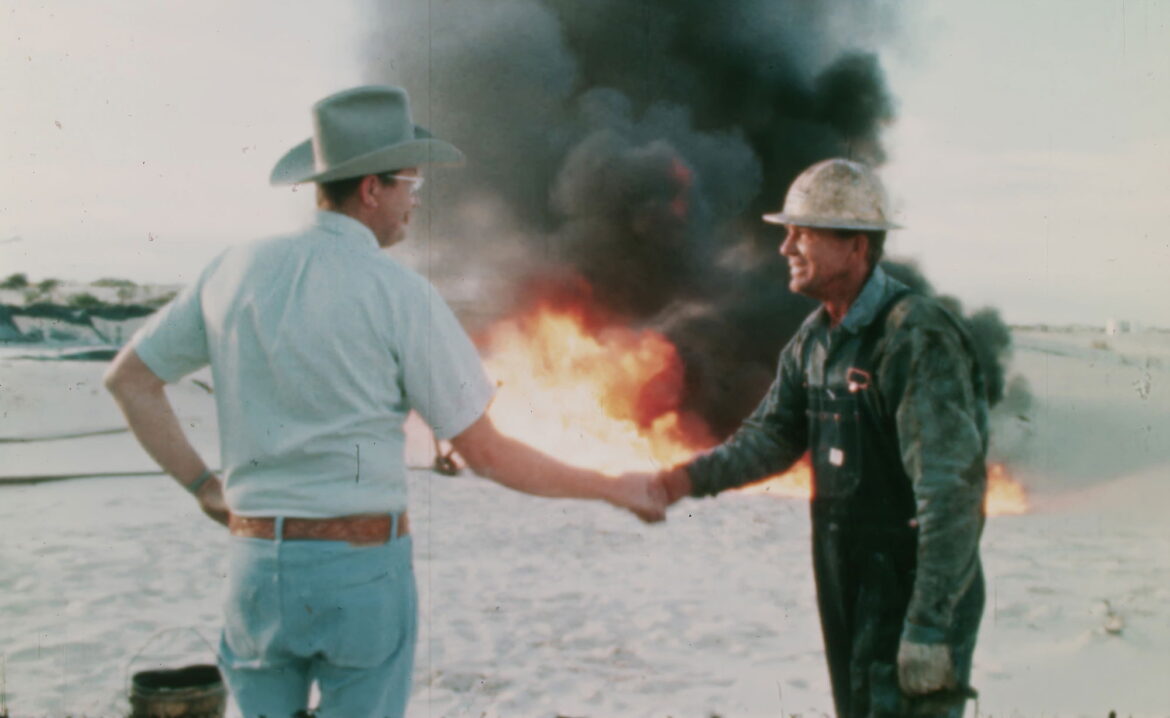
“We need a new attitude about the environment.” Cinetic debuted the trailer for a compelling documentary film called The White House Effect, made by a trio of some of the best doc filmmakers around – Bonni Cohen, Pedro Kos, Jon Shenk. It will be streaming on Netflix to watch starting this week – after premiering at film festivals in 2024. The title comes from an actual quote used by President George H.W. Bush who said he would use “the White House effect” to tackle climate change problems in the 80s. However, things didn’t really go well. Three decades ago, the world was poised to stop global warming. Using exclusively archival materials, The White House Effect tells the dramatic origin story of the climate crisis and how a political battle in the George H. W. Bush administration interrupted that moment, changing the course of history. So sad and infuriating. “How it happened is a question that we can still learn from – and one that [this film] answers with shocking & eye-opening timeliness with a virtuoso use of archive footage. Clips from TV news, presidential speeches, documents reveal how the US was on the brink of historic climate change [action], but instead laid the groundwork for decades of polarization.” Still as important than ever to show the truth.
Here’s the official trailer for Cohen, Kos, Shenk’s doc film The White House Effect, direct from YouTube:


A riveting look at a key moment in the history of the climate crisis, The White House Effect travels back in time to show how a crucial opportunity to take real action on global warming was not just squandered but deliberately undermined. Woven entirely of archival material, the film focuses on the pivotal years of the George H.W. Bush administration — 1988 to 1992 — when the entire country was waking up to the reality of global warming and Bush had pledged to use “the White House effect” to tackle it. Infuriating and irrefutable, the film tracks cause & effect with devastating precision to reveal just how hollow that promise became as Bush finds himself increasingly caught between his chief of staff John Sununu and industry power brokers on one side and his EPA chief Bill Reilly and climatologists on the other. As the world prepares for the Rio Earth Summit in 1992, Bush faces mounting pressure to make a decision that will change the course of history—culminating with the U.S. undermining a global agreement to set hard limits on emissions, setting the stage for the increasingly hot, dangerous, polarized future we all now face.
The White House Effect is co-directed by three award-winning doc filmmakers: Bonni Cohen (director of The Rape of Europa, Audrie & Daisy, Athlete A, Make a Splash) & Pedro Kos (director of Bending the Arc, Rebel Hearts, In Our Blood) & Jon Shenk (director of Lost Boys of Sudan, The Island President, Audrie & Daisy, An Inconvenient Sequel: Truth to Power, Athlete A). Produced by Noah Stahl, Josh Penn, Justine Nagan. This initially premiered at the 2024 Telluride Film Festival a few years ago. Cinetic / Netflix debuts The White House Effect doc streaming on Netflix starting on October 31st, 2025 this fall. Look any good?
Find more posts in: Documentaries, To Watch, Trailer
Journalists and filmmakers and cinema itself are facing growing political threats and increasing difficulties, according to film industry reps at the Zurich Summit on Saturday.
Taking part in a discussion on the political turmoil engulfing the entertainment industry at the Zurich Film Festival industry event were Kathleen Fournier of Charlotte Street Films, producer of the Julian Assange doc “The Six Billion Dollar Man;” David Unger, CEO of Artist International Group; Nathanaël Karmitz, chairman of Paris-based MK2; and Stephen Follows, film data researcher and consultant for Guinness World Records.
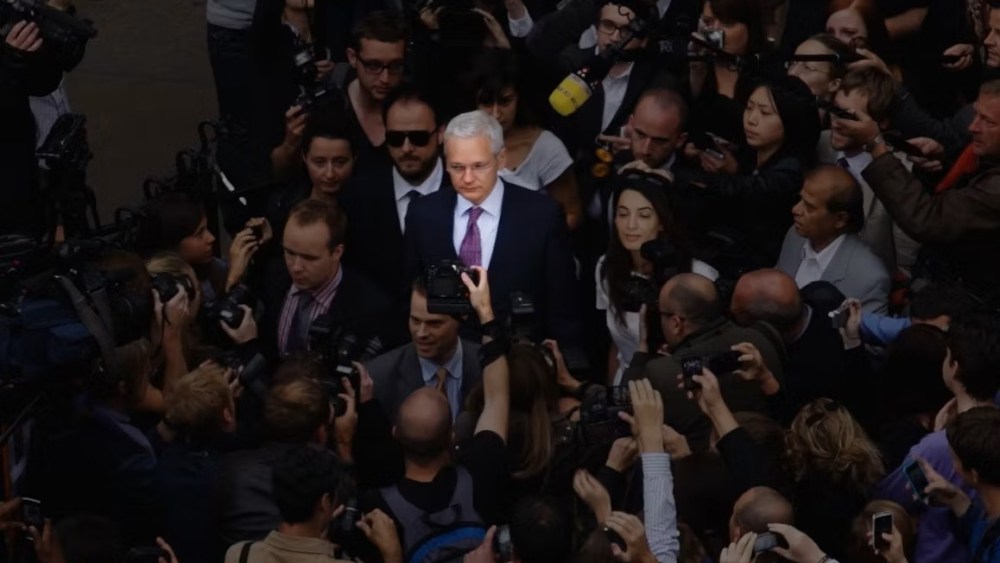
Offering a stark example of the darkening climate for filmmakers was Fournier’s experience in producing Eugene Jarecki’s “The Six Billion Dollar Man,” which screens at the Zurich Film Festival.
“As a filmmaker, as a producer, there is substantial risk sometimes involved for me and my team personally,” Fournier said, explaining how she moved with her family to Berlin to work on the documentary, which tells “the definitive story of Wikileaks,” due to the potentially explosive footage they had obtained.
“We didn’t feel comfortable editing in the U.K. or in the U.S. because there are laws there and ways to seize footage, and journalists aren’t protected in the way they are in Germany. So we moved the entire production and editing team to Berlin, and that was really inspiring and very interesting … until Gaza happened and we started to see that even Germany, with all of its civic mindedness, is fallible to ideology and to erosion. So it was very interesting to see journalists challenged there in real time and to react to that.”
She added: “I think we really do need a mechanism in place to protect journalists. And that’s what our film is about.”
Fournier also noted how the changing political climate and growth of streaming platforms have impacted the prospects of certain types of documentaries.
“It used to be that if you won an Emmy, won the Sundance Grand Jury prize, won a Grierson Award, you would have no trouble getting your films made. And we won all of those with many of our films. I’m not complaining that doors have closed, but what I’m seeing is that as documentaries move to streaming platforms, many of the political and more nuanced and difficult or subjective documentaries did not make that leap.
“The sort of documentaries you now find on streaming platforms tend to be historical – there’s the past, so it flattens the stakes in a way because those people are gone, that time is finished – or it’s true crime or it’s often very sort of personal stories. So it is interesting trying to make a film at this particular juncture as the media landscape is changing fundamentally, dramatically.”
Yet life has always been difficult, Fournier added. “Every epoch has its challenges, and I think we as a generation, my generation, inherited a lot of the fruits of other people’s labor in the civil rights movement, in terms of civil liberties. Now it’s up to us to stand up for those and really investigate what it means as some of those rights and liberties get challenged or taken away.”
Despite winning this year’s Golden Eye Special Jury Prize at Cannes and a “phenomenal” screening in Zurich, “The Six Billion Dollar Man” has yet to land a U.S. distributor.
“We’ve been dancing with lots of partners and talking. People love the film, but it’s a difficult film. … It talks about Trump, it talks about the deep state. It uses all the facts that come from various court cases. It’s an incredibly, deeply researched film.”
Offering a sharp critique of the industry, Follows argued that the onus was on companies to exhibit greater courage, as was the case in the 1970s, which saw much braver, more diverse and interesting storytelling than what was produced in subsequent decades.
“The film industry is fundamentally, as a business and as an ecosystem, risk averse and scared and cowardly. … It’s absolutely cowardly that they’re not releasing these films. You think about how ‘Bowling for Columbine’ got media releases and things like that. So this needs agitators. If we leave it and don’t actively do things, the industry acts in horrible ways. The reason Me Too had to happen is because when left to our own devices as an industry, we didn’t police, we didn’t sort out.”
While stressing that politics and cinema have always been very linked, Karmitz said: “What is new is that we ask this question, and we ask this type of question because culture is under attack and cinema is under attack.”
Karmitz said that while the press was talking less and less about films, far-right accounts on the social media platform X were systematically attacking “everything about movies and French movies.”
The far-right has become the major voice discussing cinema on X, he added. “Is this a problem? Yes, it is, because the question is, how do we organize to fight back?”
Karmitz noted that many of MK2’s cinema events and discussions attract contentious reactions from far-right critics.
Looking at the broader situation in France, he also stressed the recent legal challenge faced by the CNC national film center in Parliament and the ongoing right-wing assault on national television.
Unger, for his part, expressed optimism that the climate would eventually improve. He recalled how earlier films by the likes of Charlie Chaplin and Stanley Kramer “were unbelievably controversial” in their day. Kramer’s 1967 classic “Guess Who’s Coming to Dinner,” for example, no longer causes the great ruckus it once did.
He also underscored the importance of such a discussion at the Zurich Summit. “I see that this register’s here. And I think for us to have this dialogue here is important, because it’s forcing all of us in this room to kind of examine where the business is and how we can help shape it.”
Massive Attack Announce Brazil Concert Supporting Indigenous Rights and Climate Justice
Massive Attack will perform at the São Paulo arena Espaco Unimed, on a bill with the Sepultura side project Cavalera, on Thursday, November 13. They timed the event to coincide with the COP30 International Climate Change Summit taking place in the Brazilian city of Belém. The bands partnered with the Indigenous Peoples of the Amazon to put on the show, in support of their fight to achieve climate justice and secure immediate recognition and protection for Indigenous lands.
Representatives of Indigenous movements will appear at the event itself, a press release notes, and the two bands will also work within Brazil to support Amazonian Indigenous movements. Sepultura founders Max and Iggor Cavalera will perform the band’s Chaos AD album in full at the show.
Robert “3D” Del Naja added that he is honored to work with the brothers “in support of the extraordinary integrity and vital role of the Indigenous people of Brazil and the wider Amazon region. This is more than a passing of the mic. It’s an opportunity to listen to the knowledge, moral authority and wisdom of the Indigenous alliances and help ensure they are heard in the negotiation rooms of COP30. We’ve never needed their presence within that distorted political space as much as we do right now.”
The announcement comes with a joint statement from three Indigenous bodies: the G9, the Coordination of Indigenous Organizations of the Brazilian Amazon, and the Articulation of Indigenous Peoples of Brazil. It reads: “We, Indigenous peoples, step onto the stage as if lighting an ancient fire in the heart of the night. Together with Massive Attack and Cavalera, we turn sound into uprising. Our voices—alive, ancestral, untamed—will cut through the air, cross every border, and unite peoples, from the Amazon to the Pacific. We are the roots that resist, the future that insists. We have never left. We are here to remind you: The Earth remembers. And through us, it demands—dismantle the machine that devours her. The answer is already here. It rises from the very ground we walk together. The Answer Is Us. All of us. And we will advance.”