Hailing from Atlanta, Bangladesh stands as one of the most accomplished yet criminally unsung producers in Hip-Hop and R&B of the new millennium. Known for his explosive, bass-heavy sound and infectious rhythmic style,
Bangladesh’s fingerprints are embedded across some of the genre’s most defining records. But long before his beats became staples of club speakers and car stereos worldwide, he was a barber—steady-handed behind a chair, but with his heart firmly set on music. Eventually, he decided to go all in on his passion, a move that would not only change his life, but save it.
Reflecting on how producing became a guiding force, Bangladesh once explained, “So, say I might be thinking negatively. I might be thinking, ‘Man, I’m going to go do something negative,’ which it’s not like I am but every night when you’re around whatever you’re around at the time, you can fall victim to it.
“Just growing up in the in the in the hood, you can start going down the wrong path, thinking negatively [due to] what you’re seeing and sh*t.
“So, when I would think like that, I would get these feelings [from producing] kind of showing me what I’m going to be doing or where I’m going. Giving me the example of the feeling just so I don’t go do the sh*t that I’m thinking about.”
Courtesy Of Bangladesh
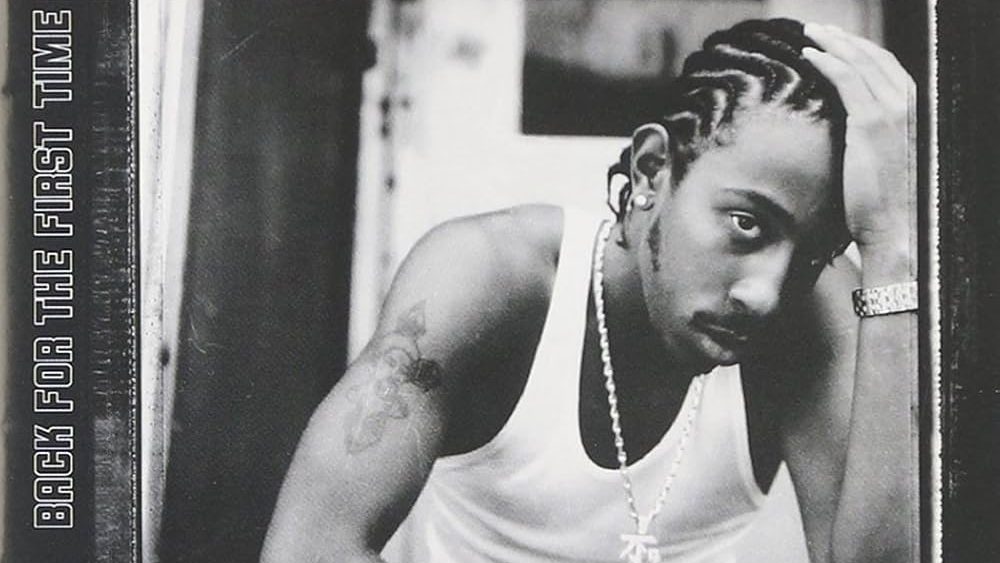
His path took a pivotal turn after a chance encounter with Ludacris—then a radio personality hungry to prove himself as a rapper. The two hit it off creatively, and Bangladesh went on to produce a major portion of Luda’s independent debut Incognegro and his breakout major label release Back for the First Time.
Those early records didn’t just help launch Ludacris into superstardom—they introduced Bangladesh’s rambunctious, high-energy production style to the world.
From there, his sound became one of the most sought-after in the industry, shaping hits that blurred the lines between grit and groove.
Yet, despite his undeniable impact, Bangladesh remains a figure who often chooses substance over spotlight—a quiet architect of modern rap and R&B’s evolution.
In this wide-ranging conversation for VIBE‘s Views From The Studio series, we explore his journey from the barbershop to the boards, the stories behind his signature hits, his candid views on today’s musical landscape, and the collaborations that lie ahead for one of music’s most brilliant, if underappreciated, sonic innovators
VIBE: You’ve had an illustrious run. created many hits, and worked with many artists. How did you first get into music production?
Bangladesh: I would say I was kind of called to it. It was just calling me to do it through the spirit. I guess that’s how I first started, I just bought me a beat machine one day. I was cutting hair, I was a barber [at the time].
So, I saved my money up to get this beat machine that I seen all the producers, all the relevant producers at that time was using, it was called a MPC 2000. I bought that and I invested in myself so I took it seriously.
It’s like something that I really saved my money up to buy so I was really into it. I think anything that you actually invest in or buy with your own money that you work hard for, I think you’re going to take it seriously ’cause you could do anything with your money.
Things like that as a teenager, kids are typically going to purchase something that they could show off in the neighborhood or go outside with, whether it’s a car, clothes, or something that you can get instant validation for. Buying a beat machine, nobody’s around you to see what you bought with your money.
So it was a big deal as far as progressing and and maturity to say, “Save $2,500 up, just buy it”. This is before people understood the music business. Back then, it was more like ‘You can’t do that. You’ll never make it.’ It was more that attitude. You didn’t really see examples of [people] making it into the music business back then, it wasn’t around you like that. You were lucky to to be a part of something like that. Nowadays, there’s more avenues to independently get into it.
And there’s more technology that’s accessible and easy to learn to do it. So yeah, I just was called to it and I just invested in myself.
Who were some of your early influences?
I would have to say Timbaland, definitely. I would definitely have to say Organized Noize. You know, Outkast had just came out, so I was drawn to their production. I think Organized Noise was the first Southern Hip-Hop production crew.
They created Southern Hip-Hop. They were the first ones to make Southern Hip-Hop records with sample loops. And not just sample loops, but like samples that they actually dug through the crates to find, certain loops and sh*t.
The first Hip-Hop production crew to bring a rap group that had substance. At the time, music in Atlanta was more booty shake and uptempo dance music. We didn’t have rappers or rap groups that was Hip-Hop, had the relevancy, had the the song titles, the substance, the lyrical ability.
We didn’t have that before then, so definitely Organized Noize. I would say go back to Teddy Riley, Rodney Jerkins, [R.] Kelly, DeVante [Swing], but Timbaland and Organized Noize were making the production that I was inspired by at the time the most.
What’s the backstory behind your production tag?
My company was called Bangladesh Records and that’s why I first established my company with that name. That was a time that I didn’t have a producer name, I was just going by my government name.
I was just going by my government name ’cause I didn’t want to come up with nothing that I wouldn’t like in a year. My production took off so quick, I wasn’t big, I didn’t have a stage name, I had the company name. I was working on a personal project and on one of the songs I just would shout out, ‘Bangladesh.’
I was doing that a whole bunch of times. I just took a sample of one of them and ran it through this filter. I just started putting it in front of my beats and people just started calling me Bangladesh.
It really wasn’t no science to it, I was just doing something. I wasn’t thinking like, ‘Oh, I’m going to tag my beats.’ It wasn’t really like that. It was just something unconsciously being done that actually was a tag that created the familiarity of who I am and my sound and that’s really where it came from.
I think prior to that, listening to Rodney Jerkins production with his Darkchild tag. I heard Just Blaze shoutout [his tag].
I just looked at they was like shouting out their production on their beat. But yeah, Rodney Jerkins, I think with the Darkchild tag kind of unconsciously birthed that type thing.
What was the production gear that you were using?
As far as the production, my first piece of equipment was a MPC 2000. That was just something that I would see everybody using. That was like the standard thing. Either you had a MPC 2000 or MPC 3000 at that time. Then I went to a MPC 2000XL. That’s the heart and the brains of the operation.
I just wanted to learn how to sample inside the machine and put the sounds in the pads and sequence. Everything else, I don’t know nothing about that sh*t, I just want to know how to make a beat and chop up sounds. So, then I had a Casio keyboard.
It was my cousin’s keyboard, but I would sample sounds out of there. For example, “What’s Your Fantasy,” I took one note of it, sampled it into the MP, put it on all the pads and I’m not playing that on a keyboard, I tapped that on the pads. So yeah, that’s what I was using.
See, “What’s Your Fantasy” was actually like a three-part beat. It was like three beats in one beat. The “What’s Your Fantasy” beat was the intro to another beat. So, it will come on, you hear it without the hi-hat. It would It would come on like that, play for like eight bars, then it’ll switch into another beat. Then, that main beat will go into the outro. I used to do that sh*t all the time.
It’s kind of doing too much, but I was really just mad creative. So, when I gave Ludacris the beat, he was loving the intro. So, he was like, “Man, make this a beat.” So, I just extended the beat and put a hi-hat on it. And, sh*t, probably a week later when I seen him, he was like, ‘Yeah I got a hook to that song.’
Then he he told me the hook. So, when he’s telling me the hook, I’m new to this, I wasn’t really thinking about that part. The songwriting part.
It was new to me, so I didn’t have much of an opinion when he’d tell me his ideas. I’d just be listening. I wouldn’t be having an opinion about that. When I heard that [hook] ,I really didn’t think nothing.
I wouldn’t think, “Oh that’s hard,” or, “Oh that’s weak,” I didn’t think nothing. I just thought it was different, but to know what it was going to be, I didn’t really. I wasn’t really focused on that part of it. But that’s how “What’s Your Fantasy” came about.
You helped Too $hort score his first Top 40 hit with Kelis‘ “Bossy” record. What was it like working with those two?
Yeah, that was dope. That beat actually went through a couple of people’s hands. I played that beat in sessions for a lot of different people. Everybody gravitated to that beat when I played it. I can’t remember who I sent it to, but it might have been Mark Pitts. He was A&R of Kelis’ album at the time. But I didn’t make that for Kelis. Somehow she heard it then Sean Garrett wrote the hook.
Then a couple of people wrote the verses, Jasper being one of those people. He wrote a lot for Lloyd. He’s the reason how I knew what was going on with it ’cause he called me. He was excited. He’s like, “Man, we got some dope. We got something dope to that beat you made. It’s hard, man.” I ain’t know nothing about it till he told me.
So there was creative process going on with the production already that I didn’t even know until he called me about it. But it was dope for me, it was a monumental time for my career due to the fact that Kelis just was on a run with the Neptunes. They produced the whole first joint then she’s doing something else [sonically] on her sophomore album.
It’s hard to outdo the first time, you know what I’m saying? I stepped up to the plate so it’s like I felt like I belonged again ’cause she’s coming off of Pharrell and Neptunes and now she got the Bangladesh joint.
It’s different, she came back with 808s and and little bells and sh*t. So that was a dope experience and dope time and it was an R&B song.
I really wasn’t thinking R&B when I made the beat, so that was different. Too $hort getting on it was just like the icing on the cake. We all grew up Too $hort fans so yeah. It was different for him too to get on something like that and just those two together, Kelis and Too $hort, was like a different look. So that was a dope time, man. It’s a classic song that still be rocking till this day.
In 2004, you produced 8Ball & MJG’s track, “You Don’t Want Drama,” which is one of their biggest crossover hits and help introduce them to a new generation. What’s the backstory behind that track?
That was probably the first production I did outside of Ludacris in the beginning. It was the first time I’ve got outside and connected with or pursued to connect with artists in the music business. I was backstage at [Atlanta] Birthday Bash, I think, when I met 8Ball.
And I kind of just introduced myself. I just would use whatever [beat] was relevant at the time, which I had “What’s Your Fantasy.”
“What’s Your Fantasy” being a song that actually broke an artist kind of was a little more than actually just making a hit record ’cause breaking artists or introducing a new artist to the world was looked at way different than just making a hit song.
So, that’s how I would introduce myself, as Shondrae, Bangladesh, I did “What’s Your Fantasy,” Ludacris. So, that will get the conversation going, but that’s how I met him. I was in New York. I had been calling him already, but I was in New York. It was probably two weeks after I got his number.
He had me answering the phone every time I called him. I just happened to be in New York for some other business. I had a Bad Boy meeting on Friday with an A&R. This is a Monday. So I called 8Ball, he answers. He at the hotel, he told me to pull up.
I pulled up, played him some beats. He picked “Don’t Make.” I actually did three songs on that project. He picked a a song called “Don’t Make” that Friday. I was going to the meeting and the A&R was already raving about the beats that I gave him on that Monday. I guess they had recorded some ideas between those days.
So he took me into the studio and started playing me the ideas and that’s what 8Ball came in. That’s when Puff came in, kind of going over the songs and trying to complete them and stuff like that. That’s really how that came about.
You also worked with Beyoncé on “Diva,” one of her most empowering records. What was that experience like?
“Diva,” that was a blessing. That was a record that “A Milli” created. You know, it was like whatever your relevant song is at the time is what people kind of be after. ‘A Milli’ was a smash.’
So I think it was dope for Beyoncé to just be open to what I’m doing. “Diva” is something that I had made already. I had made this beat already. That’s me actually saying “Diva” on the beat. So when I was working with Sean Garrett, he was going in [to work] on Beyoncé.
He’s a fan of “A Milli.” He’d always tell me how much we love “A Milli” and if he had “A Milli,” what he would have did to it. So, I had this “Diva” beat, which I felt like if we’re working on Beyonce, there’s really nobody else that could do this beat but Beyoncé, so it just worked out. I feel like “Diva” is Beyoncé’s “A Milli.”
Another record from that time period that I think may have been spawned from “A Milli” was “Did It On’em” by Nicki Minaj. What was it like working with Nicki?
Working with Nicki, it was fun. Again, she was a new artist, too. That was the first album. “Did It On’em” went through several hands, it actually was Lil Wayne‘s beat first. He recorded that song first, not “Did It On’em” song but he recorded the song to that beat. He was in love with this beat. Well, he was in love with this song that he recorded.
I never heard the song, but the source that I got the beat to him through called me. I gave him this beat. I gave him some beats and it probably two months later he called me about this, but at that point I had already recorded the song on somebody else. The Game had recorded the song, too, within those two months.
I was kind of geeked about The Game song. I feel like at at that time, the game hadn’t had a song like that. It was dope. Best The Game song I’ve ever heard at the time.
So I was feeling like that was the move. Like I said, I had gave Lil Wayne his beat like too two months prior. I didn’t hear from him so I didn’t know if he was doing his beat. So nothing happened from The Game sh*t. I was still shopping the beat.
Lil Wayne had got locked up at that time. That was the time he had did a year. Puff was managing Nicki Minaj. Puff wanted me to play him beats for his project, so I played him some beats.
That “Did It On’em” beat was one of the beats that I left for him. Sh*t, some weeks went by and I think he called me. I think Puff called me telling me that Nicki Minaj liked the “Did It On’em” beat and he was apologizing because he didn’t know that I had issues with Cash Money.
So he was kind of calling me to apologize because he didn’t know that I had these issues prior to him playing her my beats. So, I just linked up with her. I already had a relationship with her prior to this, she had did something for me.
We had been meaning to work already so it worked out. She played me the song over the phone. I told her that was Wayne’s beat. So I was just making sure that she knew that and she got his okay to to use the beat.
‘Cause last I knew, they was part of the same team, so I know he had did something to the record. I asked her about my royalties, you know, it was like little issues that I had over there, making sure like these things were were being handled at this point to move on. And she said that she asked Wayne for the beat.
He said, “Yeah.” And my royalties will be paid out, so, I moved forward with it. Come to find out when Wayne got out of prison that he didn’t know how she got the beat. Like using interview telling this story how when he was locked up how one of his artists fucked this girl and and Nicki stole his beat. Damn.
What would you say are your most underrated beats?
I would have to say “Jefe” by T.I. and Meek Mill. I feel like the production on that is outstanding. I did another one called “Classic” for Meek Mill. If you hear it, I don’t know if people would know it’s me, but if you know my style, it’s not like outside of [that].
It’s not like I’m reaching for something else, but it’s definitely more Hip-Hop, more real Hip-Hop type driven. There’s a whole bunch, man, ’cause I remember songs that come out and they weren’t doing nothing [commercially]. I’m like, “Man, that sh*t hard as hell, why it ain’t catching fire?”
I did this sh*t for Dem Franchize Boyz called “Talking Out the Side of Your Neck,” I ain’t like that hook though. I think the hook kind of prevented that record from going somewhere, but that beat hard. I did a whole bunch on Brandy‘s Two Eleven album. She put out the video to “Put It Down” featuring Chris Brown. I did that but I did like four more (“Let Me Go,” “So Sick”) that’s incredible.
All [of] them jamming. I did this group called One Chance. It was Usher’s group back in the day. A song called “Emotional,” an R&B joint. People don’t know my range .And I did that early, like 2001. So, that beat’s dope. It’s like one of them underground classics, it’s one of them. There’s a few of them though, but those those are the ones that stuck out.
Do you prefer for analog or digital?
Analog. Analog all day. Digital is too digital. It’s too futuristic, it’s too clean, it’s too perfect. Analog is dirty, it’s more like street, it’s more like it touches the spirit a little different. There’s imperfections there that create the balance, gives it character.
Digital, it’s not too much character there. Then, anything digital kind of sounds the same even if it’s different, you know what I’m saying? It just sounds the same. And if you’re using analog and you got your your own style, it don’t sound the same. You got more room to just give off your personality and character in. Digital is too much like A.I.
What are your thoughts on A.I. and music production?
I’m not rocking with it. I ain’t. Not to you know be an old ni**a type, but there’s it’s like science trying to be you. It’s like technology that’s trying to emulate you.
I mean, who’s going to rock with that? As a creative, you’re not. I don’t want nobody to be like me. So yeah, I don’t really rock with it. I think it could be useful for certain things if you utilize it in certain ways.
But for the inexperienced people that are just trying to do music that didn’t go through the process to get to where they’re going. The ones that ain’t practicing and exercising to perfect their craft, you can just learn A.I. and do what you can do or try to do what you can do. No, I ain’t cool with that.
What would be your advice to producers trying to get in the game?
My advice, it’s cliche but just believe in yourself and always try to create your own style. A lot of creatives emulate things, and that’s cool in the beginning. There’s something that inspires you to do what you’re doing and you tend to emulate what you’re in love with, but you have to get to a place where you create your own style so, can’t nobody really do what you do.
And you want people to come to you for what you do, you know what I’m saying? If you sound like everybody else, there’s nothing that makes you unique and stand out. Just a lot of crabs in the barrel. It’s not unique or nothing.
So, for me, I stand out because like I have a sound and a style. All the greats have sounds and styles. If you want to be great, then that’s what you need to do.
Are there any producers that’s on the rise that you check for?
I think Cash Cobain is having his run. He got a little sonic style that he’s sticking with, I like that. I like the fact that people come to you for what you do. And he’s owning it and and running with it and having success with it.
I mean, there’s production that I hear but I might not know who it is. Or stuff that I hear that I might like but I don’t really know who it is. But he sticks out, for the most part, Cash Cobain.
Yeah. That goes back to what you were saying about having your own sound. What do you have coming up that the people can look out for moving forward?
Recently, I’ve been in the studio with Young Dro, LaRussell, Fredo Bang. Rick Ross. Yeah, that’s about it. I’ve been in there with a lot of new artists but that’s about it.
I’m in my creative bag right now. I’m making clothes. I got a clothing line. It’s a lot of leathers, it’s some fly sh*t. It’s like lifestyle sh*t, I got the music to to match with it. I’m just in my designer lifestyle mode, things that I’m into, that’s what I’m trying to give off.
That’s really it, you know. You can go to my website superproducerbangladesh.com, I got some merch pieces on there.
I haven’t put the clothing line up there yet, but I just got the boxes here so you know it’ll be up on the internet. But yeah, just check me out. I just want to get into that world.