Also Read: Farhan Akhtar & Raashii Khanna’s Naine Ra Lobhi From 120 Bahadur Is Out Now

Farhan Akhtar and Raashii Khanna are set to visit the city of Jodhpur for an emotional tribute on the day of the trailer launch of their upcoming war drama, 120 Bahadur. The film, based on the valour of the real-life heroes of the 1962 Battle of Rezang La, has already set expectations high for its stirring portrayal of India’s armed forces.
The Jodhpur visit holds special significance, as the two will be paying homage at the memorial of Major Shaitan Singh Bhati, PVC — the war hero whose courage inspired generations. During their visit, Farhan Akhtar and Raashii Khanna will also be meeting Major Shaitan Singh Bhati’s son, Narpat Singh Ji, and the family, showing the trailer first to them before the trailer is unveiled to the world.
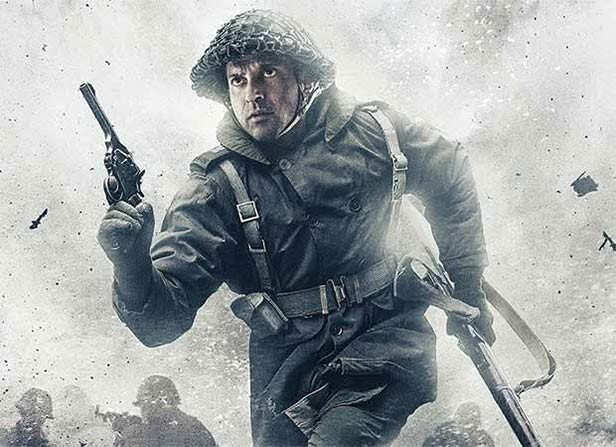
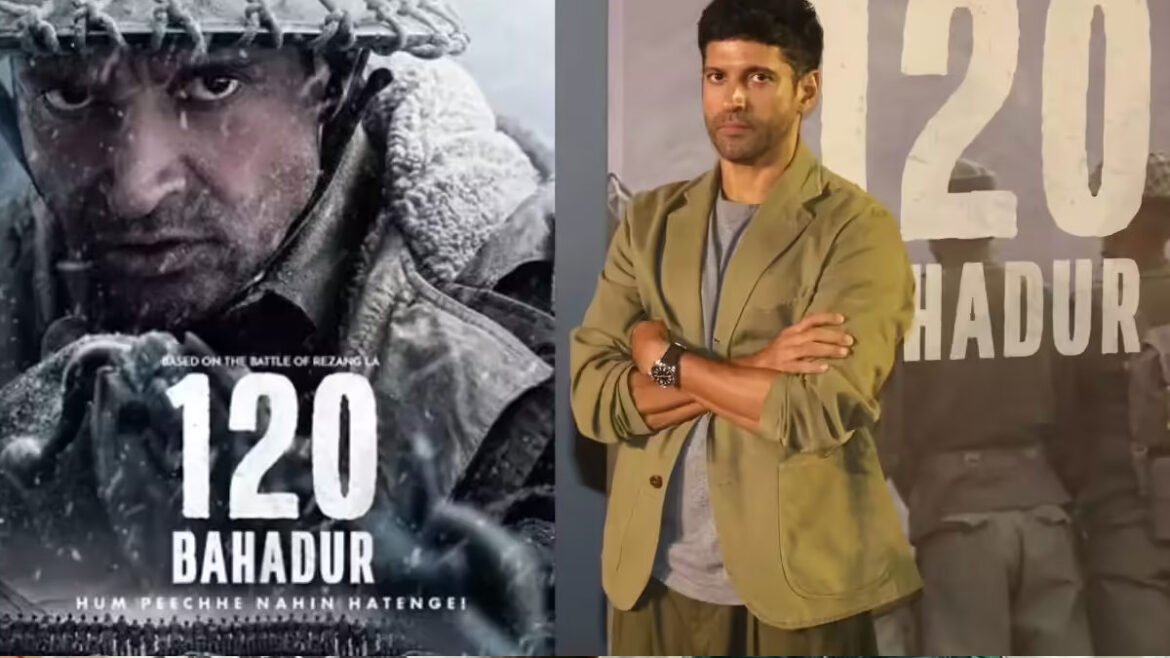
In the film, Farhan Akhtar essays the role of Major Shaitan Singh, while Raashii Khanna appears in a significant special role — marking a meaningful on-screen reunion for the two. The choice of Jodhpur, a city steeped in military pride and royal heritage, reflects the gravity of the story the film seeks to tell.
As per a source close to the film, “Farhan Akhtar and Raashii Khanna will be visiting Jodhpur on the day of the trailer launch to pay homage at the memorial of Major Shaitan Singh Bhati, PVC. The visit is being planned as a heartfelt tribute to Major Shaitan Singh Bhati, PVC, and the spirit of valour and sacrifice that 120 Bahadur celebrates. During their visit, Farhan and Raashii will also meet Major Shaitan Singh Bhati’s son, Narpat Singh Ji, and the family, before unveiling the trailer to the world.”
Directed by Razneesh ‘Razy’ Ghai and produced by Ritesh Sidhwani, Farhan Akhtar (Excel Entertainment), and Amit Chandrra (Trigger Happy Studios), 120 Bahadur is an Excel Entertainment production and releases in cinemas on November 21, 2025.
For more news and updates from the entertainment world, stay tuned to Bollywood Bubble.

With nearly 10 years of experience, Grinell Esther Jacinto is the Desk Head of Bollywood Bubble. Her interests lie in everything that is kaleshi and she loves to dig deeper into the lives of B-town actors. She has a problem though – she loves horror films but will have chills the minute the theatres lights dims. She’s previously worked with Koimoi, UrbanAsian and SpotboyE.
Song: Dada Kishan Ki Jai
Movie: 120 Bahadur
Singer: Sukhwinder Singh
Music Composed & Produced by: Salim Sulaiman
Lyrics: Javed Akhtar
Music Co-Produced by: Raj Pandit
Check out Dada Kishan Ki Jai Song Lyrics from 120 Bahadur starring Farhan Akhtar
Jo Bhi Sunega Unki Kahani
Hoga Wahi Mureed
Apni Dharti Par Deewane
Kaise Hue Shaheed
Jo Dhad Dhad Raaste Mein Patthar Barse Jaave
Dam Dam Dhol Mein Hum Aadha Udhar Jaave
Apna Gaav Na Jhukna Hai Na Jhukna Hai
Parvat Roke To Parvat Roke To Thokar Se Use Hataave
Jo Dhad Dhad Raaste Mein Patthar Barseve
Goliyon Ki Barishon Mein Piche Nahi Hate The
Hum Peeche Nahi Hate The Hum Piche Nahi Hate Ho Ho
Goliyon Ki Barishon Mein Piche Nahi Hate The
Hum Seene Chhalni Ho Gaye The Par Himmat Nahi
Hui Thi Kam Himmat Nahi Hui Thi Kam Himmat
Nahi Hui Thi Kam
Are Marte Marte Hothon Par Tha
Marte Marte Hothon Par Tha
Bharat Mata Bharat Mata
Dada Kishan Ki Jai Bolo
Dada Kishan Ki Jai
Raaste Mein Patthar Barse Jaave
Dham Dham Dhol Pe Hum Aadha Gaave
Apna Kaam Jhukna Hai Na Rukna Hai
Parvat Roke To Parvat Roke To Thokar Se Use Hataave
Dhad Dhad Raaste Mein Patthar Barse Aave
Marte Marte Hothon Par Tha
Bharat Mata Bharat Mata
Dada Kishan Ki Jai Bolo
Dada Kishan Ki Jai
2025 has undoubtedly been a defining year for Ankit Siwach, a year that marks his evolution from a talented performer to one of the most promising names in the industry. Known for his sincerity and constant desire to challenge himself, Ankit has seamlessly transitioned across platforms, genres, and audiences. From his gripping performance in Kull to his international recognition at NYIFF and now his striking transformation in 120 Bahadur, Ankit’s journey this year has been nothing short of unstoppable.
The year began with Kull, a project that showcased Ankit in one of his most complex roles. The thriller gave him the space to dive deep into layered emotions, earning him praise for his controlled yet impactful performance. It was proof that Ankit could shoulder a narrative that relied heavily on emotional depth and nuance.
Then came the recognition that truly put him on a global map, the NYIFF (New York Indian Film Festival). His appearance with Madam Driver at one of the most prestigious international film festivals not only highlighted his versatility but also positioned him among artists who are redefining Indian storytelling beyond borders. It was a proud moment that reflected years of consistency and craft.
And now, with 120 Bahadur, Ankit takes yet another leap forward. The teaser alone has created a buzz, with fans and critics alike calling it his fiercest transformation yet. Playing a soldier demanded not just physical preparation but emotional depth, something Ankit embodies naturally.
Together, these three milestones, Kull, NYIFF, and 120 Bahadur, have become symbols of Ankit Siwach’s relentless growth. 2025 isn’t just another chapter in his career; it’s the year he proved that passion and persistence can truly make an artist unstoppable.
For more news and updates from the entertainment world, stay tuned to Bollywood Bubble.
The story of Rezang La has always existed in a paradoxical space in Indian cinema. It is one of the most heroic episodes in the country’s military history, yet its cinematic presence has been faint, almost spectral. Chetan Anand’s Haqeeqat (1964), long regarded as India’s first major war film, gave voice to the sorrow and loss of the 1962 Sino-Indian conflict. It captured the anguish of a nation defeated, and though it alluded to the bravery of Indian troops, it never isolated Rezang La as the defining stage of resistance. For audiences of that time, still reeling from the shock of the war, mourning seemed more immediate than memorialization.
In the decades that followed, cinema turned away from 1962 almost entirely. Where the 1971 war and even Kargil found their cinematic champions in films like Border or LOC Kargil, Rezang La was left to regimental histories, military commemorations, and the occasional documentary. Its visual telling remained confined to niche audiences, while in popular culture the 1962 war was remembered—if at all—as a defeat.
That absence matters more today than ever, because India’s younger population—those born after liberalization, raised in the post-Kargil era of chest-thumping nationalism—have little or no memory of 1962 beyond a line in school textbooks. For them, Rezang La is not part of a living imagination. It is here that 120 Bahadur holds its real significance. More than a film, it is a cinematic reclamation, introducing a forgotten legend to an audience that may not even know the war it belongs to.
The involvement of Farhan Akhtar and Ritesh Sidhwani signals ambition. Their track record—be it Lakshya with its earnest soldier’s arc, or Dil Chahta Hai and ZNMD with their pulse on generational storytelling—suggests an ability to marry scale with human emotion. The expectation, then, is that 120 Bahadur will not simply be a patriotic tableau, but an immersive war drama that humanizes the 120 soldiers while delivering the spectacle modern audiences seek on the big screen.
The trailer, in that sense, becomes a litmus test. It must do two things at once: educate a generation largely unaware of Rezang La, and entice them into theatres with the promise of cinematic scale. On the first count, the glimpses of snowbound terrain, the grit of soldiers preparing for a last stand, and the invocation of Major Shaitan Singh do establish the battle’s historicity. On the second, however, the trailer leaves questions. Does it lean enough into the emotional and visual intensity required to justify the theatre experience, or does it risk appearing as just another patriotic war drama destined for OTT discovery later?
This tension defines the film’s challenge. To draw young audiences into cinemas, 120 Bahadur must transcend textbook patriotism and offer an experience that feels both authentic and spectacular. If it succeeds, it will not only restore Rezang La to the cinematic canon but also bridge a generational gap in India’s cultural memory. If it falters, it risks consigning a story of extraordinary courage to the same fate it has endured for sixty years—admired in military circles, but absent from popular imagination.