celebpeek
  • Home
  • Bollywood
  • Hollywood
  • Lifestyle
  • Fashion
celebpeek
  • Music
  • Celebrity News
  • Events
  • TV & Streaming
Home » Alejandro
Tag:

Alejandro

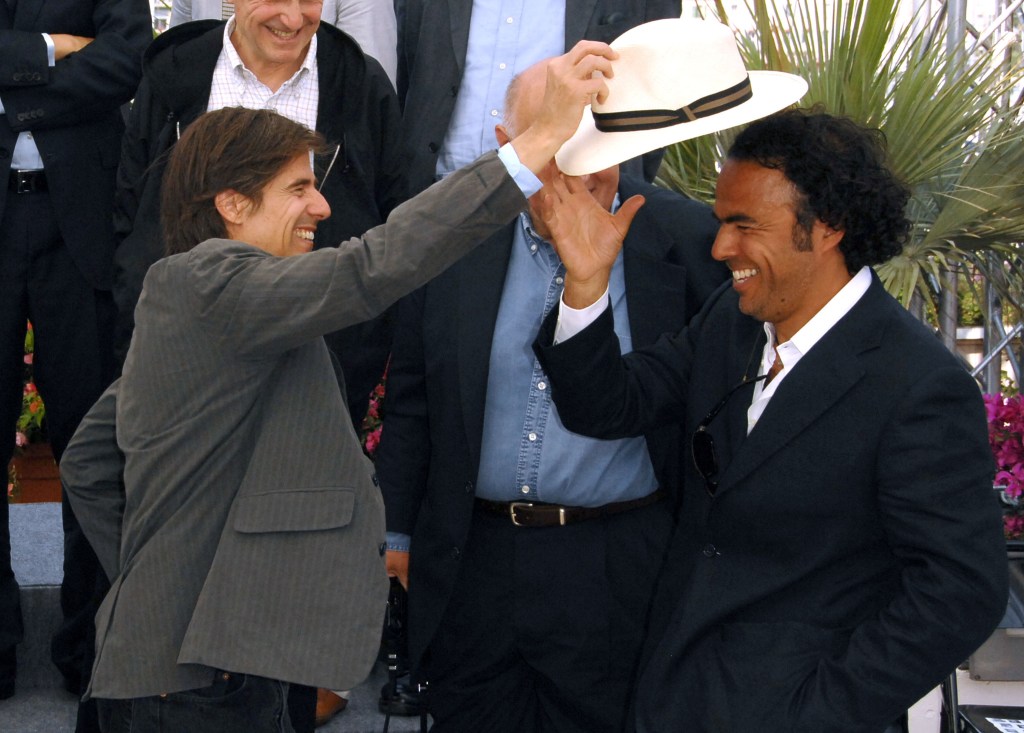
Alejandro González Iñárritu honors Walter Salles Academy Museum
TV & Streaming

Alejandro González Iñárritu honors Walter Salles Academy Museum

by jummy84 October 15, 2025
written by jummy84

Ed. Note: On Saturday, Walter Salles will be bestowed a Luminary Award at the Academy Museum Gala Tribute, along with Penélope Cruz, Bruce Springsteen and Bowen Yang. Multiple Oscar winner Alejandro González Iñárritu wanted to say a few things about his friend Salles, the storied director of Central Station and most recently I’m Still Here.

Walter Salles couldn’t understand how a raw piece of wood could become a giraffe or an elephant. Especially since the hands sculpting that wood belonged to the Polish artist Frans Krajcberg—a man who had arrived to Brazil without ever having had any contact with those animals. Surprised by the question, Krajcberg replied: “Well, I take the wood, and everything that is not the elephant, I remove.”

Walter learned this lesson well in 1995 when he made his first documentary about the correspondence between the sculptor Krajcberg and a woman serving a twenty-year prison sentence, Maria do Socorro Nobre. When Walter sculpts a cinematic piece, everything that is not human, he removes. What remains is the talkative biped animal we are—always naked and exposed.

His gaze is compassionate but honest. There is no place for irony or cynicism. Nor does he indulge in excess emotion or manipulation. I first met Walter more than 25 years ago after the release of Central Station that beautiful film born out of his first documentary about the correspondence between the inner worlds of Brazilian characters. Humanity seeped and shone through non-actors interacting with actors, always under the wise and soulful gaze of Fernanda Montenegro.

In his film I’m Still Here, three decades later and still faithful to Krajcberg’s teaching, Walter stripped away everything unnecessary so that we could see, with clarity, and through the eyes of Fernanda Torres, what is truly essential in a painful human experience.

Paradoxically, at a time when corporate cinema seems intent on stripping away everything human—leaving only pixels, algorithms, and the basest ideas that trigger and manipulate our most obvious, cruel, and primitive emotions—Walter removed all frontal and reductive politics which, in a binary world, just blind and agitate even more the people who already agree with us, in order to offer and explore a purely human cinematic sculpture about silence. And silence is political in singular way.

The control of the narrative and the language is the signature of every dictatorship. Censorship forces silence. Things need to be felt and understood through the gaze and not the verb. It is through silences, through the stretching of time, through the waiting for a body that does not return, that the spectators entered the film and completed it.

For Walter, the reconstruction of a family memory, at the core of the film, mirrored the rebuilding of Brazil’s collective memory. I’m Still Here architecture flows between the individual to the collective, the artistic and the politic, the local and the universal. Cinema and identity intertwined.

Over all these years, with a good bottle of red wine on the table and plenty of laughter, we have shared countless conversations about our mutual passion for the cinematic language and the construction of films. Walter always describes a film in architectural terms. A film is less a place one sees than a place one inhabits.

In my view, there are engineer directors and architect directors. The former makes vertical films—solid, functional, built with heavy strokes. The latter are more horizontal, transparent, drawn with lighter lines. For the engineer, the important thing is structure, what is visible from the outside, and the efficient, pragmatic and rational function of the materials. For the sculptor or architect director, everything revolves around what is not seen, but rather felt. It is about the relationship between exterior and interior space, privileging sensation over function—the emotion of light and space over the object itself.

To me, what defines the architecture of Walter’s cinema is nobleness. Nobleness in one’s gaze cannot be studied or imitated; It must come from within, from the filmmaker’s way of being and thinking.

In dictatorships, such as the one now unfolding at digital speed in many countries around the world, thousands or millions lose their lives or disappear. Often only the important people are remembered. Over the past five years, I listened to Walter speak of Eunice and her family with the empathy and tenderness of a son. She was an unknown figure to the world, yet essential in Walter’s life. In Brazil, as in every country scarred by dictatorship, everyone carries a Eunice in their heart. That’s why Jair Bolsonaro, the former president of Brazil, has just been sentenced to over 27 years of prison after attempting military force to overturn an election. In the United States, a dictatorship is still an abstract thought. A black cloud looming. In Brazil, they know by experience. Hatred, spread through rhetoric, populism and the internet,- acts like a virus, ravaging any healthy social organism bringing, death, destruction and pain. Just as Italian Neorealism and Brazilian Cinema Novo once did, through his cinema, Walter’s inner space opens its doors horizontally, without agendas or hierarchies, so that all human emotion can converse within this personal yet collective space.

I deeply celebrate that our admired and beloved friend Walter Salles is now deservedly receiving the Academy Museum Luminary Award for his beautiful sculptural and cinematic work.

October 15, 2025 0 comments
0 FacebookTwitterPinterestEmail
Rauw Alejandro: Cosa Nuestra: Capítulo 0 Album Review
Music

Rauw Alejandro: Cosa Nuestra: Capítulo 0 Album Review

by jummy84 October 9, 2025
written by jummy84

It’s rare these days for an album to be allowed to stand on its own. No matter how good a record is or how well-received, musicians can’t help but make sequels. The album is completely different but also still the album. Every eusexua has an afterglow. Though we are born to die, we are promised paradise. The same themes are mined, remixed, subverted, and marketed as a continuation until the album cycle lemon runs dry, bitter, or both.

Rauw Alejandro’s a particular fan of this framework. Real fans remember both slices of Trap Cake. He followed up magnum opus Saturno with Playa Saturno, a forehead kiss of an album tack-on. Cosa Nuestra’s “chapter zero,” billed as a prequel to last year’s album, is four songs shorter than the original 18-track LP. In other words, it’s a full album of its own, with a largely new sound and focus, even if it’s meant to exist in the cigar-perfumed universe Rauw has been wearing vintage suits in for over a year now.

Where Cosa Nuestra channeled salsa romántica greats, Capítulo 0 taps into syncretism, ancestry, and Puerto Rican folk sounds. This includes bomba, the Afro-Puertorican genre rooted firmly in the drum that forms the backbone of several tracks on Capítulo 0, including swoon-worthy opening track “Carita Linda,” rife with shakers and a call-and-response that feels like godly invocation.

Despite Cosa Nuestra’s aesthetic, salsa wasn’t quite in the room with us on that release; here, it is relegated to the album’s three-part finale. “Callejón de los Secretos,” with Chilean-Mexican musician Mon Laferte, is a high-class duet out of an old-school lounge. Energetic “FALSEDAD” sees Rauw decry a past love to congas and salsa horns with the heartbroken mastery of Frankie Ruiz (whose “Tú Con El,” a crucial cover from this era, Rauw nods to in the lyrics). Closer “Mirando Al Cielo” is an ode to Puerto Rico that evokes the mysticism coursing through Capítulo 0: “Mary is taking care of me/Yemayá is opening the seas,” he sings in Spanish, conjuring a divine protection that’s in line with salsa classics since the genre’s onset and closing the Cosa Nuestra era with his best vocals to date. That it feels a little late doesn’t lessen the impact, or execution.

October 9, 2025 0 comments
0 FacebookTwitterPinterestEmail
Alejandro G. Iñárritu on 'Amores Perros' and His New Tom Cruise Movie
TV & Streaming

Alejandro G. Iñárritu on ‘Amores Perros’ and His New Tom Cruise Movie

by jummy84 October 4, 2025
written by jummy84

It’s opening day of Paul Thomas Anderson’s “One Battle After Another,” and Alejandro González Iñárritu is worried about how it will play with audiences. “I just cross my fingers that people go in millions,” he told me. “I hope, because it’s so important.”

We are talking on Zoom, and of course, Iñárritu is rooting for PTA: He’s a fellow auteur who makes expensive original movies with movie stars. (BTW, the $130-million movie opened to $22 million.) For his part, Iñárritu just wrapped principal photography in April on an untitled comedy ensemble led by Tom Cruise and produced by Legendary for Warner Bros.

The Mexican filmmaker is directing his first English-language movie since 2015’s “The Revenant,” which won “One Battle After Another” star Leonardo DiCaprio his first Oscar. The untitled Cruise comedy, shot in 35-millimeter VistaVision by three-time Oscar-winner Emmanuel “Chivo” Lubezki, should come out sometime next fall. The director is in the editing room.

ANEMONE, from left: Daniel Day-Lewis, Sean Bean, 2025. © Focus Features / courtesy Everett Collection

“We’re going to finish in February, March,” he said. “We still have a long way [in] post-production.”

Even though both Iñárritu and Cruise are powerful, controlling perfectionists on a movie production, “it was the most amazing, unexpected, sweet, gentle relation that I have had on a set,” Iñárritu said. “His manners, his understanding, his passion, and his integrity, and the way he prepares. He loves the process. Filmmaking has been his life for 40 years. I have never seen somebody so devoted. I was happy to share with him that passion. And at the same time, we built an incredible relation of mutual trust. He will surprise the world. People will see a new kind of thing. It was blessed, and not only him, but all the cast: Riz Ahmed, Sandra Hüller, John Goodman, and Jesse Plemons. We had a blast. It was challenging, but it was wild comedy. And we laugh a lot. We have a wild time.”

AMORES PERROS, (aka LOVE'S A BITCH), Director Alejandro Gonzalez Inarritu, Emilio Echevarría, 2000. (c) Lions Gate Films/ Courtesy: Everett Collection.
Alejandro González Iñárritu and Emilio Echevarría on set of ‘Amores Perros‘©Lions Gate/Courtesy Everett Collection

But we are not Zooming to talk about Cruise. This May, to celebrate the 25th anniversary of “Amores Perros,” Iñárritu’s daring triptych debut feature, shot in Mexico City and introducing Gael García Bernal, the director screened the restored 4K version at Cannes to a packed house. The movie holds up: It’s vivid, loud, assaultive, and violent, from the visceral dogfights (no animals were harmed) to the glam model (Goya Toledo) who is forever mutilated in a car crash. A brand-new 5.1 surround sound mix by Jon Taylor at NBCUniversal StudioPost enhances the intensity.

The director hesitated to watch the film at the Cannes Classics showing. He had undergone the painstaking Criterion restoration for the 20th anniversary in 2020 with cinematographer Rodrigo Prieto, but had only watched the film in bits and pieces.

“I hadn’t seen the film complete in 25 years,” he said. “The film was shot in a bleach-bypass process, or silver retain, which is a very corrosive thing, because the silver stays in the negative. So we have to restore a lot of things. [I thought] what young man did that? And all the effort that it took for all of us who did the film, the amount of work, considering the little money we have, and so little time. What I can tell you is that I was impressed by the muscle. It hasn’t become a flaccid film.”

Gael Garcia Bernal, Alejandro Gonzalez Inarritu, and Martha Sosa t the
Iñárritu at the Cannes restoration premiere of ‘Amores Perros’ in May 2025Anne Thompson

“Amores Perros” played Cannes 25 years ago, but not in Competition, where it was roundly rejected before it went to the selection committee. Luckily, it was invited to Critics’ Week, won the Grand Prix, and landed a North American release in 2001 from Lionsgate. The rest is history. It launched the careers of Iñárritu, 19-year-old García Bernal, and Prieto, among others. After the screening, a grateful and teary García Bernal said, “It’s a film that we all were transformed, and even the way in Mexico we were perceived, the films were transformed.”

“Even when we were a very small independent film in a very small section that is not even official, it became the film that everybody wanted to see,” said Iñárritu. The film was nominated for the Best Foreign Language Film Oscar; the writer, director, and producer went on to win Best Director for “Birdman” and “The Revenant,” and Original Screenplay and Best Picture (“Birdman”).

When they made “Amores Perros,” the filmmaker explained, the Mexican film industry was producing only five to seven local films a year from the same few directors, with a nationalistic flavor, subsidized by the government. Maybe one would wind up in theaters. “Every director that I knew at that time, they [had] just made one film,” he said. “And they were already 50 years old. A film was considered a one-time opportunity, and you better make sure that you put all you have to say there.”

AMORES PERROS, (aka LOVE'S A BITCH), Vanessa Bauche, Gael Garcia Bernal, 2000. (c) Lions Gate Films/ Courtesy: Everett Collection.
‘Amores Perros’©Lions Gate/Courtesy Everett Collection

Also based in Mexico City, novelist Guillermo Arriaga wrote the screenplay for “Amores Perros,” “an incredible, solid, complex script,” said Iñárritu. “Mexico City is a complex city with incredible ancient culture with visual traditions. It has the third most museums in the world. And we were middle-class, educated. So we can see and observe: low, high, wherever. We were having access to many things.”

The “Amores Perros” team had been working together making commercials and videos for seven years. They were already quite sophisticated. “We were all Chilango, so we knew exactly how that city smells and feels,” said Iñárritu. “There was a new government coming, that threw out the party dictatorship of 70 years. So there was hope and a feeling that we need[ed] to shake who we were, how we talk about ourselves, how we see ourselves. This film came into the right moment.”

Iñárritu has written an essay about making the film for Mack Books’ just-published “Amores Perros” book, which also showcases unseen set photography, critical essays, and production documents. And “Sueño Perro: Alejandro G. Iñárritu’s Celluloid Installation” is making the rounds, starting at Fondazione Prada in Milan and LagoAlgo in Mexico City, and then moving in February to LACMA in Los Angeles.

Back in 2020, “Amores Perros,” which runs two hours and 37 minutes, was edited down from 1 million feet of material. “That means 15,000 feet of film of 35 millimeters,” said Iñárritu, “so 985,000 feet were left out. I was experimenting with handheld and lenses, and Rodrigo and I were on fire.”

AMORES PERROS, (aka LOVE'S A BITCH), Gustavo Sanchez Parra, 2000. © Lions Gate / Courtesy Everett Collection
‘Amores Perros’©Lions Gate/Courtesy Everett Collection

The director found out that his 1 million feet of dailies were in storage in Mexico’s National Autonomous University archive. “I started exploring,” he said. “It was beautiful to see how, when I start seeing all [that] was left out, how many films were there within the film, and watching this material with a new gaze. When I was editing, I was watching with the function of finding the pieces of the puzzle to serve the narrative. But now I was seeing the flow and the beauty itself of the images, so without the dictatorship of the narrative, I start collecting. And that’s the beginning of this installation. It’s 35-millimeter projectors in a labyrinth of dark rooms, with these big guys projecting material like a magic lantern. It’s very dreamy. People are touched by it because it’s not an homage to the film. It’s a resurrection. It’s a reinvention itself, and it stays completely detached from the film.”

The essay reveals the context of the “Amores Perros” production, the director’s aesthetic and philosophy of filmmaking, and how he creates cards for each sequence in a movie. “My obsession is the grammatical film language,” he said. “Those cards integrate everything that I should know when whatever challenge of the film comes — in crisis, in production, in depression. Those are my bricks that sustain some clarity during [filming], and it helped me out. It’s an exercise that takes me days and months to get it all, but it’s homework that goes deep for me to understand what I’m dealing with. What is the purpose of the scene? What is the purpose of that character, what does the other guy want, and what will be the conflict?”

Mubi will re-release the film this month in theaters all over Latin America, and make it available globally on its streaming platform on October 24. While the filmmaker never made any money on the film, which he invested in, he now owns about 75 percent. “Mubi is buying the rights for the next 10 years,” he said. “They’re one of the few streamers that are supporting independent filmmakers. We are in the right hands.”

While the life of a filmmaker is peripatetic at best, Iñárritu and his wife, with their two children out of the nest, are trying to decide where to live. They’ve been residing in Los Angeles. “We are gypsies,” he said. “I did ‘Bardo’ in Mexico. So I lived in Mexico City for one year and a half. Then I finished shooting the last film at Warner Bros. It’s a difficult moment in the world, and that decision is important for us. Things have changed a lot, as you know.”

October 4, 2025 0 comments
0 FacebookTwitterPinterestEmail

Social Connect

Facebook Twitter Instagram Pinterest Youtube Snapchat

Recent Posts

  • 2009 feels like a whole other world away

  • Watch Ariana Grande and Jimmy Fallon Perform a History of Duets

  • Spotify’s Joe Hadley Talks ARIA Awards Partnership

  • Nick Offerman Announces 2026 “Big Woodchuck” Book Tour Dates

  • Snapped: Above & Beyond (A Photo Essay)

Newsletter

Subscribe my Newsletter for new blog posts, tips & new photos. Let's stay updated!

Categories

  • Bollywood (1,929)
  • Celebrity News (2,000)
  • Events (267)
  • Fashion (1,605)
  • Hollywood (1,020)
  • Lifestyle (890)
  • Music (2,002)
  • TV & Streaming (1,857)

Recent Posts

  • Shushu/Tong Shanghai Fall 2026 Collection

  • Here’s What Model Taylor Hill Is Buying Now

  • Julietta Is Hiring An Assistant Office Coordinator In Dumbo, Brooklyn, NY (In-Office)

Editors’ Picks

  • 2009 feels like a whole other world away

  • Watch Ariana Grande and Jimmy Fallon Perform a History of Duets

  • Spotify’s Joe Hadley Talks ARIA Awards Partnership

Latest Style

  • ‘Steal This Story, Please’ Review: Amy Goodman Documentary

  • Hulu Passes on La LA Anthony, Kim Kardashian Pilot ‘Group Chat’

  • Hannah Einbinder Slams AI Creators As “Losers”

  • Facebook
  • Twitter

@2020 - celebpeek. Designed and Developed by Pro


Back To Top
celebpeek
  • Home
  • Bollywood
  • Hollywood
  • Lifestyle
  • Fashion
celebpeek
  • Music
  • Celebrity News
  • Events
  • TV & Streaming