celebpeek
  • Home
  • Bollywood
  • Hollywood
  • Lifestyle
  • Fashion
celebpeek
  • Music
  • Celebrity News
  • Events
  • TV & Streaming
Home » Accusers
Tag:

Accusers

Virginia Giuffre
Hollywood

How Did Virginia Giuffre Die? About the Epstein Accuser’s Death – Hollywood Life

by jummy84 November 14, 2025
written by jummy84

Image Credit: Virginia Giuffre/Instagram

Virginia Giuffre, a survivor of Jeffrey Epstein‘s sex trafficking scheme and a Prince Andrew accuser, died on April 25, 2025, three weeks after revealing she had been in a car accident. In a statement following the news of her death, Giuffre’s family described her as a “fierce warrior in the fight against sexual abuse and sex trafficking” and “the light that lifted so many survivors,” according to The New York Times.

Below, learn everything we know about Giuffre, how she died and the automobile accident she was in.

How Old Was Virginia Giuffre When She Died?

Giuffre was 41 years old when she died.

Who Was Virginia Giuffre?

Best remembered for being a voice against Epstein and Prince Andrew, Giuffre sued Epstein and Ghislaine Maxwell in 2009 of recruiting her to join his sex-trafficking ring while Giuffre was still a minor. She additionally accused them or forcing her to have sex with Prince Andrew. At the time of her lawsuit, Giuffre identified herself as Jane Doe 102.

In her lawsuit against Epstein, Giuffre said she was recruited into his sex-trafficking ring in 2000 while working as a locker room attendant at Donald Trump‘s Palm Beach, Florida, resort, Mar-a-Lago. According to Giuffre, Maxwell invited her to work as Epstein’s traveling masseuse, then Maxwell and Epstein groomed her into performing sexual acts for opulent men.

In 2015, Giuffre became the first of Epstein’s survivors to forgo her anonymity and reveal her name. “Ghislaine told me that I have to do for Andrew what I do for Jeffrey,” Giuffre said at the time.

In 2021, Giuffre sued Andrew, and he agreed to settle the lawsuit in 2022. At the time, the prince — who is King Charles III‘s younger brother — applauded Giuffre for going public with her story, and he vowed to “demonstrate his regret” for his connection to Epstein “by supporting the fight against the evils of sex trafficking, and by supporting its victims,” per NYT.

On July 29, 2025, Trump publicly stated that Epstein had “stolen” staff from the spa at Mar‑a‑Lago—among them, he believes, Virginia. Trump said he cut ties with Epstein after warning him that “taking people that work for me is bad” and asserted that Giuffre “had no complaints about us whatsoever”

How Did Virginia Giuffre Die?

Giuffre announced that she was given four days to live as a result of renal failure. She had been hospitalized after being hit by a bus that was allegedly driving 110 kilometers per hour, which is roughly miles per hour.

On April 25, 2025, Giuffre’s family confirmed that she had died by suicide, according to a statement obtained by NBC News.

“It is with utterly broken hearts that we announce that Virginia passed away last night at her farm in Western Australia,” the statement read. “She lost her life to suicide, after being a lifelong victim of sexual abuse and sex trafficking. Virginia was a fierce warrior in the fight against sexual abuse and sex trafficking. She was the light that lifted so many survivors,” the statement said. “In the end, the toll of abuse is so heavy that it became unbearable for Virginia to handle its weight.”

Virginia Giuffre’s Accident

On March 30, 2025, Giuffre revealed she had been hospitalized from a car accident and that she was diagnosed with renal failure, also known as kidney failure. She shared an Instagram selfie with her facial bruises on full display.

“This year has been the worst start to a new year, but I won’t bore anyone with the details, but I think it important to note that when a school bus driver comes at you driving 110km as we were slowing for a turn, that no matter what your car is made of it might as well be a tin can,” Giuffre wrote in her caption. “I’ve gone into kidney renal failure, they’ve given me four days to live, transferring me to a specialist hospital in urology. I’m ready to go, just not until I see my babies one last time, but you know what they say about wishes. S**t in one hand and wish in the other & I guarantee it’s still going to be s**t at the end of the day.”

Giuffre concluded her post by bidding her supporters “farewell,” writing, “Thank you all for being the wonderful people of the world and for being a great part of my life. Godbless you all xx Virginia.”

In 2023, Giuffre revealed she had undergone spinal surgery in an Instagram post.

If you or someone you know is in emotional distress or considering suicide, call the National Suicide Prevention Lifeline at 1-800-273-TALK (8255).

If you or anyone you know has been sexually abused, call the National Sexual Assault Hotline at 1-800-656-HOPE (4673). A trained staff member will provide confidential, judgment-free support as well as local resources to assist in healing, recovering and more.

November 14, 2025 0 comments
0 FacebookTwitterPinterestEmail
Russell Simmons Owed Millions to His Accusers. Have They Found Justice?
Music

Russell Simmons Owed Millions to His Accusers. Have They Found Justice?

by jummy84 November 3, 2025
written by jummy84


S
ince 2018, Russell Simmons has been living the life of a well-heeled holy man primarily in Bali, cultivating an aesthetic that falls somewhere between Eat, Pray, Love and alternative-medicine practitioner. Calling himself a yogi and professing wellness expertise — he has been promoting his 2015 vegan cookbook on Instagram — the Def Jam Recordings co-founder posted an exuberant selfie with a group of apparent religious pilgrims earlier this year, with the caption: “The goal is self discovery when one knows the self she/he makes life a moving prayer.… he should practice living in prayer ❤️ and one day in this lifetime or the next all suffering stops…” This introspection has also served as a business opportunity: Simmons is a founder and investor in the Gdas Bali Health and Wellness Resort, “the destination for devotional and wellness practitioners,” he wrote on Instagram.  

His Instagram account is filled with dedications to his family, yoga mentors, and old-school rapper friends — “It has probably been at least one year since I missed 8 am meditation,” he wrote in August — with Simmons noting recently that “Govinda das Ananda (god’s blissful servant) was the name given to me by krishna,” and writing that one woman’s introduction to yoga and meditation “inspire[s] me to keep serving.”

However full the pioneering hip-hop mogul’s island life might appear, his relocation came amid numerous sexual-misconduct allegations back in the United States. For more than a year, Simmons’ continued residence in Bali dovetailed with allegations that he had yet to pay agreed-upon settlements to at least five women who have accused him of sexual misconduct.

Wendy Franco, Sil Lai Abrams, and Sherri Abernathy said in court papers filed in October 2024 that for more than a year, Simmons hadn’t paid 2023 agreements of more than $3 million total. Specifically, Simmons had agreed to pay Franco $515,000, and Abrams and Abernathy $1,265,000 each.

Editor’s picks

Abernathy alleged that Simmons raped her in 1983, while Abrams claimed Simmons raped her a decade later in 1994. Franco has not publicly made claims against Simmons, but according to settlement paperwork filed in court, the settlement relates to alleged “physical injuries and sickness.” Documents filed in the legal proceedings also show that as of January 2025,, Simmons also owed a total of at least $8 million to three other accusers: Tina Klein-Baker, Toni Sallie, and Alexia Jones. These filings from earlier this year claimed that Simmons had paid only $220,000 total to them. (A firm spokesperson for Klein-Baker’s lawyer, Kenya Davis of Boies Schiller Flexner, said that “at this stage of litigation, the attorneys and clients could not comment.” The attorney for Sallie and Jones declined to comment and declined to make them available for this article.)

Rolling Stone sent a detailed list of questions related to the allegations of abuse and nonpayment to multiple attorneys representing Simmons. Simmons, through one of his attorneys, Imran Ansari, declined to comment. Two days after Rolling Stone sent Simmons questions for this article, a lawyer for Franco, Abrams, and Abernathy told Rolling Stone, “The matter has been resolved,” but declined to provide any additional details. Lawyers for Simmons did not reply to additional inquiries on the nature of the resolution, and it remains unclear what conditions and parameters, if any, are included in the resolution or how much money, if any, the women have received.

Wendy Franco, Sherri Abernathy and Sil Lai Abrams in New York in August.

Photograph by Dana Scruggs for Rolling Stone

Meanwhile, Simmons has gone on the attack in response to allegations against him. This summer, he filed a defamation suit against HBO and Amy Ziering and Kirby Dick, the filmmakers who produced On the Record, a 2020 documentary featuring interviews with several Simmons accusers. (Simmons’ lawyer claimed “credible information, persuasive evidence, [and] witness statements” supporting Simmons were “disregarded” in the making of the film. HBO’s parent company, Warner Bros. Discovery, said in a statement to Rolling Stone that the lawsuit “lacks both merit and substance” and that they “stand behind the documentary.” The suit is ongoing.) 

Related Content

The settlement papers with Franco, Abrams, and Abernathy do not detail specific accusations — like Franco’s, the other two settlements reflect that “[t]he Settlement Amount constitutes a payment for damages for Claimant’s alleged personal, physical injuries and sickness” — nor does Simmons admit wrongdoing in the settlements, which state that his payment does not imply “any admission of liability, fault, or wrongdoing.” Sallie and Jones’ settlements also state that the agreements do not admit any liability of wrongdoing, nor specify exact allegations.

In interviews with Rolling Stone prior to the resolution, Franco, Abrams, and Abernathy largely described Simmons’ apparent delay in payment as another emotional blow in the already-arduous process of legal action against him. His nonpayment, which spanned more than a year at the time of these interviews, felt like another trauma.

“It was devastating,” Franco said in an April interview with Rolling Stone, before the resolution. “I just felt so stupid that I thought this person would follow through, that I thought that someone who could do what he did would turn around and acknowledge me and make some type of amends. You exposed yourself to this, and now this person again shows you that it doesn’t matter to him.” 

Simmons has said that “I own no property in the United States,” and has cried poverty in filings. His legal team, in a defamation suit filed by former music-industry executive Drew Dixon, who accused him of rape in 2017, said in September that he owes them more than $100,000 in fees. (Simmons has denied Dixon’s claims.) The attorneys also said that Simmons is unable to pay a $15,000 penalty imposed by the court on his legal team for missing a scheduled court hearing.

“You exposed yourself to this, and now this person again shows you it doesn’t matter to him.”

Wendy Franco

Dixon’s lawyer, Kenya Davis, shot back that Simmons has money, urging a New York judge to ignore Simmons’ “palpably false and self-serving claims of poverty.” Davis said that Simmons has a 75 percent stake in the Gdas resort and noted his “ongoing partnership with and ownership interest” in a Singapore-based talent agency.

Resolved or not, Franco, Abrams, and Abernathy’s years-long financial purgatory also exemplifies the unfulfilled promises of #MeToo. Women were encouraged to take action against men who had allegedly harmed them — often upending their lives in the process — only to find that the financial and emotional relief in coming forward might be ephemeral at best, nonexistent at worst. Simmons’ protracted nonpayment also reflects the logistical perils and broader challenges for anyone navigating the legal process. People can willingly enter into settlements — as Simmons did — but if they don’t pay, enforcement of these agreements could spiral into a labyrinthine and prolonged legal fight. 

“It could be indefinite,” says Daniel Tabak, a partner at the New York law firm Cohen & Gresser who focuses on bankruptcy and was not involved in any Simmons cases. “There’s no guarantee that [plaintiffs] will ever be able to collect.”

Meanwhile, Simmons’ financial liabilities don’t seem to have impeded his movements. On Aug. 11, he posted a video of himself and a fan to his Instagram shot in New York City. “NYC can be so magical,” he wrote. “Just met this wonderful young lady. She is full of love

A ‘Life-Changing Trauma’

For years, Franco dealt with her pain personally and alone, and tried as best as she could to avoid thinking about Simmons. “I did not follow Russell Simmons in any way. I was very averse to him and everything about him,” she says. Then came #MeToo. 

While Franco declined to discuss the specifics of her allegations — “Ms. Franco is reluctant to elaborate on her claims against Mr. Simmons, given his penchant for litigation,” her attorney, Andrew Wilson of Emery Celli Brinckerhoff Abady Ward & Maazel, tells Rolling Stone — she spoke openly prior to the resolution about the deep emotional toll of Simmons’ apparent failure to pay the settlement. 

“A lot of people were writing about their experiences with powerful men having abused them,” Franco tells Rolling Stone. She had come across accounts of women speaking out against Simmons and had learned about a documentary on him while it was already in progress. “I missed my opportunity to be in this film because it had already been done,” Franco says. “It was a letdown.”

Simmons, circa 1994.

Ron Galella/Ron Galella Collection/Getty Images

Franco contended with economic and family hardships from a young age. The 50-year-old came to the U.S. with her family from the Dominican Republic at age 11, and describes the move as “a lot of trauma.” She and her siblings were separated and scattered into foster homes during the immigration process. Franco says she was “pretty much living on my own by the age of 14” and staying with friends in New York.  

She wanted to act, but her dyslexia and need to learn English on her own scared her from reading in public. But Franco, who ultimately became enmeshed in the downtown New York City arts world, taught herself by “reading The Outsiders with a dictionary, listening to the Smiths, and translating.”

The resilience carried forward. Franco kept up with Simmons’ accusers through social media and discovered the Adult Survivors Act. The 2022 New York state law created a one-year window for adult survivors of sexual misconduct to file civil claims against their alleged abusers that otherwise would have exceeded the statute of limitations. “It felt like divine intervention,” she says, sometimes twirling a ringlet around her finger when she speaks. “It felt crazy and it worked out. I felt like a little bit of my history was validated. It was amazing.”

The settlement addressed a sense of dehumanization that had weighed on her for years. “It’s like a life-shifting, life-changing trauma that makes you doubt who you are and your value and your worth, and it means so little to the person who traumatizes you, who abuses you; it means nothing to them,” she says. “They might not even fucking remember it. So to have that person have to admit, even if it’s just to get you off their back, that you existed … it’s incredibly important.”

Abernathy — who as Sheri Sher was a founding member of the pioneering all-female hip-hop group Mercedes Ladies — describes a sense of empowerment in her decision to come forward. The 64-year-old former rapper still delivers her words enthusiastically, often smiling as she recalls the group’s music. She tells Rolling Stone that she worried about reprisal amid her already turbulent life had she come forward back in the 1980s. Abernathy’s family, consisting of her mother and 10 siblings, constantly faced eviction in New York City. Writing was her solace. She was frequently scribbling in black-and-white-speckled notebooks, covering one side in rhymes and the other with diary-like missives.

During one eviction, Abernathy recalls, city marshals took her composition book. “That really hurt me,“ she says. She crossed paths with Simmons a few times while she was pushing hard for Mercedes Ladies’ success. She has previously said that Simmons attacked her one evening after luring her to his office under the false pretence of a business conversation. 

Abernathy alluded to the alleged rape in her 2008 autobiographical novel, Mercedes Ladies, but did not name Simmons despite her friends’ encouragement to do so. She mulled naming him for four months, but ultimately decided against it. “I felt that if I came out,” she tells Rolling Stone, “I would have a lot of trouble on my hands.”

Wendy Franco

Photograph by Dana Scruggs for Rolling Stone

That changed in late 2017. Following allegations against Harvey Weinstein that October, more women were coming forward with sexual misconduct claims against powerful men in the entertainment industry, including music, notably leading to the conviction of R&B star R. Kelly and sprawling allegations against Marilyn Manson. (Manson has denied the claims.)

Model Keri Claussen accused Simmons of sexual assault in a November 2017 article in the Los Angeles Times. Less than two weeks later, screenwriter Jenny Lumet alleged in The Hollywood Reporter that Simmons sexually assaulted her. Three women, including Dixon, accused Simmons of rape in a Dec. 13, 2017, New York Times article. (Simmons is fighting Dixon’s defamation suit, in part by insisting that his broad denials of sexual misconduct on a podcast did not directly name her.) 

“I felt that if I came out [in 2008], I would have a lot of trouble on my hands.”

Sherri Abernathy

That same day, Abernathy was one of five women who accused Simmons of misconduct in a Los Angeles Times article. “I never really expected that all these women would come out. I thought I was the only one,” she says. “When it came out, I felt a little bit of empowerment behind it. I thought there was never gonna be justice, but justice did come out.”

Simmons has repeatedly denied the claims, saying in 2017 that “these horrific accusations have shocked me to my core, and all of my relations have been consensual.” He apologized in another statement for being “thoughtless and insensitive.” Weeks earlier, he said that he had “never committed any acts of aggression or violence in my life. I would never knowingly cause fear or harm to anyone.” 

The settlement “wasn’t about money,” says Abernathy, noting how she didn’t name Simmons despite her book coming out at the height of his fame. “I’m not a money person. I always worked and kept paying my own way.” For Abernathy, who recently retired after working as a New York state court officer for 20 years, the settlement meant that Simmons was “being held to account for his actions.”

Abrams, a writer and survivor advocate, says she was surprised that there might be any way to get justice. “When I first heard of the Adult Survivors Act, I was shocked that it would even pass. I always held reservations about it as a mechanism for justice, because I know how extensive sexual victimization is in our society,” she says. “We treat it as if it is this aberration, and while it is aberrant, unfortunately it is common. And one of the things we’ve learned from #MeToo was how widespread this issue is. It’s not something that just happens on the fringes of society.”

Abrams, who has said that she came from a chaotic home, told The Hollywood Reporter that she met Simmons in 1989. She had moved to New York City the prior year, and was working as a nightclub hostess. (She also worked as an executive assistant at Def Jam in 1992.) A few years after meeting Simmons, they had sex at various points. In 1994, Abrams saw Simmons for what she believed was a platonic meeting. She had previously told him she no longer wanted a sexual relationship and he agreed to that, according to her interview with The Hollywood Reporter. When they were out that night, Abrams has previously said, she was drinking alcohol while Simmons drank sparkling water, claiming he was sober. 

Later that evening, Abrams asked Simmons to direct his driver to bring her home, but she was driven to his apartment instead. Abrams said that she passed out on his bed with her clothes on. Abrams, who has said she was wavering in and out of consciousness, alleged that Simmons raped her despite her repeatedly saying no, and then directed her to leave his apartment because he was waiting for a romantic interest to call him. 

Sherri Abernathy

Photograph by Dana Scruggs for Rolling Stone

‘Living a Nightmare’

In November 2023, it seemed like things would finally come to a close for the three women. Simmons signed settlements with Abrams, Abernathy, and Franco and agreed to an October 2024 deadline for payment. These settlement agreements were confidential — meaning that the women were legally barred from disclosing the amount or even the existence of a potential settlement. Nobody would know that he paid the women a dime, obviating the possibility of additional bad press. As part of these settlements, Simmons also signed paperwork attesting that he owed them the settlement money and confirming the payment deadline. 

Because these statements effectively validated the settlements, they should have expedited enforcement. The statements also stipulated that if Simmons didn’t pay, the women’s attorneys could file these statements — and the total amounts owed — in court and make them public. 

Simmons blew past the deadline without paying any of the women. The women’s attorneys filed these statements in October 2024, publicly revealing that he had brokered confidential agreements, alongside the amounts. “I was looking at my phone every day,” Franco says of waiting for Simmons’ payment. When she spoke to her attorney at the deadline and learned that he hadn’t paid, “it was devastating.”  

“It just made me feel crazy. I cried for days. I was completely incapacitated,” she tells Rolling Stone. “I didn’t work for a little bit, and not because I’m melodramatic and [not because] I’m a fucking take-to-my-bed person.” Franco was angry. The burden of that limbo, she says, was “like an anchor.”

Abernathy voices similar sentiments. After a “very tedious and long” process, she and Simmons had come to an agreement, and for her, it seemed like it would be as over as it could be. “I thought, and I’m quite sure the rest of the girls thought, that Russell was going to keep [his promise].” When he delayed payment for more than a year, all the while leaning harder into his Zen vibe and luxe tropical lifestyle on social media, “it was just like living a nightmare over and over.”

“How do you go from the godfather of hip-hop to this broken, cornered animal on this tiny island? That’s quite sad.”

Sil Lai Abrams

Last spring, Abernathy underwent brain surgery for an aneurysm and was “in the hospital fighting for my life.” As a result, Abernathy says she must avoid stress and keep her blood pressure down. She also needs a clear head for a hopeful Mercedes Ladies project. “I didn’t want myself to get upset,” she said at the time of the ongoing nonpayment. “I didn’t want to start crying again.”

Abrams says the past year touched on her longstanding reservations about the legal process: “With the Adult Survivors Act, my concern was that once these cases began to be settled through the civil courts, a pushback would come [with] the narrative that had always existed: that the intention of a survivor coming forward is monetary gain.”

She says she still decided to give it a shot, going into the negotiation “with an open mind.” She was baffled at Simmons’ delay in upholding the agreement, saying the situation “just [kept] him tethered to all of us.”

“How do you go from the godfather of hip-hop to this broken, cornered animal on this tiny island?” Abrams says. “That’s quite sad.”

Abrams says the entire situation points “to the limitations that civil suits can have on actually bringing survivors some measure of justice that’s intended.”

Remaining Optimistic

The whole point of coming to a settlement is to avoid lengthy lawsuits and trials that can cost both sides more money. Most settlements include confidentiality clauses that not only conceal the settlement figure, but also bar anyone involved from publicly discussing it. When someone doesn’t pay, collecting the owed money isn’t as straightforward as sending an angry letter. The person with the purse strings could decide to stall or skip out on their tab. Attorneys can take them to court. A judge can order payment. Banks can be forced to comply. But if the money isn’t readily available, getting it becomes a challenging process.

“A sophisticated, wealthy defendant often can hide their assets in a way that makes it very difficult for plaintiffs to collect,” explains Tabak, the Cohen & Gresser lawyer who helmed Hulk Hogan’s legal team in Gawker’s bankruptcy, resulting in a $31 million settlement. 

Sil Lai Abrams

Photograph by Dana Scruggs for Rolling Stone

The state of Simmons’ finances remains unclear. For years, Simmons has been fighting his ex-wife, Kimora Lee, in court over millions of dollars in Celsius energy drink shares that the feds want to seize following the money-laundering conspiracy conviction of Kimora’s ex-husband Tim Leissner. (Through a rep, she declined to comment for this article.)

How exactly the Celsius case will play out is unknown — a recent court filing suggests that Simmons and Kimora might have come to some sort of agreement that’s yet to be finalized — but at the very least, Simmons has tens of millions on the line. Three of his accusers — Sallie, Baker, and Jones — have appeared in court filings as “interested parties” in the Celsius case, though it’s unclear if any of the disputed money would go to his accusers. 

Wilson, Franco’s attorney, has subpoenaed a business firm that works with Simmons for information about his finances. He has also subpoenaed one of Simmons’ daughters, Aoki Lee Simmons, for financial information. Wilson’s firm also sent Aoki Lee a letter dated April 4 warning that if she spent any of her father’s money, she could be on the hook for his nonpayment. (A rep for Aoki said he was not able to reach her for comment.)

Resolution aside, the months of waiting both took a toll and prompted questions for the women. “He has his freedom, technically, but he’s trapped in a prison of his own making, mentally and otherwise — he’s not dealing with reality,” Abrams said in July. “The reality is: He owes a significant number of people a significant amount of money. And that’s not going to get wiped away just because he chooses to hide on an island in the ocean.”

PRODUCTION CREDITS

Hair by SABRINA ROWE. Makeup by GREGG HUBBARD. Makeup Assistant: BLEN WASIHUN.

November 3, 2025 0 comments
0 FacebookTwitterPinterestEmail
Tommy Lee, Bill Cosby Assault Accusers Await New Law to Revive Lawsuits
Music

Tommy Lee, Bill Cosby Assault Accusers Await New Law to Revive Lawsuits

by jummy84 October 12, 2025
written by jummy84


I
n 2003, Heather Evans Taylor agreed to take a helicopter sightseeing tour with a pilot friend she’d met through her bank teller job in San Diego. When she arrived at Montgomery Field Airport, she was surprised to see that Tommy Lee, the lanky and colorfully tattooed Mötley Crüe drummer, was already waiting to join them, she says.

What allegedly happened next was described in excruciating detail in a sexual assault lawsuit Taylor filed against Lee in December 2023. She claimed Lee and the pilot, David Martz, started drinking and snorting cocaine immediately after takeoff. She alleged Lee forcibly kissed, groped, digitally penetrated her, and tried to force her to give him oral sex – all while Martz looked on, smiling. (Through his lawyer, Sasha Frid, Lee has previously “vehemently and categorically” denied the allegations. Frid declined to comment for this article.)

“It was a horrific experience. I felt like they made a mockery out of me,” Taylor tells Rolling Stone, revealing her full identity in her first media interview after originally filing her complaint as a Jane Doe. Sitting at her dining room table, her eyes welling with tears, Taylor says she flew back in stunned silence with Martz after they allegedly dropped Lee off at the Van Nuys Airport in Los Angeles. “I never would have thought something like that would happen to me,” she says. “I felt so abandoned and alone.”

Taylor, 52, says the alleged incident left her with post-traumatic stress disorder, panic attacks, and anxiety. She was too afraid to report the alleged incident to police, she says, so she barely talked about it for years and tried to move on. Eventually, she went on medication, started rescuing dogs, and began intensive psychotherapy. She thought her chance to seek legal redress had long since lapsed, until the California legislature passed the Sexual Abuse and Cover-Up Accountability Act in late 2022. The act opened two retroactive filing windows for otherwise expired claims of adult sexual abuse. Claims for incidents prior to 2009, like Taylor’s, had to meet two specific criteria: First, plaintiffs had to establish that a private business was legally responsible for damages arising from the assault. Second, they had to allege that the business covered up a previous claim of sexual assault.

Editor’s picks

The new law, known as AB 2777, was part of a wave of legislation across the country recognizing that many survivors of sexual assault take years or even decades to step forward due to lasting trauma, social stigma, or fear of retribution. Unlike New York’s Adult Survivors Act, which functioned as a catch-all that allowed plaintiffs to sue virtually any individual or institution, the California statute was more tailored. Beyond requiring a cover-up for decades-old claims, it also barred cases against public institutions such as schools and law enforcement agencies. The vague wording also made it difficult to go after the alleged perpetrators themselves as individual defendants.

But back in 2023, the law seemed to offer Taylor a real chance to sue Lee and maybe even Martz, though Martz had died in a single-engine Cessna crash in 2015. (According to the Los Angeles Times, which reported on Martz’s death, the pilot had a lengthy disciplinary record that included multiple license suspensions. One revocation in 2009 came after Martz was filmed receiving oral sex from a Swedish porn star while hovering over San Diego. Martz also faced misdemeanor charges for landing a helicopter on a public road in the Hollywood Hills in 2006 to collect Lee for a Nine Inch Nails concert. He received three years of probation.)

Taylor says she initially considered the law “promising,” so she got her records in order, linked with a law firm, and filed her lawsuit in December 2023. She was still in a “vulnerable” place, she says, but she felt incredible relief when she signed the papers, got a stamped copy, and talked about it with her husband.

Related Content

“I was terrified yet excited at the moment I filed,” Taylor says. She recalls thinking to herself, “I get to reclaim who I am as a person. I get to take control. I’m in control, nobody else is now.”

Less than four months later, though, a California judge stopped her in her tracks, dismissing her entire complaint on a technicality. The judge said she failed to give enough detail in her complaint to support the allegation of a cover-up. Taylor says she broke down and cried.

“It was very, very frustrating,” she says. “It felt like the judge and the law were punishing the wrong person. I’m not the one who committed the crime. But it felt like I was the one being held accountable.”

Taylor’s shock turned to outrage when Lee’s lawyer publicly praised the judge’s decision, saying it proved Taylor had no case. The attorney called her allegations “false and bogus.” For Taylor, the provisional dismissal proved something else – that AB 2777 had led many hopeful plaintiffs to a “brick wall.” It allowed the judge to reject her lawsuit before even considering the merits of her abuse claim.

A judge gave Taylor 20 days to try again with an amended lawsuit. But 11 days later, in a surprise move, Taylor and her lawyers made the strategic decision to voluntarily withdraw her entire lawsuit. In a statement to Rolling Stone at the time, they said a second round of proposed legislation, if successful, would likely give Taylor a better shot at success. In the meantime, they didn’t want to risk another adverse ruling from the judge that could permanently terminate Taylor’s right to sue Lee.

Through his lawyer, Lee again claimed victory. “This dismissal is a complete vindication for Tommy Lee,” Frid said in a statement to Rolling Stone in May 2024. Taylor says it was painful to go online in the immediate aftermath. Some online were calling her a “fraud,” she says. As a Jane Doe plaintiff at the time, she felt powerless to speak up. She desperately wanted to show people the handwritten letter she says she received from Martz, inviting her to lunch just weeks before the alleged assault, but she felt cast aside.

Heather Evans Taylor in her San Diego home this month.

Nancy Dillon

“Everybody came for me,” she says. “I felt silenced. I wanted people to know I’m real. I’m not this ghost.”

Through it all, Taylor says she never considered giving up. “I dismissed the case so I could resume it later,” she explains. “I’m still planning on going full force into this so I can get some type of justice.” 

Taylor says she’s hopeful she’ll get that chance with a version of the legislation that her lawyers cited last year. The bill, AB 250, is now sitting on Gov. Gavin Newsom’s desk, awaiting a decision by Monday. If made into law, AB 250 would give Taylor and other plaintiffs like her, including Bill Cosby accuser Victoria Valentino, a fully retroactive filing window for any claim of adult sexual abuse against an individual perpetrator, no matter how old, for a new two-year period ending Dec. 31, 2027. In what legal experts are calling a potentially seismic shift for plaintiffs like Taylor, the law would allow suits against alleged individual perpetrators without the need to prove a cover-up. (Claims against businesses would still require evidence of a cover-up.)

An Uphill Battle

Taylor says she filed her initial lawsuit with the belief that AB 2777 allowed her to sue Lee as an individual and then use the discovery process to find enough facts to meet the law’s other requirements. She, and other plaintiffs like her, faced an uphill battle. In court filings, their lawyers said AB 2777 included language that plaintiffs could revive “any claim,” including against an individual, so long as the overall lawsuit also alleged a business defendant engaged in a previous cover-up. But lawyers representing the accused countered that the law, as written, only mentioned liability on the part of businesses and never explicitly stated that perpetrators could be sued. 

The law’s ambiguity became an immediate battleground as defendants like Lee sought early dismissals on procedural grounds. Before long, judges started interpreting AB 2777 to completely exclude individual defendants. In one sexual assault lawsuit filed against Nigel Lythgoe, a judge rejected all the claims against the American Idol producer as an individual, saying they could never be filed again. The judge otherwise allowed the case to proceed against the TV production company Lythgoe was leading at the time, though the plaintiffs later filed a dismissal. (At a nearby courthouse, however, a different judge made a completely opposite ruling in a similar case, allowing a music industry CEO accused of sexual assault to remain on the hook as an individual defendant, despite his denials.)

While AB 2777 was clearly intended to rein in powerful institutions and employers with cultures of silence that condoned abuse, it seemed to toss out hurdles for plaintiffs suing less conventional defendants. The bar appeared particularly high for lawsuits involving the entertainment industry, where alleged perpetrators might work for an obscure, closely guarded company in which they’re the sole employee.

“Before speaking up, I felt like I was lying to myself … The silence was eating me alive.”

Heather Evans Taylor

In the case of Lee, Taylor argued that she needed more time to conduct discovery to identify a company she suspected Lee had at the time of her alleged assault. She had also sued his touring company, Mayhem, but Lee claimed the corporation was suspended in February 2023. Taylor argued it was merely delinquent.

AB 2777 also raised questions about what exactly qualified as a cover-up. Its text described a cover-up as a “concerted effort to hide evidence” and incentivize silence, and it pointed to the use of nondisclosure agreements or confidentiality agreements as examples. But legal experts say the wording was murky, making judicial interpretation a moving target. The judge who provisionally dismissed Taylor’s claim said during one court hearing that Lee’s lifestyle leading up to the alleged assault, described as “salacious and hedonistic” in Taylor’s original complaint, had the court questioning Taylor’s ability to allege a prior cover-up at all. The judge also found fault with Taylor’s claims that Lee “must” have had a loan-out company in 2003 because it was “industry standard.” 

Taylor and her lawyers could have forged ahead, trying to address the court’s concerns, but it would have been a gamble. And it could have ended with a ruling barring her from ever bringing her claims again.

Victoria Valentino at Bill Cosby’s sexual assault trail in Norristown, Pennsylvania in 2017.

Bastiaan Slabbers/NurPhoto/Getty Images

Valentino, the former Playboy model who claims Cosby drugged and raped her in 1969, ended up in a similar situation. She filed a lawsuit against Cosby using AB 2777 in June 2023, alleging the disgraced comedian convinced her to swallow two pills during a meeting at a restaurant while she was grieving the drowning death of her six-year-old son. Valentino, 82, alleged Cosby drove her to a nearby office and raped her while she was too immobilized to fight back. (Cosby has denied the allegations through his spokesman.)

A judge provisionally dismissed Valentino’s lawsuit in 2024, ruling she hadn’t pleaded “any facts” establishing liability on the part of the three Cosby-linked companies she was also suing. The judge ruled she also failed to show any “concerted effort” to stage a cover-up. Though Valentino claimed Cosby sexually assaulted six different women “before or around the same time,” possibly drugging them in what she claimed amounted to a “cover-up,” the judge pushed back. “The statute requires a cover-up by the entity,” the judge wrote. (​​In 2018, Cosby was convicted of three counts of aggravated assault on Andrea Constand, a woman he had mentored at Temple University. The comedian, 88, was released from prison in 2021 after serving only part of his three-to-10-year sentence after the Pennsylvania Supreme Court overturned his jury conviction, finding that a “non-prosecution agreement” with a former district attorney should have protected Cosby from criminal liability. He has denied allegations of sexual assault from dozens of accusers.)

“Waiting for Justice”

With AB 250, California Assembly Majority Leader Cecilia Aguiar-Curry set out to fix what her office described as the “problem” with AB 2777. In a fact sheet published online, the office said AB 2777 “applied only to claims against entities that covered up a sexual assault, not the individuals who perpetrated sexual assault.” The office said AB 250 also was needed to extend the statute of limitations until December 31, 2027, thereby reviving important related claims such as wrongful termination and sexual harassment. The bill also ditches the burdensome cover-up requirement for claims against individuals.

“We provide more clarity that allegations of sexual assault against a perpetrator do not require proof of a cover-up by an entity,” John Ferrera, the chief of staff to Aguiar-Curry, tells Rolling Stone. “The survivor can sue the perpetrator alone, without having to prove there was a cover-up.”

Aguiar-Curry says the legislation is critical to protect survivors who fell through the cracks of AB 2777. “These survivors are frozen right now, and they’re just waiting for justice. The governor’s action [signing the bill] will help make justice possible for all of them,” she tells Rolling Stone. “It would send a clear message that California will stand up for our survivors.” Without the bill, she says, “many survivors would lose their last chance to seek accountability and closure.”

Taylor and Valentino both say they plan to re-file their lawsuits in the new year if the bill becomes law. For his part, Newsom hasn’t signaled how he’ll proceed. He can sign AB 250, veto it, or do nothing, which would allow it to become law on Jan. 1 without his stated approval. “The Governor has until October 13 to act on legislation currently on his desk,” a Newsom spokesperson says. “Our office does not typically comment on pending legislation.”

“He Suggests I Call the Police”

As she awaits the fate of AB 250, Taylor says she’s eager to tell her story, regardless of whether she’ll be able to file again. She opens a manila folder and fishes out the handwritten letter that she says Martz sent to her before the alleged assault. The postmark reads Dec. 20, 2002. “I would love to go to lunch. Give me a call or email me,” Martz allegedly wrote.

Taylor says she first met Martz in February 2002. He opened a business banking account with her, and they struck up a friendship. He repeatedly invited her to join him for a sightseeing ride in his helicopter, she says, and while she was hesitant at first, she eventually agreed.

In her lawsuit, Taylor said that when she arrived at the airfield that day, Martz informed her there was a last-minute change of plans. They walked toward the hangar, and Lee was already waiting by the chopper, she claimed.

“Within a matter of minutes of being airborne, Martz pulled out alcohol he had stored in the helicopter and began to mix drinks,” the lawsuit alleged. Taylor said Martz and Lee drank, smoked marijuana, and snorted cocaine during the flight. Martz purportedly asked Taylor through the headphone system why she wasn’t drinking and said she should “just relax.”

Taylor claimed Martz urged her to join them in the cockpit to get the best view. Feeling “immense pressure” to meet Martz’s demands while captive in the tiny aircraft, she acquiesced, the filing said. Almost immediately, Lee began groping and kissing her, she claimed. When she attempted to pull away, he allegedly “became more forceful.”

“At one point, Lee penetrated plaintiff with his fingers while fondling her breasts. Lee then pulled down his pants and attempted to force plaintiff’s head toward his genitals. By this point, plaintiff was in tears, but she had nowhere to go — she was trapped with little mobility to leave the cockpit,” the lawsuit said.

“Our trauma needs to be honored and valued for what it was.”

Victoria Valentino

As she recounts that day to Rolling Stone, Taylor says she feels foolish for ever believing Martz was her friend. “He wasn’t who I thought he was,” she says. “I trusted him, and he took advantage of the situation.” 

She then pulls out a tiny diary with a rainbow-colored unicorn on its tattered cover. She flips through several loose pages filled with cursive writing. She penned them in the days after the alleged assault, she says.

“So embarrassed. Feel awful, feel violated. Never did I expect to be used and taken advantage of,” she wrote on a page dated Feb. 23, 2003. “Tommy Lee hurt me. I never told anyone. I should have went to the police,” she scrawled on another page dated March 7, 2003. “Asking myself how Tommy Lee could sexually assault me and I didn’t tell. I’m scared,” she purportedly wrote on March 18, 2003.

The diary is so old, she says, the binding fell apart. She’s not sure it would be admissible at a possible trial, but she’s adamant it’s a true record of her life at the time, filled with daily observations, many having nothing to do with Lee. One page dated April 8, 2003, reads, “Told my friend Ed what happened to me. He suggests I call the police.”

The friend, Ed Banda, confirms to Rolling Stone that he remembers Taylor telling him in 2003 that she’d been assaulted by a celebrity. “We had a friendship, but she was very hesitant,” he says. “She didn’t know what to do. She was figuring stuff out. She was just worried about being ostracized.” 

Banda, 62, says they later reconnected when they worked together at a grocery store in 2014. She told him she was still considering the possibility of “pursuing it,” he says. He told her she should, he recalls. “It does affect you,” he says, recalling that her voice would quiver. Ultimately, she wasn’t ready, he says. “She wanted to keep tight-lipped about it.”

Taylor says her trauma from the alleged assault turned her into a virtual recluse. She started taking anti-anxiety medication, which helped. Then she started rescuing animals around 2010, and found it therapeutic. When one of her therapists moved out of state, she started seeing Dr. Neenah Amaral in September 2022. “I can corroborate that [the alleged incident with Lee] was part of the reason she came in. It was for the PTSD and the anxiety based around that story,” Amaral tells Rolling Stone. “That was the primary topic. In my professional opinion, I believe her.”

“I Probably Blamed Myself”

Like Taylor, Valentino is hopeful AB 250 will become law. Last January, she lost her home and a lifetime’s worth of memorabilia in the wildfire that swept through her neighborhood in Altadena. She says having a chance to sue Cosby again would give her a “purpose” amid so much loss.

Speaking by phone earlier this month, Valentino recalls the night Cosby allegedly assaulted her. She was still reeling from the drowning death of her son in 1969, she says, and the purported assault plunged her into an even deeper depression. She had no idea Cosby had other accusers at the time, and going to the police never crossed her mind.

“I probably blamed myself. I didn’t feel good enough, powerful enough, and this was the sixties. I had been out marching against Vietnam and for civil rights. Back in the day, we smoked pot, it was a felony,” she recalls. “It never occurred to me that the police were  safe to go [to]. It never occurred to me that I would ever find justice with them, or protection. So I just sucked it up.”

But after Constand first sued Cosby in 2005 and comedian Hannibal Buress reignited interest in the Cosby allegations with a viral joke in 2014, she stepped forward with her allegations and became an outspoken critic of Cosby. She attended the Santa Monica civil trial where a jury found Cosby liable for the sexual assault of a 16-year-old girl, Judy Huth, at the Playboy Mansion in 1975. Speaking with Rolling Stone after that verdict in June 2022, Valentino said the statute of limitations for her alleged assault was “so far gone,” there was “no hope” she could ever bring a lawsuit, but she was “thrilled to death” for Huth’s victory. Three months later, on Sept. 19, 2022, Gov. Newsom approved AB 2777, setting the stage for her own lawsuit.

She says “an opportunity to seek tangible justice” would be deeply meaningful. “I’m not looking forward to being lacerated by his attorney,” she says, “but I want him to face the consequences of his actions. Women are not expendable.” She argues there’s no statute of limitations on murder, “yet this is a murder of a woman’s spirit, a murder of a woman’s career.”

Valentino says Newsom signing AB 250 would send a clear message of support. “We need some kind of recourse. Our trauma needs to be honored and valued for what it was. Our lives need to be respected,” she says. “My assault changed the entire trajectory of my life.” (Cosby’s spokesman, Andrew Wyatt, declined to comment for this piece.)

“I Let It Consume Me”

Legal experts interviewed by Rolling Stone agree that AB 250, if made law, would address many of the roadblocks plaintiffs faced with AB 2777. The new legislation still keeps public entities off-limits, but it closes the loophole surrounding perpetrator defendants.

“It’s huge,” says Karen Barth Menzies, a partner at the Justice Law Collaborative law firm who’s helped plaintiffs use California revival statutes to sue celebrity defendants including Backstreet Boys singer Nick Carter and Mexican superstar Gloria Trevi. She said AB 2777 “confused” a lot of plaintiffs and lawyers alike, leaving many unwilling to take on the high cost and risk of litigation, especially against wealthy opponents. 

“When they passed AB 2777, it was retroactive without limitation and we expected the floodgates to open, in a way, because, unfortunately, sexual abuse is so prevalent, especially in the music and entertainment industries,” she says. “While the legislative history and intent seem clear, the language of AB 2777 wasn’t, which has caused confusion and contentious fights in court.” AB 250 “is much clearer,” she says. She expects the longer, two-year window will also help victims seek justice, especially coming after AB 2777, which itself increased awareness of revival laws.

Jessica Ramey Stender, deputy legal director at Equal Rights Advocates, says beyond the bill’s clear stance on perpetrator defendants, she’s also impressed with its more liberal, two-year filing window, saying it would offer potential plaintiffs a much broader chance to go after private businesses purportedly engaging in cover-ups.

“Sexual assault is one of the most traumatic experiences a person can endure, so sexual assault survivors often take a lot of time to even be able to come forward and speak out about what happened to them, let alone take action to hold the perpetrator or any other entity accountable,” she says. The new window proposed by AB 250 could be life-changing for survivors, she says, even as it helps “expose patterns of abuse to help prevent future harm by creating accountability within institutions,” she says.

Taylor says she decided to reveal her identity as AB 250 sits on Newsom’s desk in the hope it might encourage others to step forward as well. She says her silence over the last two decades left her feeling physically and mentally drained. “I feel like I missed out on 20 years of my life because I let it consume me,” she says.

“This is not a money grab stunt. I’m speaking out on my behalf because nobody else will. This is not to gain attention. I don’t want that,” she says. “There’s a person here. And I want everybody to know that it’s okay to come out and speak. It’s okay to talk about it.”

As she sits in her tidy San Diego-area home next to a framed cover of San Diego magazine that named her pet-sitting business a top local pick, Taylor admits she still prefers animals to most humans. But she feels herself getting stronger. She expects to be attacked again online now that she’s going public. She is ready, she says. “Dedicating my life to animals really helped me heal,” she says.

“Before speaking up, I felt like I was lying to myself. Not facing it led to more panic attacks and more anxiety,” she says. “The silence was eating me alive.”

Trending Stories

October 12, 2025 0 comments
0 FacebookTwitterPinterestEmail
Smokey Robinson's Sexual Assault Accusers Can Proceed Anonymously
Music

Smokey Robinson’s Sexual Assault Accusers Can Proceed Anonymously

by jummy84 September 11, 2025
written by jummy84

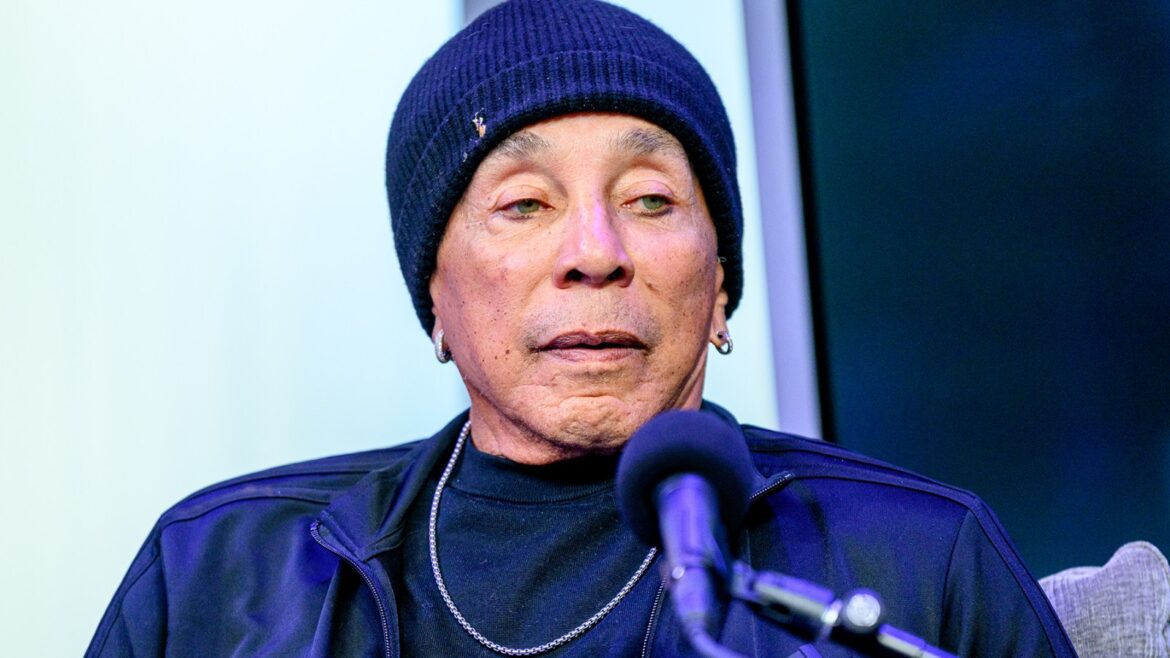
A judge ruled Thursday that the four housekeepers suing Smokey Robinson for sexual assault can move forward with their $50 million lawsuit against the Motown star using pseudonyms.

Robinson had filed a motion asking the court to strike down the women’s complaint and force them to refile using their real names if they wanted to proceed. He claimed the women waived their right to anonymity when they appeared at a press conference on May 6 wearing masks and sunglasses while their lawyers shared some identifying information.

The “Being With You” singer, who is now counter-suing the Jane Does with a $500 million defamation and elder abuse cross-complaint, argued the women and their lawyers shouldn’t be allowed to “pick and choose” the details they disclose. At the press conference, the lawyers told reporters that the women were Latina, earned “below minimum wage,” and didn’t step forward sooner in part due to concerns they might face “reprisals” related to immigration status.

Before the judge ruled from the bench Thursday at a morning hearing in downtown Los Angeles, Robinson’s lawyer, Christopher Frost, argued that the pseudonyms were hindering the defense’s effort to subpoena witnesses. He also revealed some of what Jane Doe 3 purportedly said during her sealed deposition taken a day earlier.

“We learned that Jane Doe No. 3 is the sister of Jane Doe 2, and she brought Jane Doe 2 to the employment of the Robinsons four years after she claims to have already been sexually assaulted. That’s the kind of information they want to hide,” Frost argued. “We also learned that Jane Doe 3 did nothing to find another job for 12 years, then had another job and left it to come back to the Robinsons. That’s all during the time they were claiming they were being sexually assaulted. That’s the type of information they don’t want the public to know.”

Los Angeles County Judge Kevin C. Brazile listened but stuck to his tentative order in favor of the Jane Does. He said the women could proceed with pseudonyms, but he might change his mind as the case progresses. He then set a trial date for Oct. 11, 2027, adding that Robinson’s advanced age, 85, gave him priority. The judge said his other new trials were being set three years in the future.

Editor’s picks

“This early in the case, I don’t think their identities need to be revealed. Maybe later, but for now, you’re not harmed. You know who they are,” Judge Brazile said. He signaled he would grant exceptions to the anonymity ruling if Robinson’s defense needs to use the women’s names when reaching out to third-party witnesses to ask about their interactions with the plaintiffs.

In his written ruling, Brazile said he disagreed with Robinson’s claim that the plaintiffs waived their right to anonymity “simply because they might argue that their immigration status resulted in a delay coming forward, or because plaintiffs had a media conference during which they wore masks.”

“The court believes that this is a matter in which there is an overriding interest supporting the use of pseudonyms,” Brazile wrote. He cited the “repeated rapes” alleged in the women’s complaint and the possibility that Robinson’s celebrity status might inspire fans to “seek retribution.”

Before setting the trial date, Judge Brazile asked about the musician’s health. “I’ve hugged the man. He’s in better shape than I am,” Frost replied. The lawyer said the 2027 trial date worked, but something sooner might be a problem. “The other problem we have is that because the Jane Does filed police reports, we can’t have him testify at the moment, and we don’t know how long that is going to take, so we have to avoid a situation where we move so quickly that he can’t present his defense,” Frost said.  

Related Content

The high-profile legal battle first grabbed headlines in early May, when the four women filed their stunning complaint with allegations that the soul singer repeatedly sexually assaulted them during their various tenures dating as far back as 2007. The lawsuit accused Robinson of multiple rapes, instances of sexual assault and battery, false imprisonment, and gender violence. It went on to accuse Robinson and his wife, Frances Robinson, of negligence, creating a hostile work environment, sexual harassment, and causing emotional distress.

In the 27-page complaint, the women alleged that Robinson would find ways to isolate them at his homes in the San Fernando Valley and Las Vegas and force them into sexual contact despite their protests. Jane Doe 1 alleged Robinson sexually battered her at least seven times between January 2023 and February 2024. She claimed Robinson would take his wife to a nail salon, rush home, and then lure her into his “blue bedroom,” where he would lock the door and place a white towel on his bed so he wouldn’t “soil the bed lines.” The woman claimed Robinson ignored her resistance and would “roughly penetrate” her without using a condom.

Jane Doe 2 alleged she worked for Robinson and his wife between May 2014 and February 2020. She claimed Robinson forced her into unwanted sexual acts on at least 23 occasions. She said Robinson would force her to perform oral sex on him before he penetrated her without using a condom. She claimed he “enjoyed ejaculating all over [her] face, much to his satisfaction and her abject humiliation.”

In their cross-complaint, Robinson and his wife claimed the former housekeepers conspired with their lawyers to make “slanderous statements” against the couple at their press conference. They claimed the Jane Does and their lawyers “fabricated” the claims to extort money.

According to the Robinsons, they treated the women “as extended family” during their employment, giving them autonomy in their jobs and substantial gifts, including money for dental work, clothing, vacations, concert tickets, and even a car in one case.

Trending Stories

“The depths of plaintiffs’ avarice and greed know no bounds. During the very time that the Robinsons were being extraordinarily generous with plaintiffs, plaintiffs were concocting an extortionate plan to take everything from the Robinsons – everything over and above what they were freely given – and wrongfully destroy the Robinsons’ well-built reputations,” the 19-page cross-complaint obtained by Rolling Stone said.

Lawyers for the women did not immediately respond to a request for comment Thursday.

September 11, 2025 0 comments
0 FacebookTwitterPinterestEmail

Social Connect

Facebook Twitter Instagram Pinterest Youtube Snapchat

Recent Posts

  • 2009 feels like a whole other world away

  • Watch Ariana Grande and Jimmy Fallon Perform a History of Duets

  • Spotify’s Joe Hadley Talks ARIA Awards Partnership

  • Nick Offerman Announces 2026 “Big Woodchuck” Book Tour Dates

  • Snapped: Above & Beyond (A Photo Essay)

Newsletter

Subscribe my Newsletter for new blog posts, tips & new photos. Let's stay updated!

Categories

  • Bollywood (1,929)
  • Celebrity News (2,000)
  • Events (267)
  • Fashion (1,605)
  • Hollywood (1,020)
  • Lifestyle (890)
  • Music (2,002)
  • TV & Streaming (1,857)

Recent Posts

  • Shushu/Tong Shanghai Fall 2026 Collection

  • Here’s What Model Taylor Hill Is Buying Now

  • Julietta Is Hiring An Assistant Office Coordinator In Dumbo, Brooklyn, NY (In-Office)

Editors’ Picks

  • 2009 feels like a whole other world away

  • Watch Ariana Grande and Jimmy Fallon Perform a History of Duets

  • Spotify’s Joe Hadley Talks ARIA Awards Partnership

Latest Style

  • ‘Steal This Story, Please’ Review: Amy Goodman Documentary

  • Hulu Passes on La LA Anthony, Kim Kardashian Pilot ‘Group Chat’

  • Hannah Einbinder Slams AI Creators As “Losers”

  • Facebook
  • Twitter

@2020 - celebpeek. Designed and Developed by Pro


Back To Top
celebpeek
  • Home
  • Bollywood
  • Hollywood
  • Lifestyle
  • Fashion
celebpeek
  • Music
  • Celebrity News
  • Events
  • TV & Streaming