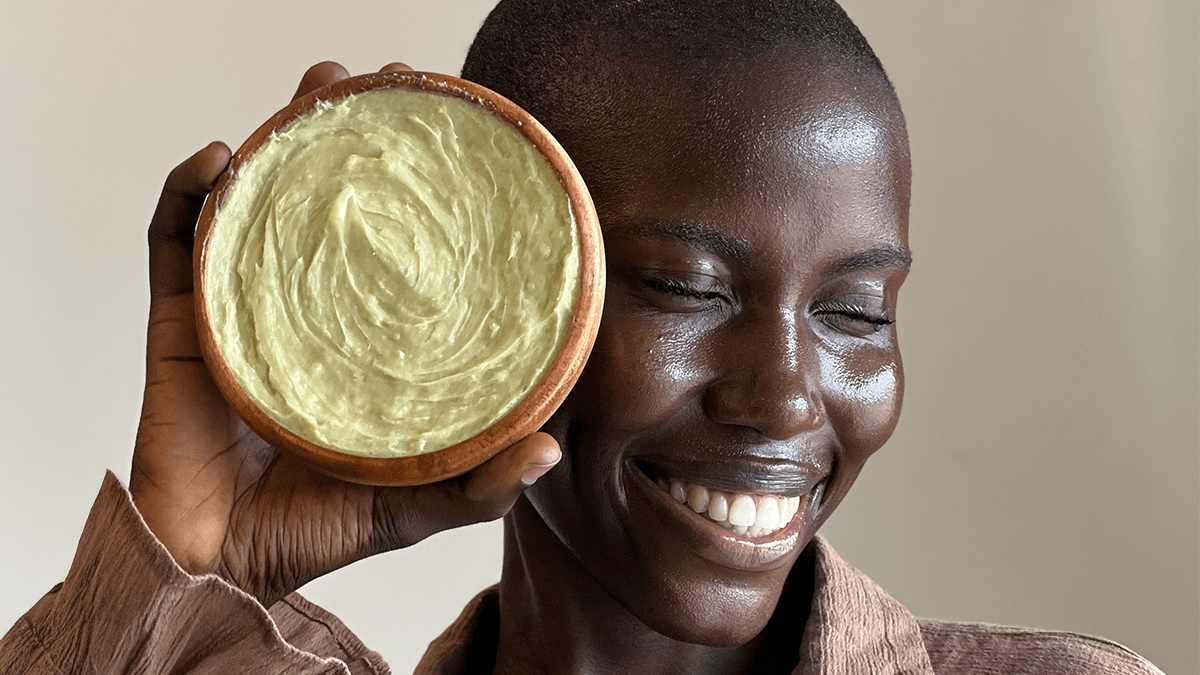
The world is waking up to the properties of these botanicals. The global market for moringa, for example — one of Africa’s most popular ingredients — is projected to reach $25.1 billion by 2035, up from $9.7 billion in 2024, according to US-based market research firm Spherical Insights. Cosmetics and personal care is one of the main application segments, underscoring the appetite for plant-based actives from the continent.
African botanicals have been used locally for generations, but the key opportunity for S’Able Labs lies in marrying natural products with cutting-edge skincare formulations to target a broader audience. “Where A-beauty is so well placed is in taking [traditional ingredients] to another level,” she says. “I want to see oat amino acids combined with kaolin clay, or black seed oil with vitamin C and ferulic acid.”
Among the more established players in the A-beauty space is RandR Skincare, founded by Valerie Obaze in Nigeria, which recently celebrated its 15th anniversary. The brand reimagined shea butter — traditionally sold solid — into a liquid format for ease of use and presented it in ways Obaze describes as “modern and desirable”.
For Obaze, what differentiates A-beauty is its approach to production and community. Many manufacturers of natural ingredients on the continent, particularly in West Africa, operate as cooperatives. RandR purchases from them at a fair price and provides training and financial literacy support to the women involved in production.
Liha Beauty’s core ingredients, including ivory and gold shea butters, are also sourced from cooperatives in Nigeria and Ghana, where the brand says it has built long-term relationships with women-led producers. “These partnerships ensure fair trade and maintain the traditional handcrafting methods that preserve the purity of the shea,” says co-founder Janita Brock.
A-beauty at scale
Scaling is the primary hurdle for A-beauty to reach the same global prominence as K-beauty and J-beauty. Many brands that use ingredients sourced from Africa rely on artisanal or cooperative-based ingredient production, but logistics, export costs and inconsistent infrastructure slow regional trade. Africa’s Continental Free Trade Agreement was designed to ease barriers to intra-continental trade by standardising tariffs. But in reality, implementation has been uneven across the countries that ratified it.
